EDITOR’S NOTE: This story includes discussion of suicide. If you or someone you know needs help, the national suicide and crisis lifeline in the U.S. is available by calling or texting 988.
In rambling writings full of vitriol against a wide range of people, the teenagers who attacked the Islamic Center of San Diego this week, killing three men and themselves, left little doubt about the models for their violence.
Click to Gallery
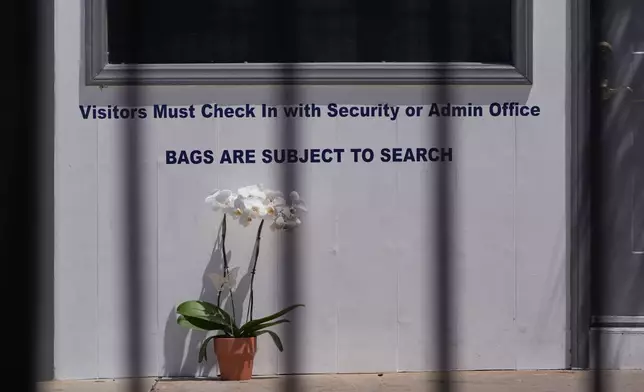
Orchids are left outside of the Islamic Center of San Diego, the day after a shooting, Tuesday, May 19, 2026, in San Diego. (AP Photo/Jae C. Hong)
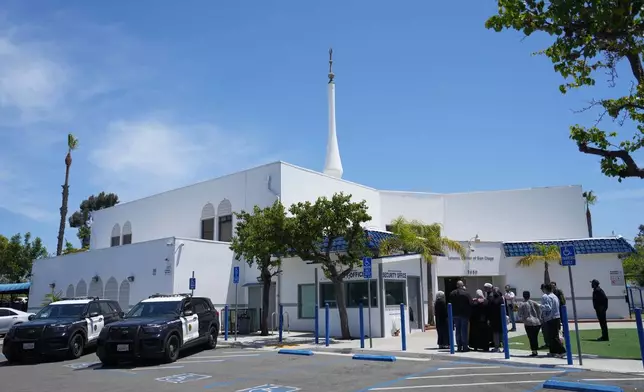
People gather as police vehicles are parked outside of the Islamic Center of San Diego, the day after a shooting, Tuesday, May 19, 2026, in San Diego. (AP Photo/Jae C. Hong)
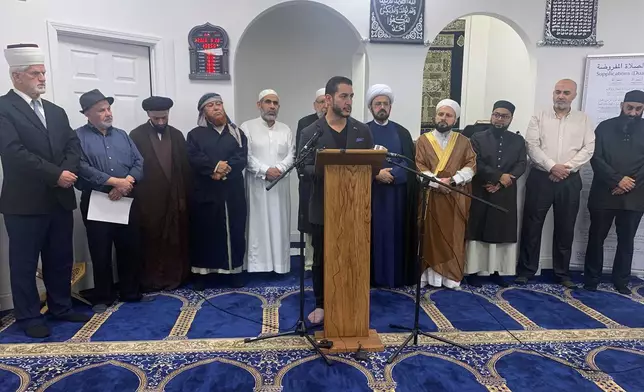
Abdul El-Sayed, a Democratic candidate for the U.S. Senate from Michigan, speaks at a news conference hosted by the Imams Council of Michigan at the Dawah Institute mosque Wednesday, May 20, 2026, in Detroit. (AP Photo/Mike Householder)
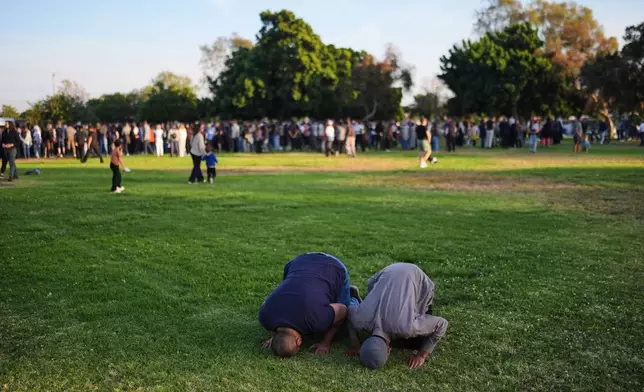
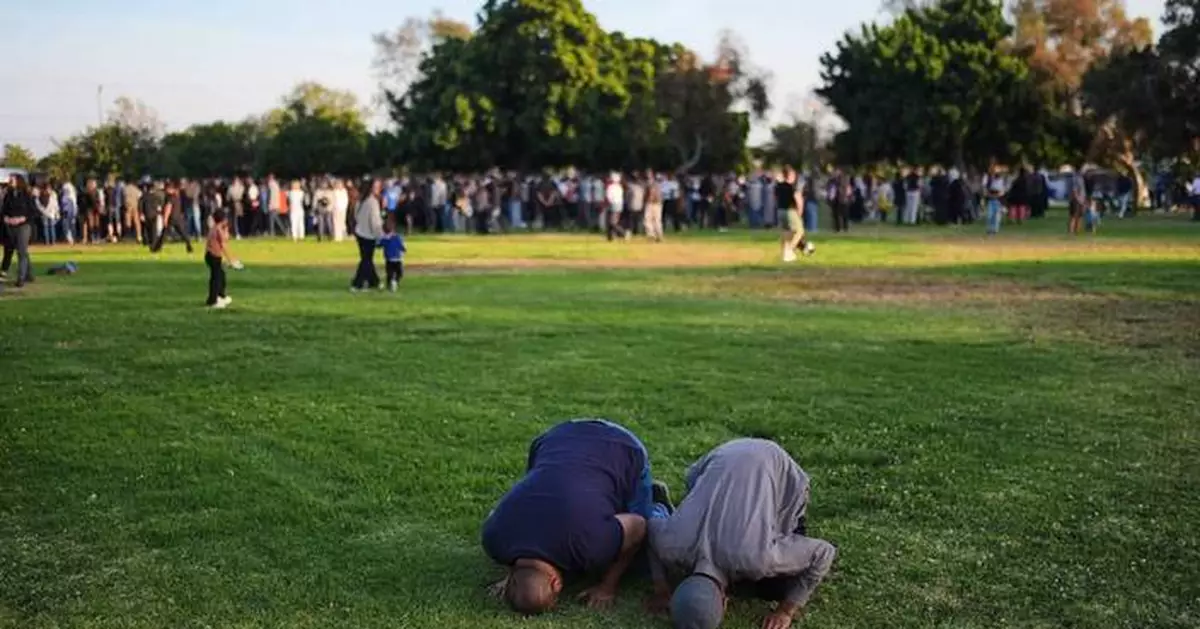
Two people pray during a vigil, the day after a shooting, outside of the Islamic Center of San Diego, Tuesday, May 19, 2026, in San Diego. (AP Photo/Jae C. Hong)
Chief among them: the shooter who killed 51 people at two mosques in Christchurch, New Zealand, in 2019.
Researchers who study extremism have long noted the resonance of the Christchurch attack among far-right assailants, attributing it to the extent of the violence, the document the killer posted concerning his views and actions, and — especially — his decision to livestream the massacre. Among those who apparently modeled attacks after Christchurch was a shooter who months later killed 22 people in a Texas Walmart.
“Part of what we’re seeing in violent extremist communities online is wanting to emulate the attacks that have had the most kills — which is a disgusting thing to say, but it's the reality,” said Katherine Keneally, director of threat analysis and prevention at the Institute for Strategic Dialogue, an anti-extremism organization. “There is this obsession and it’s just sort of gamifying of attacks.”
Cain Clark, 17, and Caleb Vazquez, 18, stormed the Islamic Center on Monday before being driven back outside by a security guard who exchanged gunfire with them as he initiated a lockdown, helping to protect 140 children, authorities have said.
The pair killed the guard, Amin Abdullah, and two other men before taking their own lives in a vehicle nearby.
They left behind a 74-page document — the same length as the one written by Christchurch shooter Brenton Tarrant. Like Tarrant's, it cited a range of far-right ideological inspirations, including the notion that white people are being replaced by other populations, and offered self-interviews detailing their motives and goals.
And they called themselves “Sons of Tarrant.”
The writings include hateful rhetoric toward Jewish people, Muslims and Islam, as well as the LGBTQ+ community, Black people, women, and the political left and right. They indicated they were trying to accelerate the collapse of society. In his section, Vazquez wrote of having “some mental health issues” and being rejected by women.
Brian Levin, the founding director of the Center for the Study of Hate and Extremism at California State University in San Bernardino, noted that while white supremacist writings dating to the 1970s offered a narrative blueprint for decentralized terror attacks, neo-Nazis decades ago favored an approach sometimes called the “propaganda of the deed” — the attack on its own was supposed to inspire copycats, even without written explanations.
The internet has made it easier to spread writings by attackers, and since a far-right attacker killed 77 people in Norway in 2011 and released a 1,500-page document, it has become more common for writings to accompany such atrocities, Levin said. Frequently the writings quote from past white-supremacist texts.
“This strategy of being another chapter in a continuing chain of extremism not only telegraphs that the movement is bigger than it is, but also its resilience — that it is reoccurring with a different set of violent actors, some of whom die in the process,” Levin said.
The shooting was the latest in a series of attacks on houses of worship. Threats and hate crimes targeting the Muslim and Jewish communities have risen since war began in the Middle East, forcing increases in security.
Keneally said she had mixed feelings about the media attention on the attacks: The public needs to understand what happened, but it also risks amplifying the killers' message and spreading the contagion of mass violence. She said she has struggled with questions she has gotten about whether such attacks are motivated by nihilistic extremism, or accelerationist, neo-Nazi, or white supremacist ideologies.
“We’re trying to put people in buckets and we’re asking the why, but we’re not going back and looking at the how," Keneally said. "How did these kids end up going down this route? How is social media playing a role in that?”
At 17 and 18, she said, healthy teenagers should be excited about graduating high school or entering young adulthood, not engaging with extremist ideologies.
While hateful extremism inspired the teens to attack the Islamic center, it inspired the security guard, Abdullah, in another way: to defend it.
In an interview, his friend Khalid Alexander said Abdullah was increasingly concerned about negative rhetoric toward Muslims, including from politicians.
“He recognized a direct kind of correlation between the threat of the community he was protecting and the types of, really, hate that was being spewed on television in an anti-Muslim, anti-Black, anti-immigrant feeling,” Alexander said. “And so he was keenly aware of the dangers of his job. And that’s exactly why he chose to do it.”
Johnson reported from Seattle. Associated Press writers Julie Watson in San Diego and Safiyah Riddle in Montgomery, Alabama, contributed.
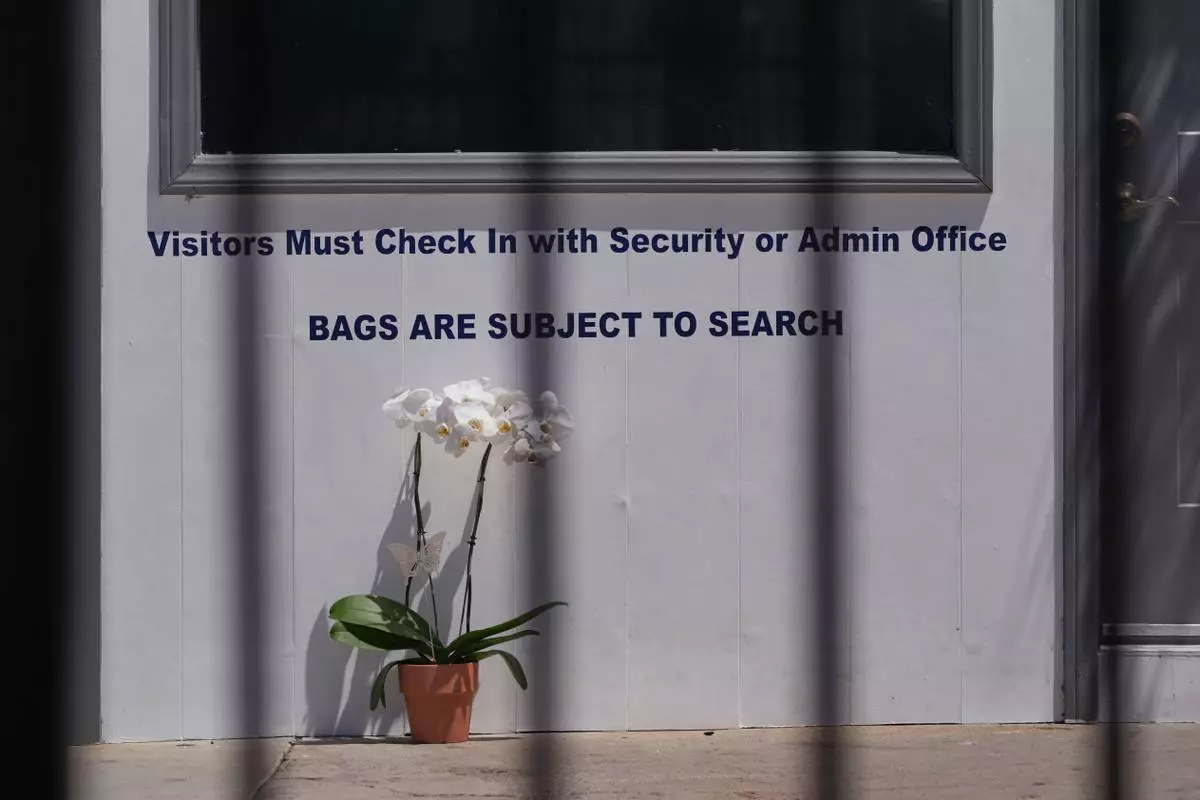
Orchids are left outside of the Islamic Center of San Diego, the day after a shooting, Tuesday, May 19, 2026, in San Diego. (AP Photo/Jae C. Hong)
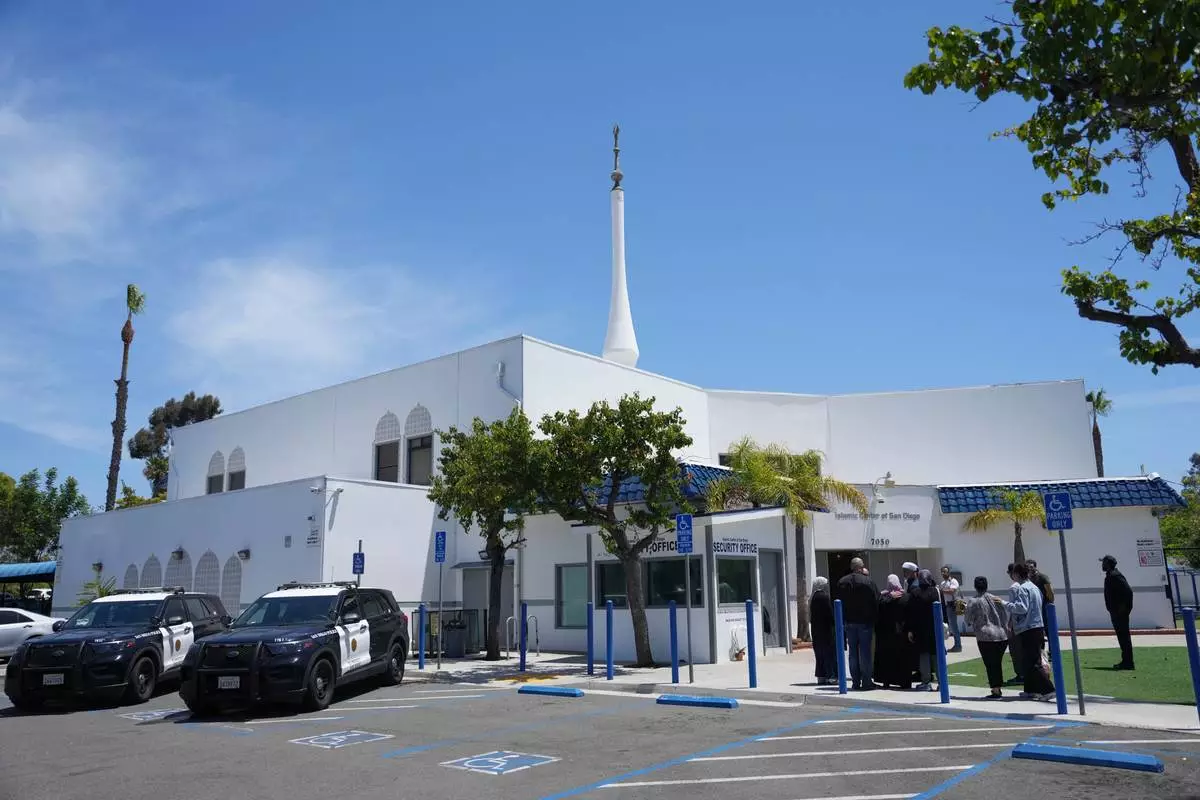
People gather as police vehicles are parked outside of the Islamic Center of San Diego, the day after a shooting, Tuesday, May 19, 2026, in San Diego. (AP Photo/Jae C. Hong)
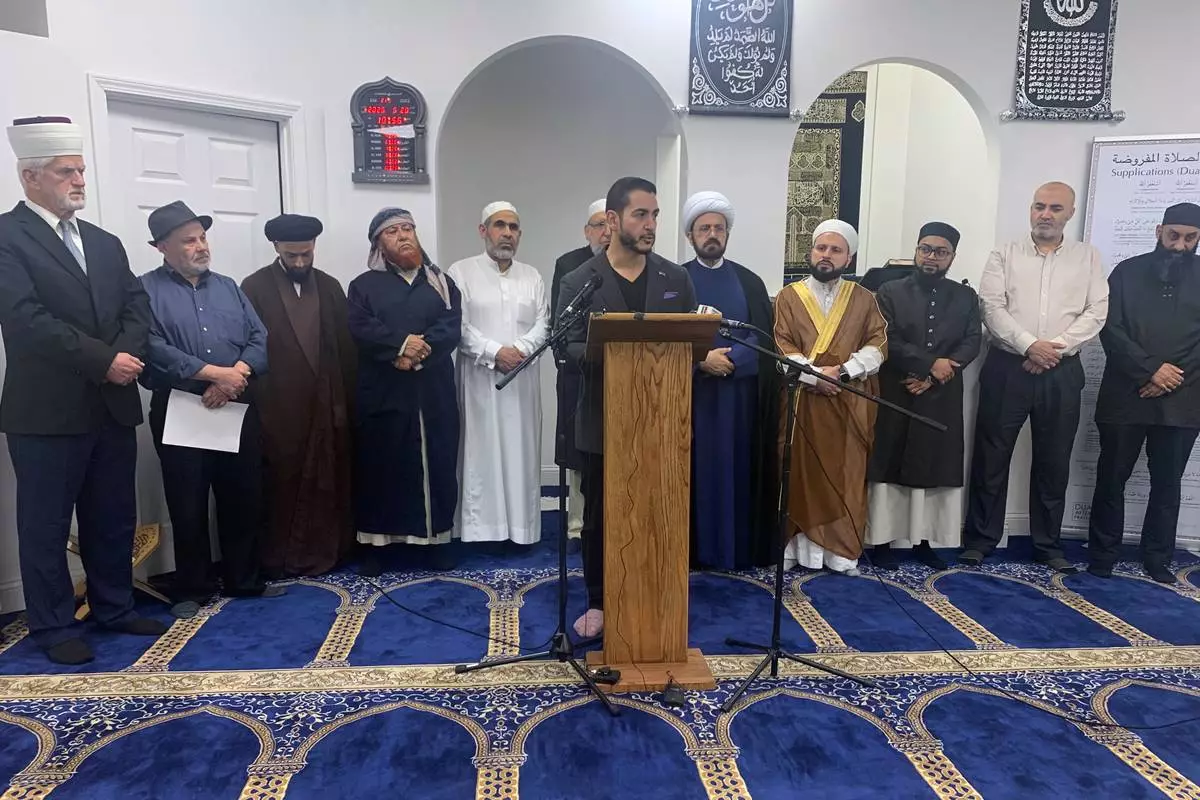
Abdul El-Sayed, a Democratic candidate for the U.S. Senate from Michigan, speaks at a news conference hosted by the Imams Council of Michigan at the Dawah Institute mosque Wednesday, May 20, 2026, in Detroit. (AP Photo/Mike Householder)
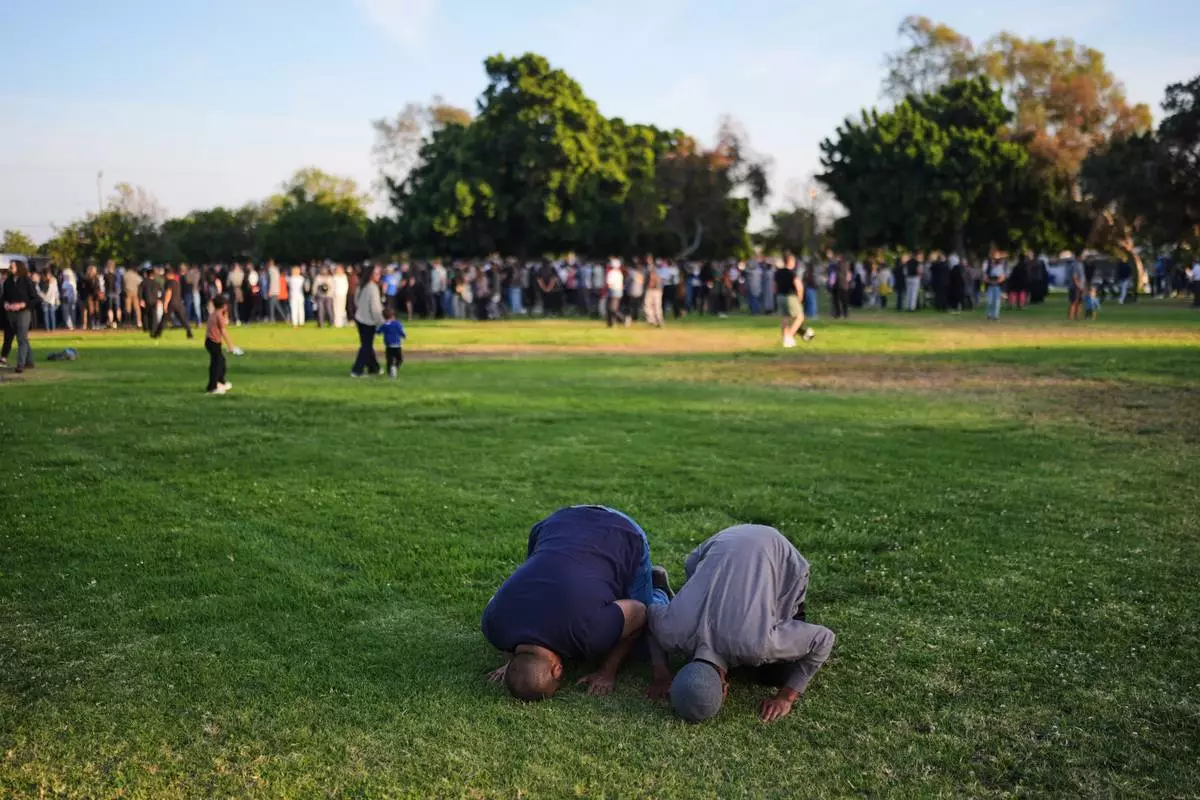
Two people pray during a vigil, the day after a shooting, outside of the Islamic Center of San Diego, Tuesday, May 19, 2026, in San Diego. (AP Photo/Jae C. Hong)