Skip to Content Facebook Feature Image

Heat wave empties roads and markets in north India as some farmers turn to nighttime work

News

Heat wave empties roads and markets in north India as some farmers turn to nighttime work
News

News

Heat wave empties roads and markets in north India as some farmers turn to nighttime work

2026-05-21 14:00 Last Updated At:14:35

NEW DELHI (AP) — Roads and markets have emptied during afternoons and some farmers have switched to nighttime work to avoid scorching temperatures as a heat wave grips large parts of India.

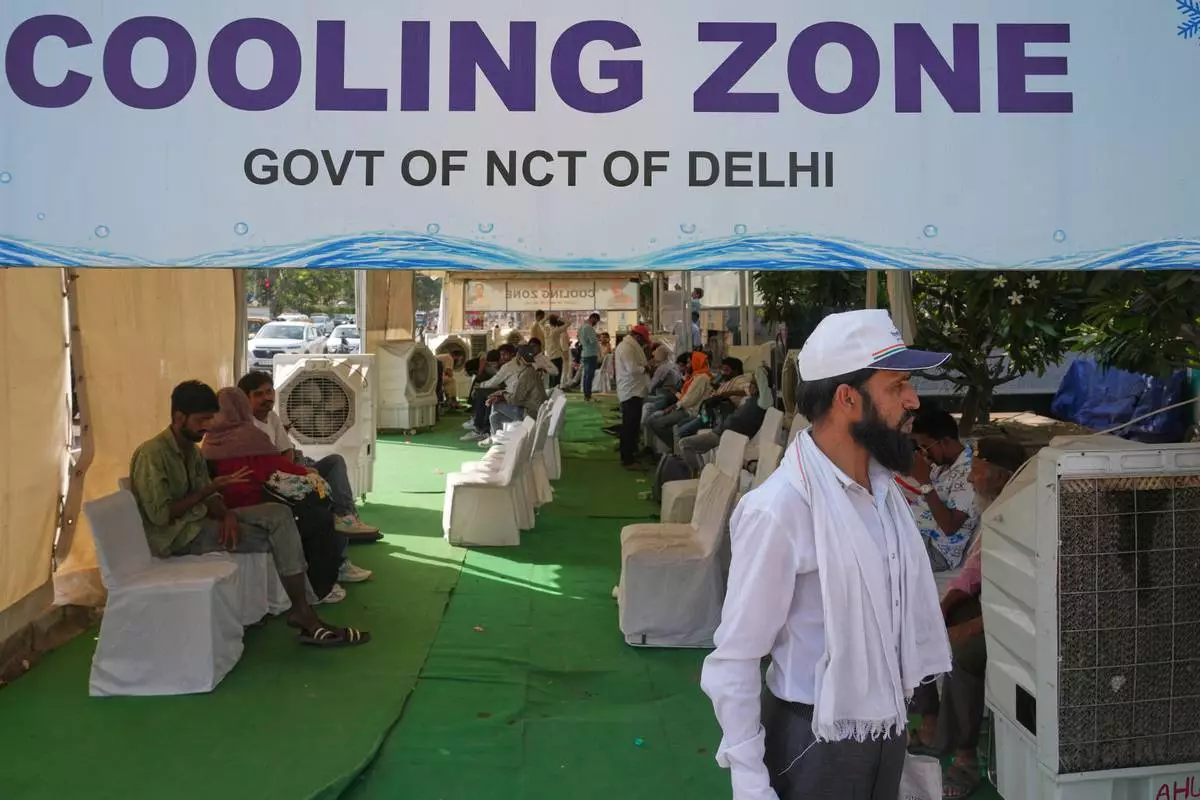
The India Meteorological Department forecast maximum temperatures Thursday of around 45 degrees Celsius (113 Fahrenheit) in the capital, New Delhi, where authorities have opened temporary “cooling zones” to help people cope.

More Images
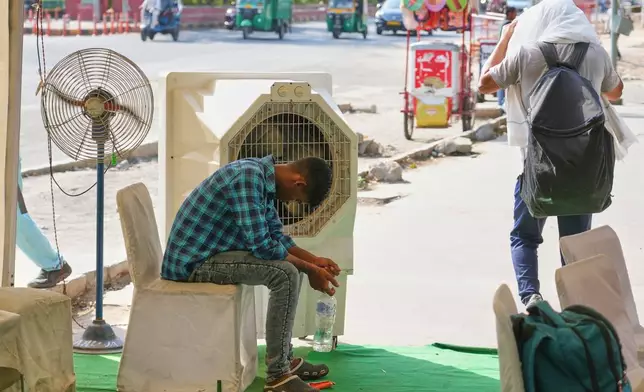
A man sits in front of a water cooler at a roadside cooling station set up by the government to provide relief for people from the intense summer heat in New Delhi, India, Wednesday, May 20, 2026. (AP Photo/Manish Swarup)
A man sits in front of a water cooler at a roadside cooling station set up by the government to provide relief for people from the intense summer heat in New Delhi, India, Wednesday, May 20, 2026. (AP Photo/Manish Swarup)

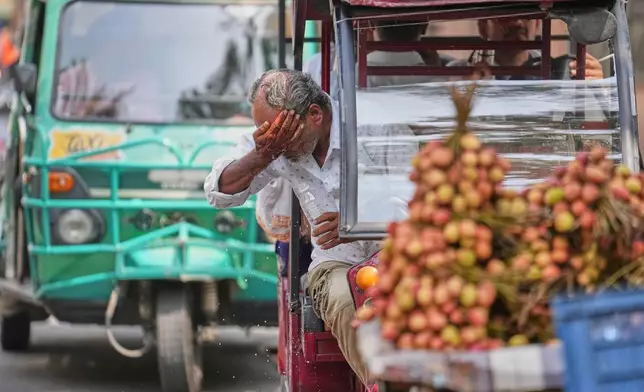
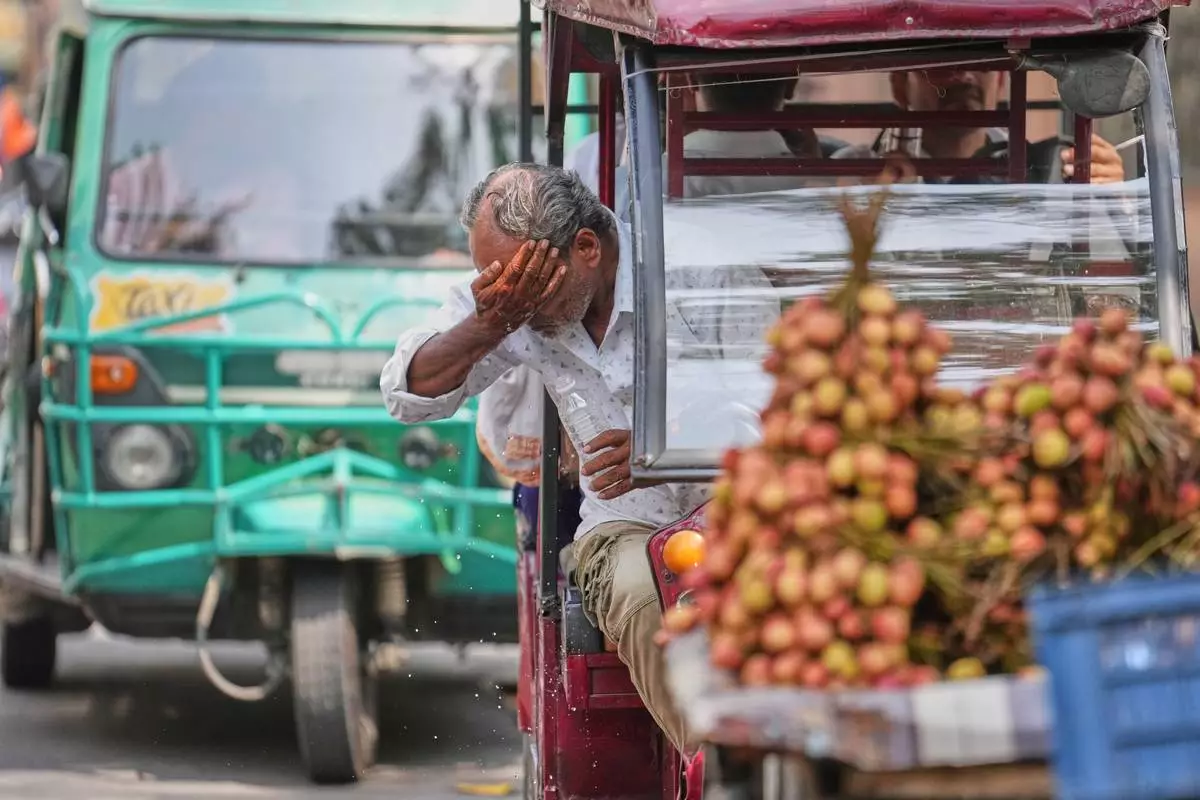
An electric rickshaw driver splashes water on his face to cool off under the intense summer heat in Lucknow, India, Wednesday, May 20, 2026. (AP Photo/Rajesh Kumar Singh)
An electric rickshaw driver splashes water on his face to cool off under the intense summer heat in Lucknow, India, Wednesday, May 20, 2026. (AP Photo/Rajesh Kumar Singh)

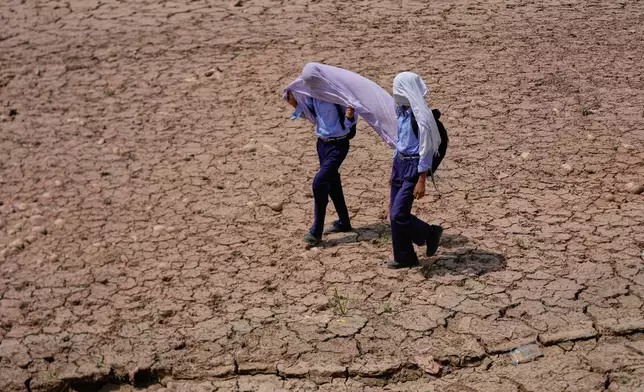
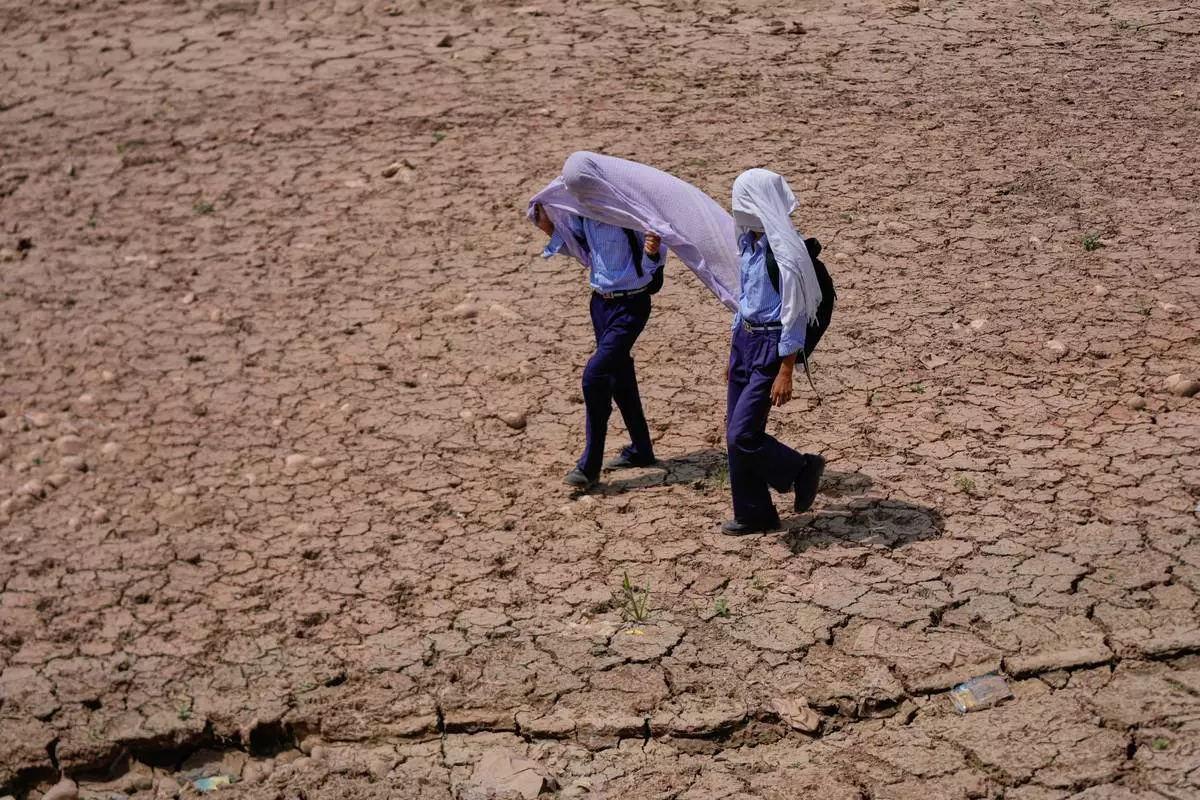
School children use cotton towels over their heads to protect themselves from the scorching afternoon heat as they walk through a parched field on the outskirts of Jammu, India, Wednesday, May 20, 2026. (AP Photo/Channi Anand)
School children use cotton towels over their heads to protect themselves from the scorching afternoon heat as they walk through a parched field on the outskirts of Jammu, India, Wednesday, May 20, 2026. (AP Photo/Channi Anand)

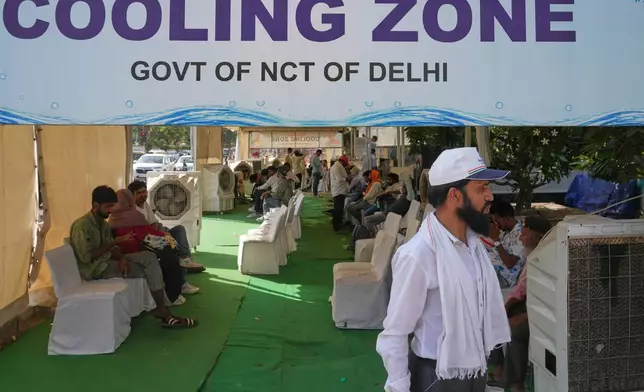
Commuters rest at a roadside cooling station set up by the government to provide relief for people from the intense summer heat in New Delhi, India, Wednesday, May 20, 2026. (AP Photo/Manish Swarup)
Commuters rest at a roadside cooling station set up by the government to provide relief for people from the intense summer heat in New Delhi, India, Wednesday, May 20, 2026. (AP Photo/Manish Swarup)

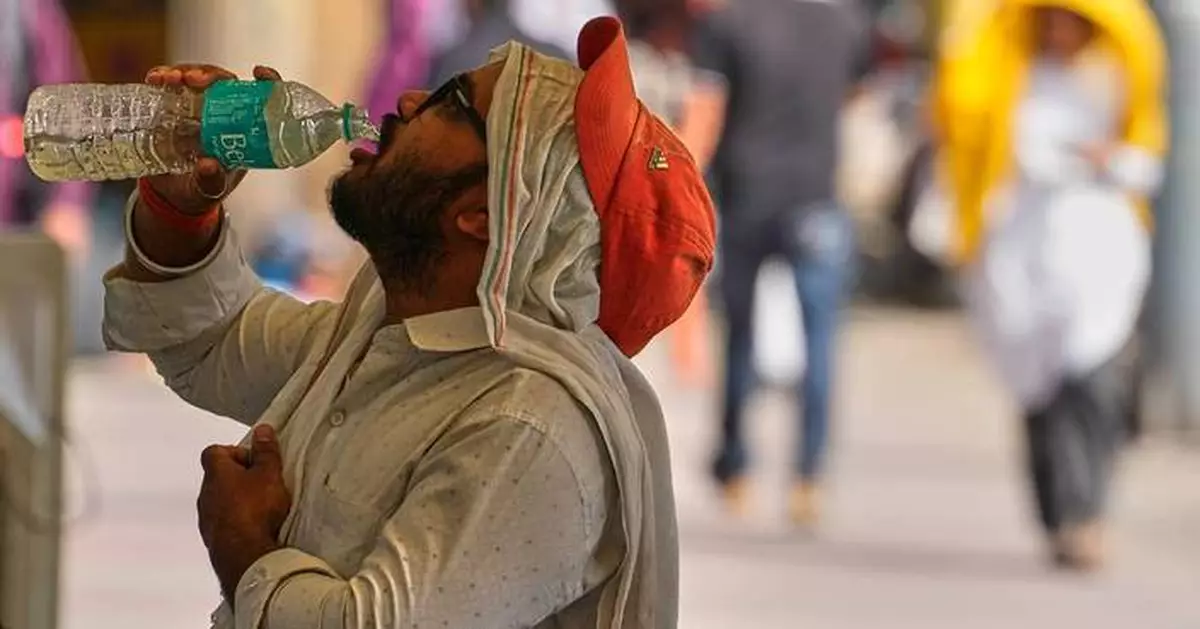
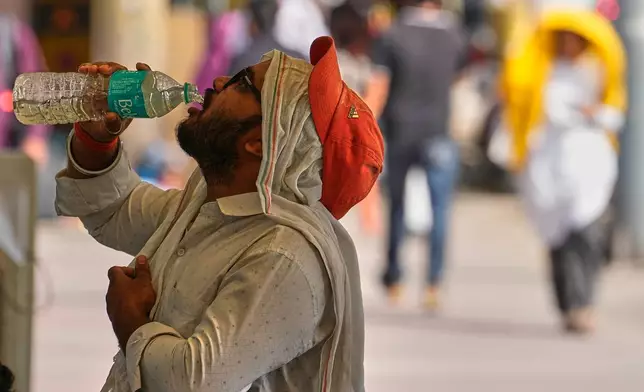
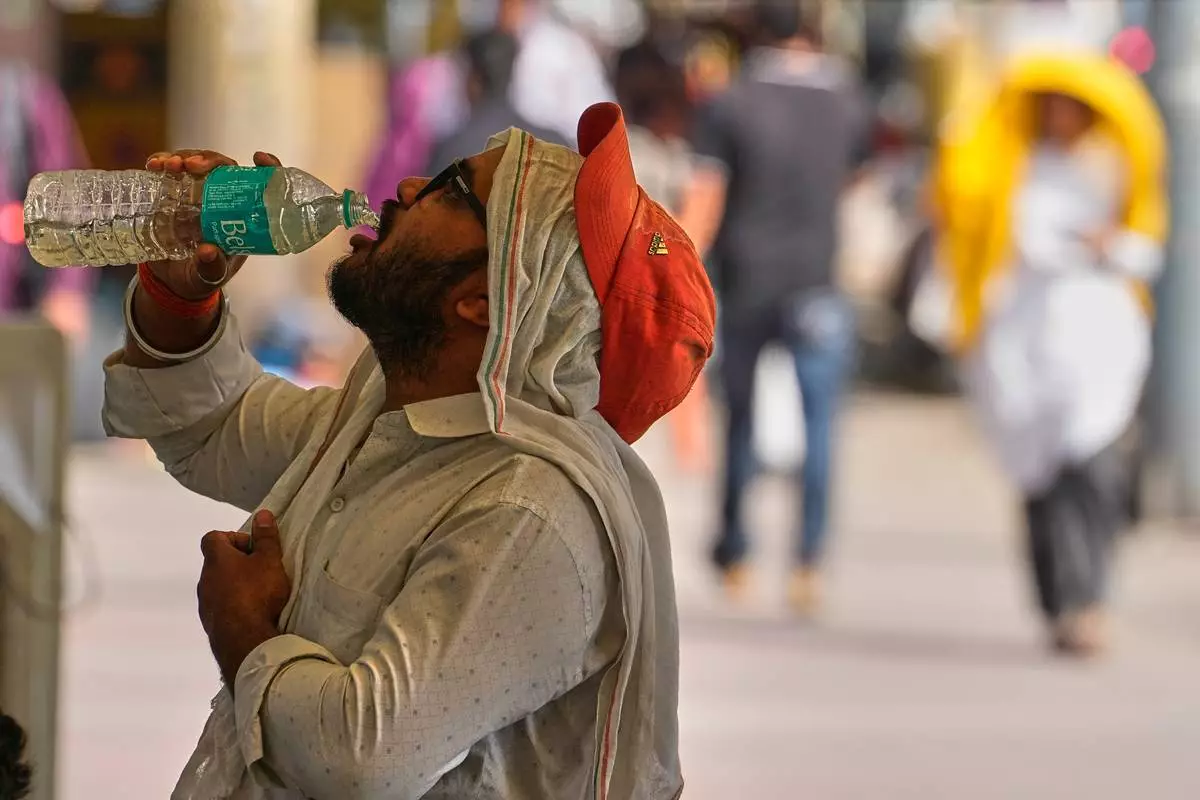
A commuter drinks water on a hot afternoon in New Delhi, India, Wednesday, May 20, 2026. (AP Photo/Manish Swarup)

A commuter drinks water on a hot afternoon in New Delhi, India, Wednesday, May 20, 2026. (AP Photo/Manish Swarup)

The weather department warned conditions will likely persist across several northern regions in the coming days, with temperatures staying well above seasonal averages. Authorities urged people to stay indoors during the hottest hours and take precautions against heat-related illnesses.

India declares a heat wave whenever temperatures are above 40 C (104 F) in the plains and 30 C (86 F) or more in its hilly regions.

The extreme heat has disrupted daily life across several northern states.

In some parts of Uttar Pradesh state, India’s most populous, roads and markets have closed in the afternoons as people stayed indoors while some traders shifted work to early mornings. Farmers began working at night because daytime conditions became unbearable.

The heat also disrupted schools, with authorities in several areas announcing early summer vacations and suspending classes as the maximum temperature shot up to 48.2 C (118.8 F) on Tuesday in the city of Banda.

Health authorities urged people to avoid going outdoors during peak afternoon hours, stay hydrated and seek medical help if they experience symptoms such as dizziness or high fever.

In New Delhi, residents and tourists sought relief from the heat inside cooling shelters set up across the capital. The shaded space provides air coolers, fans, drinking water and oral rehydration solutions to help people deal with the extreme heat.

Inside one tent on Wednesday, people rested beside air coolers as officials distributed cups of water mixed with rehydration salts.

“We had come here for outing. But it is too hot here. The cooling system here is good for us,” said Basharat Ahmad Malla, a 25-year-old tourist.

Climate experts say India’s rising temperatures are part of a broader global pattern linked to climate change.

India has faced more frequent and intense heat waves in recent years, with all of its warmest years on record occurring in the last decade.

“India has warmed considerably as a result of anthropogenic (human-made) climate change in the last decade compared to previous years. Northwestern India has warmed much faster than many other parts of the country,” said Anjal Prakash, author of several United Nations climate reports and professor of public policy at Pune-based Flame University.

Prakash said India is accustomed to summer heat but “climate change is loading the dice towards extreme and pervasive episodes like those we see now.”

Studies by public health experts found that up to 1,116 people have died every year between 2008 and 2019 due to heat. Public health experts say the true number of heat-related deaths is likely in the thousands, but because heat is often not listed on death certificates, many deaths are not counted in official figures.

Associated Press journalists Biswajeet Banerjee in Lucknow, Piyush Nagpal in New Delhi, and Sibi Arasu in Bengaluru, India, contributed to this report.
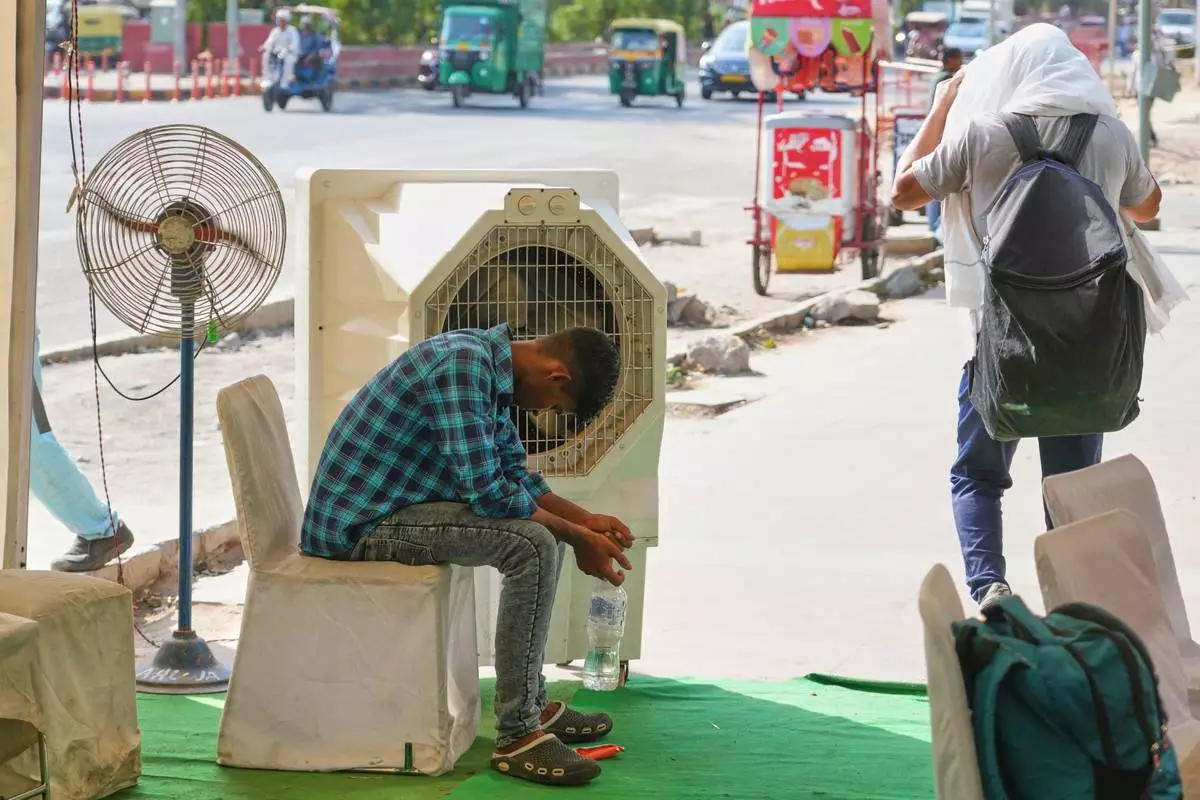
A man sits in front of a water cooler at a roadside cooling station set up by the government to provide relief for people from the intense summer heat in New Delhi, India, Wednesday, May 20, 2026. (AP Photo/Manish Swarup)
A man sits in front of a water cooler at a roadside cooling station set up by the government to provide relief for people from the intense summer heat in New Delhi, India, Wednesday, May 20, 2026. (AP Photo/Manish Swarup)

An electric rickshaw driver splashes water on his face to cool off under the intense summer heat in Lucknow, India, Wednesday, May 20, 2026. (AP Photo/Rajesh Kumar Singh)
An electric rickshaw driver splashes water on his face to cool off under the intense summer heat in Lucknow, India, Wednesday, May 20, 2026. (AP Photo/Rajesh Kumar Singh)

School children use cotton towels over their heads to protect themselves from the scorching afternoon heat as they walk through a parched field on the outskirts of Jammu, India, Wednesday, May 20, 2026. (AP Photo/Channi Anand)
School children use cotton towels over their heads to protect themselves from the scorching afternoon heat as they walk through a parched field on the outskirts of Jammu, India, Wednesday, May 20, 2026. (AP Photo/Channi Anand)

Commuters rest at a roadside cooling station set up by the government to provide relief for people from the intense summer heat in New Delhi, India, Wednesday, May 20, 2026. (AP Photo/Manish Swarup)
Commuters rest at a roadside cooling station set up by the government to provide relief for people from the intense summer heat in New Delhi, India, Wednesday, May 20, 2026. (AP Photo/Manish Swarup)

A commuter drinks water on a hot afternoon in New Delhi, India, Wednesday, May 20, 2026. (AP Photo/Manish Swarup)


A commuter drinks water on a hot afternoon in New Delhi, India, Wednesday, May 20, 2026. (AP Photo/Manish Swarup)
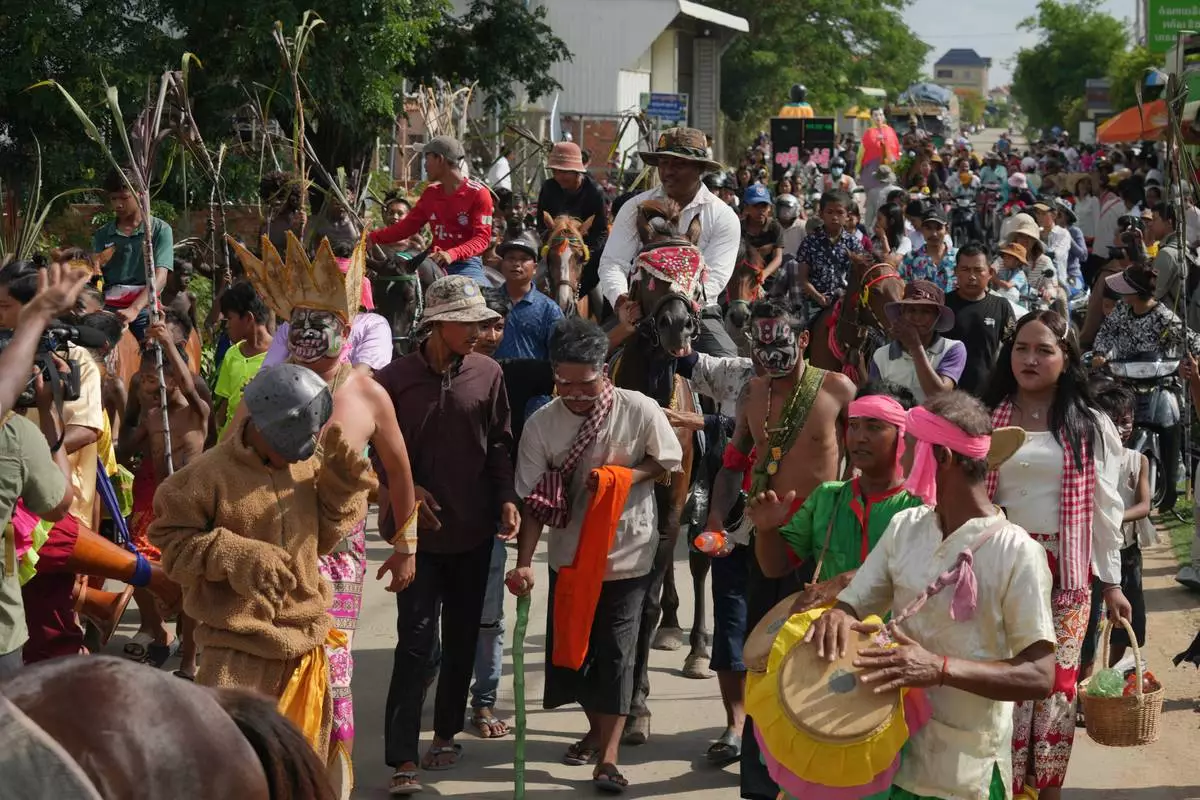
PHUM BOEUNG, Cambodia (AP) — Hundreds of Cambodians on Thursday morning honored their village’s guardian spirits by holding a colorful centuries-old ceremony to pray for good fortune, rain and prosperity.

The “He Neak Ta” ritual has been celebrated annually for several hundred years by the villagers in Phum Boeung, about 25 kilometers (15 miles) northwest of the capital, Phnom Penh.

The ceremony, which has become increasingly rare in modern times, coincides with the onset of the summer monsoon as farmers prepare for planting rice, a particularly water-intensive crop.

Although most Cambodians are Buddhist, the ritual reflects a widespread faith in animism, the belief that spirits can inhabit all types of living and inanimate objects.

Chamrouen Ratha, a 26-year-old blacksmith, said he was taking the day off from work to join other villagers in honoring the same spirits celebrated by his ancestors.

“The significance of this ceremony is to pray for happiness and prosperity for all the villagers in this area and the participants who have joined this ceremony,” he said.

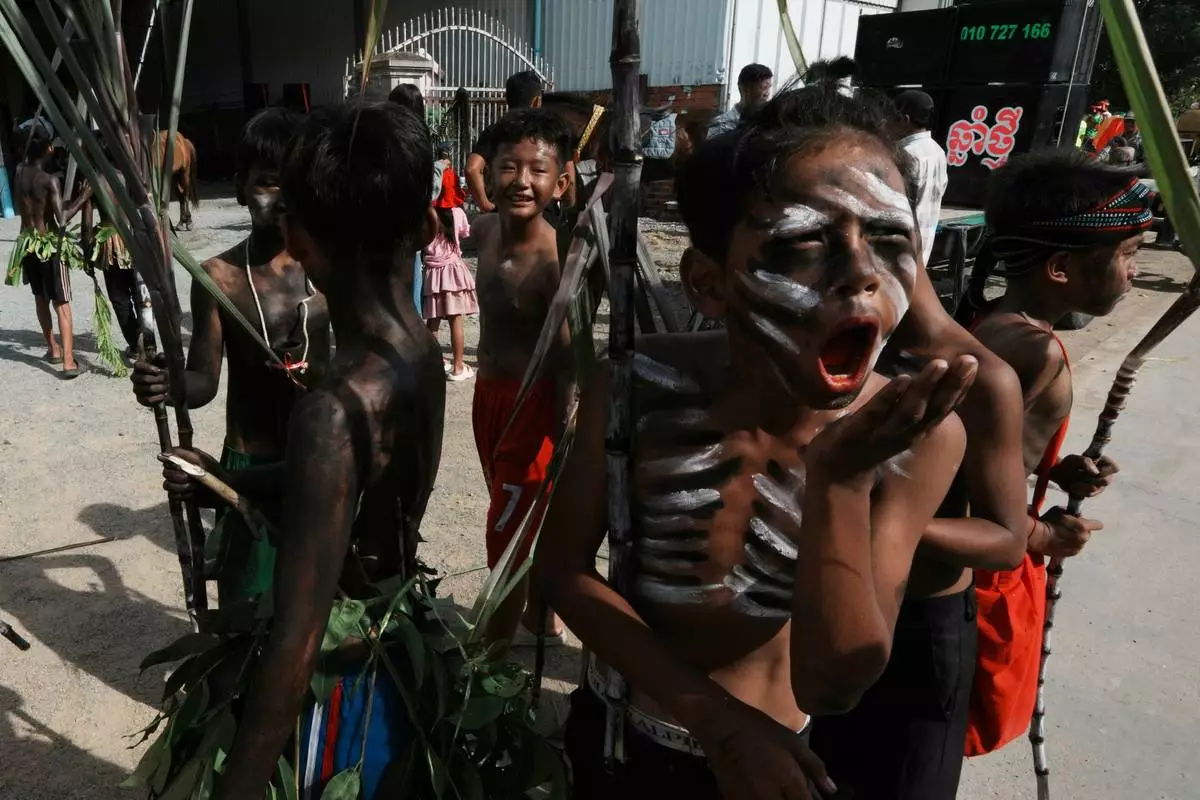
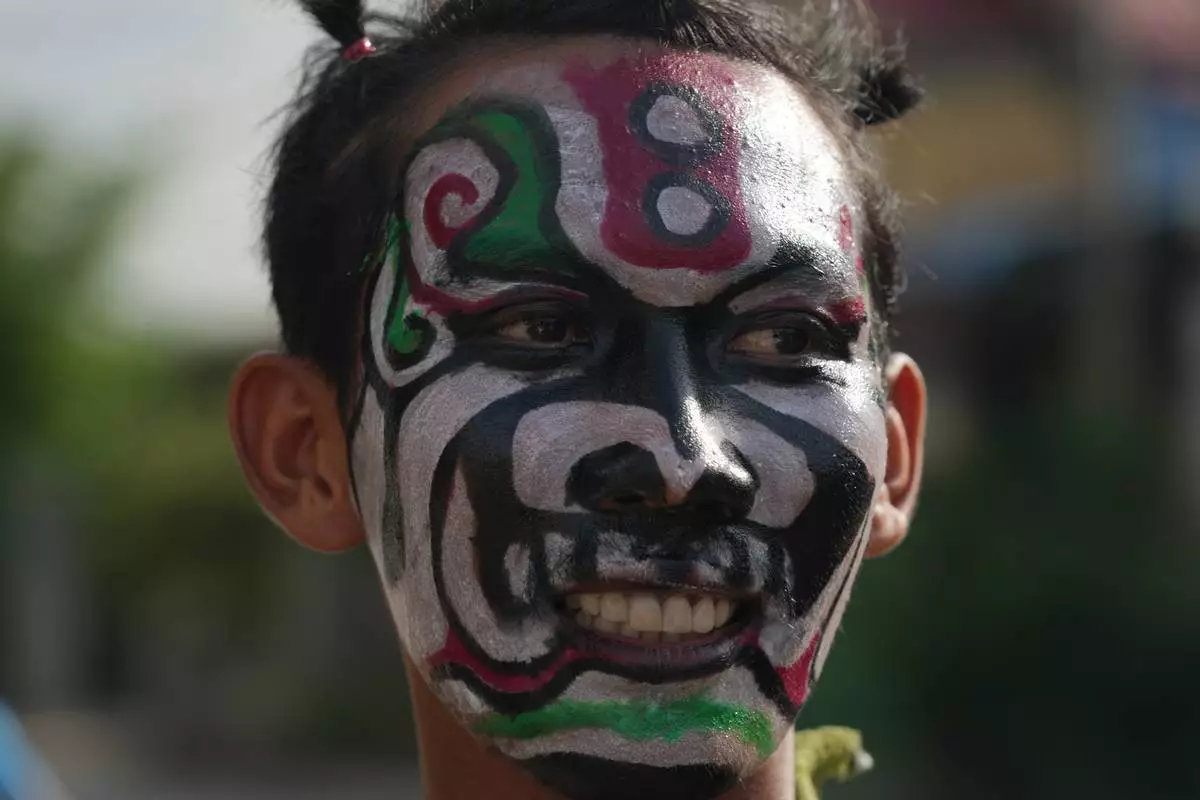
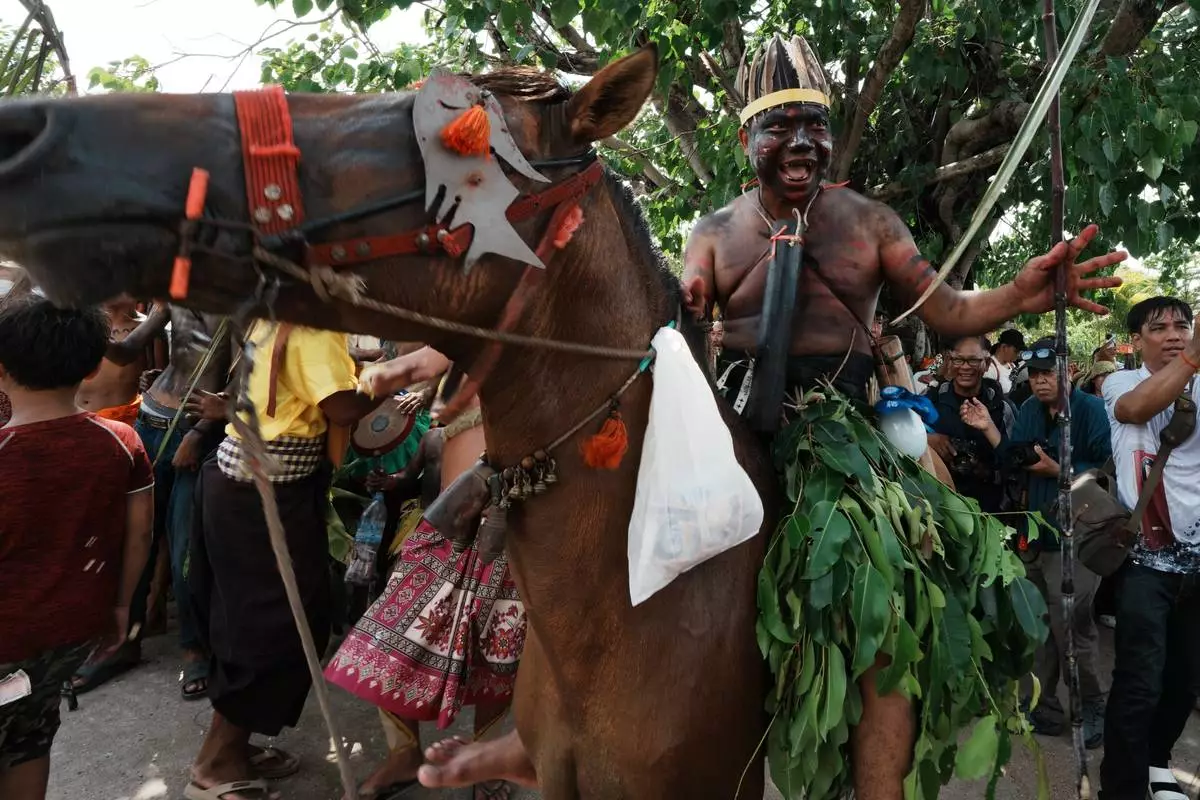
Villagers of all ages congregate about 2 kilometers (1.2 miles) from the local monastery dedicated to their guardian spirit. Young village men paint scenes inspired by local folklore on their faces and bodies, dress as spirits and don grass skirts. A few wear painted oversized heads atop their costumes.

Many young woman wear traditional silk clothing, with gold-colored necklaces and flowers tucked behind their ears. Some dance elegantly to the beat of handheld drums and small gongs.

The ragtag procession, including some participants traveling on motorbikes and even on horseback, slowly makes its way to the guardian spirit's shrine.

There, villagers light incense sticks and offer various types of fruit, food, soft drinks, and alcohol while praying for good fortune, adequate rain, prosperity and the prevention of disease within their community.

The half-day ceremony concludes with the spraying of holy water on the cheerful participants.

“I pray for enough rainfall with abundant rice production ... so that villagers would enjoy their harvest,” said one of the costumed marchers, 30-year-old driver Sim Pov.

Neak Mao, 64, who brought two horses with him, said he has attended the ceremony since he was young.

"This celebration is to ensure that the traditions of our ancestors are not lost, which they have tried to preserve and we continue to do so every year,” he said.

A boy with a ghost painting takes part in a ceremony to invoke rain amid the rice planting season in Pring Ka-ek village, northwest of Phnom Penh, Cambodia, Thursday, May 21, 2026. (AP Photo/Heng Sinith)

A boy with a ghost painting takes part in a ceremony to invoke rain amid the rice planting season in Pring Ka-ek village, northwest of Phnom Penh, Cambodia, Thursday, May 21, 2026. (AP Photo/Heng Sinith)

A man representing a ghost rides on a horse during a ceremony to invoke rain amid the rice planting season in Pring Ka-ek village, northwest of Phnom Penh, Cambodia, Thursday, May 21, 2026. (AP Photo/Heng Sinith)

A man representing a ghost rides on a horse during a ceremony to invoke rain amid the rice planting season in Pring Ka-ek village, northwest of Phnom Penh, Cambodia, Thursday, May 21, 2026. (AP Photo/Heng Sinith)

Villagers march to mark a ceremony to invoke rain amid the rice planting season in Pring Ka-ek village, northwest of Phnom Penh, Cambodia, Thursday, May 21, 2026. (AP Photo/Heng Sinith)

Villagers march to mark a ceremony to invoke rain amid the rice planting season in Pring Ka-ek village, northwest of Phnom Penh, Cambodia, Thursday, May 21, 2026. (AP Photo/Heng Sinith)

Boys representing ghosts participate during a ceremony to invoke rain amid the rice planting season in Pring Ka-ek village, northwest of Phnom Penh, Cambodia, Thursday, May 21, 2026. (AP Photo/Heng Sinith)

Boys representing ghosts participate during a ceremony to invoke rain amid the rice planting season in Pring Ka-ek village, northwest of Phnom Penh, Cambodia, Thursday, May 21, 2026. (AP Photo/Heng Sinith)

A man with a ghost painting takes part in a ceremony to invoke rain amid the rice planting season in Pring Ka-ek village, northwest of Phnom Penh, Cambodia, Thursday, May 21, 2026. (AP Photo/Heng Sinith)

A man with a ghost painting takes part in a ceremony to invoke rain amid the rice planting season in Pring Ka-ek village, northwest of Phnom Penh, Cambodia, Thursday, May 21, 2026. (AP Photo/Heng Sinith)

Recommended Articles