A supersized World Cup with more teams, more games and even more host nations than ever before leaves a big question hanging over the biggest sporting show on earth: How much is too much?
The latest edition of the World Cup — co-hosted by the United States, Canada and Mexico — will push the boundaries of how far the most popular sport on the planet can go before it reaches breaking point.
Be it the limits of physical endurance as top players threaten strike action over an ever-congested calendar, the attention span of fans in an age of seemingly wall-to-wall televised soccer or the exorbitant prices people are prepared to pay for tickets — or even parking — the pressure points are numerous going into the June-July tournament.
With an expanded 48-team format — up from 32 — played out over nearly six weeks, some say the tournament risks a dilution of FIFA's most prized product.
“I personally think it’s kind of taken a little bit of the excitement and quality away from the tournament and it’s almost like it doesn’t start until the round of 32,” former U.S. forward Clint Dempsey told The Associated Press.
The expanded format has effectively removed the chance of several top teams being drawn in the same group — known as a “group of death” in soccer vernacular.
Much of the jeopardy traditionally seen in the early stages of the tournament has been removed until the round of 16 because the eight best third-place teams also advance to the round of 32.
“The biggest danger is dilution of spectacle," said Jonathan Wilson, author of The Power and the Glory: A New History of the World Cup.
"Maybe FIFA gets away with it this time because it’s the first expanded tournament and because ticket prices are enormous. But eventually broadcasters and fans may stop caring if the tournament doesn’t become interesting until the last 16,” Wilson said. “A World Cup game should feel almost must-watch. ... Nobody is watching 90 out of 104 games. It’s just too much.”
FIFA President Gianni Infantino says the expansion of the tournament will make the game “truly global” and create opportunities for countries that “would never have dreamed to participate” in a World Cup.
The theory is that given a greater chance to qualify, more nations would increase grassroots funding and therefore improve the standard of soccer around the globe.
Four nations will be making their debut next month, including tiny Curaçao, the smallest by population ever to qualify.
“It’s a big achievement for us to make it, but we also want to show that we can play and that we deserve to be there,” Curaçao goalkeeper Eloy Room said.
Jordan, Cape Verde and Uzbekistan are the other debutants. Haiti has qualified for the first time since 1974.
“As children, we all watched the World Cup. We all dreamed of playing in the World Cup. But it was just a dream, a fantasy when you’re a child," Haiti midfielder Yassin Fortune said. "Qualifying and being able to participate is unimaginable."
There are certainly feel-good stories. Like Haiti goalkeeper Josué Duverger, who will swap regional soccer in Germany to rub shoulders with Brazil superstars like Vinícius Júnior and Neymar. New Zealand has called up defender Tommy Smith from Braintree Town, which was relegated from the fifth tier of English soccer this season.
Maheta Molango, chief executive of England's Professional Footballers' Association, has been one of the leading voices warning about the impact on top players being asked to play more and more soccer.
He says the quality of the product is being diminished and soccer should follow the lead set by the NFL and appreciate the “value of scarcity.”
The NFL averages nearly $11 billion in revenue per season from its media deals, with teams playing 17 regular season games and up to 21 if they make the Super Bowl.
The English Premier League is the world's richest and most watched soccer league in the world, yet its financial figures do not match the NFL's. Its teams play 38 games each per season and its latest domestic broadcast deal was worth $9 billion, at current exchange rates, over a four-year period. Its international deals from 2022-25 were reportedly worth $7.2 billion. Even combined, its yearly broadcast revenue is less than half of the NFL's.
Considering the greater global reach of soccer, the sport needs to think about the quality of its output, Molango said.
“We target China, the U.S., India. So this, in my view, should make us reflect on the value of scarcity because sometimes we always think that more is more, but I disagree," he said. “The starting point has to be ‘let’s put back the quality of the show at the center of our project.'”
Not only is the product in question, but players unions are concerned about the physical and mental strain on top stars, who are given less rest time. After this World Cup many will have played three consecutive years of major tournaments in the offseason, following the European Championship and Copa America in 2024 and the newly expanded Club World Cup last summer.
In December, the global players' union FIFPRO said Chelsea had seen a 44% spike in injuries after winning the Club World Cup.
Several top players including Brazil stars Rodrygo, Éder Militão and Estevao have been ruled out of the tournament after picking up injuries in recent months.
“The top players get treated a little bit like cattle,” former Liverpool player Jamie Carragher said. "If they start getting criticism for the performances at certain stages of the World Cup, I think we’ve got to remember how much football they’ve played and the conditions that they’re playing the game in, and it just doesn’t seem like anyone who organizes football ever thinks about the demands physically and mentally on the top players.”
The World Cup is FIFA’s main revenue generator and the financial advantage to expanding it is compelling.
More games — 104 in total — mean more tickets to sell, with prices rising to thousands of dollars for the best seats at the biggest matches.
When tickets went on general sale in January they ranged from $140 to $8,680. Since then some have been made available for less and others for significantly more — rising to a face price of $32,970 for the final.
FIFA can make more money on its resale marketplace where it takes a 30% commission from each sale. In April the platform listed four tickets to the final for just under $2.3 million each.
Fans have accused FIFA of a “monumental betrayal” over its pricing strategy, but demand appears to be high and the not-for-profit organization says the money it makes goes back into the sport.
In that case, soccer can expect a bumper windfall from the World Cup, with more than $9 billion in revenue anticipated this year.
It remains to be seen if the supersized format it is a turn off for fans. Audience measurement company Nielsen says interest in international soccer in the U.S. is on the rise.
The most watched game on television in the U.S. between 2023-25 was Spain vs. England in the Euros final, with an average audience of 6.6 million. Second was the Copa America final between Argentina and Colombia with 6.5 million.
At the time of reporting FIFA struck media deals with 180 territories to broadcast the tournament, with more to come, indicating appetite remained strong even amid wider concerns.
James Robson is at https://x.com/jamesalanrobson
AP World Cup: https://apnews.com/hub/fifa-world-cup
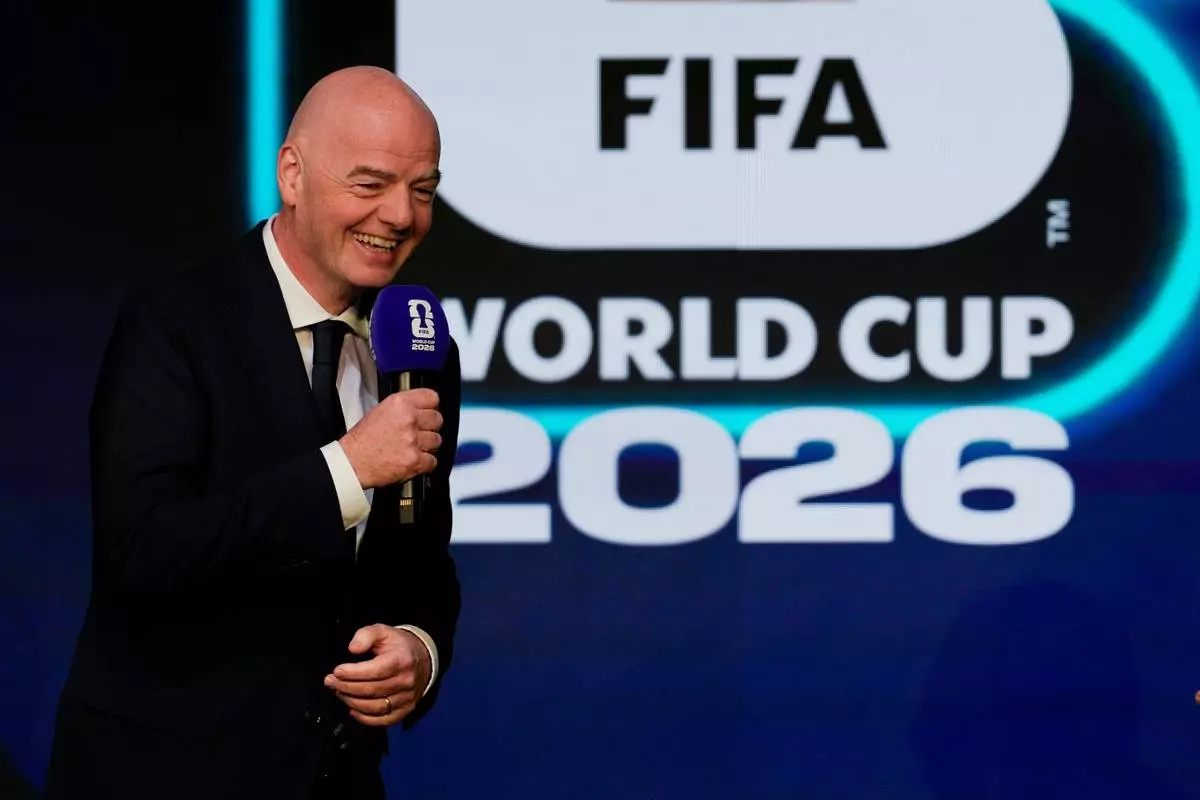
FILE - FIFA President Gianni Infantino speaks during the match schedule reveal for the 2026 soccer World Cup in Washington, Saturday, Dec. 6, 2025. (AP Photo/Chris Carlson, File)
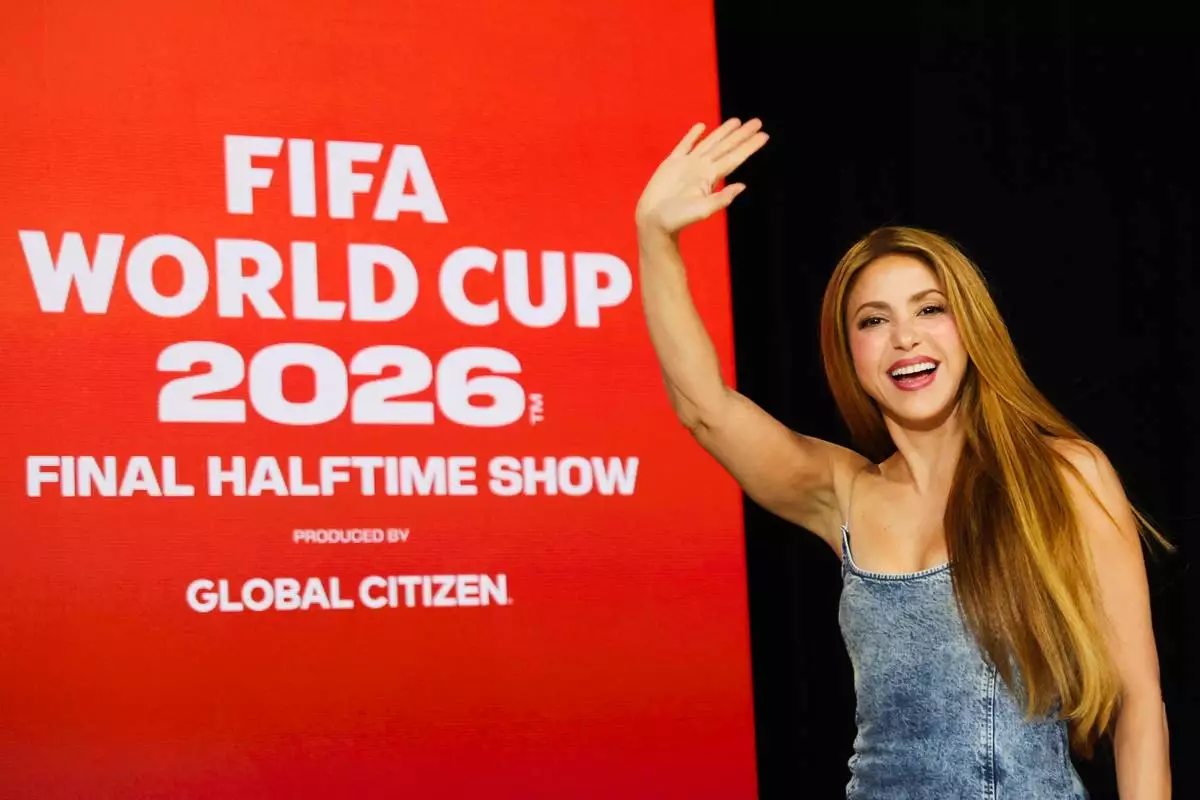
Shakira enters for a panel on the 2026 FIFA World Cup soccer tournament halftime show at the Global Citizen NOW summit, Thursday, May 14, 2026, in New York. (AP Photo/Heather Khalifa)
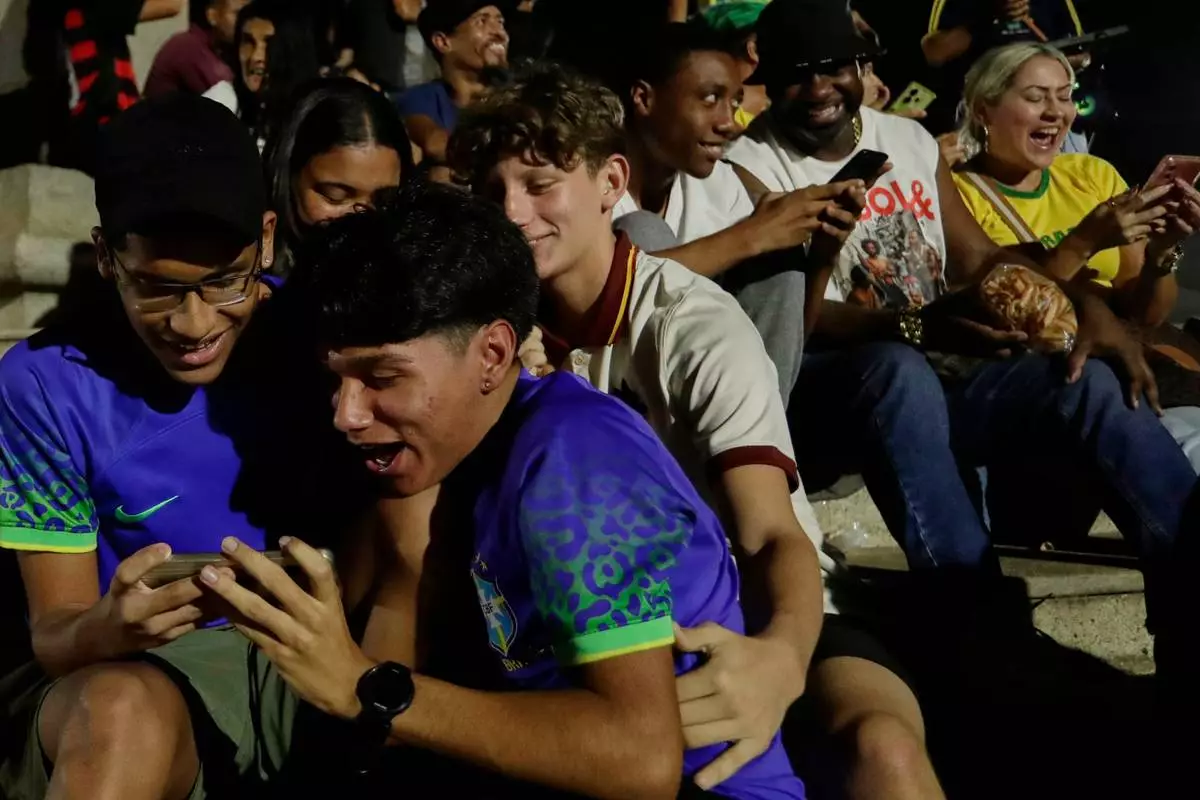
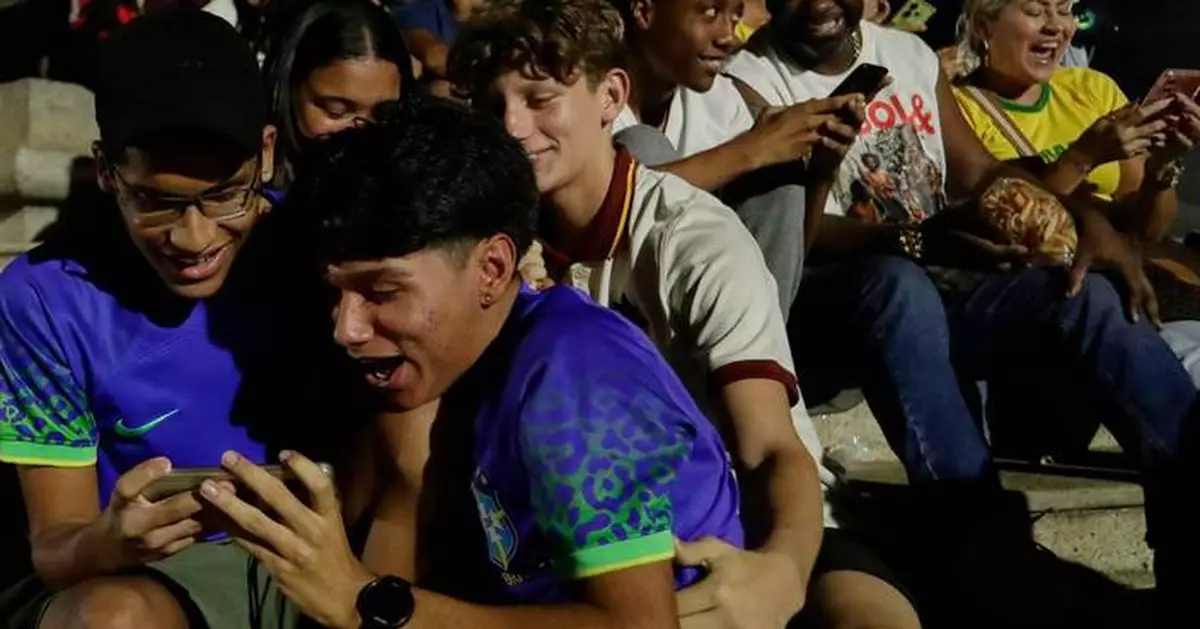
Fans celebrate Neymar's inclusion in Brazil's squad for the 2026 FIFA World Cup in Rio de Janeiro, Monday, May 18, 2026. (AP Photo/Bruna Prado)