WASHINGTON (AP) — In the year since President Donald Trump signed an executive order promising to create a deep-sea mining industry from scratch, businesses have raised millions of dollars from investors, stock prices have soared and federal regulators have raced to fast-track a permitting process.
At least nine companies are in talks with the government for access to seabed minerals, according to an Associated Press review. Sections of the seafloor from American Samoa to Alaska could be auctioned for offshore mining this summer and through the fall.
All the action suggests the U.S. may soon give the green light for companies to commercially mine the seabed — something that’s never been done in international waters.
But a close look at some of the companies involved reveals uncertain track records and histories spattered with legal disputes, while major questions about how the minerals would be processed and refined remain unanswered. Watchers of the nascent industry are skeptical the promised riches will ever materialize.
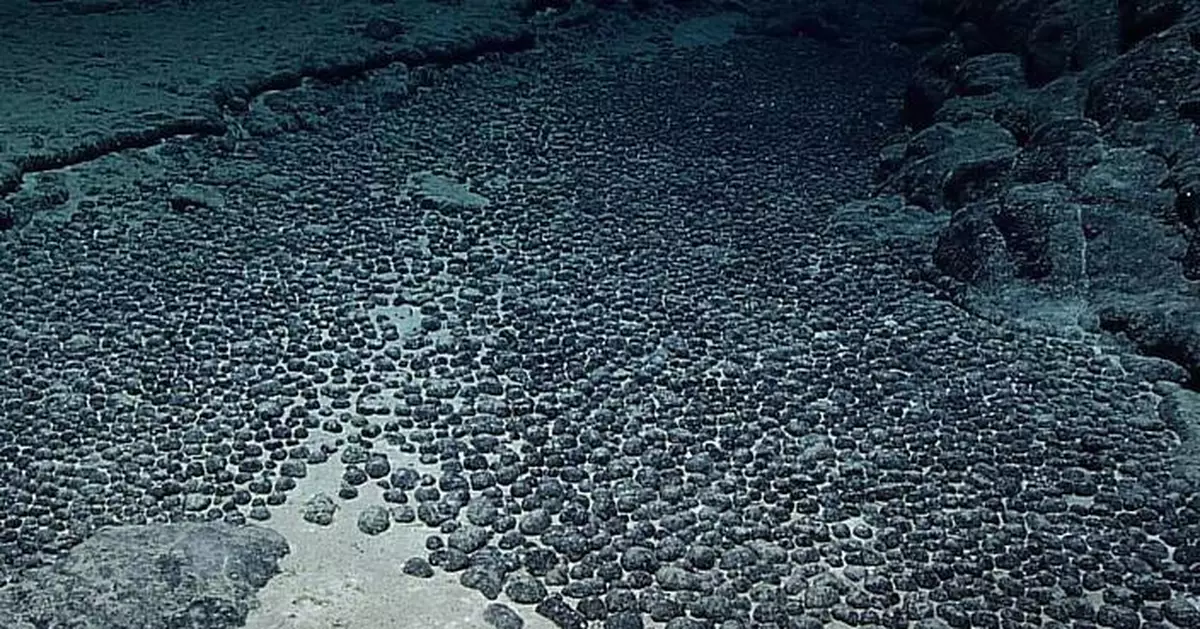
The most widely prized ores on the seafloor are fist-shaped rocks known as polymetallic nodules, formed over millions of years from the remains of sunken shark teeth and shells. They contain high grades of manganese, copper, nickel and cobalt, and some rare earth elements. Trillions of nodules lie on the international seabed between Mexico and Hawaii, scientists say.
Nearer to shore, companies have proposed dredging ocean sands for titanium, zirconium and phosphorites.
Trump’s April 2025 executive order hailed seafloor minerals as vital to America’s future prosperity and its trade independence from China, and directed U.S. agencies to expedite permitting.
Two U.S. agencies will enforce rules: the National Oceanic and Atmospheric Administration and the Bureau of Ocean Energy Management. NOAA has never approved a commercial project for seabed mining; nor has BOEM, beyond a short-lived mining effort in California waters more than 60 years ago.
In June, Interior Secretary Doug Burgum announced a mandate for his staff to “speed up” the development of critical minerals offshore. The agency soon announced it was evaluating seabed mining in the waters of Alaska, Virginia, American Samoa and the Northern Mariana Islands. It plans to hold the first lease sale as early as August, according to a budget proposal.
NOAA has shortened the timeline for companies pursuing commercial permits, and targets processing 16 applications next fiscal year.
So far, companies include a firm that once made its money hunting for sunken treasure, and a startup that sprung from an effort to find Amelia Earhart’s long-lost plane.
And it includes The Metals Company, long seen as the industry's front-runner. If granted a permit, the firm says it can commercially mine the seafloor before the end of next year. It is one of few companies to have tested equipment in deep-water conditions — hauling up 3,000 metric tons of nodules in a 2022 trial.
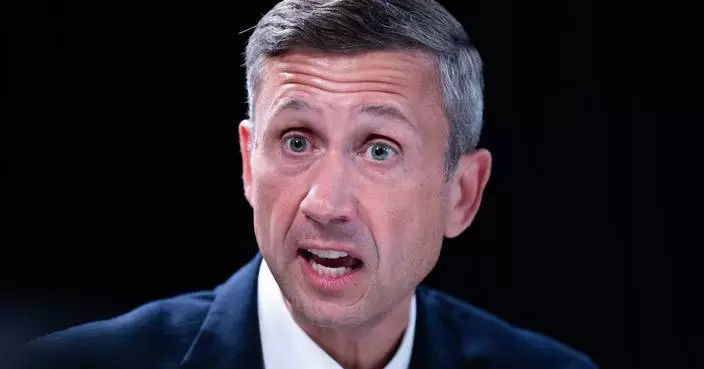
The company has close ties to the Trump administration. CEO Gerard Barron says he was in the White House on the day Trump signed the executive order, and since then, he’s been invited to speak at three congressional hearings.
A spokesperson for The Metals Company said the firm had no unfair advantages, and is well-poised to address the strategic priorities of the U.S. after 15 years of preparation and testing.
Odyssey Marine Exploration formed in the 1990s with a mission to discover sunken treasure and sell the artifacts for profit. The company claims to have found more shipwrecks than any other organization in the world.
Odyssey ran into trouble in 2007, when it discovered an underwater shipwreck littered with silver and gold coins that Odyssey brought to the U.S. The treasure was later claimed by the government of Spain, prompting a yearslong court battle, during which Odyssey pivoted to pursuing seafloor minerals.
In December, BOEM announced that Odyssey had requested the agency begin the regulatory process to consider mining off the coast of Virginia.
The startup Impossible Metals has set its sights on seafloor nodules in U.S. waters near American Samoa and the Northern Mariana Islands, despite growing outcry from local residents and leaders. The company boasts of being the most environmentally friendly deep-sea mining company.
Still other companies are lining up for U.S. permission, including American Metal Resources, SeaX, Deep Sea Minerals Corp., and Deep Sea Rare Minerals, which planned to change its name to Eco Minerals this week.
A number of analysts and investors question the economic merit of deep-sea mining. Ian Lange, a professor of mineral economics at the Colorado School of Mines, said deep-sea mining advocates seem to overlook the more affordable and widely available sources of minerals on land. He questioned whether demand is strong enough: Copper mines in Michigan and Wyoming are fully permitted but inactive; a cobalt mine is idled in Idaho.
In an assessment of the economic viability of The Metals Company’s project, the company forecast that it would break even in its eighth year of commercial seabed mining – the same year that it forecast the mineral reserves to be “all mined.”
“No one goes into a project saying, ‘In the best-case scenario, we’ll break even,’” said mining consultant Steven Emerman.
The Metals Company said it had completed mining plans and seafloor surveys for the first eight years of the project, and that the costs of surveying, sampling and analyzing additional seafloor minerals were best incurred once the project was underway. It said at at least three land-based mines were needed to produce the four minerals that exist in polymetallic nodules, the company said, and this variety makes the project resilient to economic headwinds and changing demand for metals.
Despite Trump’s focus on trade independence, the U.S. currently has no major processing facilities for nickel, manganese or cobalt.
In the near term, companies will have to rely on existing supply chains abroad. The Metals Company has thus far explored processing in Japan, South Korea and Indonesia.
But reliance on foreign partners could raise a host of legal issues for deep-sea mining companies. Most other countries involved in deep-sea mining are bound by their commitments to the International Seabed Authority, and could be sued for helping the U.S. tap the global seabed.
—-
The Associated Press receives financial support from multiple private foundations. AP is solely responsible for all content. Find AP’s standards for working with philanthropies, a list of supporters and funded coverage areas at AP.org.
—-
Contact AP’s global investigative team at Investigative@ap.org or https://www.ap.org/tips/
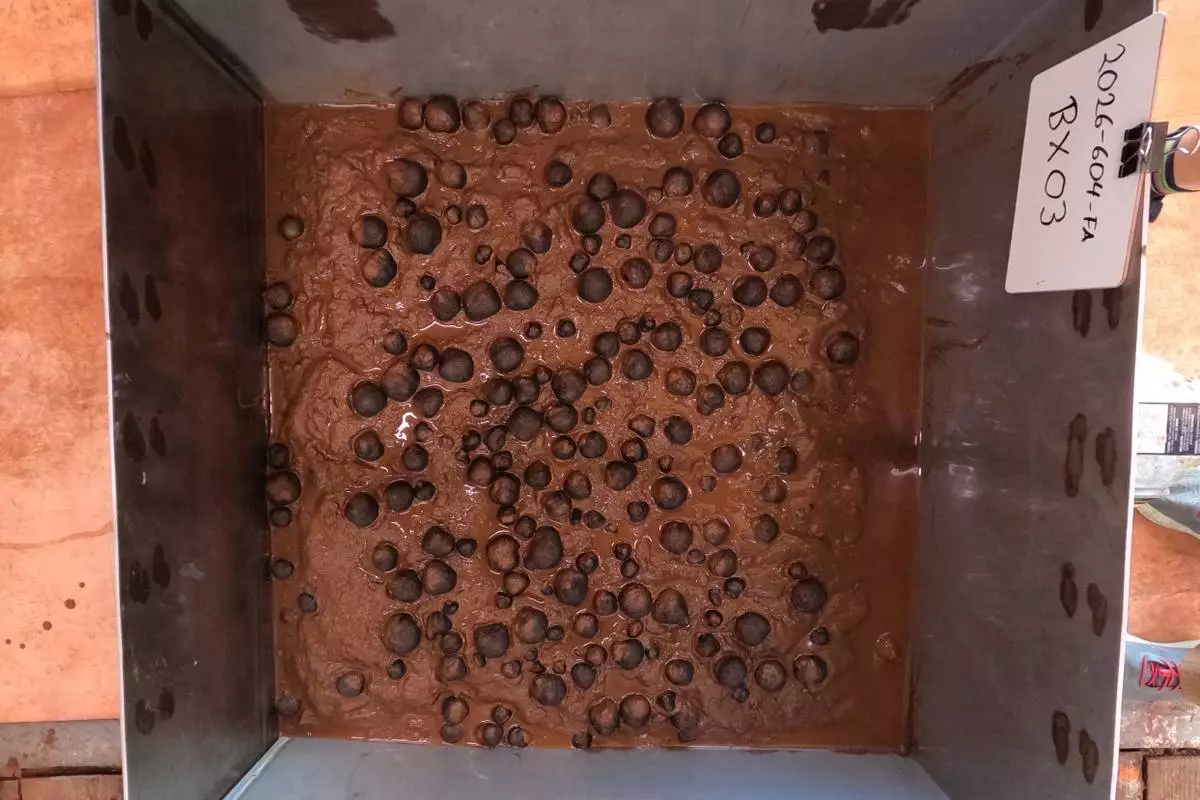
This photo provided by the U.S. Geological Survey shows polymetallic nodules in a sample from the seafloor that was collected on April 14, 2026, in U.S. waters off American Samoa. (USGS via AP)
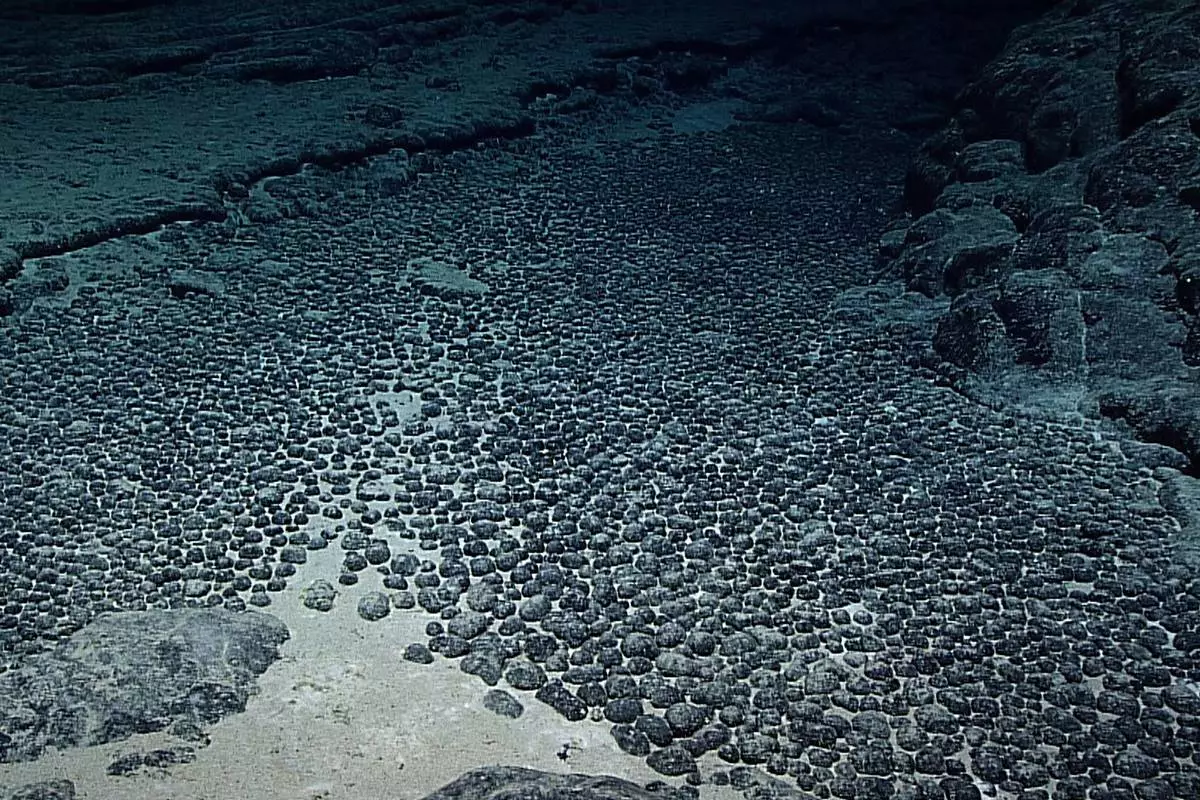
This photo provided by NOAA shows a field of manganese nodules in deep waters off of Hawaii during the Hohonu Moana (deep water) expedition in 2015. (NOAA Office of Ocean Exploration and Research via AP)