WASHINGTON (AP) — Fewer Americans filed for jobless aid last week as layoffs remain low despite a number of uncertainties that continue to cloud the economy.
U.S. applications for unemployment benefits for the week ending May 16 fell by 3,000 to 209,000, the Labor Department reported Thursday. That’s fewer than the 213,000 new applications analysts surveyed by the data firm FactSet had forecast.
Weekly filings for unemployment benefits are considered a proxy for U.S. layoffs and are close to a real-time indicator of the health of the job market.
Despite historically low layoffs, the labor market appears to be stuck in what economists call a “low-hire, low-fire” state. That’s kept the unemployment rate low at 4.3%, but left many of those out of work struggling to find new employment.
Though U.S. employers delivered a surprising 115,000 new jobs in April, the Iran war has injected a large degree of uncertainty about the broader U.S. economy and labor market.
The Strait of Hormuz, where one-fifth of the world’s oil travels through, remains closed. Since the beginning of the war in late February, oil prices have spiked more than 50% and the average price for a gallon of gas in the U.S. has climbed to $4.56 from less than $3. Besides hitting consumers’ pocketbooks, those higher costs can discourage businesses from hiring.
Data from the U.S. government last week revealed that inflation at the consumer level rose 3.8% from April 2025, the biggest jump in three years. Food prices are also up, but may not yet fully reflect rising energy costs due to the Iran war, analysts say.
Another report last week showed that wholesale prices shot up 6% from a year ago, the highest point in more than three years. The Labor Department’s producer price index — which tracks inflation before it hits consumers — shot up 1.4% from March to April, the biggest monthly gain in more than four years.
This comes at a time when U.S. inflation is already above the Federal Reserve’s 2% goal. At its most recent meeting, the Fed opted to leave its benchmark rate alone, citing economic uncertainty caused by instability in the Middle East and still-elevated inflation.
Lower interest rates can boost the economy and hiring, but also tend to stoke inflation, leading a number of Federal Reserve policymakers to say they are willing to consider an interest rate hike this year.
On top of that, the recent artificial intelligence boom and the investment required to develop it could alter or even replace some jobs.
A number of high-profile companies have cut jobs recently, including Verizon, UPS, Amazon, Disney and Walmart.
Weekly jobless aid applications have stabilized in a range mostly between 200,000 and 250,000 since the U.S. economy emerged from the pandemic recession. However, hiring began slowing about two years ago and tapered further in 2025 due to President Donald Trump’s erratic tariff rollouts, his purge of the federal workforce and the lingering effects of high interest rates meant to control inflation.
Employers added fewer than 200,000 jobs last year, compared with about 1.5 million in 2024, according to the data firm FactSet.
The Labor Department’s report Thursday showed that the four-week moving average of jobless claims, which softens some of the weekly volatility, inched down by 1,500 to 202,500.
The total number of Americans filing for unemployment benefits for the previous week ending May 9 grew by 6,000 to 1.78 million.
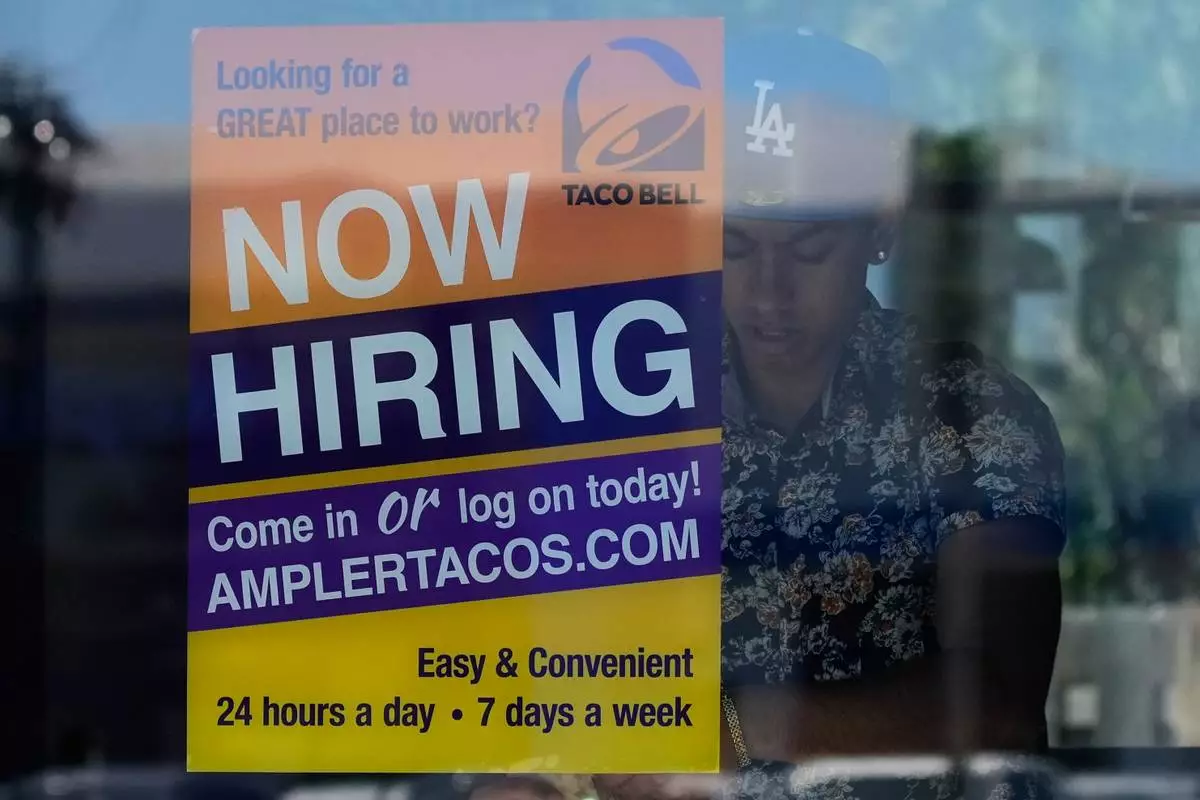
A hiring sign is displayed at a restaurant in Niles, Ill., Thursday, May 14, 2026. (AP Photo/Nam Y. Huh)
NEW YORK (AP) — The U.S. stock market is slipping Thursday after oil prices resumed their climb.
The S&P 500 fell 0.3% and is on track for a fourth drop in five days after setting its all-time high. The Dow Jones Industrial Average was down 110 points, or 0.2%, as of 11:45 a.m. Eastern time, and the Nasdaq composite was 0.4% lower.
A halt in the torrid run for stocks benefiting from the artificial-intelligence boom has slowed the U.S. market recently. Not even another better-than-expected profit report from Nvidia was enough to kick it back into gear.
The chip company reported stronger profit and revenue for the latest quarter than analysts expected, while also forecasting revenue for the current quarter that cleared analysts’ estimates. “The buildout of AI factories — the largest infrastructure expansion in human history — is accelerating at extraordinary speed,” CEO Jensen Huang said.
But such performances and such talk have become routine, and Nvidia's stock swiveled between losses and gains before falling 1.7%.
Some analysts said the weakness may have simply been because investors were locking in profits after Nvidia’s stock had soared nearly 70% over the prior year, more than double the S&P 500’s 27% jump. The broad AI industry is also getting criticism for becoming too expensive, as well as too circular as Nvidia has bought ownership stakes in companies that use its own chips that drive Nvidia’s revenue.
Pressure built on Wall Street, meanwhile, as the price for a barrel of Brent crude oil climbed 2.6% to $107.76 and trimmed its loss for the week. Oil prices have been swinging up and down with uncertainty about how long the war with Iran will keep the Strait of Hormuz shut, which is preventing oil tankers from exiting the Persian Gulf to deliver crude.
The higher oil prices pushed Treasury yields upward in the bond market, resuming rises following a slowdown the day before.
Climbing yields have cranked up the pressure on financial markets worldwide. They're slowing economies and weighing on prices for stocks and all kinds of other investments. Besides driving up rates for mortgages, high yields could also curtail companies’ borrowing to build the AI data centers that have been supporting the U.S. economy’s growth recently.
The yield on the 10-year Treasury rose to 4.61% from 4.57% late Wednesday.
It had gotten near 4.63% in the morning, after a report gave the latest signal that the U.S. job market remains in better shape than economists expected. The number of U.S. workers applying for unemployment benefits last week unexpectedly declined in an indication of fewer layoffs.
But yields eased a bit following a mixed preliminary report showing weaker-than-expected growth for business activity among U.S. services businesses and improved growth for U.S. manufacturers. Companies are feeling the effects of accelerating inflation and are seeing subdued growth in their order books, the preliminary data from an S&P Global survey said.
“The damaging economic impact from the war in the Middle East is becoming increasingly evident in the business surveys,” according to Chris Williamson, chief business economist at S&P Global Market Intelligence.
Inflation is worsening even beyond the high oil prices caused by the Iran war, while U.S. households are showing widespread discouragement about the economy.
Elsewhere on Wall Street, Walmart fell 7.8% following its profit report. The retailer delivered another quarter of impressive revenue but offered up weaker forecasts for upcoming profit than analysts expected.
On the winning side of Wall Street was Ralph Lauren, which jumped 11.3% after reporting stronger profit and revenue for the latest quarter than analysts expected.
In stock markets abroad, indexes were mixed in Europe following bigger moves in Asia.
South Korea’s Kospi Kospi soared 8.4% thanks to strength for technology stocks. Samsung Electronics jumped 8.5% after its labor union and management reached an agreement late Wednesday that averted a strike. SK Hynix, a chip company partnering with Nvidia, surged 11.2%.
Tokyo’s Nikkei 225 jumped 3.1%, while indexes fell 1% in Hong Kong and 2% in Shanghai.
AP Business Writers Matt Ott and Elaine Kurtenbach contributed.
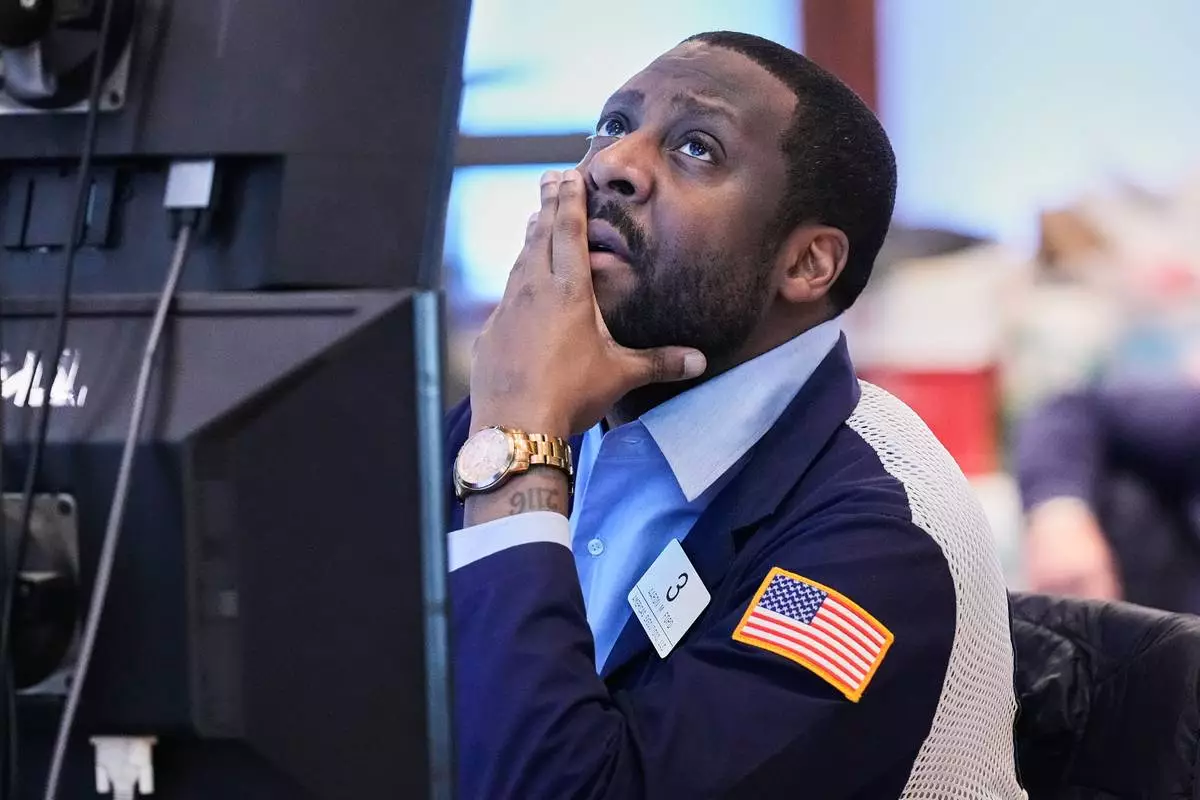
Trader Aaron Ford works on the floor of the New York Stock Exchange, Thursday, May 7, 2026. (AP Photo/Richard Drew)
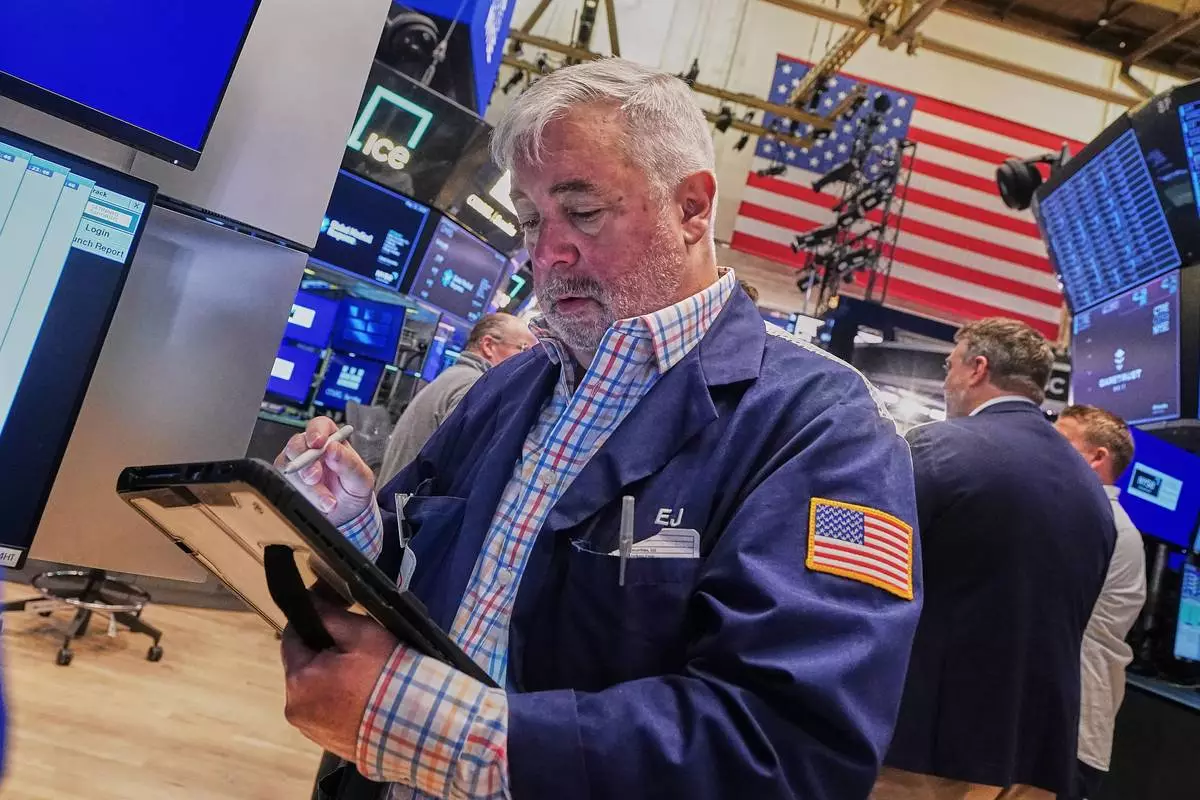
Trader Edward McCarthy works on the floor of the New York Stock Exchange, Wednesday, May 13, 2026. (AP Photo/Richard Drew)

A Global Medical Response helicopter sits in front of the New York Stock Exchange before the planned IPO of GMR Solutions, Inc., Wednesday, May 13, 2026. (AP Photo/Richard Drew)
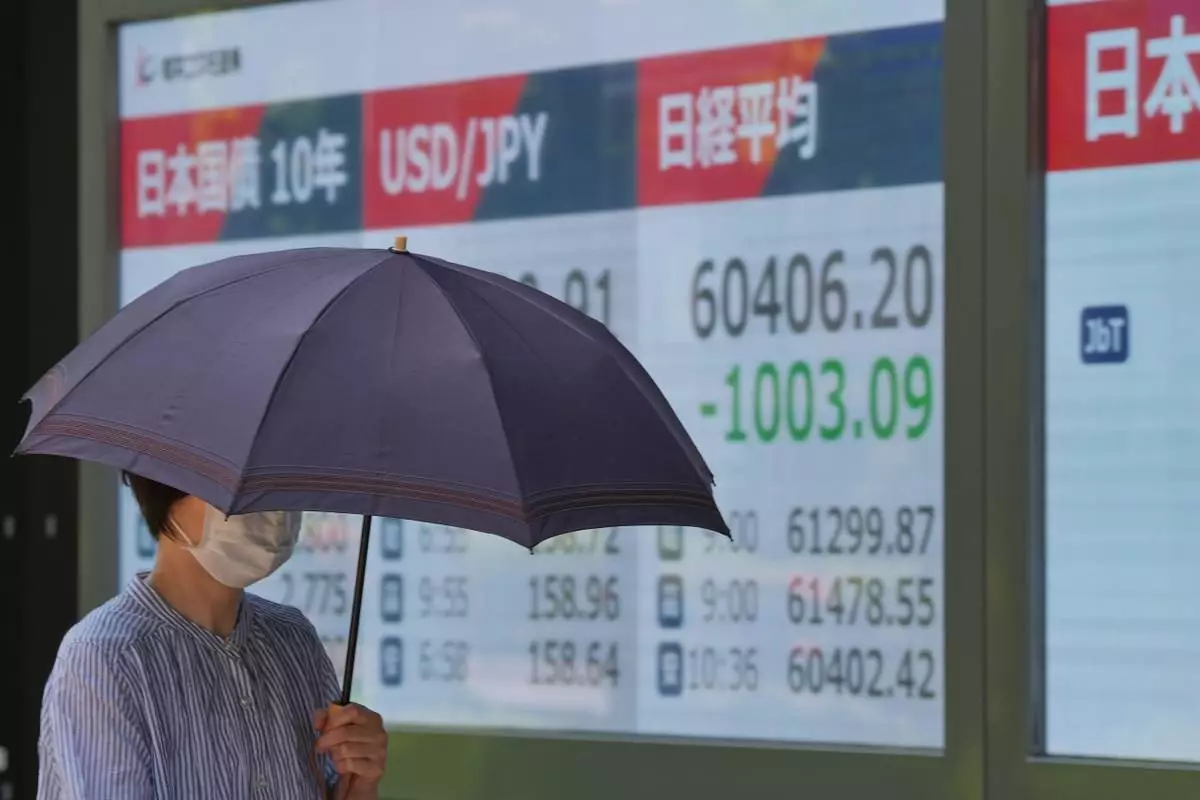
A person walks in front of an electronic stock board showing Japan's Nikkei index at a securities firm Monday, May 18, 2026, in Tokyo. (AP Photo/Eugene Hoshiko)
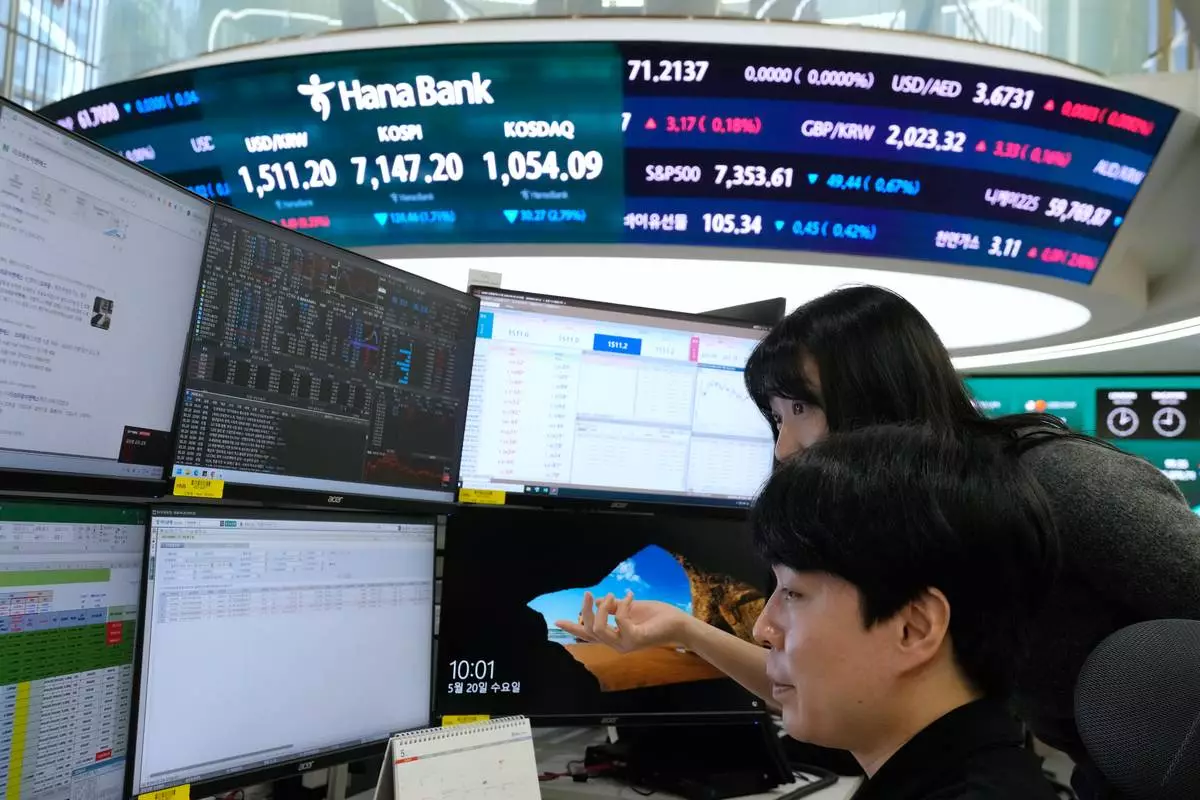
Currency traders watch monitors at the foreign exchange dealing room of the Hana Bank headquarters in Seoul, South Korea, Wednesday, May 20, 2026. (AP Photo/Ahn Young-joon)
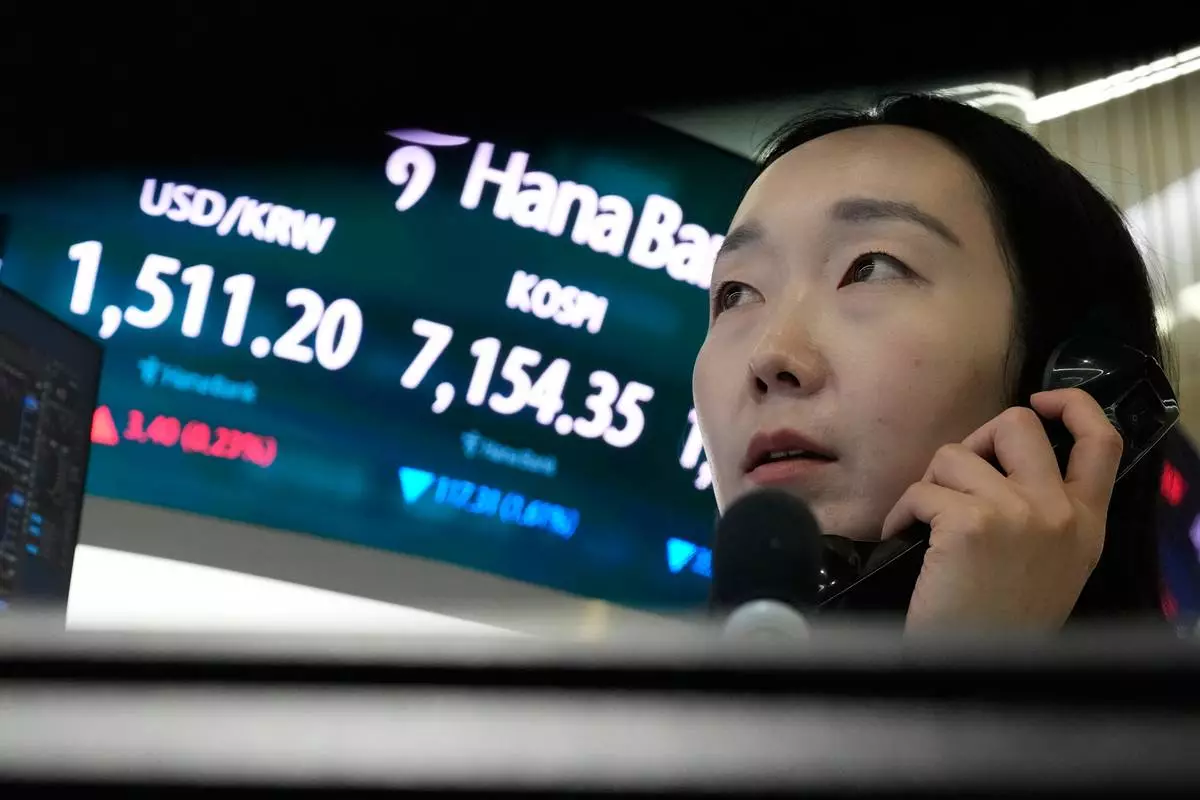
A currency trader talks on the phone near a screen showing the Korea Composite Stock Price Index (KOSPI) and the foreign exchange rate between U.S. dollar and South Korean won, left, at the foreign exchange dealing room of the Hana Bank headquarters in Seoul, South Korea, Wednesday, May 20, 2026. (AP Photo/Ahn Young-joon)