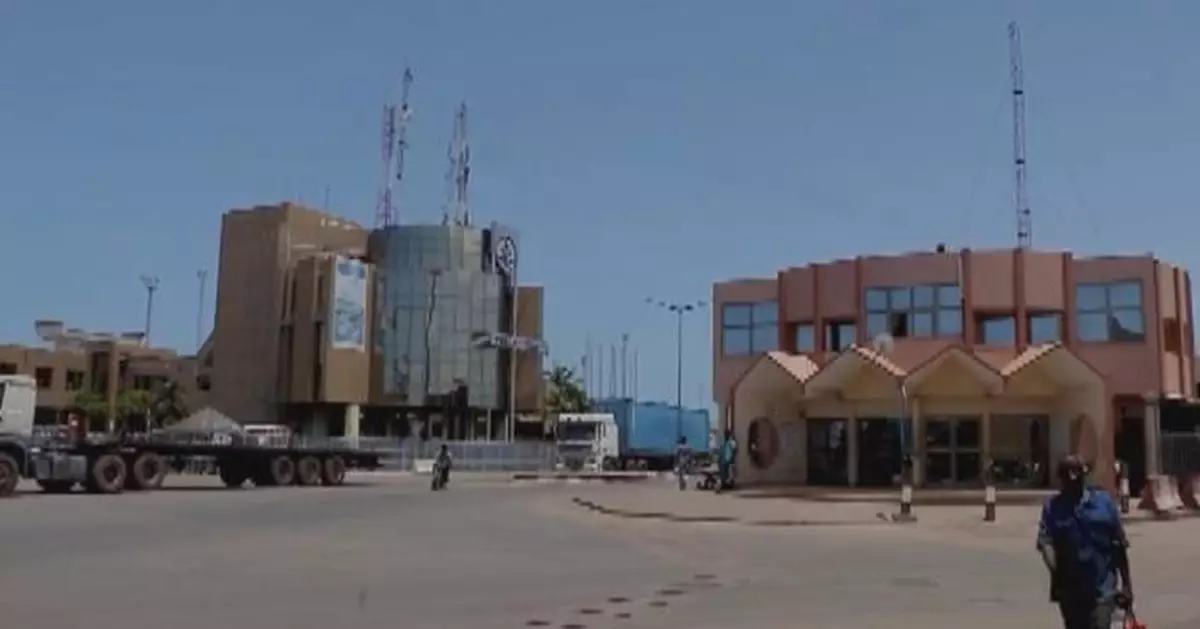
The Port of Lome in Togo has emerged as a key player as global shipping disruptions continue due to rising tensions in the Middle East, reinforcing its position as a strategic hub in international supply chains.
Turmoil in the Middle East has created critical energy choke points, disrupted vital supply lines, and forced commercial shipping to take longer, more expensive detours often around the southern tip of Africa.
These rerouted vessels have brought extra business to ports along Africa's Atlantic coastline, with Lome standing out as a vital hub in West Africa.
On the shores of the Gulf of Guinea, the Autonomous Port of Lome, the Togolese capital, operates around the clock, handling more than 35 million tonnes of cargo annually and processing over two million twenty-foot-equivalent units (TEUs).
"We have representatives from Burkina Faso, Niger, and Mali on our board of directors, serving as administrators in the management of the Port of Lome. This is not something new, born out of current West African dynamics. These relationships go back centuries," said Kodjo Adegnon, director general of the port.
The port has become a strategic gateway for landlocked Sahelian countries, with logistics corridors linking Burkina Faso, Niger, and Mali to the Togolese coastline. Cooperation is now institutionalized, with representatives from these countries directly involved in the port's governance.
"In Togo's logistics system, the Adetikope Industrial Platform plays a very important role. Its primary objective was to ease congestion at the Port of Lome. Today, all transit cargo destined for landlocked countries has been entrusted to the Adetikope Industrial Platform," said Idiola Sandah, general coordinator of the platform.
To sharpen competitiveness, Lome has digitalized most of its operations, cutting delays and costs in the race among West African ports to capture Sahelian trade flows.
"In terms of delays and costs, there are several advantages put in place by the authorities, particularly digitalization. Today, almost all port operations are digitalized," said Francisco Kpodar, president of Association Convergence.
"When goods leave the Port of Lomé for Ouagadougou, Mali, or Niger, security and escort systems are put in place to ensure the safe transportation of the cargo," said Kodjo Dansou, a Sahel corridor transport operator.
As global routes shift, Lome's mix of safety and efficiency has made it a reliable choice for shipping companies looking for alternatives.
"I believe the current situation around the Strait of Hormuz has actually had a positive impact on the Port of Lomé. As the strait has become an area of insecurity and difficult navigation, several shipping companies have chosen to return to more traditional routes," said Edem Kokou Tengue, Togolese minister delegate for maritime economy.
Inaugurated in 1968, the Autonomous Port of Lome has grown into a key economic pillar for Togo and a lifeline for Sahelian countries. More than just infrastructure, it now stands as a strategic anchor for regional supply chains in times of crisis.
Port of Lome strengthens role in global supply chains amid Middle East turmoil