|
At ASCO 2026, Lunit will present precision patient stratification and biomarker-driven oncology research through AI-powered HER2/IHC biomarker quantification and spatial tumor microenvironment analysis.
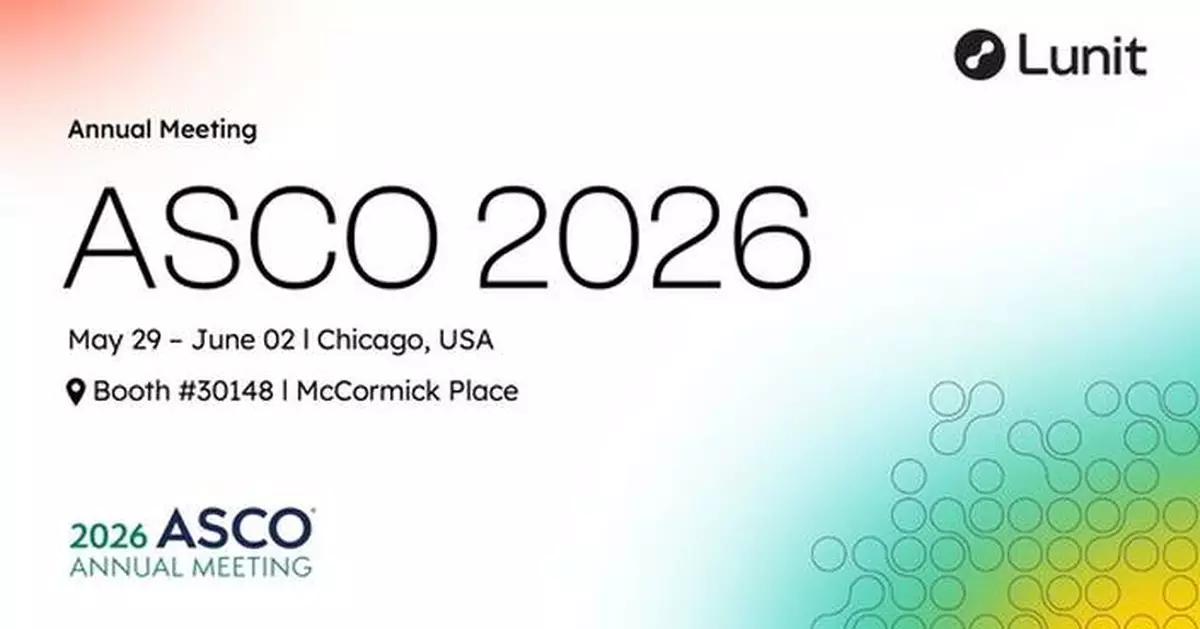
SEOUL, South Korea, May 22, 2026 /PRNewswire/ -- Lunit, a leading provider of AI for cancer diagnostics and precision oncology, today announces that five studies featuring its AI biomarker platforms are being presented at the 2026 American Society of Clinical Oncology (ASCO) Annual Meeting, taking place May 29–June 2 in Chicago, IL.
This year's presentations reflect Lunit's expanding biomarker research beyond conventional immune profiling toward integrated AI-powered HER2/IHC biomarker quantification and spatial tumor microenvironment (TME) analysis. Using AI to characterize HER2 expression, immune phenotypes, tertiary lymphoid structures (TLS), tumor-infiltrating lymphocytes (TILs), and endothelial cells, the studies highlight the potential of integrated biomarker analysis to improve precision patient stratification across multiple cancer types.
The five presentations include studies across biliary tract cancer (BTC), non-small cell lung cancer (NSCLC), adenoid cystic carcinoma (ACC), microsatellite-stable (MSS), metastatic colorectal cancer and advanced gastric cancer (AGC).
One of the featured studies, led by researchers at Yonsei University College of Medicine, evaluates a first-line quadruplet regimen consisting of trastuzumab, nivolumab, gemcitabine, and cisplatin in HER2-positive advanced BTC. The study is selected as a Rapid Oral Presentation at ASCO 2026.
Using AI-powered whole-slide image (WSI) analysis, researchers analyze HER2 expression and immune phenotypes within tumor tissue. Among 40 patients enrolled in the multi-center phase Ib/II trial, the combination of therapy demonstrates an objective response rate (ORR) of 55%, disease control rate (DCR) of 95%, and median progression-free survival (PFS) of 10.6 months. Patients with HER2 IHC 3+ tumor cell proportions ≥10%, as identified by AI analysis, achieve substantially higher response rates compared to those below the threshold (80% vs. 36.4%). The study demonstrates how integrated AI-powered HER2 and spatial tumor microenvironment analysis may help identify patients more likely to benefit from HER2-targeted combination therapies.
Another study characterizes the tumor microenvironment landscape of HER2-overexpressing NSCLC using AI-powered spatial analysis. Across more than 2,000 NSCLC whole-slide images, HER2-overexpressing tumors demonstrate significantly reduced tumor-infiltrating lymphocyte density and lower proportions of inflamed immune phenotype compared to non-overexpressing tumors. The immune-cold phenotype becomes more pronounced in tumors with higher proportions of HER2 3+ cells. The study provides additional insight into the biological relationship between HER2 overexpression and tumor immune status, while highlighting the broader potential of combining AI-powered HER2 analysis with spatial tumor microenvironment characterization in biomarker research.
Another featured study, conducted with Seoul National University Hospital, explores AI-powered spatial tumor microenvironment analysis in adenoid cystic carcinoma (ACC), a rare cancer with limited treatment options. Researchers identify a subgroup of ACC patients with high endothelial cell and tumor-infiltrating lymphocyte (TIL) densities who demonstrate significantly prolonged progression-free survival following axitinib treatment (19.6 months vs. 11.1 months). The findings suggest that AI-based spatial profiling may help distinguish responder populations that are difficult to stratify using conventional biomarkers alone.
Researchers at Asan Medical Center investigate AI-powered tumor microenvironment analysis in MSS metastatic colorectal cancer, which is generally considered resistant to immune checkpoint inhibitors (ICIs). Researchers find that patients with larger tertiary lymphoid structure (TLS) regions identified by AI demonstrate improved progression-free survival and overall survival following immunotherapy. The findings highlight the potential of AI-powered spatial analysis to identify MSS colorectal cancer patients more likely to benefit from immunotherapy.
"These studies demonstrate how AI-powered biomarker analysis is evolving beyond conventional immune profiling toward integrated HER2/IHC quantification and spatial tumor microenvironment analysis," said Brandon Suh, CEO of Lunit. "We believe integrated biomarker analysis will play an increasingly important role in precision oncology research, patient stratification, and treatment-response assessment."
Lunit will be exhibiting at ASCO 2026, where attendees can learn more about the company's AI biomarker platforms and research collaborations.
###
Lunit's featured AI biomarker studies at ASCO 2026 include:
[Rapid Oral #4016] A phase Ib/II trial of First-line Trastuzumab, Nivolumab, Gemcitabine and Cisplatin in HER2-positive biliary tract cancer (HERBOT): a multi-institutional study from the Korean Cancer Study Group
[Poster #8545/335] AI-powered characterization of the tumor microenvironment landscape in HER2-overexpressing non-small cell lung cancer
[Poster #6122/579] Artificial Intelligence-Powered Spatial Analysis of Endothelial Cells and Tumor-Infiltrating Lymphocytes Predicts Response to Axitinib in Adenoid Cystic Carcinoma
[Poster #2532/322] AI-powered spatial tumor microenvironment analysis in metastatic microsatellite-stable colorectal cancer receiving immunotherapy
[Poster #2612/402] Potential effects of TGF-β inhibition on immune resistance by targeting immunosuppressive microenvironment in advanced gastric cancer (AGC): Multi-omics post-hoc analysis of the K-Umbrella-06 Trial
About Lunit
Founded in 2013, Lunit (KRX: 328130) is a global leader on a mission to conquer cancer through AI. Our clinically validated solutions span medical imaging, breast health, and biomarker analysis—empowering earlier detection, smarter treatment decisions, and more precise outcomes across the cancer care continuum.
Lunit offers a comprehensive suite spanning risk prediction and early detection to precision oncology. Our FDA-cleared Lunit INSIGHT Breast Suite and breast health solutions support cancer screening in thousands of medical institutions worldwide, while the Lunit SCOPE platform is used in research partnership with global pharma and laboratory leaders for biomarker research, and companion diagnostic development.
Trusted by over 10,000 sites in more than 65 countries, Lunit combines deep medical expertise with continuously evolving datasets to deliver measurable impact—for patients, clinicians, and researchers alike. Headquartered in Seoul with global offices, Lunit is driving the worldwide fight against cancer. Learn more at lunit.io.
At ASCO 2026, Lunit will present precision patient stratification and biomarker-driven oncology research through AI-powered HER2/IHC biomarker quantification and spatial tumor microenvironment analysis.
SEOUL, South Korea, May 22, 2026 /PRNewswire/ -- Lunit, a leading provider of AI for cancer diagnostics and precision oncology, today announces that five studies featuring its AI biomarker platforms are being presented at the 2026 American Society of Clinical Oncology (ASCO) Annual Meeting, taking place May 29–June 2 in Chicago, IL.
This year's presentations reflect Lunit's expanding biomarker research beyond conventional immune profiling toward integrated AI-powered HER2/IHC biomarker quantification and spatial tumor microenvironment (TME) analysis. Using AI to characterize HER2 expression, immune phenotypes, tertiary lymphoid structures (TLS), tumor-infiltrating lymphocytes (TILs), and endothelial cells, the studies highlight the potential of integrated biomarker analysis to improve precision patient stratification across multiple cancer types.
The five presentations include studies across biliary tract cancer (BTC), non-small cell lung cancer (NSCLC), adenoid cystic carcinoma (ACC), microsatellite-stable (MSS), metastatic colorectal cancer and advanced gastric cancer (AGC).
One of the featured studies, led by researchers at Yonsei University College of Medicine, evaluates a first-line quadruplet regimen consisting of trastuzumab, nivolumab, gemcitabine, and cisplatin in HER2-positive advanced BTC. The study is selected as a Rapid Oral Presentation at ASCO 2026.
Using AI-powered whole-slide image (WSI) analysis, researchers analyze HER2 expression and immune phenotypes within tumor tissue. Among 40 patients enrolled in the multi-center phase Ib/II trial, the combination of therapy demonstrates an objective response rate (ORR) of 55%, disease control rate (DCR) of 95%, and median progression-free survival (PFS) of 10.6 months. Patients with HER2 IHC 3+ tumor cell proportions ≥10%, as identified by AI analysis, achieve substantially higher response rates compared to those below the threshold (80% vs. 36.4%). The study demonstrates how integrated AI-powered HER2 and spatial tumor microenvironment analysis may help identify patients more likely to benefit from HER2-targeted combination therapies.
Another study characterizes the tumor microenvironment landscape of HER2-overexpressing NSCLC using AI-powered spatial analysis. Across more than 2,000 NSCLC whole-slide images, HER2-overexpressing tumors demonstrate significantly reduced tumor-infiltrating lymphocyte density and lower proportions of inflamed immune phenotype compared to non-overexpressing tumors. The immune-cold phenotype becomes more pronounced in tumors with higher proportions of HER2 3+ cells. The study provides additional insight into the biological relationship between HER2 overexpression and tumor immune status, while highlighting the broader potential of combining AI-powered HER2 analysis with spatial tumor microenvironment characterization in biomarker research.
Another featured study, conducted with Seoul National University Hospital, explores AI-powered spatial tumor microenvironment analysis in adenoid cystic carcinoma (ACC), a rare cancer with limited treatment options. Researchers identify a subgroup of ACC patients with high endothelial cell and tumor-infiltrating lymphocyte (TIL) densities who demonstrate significantly prolonged progression-free survival following axitinib treatment (19.6 months vs. 11.1 months). The findings suggest that AI-based spatial profiling may help distinguish responder populations that are difficult to stratify using conventional biomarkers alone.
Researchers at Asan Medical Center investigate AI-powered tumor microenvironment analysis in MSS metastatic colorectal cancer, which is generally considered resistant to immune checkpoint inhibitors (ICIs). Researchers find that patients with larger tertiary lymphoid structure (TLS) regions identified by AI demonstrate improved progression-free survival and overall survival following immunotherapy. The findings highlight the potential of AI-powered spatial analysis to identify MSS colorectal cancer patients more likely to benefit from immunotherapy.
"These studies demonstrate how AI-powered biomarker analysis is evolving beyond conventional immune profiling toward integrated HER2/IHC quantification and spatial tumor microenvironment analysis," said Brandon Suh, CEO of Lunit. "We believe integrated biomarker analysis will play an increasingly important role in precision oncology research, patient stratification, and treatment-response assessment."
Lunit will be exhibiting at ASCO 2026, where attendees can learn more about the company's AI biomarker platforms and research collaborations.
###
Lunit's featured AI biomarker studies at ASCO 2026 include:
[Rapid Oral #4016] A phase Ib/II trial of First-line Trastuzumab, Nivolumab, Gemcitabine and Cisplatin in HER2-positive biliary tract cancer (HERBOT): a multi-institutional study from the Korean Cancer Study Group
[Poster #8545/335] AI-powered characterization of the tumor microenvironment landscape in HER2-overexpressing non-small cell lung cancer
[Poster #6122/579] Artificial Intelligence-Powered Spatial Analysis of Endothelial Cells and Tumor-Infiltrating Lymphocytes Predicts Response to Axitinib in Adenoid Cystic Carcinoma
[Poster #2532/322] AI-powered spatial tumor microenvironment analysis in metastatic microsatellite-stable colorectal cancer receiving immunotherapy
[Poster #2612/402] Potential effects of TGF-β inhibition on immune resistance by targeting immunosuppressive microenvironment in advanced gastric cancer (AGC): Multi-omics post-hoc analysis of the K-Umbrella-06 Trial
About Lunit
Founded in 2013, Lunit (KRX: 328130) is a global leader on a mission to conquer cancer through AI. Our clinically validated solutions span medical imaging, breast health, and biomarker analysis—empowering earlier detection, smarter treatment decisions, and more precise outcomes across the cancer care continuum.
Lunit offers a comprehensive suite spanning risk prediction and early detection to precision oncology. Our FDA-cleared Lunit INSIGHT Breast Suite and breast health solutions support cancer screening in thousands of medical institutions worldwide, while the Lunit SCOPE platform is used in research partnership with global pharma and laboratory leaders for biomarker research, and companion diagnostic development.
Trusted by over 10,000 sites in more than 65 countries, Lunit combines deep medical expertise with continuously evolving datasets to deliver measurable impact—for patients, clinicians, and researchers alike. Headquartered in Seoul with global offices, Lunit is driving the worldwide fight against cancer. Learn more at lunit.io.
** This press release is distributed by PR Newswire through automated distribution system, for which the client assumes full responsibility. **
Lunit Highlights AI-Powered IHC and Tumor Microenvironment Research at ASCO 2026
|
Appoints Wilton Kee as Chief Executive Officer, Succeeding Patrick Graham
HONG KONG, May 22, 2026 /PRNewswire/ -- Manulife Hong Kong and Macau today announced strategic changes to its senior leadership team with Wilton Kee appointed to succeed Patrick Graham as Chief Executive Officer, Manulife Hong Kong and Macau, subject to regulatory approval. His appointment reflects Manulife's strong commitment to talent development, continuity of strategy, and long-term growth in Hong Kong and Macau, and forms part of the Company's succession planning to deliver on its refreshed enterprise strategy.
"Wilton's appointment underscores our continued focus on disciplined execution, a diversified business model, and our long-term commitment to customers in one of our largest markets in Asia," said Steve Finch, President and CEO of Manulife Asia. "He brings deep and diversified expertise and strategic vision that will help to shape our continued success. Most recently in his dual role as Deputy CEO and CFO, Wilton has reinforced our market position, driven enterprise integration, strengthened management oversight, and advanced alignment on strategic and operational priorities. This appointment represents our confidence that he will continue to execute against our long-term growth priorities as CEO."
Mr. Kee joined Manulife in 2013 and has held a number of senior leadership roles across pricing, product, health and finance in Hong Kong and Macau. He previously served as Chief Product Officer and later assumed the additional role of Head of Health. In 2022, he was appointed Chief Financial Officer, and in March 2026, took on additional responsibilities as Deputy CEO, contributing significantly to the company's strategic development and market leadership in both markets.
Wilton will succeed Patrick effective as of July 1, 2026.
About Manulife Hong Kong and Macau
Manulife Hong Kong has been a trusted name for more than 125 years, while we have served the Macau market for nearly three decades. Since our operations began in Asia in 1897, we have grown into one of the top-tier providers of financial services, offering a diverse range of protection and wealth products and services to over 2.6 million customers in Hong Kong and Macau. We are committed to helping make decisions easier and lives better for our customers.
Manulife Hong Kong and Macau, through Manulife International Holdings Limited, owns Manulife (International) Limited, Manulife Investment Management (Hong Kong) Limited, and Manulife Provident Funds Trust Company Limited. These entities are all subsidiaries of Manulife Financial Corporation.
About Manulife
Manulife Financial Corporation is a leading international financial services provider, headquartered in Toronto, Canada. Anchored in our ambition to be the number one choice for customers, we operate as Manulife across Canada and Asia, and primarily as John Hancock in the United States, providing financial advice, insurance and health solutions for individuals, groups and businesses. Through Manulife Wealth & Asset Management, we offer global investment solutions, financial advice, and retirement plan services to individuals, institutions, and retirement plan members worldwide. At the end of 2025, we had more than 37,000 employees, over 106,000 agents, and thousands of distribution partners, serving over 37 million customers with operations across 25 markets globally. We trade as 'MFC' on the Toronto, New York, and Philippine stock exchanges, and under '945' on the Hong Kong stock exchange. Not all offerings are available in all jurisdictions. For additional information, please visit manulife.com.
Media Contact:
Alice Li
E Alice_SM_Li@manulife.com
T (852) 2202 1050 Ext 661050
Appoints Wilton Kee as Chief Executive Officer, Succeeding Patrick Graham
HONG KONG, May 22, 2026 /PRNewswire/ -- Manulife Hong Kong and Macau today announced strategic changes to its senior leadership team with Wilton Kee appointed to succeed Patrick Graham as Chief Executive Officer, Manulife Hong Kong and Macau, subject to regulatory approval. His appointment reflects Manulife's strong commitment to talent development, continuity of strategy, and long-term growth in Hong Kong and Macau, and forms part of the Company's succession planning to deliver on its refreshed enterprise strategy.
"Wilton's appointment underscores our continued focus on disciplined execution, a diversified business model, and our long-term commitment to customers in one of our largest markets in Asia," said Steve Finch, President and CEO of Manulife Asia. "He brings deep and diversified expertise and strategic vision that will help to shape our continued success. Most recently in his dual role as Deputy CEO and CFO, Wilton has reinforced our market position, driven enterprise integration, strengthened management oversight, and advanced alignment on strategic and operational priorities. This appointment represents our confidence that he will continue to execute against our long-term growth priorities as CEO."
Mr. Kee joined Manulife in 2013 and has held a number of senior leadership roles across pricing, product, health and finance in Hong Kong and Macau. He previously served as Chief Product Officer and later assumed the additional role of Head of Health. In 2022, he was appointed Chief Financial Officer, and in March 2026, took on additional responsibilities as Deputy CEO, contributing significantly to the company's strategic development and market leadership in both markets.
Wilton will succeed Patrick effective as of July 1, 2026.
About Manulife Hong Kong and Macau
Manulife Hong Kong has been a trusted name for more than 125 years, while we have served the Macau market for nearly three decades. Since our operations began in Asia in 1897, we have grown into one of the top-tier providers of financial services, offering a diverse range of protection and wealth products and services to over 2.6 million customers in Hong Kong and Macau. We are committed to helping make decisions easier and lives better for our customers.
Manulife Hong Kong and Macau, through Manulife International Holdings Limited, owns Manulife (International) Limited, Manulife Investment Management (Hong Kong) Limited, and Manulife Provident Funds Trust Company Limited. These entities are all subsidiaries of Manulife Financial Corporation.
About Manulife
Manulife Financial Corporation is a leading international financial services provider, headquartered in Toronto, Canada. Anchored in our ambition to be the number one choice for customers, we operate as Manulife across Canada and Asia, and primarily as John Hancock in the United States, providing financial advice, insurance and health solutions for individuals, groups and businesses. Through Manulife Wealth & Asset Management, we offer global investment solutions, financial advice, and retirement plan services to individuals, institutions, and retirement plan members worldwide. At the end of 2025, we had more than 37,000 employees, over 106,000 agents, and thousands of distribution partners, serving over 37 million customers with operations across 25 markets globally. We trade as 'MFC' on the Toronto, New York, and Philippine stock exchanges, and under '945' on the Hong Kong stock exchange. Not all offerings are available in all jurisdictions. For additional information, please visit manulife.com.
Media Contact:
Alice Li
E Alice_SM_Li@manulife.com
T (852) 2202 1050 Ext 661050
** This press release is distributed by PR Newswire through automated distribution system, for which the client assumes full responsibility. **

Manulife Hong Kong and Macau Announces CEO Succession