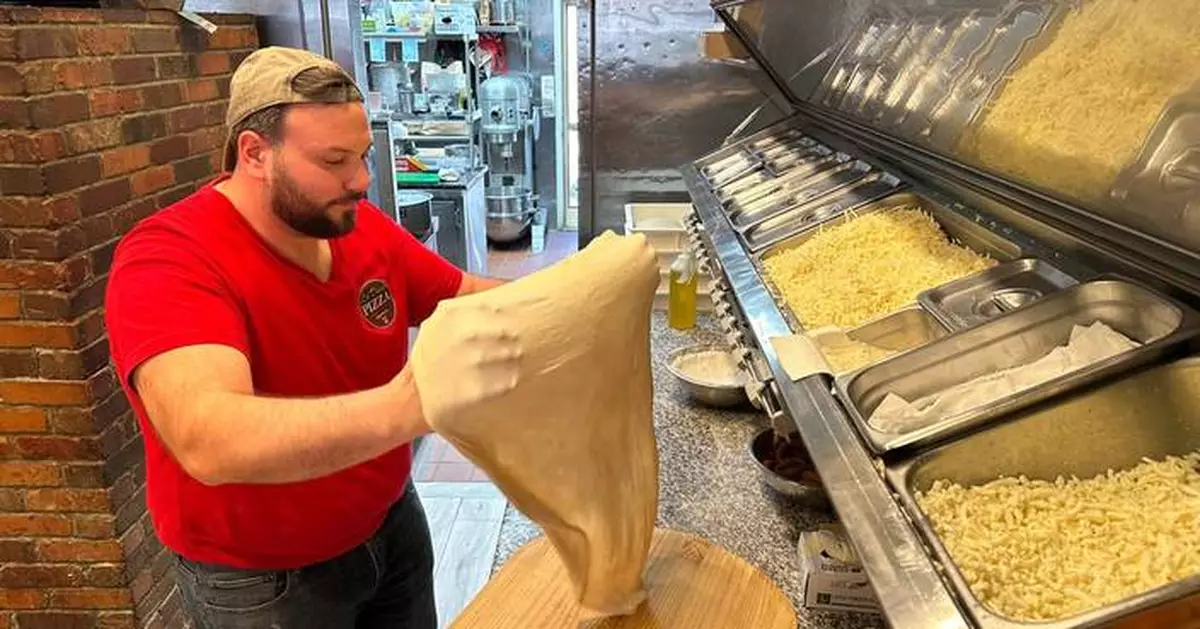
NEW YORK (AP) — After more than a decade of mixing and kneading dough in his family’s Brooklyn pizzeria, Salvatore Lo Duca recently made a distressing discovery: A key component of their thin-crust pies, bromated flour, contained a suspected carcinogen already banned in much of the world.
So, in the back kitchen of Lo Duca Pizza, the 39-year-old began tweaking the original recipe handed down by his parents — with unexpected results.
“When we started playing around with a different flour, I actually took a liking to it,” said Lo Duco, who runs the shop with his five brothers. “It’s a little more expensive, but the quality is there.”
A looming ban on the additive, potassium bromate, may soon force thousands of pizzerias and bagel shops across New York into a similar transition.
The bill, passed by state lawmakers and awaiting Gov. Kathy Hochul’s signature, has divided dough-makers, triggering fears that even a minor change to long-established baking practices could have dramatic implications for the city’s most iconic foods.
“This is an earth-shaking event for New York pizza,” said Scott Wiener, a pizza historian who leads tours of notable slice shops. “That ingredient is part of the identity of the slice.”
Employees at several stores that use bromated flour declined to comment for this story. But Wiener estimated that around 80% of pizza and bagel shops rely on a flour that contains the oxidizing agent, which reduces rest time for dough and helps ensure a stronger, chewier product.
To some, the quintessential qualities of the New York bagel — its height and structure, external crispiness and springy bite — would not be possible, or at least as ubiquitous, without the chemical shortcut.
“You could achieve that same bagel texture, but it’s a lot more work and it’s going to be a lot more expensive,” lamented Jesse Spellman, the second-generation owner of Utopia Bagels.
Ahead of the possible ban, he too has been adjusting his family recipe, experimenting with yeast concentrations and rise time.
“It’s going to take some time to get a product that we’re happy with,” Spellman said.
Others, meanwhile, see the proposed ban on potassium bromate as long overdue. The additive is already outlawed across the European Union, China, India, Canada and — as of next year — California. Some experts have theorized that its absence outside the United States could be one reason that many Americans find baked goods in Europe and elsewhere more tolerable.
“From a consumer’s point of view, there’s nothing good about potassium bromate,” said Erik Millstone, a professor of science policy at the University of Sussex focused on the health impact of chemicals in food.
Going back to the 1980s, he noted, studies have shown it can cause cancer in laboratory animals, even in “perfectly reasonable” doses.
“Most well-informed people would prioritize a long healthy life over a slightly softer and more soluble bun,” he said.
Already, many of New York’s most celebrated pizzerias, particularly newer and more artisanal-leaning shops, tout their use of “unbromated” flour.
But neighborhood slice shops still overwhelmingly rely on a General Mills flour called All Trumps, a standard ingredient since the city’s first grab-and-go pizza parlors opened nearly a century ago, according to Wiener. General Mills now sells an unbromated flour for roughly the same price, though other alternatives are costlier.
In Wiener’s view, the move away from bromated flour could ultimately improve the quality of slices across the city.
“Without such a fast turn around for dough production, you’re going to get more well-fermented doughs, which is going to lead to lighter pizzas that are easier to eat and leave you with less of a stomachache,” he said. “It will require more of a process. But everything will be built back better.”
If the legislation passes, businesses will have a one year grace period to continue using the additive, plus additional time to go through unexpired bags. A spokesperson for Hochul said she would review the bill.
In the meantime, the possibility of the ban has rippled beyond New York’s borders.
“Pizza in Florida is officially better than pizza in New York,” crowed Mario Mangilia, the owner of DoughBoyz in Florida in a recent Instagram post. He added that “my grandfather would haunt me” if the shop’s dough recipe were ever changed.
But after he was confronted by several prominent pizza accounts over the additive's health concerns, Mangilia appeared to walk back his pro-bromate stance.
“I’ll tell you what,” he replied to a Long Island-based pizza owner. “I’ll test some different flour out to check it out.”
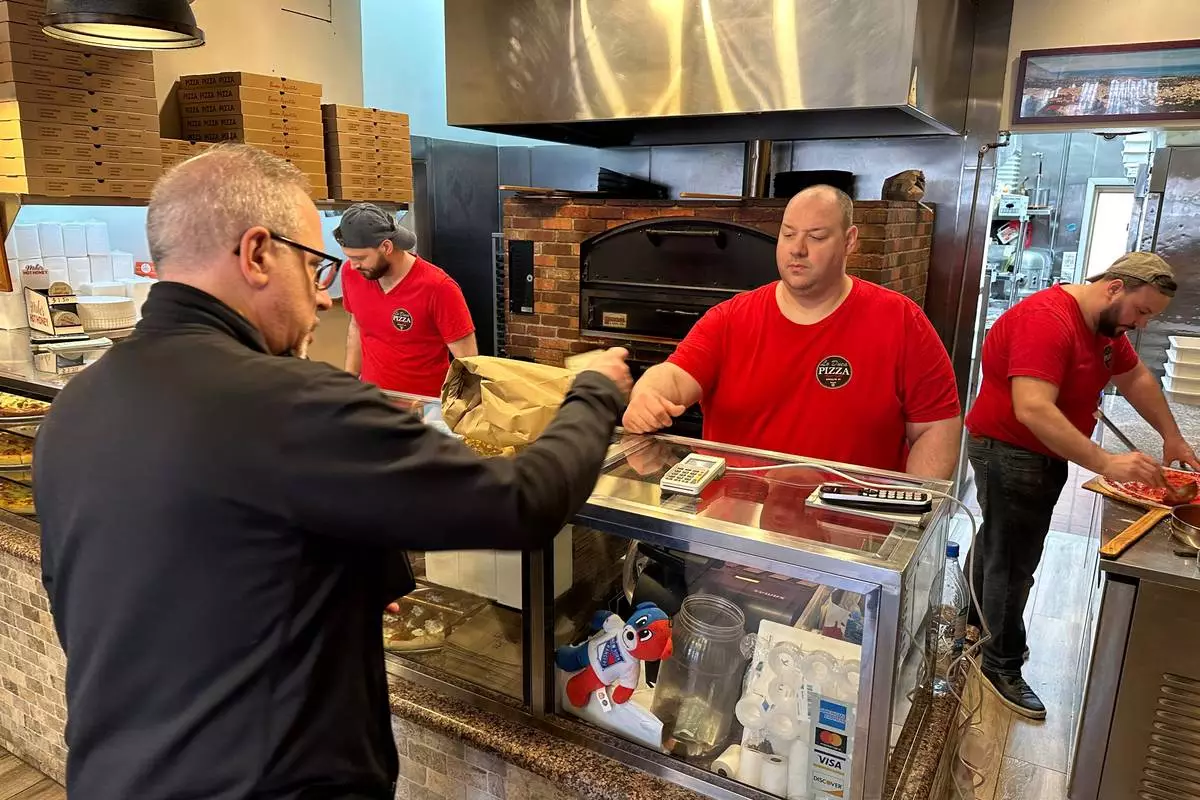
A man pays for pizza at Lo Duca Pizza, May 12, 2026, in the Brooklyn borough of New York. (AP Photo/David R. Martin)

A worker at Utopia Bagel preps bagels made with bromated flour, May 13, 2026, in the Queens borough of New York. (AP Photo/David R. Martin)
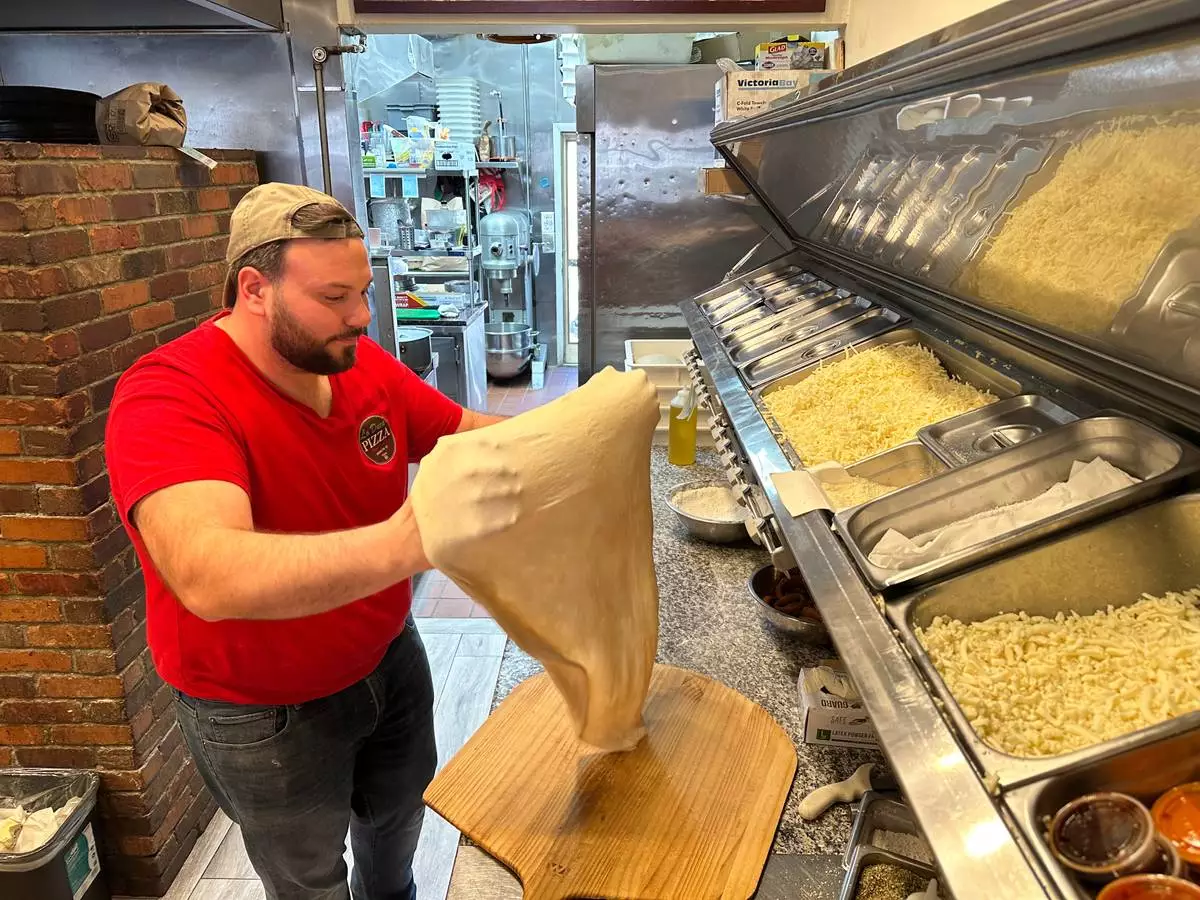
Salvatore Lo Duca makes pizza at Lo Duca Pizza Tuesday, May 12, 2026, in the Brooklyn borough of New York. (AP Photo/David R. Martin)
HELSINGBORG, Sweden (AP) — NATO allies and defense officials expressed bewilderment on Friday at U.S. President Donald Trump’s announcement that he would send 5,000 U.S. troops to Poland just weeks after he ordered the same number of forces pulled out of Europe.
The apparent change of mind came after weeks of statements from Trump and his administration about reducing — not increasing — the American military footprint in Europe. Trump's initial order set off a flurry of action among military commanders and left allies already doubtful about America's commitment to Europe's security to ponder what forces they might have to backfill on NATO's eastern flank with Russia and Ukraine.
Earlier this month, the Trump administration said it was reducing levels in Europe by about 5,000 troops, and U.S. officials confirmed about 4,000 service members were no longer deploying to Poland. The dispatch to Germany of U.S. personnel trained to fire long-range missiles was also halted.
But in a post on Truth Social on Thursday, Trump said he would send "an additional 5,000 Troops to Poland,” citing his strong ties with Polish President Karol Nawrocki, whom Trump endorsed in elections last year.
“It is confusing indeed, and not always easy to navigate,” Swedish Foreign Minister Maria Malmer Stenergard told reporters at a meeting Friday that she was hosting of her NATO counterparts, including U.S. Secretary of State Marco Rubio.
Ministers from the Netherlands and Norway were sanguine about Trump’s latest move, as was Latvian Foreign Minister Baiba Braže, who said allies knew the U.S. troop “posture was being reconsidered, and now there is no change of posture. For now.”
U.S. defense officials also expressed confusion. “We just spent the better part of two weeks reacting to the first announcement. We don’t know what this means either,” said one of two officials who spoke on condition of anonymity to discuss sensitive military matters.
But Rubio played down the issue. He said that “the United States continues to have global commitments that it needs to meet in terms of our force deployment, and that constantly requires us to reexamine where we put troops.”
The latest surprise came despite a U.S. pledge to coordinate troop deployments, including one from NATO’s top military officer, U.S. Lt. Gen. Alex Grynkewich, on Wednesday.
Trump's initial announcement that he would withdraw troops came as he fumed over remarks by German Chancellor Friedrich Merz, who said that the U.S. was being “humiliated” by the Iranian leadership and criticized what he called a lack of strategy in that war.
Trump told reporters that the U.S. would be cutting even more than 5,000 and also announced new tariffs on European cars. Germany is the continent’s biggest auto producer.
Rubio insisted that Trump’s decision “is not a punitive thing. It’s just something that’s ongoing.” He has often been called on to offer a less antagonistic U.S. presence at meetings with European partners, but Rubio did skip the last NATO gathering of foreign ministers in December.
About 80,000 U.S. troops are stationed in Europe. The Pentagon is required to keep at least 76,000 troops and major equipment on the continent unless NATO allies are consulted and there is a determination that such a withdrawal is in U.S. interests.
The withdrawal of 5,000 troops might drop numbers below that limit.
But Trump's latest post suggests that troop numbers in Europe would not change. Polish Foreign Minister Radek Sikorski welcomed the decision to send more forces to his country, saying it ensures that “the presence of American troops in Poland will be maintained more or less at previous levels.”
NATO Secretary-General Mark Rutte also welcomed the move. On Thursday, before Trump took to Truth Social again, Rutte had underlined that it was important for Europe to take care of its own security. “We have a process in place. This is normal business,” he told reporters.
Friday's NATO meeting in Helsingborg, Sweden, was aimed at preparing for a summit of Trump and his counterparts in Turkey in July.
Cook reported from Brussels. Associated Press writer Emma Burrows in London contributed.
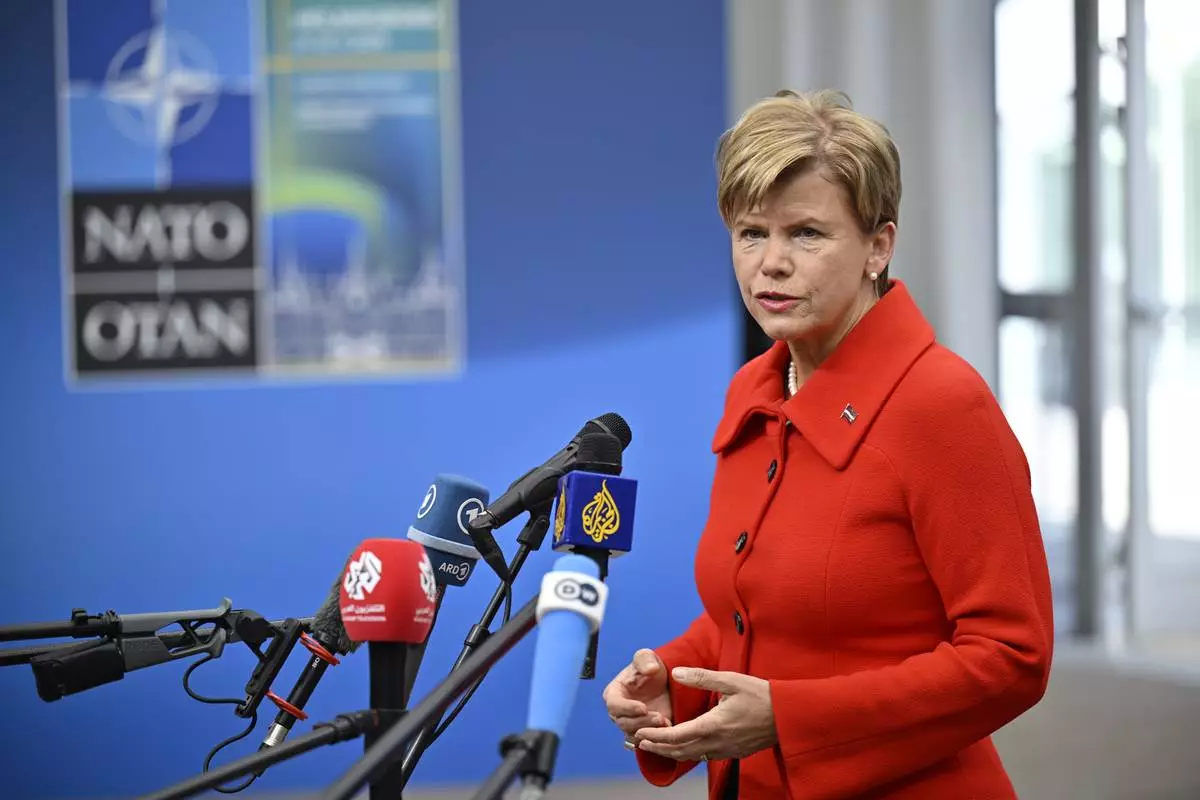
Latvian Foreign Minister Baiba Braže speaks at the doorstep of the NATO foreign ministers' meeting at Sea U in Helsingborg, Sweden, Friday, May 22, 2026. (Johan Nilsson/TT News Agency via AP)
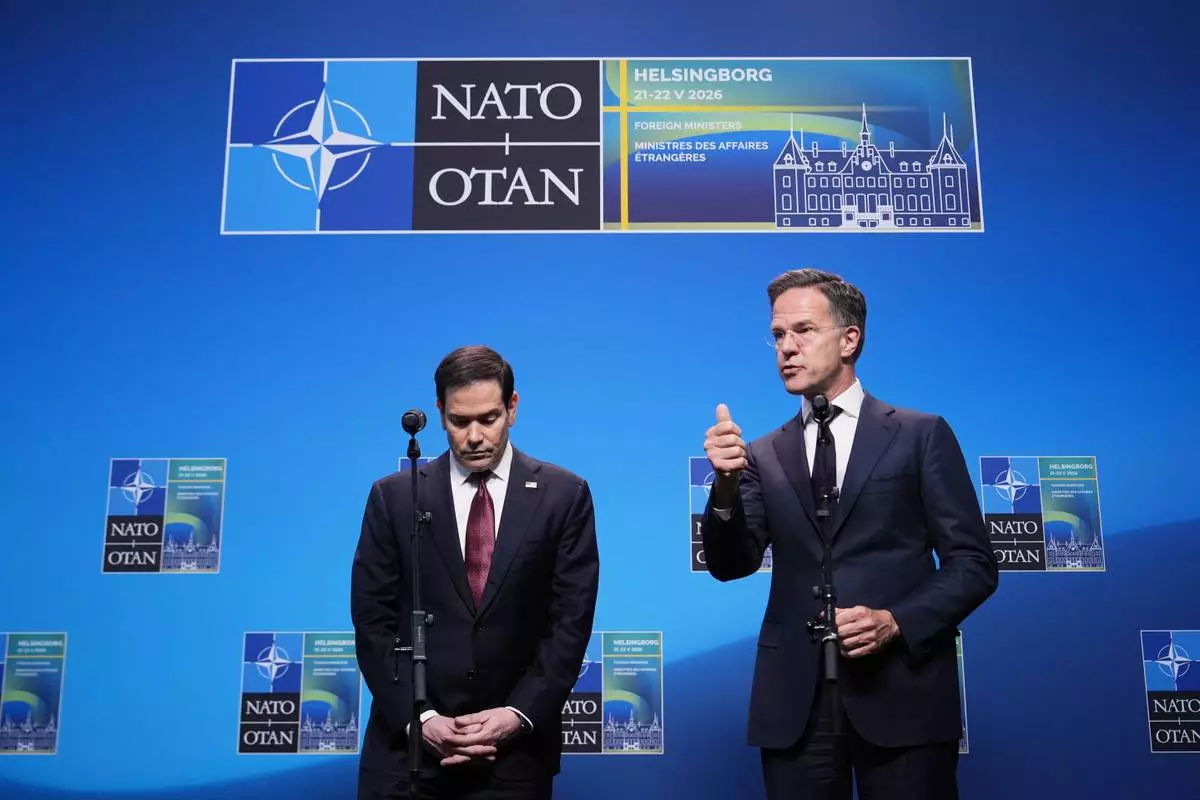
United States Secretary of State Marco Rubio, left, and NATO Secretary General Mark Rutte deliver a statement during a meeting of NATO foreign ministers in Helsingborg, Sweden, Friday, May 22, 2026. (AP Photo/Julia Demaree Nikhinson, Pool)
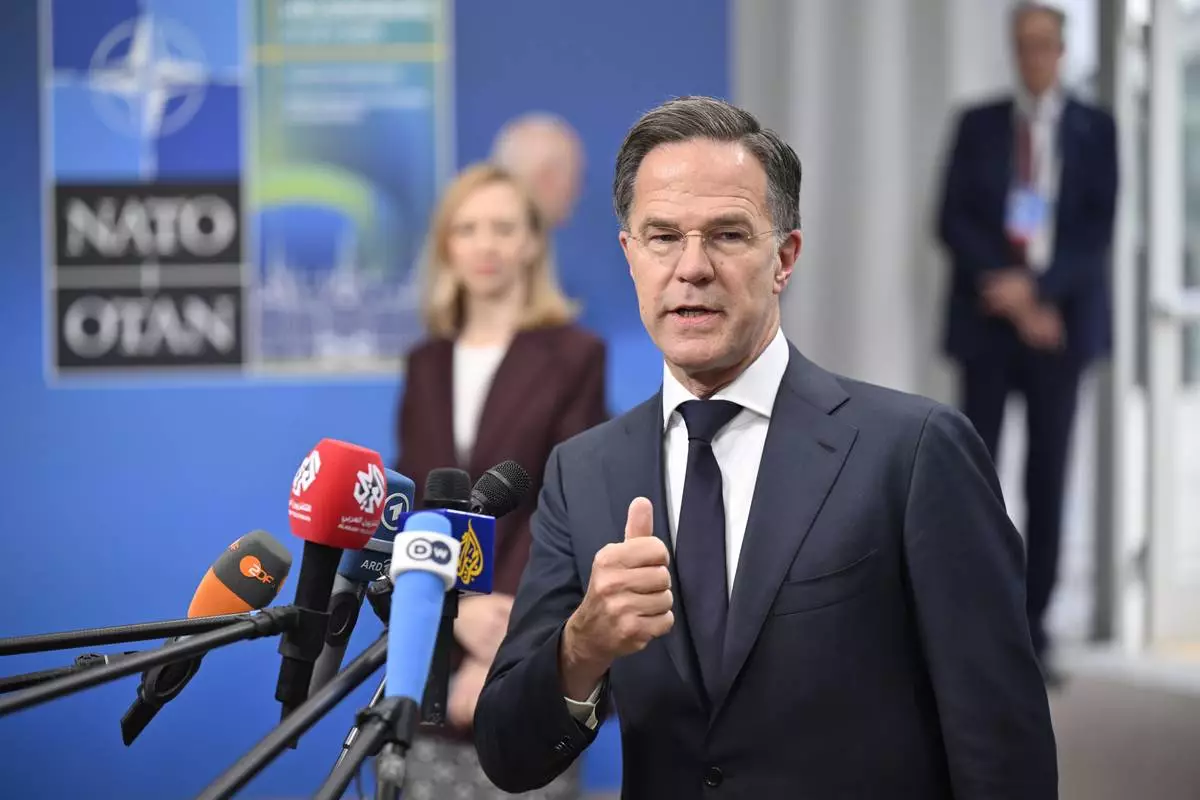
NATO Secretary General Mark Rutte speaks to media at the NATO Foreign Ministers' meeting in Helsingborg, Sweden, Friday, May 22, 2026. (Johan Nilsson/TT News Agency via AP)
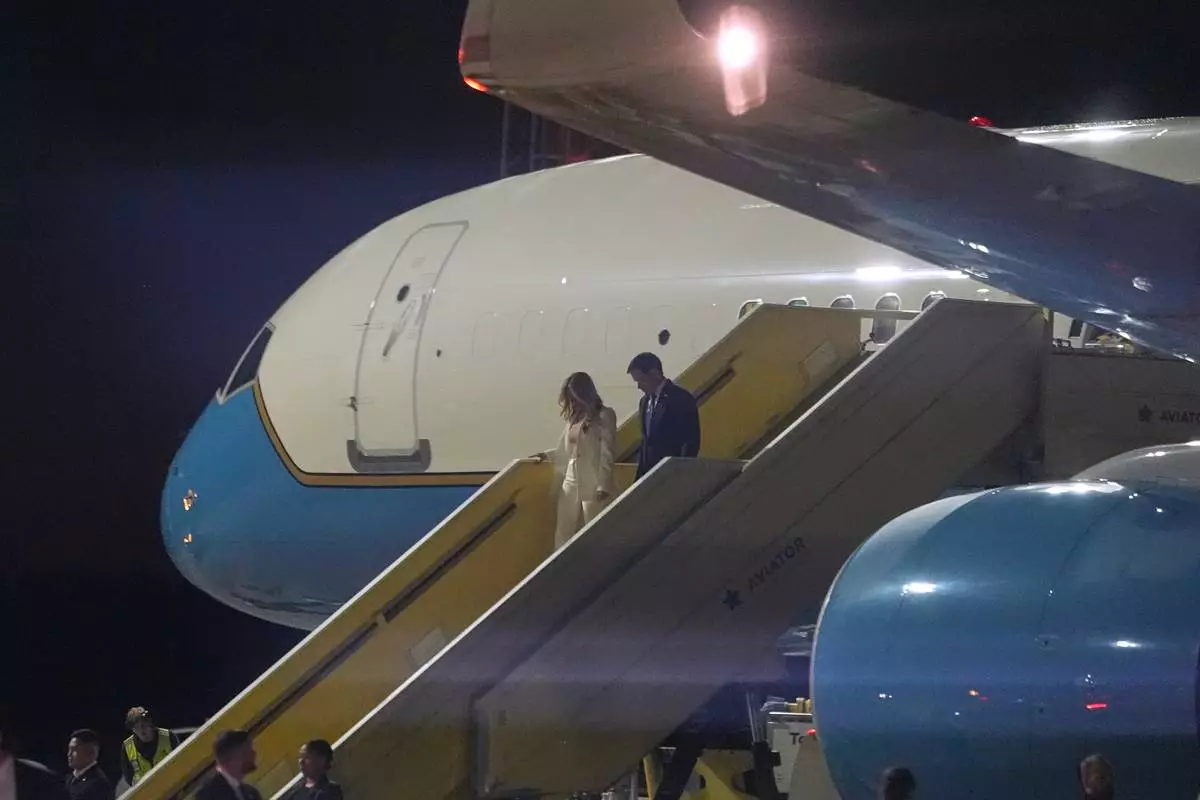
Secretary of State Marco Rubio arrives with his wife Jeanette at Malmo Airport, Friday, May 22, 2026, in Malmo-Sturup, Sweden, ahead of a NATO foreign ministers meeting. (AP Photo/Julia Demaree Nikhinson, Pool)
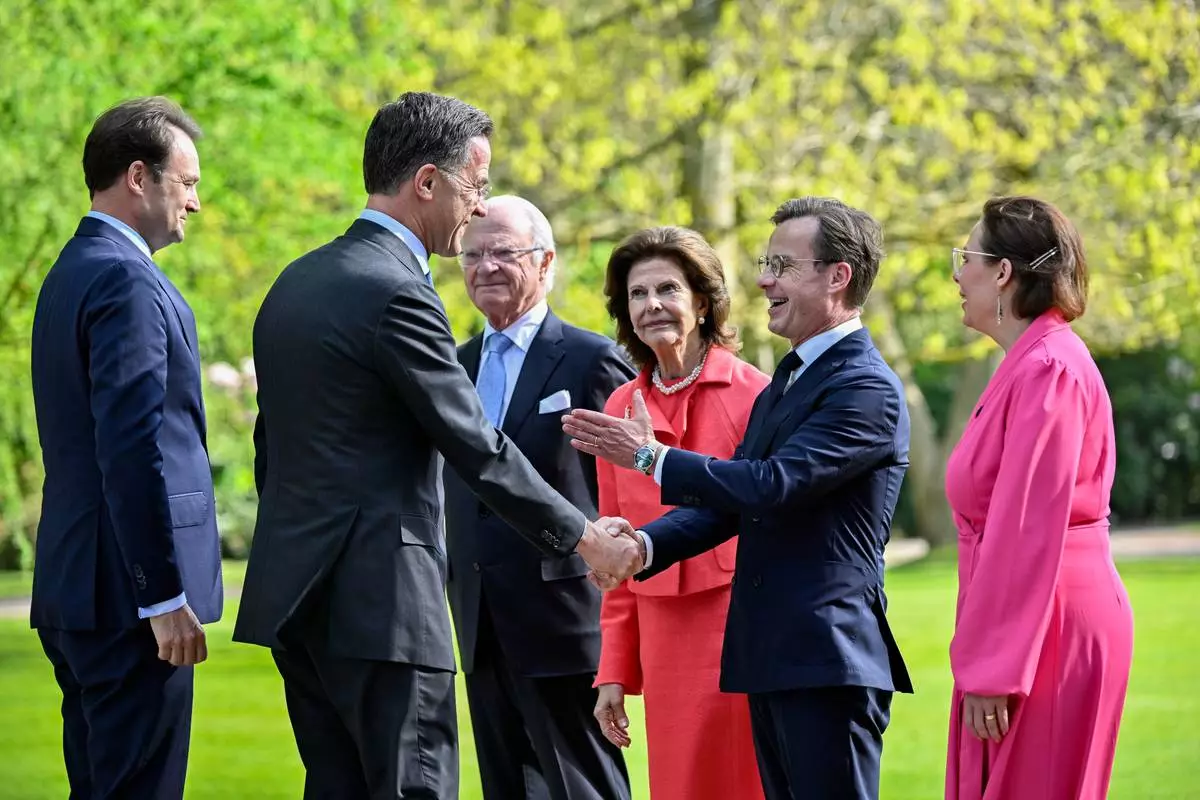
NATO Secretary General Mark Rutte, second from left, shakes hands with Prime Minister of Sweden Ulf Kristersson, as he is greeted by King Carl Gustaf of Sweden, Queen Silvia of Sweden and Minister for Foreign Affairs of Sweden Maria Malmer Stenergard, right, before a dinner at Sofiero Castle in Helsingborg, Sweden, Thursday May 21 2026. (Johan Nilsson/TT News Agency via AP)
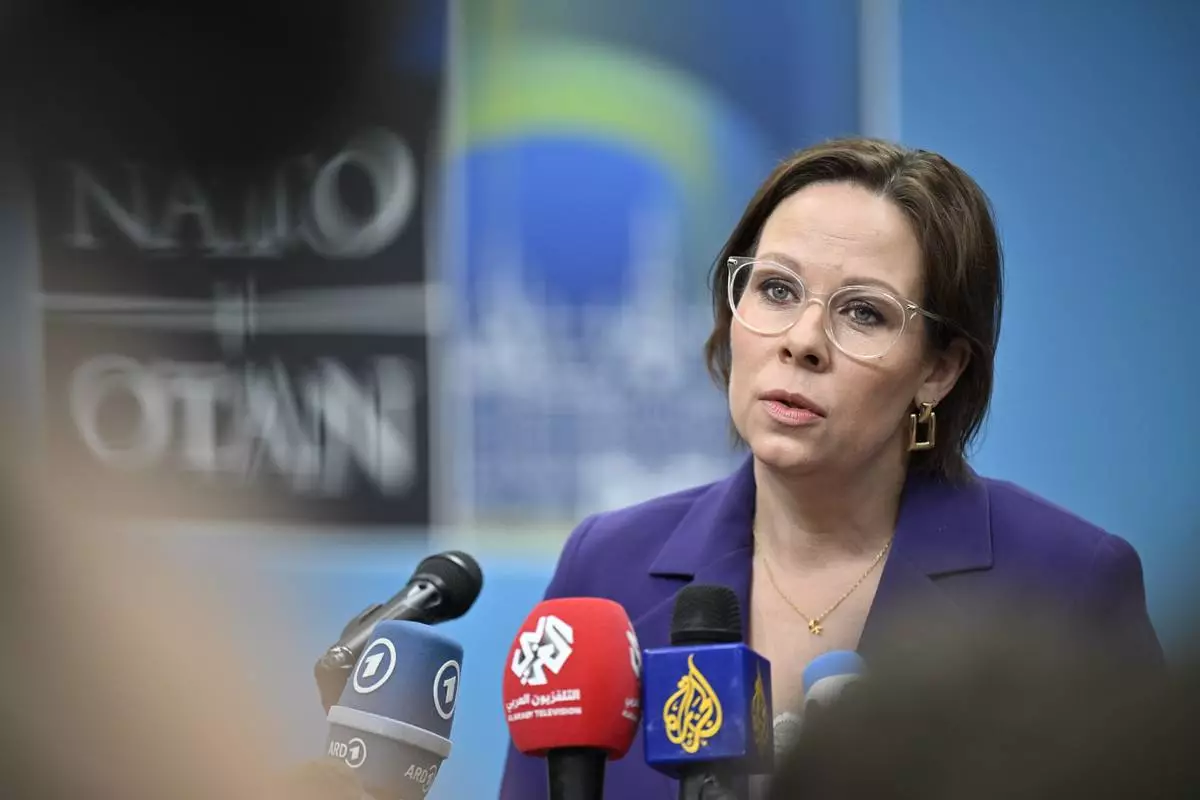
Swedish Foreign Minister Maria Malmer Stenergard speaks to media at the NATO Foreign Ministers' meeting in Helsingborg, Sweden, Friday, May 22, 2026. (Johan Nilsson/TT News Agency via AP)