Skip to Content Facebook Feature Image

Fentanyl, meth found at house where New Mexico responders got sick after answering overdose call

News

Fentanyl, meth found at house where New Mexico responders got sick after answering overdose call
News

News

Fentanyl, meth found at house where New Mexico responders got sick after answering overdose call

2026-05-23 08:17 Last Updated At:08:20

ALBUQUERQUE, N.M. (AP) — Fentanyl and methamphetamine were found at a home where first responders became sick after answering a call about suspected overdoses in a rural county in New Mexico, authorities said Friday.

Three people found inside the house on Wednesday died. A fourth person who was in the house and one of the emergency responders who became sick were still being treated at a hospital Friday.

More Images
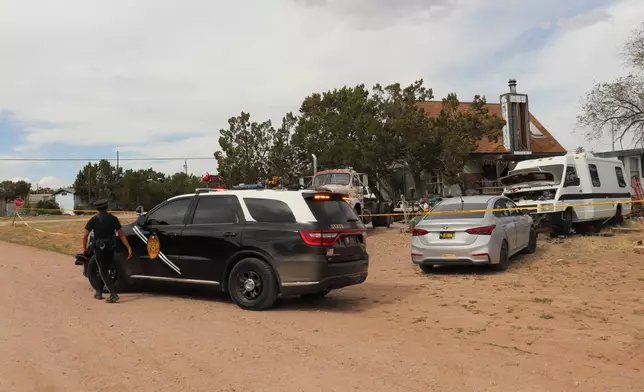
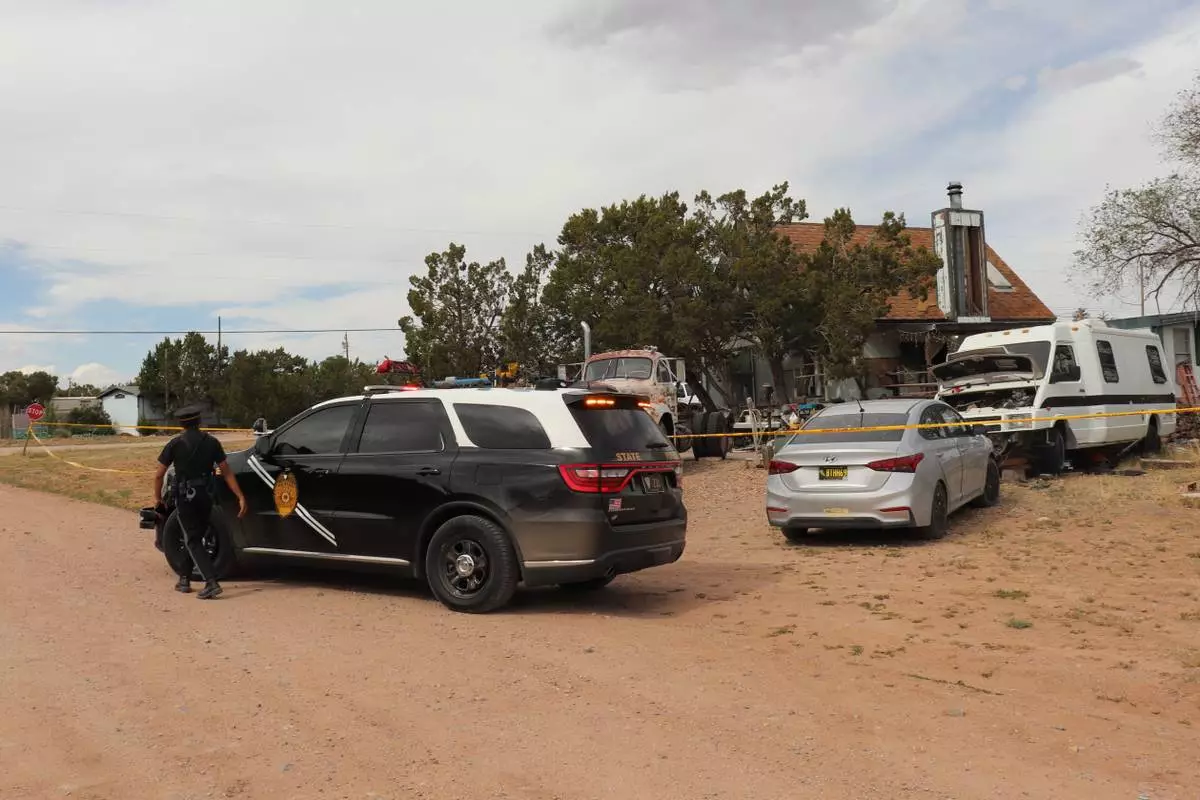
New Mexico State Police respond to home in Mountainair, N.M., where authorities say several people died Wednesday, May 20, 2026, and more than a dozen first responders were exposed to an unknown substance and later treated at a hospital. (AP Photo/Savannah Peters)
New Mexico State Police respond to home in Mountainair, N.M., where authorities say several people died Wednesday, May 20, 2026, and more than a dozen first responders were exposed to an unknown substance and later treated at a hospital. (AP Photo/Savannah Peters)

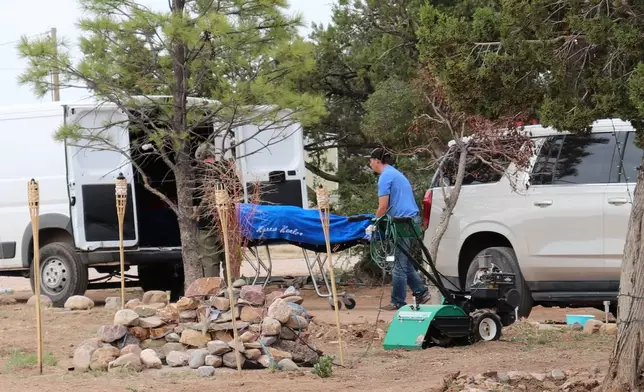
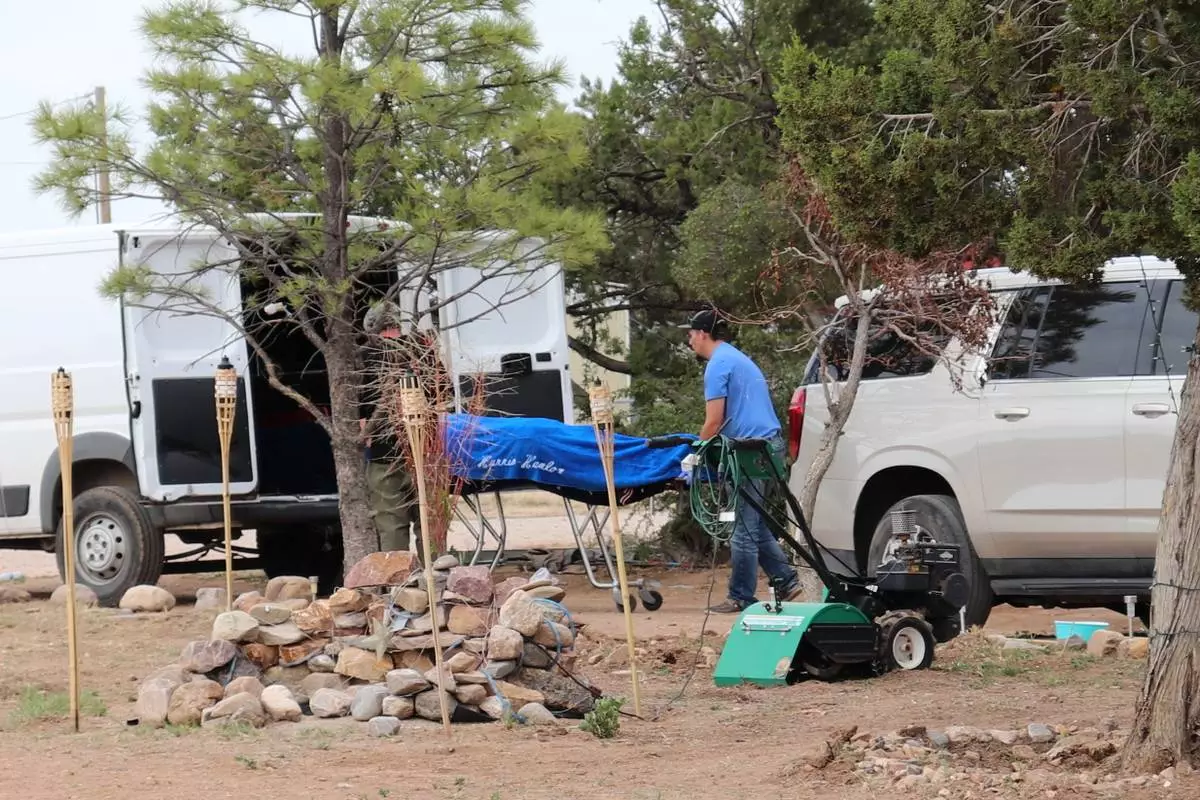
Workers remove a body in Mountainair, N.M., Wednesday, May 20, 2026, after several people died and more than a dozen first responders were exposed to an unknown substance. (AP Photo/Savannah Peters)
Workers remove a body in Mountainair, N.M., Wednesday, May 20, 2026, after several people died and more than a dozen first responders were exposed to an unknown substance. (AP Photo/Savannah Peters)

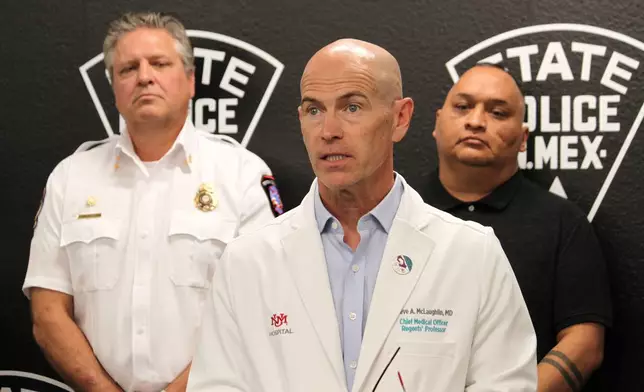
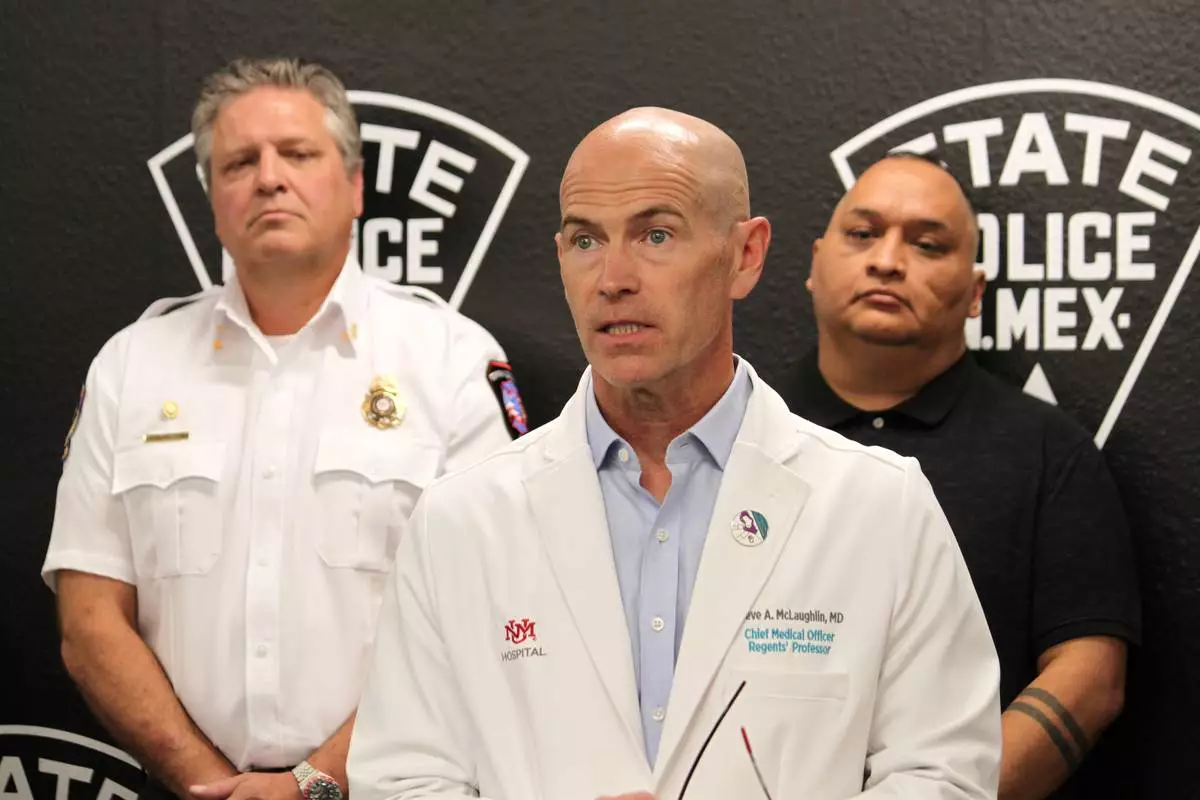
University of New Mexico Hospital Chief Medical Officer Steve McLaughlin discusses fentanyl exposure during a news conference in Albuquerque, New Mexico, on Friday, May 22, 2026. (AP Photo/Susan Montoya Bryan)
University of New Mexico Hospital Chief Medical Officer Steve McLaughlin discusses fentanyl exposure during a news conference in Albuquerque, New Mexico, on Friday, May 22, 2026. (AP Photo/Susan Montoya Bryan)

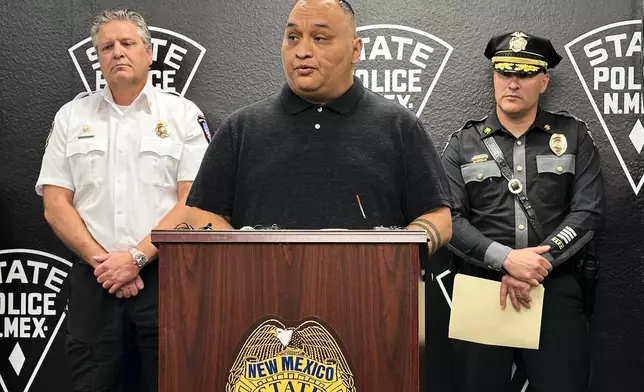
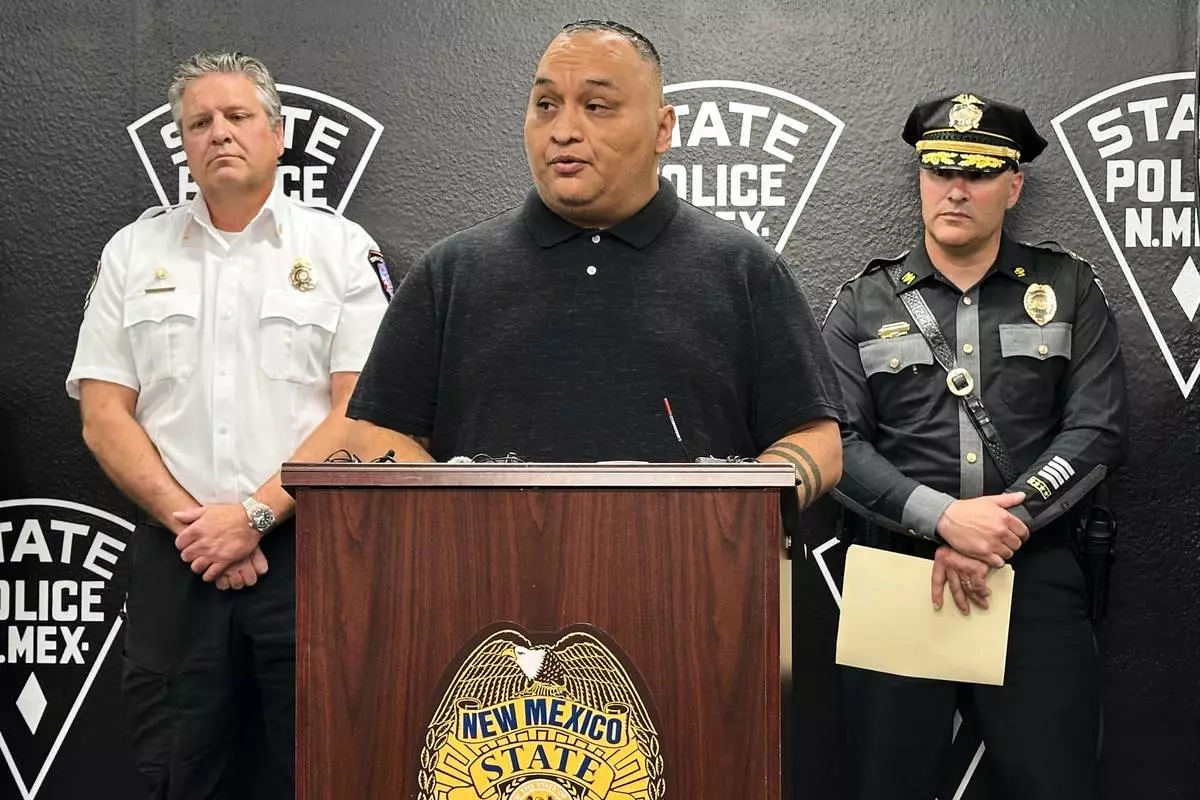
Mountainair Mayor Peter Nieto, center, provides updates during a news conference in Albuquerque, New Mexico, on Friday, May 22, 2026 about an investigation into the deaths of three people in Torrance County and a potential fentanyl exposure for first responders who answered the call. The investigation is ongoing. (AP Photo/Susan Montoya Bryan)
Mountainair Mayor Peter Nieto, center, provides updates during a news conference in Albuquerque, New Mexico, on Friday, May 22, 2026 about an investigation into the deaths of three people in Torrance County and a potential fentanyl exposure for first responders who answered the call. The investigation is ongoing. (AP Photo/Susan Montoya Bryan)

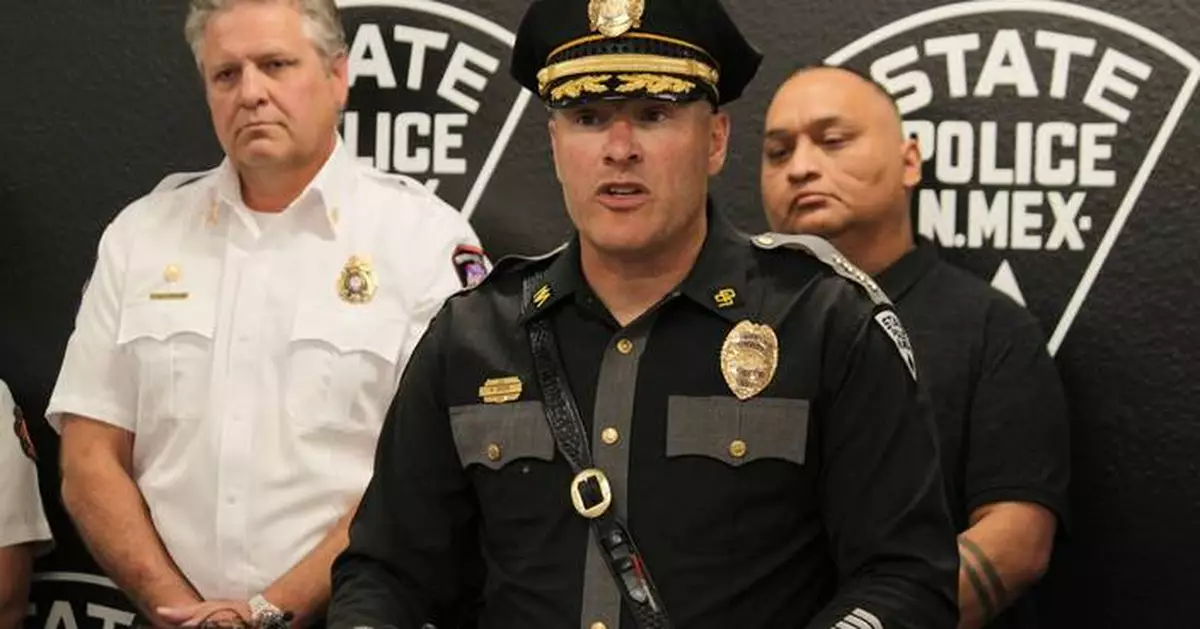
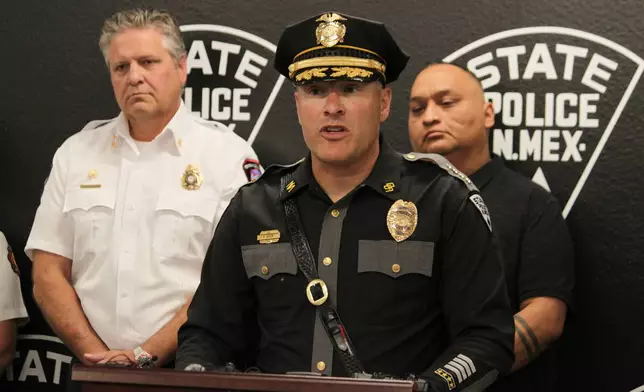
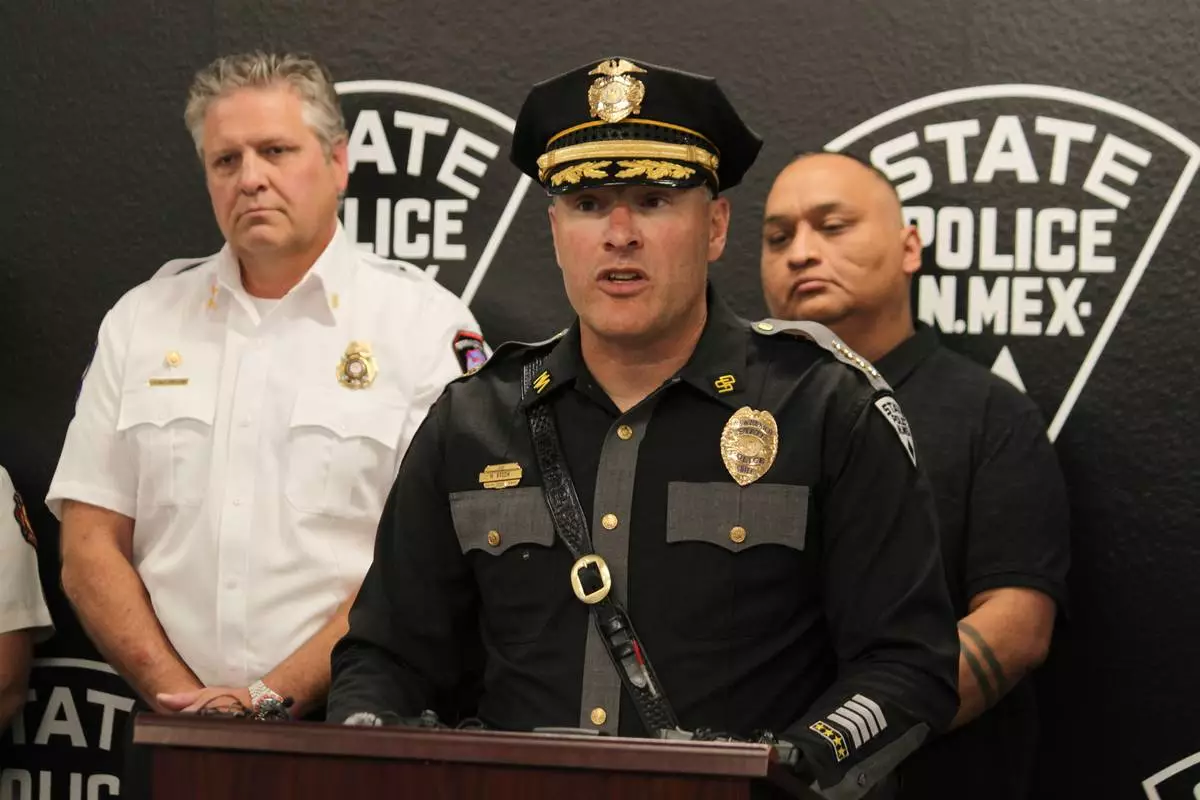
New Mexico State Police Chief Matt Broom, center, provides updates during a news conference in Albuquerque, New Mexico, on Friday, May 22, 2026 about an investigation into the deaths of three people in Torrance County and a potential fentanyl exposure for first responders who answered the call. The investigation is ongoing. (AP Photo/Susan Montoya Bryan)

New Mexico State Police Chief Matt Broom, center, provides updates during a news conference in Albuquerque, New Mexico, on Friday, May 22, 2026 about an investigation into the deaths of three people in Torrance County and a potential fentanyl exposure for first responders who answered the call. The investigation is ongoing. (AP Photo/Susan Montoya Bryan)

A doctor who saw the responders exhibiting symptoms — including nausea and dizziness — said their symptoms most closely resembled fentanyl exposure. However, the investigation into how the exposure happened and what caused it was ongoing.

University of New Mexico Hospital Chief Medical Officer Steve McLaughlin said during a news conference in Albuquerque that authorities were working “under the assumption” that fentanyl was to blame. He said the responders' symptoms ranged from mild to slightly more severe.

“It’s probably not absorbed through your skin, but it would be absorbed through your eyes, nose, mucous membranes, or if you inhale it,” McLaughlin told The Associated Press.

Meth is notoriously toxic when exposed to it, and fentanyl less so. Authorities noted during Friday's news conference that the responders who became ill had directly treated the people found inside the house east of Albuquerque, in the rural town of Mountainair.

More than a dozen first responders were quarantined and decontaminated after responding to the scene.

Of the two people still hospitalized Friday, one was a person who was found unresponsive in the home where three died. Authorities said they were called to the home by a co-worker of one of the people inside after they failed to show up to work.

New Mexico State Police Chief Matt Broom said investigators did not immediately find evidence of drug manufacturing in the house.

State police said early on that there was no threat to the public and that investigators did not believe the substance that caused the responders to become sick was airborne.

Two of the victims were identified Friday as Mika Rascon, 51, and Georgia Rascon, 49. The name of the third person who died has not been released, and the cause and manner of their deaths has not been determined.

Audio archives from the Torrance County Fire Dispatch channel on the site Broadcastify showed that responders went to the home following a report of a 60-year-old man unconscious but breathing.

Within minutes, a dispatcher is heard saying there were three other people at the home, two of whom might not be breathing. Then came a call for naloxone, the opioid-overdose antidote. One person was revived using naloxone, authorities said.

Less than an hour after the initial call, the dispatch center relayed that there were multiple exposures.

Some first responders began coughing, vomiting and experiencing dizziness, authorities said. Most had no symptoms, hospital officials said.

The initial responders on the scene did not have protective gear but followed safety protocols, said Torrance County Fire Chief Gary Smith. They saw two victims inside, pulled them into the fresh air and attempted to resuscitate them, he said.

“This did come in as an overdose. There was no indication of any type of hazmat type scenario,” Smith said.

Debriefings were planned in coming days to determine if there were any weaknesses in the response, he added.

Scientific evidence shows fentanyl, a potent opioid, does not cause overdoses through casual skin contact or brief airborne exposure in typical field scenarios. Experts say overdoses require significant ingestion, injection or inhalation of the substance.

Residents around Mountainair, a town with fewer than 1,000 people, have voiced frustration about drug use in the community and elsewhere.

New Mexico had the fourth-highest rate of drug overdose deaths of any U.S. state in 2024, with 775 deaths, according to the most recent data available from the Centers for Disease Control and Prevention.

Claudia Lauer contributed reporting from Philadelphia.

Brown reported from Billings, Montana.
New Mexico State Police respond to home in Mountainair, N.M., where authorities say several people died Wednesday, May 20, 2026, and more than a dozen first responders were exposed to an unknown substance and later treated at a hospital. (AP Photo/Savannah Peters)
New Mexico State Police respond to home in Mountainair, N.M., where authorities say several people died Wednesday, May 20, 2026, and more than a dozen first responders were exposed to an unknown substance and later treated at a hospital. (AP Photo/Savannah Peters)

Workers remove a body in Mountainair, N.M., Wednesday, May 20, 2026, after several people died and more than a dozen first responders were exposed to an unknown substance. (AP Photo/Savannah Peters)
Workers remove a body in Mountainair, N.M., Wednesday, May 20, 2026, after several people died and more than a dozen first responders were exposed to an unknown substance. (AP Photo/Savannah Peters)

University of New Mexico Hospital Chief Medical Officer Steve McLaughlin discusses fentanyl exposure during a news conference in Albuquerque, New Mexico, on Friday, May 22, 2026. (AP Photo/Susan Montoya Bryan)
University of New Mexico Hospital Chief Medical Officer Steve McLaughlin discusses fentanyl exposure during a news conference in Albuquerque, New Mexico, on Friday, May 22, 2026. (AP Photo/Susan Montoya Bryan)

Mountainair Mayor Peter Nieto, center, provides updates during a news conference in Albuquerque, New Mexico, on Friday, May 22, 2026 about an investigation into the deaths of three people in Torrance County and a potential fentanyl exposure for first responders who answered the call. The investigation is ongoing. (AP Photo/Susan Montoya Bryan)
Mountainair Mayor Peter Nieto, center, provides updates during a news conference in Albuquerque, New Mexico, on Friday, May 22, 2026 about an investigation into the deaths of three people in Torrance County and a potential fentanyl exposure for first responders who answered the call. The investigation is ongoing. (AP Photo/Susan Montoya Bryan)


New Mexico State Police Chief Matt Broom, center, provides updates during a news conference in Albuquerque, New Mexico, on Friday, May 22, 2026 about an investigation into the deaths of three people in Torrance County and a potential fentanyl exposure for first responders who answered the call. The investigation is ongoing. (AP Photo/Susan Montoya Bryan)
New Mexico State Police Chief Matt Broom, center, provides updates during a news conference in Albuquerque, New Mexico, on Friday, May 22, 2026 about an investigation into the deaths of three people in Torrance County and a potential fentanyl exposure for first responders who answered the call. The investigation is ongoing. (AP Photo/Susan Montoya Bryan)

BUENOS AIRES, Argentina (AP) — An Argentine who spent 448 days imprisoned in Venezuela called Friday for the international community to increase pressure on the government of interim Venezuelan President Delcy Rodríguez to release other prisoners.

The 35-year-old Nahuel Gallo was released March 1 after being detained on espionage accusations brought by the government of now-ousted President Nicolás Maduro.

“I think we’re still imprisoned until our fellow inmates are freed,” Gallo told The Associated Press.

During nearly 15 months in detention, Gallo said he endured beatings, limited medical care and constant psychological pressure inside Rodeo I.

As acting president since Maduro’s capture by U.S. forces in January, Rodríguez has promised democratic reforms and the Venezuelan government has previously denied reports of abuses in prisons. Critics, however, say hundreds remain jailed for political reasons.

For Gallo, those detentions show Venezuela’s repressive system remains intact.

On Thursday, Gallo met in Buenos Aires with U.S. Ambassador to Argentina Peter Lamelas, who said in a statement that “the Maduro regime in Venezuela used the arbitrary detention of foreign citizens as a tool of political repression.”

This week, National Assembly President Jorge Rodríguez — the interim president’s brother — announced plans to release 300 detainees, some of which rights groups consider politically based.

Gallo was arrested Dec. 8, 2024, while attempting to enter Venezuela to visit his Venezuelan partner, María Alexandra Gómez García, and their son, who was then less than 2 years old.

At an immigration checkpoint, Venezuelan authorities searched his phone and found WhatsApp conversations with his partner about Venezuela’s political and economic situation.

“You’re criticizing my president,” Gallo recalled officers telling him.

He was then transferred to the General Directorate of Military Counterintelligence, where he said he was handcuffed, beaten and kicked during interrogations.

Afterward, he was forced into a truck, where agents continued interrogating him after finding contacts linked to Argentine judicial agencies on his cellphone.

“You are a spy. You work for the government,” he recalled them saying while threatening to throw him from the vehicle, pressing a gun against his head and pointing a Taser at him.

Nearly three weeks after his arrest, then-Venezuelan Attorney General Tarek William Saab accused Gallo of participating in “terrorist actions” against Venezuela.

During the nearly 15 months he spent at Rodeo I, Gallo said he had no contact with Argentine officials and no information about whether negotiations for his release were underway.

Gallo described harsh conditions inside the prison. Medical care was limited. Detainees had only a few minutes each day to bathe, wash clothes and use the bathroom. Inmates were frequently sprayed with pepper spray.

As a foreigner, he was not allowed to receive visits. The first time he spoke with his wife came after a year in detention and only after he launched a hunger strike.

The memories that still haunt him are of guards beating prisoners in nearby cells.

“I think the greatest torture is seeing something being done to someone else and not being able to do anything,” Gallo said.

He now uses social media to denounce conditions in Venezuelan prisons and advocate for those still detained.

“The person who’s still inside is waiting for the one who got out to do something,” he said.

Gallo still remembers what fellow inmates told him as he left Rodeo I: “Gallo, don't forget about us.”

Follow AP’s Latin America coverage at https://apnews.com/hub/latin-america

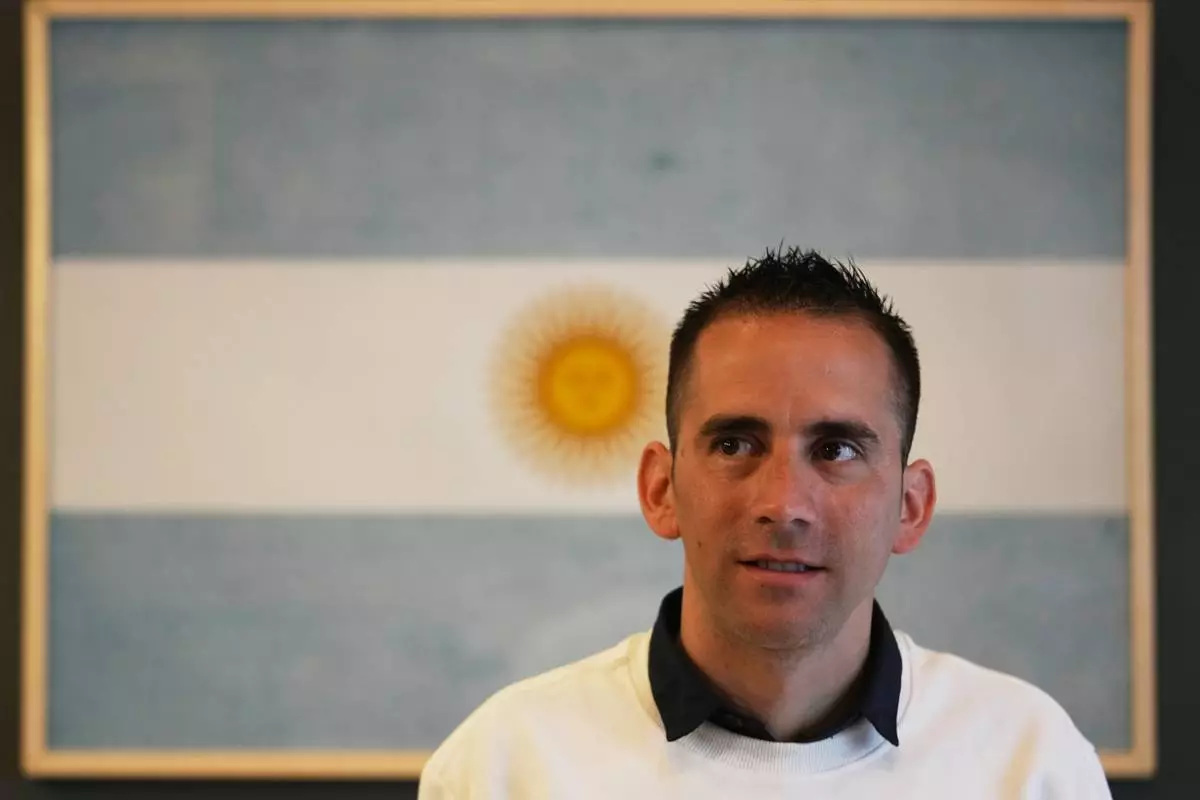
Argentine gendarmerie officer Nahuel Gallo, who was released after 15 months in detention in Venezuela, poses for a photo in Buenos Aires, Argentina, Friday, May 22, 2026. (AP Photo/Natacha Pisarenko)

Argentine gendarmerie officer Nahuel Gallo, who was released after 15 months in detention in Venezuela, poses for a photo in Buenos Aires, Argentina, Friday, May 22, 2026. (AP Photo/Natacha Pisarenko)

Argentine gendarmerie officer Nahuel Gallo, who was released after 15 months in detention in Venezuela, poses for a photo in Buenos Aires, Argentina, Friday, May 22, 2026. (AP Photo/Natacha Pisarenko)

Argentine gendarmerie officer Nahuel Gallo, who was released after 15 months in detention in Venezuela, poses for a photo in Buenos Aires, Argentina, Friday, May 22, 2026. (AP Photo/Natacha Pisarenko)

Recommended Articles