OSLO, Norway (AP) — Barcelona and OL Lyonnes are both chasing a season sweep of four major trophies when they meet in the Women’s Champions League final Saturday.
The two dominant clubs in European women’s soccer over 15 years face each other for the fourth time in the past eight finals.
Click to Gallery

Barcelona's Alexia Putellas walks with a ball during a training session on the eve of the Women's Champions League final soccer match between FC Barcelona and OL Lyonnes, in Oslo, Friday, May 22, 2026. (AP Photo/Kirsty Wigglesworth)

Barcelona's Aitana Bonmati, right, and Sydney Schertenleib play with a ball during a training session on the eve of the Women's Champions League final soccer match between FC Barcelona and OL Lyonnes, in Oslo, Friday, May 22, 2026. (AP Photo/Kirsty Wigglesworth)

Lyonnes players and staff gather together on the pitch during a training session on the eve of the Women's Champions League final soccer match between FC Barcelona and OL Lyonnes, in Oslo, Friday, May 22, 2026. (AP Photo/Kirsty Wigglesworth)

Lyonnes' Ada Hegerberg reaches for the ball during a training session on the eve of the Women's Champions League final soccer match between FC Barcelona and OL Lyonnes, in Oslo, Friday, May 22, 2026. (AP Photo/Kirsty Wigglesworth)

Barcelona's Kika Nazareth plays with a ball during a training session on the eve of the Women's Champions League final soccer match between FC Barcelona and OL Lyonnes, in Oslo, Friday, May 22, 2026. (AP Photo/Kirsty Wigglesworth)
It is 2-1 in that head-to-head for Lyon which has a record eight European titles, including five straight through 2020, in the competition’s 25-year history.
Barcelona is in its seventh final in eight years, its sixth in a row, and is widely favored to win a fourth title.
That era started with a humbling 4-1 loss to Lyon in the 2019 final in Budapest.
“They were much, much better than us. I am humble enough to say that,” Barcelona’s two-time Ballon d’Or winner Alèxia Putellas recalled.
Lyon also won their title clash in 2022 and only in 2024 did Barcelona finally triumph against its biggest rival.
Lyon captain Wendie Renard is set to play in her 12th final of a remarkable career, since scoring in the French giant’s first title win in 2011.
The teams are coached by former colleagues at Barcelona. Jonatan Giráldez now coaches Lyon after winning two Women’s Champions League titles at Barcelona when Pere Romeu was one of his assistants.
“I feel privileged to face Barcelona as I’m grateful for the experience I had there and I wish them the best,” Giráldez said.
UEFA’s choice of Oslo to host the final has drawn some criticism from Barcelona.
Star player Aitana Bonmatí suggested the 28,000-seat Ullevaal Stadium was “a step back” for women’s soccer: a stadium too small in a city with too few direct flights.
Norway was defended as “the motherland” of women’s soccer in Europe by UEFA’s director of women’s football, Nadine Kessler. She played in three Champions League finals that each drew crowds of fewer than 20,000.
The Ullevaal is sold out Saturday, while one year ago Sporting Lisbon’s stadium was just three-quarters full with nearly 39,000 to watch Arsenal beat Barcelona 1-0.
Norway’s established stars — Barcelona’s Caroline Graham Hansen and Lyon's Ada Hegerberg — stood up for their national stadium Friday.
“The venue was decided a couple of years ago,” said Graham Hansen, who grew up in this neighborhood of Oslo, “and you didn’t take it for granted you would sell out the stadium.”
The game is “a once in a lifetime” opportunity for Norwegian soccer and to inspire young girls, Hegerberg said.
The 2027 final is in Warsaw at Poland’s national stadium, which can hold 56,000 for the biggest games.
AP soccer: https://apnews.com/hub/soccer
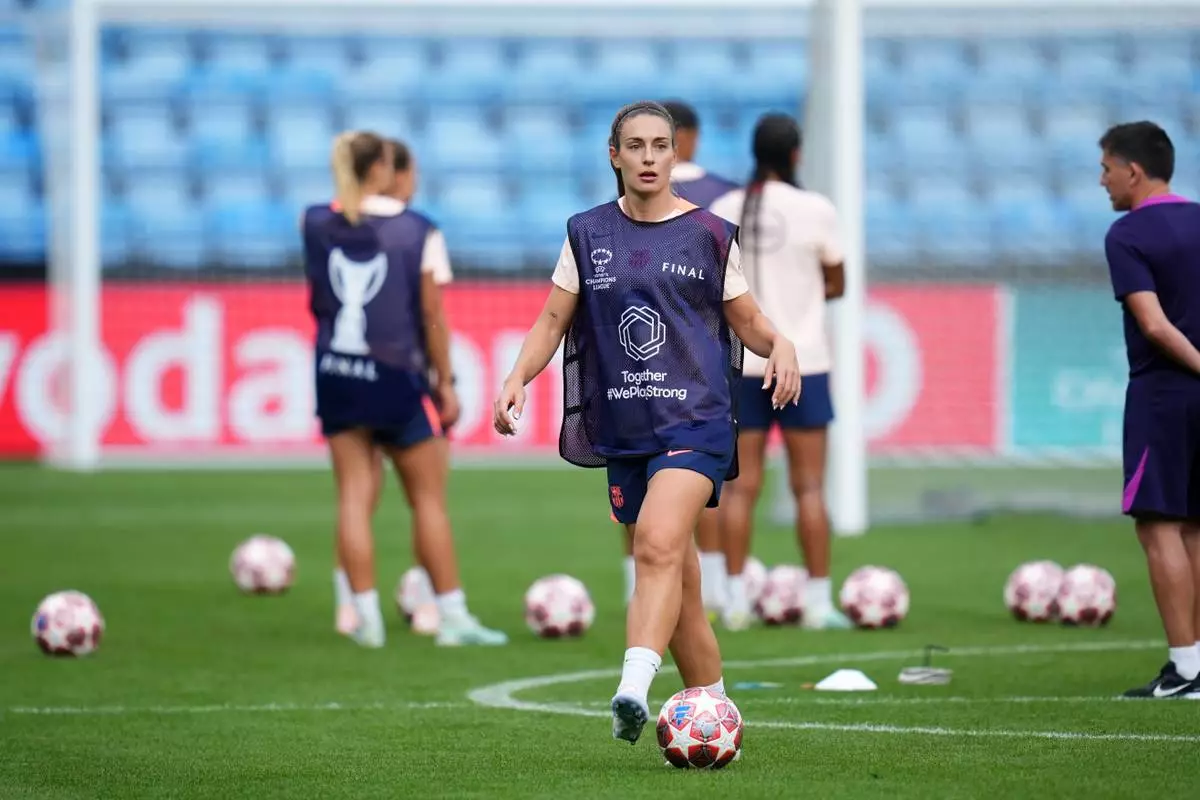
Barcelona's Alexia Putellas walks with a ball during a training session on the eve of the Women's Champions League final soccer match between FC Barcelona and OL Lyonnes, in Oslo, Friday, May 22, 2026. (AP Photo/Kirsty Wigglesworth)

Barcelona's Aitana Bonmati, right, and Sydney Schertenleib play with a ball during a training session on the eve of the Women's Champions League final soccer match between FC Barcelona and OL Lyonnes, in Oslo, Friday, May 22, 2026. (AP Photo/Kirsty Wigglesworth)
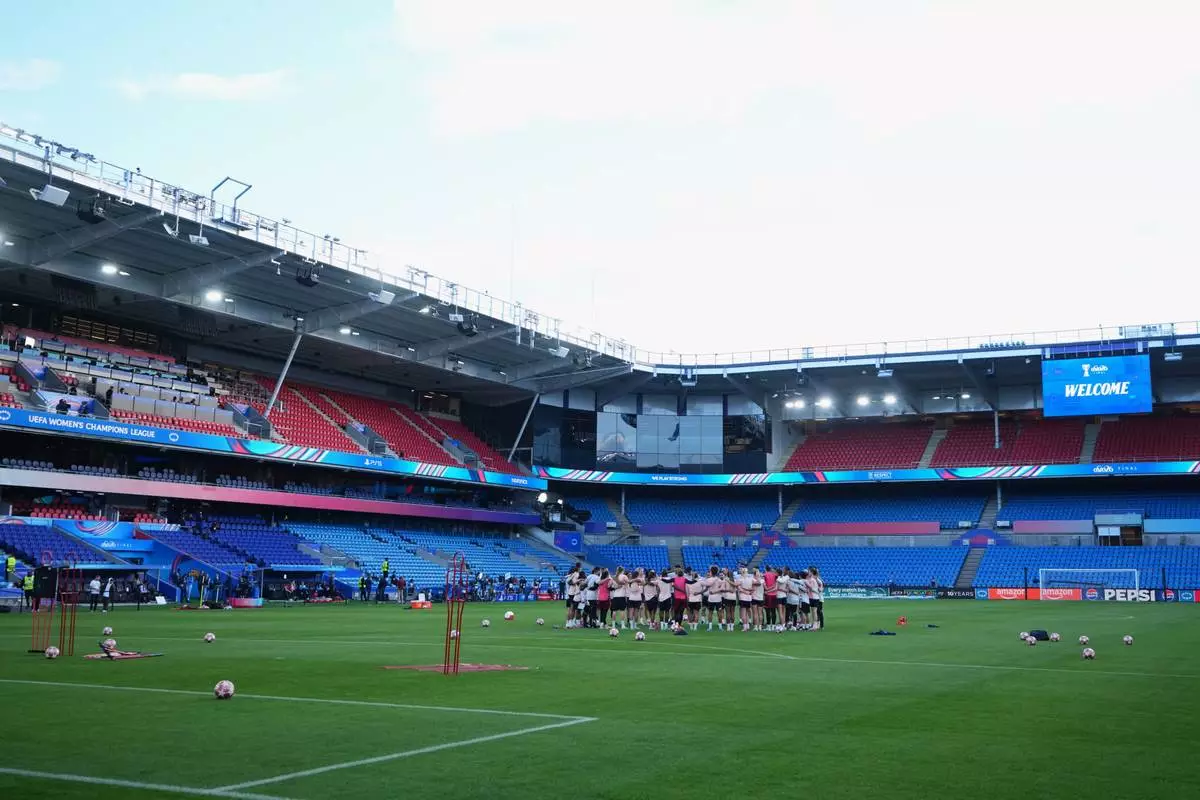
Lyonnes players and staff gather together on the pitch during a training session on the eve of the Women's Champions League final soccer match between FC Barcelona and OL Lyonnes, in Oslo, Friday, May 22, 2026. (AP Photo/Kirsty Wigglesworth)

Lyonnes' Ada Hegerberg reaches for the ball during a training session on the eve of the Women's Champions League final soccer match between FC Barcelona and OL Lyonnes, in Oslo, Friday, May 22, 2026. (AP Photo/Kirsty Wigglesworth)

Barcelona's Kika Nazareth plays with a ball during a training session on the eve of the Women's Champions League final soccer match between FC Barcelona and OL Lyonnes, in Oslo, Friday, May 22, 2026. (AP Photo/Kirsty Wigglesworth)

JOHANNESBURG (AP) — When South African infectious disease specialist Lucille Blumberg checked her email on the morning of May 1, while the country was celebrating the Labor Day holiday, an urgent message caught her attention.
A U.K.-based colleague had written about a passenger from a cruise ship sailing thousands of miles away in the Atlantic Ocean who had been evacuated and admitted to a Johannesburg hospital with suspected pneumonia. Others aboard the vessel were also sick.
The colleague, who monitors diseases in remote British overseas territories in the South Atlantic Ocean, asked Blumberg to follow up on the passenger, who had been evacuated from the ship in one of the territories, Ascension Island.
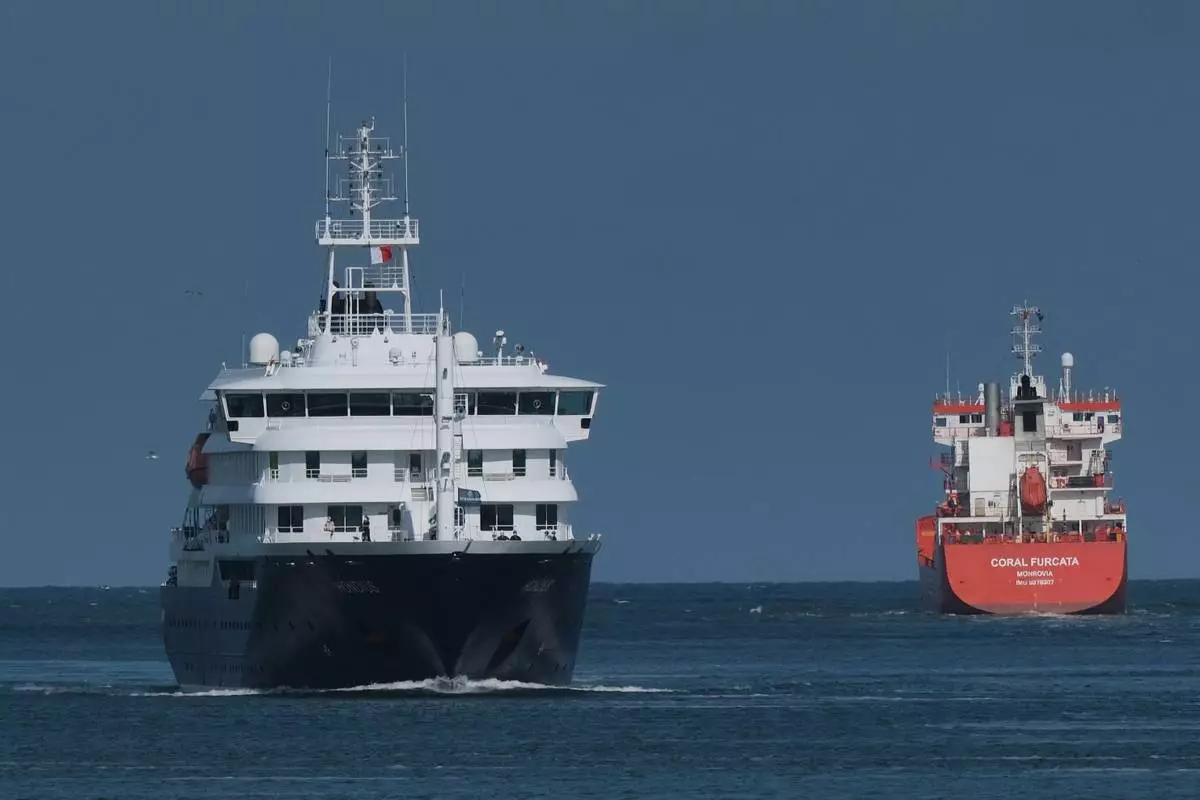
Blumberg and other experts at South Africa’s National Institute for Communicable Diseases were suddenly thrown into the race to identify the cause of an outbreak aboard the Dutch cruise ship MV Hondius.
“Even though it was a public holiday, we moved, we moved really fast," Blumberg told The Associated Press. "It was busy. There were many conversations. There were online discussions, and there was laboratory testing happening at the time.”
Within 24 hours, they had determined that the man’s illness was caused by hantavirus, a rare rodent-borne virus.
The elderly British man had arrived at a private hospital in Johannesburg days earlier and was seriously ill, but health workers weren’t sure of the underlying cause.
By the time he was evacuated from the ship, two elderly Dutch passengers who had been on board the MV Hondius cruise liner had already died, but there had been little alarm. Ascension Island health authorities had reported a cluster of illnesses on the ship that appeared to be pneumonia to the World Health Organization.
At first, Blumberg and her colleagues thought it might be Legionella, a bacterium that causes a serious form of pneumonia, Legionnaires’ disease. Or maybe bird flu.
"I called my infectious disease colleagues, and we had a caucus, and we discussed the usual ones,” Blumberg said. “Legionella is well described in outbreaks in hotels and on cruise ships, and influenza certainly is. These people had visited islands where avian influenza is well documented.”
Tests on all those were negative. The experts also ran an extensive panel of tests for other respiratory diseases. Also, all negative.
The team then began looking more closely at where the ship came from — Argentina — and the fact that passengers on board were avid bird watchers and had reportedly been to parts of South America where there were birds, but also rodents.
That pushed the South African disease experts toward another theory: the rare, rodent-borne hantavirus infection, which is found in parts of South America.
“It’s a well-described, not common, but it’s a well-described virus in Chile and Argentina,” Blumberg said. She added that their work was aided by collaboration with hantavirus experts from South America and the United States, facilitated by the WHO, the U.N. health agency.
“You can get onto a Zoom (call) online and ask your questions and get advice. This is not something every day. So that was quite extraordinary,” Blumberg said.
By then, it was Saturday morning. Blumberg called the head of the only laboratory in South Africa that can test for hantavirus.
“I said, we want to do hanta, and she said, ‘yeah, I’m coming.'”
The tests, carried out on the sick man's blood samples, came back positive for hantavirus that afternoon. The team did a second set of tests to be sure, Blumberg said.
Those positive tests, which also identified the Andes strain of hantavirus, allowed the WHO to inform the cruise ship what it was dealing with and announce an outbreak on board. While hantavirus is not easily spread from person to person, the WHO says the Andes virus can be transmitted between people.
The test results also led Blumberg to rush to collect blood samples from a Dutch woman — one of the first two cruise passengers to die — who had disembarked from the ship with her husband's body on the island of St. Helena and flown to South Africa, where she died.
A posthumous hantavirus test on her was also positive.
“It was a bit of a wow moment,” Blumberg said. “And at least once you know what you’re dealing with, it’s much easier to respond.”
The British man who was the first confirmed case of hantavirus infection from the cruise ship is improving in hospital, South Africa's health ministry has said. Meanwhile, the ship has arrived at the Dutch port of Rotterdam, where it was disinfected, and the remaining crew members disembarked.
“I’ve been doing outbreaks for 25 years. That’s what we do. We do them every day," she said. "I think the important thing was to respond immediately to a question that clearly was urgent and then to take it from there.”
AP coverage of the cruise ship hantavirus outbreak: https://apnews.com/hub/hantavirus
The MV Hondius cruise ship arrives at the Port of Rotterdam, Netherlands, Monday, May 18, 2026. (AP Photo/Patrick Post)
People in protective gear remove waste from the MV Hondius cruise ship after its arrival at the Port of Rotterdam, Netherlands, Monday, May 18, 2026. (AP Photo/Patrick Post)