Residents in Goma, in the eastern Democratic Republic of the Congo, are suffering from the Ebola outbreak amid months of insecurity, a humanitarian crisis, and economic paralysis.
At the port of Goma, the main link between the cities of Goma and Bukavu, several boats continue their daily operations, with few visible preventive measures in place for travelers.
The travel restrictions imposed on the border between the DRC and Rwanda in recent days plunge many families into uncertainty, particularly those who rely on small-scale cross-border trade.
"We already have experience with this disease. If we are asked to follow safety measures, we are ready to do so. We can cross the border while wearing face masks, maintain social distancing, and set up handwashing stations at the borders. But closing the borders is killing us. Many families depend on this daily trade for their livelihoods," said Kafira Maulu, an official responsible for caring for people with disabilities.
Informal workers, particularly motorcycle taxi drivers and small merchants, complained about the partial border closure.
"The border helps us a lot, especially people who take odd jobs. We wanted them to keep the border open with preventive measures against Ebola. Today, unemployment is rising, and we spend the whole day here without earning anything. The authorities should install handwashing stations and step up awareness campaigns instead of closing everything," said Jibrile Bahune, a motorcycle taxi driver at the Goma border.
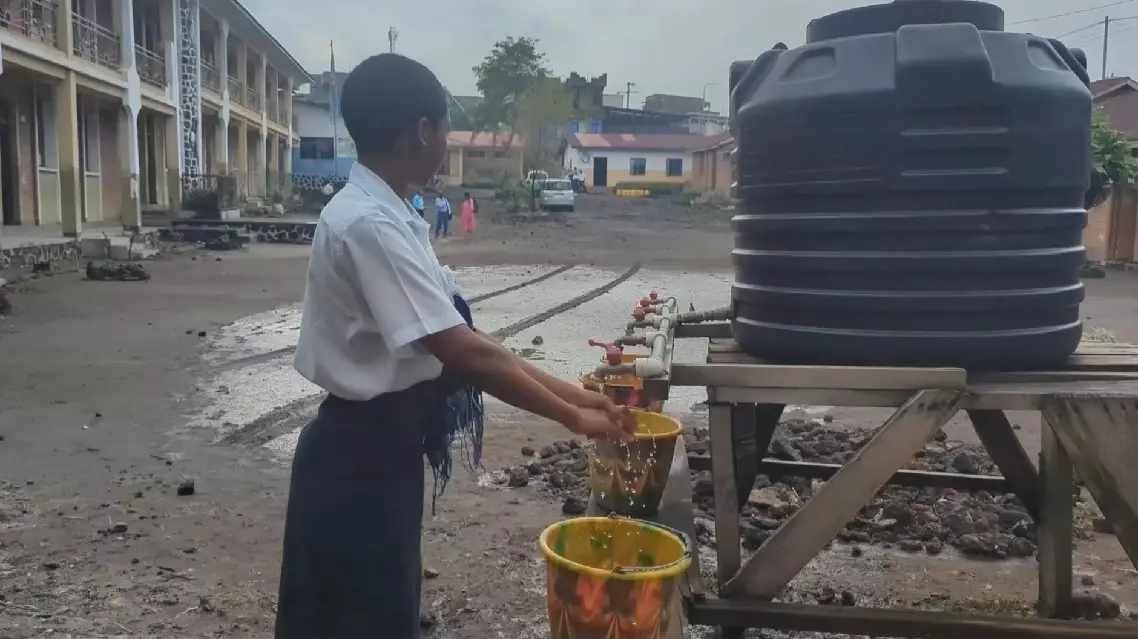
In response to Ebola outbreak, some local officials have stepped up preventive measures in public spaces. At the Virunga Central Market, handwashing stations are gradually being installed at various entrances.
"We have started installing handwashing stations in the market to prevent the spread of the Ebola virus. But we still need support from health authorities and partners to expand these facilities and protect the population," said Mutwahiki Delphin, manager of Virunga's central market.
In some schools in Goma, temperature checks and hygiene measures have also been implemented to limit the risk of infection among students. But for many residents, protective measures remain difficult to access amid poverty exacerbated by the conflict.
"Many people can't even afford to buy a face mask or hand sanitizer. We are asking the authorities to provide face masks and hygiene products to the public free of charge so that everyone can protect themselves," said Evelyne, a pharmacy manager in Goma.
As health authorities continue their surveillance efforts, the people of Goma are trying to cope with a dual crisis: ongoing insecurity and the fear of a new Ebola outbreak.
Goma residents battle Ebola outbreak amid insecurity, economic collapse
Goma residents battle Ebola outbreak amid insecurity, economic collapse