More than 30 Siberian tiger cubs have been born at the Siberian Tiger Park in Hailin City, northeast China's Heilongjiang Province since early April, as the endangered species enters its annual peak breeding period, with dedicated keepers providing meticulous round-the-clock care to ensure their healthy development.
Inside the incubators, the tiny, fluffy creatures with their eyes still partially closed are receiving constant monitoring, as they have not yet passed the critical survival period.
Maintaining stable body temperature is one of the most crucial tasks for their keepers during the first few days of the cubs' life.
"This little tiger was born just three days ago. Newborn cubs often have unstable body temperatures, so we place them in incubators that maintain a constant temperature of around 28 degrees Celsius to help them reach a normal body temperature that usually ranges between 36.5 and 38 degrees Celsius," said Yang Zhongliang, a keeper at the Siberian Tiger Park.
Since the first cub was born in April, the park has welcomed over 30 new arrivals. Keepers feed the hungry cubs every four to six hours, a demanding schedule that requires careful attention and observation to ensure no cub is missed.
Distinguishing between the nearly identical-looking cubs might seem like a difficult task, but the experienced keepers have developed reliable methods. "Each tiger's stripes are as unique as human fingerprints. We also notice differences in their facial features—some have big eyes, others have smaller ones. We name them based on these distinctive characteristics, and we also assign names based on their birth order and their mother's identification number," Yang explained.
Beyond regular milk feedings, the daily routine for these cubs involves rigorous health monitoring, including temperature checks, weighing, and assisting with bowel movements.
"From birth to weaning, it takes about 80 to 90 days, during which we have to feed them milk every day. Starting from around 30 days old, we gradually introduce minced meat into their diet," he added.
As the cubs grow bigger and stronger, they get to enjoy their first taste of the outdoors. When the weather is nice, keepers would take the 40-day-old cubs to lawns outside for some sunshine and physical exercise, which helps promote the cubs' growth and develop their reflexes.
The peak natural breeding season for Siberian tigers runs from April to June each year, and cubs born during this period tend to have a higher survival rate.
Siberian tigers, mainly found in the cold regions of northeast China and Russia's Siberia, are listed as one of the world's top 10 most endangered animals.
The Siberian Tiger Park in Hailin is one of the three tiger parks--all in the northeast--under the China Hengdaohezi Feline Breeding Center, the world's largest breeding center for Siberian tigers. Since the center was established in 1986 -- with just eight tigers at the time -- the park has bred over 1,100 Siberian tigers.
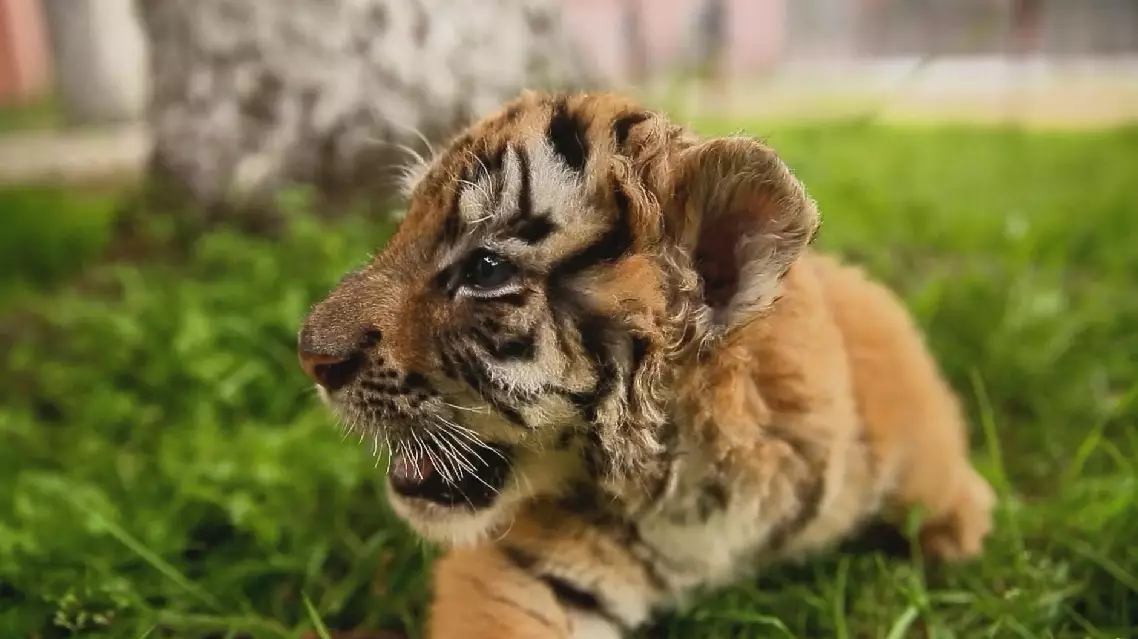
Over 30 Siberian tiger cubs born during peak breeding season in northeast China