Skip to Content Facebook Feature Image

Xizang's progress proves China's outcome-driven approach to human rights: scholar

China

China

China

Xizang's progress proves China's outcome-driven approach to human rights: scholar

2026-05-24 17:48 Last Updated At:05-25 00:57

The past 75 years of progress in Xizang Autonomous Region since its peaceful liberation proves the success of China's outcome-driven approach to human rights works, said a scholar.

In an interview with China Global Television Network (CGTN), David W. Ferguson, honorary chief English editor of China's Foreign Languages Press, stressed that despite unfounded criticism from Western countries, the constantly-improving standard of living in Xizang represents a resounding achievement for human rights.

"You can look at human rights from the perspective of processes, votes, elections, choosing your leader, free speech, or you can look at human rights from the perspective of outcomes. A roof over your head, food on the table, clothes on your back, a school for your kids, safe streets, a clean environment, health and welfare," said Ferguson.

"The West makes a great show of its superiority on the basis that they have great processes. Poor people in developing countries, and indeed people all over the world, don't need processes, they need outcomes, they need these things that I have just listed. And what China focuses on is outcomes, and what China has been focusing on in Xizang since the peaceful liberation is delivering outcomes. And anybody who thinks that things are not improving in China is simply living in a different world from reality," he said.

Xizang's progress proves China's outcome-driven approach to human rights: scholar

Xizang's progress proves China's outcome-driven approach to human rights: scholar

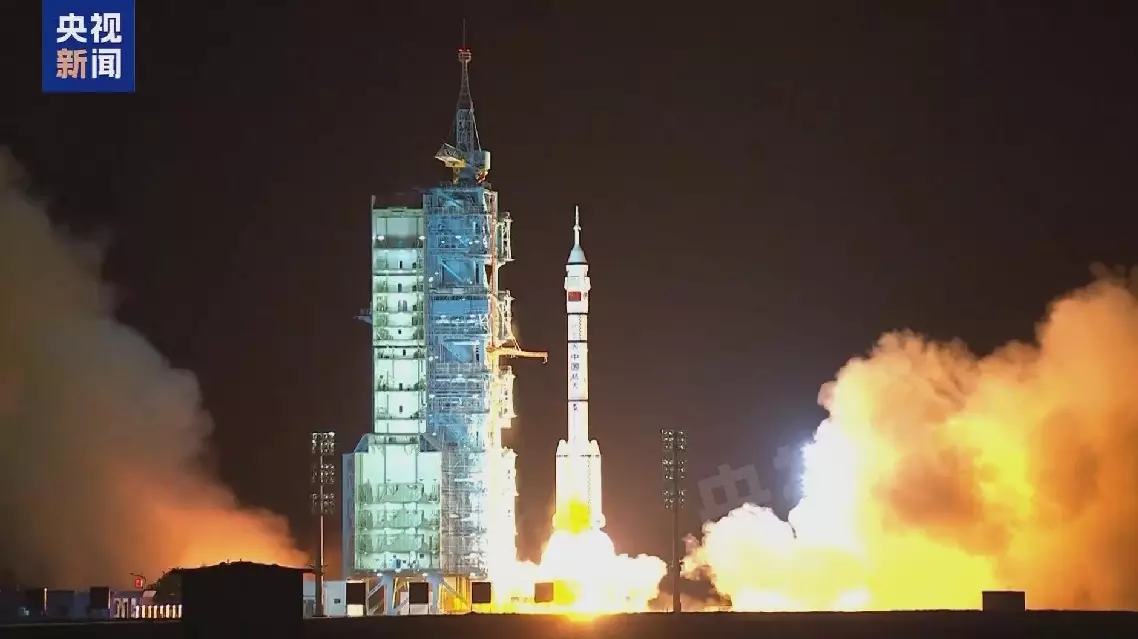
China successfully launched the Shenzhou-23 crewed spaceship on Sunday night to send three astronauts to its orbiting space station, with newly released footage from China Media Group (CMG) showcasing the stunning ascent from multiple perspectives.

The spaceship, atop a Long March-2F carrier rocket, blasted off from the Jiuquan Satellite Launch Center in northwest China at 23:08 Beijing Time (15:08 GMT).

The crew members consist of mission commander Zhu Yangzhu, and fellow astronauts Zhang Zhiyuan and Lai Ka-ying, who is also the first astronaut from China's Hong Kong Special Administrative Region.

In another notable first, one of the trio is set to stay at the Tiangong space station for a year, double the usual duration of previous Shenzhou missions.

After entering orbit, the Shenzhou-23 spaceship successfully docked with the radial port of Tiangong's core module Tianhe, forming a combination of three modules and three spacecraft.

Shenzhou-23 marks the 40th flight mission of China's manned space program and the seventh manned flight mission since the Tiangong space station entered its application and development phase in late 2022.

Footage shows liftoff of Shenzhou-23 spaceship from multiple angles

Footage shows liftoff of Shenzhou-23 spaceship from multiple angles

Recommended Articles