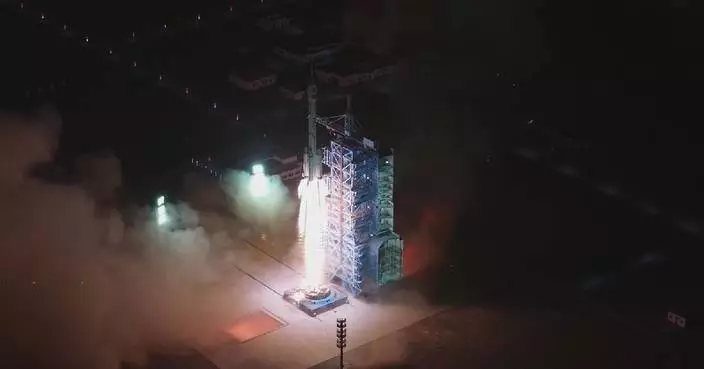
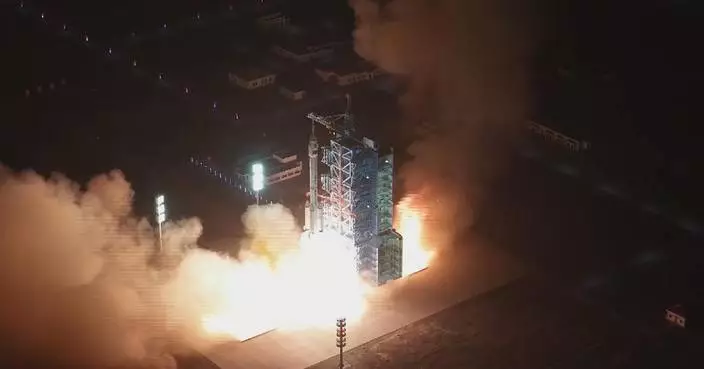
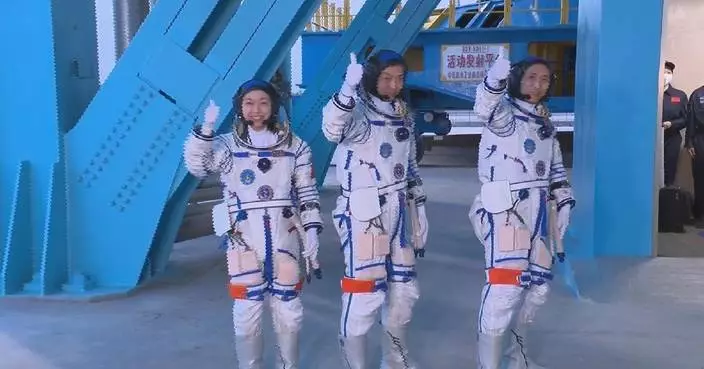
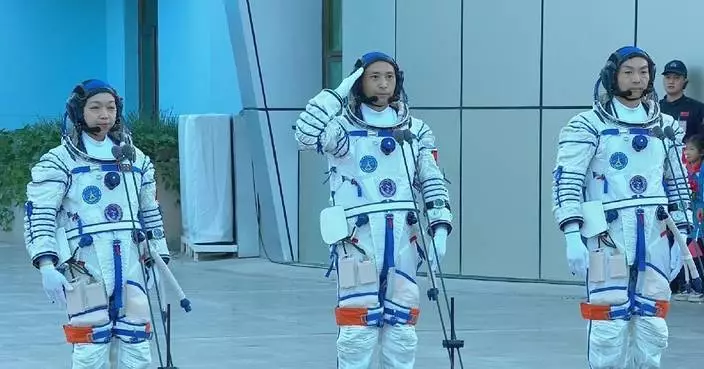
The time Chinese astronauts spend in orbit has expanded dramatically over the past two decades, from less than a day during the country's first manned space mission to a planned one-year stay by an astronaut on the Shenzhou-23 mission.
China's manned space mission started with the Shenzhou-5 mission in October 2003. Yang Liwei, the first Chinese astronaut to go to space, orbited Earth 14 times over 21 hours and 23 minutes, making China the third nation to independently master manned space technology.
From 2005 to 2008, the Shenzhou-6 and Shenzhou-7 missions marked key milestones for China, including its first multi-person, multi-day spaceflight and its first spacewalk, signaling a critical transition from experimental to application-oriented flights.
Between 2012 and 2016, Chinese astronauts on the Shenzhou-9 to Shenzhou-11 missions spent double-digit days in orbit and began conducting cutting-edge scientific and application experiments in space.
In April 2021, China began assembling its space station with the launch of the Tianhe core module. The Shenzhou-12 crew, the first to live aboard the station, completed a 93-day stay, achieving the three-month residency target.
The Shenzhou-13 mission from 2021 to 2022 raised the bar to six months, and from Shenzhou-14 onward, crew rotations stabilized at around six months.
In January 2026, the three-member Shenzhou-20 crew returned to Earth after a 204-day stay in orbit. The mission saw astronaut Chen Dong become the first Chinese astronaut to spend 400 cumulative days in orbit.
The Shenzhou-21 crew, now up for rotation, has extended their stay in orbit to nearly seven months and is poised to set a new record for the longest in-orbit duration by a Chinese space crew.
The three-member Shenzhou-23 crew was launched into space at 23:08 Sunday (Beijing Time) from the Jiuquan Satellite Launch Center in northwest China. The China Manned Space Agency (CMSA) said the astronaut selected for the one-year in-orbit stay experiment will be determined based on how the mission unfolds.
During the year-long stay, China will implement its first space-based human physiology research program to collect crucial data on how astronauts respond to long-duration spaceflight, according to the CMSA.
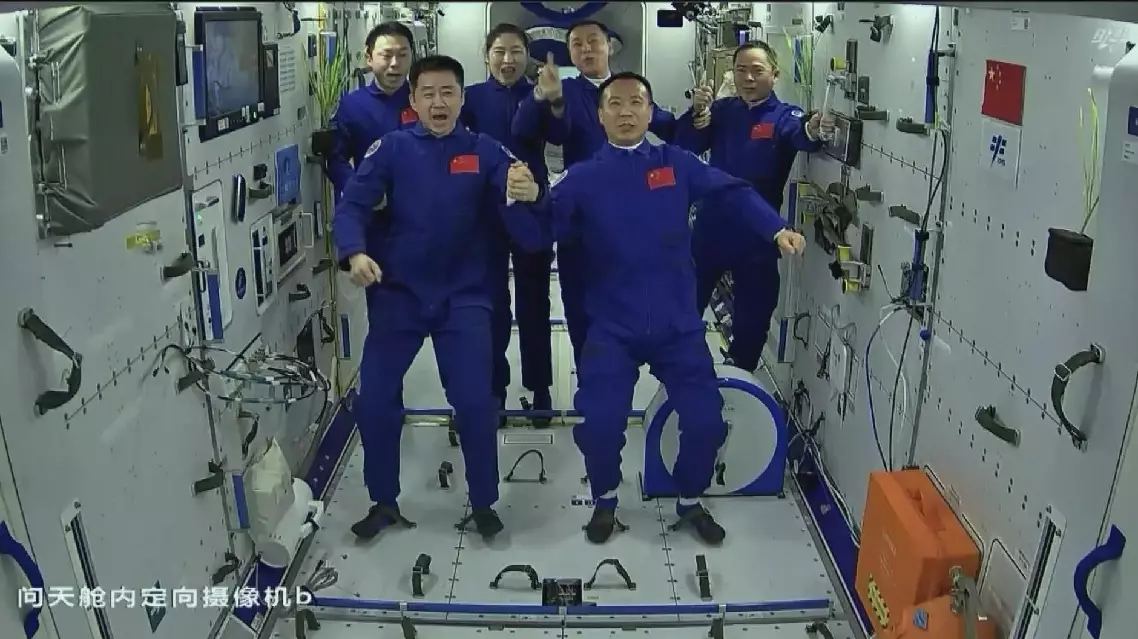
China's manned space missions grow from one-day flights to year-long orbital stays
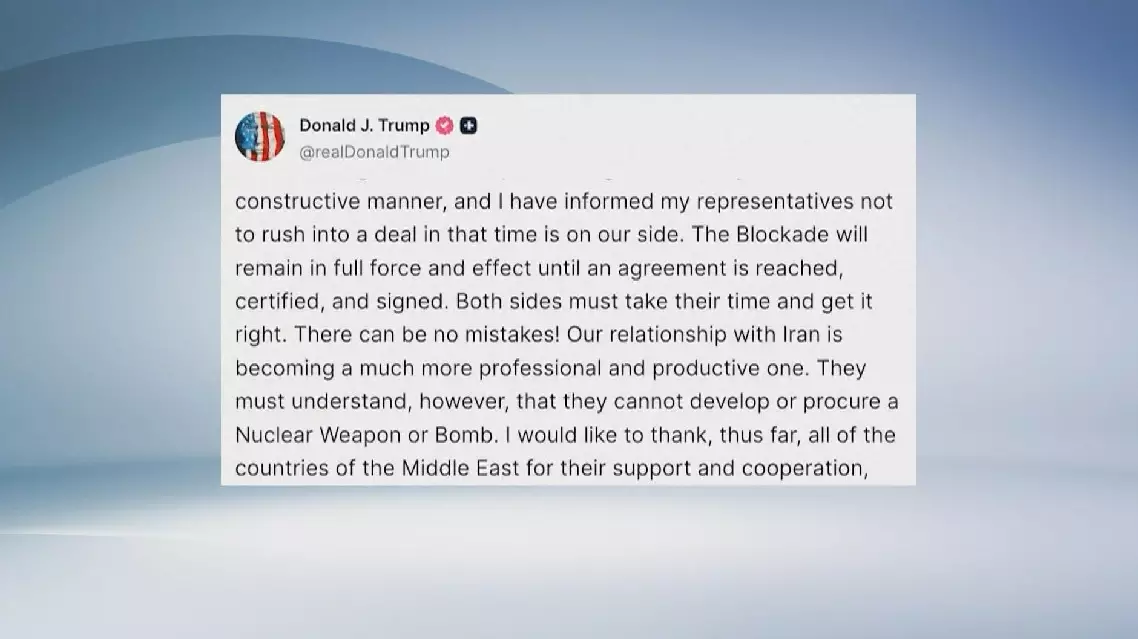
U.S. President Donald Trump said on Sunday that he has told U.S. negotiators not to rush into a deal with Iran because "time is on our side."
"The Blockade will remain in full force and effect until an agreement is reached, certified, and signed," he said in a post on Truth Social. He added: "Both sides must take their time and get it right."
The president reiterated that Iran will not be allowed to develop or procure a nuclear weapon.
He also said the "negotiations are proceeding in an orderly and constructive manner."
The post came a day after Trump announced that a peace agreement with Iran had been "largely negotiated," subject to finalization by the United States, Iran, and other relevant countries in the Middle East. He said the Strait of Hormuz would be opened as part of the agreement.
An Israeli government source said on Sunday that Trump has told Israeli Prime Minister Benjamin Netanyahu that he would not sign a final deal with Iran unless Tehran dismantled its nuclear program and removed all enriched uranium from its territory.
A senior U.S. official said Sunday that a deal with Iran is not expected to be signed on the day.
Crucial details are still under negotiation and it could take several days for the deal's approval, according to the official.
Iran's Supreme Leader Mojtaba Khamenei has approved the broad template of the agreement, but whether this will turn into a final agreement is still an open question, the official said.
Iranian President Masoud Pezeshkian said on Sunday that Iran is ready to reassure the world that it is not seeking nuclear weapons.
Iran is not seeking instability in the region, Pezeshkian said in an interview with the Iranian Students News Agency.
It is rather Tel Aviv that is driving regional instability, he said.
The Iranian president also emphasized that Iranian negotiators will never compromise on the country's "honor and dignity."
The New York Times reported Sunday that a key element of the proposed agreement was an apparent commitment by Tehran to give up its stockpile of highly enriched uranium.
In response, the Tasnim News Agency reported on Sunday that, contrary to claims by some Western media outlets that Iran had committed to removing nuclear materials from the country as part of the MoU, Iran had not made any such commitment.
Iran has not accepted any action on the nuclear issue at this stage of talks with the U.S., and nuclear negotiations have been postponed until after the potential end of the war and the implementation of some measures by the U.S. in this phase, the report said.
Tasnim also rejected the claim, attributed to Iran in the agreement, that it had committed to suspending nuclear activities for 20 years, which was reported by some regional media outlets on Sunday.
There are no details regarding Iranian nuclear measures in the potential MoU, Tasnim reported.
Trump says U.S. will not "rush into a deal" with Iran