|
DUBAI, UAE, May 25, 2026 /PRNewswire/ -- The next phase of global finance will be built on tokenized infrastructure that operates continuously across borders, according to Ben Zhou, Co-founder and CEO of Bybit.
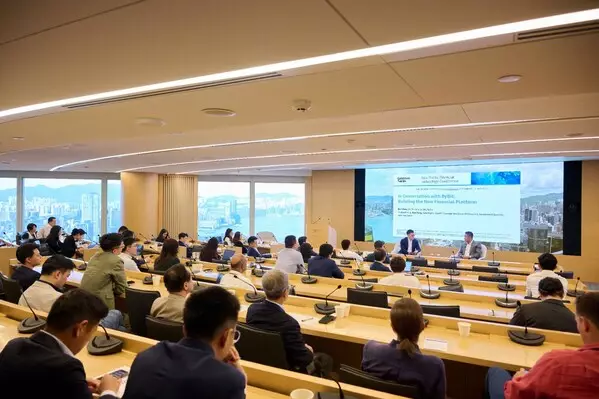
Speaking at the 2026 Goldman Sachs Asia Pacific FinTech Conference during a fireside chat titled "In Conversation with Bybit: Building the New Financial Platform," moderated by Ken Tang, Head of FIG China & Digital Assets Coverage in Asia, Investment Banking at Goldman Sachs, Ben shared his view that tokenization, stablecoins, and AI-driven financial systems are accelerating the convergence between traditional capital markets and blockchain infrastructure.
"The current financial system is still constrained by geography, operating hours, intermediaries, and settlement delays," Ben said. "Tokenization allows financial assets to move within a more connected and efficient global network."
During the discussion, Ben described how the digital asset industry is evolving beyond trading-focused platforms toward broader financial infrastructure that combines payments, trading, collateral management, yield products, and tokenized real-world assets within a unified ecosystem.
"The competition is no longer just about product speed," Ben said. "Compliance, licensing, institutional trust, and global distribution capability are becoming the real differentiators for this industry."
Ben noted that Bybit's long-term strategy centers on building infrastructure that can support both institutional and retail participation in tokenized financial markets. This includes the expansion of tokenized real-world assets (RWAs), such as equities and commodities, designed to improve accessibility and capital mobility across markets.
"We believe many traditional financial assets will eventually become tokenized," Ben said. "Once assets move on-chain, they become more transferable, more interoperable, and more efficient to use across settlement, collateral, and treasury systems."
The conversation also focused on the growing role of stablecoins in global payments and settlement infrastructure. Through initiatives such as MyBank and broader fiat connectivity efforts, Bybit is working to bridge traditional banking systems with blockchain-native liquidity rails.
"Stablecoins are becoming an important layer for global value transfer and settlement," Ben said. "Over time, much of this infrastructure may become invisible to end users, similar to how internet protocols operate today behind modern applications."
Addressing institutional adoption, Ben emphasized the importance of combining blockchain efficiency with institutional-grade governance and controls. He highlighted Bybit's ongoing investments in regulated custody frameworks, enhanced cold wallet and HSM security systems, compliance monitoring, and risk segregation capabilities.
"Institutional adoption depends on trust, governance, and operational resilience," Ben said. "The platforms that succeed long term will be the ones that can combine innovation with strong risk management and regulatory alignment."
Ben also discussed the growing convergence of AI and blockchain infrastructure, particularly as financial systems become increasingly programmable. He noted that AI agents are expected to play a larger role in trading, treasury management, and liquidity operations over time, while stressing the importance of permission controls and oversight frameworks.
"AI and blockchain naturally complement each other," Ben said. "Financial systems are becoming more programmable, but institutional adoption will require clear governance and risk management standards."
Bybit's participation at the Goldman Sachs Asia Pacific FinTech Conference reflects the company's continued focus on institutional engagement and the development of compliant infrastructure for the next generation of global financial markets.
#Bybit / #NewFinancialPlatform
About Bybit
Bybit is the world's second-largest cryptocurrency exchange by trading volume, serving a global community of over 80 million users. Founded in 2018, Bybit is redefining openness in the decentralized world by creating a simpler, open and equal ecosystem for everyone. With a strong focus on Web3, Bybit partners strategically with leading blockchain protocols to provide robust infrastructure and drive on-chain innovation. Renowned for its secure custody, diverse marketplaces, intuitive user experience, and advanced blockchain tools, Bybit bridges the gap between TradFi and DeFi, empowering builders, creators, and enthusiasts to unlock the full potential of Web3. Discover the future of decentralized finance at Bybit.com.
For more details about Bybit, please visit Bybit Press
For media inquiries, please contact: media@bybit.com
For updates, please follow: Bybit's Communities and Social Media
Discord | Facebook | Instagram | LinkedIn | Reddit | Telegram | TikTok | X | Youtube
DUBAI, UAE, May 25, 2026 /PRNewswire/ -- The next phase of global finance will be built on tokenized infrastructure that operates continuously across borders, according to Ben Zhou, Co-founder and CEO of Bybit.
Speaking at the 2026 Goldman Sachs Asia Pacific FinTech Conference during a fireside chat titled "In Conversation with Bybit: Building the New Financial Platform," moderated by Ken Tang, Head of FIG China & Digital Assets Coverage in Asia, Investment Banking at Goldman Sachs, Ben shared his view that tokenization, stablecoins, and AI-driven financial systems are accelerating the convergence between traditional capital markets and blockchain infrastructure.
"The current financial system is still constrained by geography, operating hours, intermediaries, and settlement delays," Ben said. "Tokenization allows financial assets to move within a more connected and efficient global network."
During the discussion, Ben described how the digital asset industry is evolving beyond trading-focused platforms toward broader financial infrastructure that combines payments, trading, collateral management, yield products, and tokenized real-world assets within a unified ecosystem.
"The competition is no longer just about product speed," Ben said. "Compliance, licensing, institutional trust, and global distribution capability are becoming the real differentiators for this industry."
Ben noted that Bybit's long-term strategy centers on building infrastructure that can support both institutional and retail participation in tokenized financial markets. This includes the expansion of tokenized real-world assets (RWAs), such as equities and commodities, designed to improve accessibility and capital mobility across markets.
"We believe many traditional financial assets will eventually become tokenized," Ben said. "Once assets move on-chain, they become more transferable, more interoperable, and more efficient to use across settlement, collateral, and treasury systems."
The conversation also focused on the growing role of stablecoins in global payments and settlement infrastructure. Through initiatives such as MyBank and broader fiat connectivity efforts, Bybit is working to bridge traditional banking systems with blockchain-native liquidity rails.
"Stablecoins are becoming an important layer for global value transfer and settlement," Ben said. "Over time, much of this infrastructure may become invisible to end users, similar to how internet protocols operate today behind modern applications."
Addressing institutional adoption, Ben emphasized the importance of combining blockchain efficiency with institutional-grade governance and controls. He highlighted Bybit's ongoing investments in regulated custody frameworks, enhanced cold wallet and HSM security systems, compliance monitoring, and risk segregation capabilities.
"Institutional adoption depends on trust, governance, and operational resilience," Ben said. "The platforms that succeed long term will be the ones that can combine innovation with strong risk management and regulatory alignment."
Ben also discussed the growing convergence of AI and blockchain infrastructure, particularly as financial systems become increasingly programmable. He noted that AI agents are expected to play a larger role in trading, treasury management, and liquidity operations over time, while stressing the importance of permission controls and oversight frameworks.
"AI and blockchain naturally complement each other," Ben said. "Financial systems are becoming more programmable, but institutional adoption will require clear governance and risk management standards."
Bybit's participation at the Goldman Sachs Asia Pacific FinTech Conference reflects the company's continued focus on institutional engagement and the development of compliant infrastructure for the next generation of global financial markets.
#Bybit / #NewFinancialPlatform
About Bybit
Bybit is the world's second-largest cryptocurrency exchange by trading volume, serving a global community of over 80 million users. Founded in 2018, Bybit is redefining openness in the decentralized world by creating a simpler, open and equal ecosystem for everyone. With a strong focus on Web3, Bybit partners strategically with leading blockchain protocols to provide robust infrastructure and drive on-chain innovation. Renowned for its secure custody, diverse marketplaces, intuitive user experience, and advanced blockchain tools, Bybit bridges the gap between TradFi and DeFi, empowering builders, creators, and enthusiasts to unlock the full potential of Web3. Discover the future of decentralized finance at Bybit.com.
For more details about Bybit, please visit Bybit Press
For media inquiries, please contact: media@bybit.com
For updates, please follow: Bybit's Communities and Social Media
Discord | Facebook | Instagram | LinkedIn | Reddit | Telegram | TikTok | X | Youtube
** This press release is distributed by PR Newswire through automated distribution system, for which the client assumes full responsibility. **
Bybit CEO Ben Zhou: Tokenization Will Reshape Global Finance Faster Than Expected at Goldman Sachs Asia Pacific FinTech Conference 2026

Bybit CEO Ben Zhou: Tokenization Will Reshape Global Finance Faster Than Expected at Goldman Sachs Asia Pacific FinTech Conference 2026
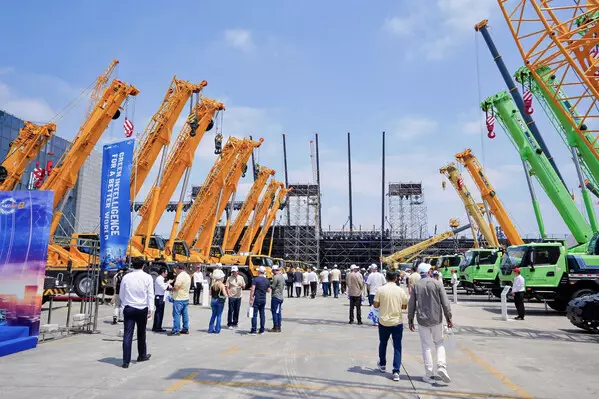
XUZHOU, China, May 25, 2026 /PRNewswire/ -- From May 18 to 22, 2026, XCMG hosted its eighth International Customer Festival, featuring an overseas crane sub-venue under the theme "Green Intelligence for a Better World." The event presented more than 20 flagship crane models spanning wheeled and crawler crane series, headlined by the debut of the company's unmanned crane technology. The sub-venue highlighted the full strength of China's intelligent heavy equipment industry and pointed to emerging trends in global lifting technology.
World Premiere of M-Series Crawler Cranes: Raising the Bar for High-End Lifting
At the overseas crane sub-venue, XCMG launched the M-Series crawler cranes. Built on an entirely new technology platform, the M-Series offers enhanced performance and strong adaptability for demanding overseas applications, including wind power installation and large-scale infrastructure projects. "The M-Series redefines the standard for global mid-to-high-end crawler cranes, with reliability and site performance that are hard to match," said a Southeast Asian infrastructure project manager attending the premiere.
Live Demonstration of Unmanned Crane Operations: Gesture and Voice Control in the Spotlight
The exhibition's most striking moment came from XCMG's XCT50G6-1EV all-electric unmanned crane, which featured an industry-first combination of gesture and voice recognition for intelligent interaction. The live demonstration showed fully automated, operator-free construction scenarios with precise and seamless responses. "There was no one in the cab. The crane responded to gestures and voice commands to perform tasks. It's truly impressive—this is the future of crane technology," said a crane user from Denver, Colorado, after watching the unmanned crane in action.
Real-World Validation: Global Customers Put XCMG Cranes to the Test
XCMG let its equipment speak through hands-on, real-world testing. Customers test-drove the G2-Series XCA60G61-E all-terrain crane, experiencing its ultra-precise load-bearing telescoping technology, as well as the XCR90 rough-terrain crane, equipped with a visual assistance system and dual-pump load-sensing hydraulics for low-visibility operation. A Canadian crane operator noted, "The visual assistance system on the XCR90 is very smart. It's a great help, especially on jobs where sight lines are blocked."
From the M-Series launch to the global debut of unmanned technology, XCMG continues to push technological boundaries and deliver smarter, higher-quality lifting solutions to support infrastructure development worldwide.
** This press release is distributed by PR Newswire through automated distribution system, for which the client assumes full responsibility. **
XCMG Hoisting Machinery Unveils Intelligent Electric Crane Technology, Setting New Global Standards for Lifting