KAMPALA, Uganda (AP) — Ugandan health authorities on Monday reported two new Ebola cases, bringing the number of infections to seven.
All the cases are linked to the outbreak in neighboring Congo, which appears to have started several days or weeks before Congolese authorities declared it on May 15.
A 59-year-old Congolese man was admitted to a hospital in Kampala, the Ugandan capital, on May 11, and died three days later, before it was known he was suffering from the Ebola virus. Two other Congolese nationals who sought medical care in Uganda later tested positive for Ebola.
Ugandan health authorities on Saturday confirmed the first local infections: a driver and a health worker exposed to the Congolese patient who died on May 11. Two more health workers at a private hospital in Kampala have since tested positive, the Ministry of Health said Monday.
“Both patients have been admitted to the designated treatment unit and are now receiving care,” Dr. Charles Olaro, the national director of health services, said in a statement.
President Yoweri Museveni has urged Ugandans to “ stop shaking hands ” as part of measures to avoid infection. He also ordered the postponement of an annual religious event that attracts thousands of pilgrims, from Congo and elsewhere, who converge around a Catholic basilica just outside Kampala by June 3.
Other measures include the temporary suspension of all public transportation and flights between Congo and Uganda.
In Congo, suspected Ebola cases have topped 900, mainly in eastern Ituri province where the ongoing outbreak is centered, authorities said Sunday. The response has been hampered by fear, anger and frustration among locals including attacks on treatment centers, as well as distrust of authorities in a region long plagued by armed violence.
Congo has had more than a dozen Ebola outbreaks over the decades. Health experts say international aid cuts last year by the United States and other rich nations are devastating for eastern Congo because of the region's unique problems.
Aid groups fighting this Ebola outbreak say they don’t have the equipment they need, such as face shields and suits to protect health workers from infection, testing kits, and body bags and other materials needed to safely bury the bodies of victims, which can be highly contagious.
The Bundibugyo type of Ebola virus responsible for the outbreak has no approved vaccine or treatment. The outbreak has been declared a global health emergency.
Tracing and isolating Ebola contacts is seen as key to stopping the spread of the disease, which usually manifests as hemorrhagic fever.
A family of fruit bats is believed to be the natural hosts of the viruses that cause Ebola, according to the World Health Organization. Ebola is spread by contact with the bodily fluids of an infected person or contaminated materials.
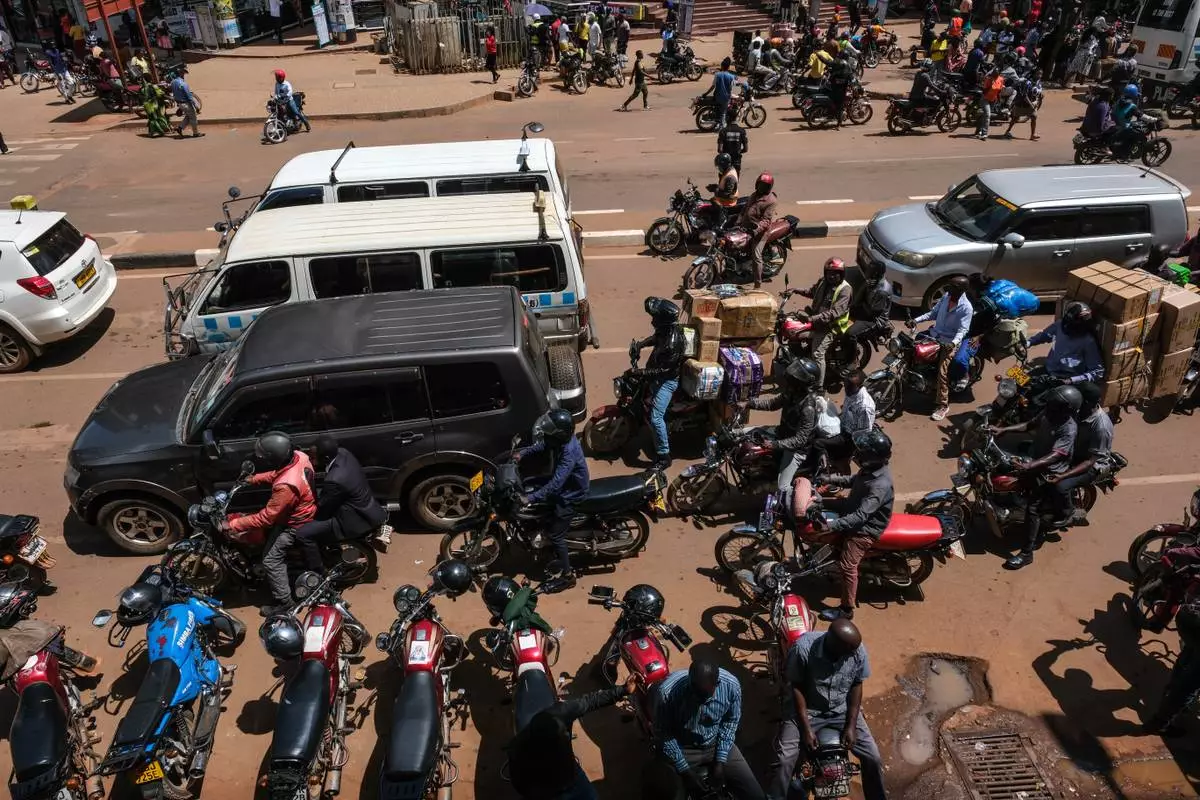
A general view of a busy street in Kampala, Uganda, Tuesday, May 19, 2026. (AP Photo/Hajarah Nalwadda)
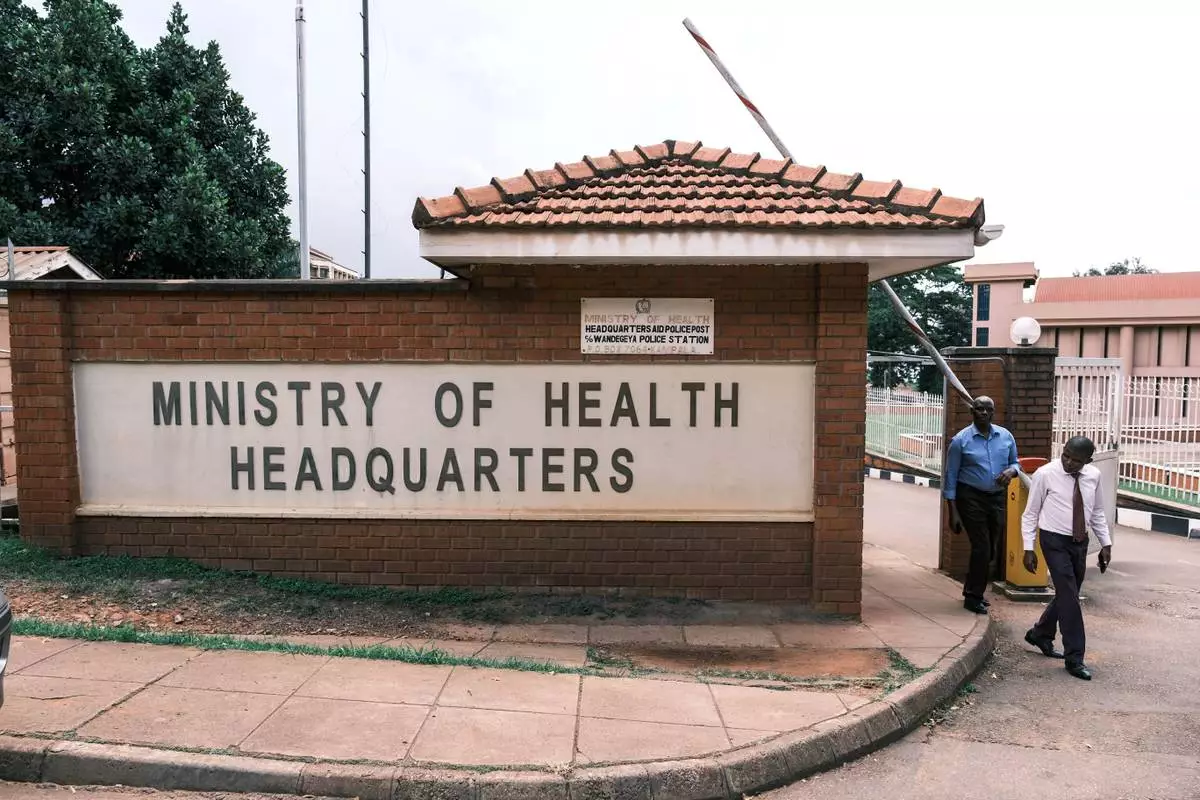
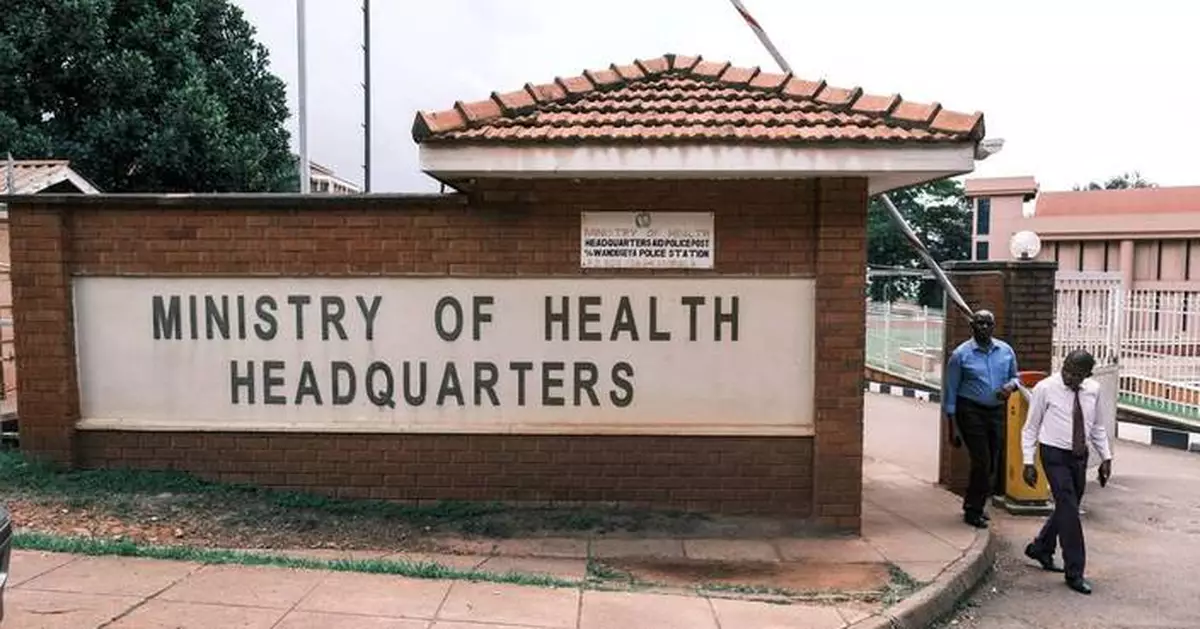
People walk out of the Ministry of Health's Headquarters in Kampala, Uganda, Tuesday, May 19, 2026. (AP Photo/Hajarah Nalwadda)
VATICAN CITY (AP) — Pope Leo XIV has issued a sweeping manifesto about safeguarding humanity in the era of artificial intelligence, examining the many social areas that the technology is fundamentally reshaping.
Here are some excerpts from the 83-page document “Magnifica Humanitas” (Magnificent Humanity) released on Monday.
Leo says that disinformation “found a powerful amplifier” with AI through the ability to “manipulate content, images and videos,” which exposes people to “biased or misleading perspectives.” The pontiff said democracy is weakened when pragmatism, that is “what appears useful effective,” substitutes for truth. “Indifference to the truth leads, slowly but surely, to a descent to totalitarianism,” Leo wrote.
Leo said that those who control digital platforms, including social media, have a power that “should be constantly guided by the pursuit of truth or respect for human dignity.” The internet should be seen as “a setting in which inner freedom and critical thought can mature,’’ and not “an instrument of excessive distraction, homogenization or dominance.” The backdrop is that communication not only transmits information but creates culture.
Leo said the workplace must be governed by “the protection of employment opportunities and the irreplaceable role of the individual.” He warned that “the pursuit of greater profits cannot justify choices that systematically sacrifice jobs, because the human person is an end, not a means, and the economic order must remain subordinate to human dignity and the common good.” Leo also said governments must foster conditions that favor employment “since it is a primary good for families and for societies.”
Leo said that AI “can only bring conflict about more quickly and render it more impersonal.” He called for concrete criteria when making a decision to strike. That includes an identifiable chain of responsibility applying also to “those who design, train, authorize and employ technology,” and measures, so that target selection takes into account the difference between combatants and noncombatants, and the impact on defenseless populations. Non-negotiable requirements include guarantees of accountability and that deployment of lethal force cannot be automated. Leo also called for a shared international framework “to curb the technological arms race and ensure robust protection for civilians.”
Leo noted that the world’s wealth “is increasingly concentrated in fewer hands, widening inequalities.” In the age of AI and robotics, it is no longer possible to rely solely on the “invisible hand’ of the market,” Leo wrote, urging politicians to orient policies toward “the common good” and to promote “dignified work, social inclusion and an equitable distribution of the benefits of innovation.”
Leo underlined the role of digital networks — including online platforms, messaging systems, anonymous payment methods — in human trafficking, which he said “must be recognized as a contemporary form of slavery.” He warned that failing to respond to or tolerating these practices risks complicity in “today’s sins, which are akin to those of the past when slavery was being concealed and justified.”
Leo also addressed the environmental costs of the data centers that are generating AI models, consuming “enormous amounts of energy and water, significantly influencing carbon dioxide emissions.” As demands increase, especially for large language models, Leo called for the development of more sustainable technological solutions.
Leo called for an alliance among policymakers, educational institutions and families to help navigate the “culture of immediacy and hyperstimulation” created by digital media. He also highlighted how AI amplifies the danger of predation on young people, and warned against having personal mobile devices at too young an age. “Online phenomena such as grooming, blackmail and the sexual exploitation of minors are not uncommon, and are made more insidious by the use of fake profiles, algorithms that facilitate dangerous contact, and AI tools capable of manipulating images and videos,” the pope wrote.
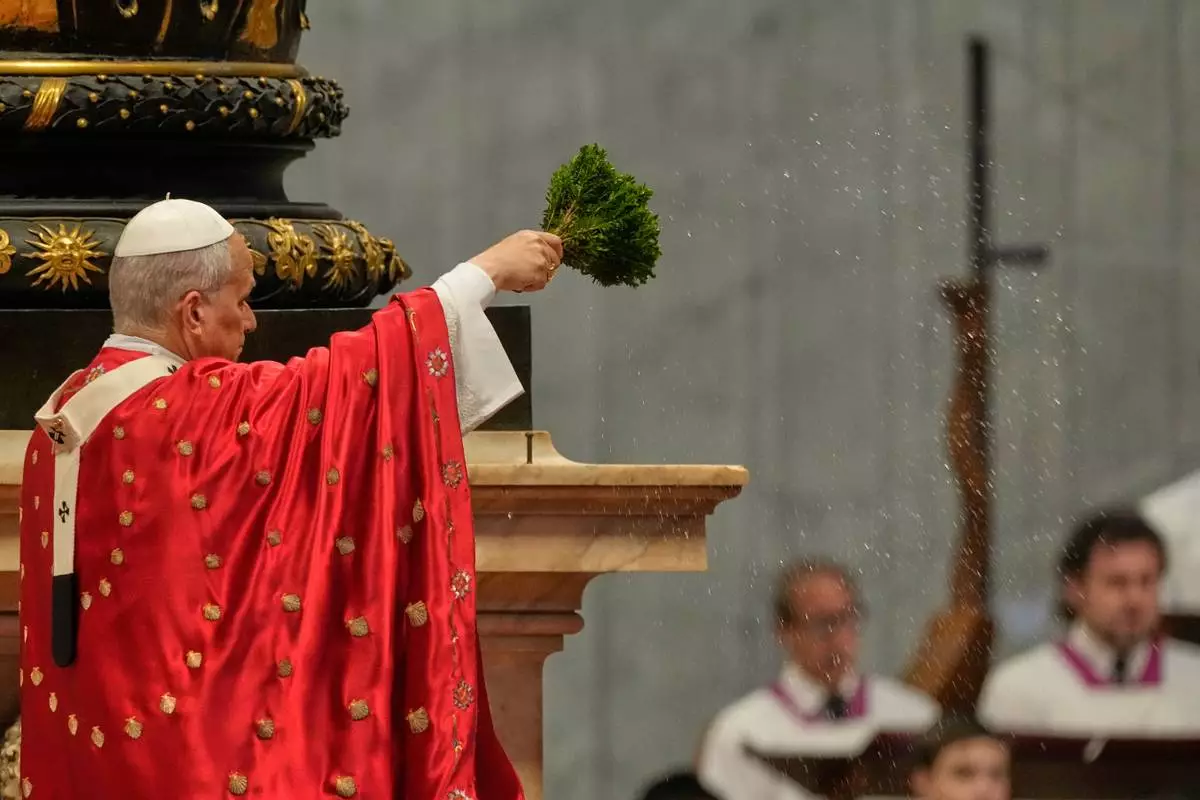
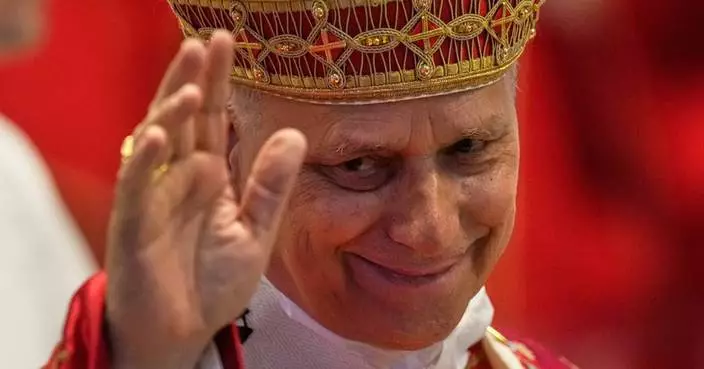
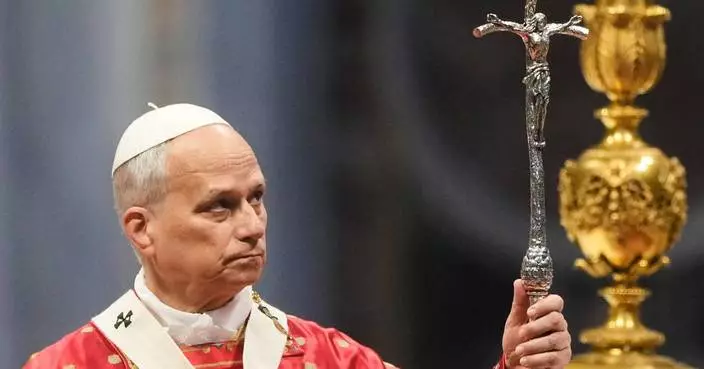
Pope Leo XIV blesses faithful as he celebrates the Pentecost Mass in St. Peter's Basilica, at the Vatican, Sunday, May 24, 2026. (AP Photo/Gregorio Borgia)