A Serbian train driver has hailed the success of the Chinese-built high-speed rail section which forms the landmark Belgrade-Budapest Railway, noting the groundbreaking cooperation project has not only slashed travel times but also forged lasting bonds between Serbia and China.
Seen as a flagship project of the China-proposed Belt and Road Initiative in Central and Eastern Europe, the Hungary-Serbia railway stretches for some 340 kilometers, including more than 180 kilometers through Serbia.
The railway section on the Serbian side was fully completed last October after eight years of construction, with Chinese and Serbian teams carrying out extensive technical exchanges and training programs which seeks to build a corps of homegrown high-speed rail talent in Serbia.
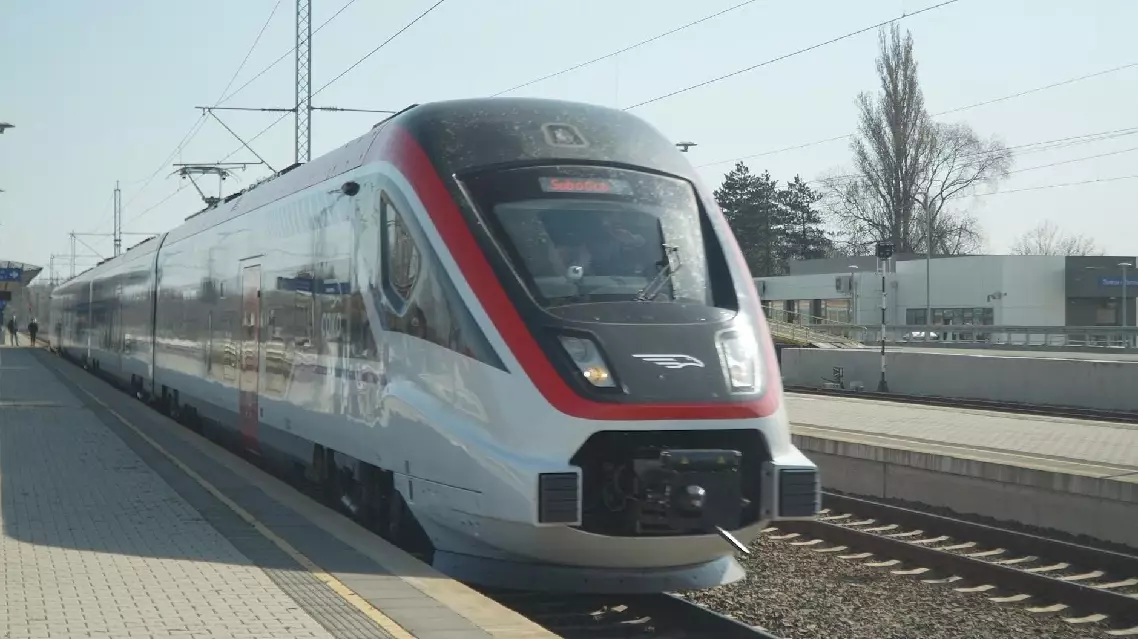
Train driver Nenad Nesic, a veteran railway-man with more than three decades of experience, was one of the trainees. During his expansive career, Nesic has commanded everything from steam and electric locomotives to now taking control of the new fleet Chinese high-speed trains, which have a design speed of 200 kilometers per hour.
He said the Chinese trains -- which have been tailored to local conditions -- are some of the finest machines he has ever handled.
"This train is unique. It combines safety, comfort, and speed. For instance, it has power batteries, so it can keep running through areas without electricity, which is a fundamental change for us. As for everything else, people tell me that it is beautiful, comfortable, and quiet. Everyone is proud of this train," Nesic said.
The trains were custom-built for the Hungary-Serbia railway using the proven, mature technology of the Fuxing China Standardized EMU platform which make up the bulk of China's huge domestic rail network, with modifications adapted to the local climate, terrain, and cross-border operational requirements.
In order to better learn about the production techniques and operating and maintenance requirements of the trains, Nesic visited China for hands-on study and training. Along the way, he established close relationships with his Chinese colleagues, whose expertise and spirit of teamwork impressed the Serbian train driver.
"Going to China for training was a great experience. We met so many wonderful people. We got to understand Chinese culture and ways of working, and the whole production process of Chinese high-speed trains. It was a beautiful experience," he said. Nesic noted the new high-speed railway has already reshaped daily life in Serbia, winning praise from both the public and the government.
"Passenger numbers are up, travel times have dropped sharply, and freight is moving more easily, too. Before, getting to Subotica took four to five hours. Now it is just 70 minutes," he said.
While the Serbian section is fully operational, the rail line is still awaiting to unleash its full cross-border potential, and Nesic revealed he has been asked constantly about when the service will stretch all the way to Budapest.
"Everyone wants it to open as soon as possible. I get calls like that nearly every day," he said.
Veteran Serbian train driver hails speed, comfort of China-built railway