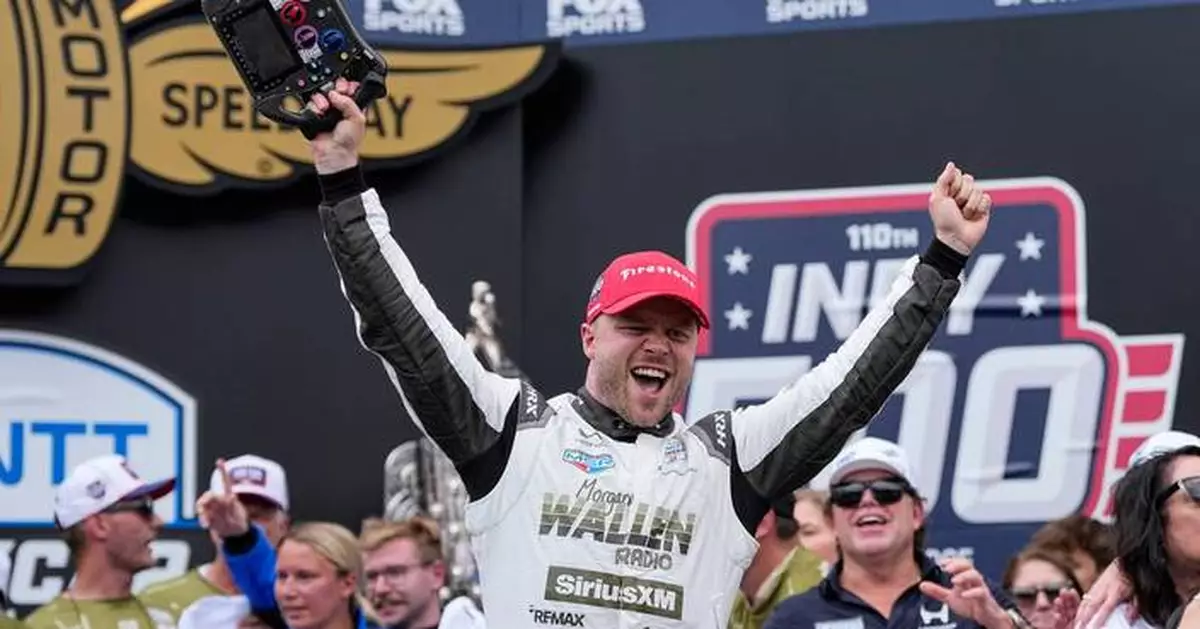
INDIANAPOLIS (AP) — Swedish driver Felix Rosenqvist earned a record $4.34 million payout after winning his first Indianapolis 500 on Sunday — topping Alex Palou's total from last year by more than $500,000.
The total purse, $30,906,400, was also a race record, organizers announced before Monday night's formal victory celebration dinner in downtown Indianapolis. That's a nearly $11 million increase over last year's previous all-time high.
Rosenqvist made a daring, perfectly timed pass on the outside of David Malukas in the closing yards, beating Malukas across the yard of bricks by 0.0233 seconds in the closest finish in race history. The previous mark came in 1992 when Al Unser Jr. beat Scott Goodyear by 0.043 seconds.
Malukas finished second for a second straight year on the Brickyard's 2.5-mile oval.
“The Indianapolis 500 continues to make history, in more ways than one,” track president Doug Boles said in a statement. “The month of May featured a back-to-back grandstand sellout crowd — our largest crowd since the 100th Running in 2016 — and intense on track action with the most lead changes ever in the Indy 500. Felix Rosenqvist added his name to the history books in stellar fashion, with the closest finish in Indy 500 history and now the largest purse. There’s no better end to a memorable month.”
The average payout nearly doubled, hitting $936,500 compared with last year's record of $596,500.
Mick Schumacher collected a $50,000 bonus for being named the race's Rookie of the Year. The son of seven-time world champion Michael Schumacher pocketed $218,800.
AP auto racing: https://apnews.com/hub/auto-racing
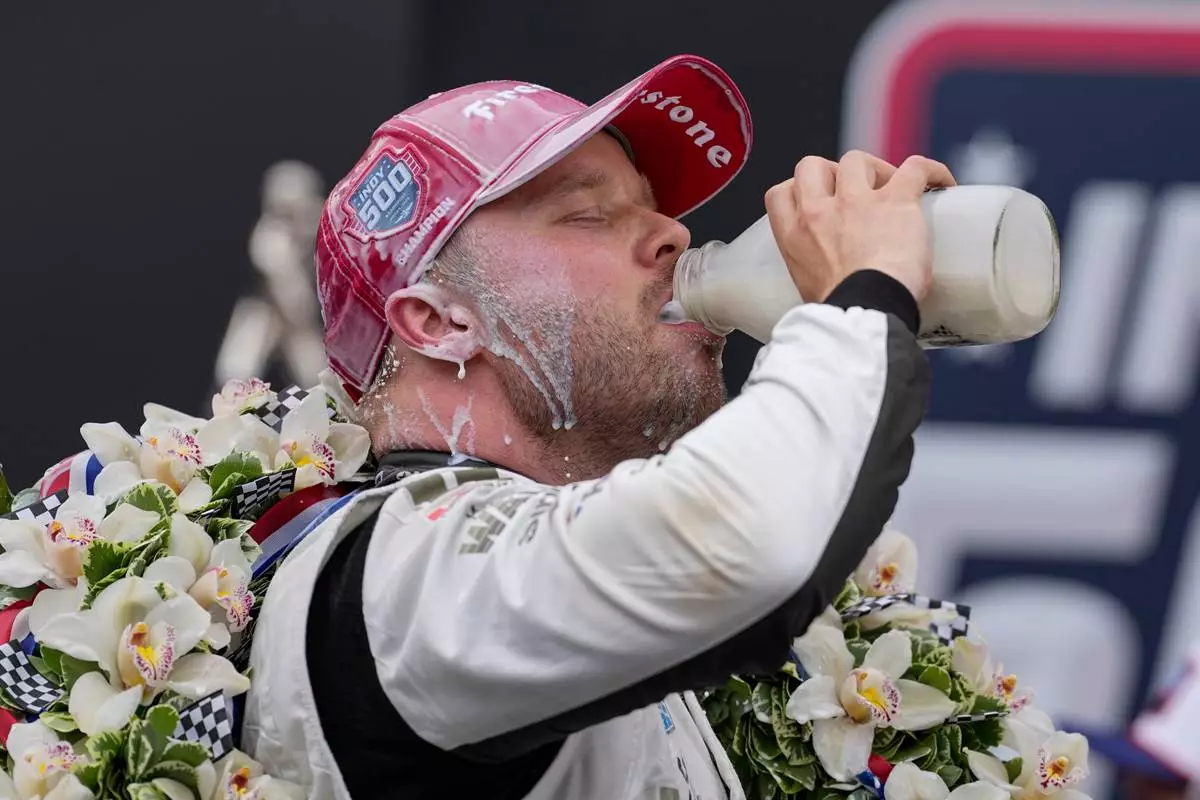
Felix Rosenqvist, of Sweden, celebrates after winning the Indianapolis 500 auto race at Indianapolis Motor Speedway in Indianapolis, Sunday, May 24, 2026. (AP Photo/Michael Conroy)
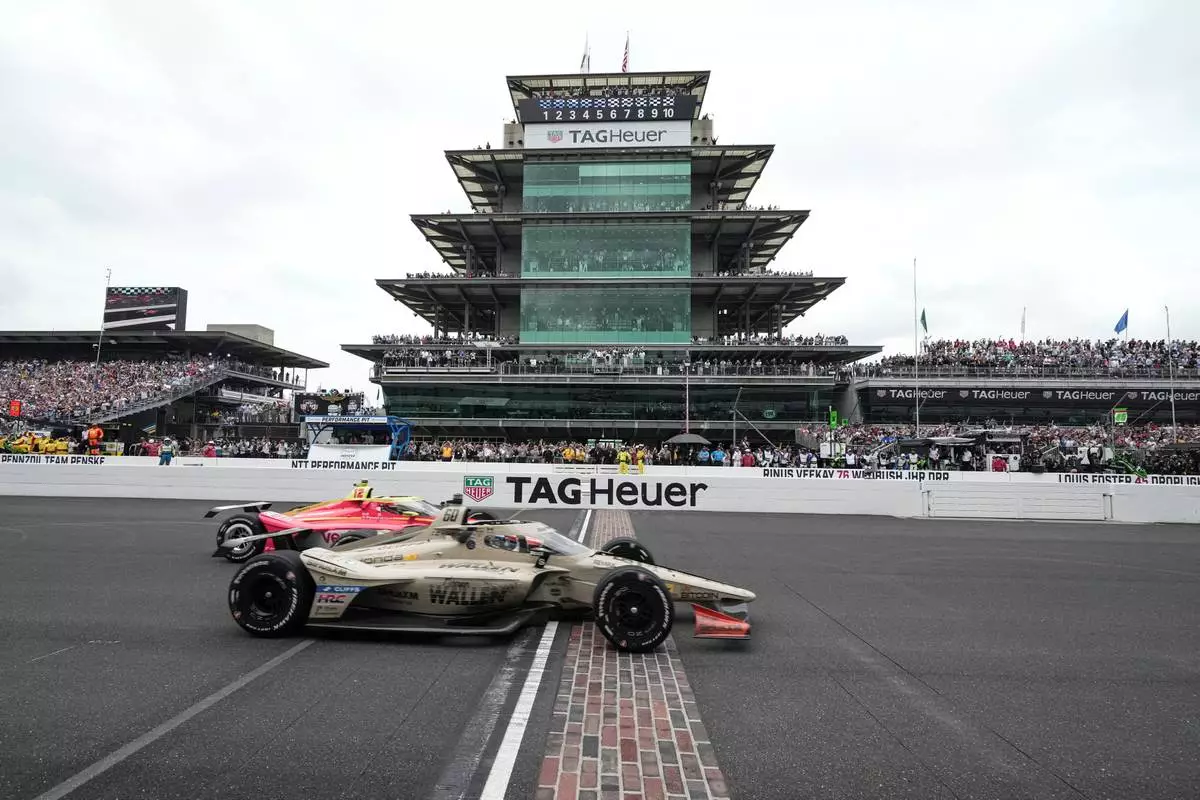
Felix Rosenqvist, foreground, of Sweden, beats David Malukas to the finish line to win the Indianapolis 500 auto race at Indianapolis Motor Speedway in Indianapolis, Sunday, May 24, 2026. (AP Photo/AJ Mast)
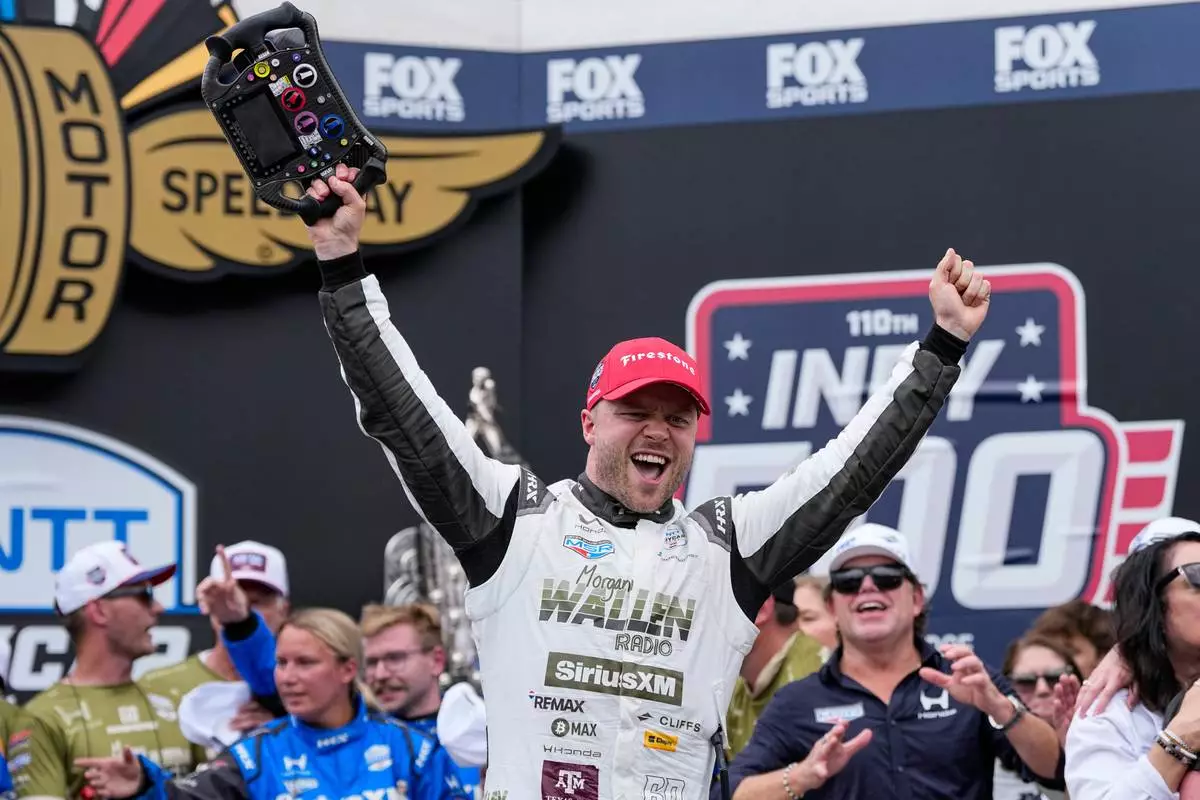
Felix Rosenqvist, center, of Sweden, celebrates after winning the Indianapolis 500 auto race at Indianapolis Motor Speedway in Indianapolis, Sunday, May 24, 2026. (AP Photo/Michael Conroy)
WASHINGTON (AP) — The best young spellers in the English language are competing at the Scripps National Spelling Bee this week, continuing a more than century-old tradition. The three-day competition begins Tuesday and concludes Thursday night.
The first bee was held in 1925, when the Louisville Courier-Journal invited other newspapers to host spelling bees and send their champions to Washington. After a long run at a convention center in suburban Maryland, the bee returns to the nation's capital this year at Constitution Hall, a few blocks from the White House.
Another change for this year: ESPN NFL analyst and recent “Celebrity Jeopardy!” champion Mina Kimes has joined the bee as its television host.
This is the 98th bee; it was canceled from 1943 to 1945 because of World War II and again in 2020 because of the COVID-19 pandemic. This year’s champion will be the 111th, because the bee ended in a two-way tie several times and an eight-way tie in 2019.
Thirty of the past 36 champions have been of Indian heritage, including last year’s winner, Faizan Zaki.
The bee is broadcast and streamed on channels and platforms owned by Scripps, a Cincinnati-based media company.
On Tuesday, preliminary rounds will stream on Scripps Sports Network and spellingbee.com from 8 a.m. to 3 p.m. EDT.
Wednesday's quarterfinals will stream on Scripps Sports Network and spellingbee.com from 8 a.m. to 1 p.m. and semifinals can be watched on those platforms from 2:30 p.m. to 6:30 p.m. Tape-delayed semifinals broadcast on ION from 8 p.m. to 10 p.m.
Finals will broadcast Thursday on ION from 8 p.m. to 10 p.m. The semifinals and finals will also air or be streamed on these Scripps-owned channels or services: ION Plus, Bounce, Grit, Laff, The Spot, Bounce XL, Grit Xtra, Laff More, Scripps News and Scripps Sports Network.
Spellers qualify by advancing through regional bees hosted by sponsors around the country. In order to compete, spellers must not have advanced beyond the eighth grade or be older than 15.
Contestants must get through two preliminary rounds, where they are quizzed on words from a list provided in advance. There is one spelling round and one multiple-choice vocabulary round.
Those who make it through the preliminaries sit for a written spelling and vocabulary test, with the top 100 or so finishers advancing to the quarterfinals. The words for the test, and for all subsequent rounds, are taken from the Merriam-Webster Unabridged dictionary.
Throughout the quarterfinals and semifinals, spellers are eliminated at the microphone through oral spelling or vocabulary questions.
About a dozen spellers advance to the finals. When only two remain, Scripps has the option to use a lightning-round tiebreaker known as a “spell-off” to determine the champion.
This year's bee has 247 spellers representing all 50 states, the District of Columbia, three U.S. territories and five other countries: The Bahamas, Canada, Ghana, Nigeria and the United Arab Emirates.
The top returning finisher from 2025 is Sarv Dharavane of Dunwoody, Georgia, who finished third last year as an 11-year-old fifth-grader. Even if he falls short this year, he has two years of eligibility left.
Other possible contenders:
— Shrey Parikh, a 14-year-old eighth-grader from Rancho Cucamonga, California, who finished third in 2024. He has dominated the bee circuit in the past year, winning the South Asian Spelling Bee, the SpellPundit National Spelling Bee and the Words of Wisdom Spelling Bee.
— Oliver Halkett, a 14-year-old eighth-grader from Los Angeles who finished in a tie for seventh last year.
— Esha Marupudi, a 14-year-old eighth-grader from Chandler, Arizona, who also tied for seventh last year.
The winner receives a custom trophy and more than $50,000 in cash and prizes. Here are the prize payouts:
— First place: $52,500 in cash, reference works from Encyclopedia Britannica and Merriam-Webster, a custom trophy and commemorative medal, and $1,000 in flight credits from Delta Air Lines.
— Second place: $25,000.
— Third place: $15,000.
— Fourth place: $10,000.
— Fifth place: $5,000.
— Sixth place: $2,500.
— All other finalists: $2,000.
Ben Nuckols has covered the Scripps National Spelling Bee since 2012. Follow his work here.
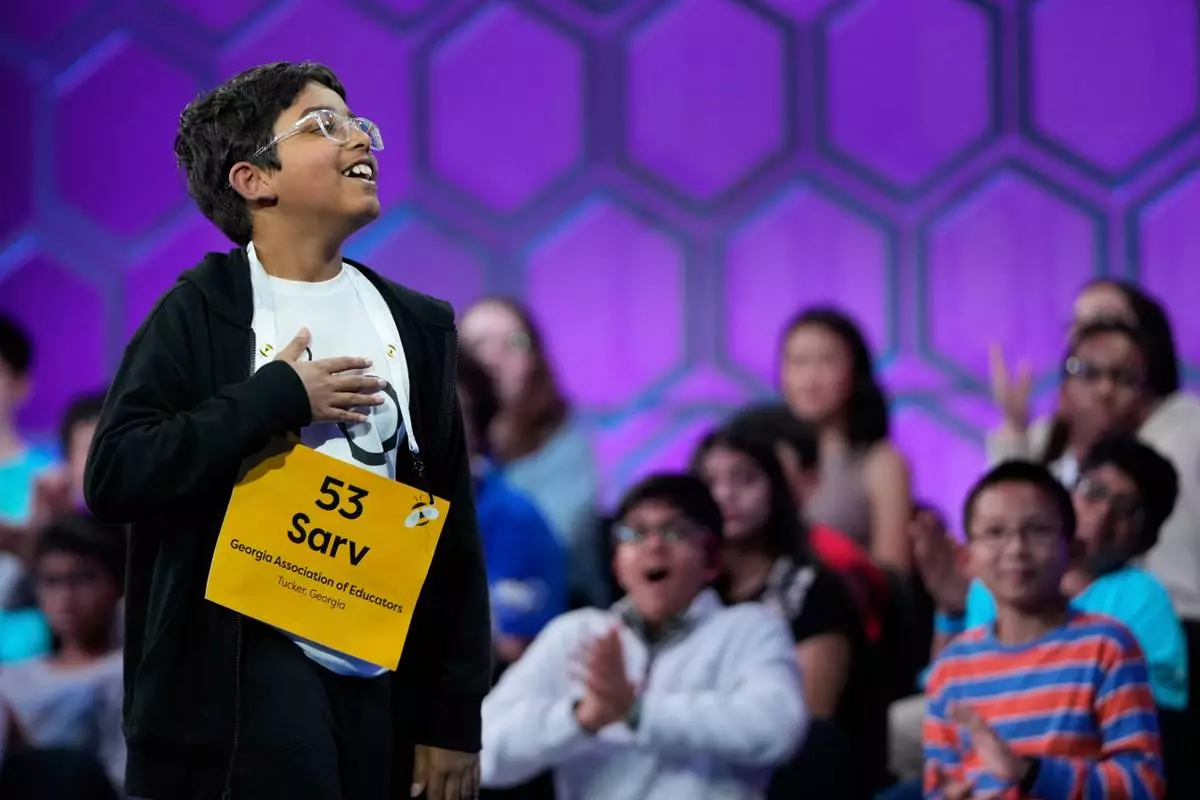
FILE - Sarv Dharavane, 11, of Tucker, Ga., reacts after spelling his word correctly in the finals of the Scripps National Spelling Bee, Thursday, May 29, 2025, in Oxon Hill, Md. (AP Photo/Julia Demaree Nikhinson, File)