Shares were mixed Tuesday in Asia after the U.S. military said it carried out what it called “self-defense” strikes in southern Iran, including on missile launch sites and boats placing mines.
The attacks came even as President Donald Trump said on social media that negotiations on ending the war were “proceeding nicely.”
Click to Gallery
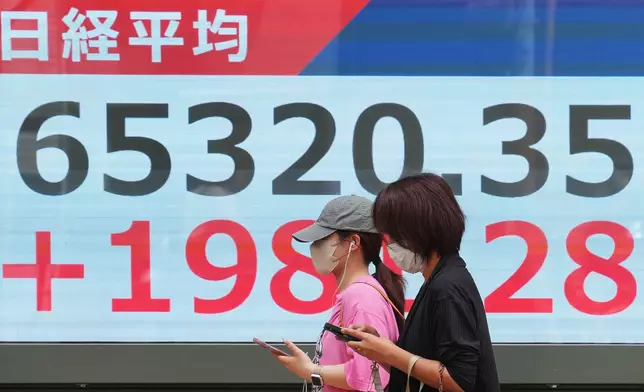
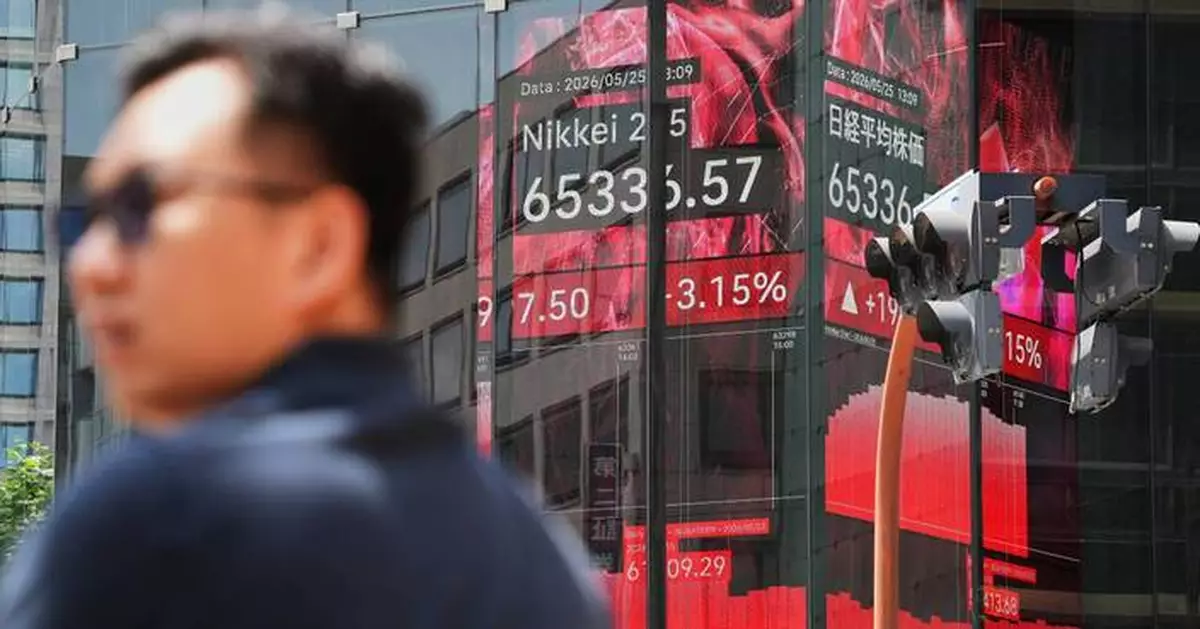
People walk in front of an electronic stock board showing Japan's Nikkei index at a securities firm Monday, May 25, 2026, in Tokyo. (AP Photo/Eugene Hoshiko)
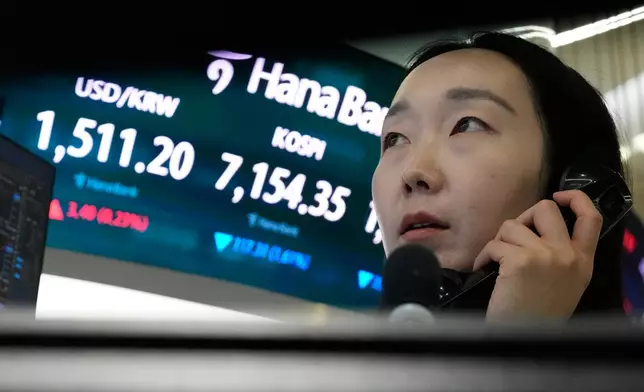
A currency trader talks on the phone near a screen showing the Korea Composite Stock Price Index (KOSPI) and the foreign exchange rate between U.S. dollar and South Korean won, left, at the foreign exchange dealing room of the Hana Bank headquarters in Seoul, South Korea, Wednesday, May 20, 2026. (AP Photo/Ahn Young-joon)
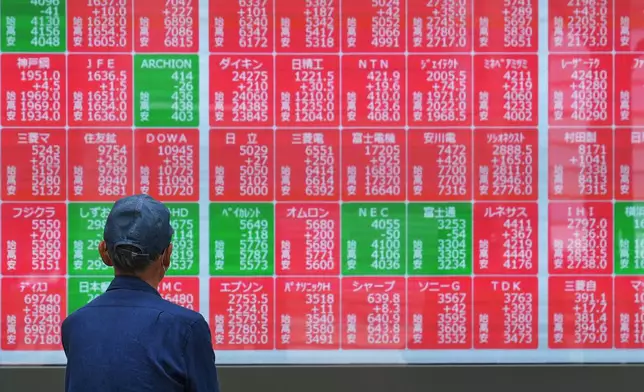
A person looks at an electronic stock board showing Japan's Nikkei index at a securities firm Monday, May 25, 2026, in Tokyo. (AP Photo/Eugene Hoshiko)
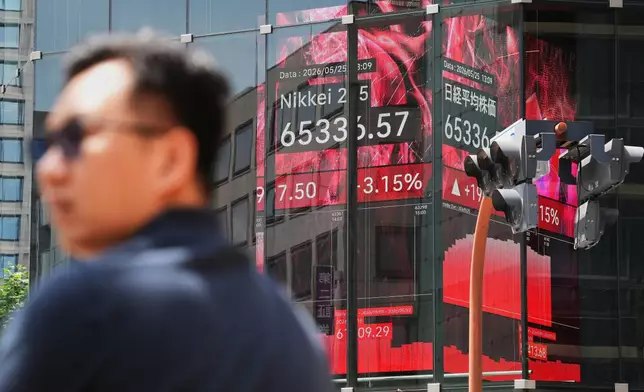
A person stands in front of an electronic stock board showing Japan's Nikkei index, seen through the glass wall of an office building Monday, May 25, 2026, in Tokyo. (AP Photo/Eugene Hoshiko)
U.S. futures jumped. Oil prices were mixed, with Brent crude rising but still trading below $100 a barrel while U.S. benchmark crude oil fell.
The U.S. military said the strikes Monday were done “to protect our troops from threats posed by Iranian forces.” It said it used restraint due to the ceasefire with Iran, which gave no official response. Further details were not immediately available, including more specifics on threats from Iran and what this means for negotiations.
With the status of peace talks with Iran unclear, markets have been swayed by various developments and comments by Trump.
“Markets are behaving as though a full Iran breakthrough already exists, even though the hardest parts of the negotiation remain unresolved,” Stephen Innes of SPI Asset Management wrote in a commentary. “Washington continues to signal optimism, while Tehran insists no agreement is imminent.”
Tokyo's Nikkei 225 lost 0.3% to 64,996.09, falling back from an all-time high close on Monday.
In Hong Kong, the Hang Seng index gained 0.4% to 25,700.33, while the Shanghai Composite index shed 0.2% to 4,143.14.
South Korea's Kospi jumped 2.6% to 8,047.51, catching up after markets were closed Monday for a holiday.
The S&P/ASX 200 in Australia lost 0.4% to 8,657.80.
The future for the S&P 500 was up 0.6%, while that for the Dow Jones Industrial Average surged 0.7% early Tuesday.
Benchmark U.S. crude oil declined $4.65 to $91.95 a barrel. Brent crude, the international standard, gained $2.05 to $95.47 a barrel after falling nearly $5 on Monday.
U.S. markets were closed on Monday for the Memorial Day holiday, while European shares advanced.
The gains followed signals of progress toward a peace deal. Regional officials said Sunday that the United States was close to reaching an agreement with Iran to end the war, reopen the Strait of Hormuz and see Iran give up its stockpile of highly enriched uranium,
Reopening the Strait of Hormuz will help decide the direction of oil prices. Its closure due to the war has prevented oil tankers from exiting the Persian Gulf and delivering crude to customers worldwide. Japan, for instance, imports almost all its oil, most of it through the strait.
On Friday, the S&P 500 added 0.4% and the Dow industrials climbed 0.6%. The Nasdaq composite gained 0.2%.
In other dealings early Tuesday, the U.S. dollar rose to 159.09 Japanese yen from 158.91 yen. The euro cost $1.1636, down from $1.1645.
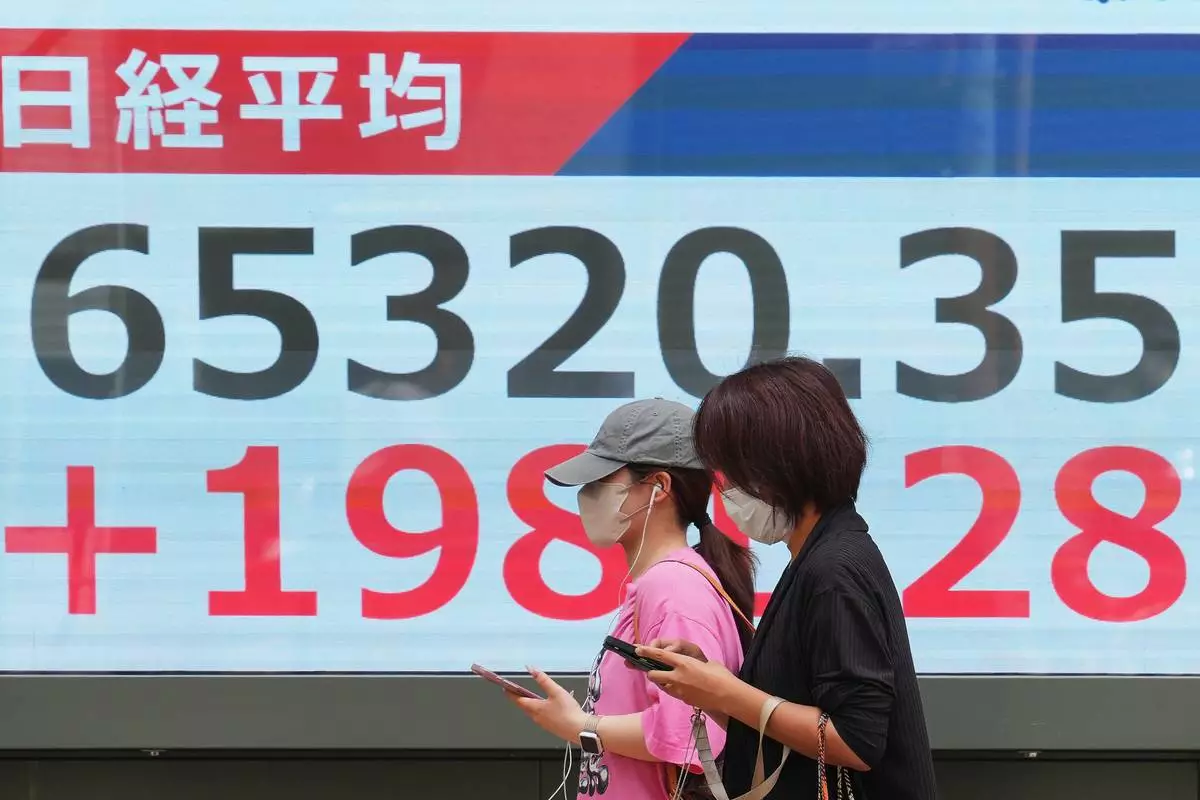
People walk in front of an electronic stock board showing Japan's Nikkei index at a securities firm Monday, May 25, 2026, in Tokyo. (AP Photo/Eugene Hoshiko)
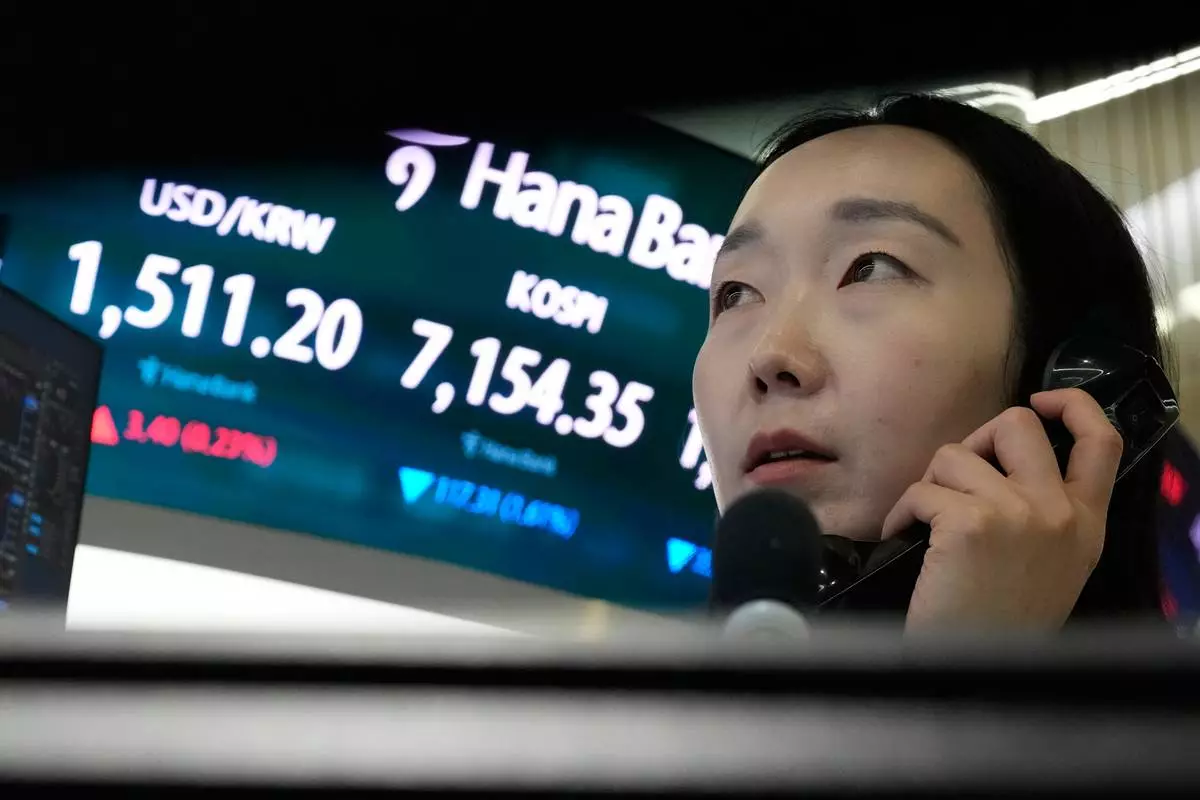
A currency trader talks on the phone near a screen showing the Korea Composite Stock Price Index (KOSPI) and the foreign exchange rate between U.S. dollar and South Korean won, left, at the foreign exchange dealing room of the Hana Bank headquarters in Seoul, South Korea, Wednesday, May 20, 2026. (AP Photo/Ahn Young-joon)
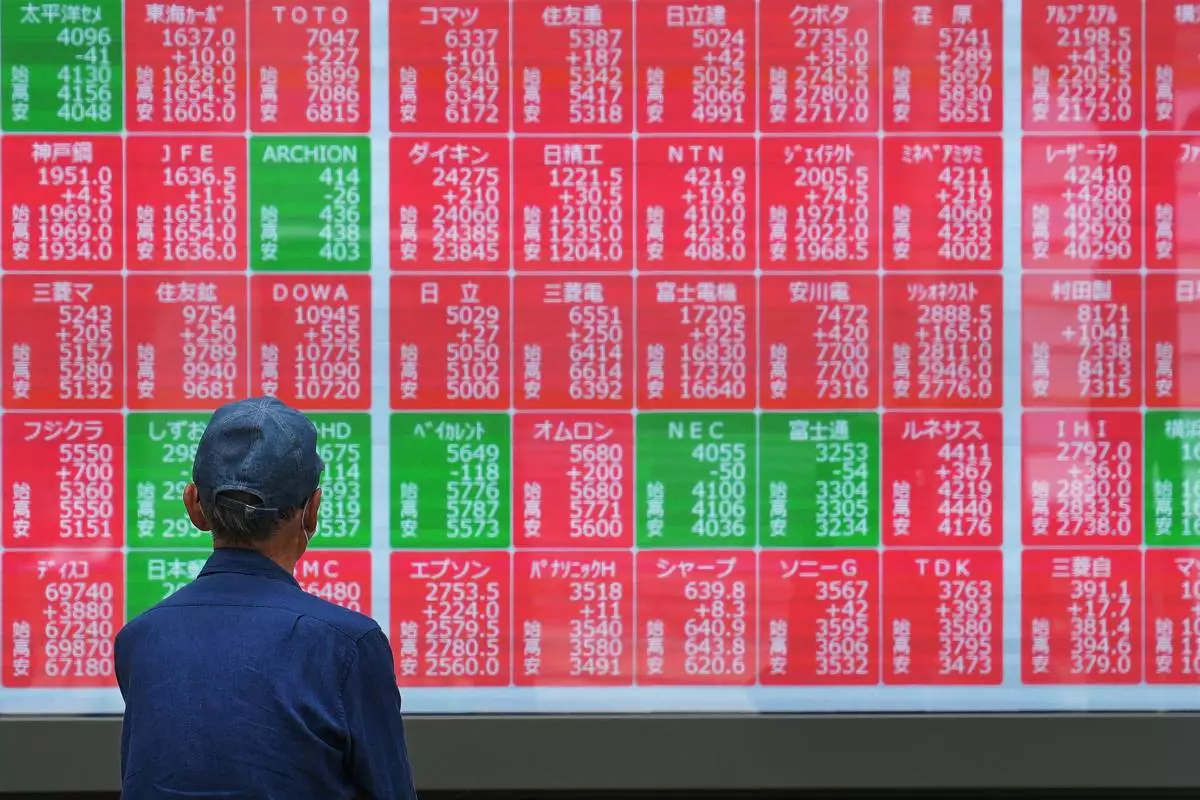
A person looks at an electronic stock board showing Japan's Nikkei index at a securities firm Monday, May 25, 2026, in Tokyo. (AP Photo/Eugene Hoshiko)
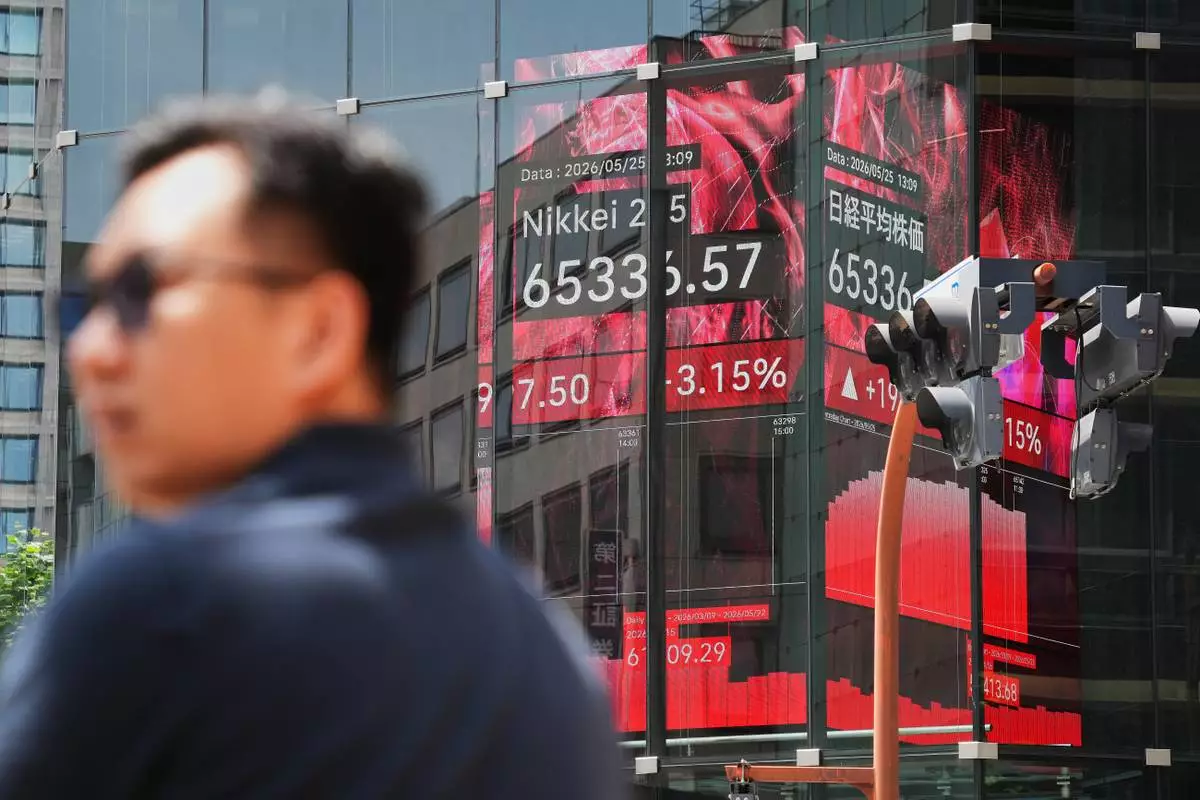
A person stands in front of an electronic stock board showing Japan's Nikkei index, seen through the glass wall of an office building Monday, May 25, 2026, in Tokyo. (AP Photo/Eugene Hoshiko)