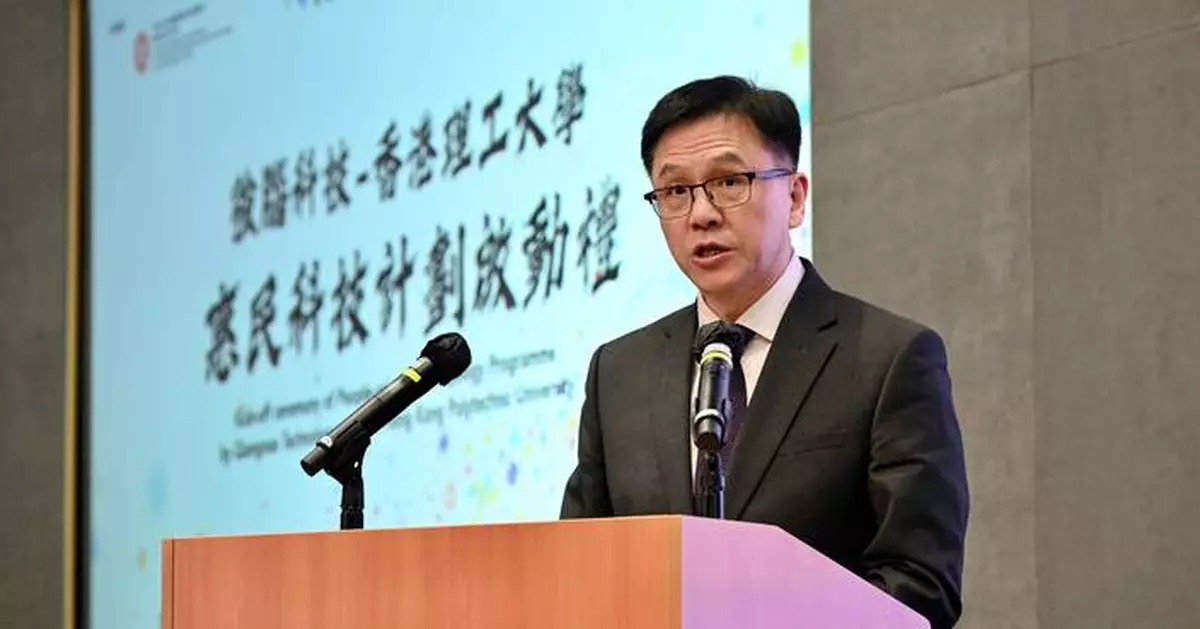
Kick-off Ceremony of People-oriented Technology Programme by Qiangnao Technology and Hong Kong Polytechnic University marks implementation of smart prosthetic technology
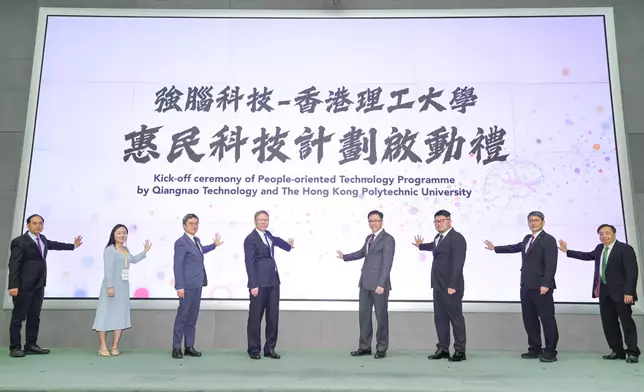
The Secretary for Innovation, Technology and Industry, Professor Sun Dong; the Permanent Secretary for Innovation, Technology and Industry, Mr Kevin Choi; and the Commissioner for Innovation and Technology, Mr Ivan Lee, attended the Kick-off Ceremony of the People-oriented Technology Programme by Qiangnao Technology and the Hong Kong Polytechnic University (PolyU) today (May 26) to witness a major milestone in the application of intelligent bionic hands and smart bionic knee joints in Hong Kong, through the collaboration between Qiangnao Technology and PolyU. The ceremony also marked another innovative technological achievement to benefit the public. The Founder and Chief Executive Officer of Qiangnao Technology, Mr Han Bicheng; representative of Qiangnao Technology Ms Sienna Xu; the President of PolyU, Professor Teng Jin-Guang; the Senior Vice President (Research and Innovation) of PolyU, Professor Christopher Chao; and the Henry G Leong Professor in Biomedical Engineering, Chair Professor of Biomedical Engineering of PolyU, Professor Zheng Yongping, also attended the ceremony.
Click to Gallery
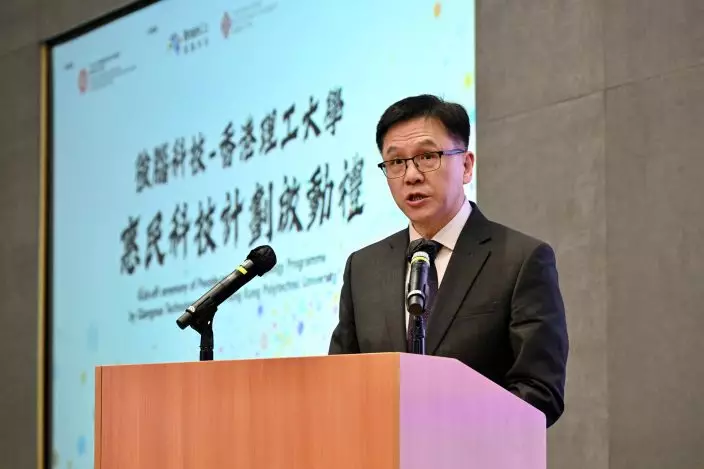
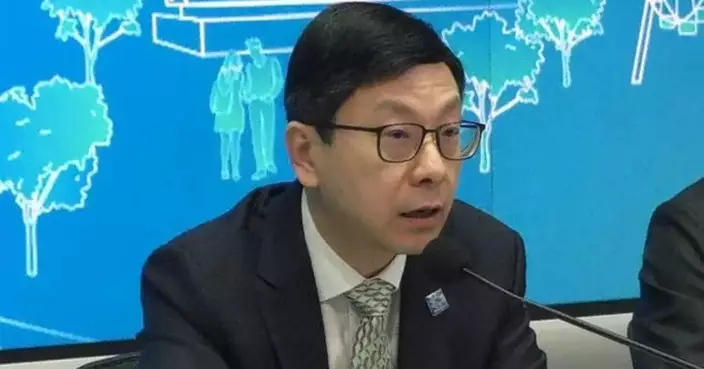
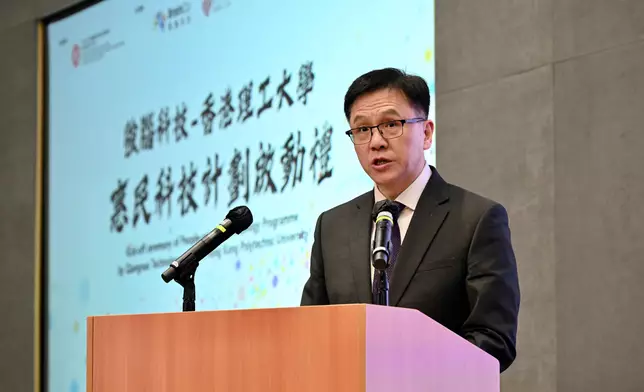
The Secretary for Innovation, Technology and Industry, Professor Sun Dong, speaks at the Kick-off Ceremony of the People-oriented Technology Programme by Qiangnao Technology and the Hong Kong Polytechnic University today (May 26). Source: HKSAR Government Press Releases
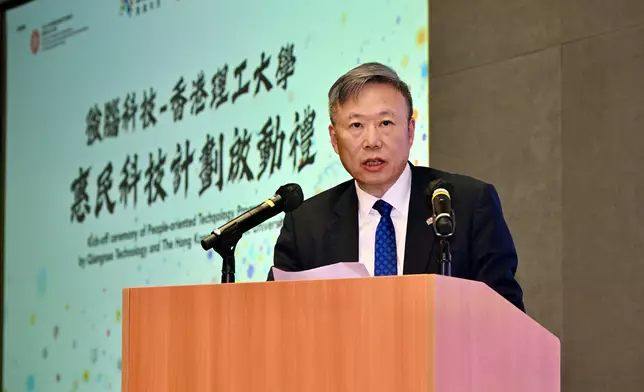
Kick-off Ceremony of People-oriented Technology Programme by Qiangnao Technology and Hong Kong Polytechnic University marks implementation of smart prosthetic technology Source: HKSAR Government Press Releases
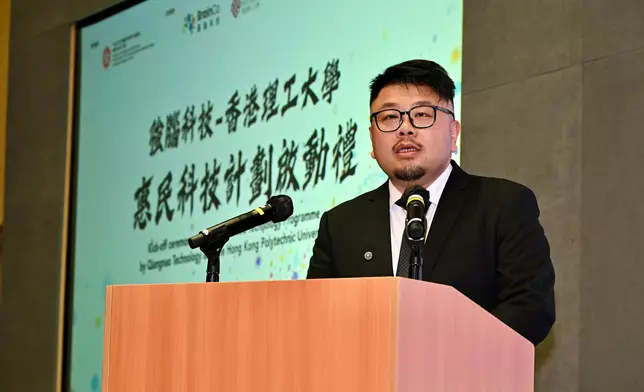
Kick-off Ceremony of People-oriented Technology Programme by Qiangnao Technology and Hong Kong Polytechnic University marks implementation of smart prosthetic technology Source: HKSAR Government Press Releases
Kick-off Ceremony of People-oriented Technology Programme by Qiangnao Technology and Hong Kong Polytechnic University marks implementation of smart prosthetic technology Source: HKSAR Government Press Releases
Kick-off Ceremony of People-oriented Technology Programme by Qiangnao Technology and Hong Kong Polytechnic University marks implementation of smart prosthetic technology Source: HKSAR Government Press Releases
Kick-off Ceremony of People-oriented Technology Programme by Qiangnao Technology and Hong Kong Polytechnic University marks implementation of smart prosthetic technology Source: HKSAR Government Press Releases
Kick-off Ceremony of People-oriented Technology Programme by Qiangnao Technology and Hong Kong Polytechnic University marks implementation of smart prosthetic technology Source: HKSAR Government Press Releases
Kick-off Ceremony of People-oriented Technology Programme by Qiangnao Technology and Hong Kong Polytechnic University marks implementation of smart prosthetic technology Source: HKSAR Government Press Releases
Kick-off Ceremony of People-oriented Technology Programme by Qiangnao Technology and Hong Kong Polytechnic University marks implementation of smart prosthetic technology Source: HKSAR Government Press Releases
The Chief Executive's 2025 Policy Address announced that the Government would support people-oriented scientific research through the Innovation and Technology (I&T) Fund to introduce prostheses built with new research and development technologies. Qiangnao Technology is a leading global enterprise in the field of brain-computer interfaces and is also one of "Hangzhou's Six Little Dragons", representing China's breakthrough development in this cutting-edge field. PolyU, meanwhile, has a strong research foundation and international influence in prosthetics and orthotics, rehabilitation sciences and biomedical engineering. With funding support from the I&T Fund, the two sides earlier launched a collaborative project. In the first phase of the programme, 60 amputees in Hong Kong will be provided with the new high-tech prostheses free of charge, together with professional assessment and rehabilitation support services by a PolyU team to help recipients gradually adapt to and master the use of prosthetics, thereby comprehensively improving their daily living abilities and quality of life.
In his speech, Professor Sun said that today's I&T initiatives respond to the National 15th Five-Year Plan, which calls for the full implementation of the "AI+" action plan to empower public well-being through AI. Hong Kong possesses strong research capabilities, with five universities ranked among the world's top 100 and two medical schools in the global top 40. It has a solid foundation in life and health technology, AI, and robotics, and is well positioned to put into practice the principle of technology for the benefit of people. The launch of the programme also embodies the original intent of using technology for good and being people-oriented, bringing cutting-edge technologies into real-world applications, to the lives of citizens in need.
Mr Han said: "Over the next two years, with the support of the Hong Kong Special Administrative Region Government, Qiangnao will work with PolyU and partners from all sectors of society to diligently implement the project and provide service support, so that more eligible amputees in Hong Kong can receive high-tech prostheses free of charge. We will also continue to enhance product experience and rehabilitation support services."
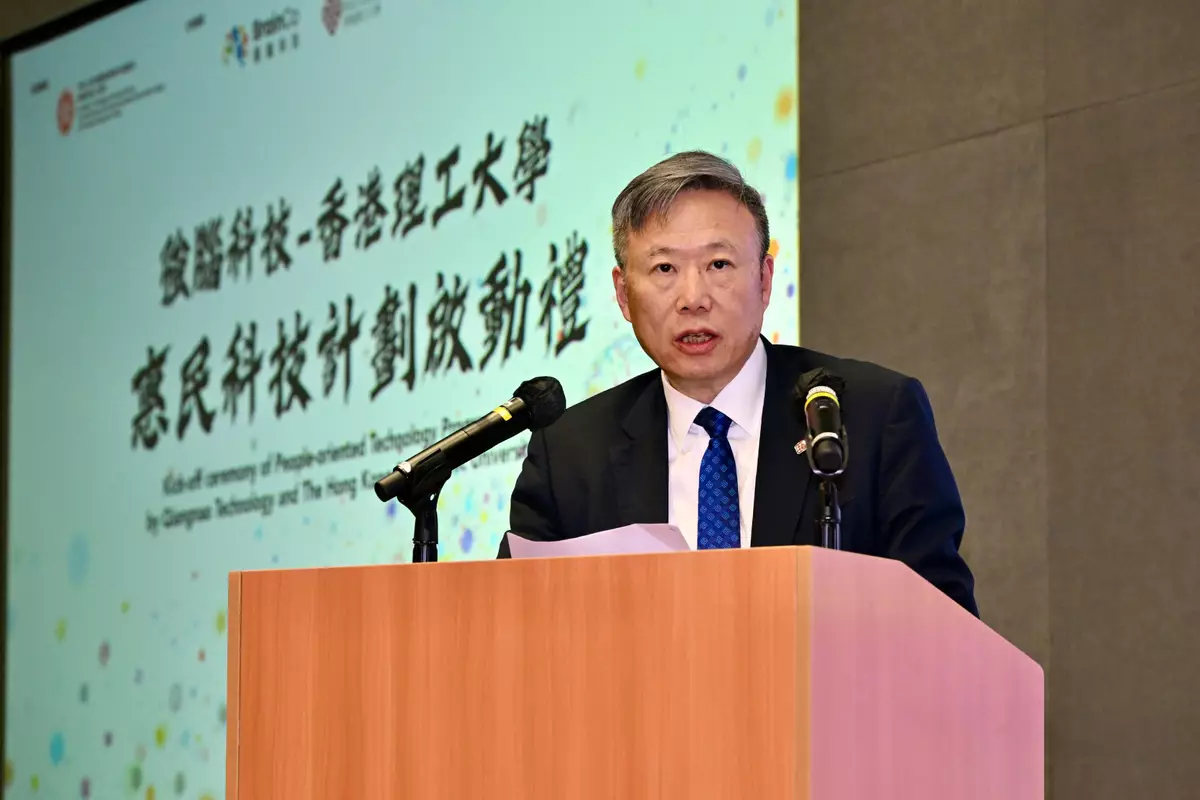
Professor Teng said, "Advanced scientific research must ultimately benefit society. The vision for developing people-oriented technology, as outlined in the Chief Executive's Policy Address, aligns perfectly with PolyU's motto, 'To learn and to apply, for the benefit of mankind'. This Programme holds immense significance: Qiangnao brings world-leading core technologies in intelligent bionic prostheses, while PolyU provides local implementation, promotion, and scientific research support. The team will evaluate the effectiveness of the technology based on clinical application scenarios, collect user feedback for timely adjustments and optimisations, and continuously improve the overall user experience. With the support of the I&T Fund, this initiative ensures that cutting-edge technology truly serves public livelihood and benefits society."
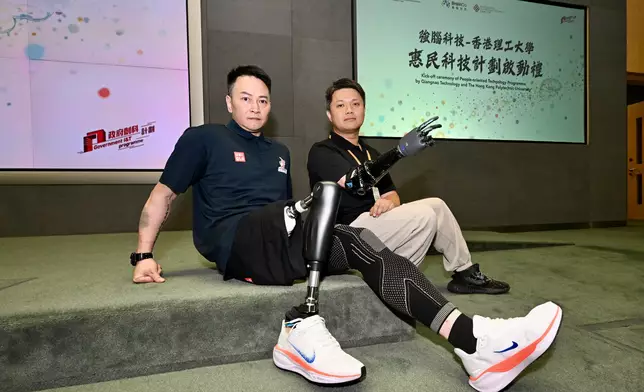
At the ceremony, amputees who had been fitted with the high-tech prostheses under the programme shared their experience and stories. The high-tech prostheses used in this collaboration do not require any implantation. Through non-invasive brain-computer interface technology, they use the wearer's myoelectric and neural signals to enable natural, precise, and flexible motion control, opening up a new direction for the development of rehabilitation technology.
The Secretary for Innovation, Technology and Industry, Professor Sun Dong, speaks at the Kick-off Ceremony of the People-oriented Technology Programme by Qiangnao Technology and the Hong Kong Polytechnic University today (May 26). Source: HKSAR Government Press Releases
Kick-off Ceremony of People-oriented Technology Programme by Qiangnao Technology and Hong Kong Polytechnic University marks implementation of smart prosthetic technology Source: HKSAR Government Press Releases
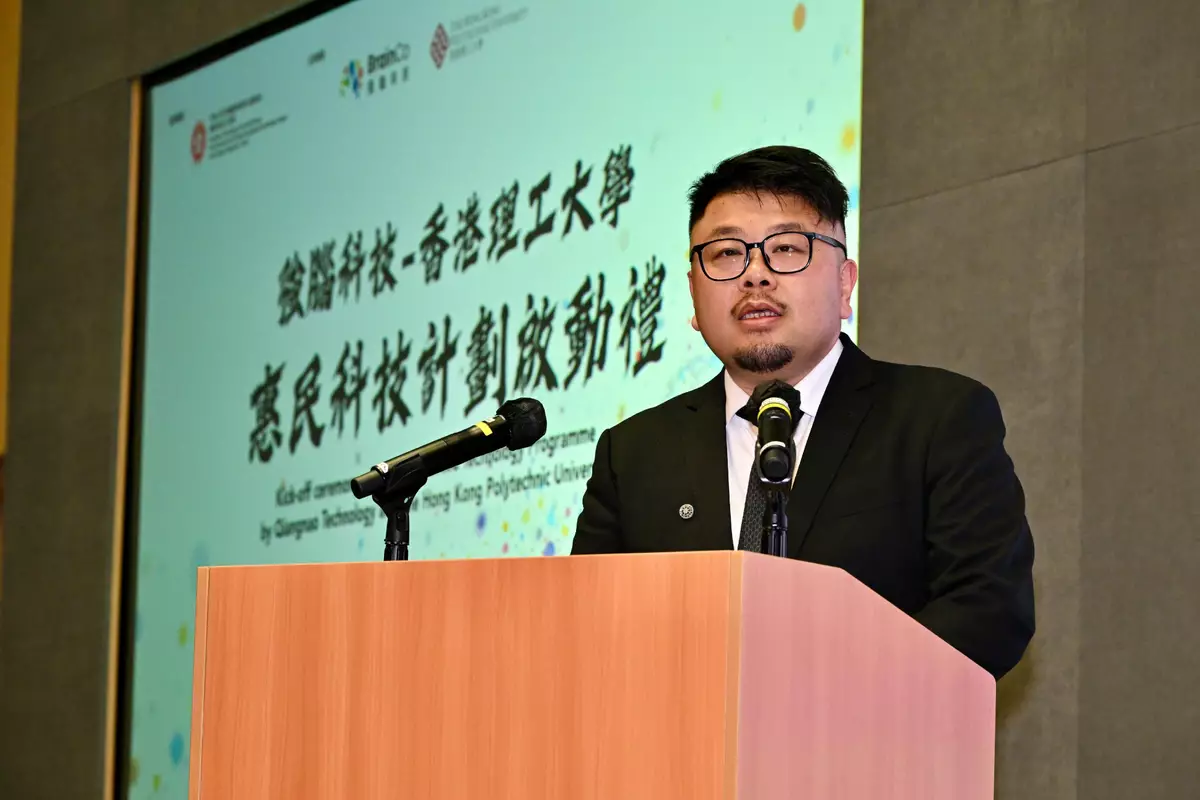
Kick-off Ceremony of People-oriented Technology Programme by Qiangnao Technology and Hong Kong Polytechnic University marks implementation of smart prosthetic technology Source: HKSAR Government Press Releases
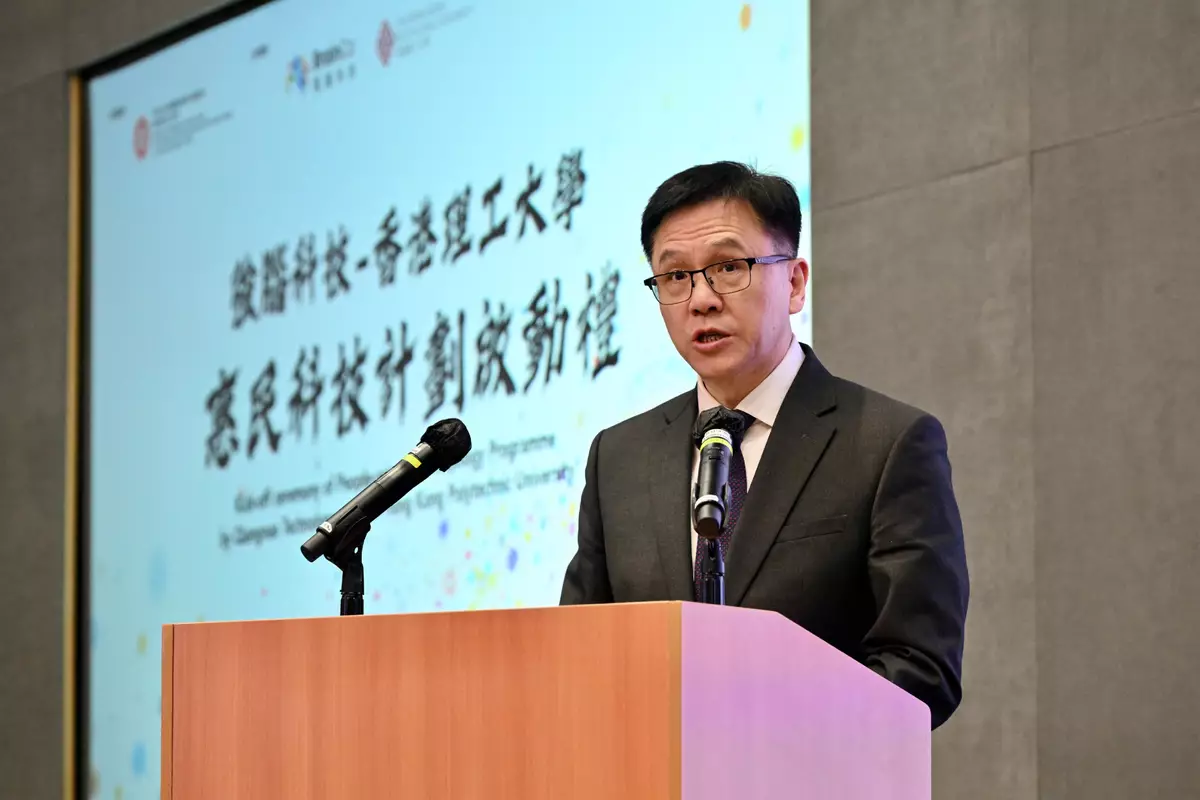
Kick-off Ceremony of People-oriented Technology Programme by Qiangnao Technology and Hong Kong Polytechnic University marks implementation of smart prosthetic technology Source: HKSAR Government Press Releases
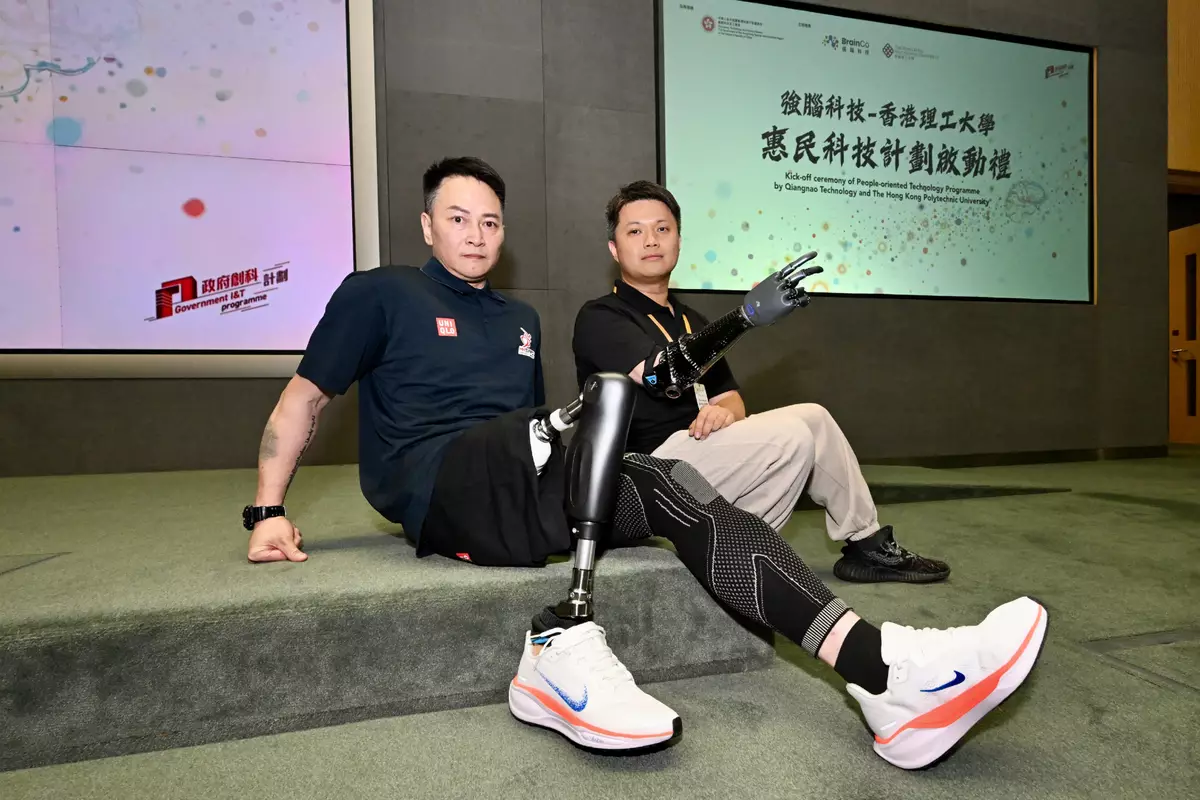
Kick-off Ceremony of People-oriented Technology Programme by Qiangnao Technology and Hong Kong Polytechnic University marks implementation of smart prosthetic technology Source: HKSAR Government Press Releases
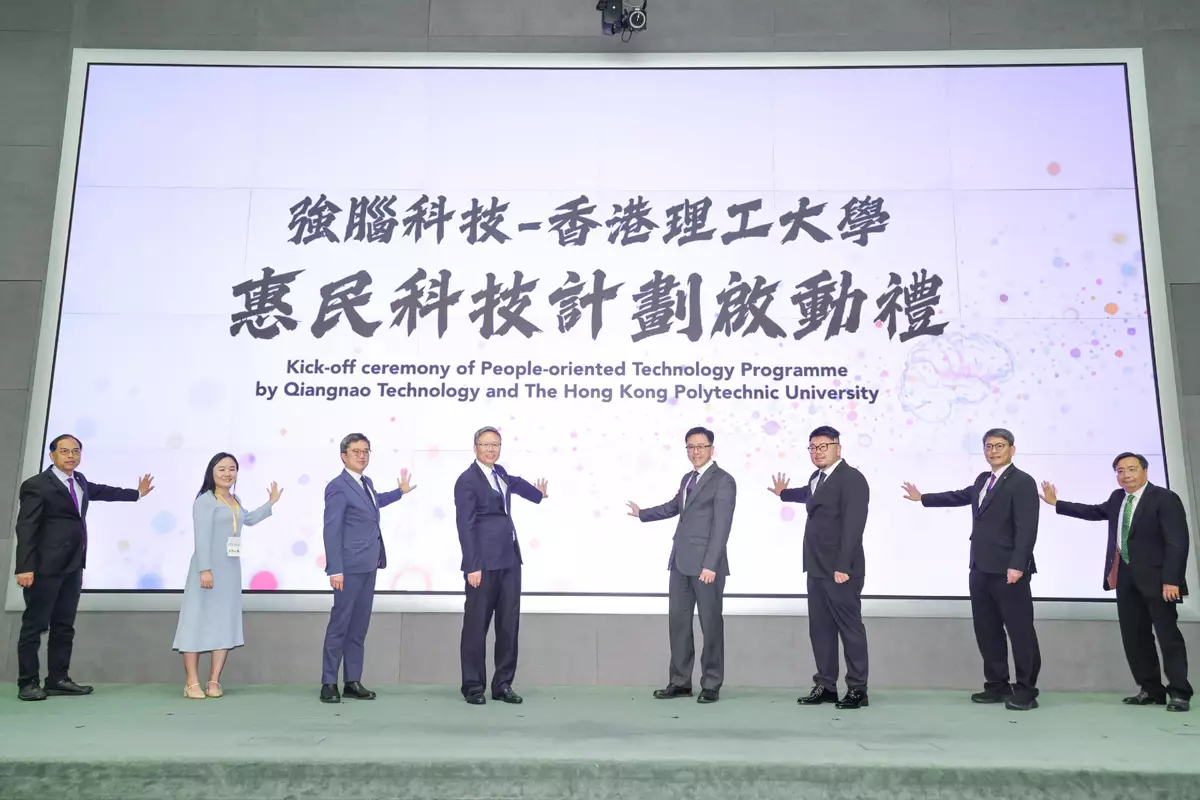
Kick-off Ceremony of People-oriented Technology Programme by Qiangnao Technology and Hong Kong Polytechnic University marks implementation of smart prosthetic technology Source: HKSAR Government Press Releases
Kick-off Ceremony of People-oriented Technology Programme by Qiangnao Technology and Hong Kong Polytechnic University marks implementation of smart prosthetic technology Source: HKSAR Government Press Releases
Kick-off Ceremony of People-oriented Technology Programme by Qiangnao Technology and Hong Kong Polytechnic University marks implementation of smart prosthetic technology Source: HKSAR Government Press Releases
Kick-off Ceremony of People-oriented Technology Programme by Qiangnao Technology and Hong Kong Polytechnic University marks implementation of smart prosthetic technology Source: HKSAR Government Press Releases