Skip to Content Facebook Feature Image

Israel and Hezbollah clash along strategic Lebanese river following overnight strikes

News

Israel and Hezbollah clash along strategic Lebanese river following overnight strikes
News

News

Israel and Hezbollah clash along strategic Lebanese river following overnight strikes

2026-05-26 20:43 Last Updated At:20:50

BEIRUT (AP) — Israel's military clashed with the Iranian-backed Hezbollah militant group Tuesday along a strategic river in Lebanon as Israeli troops tried to push farther north, just three days before Lebanese and Israeli military delegations are set to meet for direct talks in Washington.

A previously reached ceasefire appeared more nominal by the day, complicating efforts at a broader peace in the Iran war, as Tehran wants an end to the fighting to include Lebanon.

The Litani River has been a de facto boundary in Lebanon, with large areas to the south under Israeli military control despite the Washington-brokered ceasefire in place for over a month.

Tuesday's intensified strikes and clashes came after Israeli Prime Minister Benjamin Netanyahu said he had authorized more intensive strikes targeting Hezbollah across Lebanon.

Meanwhile, an Israeli security official said the military had called up an additional battalion to Lebanon, speaking on condition of anonymity in line with regulations.

Israel's military said it struck more than 100 Hezbollah sites across southern Lebanon and the eastern Bekaa Valley area overnight, saying it targeted storage facilities, command centers and observation points used to attack Israeli troops and residents in northern Israel.

One strike hit the eastern village of Mashghara, killing 12 people including several members of a family, Lebanon’s state-run National News Agency said.

Israel in recent days has intensified strikes in Nabatieh city and province, just north of the river. On Tuesday it warned city residents to leave.

Hezbollah meanwhile said it launched several rocket, artillery and exploding drone attacks on Israeli troops and vehicles mobilizing along the river toward the Nabatieh villages of Yohmor al-Shaqif and Zawtar al-Sharqieh.

Hezbollah's Al-Manar TV said the militant group repelled attacks along the river banks.

Since the ceasefire, the Lebanese capital of Beirut has been spared from strikes, but Israel's latest moves have caused fear.

“By just saying a few words on TV, (Netanyahu) causes everyone to panic and flee their homes,” said Tony Aboud in Beirut’s bustling Hamra district. “I don’t know what’s going to happen and how long we can live like this.”

The Lebanese government, which came to power on a platform of reform and disarming Hezbollah and other armed groups, hopes that the direct talks with Israel, opposed by Hezbollah, will lead to a permanent ceasefire and withdrawal of Israeli troops.

Israel says it will not withdraw until Hezbollah no longer poses a threat to residents of its northern towns.

Hezbollah has vowed to continue fighting until Israel stops its daily airstrikes and withdraws its troops from Lebanon.

In recent weeks, Hezbollah has boasted that it is using new fiber-optic drones that Israeli troops have struggled to intercept, hitting both Israeli forces and northern Israeli villages.

Israel has told people there not to gather in large numbers.

“What this requires of us now is to increase the blows, to increase the intensity. We will smite them hip and thigh,” Netanyahu said Monday.

Over a million people in Lebanon have been displaced in the war, sparked when Hezbollah fired rockets into northern Israel on March 2 in solidarity with Iran, two days after the Iran war began.

At least 3,185 people in Lebanon have been killed in Israeli strikes since the start of the war, according to the Lebanese Health Ministry. Over 9,600 others have been wounded.

Elsewhere, according to Netanyahu’s office, 23 Israeli soldiers and a defense contractor have been killed in or near southern Lebanon, and two civilians have been killed in northern Israel, the vast majority by drones.

Associated Press writers Sam Mednick and Melanie Lidman in Tel Aviv, Israel, and senior video producer Malak Harb in Beirut contributed to this report.
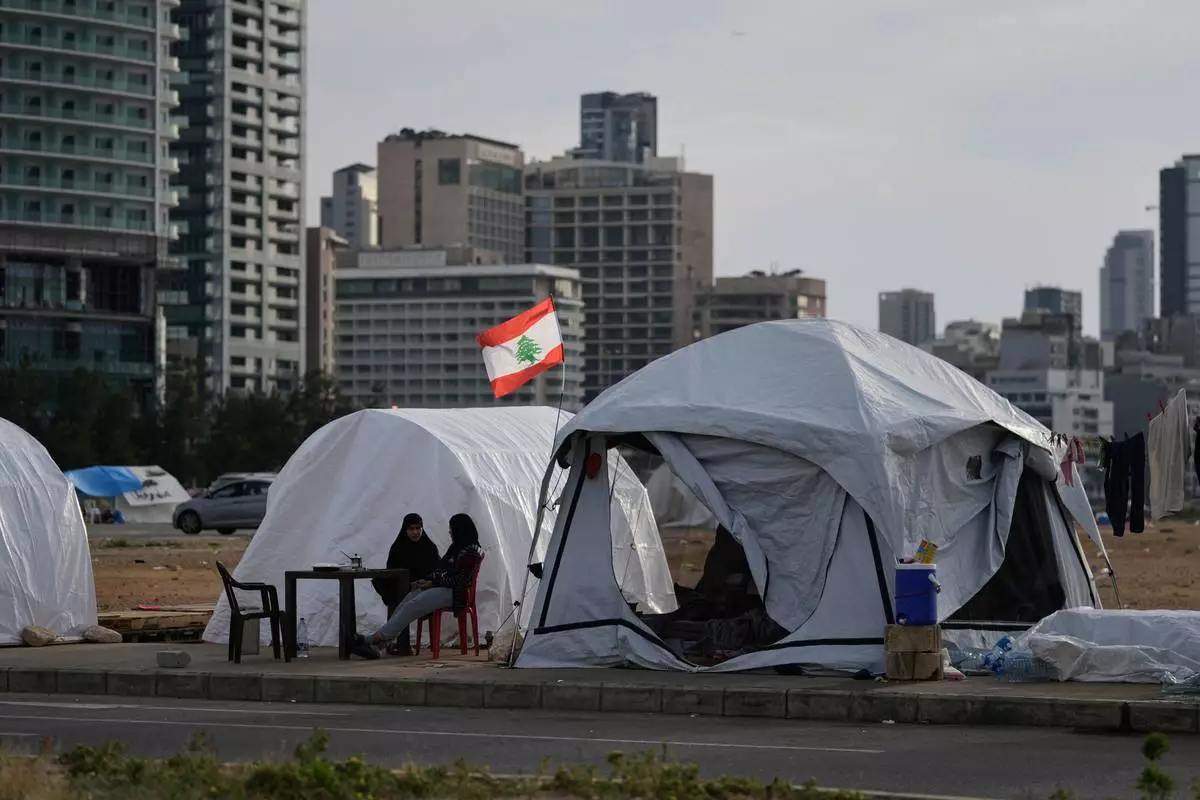
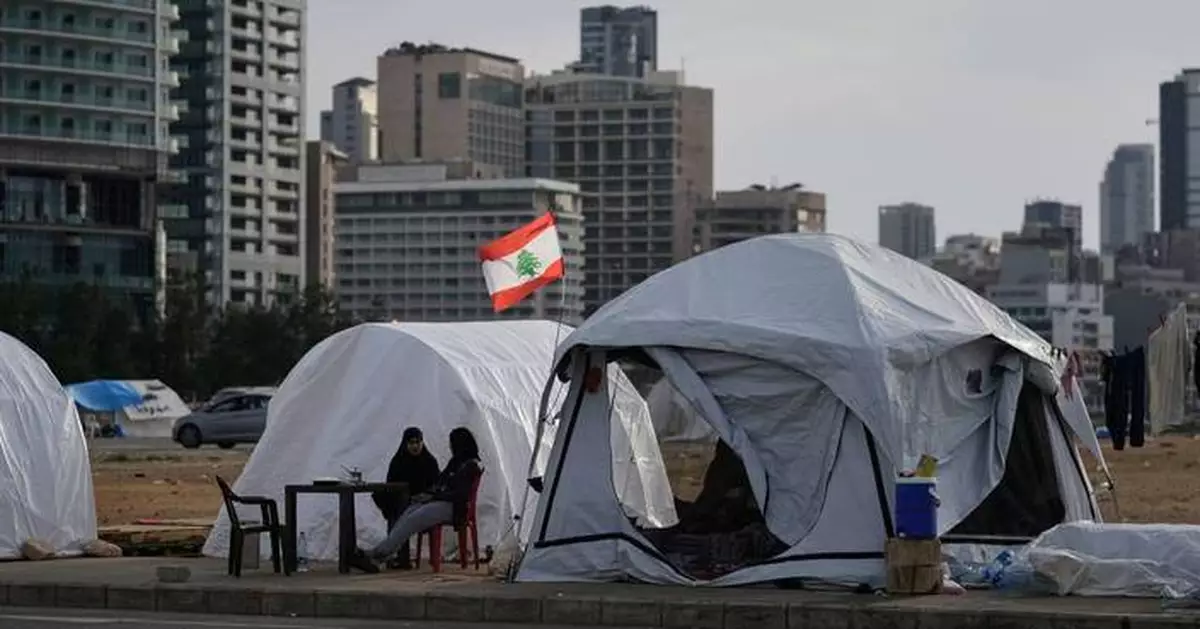
Displaced people who fled Israeli strikes in southern Lebanon sit outside shelter tents in Beirut, April 24, 2026. (AP Photo/Bilal Hussein)

Displaced people who fled Israeli strikes in southern Lebanon sit outside shelter tents in Beirut, April 24, 2026. (AP Photo/Bilal Hussein)
ARAFAT, Saudi Arabia (AP) — Muslim pilgrims from around the world congregated on Mount Arafat in Saudi Arabia on Tuesday, the second official day of the annual Islamic pilgrimage, considered the pinnacle of Hajj.

Despite the sweltering heat, the pilgrims gathered on a rocky hill and surrounding plains for intense prayers that often mark a spiritual peak. Typically, they fervently murmur prayers and pour their hearts out in supplications, asking God for forgiveness, mercy, blessings and good health. It is common for many pilgrims on that day to raise their hands in worship, with tears streaming down their faces.

Hajj, one of the Five Pillars of Islam, is required once in a lifetime for every Muslim who can afford it and is physically able to perform it.

For pilgrims, Hajj, performed over several days, can be a deeply moving spiritual experience and a chance to seek God’s forgiveness and the erasure of past sins. As they brave the intense heat to perform religious rituals, many pilgrims have been using umbrellas for shade.

A Saudi official said on Friday that more than 1.5 million pilgrims have arrived in Saudi Arabia from outside the country.

This year, Muslims have been pouring into Saudi Arabia for the Hajj against the backdrop of a tenuous ceasefire in the Iran war and related uncertainty in the region.

The U.S. military said Monday that it carried out “self-defense” strikes in southern Iran, including on missile launch sites and boats used to lay mines, even as President Donald Trump said on social media that negotiations with Tehran were “proceeding nicely.”

For many, performing the Hajj can be a realization of a lifelong dream as they spend years hoping and praying to one day be able to undertake the pilgrimage or saving up money and waiting for a permit to embark on the trip.

“This happens once in a lifetime,” Mohammad Asal, an Egyptian pilgrim, said. “People here have prepared their prayers, hoping that God will respond to them, because we know that ... the most important ritual of the Hajj is being in Arafat.”

Hajj brings together large numbers of Muslims of diverse races, ethnicities, languages and economic classes, creating a sense of unity for many. It’s a mass, communal experience, with Muslims performing rituals together. But it is also deeply personal as every pilgrim brings their own yearnings and experiences.

“Thank God our wishes are many,” Mohammad Obaid, a Sudanese pilgrim, said, adding he was praying for Sudan and for Muslims everywhere.

Associated Press religion coverage receives support through the AP’s collaboration with The Conversation US, with funding from Lilly Endowment Inc. The AP is solely responsible for this content.

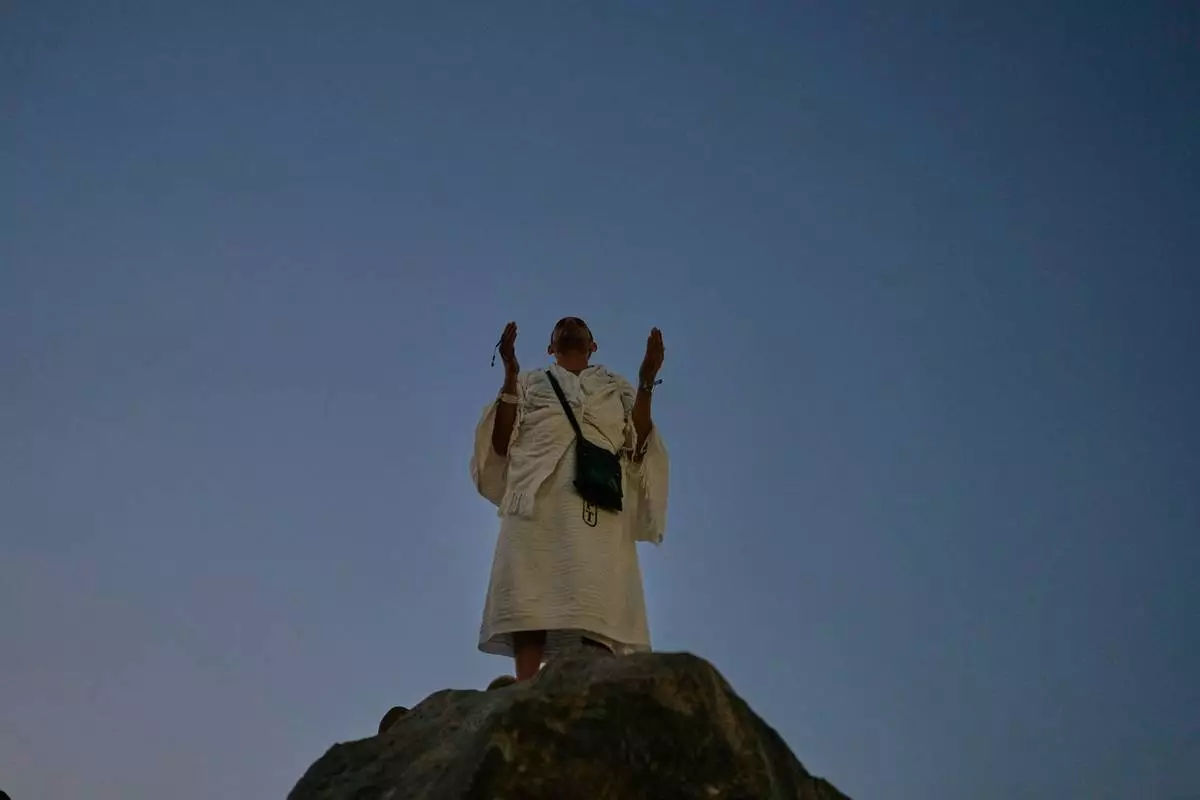
A Muslim pilgrim pray atop of the rocky hill known as the Mountain of Mercy, on the Plain of Arafat, during the annual Hajj pilgrimage near the holy city of Mecca, Saudi Arabia, Tuesday, May 26, 2026. (AP Photo/Altaf Qadri)

A Muslim pilgrim pray atop of the rocky hill known as the Mountain of Mercy, on the Plain of Arafat, during the annual Hajj pilgrimage near the holy city of Mecca, Saudi Arabia, Tuesday, May 26, 2026. (AP Photo/Altaf Qadri)

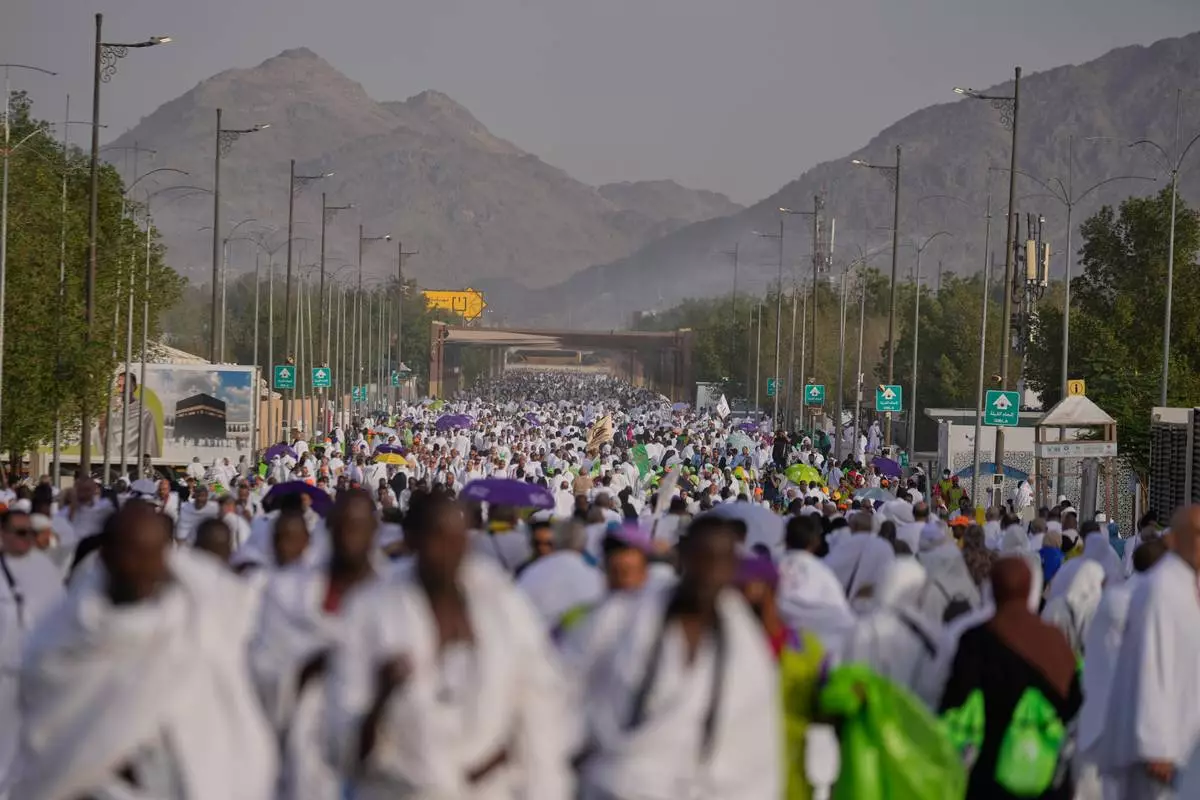
Muslim pilgrims walk towards the rocky hill known as the Mountain of Mercy, on the Plain of Arafat, during the annual Hajj pilgrimage near the holy city of Mecca, Saudi Arabia, Tuesday, May 26, 2026. (AP Photo/Altaf Qadri)

Muslim pilgrims walk towards the rocky hill known as the Mountain of Mercy, on the Plain of Arafat, during the annual Hajj pilgrimage near the holy city of Mecca, Saudi Arabia, Tuesday, May 26, 2026. (AP Photo/Altaf Qadri)

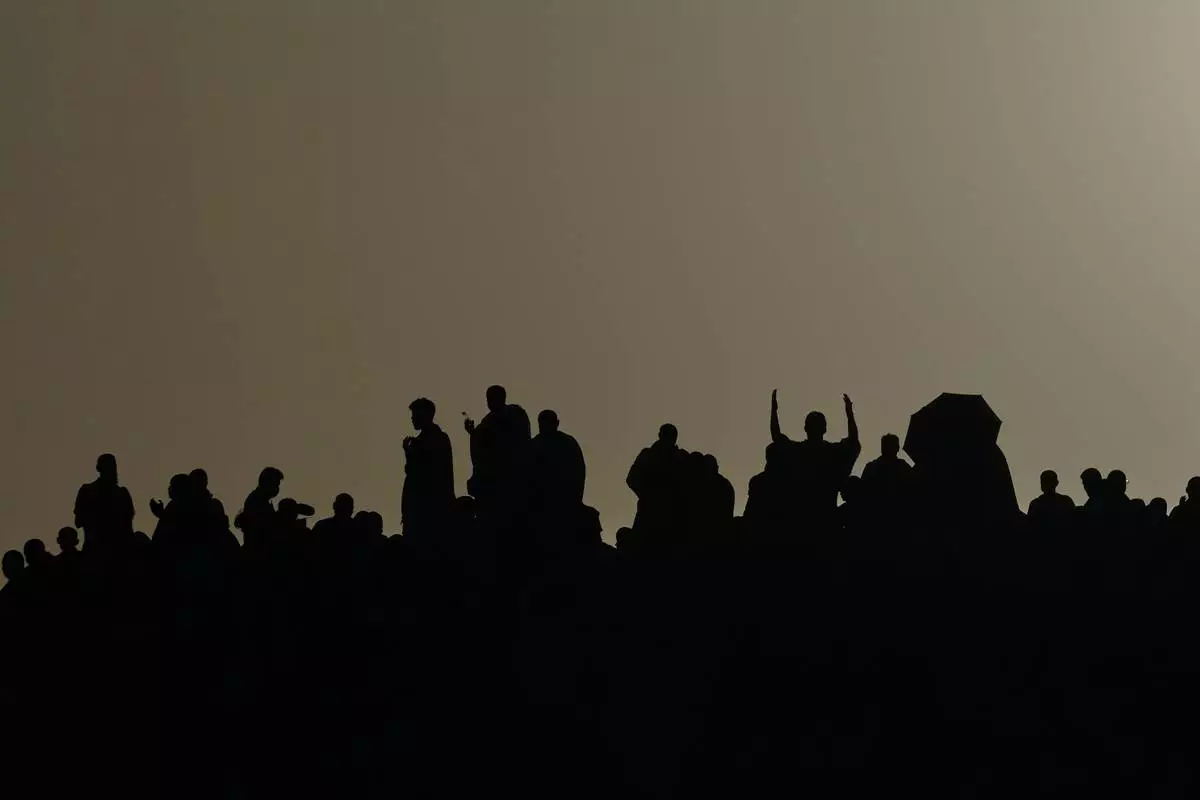
Muslim pilgrims are silhouetted as they pray at top of the rocky hill known as the Mountain of Mercy, on the Plain of Arafat, during the annual Hajj pilgrimage near the holy city of Mecca, Saudi Arabia, Tuesday, May 26, 2026. (AP Photo/Altaf Qadri)

Muslim pilgrims are silhouetted as they pray at top of the rocky hill known as the Mountain of Mercy, on the Plain of Arafat, during the annual Hajj pilgrimage near the holy city of Mecca, Saudi Arabia, Tuesday, May 26, 2026. (AP Photo/Altaf Qadri)

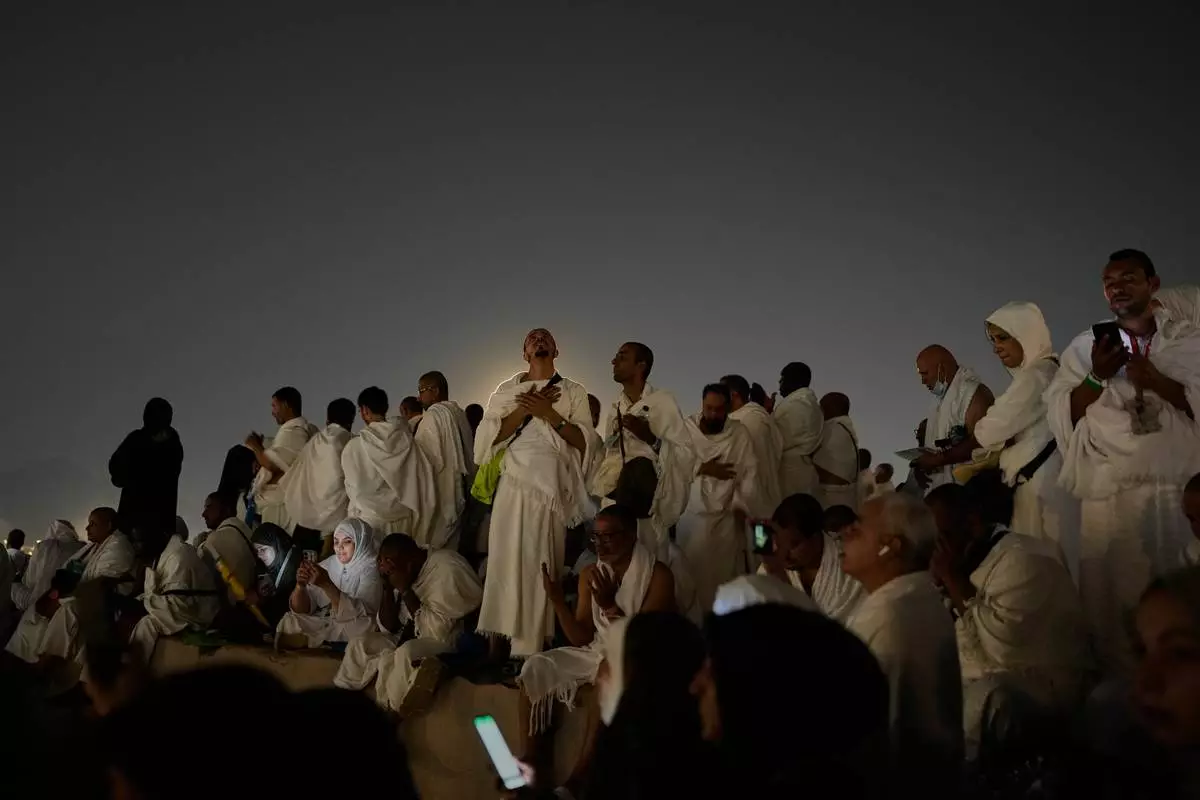
Muslim pilgrims pray at top of the rocky hill known as the Mountain of Mercy, on the Plain of Arafat, during the annual Hajj pilgrimage near the holy city of Mecca, Saudi Arabia, Tuesday, May 26, 2026. (AP Photo/Altaf Qadri)

Muslim pilgrims pray at top of the rocky hill known as the Mountain of Mercy, on the Plain of Arafat, during the annual Hajj pilgrimage near the holy city of Mecca, Saudi Arabia, Tuesday, May 26, 2026. (AP Photo/Altaf Qadri)

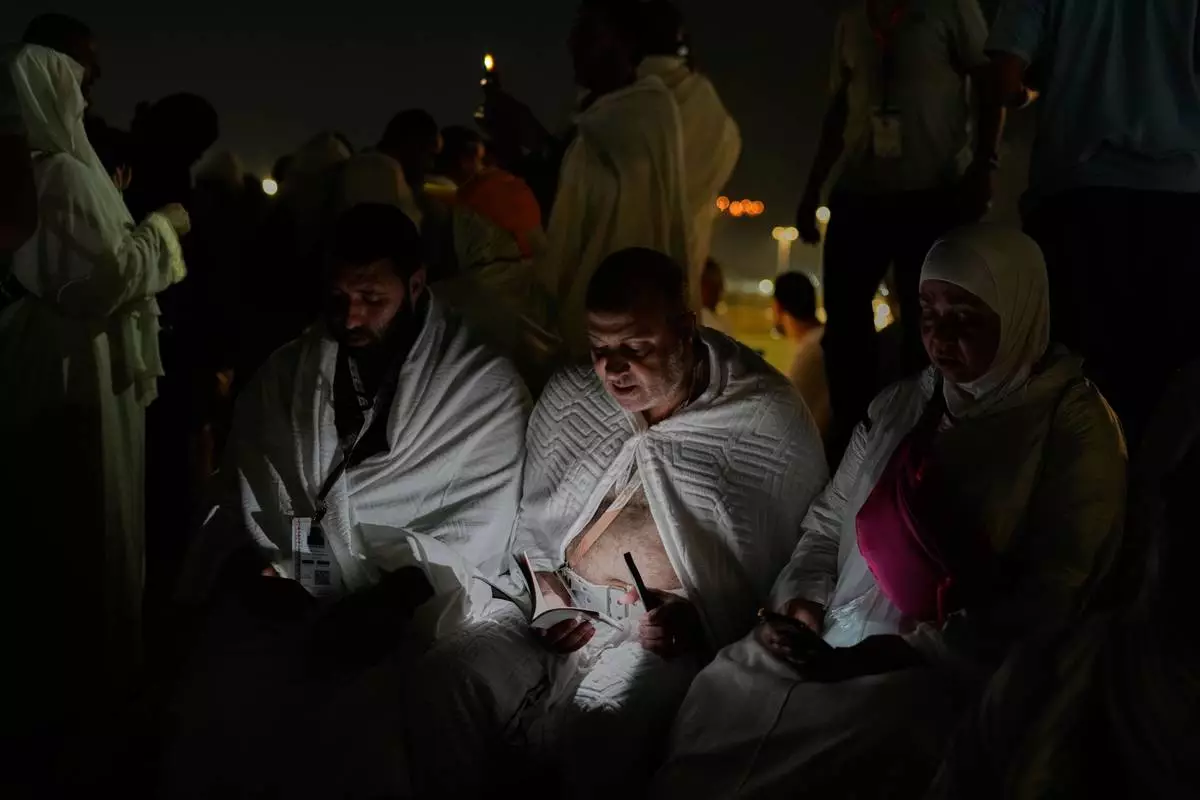
Muslim pilgrims read a copy of Islam's holy book Quran atop of the rocky hill known as the Mountain of Mercy, on the Plain of Arafat, during the annual Hajj pilgrimage near the holy city of Mecca, Saudi Arabia, Tuesday, May 26, 2026. (AP Photo/Altaf Qadri)

Muslim pilgrims read a copy of Islam's holy book Quran atop of the rocky hill known as the Mountain of Mercy, on the Plain of Arafat, during the annual Hajj pilgrimage near the holy city of Mecca, Saudi Arabia, Tuesday, May 26, 2026. (AP Photo/Altaf Qadri)

Recommended Articles