WASHINGTON (AP) — Alabama on Wednesday asked the Supreme Court to allow it to use a congressional map favoring Republicans in this year's elections, despite a lower court's ruling that the redistricting plan intentionally discriminates against Black people.
The state's Republican leadership filed an emergency appeal with the justices a day after a three-judge court refused to let the state use a map it adopted three years ago that has a majority Black population in just one of its seven congressional districts.
The judges instead required Alabama to continue using a court-ordered map that was put in place for the 2024 elections that includes two districts where Black residents comprise a majority or close to it.
Attorney General Steve Marshall told the court that the state did not intentionally discriminate against Black residents and should be allowed to hold elections this year under a map chosen by lawmakers, not judges.
The appeal is the latest development in the fallout from last month's Supreme Court ruling that struck down a Black-majority district in Louisiana and weakened the federal Voting Rights Act. That ruling has led Republicans in several Southern states, including Alabama, to take steps to reshape voting districts with large minority populations that have elected Democrats.
The redistricting frenzy is part of a broader push by President Donald Trump to try to hold on to Republicans’ slim House majority in the November elections.
The Alabama cases stretches back several years. The three-judge panel in 2023 ruled that a map drawn by Republican state lawmakers intentionally diluted the voting power of Black citizens. The court said the state, which is about 27% Black, should have two districts where Black voters are the majority or close to it. The court-selected map was used in 2024.
After the Supreme Court’s recent ruling in the Louisiana case, Alabama officials moved to implement the 2023 state-drawn map. The Supreme Court’s conservative majority agreed to lift the injunction that had blocked the map’s use and sent the case back to the three-judge panel for reconsideration in light of the Louisiana ruling.
In the meantime, voters cast ballots in Alabama’s May 19 primaries, and Republican Gov. Kay Ivey set new special primaries for Aug. 11 in four congressional districts affected by the map switch.
Upon further review, the judicial panel said it was standing behind its initial finding that there was “undisputed evidence” of intentional racial discrimination, a holding that was independent of and unaffected by the Supreme Court ruling on the Voting Rights Act.
It said the special congressional primaries should instead proceed under the previous court-approved districts.
The use of the court-ordered map led to the 2024 election of U.S. Rep. Shomari Figures, a Black Democrat. State Republicans are seeking to use a map that would give the GOP an opportunity to reclaim the south Alabama seat.
The state is asking for Supreme Court action by Monday as it makes preparations for the special vote in August.
This story has been corrected to show the Alabama primaries were May 19, not May 11.
Associated Press writer Kim Chandler contributed to this report from Montgomery, Ala.
Follow the AP’s coverage of the U.S. Supreme Court at https://apnews.com/hub/us-supreme-court.
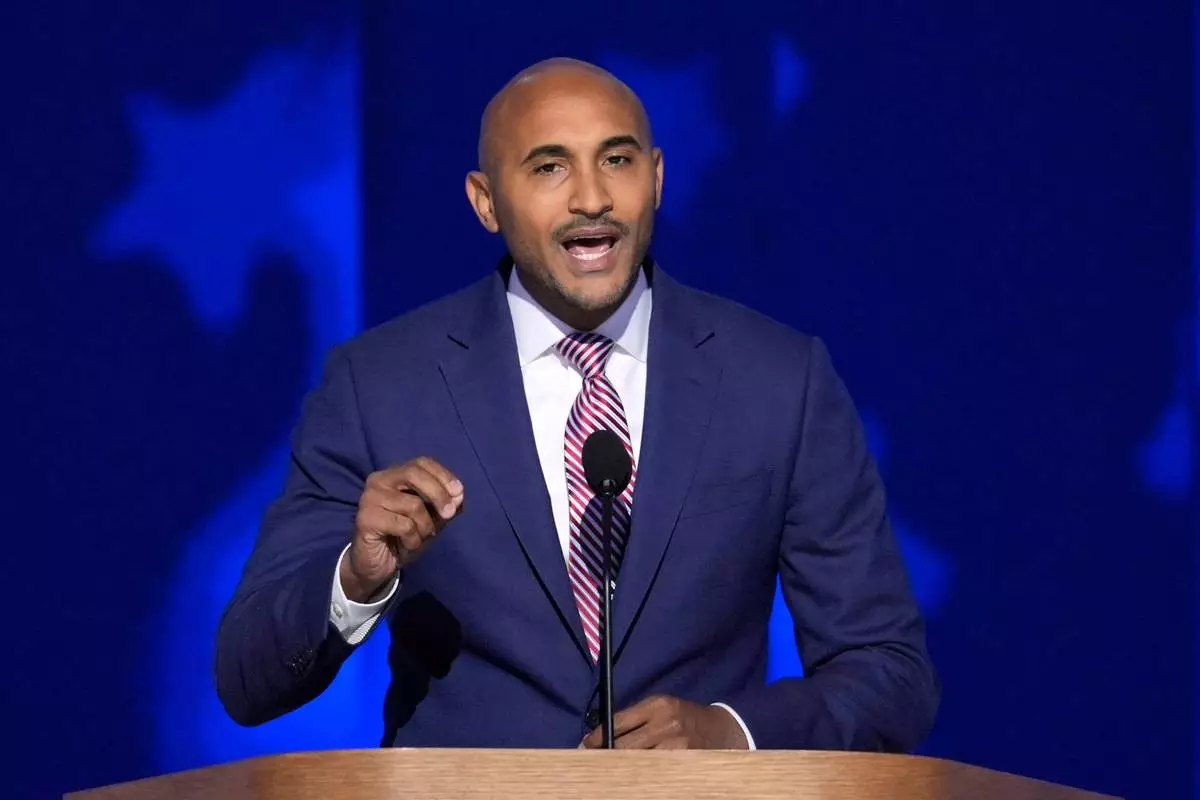
FILE - Shomari Figures, who is running for Alabama's 2nd Congressional District, speaks during the Democratic National Convention, Aug. 22, 2024, in Chicago. (AP Photo/J. Scott Applewhite, File)
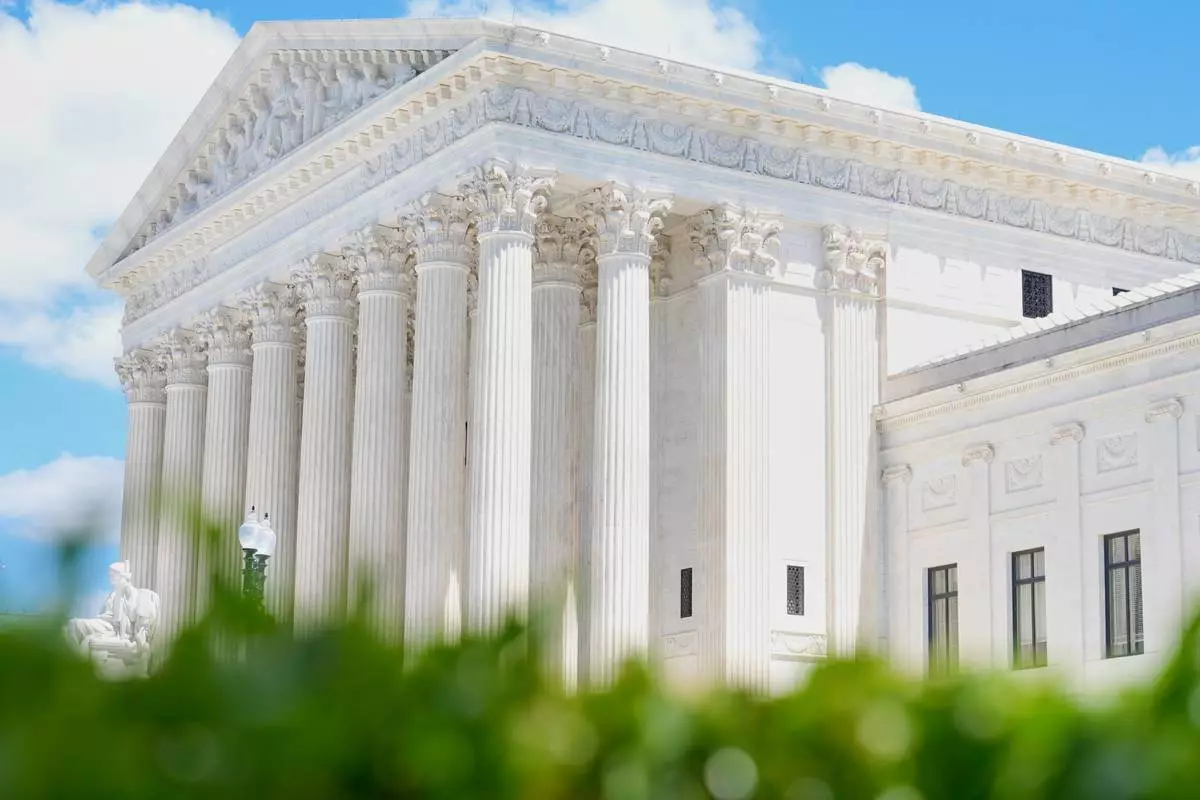
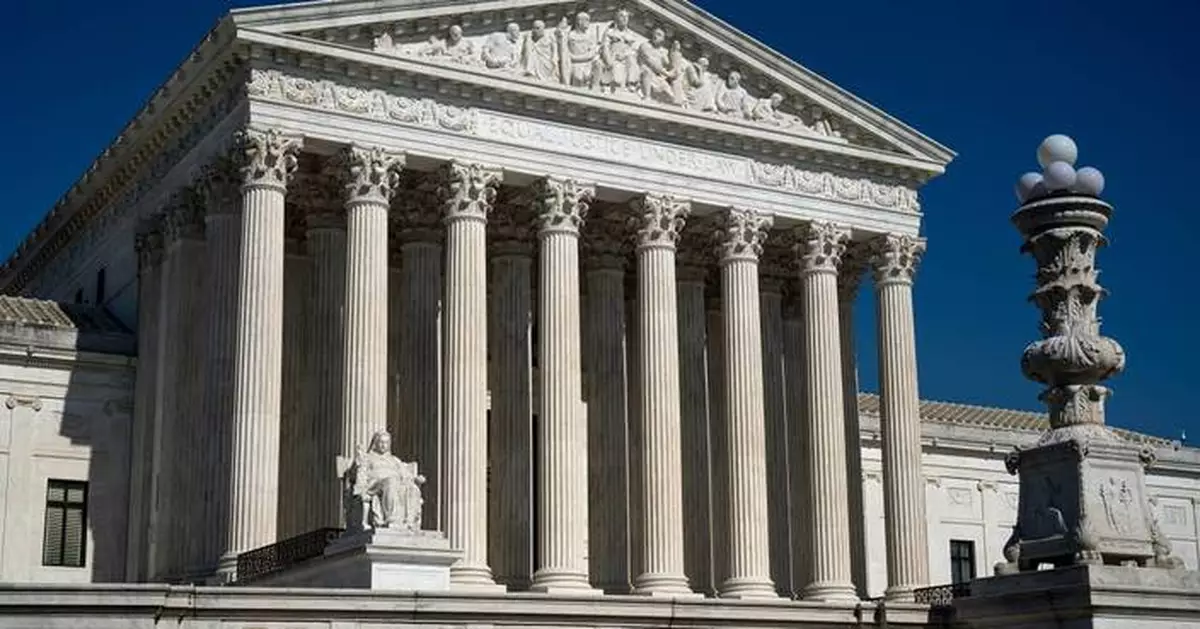
A statue titled the "Authority of Law" sits in front of the Supreme Court on Friday, May 15, 2026, in Washington. (AP Photo/Mariam Zuhaib)
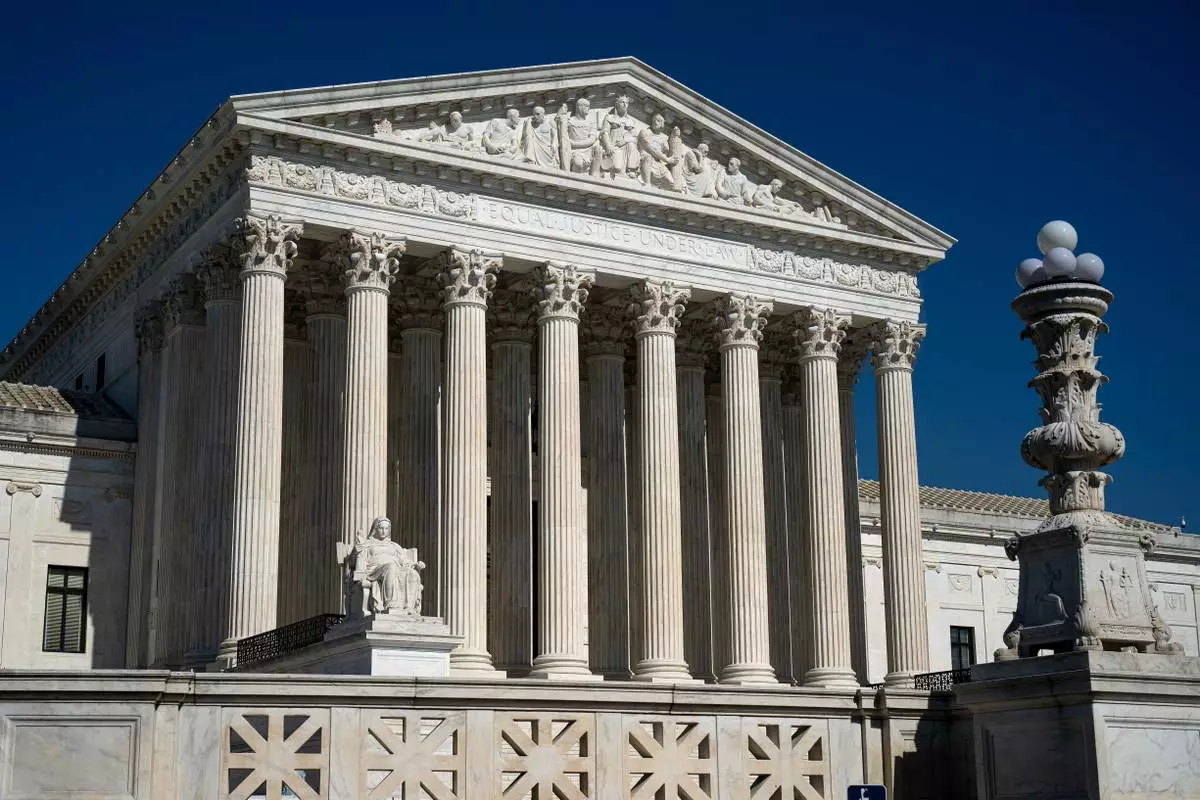
The Supreme Court is seen in Washington, Monday, May 18, 2026. (AP Photo/J. Scott Applewhite)
WASHINGTON (AP) — Two key senators involved in a long-simmering debate over fixing college sports will introduce a bipartisan bill designed to break a congressional logjam that would regulate payments to players, limit them to one “free” transfer over their careers and create a “Lane Kiffin Rule” to restrict coach movement during the season.
Sens. Ted Cruz, R-Texas, and Maria Cantwell, D-Wash., the chair and ranking member of the Senate Commerce Committee that oversees college sports, briefed The Associated Press on details of the bill they crafted in hopes it can get the 60 votes needed to clear the Senate.
“This is a stability bill, not just an NIL bill,” Cruz said, referencing the name, image and likeness payments that have led to football rosters with $30 million payrolls and reshaped the industry.
Cantwell said she and Cruz teamed on the legislation "because he and I really do believe the college sports system is in a bit of chaos.”
The bill looks very much like a “best of” pair of legislative proposals — one called SCORE, another called SAFE — that have gone nowhere over the past several months. It contains two elements the NCAA has supported: a limited antitrust exemption and a clause that would preempt much of the patchwork of state laws currently regulating NIL.
College sports has been looking to Washington for help as it grapples with rising costs of paying players and an out-of-control transfer portal that have threatened smaller sports, many involving women, that make up the backbone of the U.S. Olympic pipeline.
This bill, called the Protect College Sports Act (PCSA), would offer what Cruz and Cantwell said was very “targeted” antitrust protection — which was part of the largely Republican-backed SCORE Act that many Democrats opposed. That would be in exchange for what Cruz said would be “public-facing protections" for athletes in 10 areas, including guarantees for health insurance and scholarships and more stringent regulations for NIL deals from third parties.
“I think it's better predictability,” Cantwell said. “Why did we do it? Because when you've got thousands of athletes being cut, hundreds of programs being cut, the risk to the whole infrastructure was too high to not try to get better predictability.”
The bill would limit players to one unrestricted transfer over the course of their college careers — a widely supported idea across the country — and would adopt something close to the five-year eligibility period that the NCAA appears ready to enact next month.
The bill also tries to regulate coaching movement. Kiffin's sudden move to LSU from rival Mississippi while the Rebels were preparing for the College Football Playoff last season put a fine point on an issue that has only gotten worse in an era where teams spend millions to fill out rapidly shifting football rosters: Schools have less patience (and more money) to devote to hiring coaches for a quick fix.
Under terms of the bill, midseason coaching changes would be prohibited.
“It's not fair or right to poach a coach in the middle of the season while the team is still competing," Cruz said. "There’s a reason the NFL has a rule that you can’t do that. Obviously, NFL teams hire coaches away from each other but they don’t do so in the middle of the season.”
The bill would rework the Sports Broadcasting Act to allow conferences to pool their TV rights — a move proponents have said could add billions of dollars to the ecosystem in a conclusion the Southeastern and Big Ten Conferences believe is inaccurate.
The senators said leagues wouldn't be required to join the media pooling but those that do would have to use a percentage of any increase from that to support women's and Olympic sports. That alone could be a dealbreaker for the SEC.
“If you do nothing, then obviously, all these other women's and Olympic sports and less revenue-driven activities are going to suffer,” Cantwell said. “I've heard directly from my institutions, they say they're counting on this. Not creating this stability now would be a missed opportunity.”
The SCORE Act, which garnered little support from Democrats, was on the House schedule last week but was abruptly pulled off when the Congressional Black Caucus and NAACP came out against it.
But even if it had squeaked by in the razor-tight House, it had virtually no chance of passing as written in the Senate, where it would need 60 votes to break a possible filibuster.
“The Congressional Black Caucus and I have the same objective: stop the ‘SEC SCORE Act,’” said Cantwell, referencing the SEC as one of dozens of conferences who have supported that bill.
Some Democrats were reluctant to support a bill, like SCORE, that prohibited college athletes from being classified as employees of their schools. The new bill takes what Cantwell said was a “neutral” stance on the issue of employment.
“Senator Cruz and I have been very concerned about producing a bill that's not just about the 1% of athletes who go on and have a professional career," she said. "We took care of the entire ecosystem and have opportunities for athletes to continue to have that collegiate experience.”
AP college sports: https://apnews.com/hub/college-sports
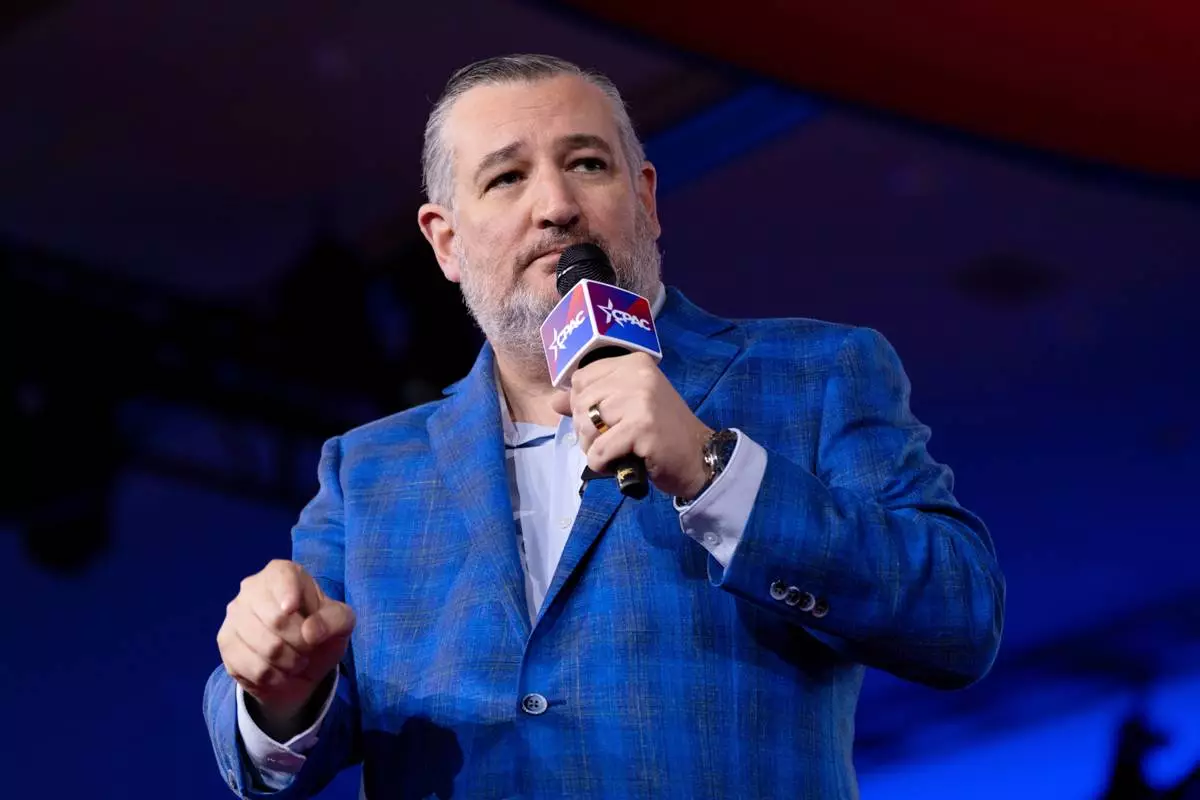
FILE - Sen. Ted Cruz, R-Texas, speaks at the Conservative Political Action Conference (CPAC) in Dallas, March 28, 2026. (AP Photo/Gabriela Passos, File)