BEIRUT (AP) — The Israeli military on Wednesday told residents across southern Lebanon to leave as it expands its operations there, saying in a statement that the military will “work with extreme force” against Lebanon’s militant Hezbollah group.
The warning — which fell on the Islamic holiday of Eid al-Adha — came a day after Israeli troops clashed with the Iran-backed Hezbollah along a strategic river in southern Lebanon, with Israeli forces pushing farther north, days ahead of talks in Washington between Lebanese and Israeli delegations.
Click to Gallery
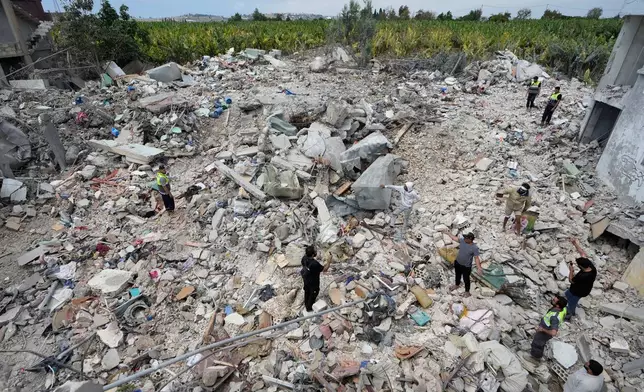
Residents and journalists inspect a building damaged in an Israeli airstrike a day earlier in the southern village of Charnay, Lebanon, Wednesday, May 27, 2026. (AP Photo/Mohammed Zaatari)
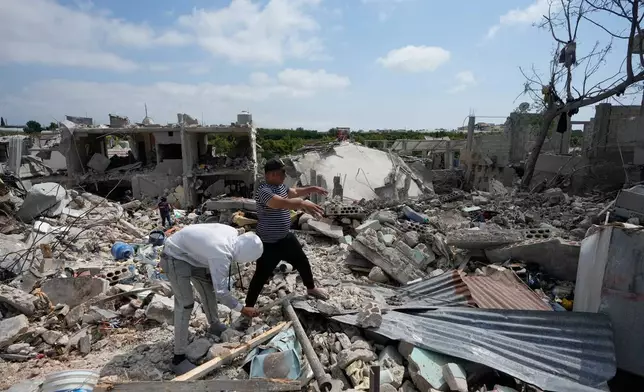
Residents search through the rubble of homes destroyed in an Israeli airstrike a day earlier in the southern village of Charnay, Lebanon, Wednesday, May 27, 2026. (AP Photo/Mohammed Zaatari)
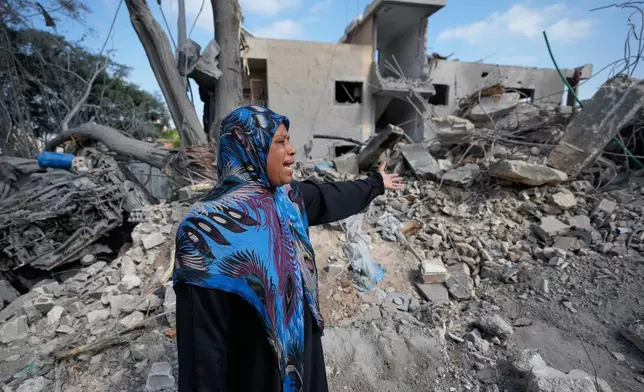
A woman gestures near the rubble of her home destroyed in an Israeli airstrike a day earlier in the southern village of Maarakeh, Lebanon, Wednesday, May 27, 2026. (AP Photo/Mohammed Zaatari)
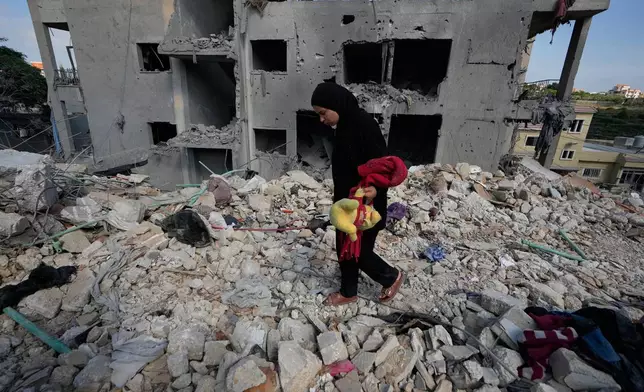
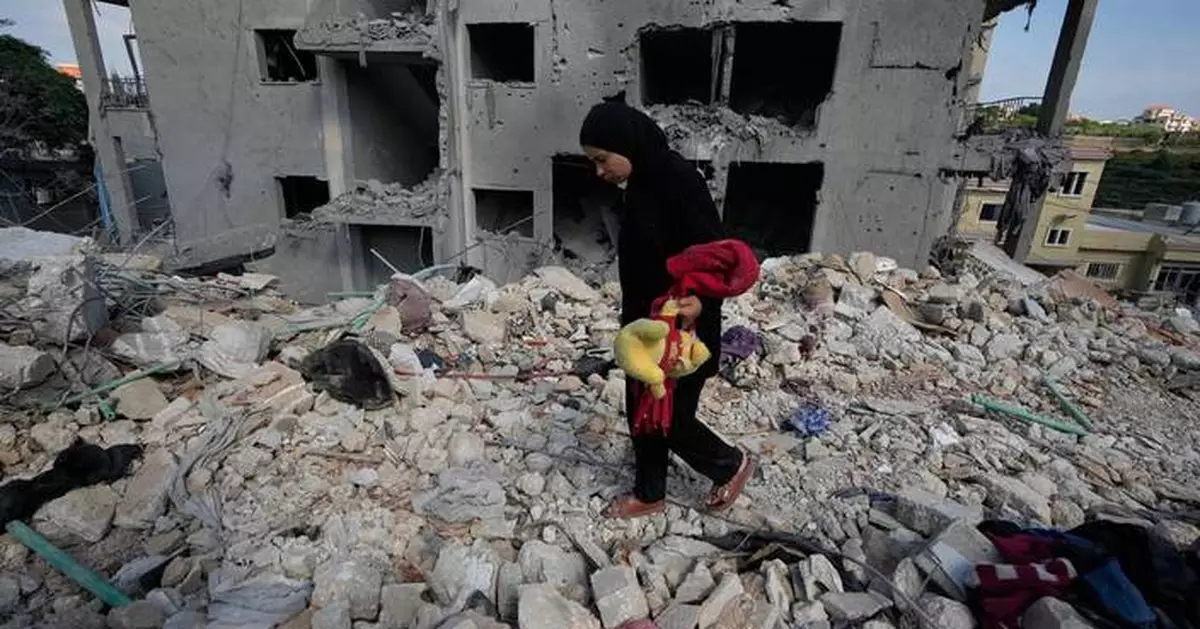
A resident carries belongings as she walks through the rubble of her home destroyed in an Israeli airstrike a day earlier in the southern village of Maarakeh, Lebanon, Wednesday, May 27, 2026. (AP Photo/Mohammed Zaatari)
Wednesday's warning is the first that orders the Lebanese to relocate from the south since a ceasefire went into effect on April 17 and follows an escalation in the Israel-Hezbollah war.
Israeli troops have crossed the Litani River, edging closer to the southern city of Nabatiyeh. Fighting between Israel and Hezbollah has also intensified in the town of Zawtar al-Sharqieh, along the strategic river. Israel has not struck Beirut or areas near the capital since the truce started.
The war started on March 2 after Hezbollah fired rockets towards northern Israel in solidarity with Iran. Over one million people in Lebanon have since been displaced, and over 3,200 people killed in Israeli strikes according to Lebanon’s health ministry. Many displaced people are sleeping in public schools that have turned into makeshift shelters or in tents pitched in encampments across the Lebanese capital.
Earlier, the Israeli military had called on the residents of Nabatiyeh and the city of Tyre along the Mediterranean coast to leave and stay away, saying there were Hezbollah members and military posts there.
Roads have been jam-packed with cars fleeing Tyre and surrounding neighborhoods heading north, seeking shelter. Strikes in the southwestern region have intensified in recent days.
Those who have nowhere to go are staying in the city, said Moussa Nasrallah of Lebanon's Civil Defense. He and other first-responders have been helping move the elderly and others living further out in the province to the city.
At least four Israeli strikes hit near Tyre since the warning was announced, Nasrallah said. The Israeli military said it has been targeting what it called “command centers” belonging to Hezbollah without giving further details.
“We can’t use our vehicles to evacuate people out of the area and not be available for the wounded,” Nasrallah told The Associated Press, fearing his colleagues would be stuck in the traffic, and unable to return to the front lines to help civilians.
Hezbollah has claimed responsibility for several attacks on both Israeli troops in Lebanon and northern Israeli border villages.
Also, amid a surge in Hezbollah attacks with exploding drones, Israeli Prime Minister Benjamin Netanyahu announced that the Israeli military will expand the scope of its attacks against Hezbollah. The Israeli military said it has struck 550 targets since the beginning of the week, a significant increase in the number of attacks.
Hezbollah has vowed to fight until the war ends in Lebanon and Israel withdraws its troops that operate across large swaths of the country's south. The Iran-backed group has dismissed Lebanon's direct talks with Israel and has backed Iran's talks with Washington to their war. Among Tehran's conditions is ending the war in Lebanon as well.
Israel's widened attacks in recent days have struck areas in eastern Lebanon along the Bekaa Valley, near the border with Syria. On Tuesday, Israel struck near the Qaraoun Dam, Lebanon's largest, on the Litani River.
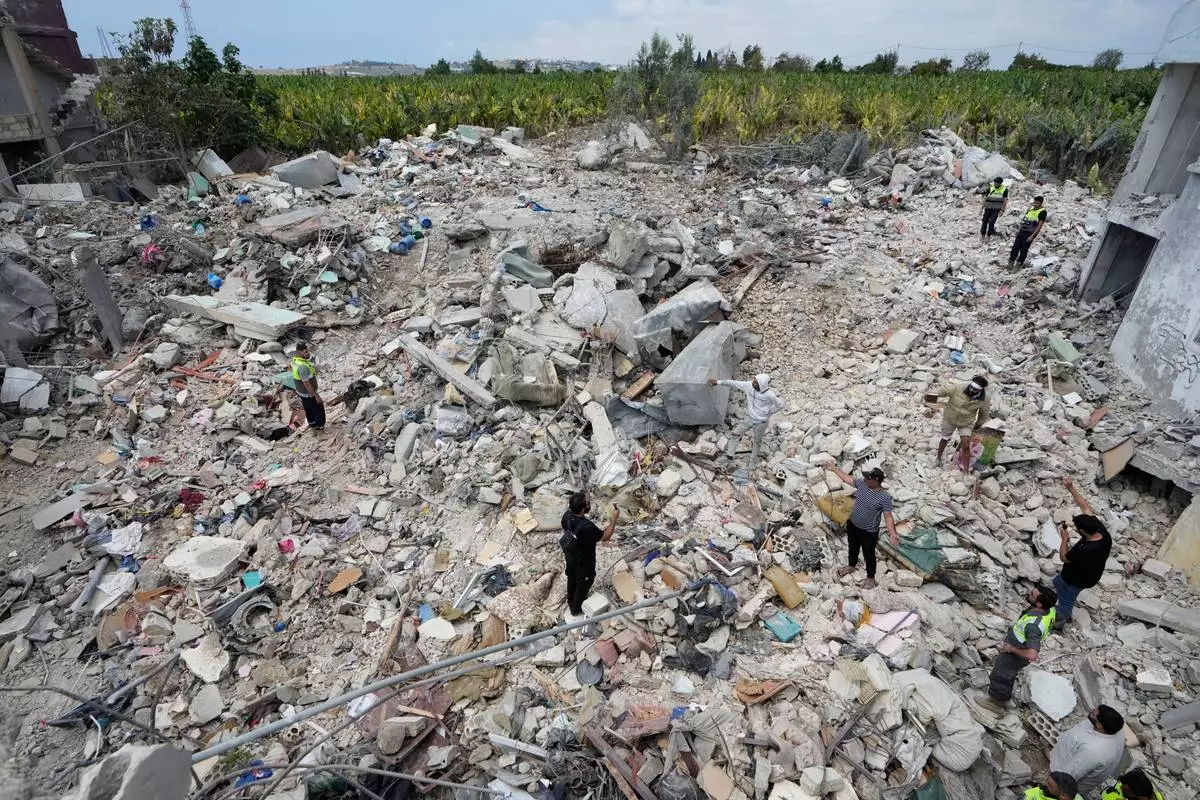
Residents and journalists inspect a building damaged in an Israeli airstrike a day earlier in the southern village of Charnay, Lebanon, Wednesday, May 27, 2026. (AP Photo/Mohammed Zaatari)
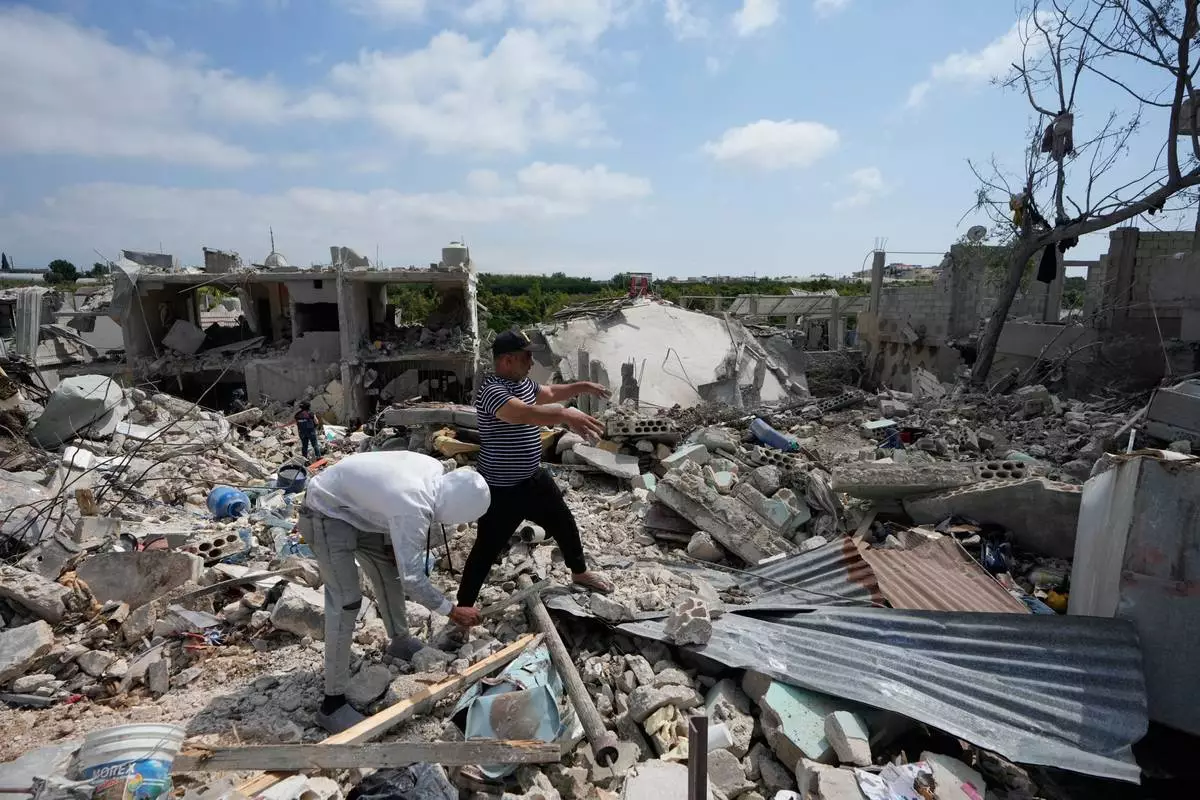
Residents search through the rubble of homes destroyed in an Israeli airstrike a day earlier in the southern village of Charnay, Lebanon, Wednesday, May 27, 2026. (AP Photo/Mohammed Zaatari)
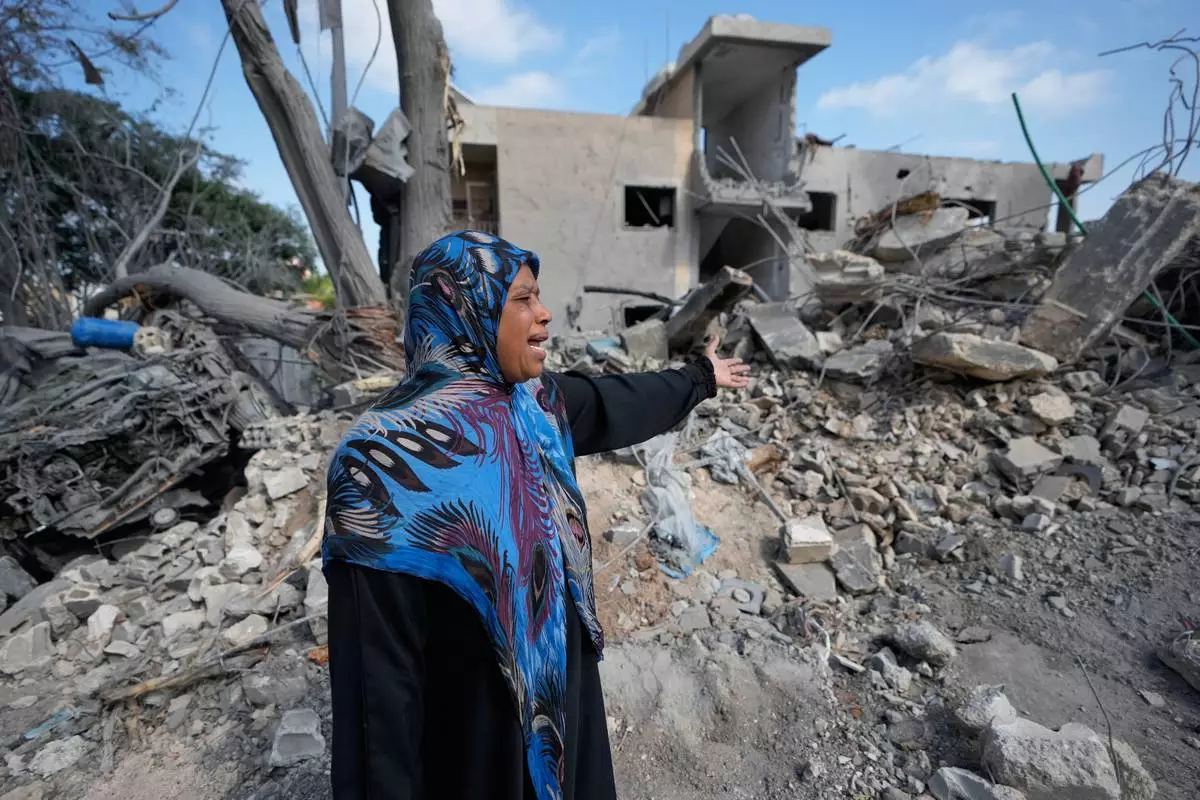
A woman gestures near the rubble of her home destroyed in an Israeli airstrike a day earlier in the southern village of Maarakeh, Lebanon, Wednesday, May 27, 2026. (AP Photo/Mohammed Zaatari)
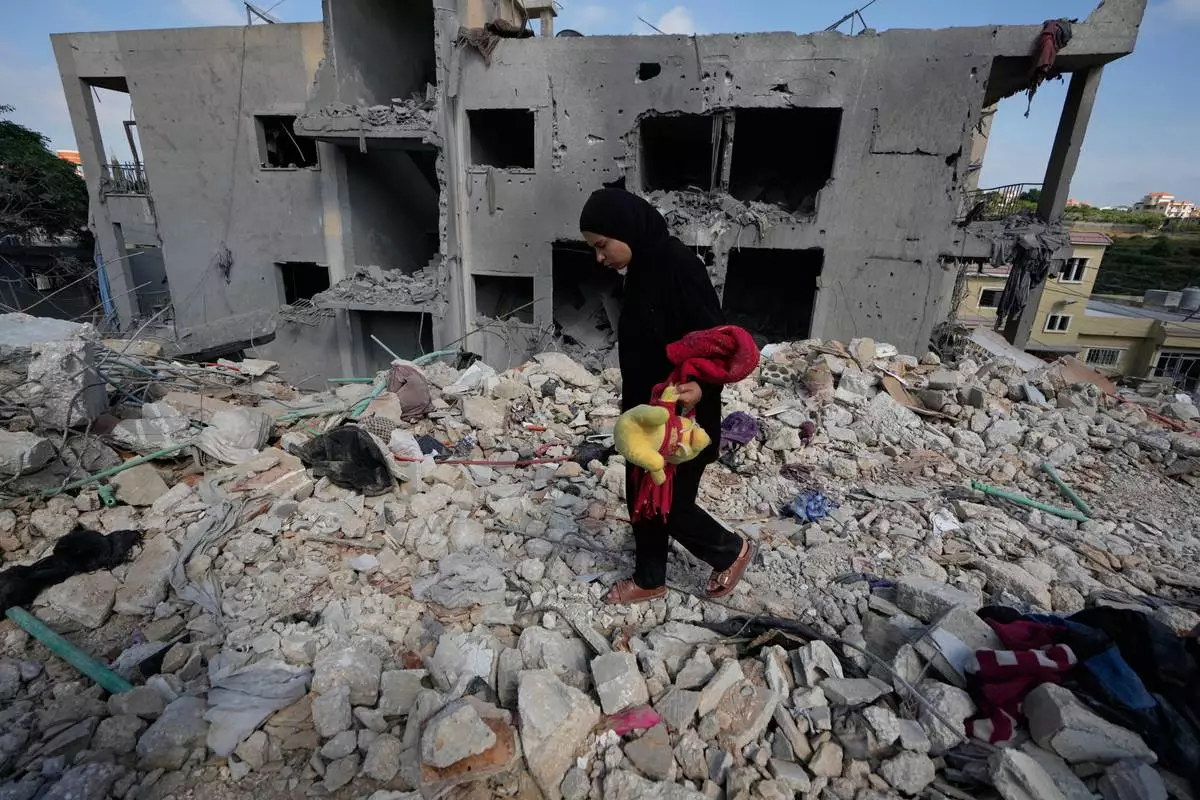
A resident carries belongings as she walks through the rubble of her home destroyed in an Israeli airstrike a day earlier in the southern village of Maarakeh, Lebanon, Wednesday, May 27, 2026. (AP Photo/Mohammed Zaatari)

NEW YORK (AP) — President Donald Trump's administration is planning to send Americans who are exposed to Ebola while abroad to a new facility in Kenya instead of flying them to the United States, an administration official said Wednesday.
The quarantine and treatment center being set up by the Departments of Defense, State and Health and Human Services will be designed for Ebola patients who need to get out of the Democratic Republic of the Congo and receive care quickly, said the official, who insisted on anonymity to share the Republican administration’s plans. The person said the plan would help patients avoid an hourslong medical evacuation to the U.S.
It was unclear where in Kenya the new facility will be built or whether the Kenyan government has signed off on the plan.
The official said the facility will be able to care for the full spectrum of Ebola, a rare but severe disease that is often fatal in people. But the official said people may be transported elsewhere for more advanced care as appropriate.
Kenya’s health minister confirmed officials there were talking with the U.S. about “preparedness and response mechanisms for Ebola” but didn’t address whether the country would establish a treatment facility for Americans.
“Any arrangements regarding international health cooperation will be guided by Kenya’s national laws, public health regulations, biosafety and biosecurity standards, and the government’s responsibility to safeguard the health and welfare of Kenyans,” Health Minister Aden Duale said in a statement.
For decades, medical experts have suggested moving patients suffering from Ebola and similar illnesses as little as possible in case their condition worsens, said Dr. Ali Khan, the public health college dean at the University of Nebraska Medical Center. But, he added, the quality of care must be equivalent to what someone would receive in American facilities.
“You’ve got to make sure the patient gets the best quality care, and you need to ensure excellent infection control,” said Khan, who earlier in his career led international responses to Ebola and other outbreaks for the U.S. Centers for Disease Control and Prevention.
During a massive Ebola outbreak in west Africa in 2014 and 2015, more than a half dozen infected Americans were brought back to the United States. That experience prompted the establishment of a U.S. network of quarantine and isolation facilities across the country.
But during that earlier outbreak, Trump, then a businessman and reality TV star, repeatedly criticized then-President Barack Obama, a Democrat, for bringing infected Americans home for care.
“The U.S. cannot allow EBOLA infected people back. People that go to far away places to help out are great — but must suffer the consequences!” he wrote in a 2014 tweet.
He also suggested a plan similar to the one described to the AP by the administration official: “Treat them, at the highest level, over there,” Trump wrote in July 2014.
During a Cabinet meeting on Wednesday, Secretary of State Marco Rubio said the State Department and other agencies were working “very, very hard to contain this crisis to the countries where it’s currently located, particularly the Democratic Republic of the Congo.”
“We cannot and will not allow any cases of Ebola to enter the United States,” he said.
Earlier this month, an American doctor working in Congo tested positive for Ebola and was sent to Germany for medical care. Serge, a Christian missionary organization, identified him as Dr. Peter Stafford. Stafford’s wife and four children did not have symptoms but also were flown to Germany and placed in isolation at Berlin’s Charite University Hospital.
On Wednesday, the hospital said the patient was in stable condition.
“The viral load measured in the patient has dropped very, very rapidly over the course of the week," likely thanks to antiviral therapy, Dr. Leif Erik Sander, director of the hospital’s infectious diseases department, told reporters.
Another American medical missionary, Dr. Patrick LaRochelle, was transported to the Czech Republic for isolation after he was exposed to Ebola, though he did not have any symptoms, according to the missionary organization.
Health authorities in Congo have been struggling to contain the outbreak, which the World Health Organization has said is outpacing them.
The number of suspected Ebola cases in eastern Congo is nearing 1,000, with at least 220 suspected deaths. Congo’s health ministry on Tuesday said 101 cases have been confirmed and it's looking into more than 3,000 possible contacts.
Challenges include the threat of armed groups in eastern Congo, a large number of displaced people and poor infrastructure.
AP journalists Evelyne Musambi in Nairobi and Kerstin Sopke in Berlin contributed to this report.
The Associated Press Health and Science Department receives support from the Howard Hughes Medical Institute’s Department of Science Education and the Robert Wood Johnson Foundation. The AP is solely responsible for all content.
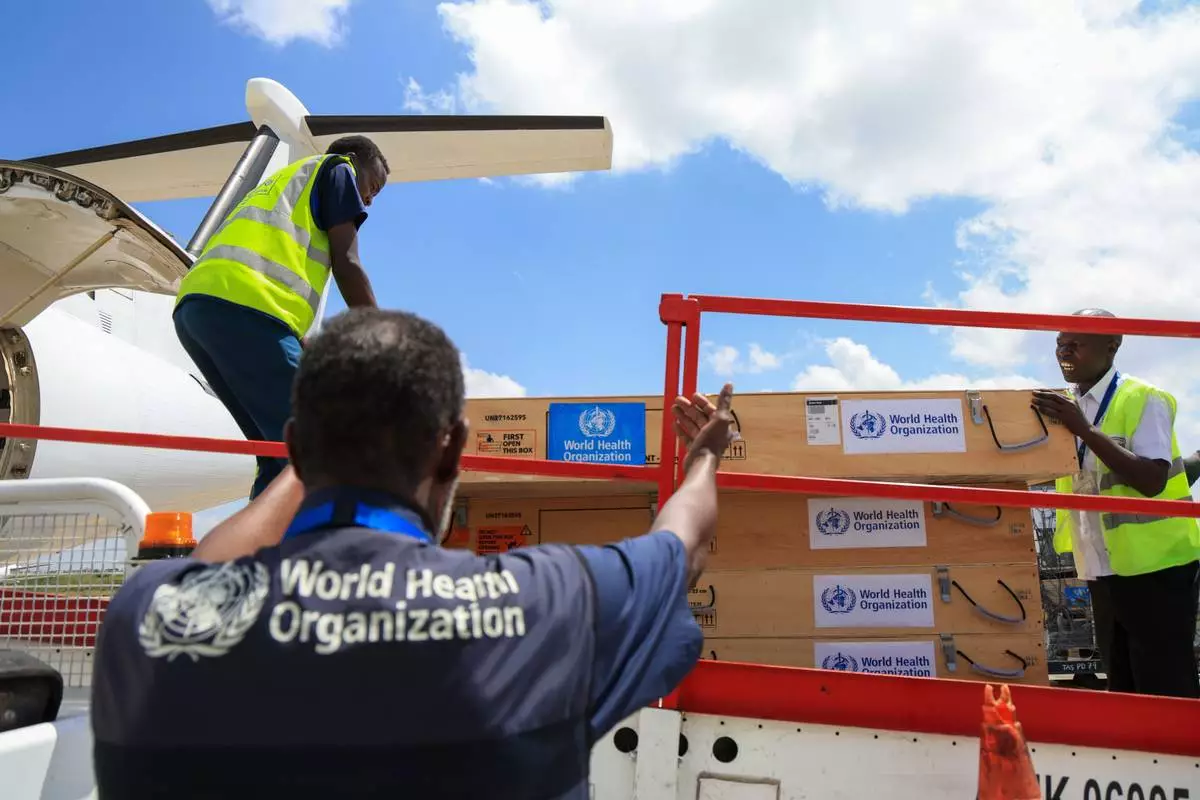
Workers load World Health Organization (WHO) emergency supplies onto a United Nations plane in Nairobi, Kenya, Wednesday, May 20, 2026, headed for Congo to combat the Ebola outbreak in Ituri province. (AP Photo/Andrew Kasuku)