NEW YORK (AP) — Baseball players fired the opening salvo Wednesday in what is expected to be long and contentious labor negotiations, asking for expanded free agency and salary arbitration rights along with almost doubling the major league minimum and increasing the money high-revenue teams share with the less-wealthy clubs.
A day before Major League Baseball is expected to make a salary cap proposal, the union outlined its initial economic proposals during a bargaining session at the players' association office in Manhattan. It included what it called a “competitive integrity tax” that would penalize teams dropping below a payroll floor and called for the luxury tax threshold to rise to $300 million next year.
Baseball’s labor contract expires Dec. 1 and MLB is expected to institute a lockout, management’s equivalent of a strike under federal labor law. Players have vowed they never will accept a salary cap.
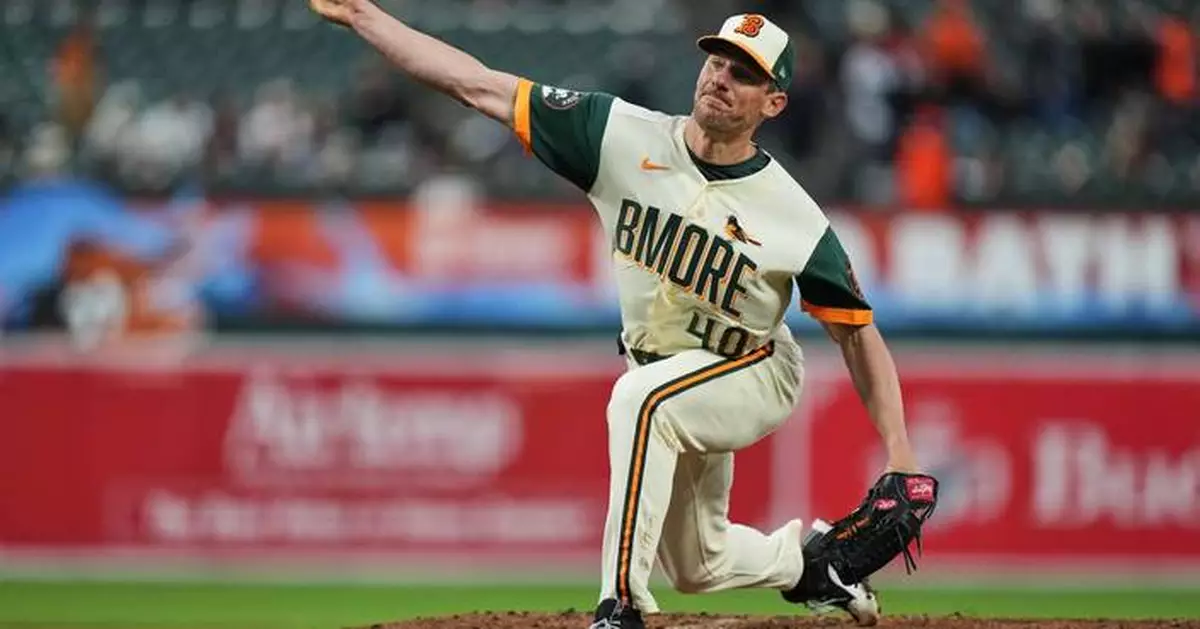
“Attendance, viewership, interest — by any measure you want to use, our game is moving in a positive direction,” Baltimore pitcher Chris Bassitt, a member of the union's eight-man executive subcommittee, said in a statement. “We’ve put forward proposals designed to continue that trend. Support, incentivize, and reward clubs who are committed to competing, especially small-market clubs. Compensate players fairly for the work they are doing.”
MLB clearly is not in favor of what the union presented and maintains the players' plan would decrease revenue sharing.
“We understand their proposals are designed to benefit players. Unfortunately, they do not address and in fact exacerbate the competitive balance problem our fans are telling us we must address,” MLB spokesman Glen Caplin said in a statement. "The MLBPA’s proposal would reduce the amount transferred to lower-revenue clubs, weaken the competitive balance tax and lead to even more payroll disparity than exists today. For example, under the union’s proposal, the Dodgers would pay less in luxury tax payments, giving them an additional $70 million to spend on payroll.”
Marcus Semien and Sean Manaea of the Mets and Eugenio Suárez of Cincinnati attended the session while other players participated online.
“The players’ proposals provide increased revenue sharing initially guaranteeing every small-market club a minimum of $240 million in revenue every season,” interim union head Bruce Meyer, who replaced Tony Clark in February, said in a statement. “This enhanced revenue sharing includes added protections to ensure clubs prioritize winning over profiteering.”
According to details obtained by The Associated Press:
— The luxury tax threshold, which starts at $244 million this season, would rise to $300 million in 2027 and then increase by $15 million annually. Penalties such as moving back a team’s pick in the amateur draft would be eliminated. Surcharge levels, currently as much as 110%, would drop to 10% above the preceding level.
— Free agent eligibility, which has been six seasons of major league service since the 1976 agreement would drop to five for players who have reached age 30 by Nov. 1. A team could retain the player by making a qualifying offer. If a player in that group refuses the qualifying offer, he would become arbitration eligible.
— The minimum salary would rise from $780,000 this year to $1.5 million next season, $1.65 million in 2028, $1,825,000 in 2029, $2 million in 2030 and $2.2 million in 2031.
— Salary arbitration eligibility would expand and teams would have to offer at least $3 million to eligible players. The threshold increased from two years to three years in 1986 and the so-called super 2 class with those of two to three years began in 1991 at 17% and it increased to 22% in 2013. The union proposed it be expanded to 44%. In addition, salaries in cases decided by arbitration panels would be guaranteed and the union asked that some salaries used for comparisons be given 120% of their value.
— The pre-arbitration bonus pool, established at $50 million in the 2022-26 deal, would increase to $180 million next year and then rise by $15 million annually. Players coming up to the major leagues for the first time who sign multiyear deals either before opening day or during the first 21 days of the season would become ineligible.
— The qualifying offer for players with six years of service would be eliminated. It has diminished the markets of some free agents since it began after the 2012 season because of penalties on signing teams.
— The amateur draft lottery would expand from six teams to eight.
— Rules instituted in 2022 designed to decrease service time manipulation would be expanded, such as ensuring a full year of service to eligible prospects who finish among the top five in MVP voting.
— Lower-revenue teams who lose players as free agents would get increased benefits and low-revenue teams would get more draft selections.
— A competitive integrity tax would be imposed on teams who do not reach 50% of the lowest tax threshold and teams further below would face surcharges. Teams would be penalized for not spending revenue-sharing money they receive on payrolls.
— Each small-market team would be guaranteed at least $240 million in revenue annually and teams would keep more ballpark-related revenue.
— Low-revenue teams with winning records or reaching the playoffs would get more revenue sharing money and local media revenue would be shared among teams more extensively.
A five-year deal was reached on March 10, 2022, the 99th day of a lockout, preserving a 162-game regular-season schedule. That was the sport’s ninth work stoppage and first since a 7 1/2-month strike in 1994-95 caused cancellation of the World Series for the first time since 1904.
AP MLB: https://apnews.com/MLB
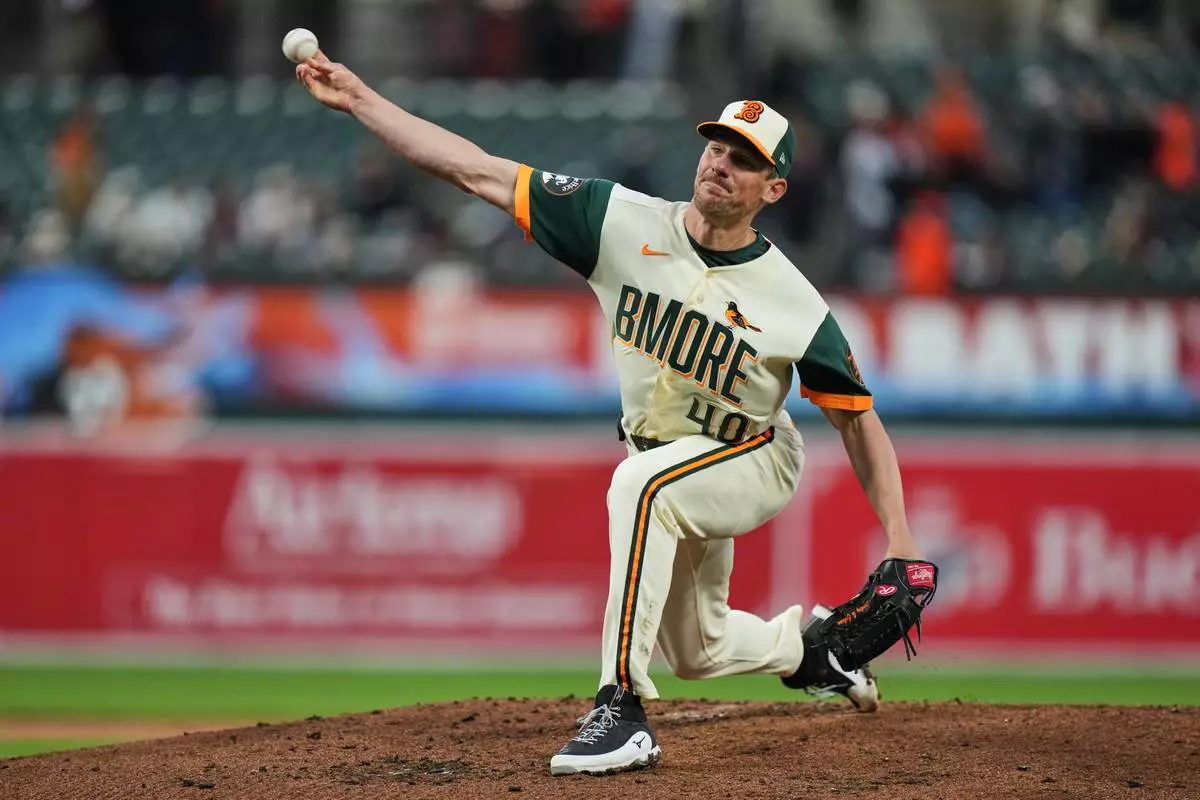
Baltimore Orioles pitcher Chris Bassitt delivers during the second inning of a baseball game against the Detroit Tigers, Friday, May 22, 2026, in Baltimore. (AP Photo/Stephanie Scarbrough)
WASHINGTON (AP) — Two key senators involved in a long-simmering debate over fixing college sports will introduce a bipartisan bill designed to break a congressional logjam that would regulate payments to players, limit them to one “free” transfer over their careers and create a “Lane Kiffin Rule” to restrict coach movement during the season.
Sens. Ted Cruz, R-Texas, and Maria Cantwell, D-Wash., the chair and ranking member of the Senate Commerce Committee that oversees college sports, briefed The Associated Press on details of the bill they crafted in hopes it can get the 60 votes needed to clear the Senate.
“This is a stability bill, not just an NIL bill,” Cruz said, referencing the name, image and likeness payments that have led to football rosters with $30 million payrolls and reshaped the industry.
Cantwell said she and Cruz teamed up on the legislation "because he and I really do believe the college sports system is in a bit of chaos.”
The bill looks very much like the “best of” from a pair of legislative proposals — one called SCORE, another called SAFE — that have gone nowhere over the past several months. It contains two elements the NCAA has supported: a limited antitrust exemption and a clause that would preempt much of the patchwork of state laws currently regulating NIL.
Meredith Page, the chair of the NCAA Division I Student Athlete Advocacy Committee and a former volleyball player at Radford, called the bill “a phenomenal step,” especially after the latest setback for the SCORE Act, which the SAAC also supported.
“I think this has lots of great protections and gives the ability for us to stablize the field that is so, so unstable right now,” Page said.
NCAA President Charlie Baker said the association was reviewing the bill and looked forward to “further productive dialogue with members of Congress.”
College sports has been looking to Washington for help as it grapples with rising costs of paying players and an out-of-control transfer portal that have threatened smaller sports, many involving women, that make up the backbone of the U.S. Olympic pipeline.
This bill, called the Protect College Sports Act, would offer what Cruz and Cantwell said was targeted antitrust protection for the likes of the NCAA and the College Sports Commission, which was part of the largely Republican-backed SCORE Act that many Democrats opposed. That would be in exchange for what Cruz said would be “public-facing protections" for athletes in several areas, including guarantees for health insurance and scholarships, more stringent regulations for NIL deals from third parties and agents who broker their deals.
“I think it's better predictability,” Cantwell said. “Why did we do it? Because when you've got thousands of athletes being cut, hundreds of programs being cut, the risk to the whole infrastructure was too high to not try to get better predictability.”
The bill would limit players to one unrestricted transfer over the course of their college careers — a widely supported idea across the country — and would adopt something close to the five-year eligibility period that the NCAA appears ready to enact next month.
The bill also tries to regulate coaching movement. Kiffin's sudden move to LSU from rival Mississippi while the Rebels were preparing for the College Football Playoff last season put a fine point on an issue that has only gotten worse in an era where teams spend millions to fill out rapidly shifting football rosters: Schools have less patience (and more money) to devote to hiring coaches for a quick fix.
Under terms of the bill, midseason coaching changes would be prohibited.
“It's not fair or right to poach a coach in the middle of the season while the team is still competing," Cruz said. "There’s a reason the NFL has a rule that you can’t do that. Obviously, NFL teams hire coaches away from each other but they don’t do so in the middle of the season.”
The bill would rework the Sports Broadcasting Act to allow conferences to pool their TV rights — a move proponents have said could add billions of dollars to the ecosystem in a conclusion the Southeastern and Big Ten Conferences believe is inaccurate.
The senators said leagues wouldn't be required to join the media pooling but those that do would have to use a percentage of any increase from that to support women's and Olympic sports. That alone could be a dealbreaker for the SEC, which has reportedly been discussing topics including breaking away from the NCAA and allowing collective bargaining for athletes at its league meetings in Florida this week.
SEC commissioner Greg Sankey, along with Jim Phillips of the Atlantic Coast and Brett Yormark of the Big 12 all said they were reviewing the bill, with Sankey saying “bipartisan engagement in Washington on these issues is critical.”
The SCORE Act, which garnered little support from Democrats, was on the House schedule last week but was abruptly pulled off when the Congressional Black Caucus and NAACP came out against it. Even if it had squeaked by in the razor-tight House, it had virtually no chance of passing as written in the Senate, where it would need 60 votes to break a possible filibuster.
“The Congressional Black Caucus and I have the same objective: stop the ‘SEC SCORE Act,’” said Cantwell, referencing the SEC as one of dozens of conferences who have supported that bill.
Some Democrats were reluctant to support a bill, like SCORE, that prohibited college athletes from being classified as employees of their schools. The new bill takes what Cantwell said was a neutral stance on the issue of employment.
But it does not resolve all of Democrats' complaints, as Sen. Chris Murphy, D-Conn., explained in a news release shortly after news of the bill hit.
“It gives the NCAA an antitrust exemption that no other industry gets just so they can keep underpaying the athletes,” he said. "Sure, there are some good things for players in this bill, but this seems like a great deal for the NCAA and the rich guys who run college sports, and a bad deal for athletes.”
Mit Winter, a Missouri attorney who specializes in sports law, said the proposal was so sprawling he was skeptical it will pass as is.
“When you start getting into the stuff about giving the CSC and NCAA antitrust exemptions and liability protection from enforcing rules on athlete denial of compensation, I think that’s where things get a little more dicey,” he said.
AP College Sports Writer Eric Olson contributed.
AP college sports: https://apnews.com/hub/college-sports
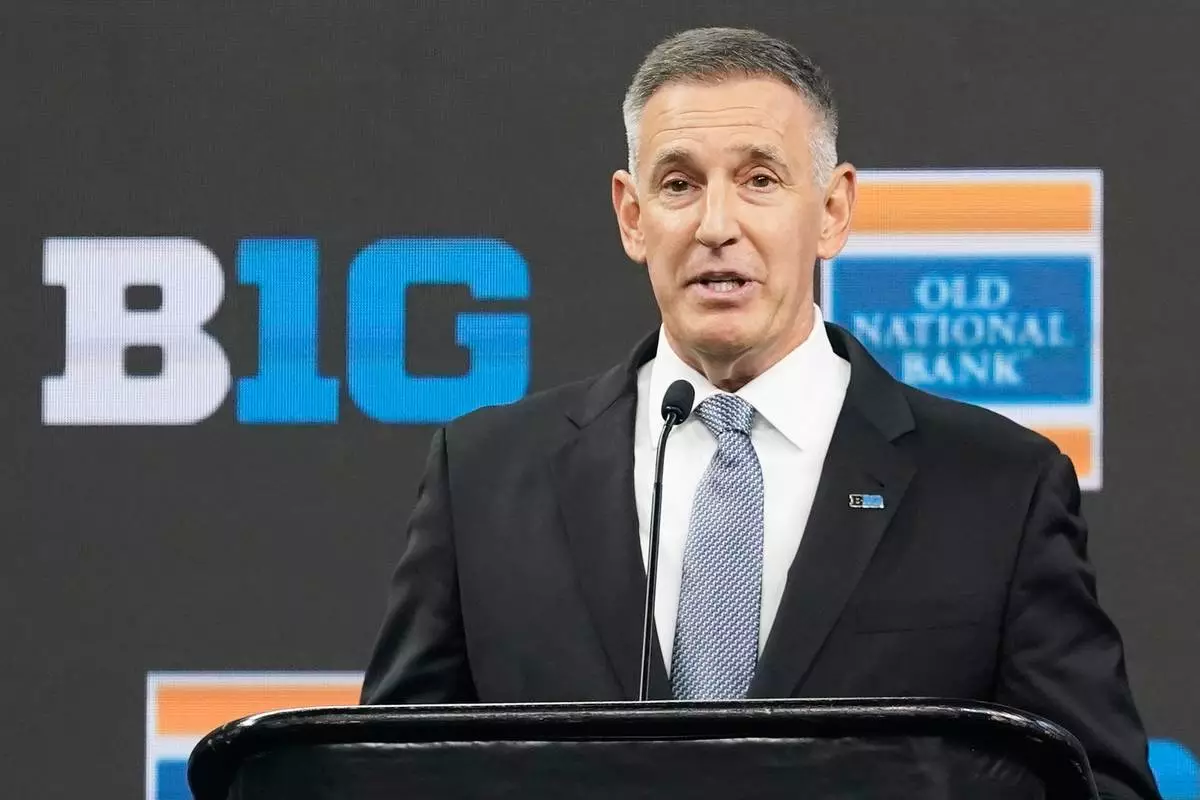
FILE - Big Ten Conference Commissioner Tony Petitti speaks during an news conference at the Big Ten Conference NCAA college football media days at Lucas Oil Stadium, July 26, 2023, in Indianapolis. (AP Photo/Darron Cummings, File)
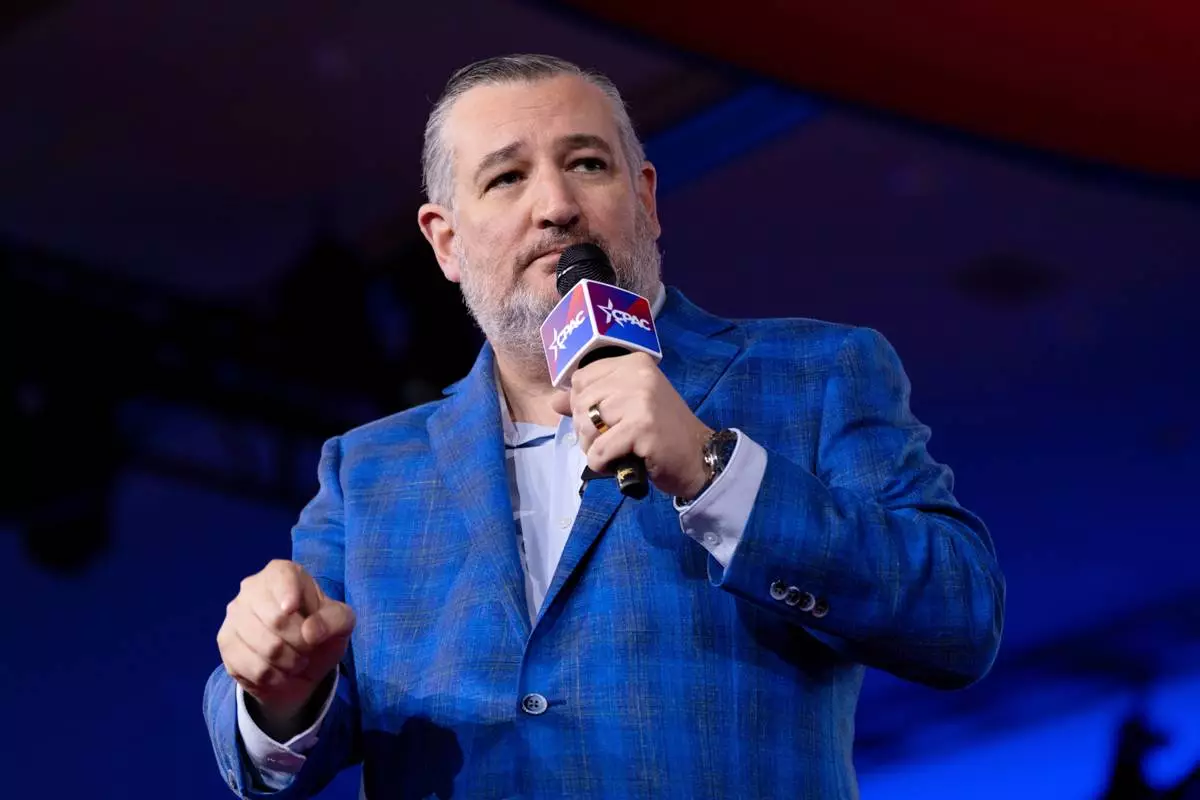
FILE - Sen. Ted Cruz, R-Texas, speaks at the Conservative Political Action Conference (CPAC) in Dallas, March 28, 2026. (AP Photo/Gabriela Passos, File)