|
- Data transferred securely and rapidly between space and ground
- Compatible with U.S. Space Development Agency standard
- UK Space Minister Liz Lloyd welcomed the news
- Units for purchase and service contracts available
OXFORD, England, May 27, 2026 /PRNewswire/ -- Archangel Lightworks, the laser communications company, has successfully completed field trials of the TERRA-M, the world's smallest deployable operational optical ground station, proving its capability. The news was warmly welcomed by Liz Lloyd, the UK Space Minister, and the trials were funded by the UK's Defence Science and Technology Laboratory.
Data was securely and rapidly transferred between the TERRA-M and a satellite in low Earth orbit over the course of a multi-day field trial in the Mediterranean region earlier this month. The field trials used the U.S. Space Development Agency laser communication standard and were repeated across multiple passes to prove reliability.
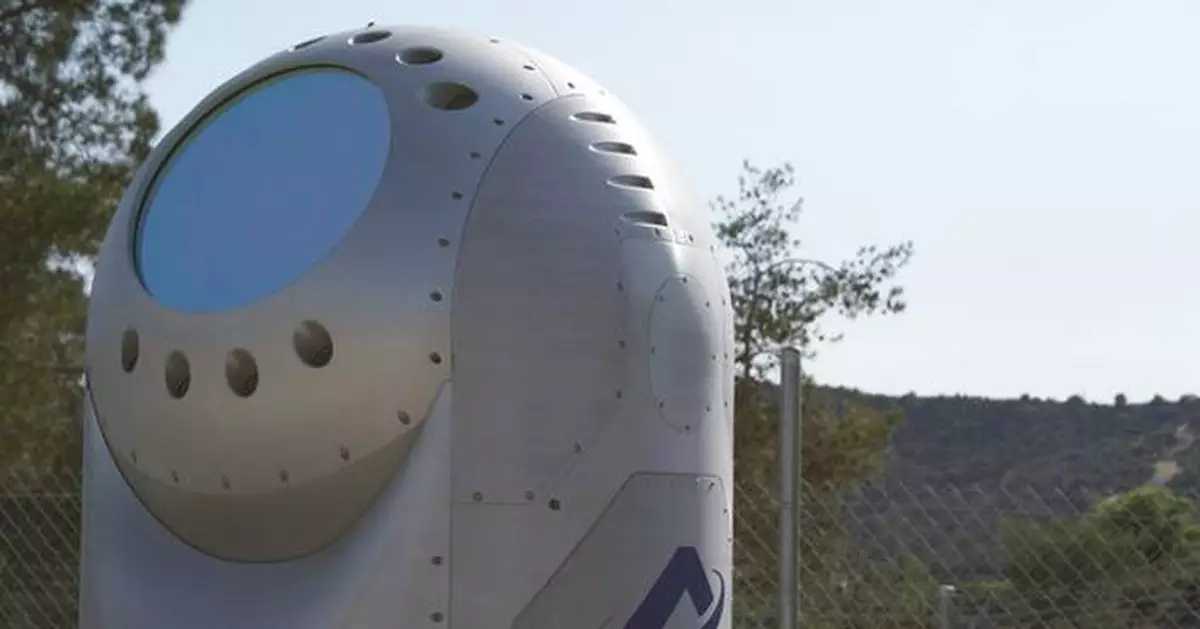
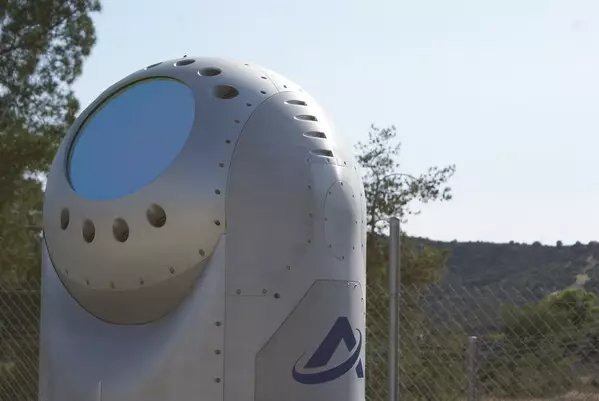
The TERRA-M is a small fraction of the size of traditional optical ground stations with an optical head standing just 1.1m tall and 0.7m in diameter. It does not require an external dome, is easily transportable by light vehicle or aircraft, and can be readily deployed on the roof of a building. TERRA-M units and ground-station-as-a-service contracts are already being purchased by and delivered to customers.
"The TERRA-M is uniquely capable of rapid, secure data transfer with satellites while also being small enough to be deployed and redeployed at the point of need," said Richard Johanson, CEO of Archangel Lightworks.
"We are on a pathway to providing resilient, large-scale deployable networks of optical ground stations," added Johanson, "the demand for space-based information and connectivity solutions continues to grow exponentially, and we are pleased that our technology will play a role in this exciting new global communications infrastructure."
Space Minister Liz Lloyd said: "Archangel Lightworks is a prime example of British innovation leading the world in next-generation space technology. The successful trials of the TERRA-M show the UK is at the forefront of laser communications, developing the kind of cutting-edge products that will underpin the future of global connectivity."
"Investing in homegrown capability like this strengthens our national security, drives economic growth, and brings opportunities to communities that need them most," added Lloyd, "the UK Government is proud to have supported Archangel Lightworks, and this is a clear demonstration of what our space sector can deliver."
The TERRA-M's small size means it can easily be deployed far from existing communications infrastructure – i.e. at the "edge" of networks. Unlike existing optical ground stations, it does not need a dedicated building of its own, or a fixed protective dome. Its modular design was developed to enable broad interoperability with a wide range of lasercom standards and terminals.
Laser communications to and from satellites is a key component of next-generation space infrastructure, supporting rapidly-increasing satellite traffic and providing a high volume, secure alternative to radio-based data transmission. Satellite internet backhaul and earth observation data transfer are among the principal applications of laser communications, which also support space exploration missions such as Artemis.
The technology has both commercial and defence applications, and bypasses the vulnerabilities associated with terrestrial and subsea cables. It also has the potential to bring high volume satellite communications to communities and thereby reduce the digital divide. As compute moves into orbit through the use of orbital data centres, optical ground infrastructure will play an increasingly important role in seamless connectivity between networks in space and networks on the ground.
Archangel Lightworks' investors include Santander Alternative Investments, National Security Strategic Investment Fund, Blackfinch Ventures, Oxford Capital, Lycka Limited, and Oxford Science Enterprises. The company raised $13.5m (£10m) in an oversubscribed Series A funding round last month, bringing total funding to date to $20m.
Archangel Lightworks is also supported by the UK Space Agency, the UK's Department of Science and Technology (DSIT) and the UK Ministry of Defence. The company has memoranda of understanding with companies including Starcloud and Omantel, and a number of commercial contracts.
About Archangel Lightworks
Archangel Lightworks builds deployable communication systems to connect networks in space with networks on the ground. Today, space and terrestrial networks are not well-connected leading to insecure, insufficient, and vulnerable infrastructure. High volume, secure links between space and ground are needed. We are driving down the Size, Weight and Power (SWaP) of optical terminals to make lasercom available and affordable. Our core product, the TERRA-M, is a miniature Optical Ground Station. The TERRA-M brings deployable, resilient connectivity to wherever it is needed, helping to solve some of Earth's most critical problems from economic inclusion to climate change.
Follow us on LinkedIn
Company contact
marketing@archangel.works
Media contact
john.elliott@speedwell-group.com
- Data transferred securely and rapidly between space and ground
- Compatible with U.S. Space Development Agency standard
- UK Space Minister Liz Lloyd welcomed the news
- Units for purchase and service contracts available
OXFORD, England, May 27, 2026 /PRNewswire/ -- Archangel Lightworks, the laser communications company, has successfully completed field trials of the TERRA-M, the world's smallest deployable operational optical ground station, proving its capability. The news was warmly welcomed by Liz Lloyd, the UK Space Minister, and the trials were funded by the UK's Defence Science and Technology Laboratory.
Data was securely and rapidly transferred between the TERRA-M and a satellite in low Earth orbit over the course of a multi-day field trial in the Mediterranean region earlier this month. The field trials used the U.S. Space Development Agency laser communication standard and were repeated across multiple passes to prove reliability.
The TERRA-M is a small fraction of the size of traditional optical ground stations with an optical head standing just 1.1m tall and 0.7m in diameter. It does not require an external dome, is easily transportable by light vehicle or aircraft, and can be readily deployed on the roof of a building. TERRA-M units and ground-station-as-a-service contracts are already being purchased by and delivered to customers.
"The TERRA-M is uniquely capable of rapid, secure data transfer with satellites while also being small enough to be deployed and redeployed at the point of need," said Richard Johanson, CEO of Archangel Lightworks.
"We are on a pathway to providing resilient, large-scale deployable networks of optical ground stations," added Johanson, "the demand for space-based information and connectivity solutions continues to grow exponentially, and we are pleased that our technology will play a role in this exciting new global communications infrastructure."
Space Minister Liz Lloyd said: "Archangel Lightworks is a prime example of British innovation leading the world in next-generation space technology. The successful trials of the TERRA-M show the UK is at the forefront of laser communications, developing the kind of cutting-edge products that will underpin the future of global connectivity."
"Investing in homegrown capability like this strengthens our national security, drives economic growth, and brings opportunities to communities that need them most," added Lloyd, "the UK Government is proud to have supported Archangel Lightworks, and this is a clear demonstration of what our space sector can deliver."
The TERRA-M's small size means it can easily be deployed far from existing communications infrastructure – i.e. at the "edge" of networks. Unlike existing optical ground stations, it does not need a dedicated building of its own, or a fixed protective dome. Its modular design was developed to enable broad interoperability with a wide range of lasercom standards and terminals.
Laser communications to and from satellites is a key component of next-generation space infrastructure, supporting rapidly-increasing satellite traffic and providing a high volume, secure alternative to radio-based data transmission. Satellite internet backhaul and earth observation data transfer are among the principal applications of laser communications, which also support space exploration missions such as Artemis.
The technology has both commercial and defence applications, and bypasses the vulnerabilities associated with terrestrial and subsea cables. It also has the potential to bring high volume satellite communications to communities and thereby reduce the digital divide. As compute moves into orbit through the use of orbital data centres, optical ground infrastructure will play an increasingly important role in seamless connectivity between networks in space and networks on the ground.
Archangel Lightworks' investors include Santander Alternative Investments, National Security Strategic Investment Fund, Blackfinch Ventures, Oxford Capital, Lycka Limited, and Oxford Science Enterprises. The company raised $13.5m (£10m) in an oversubscribed Series A funding round last month, bringing total funding to date to $20m.
Archangel Lightworks is also supported by the UK Space Agency, the UK's Department of Science and Technology (DSIT) and the UK Ministry of Defence. The company has memoranda of understanding with companies including Starcloud and Omantel, and a number of commercial contracts.
About Archangel Lightworks
Archangel Lightworks builds deployable communication systems to connect networks in space with networks on the ground. Today, space and terrestrial networks are not well-connected leading to insecure, insufficient, and vulnerable infrastructure. High volume, secure links between space and ground are needed. We are driving down the Size, Weight and Power (SWaP) of optical terminals to make lasercom available and affordable. Our core product, the TERRA-M, is a miniature Optical Ground Station. The TERRA-M brings deployable, resilient connectivity to wherever it is needed, helping to solve some of Earth's most critical problems from economic inclusion to climate change.
Follow us on LinkedIn
Company contact
marketing@archangel.works
Media contact
john.elliott@speedwell-group.com
** This press release is distributed by PR Newswire through automated distribution system, for which the client assumes full responsibility. **
World's smallest deployable operational optical ground station proves capability in successful trials
SINGAPORE, May 28, 2026 /PRNewswire/ -- Gene Solutions, a global biotechnology company advancing accessible genomic solutions for cancer detection and precision oncology, today announced that the U.S. Food and Drug Administration has granted Breakthrough Device Designation to SPOT-MAS 10, its multi-omic blood test designed to detect cancer-associated signals.
The proposed indications for use describe SPOT-MAS 10 as a qualitative in vitro diagnostic test performed on plasma derived from a single direct-draw venous whole blood specimen. The test analyzes circulating cell-free DNA methylation and fragmentomic signatures using a machine-learning-based algorithm to detect a cancer-associated signal. It is intended for use as an adjunctive screening test in asymptomatic adults aged 40 years and older to assist in the detection of cancers within the scope of the assay, including breast, lung, liver, colorectal, gastric, ovarian, pancreatic, esophageal, endometrial and head & neck cancers.
The FDA grants Breakthrough Device Designation to certain qualifying devices that have the potential to provide for more effective diagnosis of life-threatening or irreversibly debilitating diseases, such as cancer, than current options.
"Receiving FDA Breakthrough Device Designation for SPOT-MAS 10 is a defining milestone for Gene Solutions and reflects the potential of our multi-omic approach in cancer screening," said Dr. Nguyen Hoai Nghia, CEO & Co-founder of Gene Solutions. "This recognition strengthens our commitment to advancing accessible, evidence-based technologies that support earlier detection of cancers, especially for those where screening options remain limited — ultimately helping to improve patient outcomes worldwide."
SPOT-MAS has been developed through years of scientific research and clinical development. In March 2025, SPOT-MAS became the first multi-cancer early detection blood test in Asia to complete a large prospective cohort validation. Results from the K-DETEK study, published in BMC Medicine, evaluated SPOT-MAS in more than 9,000 asymptomatic participants and demonstrated strong performance, including high specificity and the ability to identify cancer-associated signals across multiple cancer types.
SPOT-MAS has since been used in more than 100,000 individuals in real-world practice, with consistent performance observed beyond controlled study settings. Real-world data were presented at ESMO Asia 2025 and will be featured at ASCO Breakthrough 2026 in Singapore.
The SPOT-MAS platform is built on a multi-omic approach integrating genetics, epigenetics and fragmentomics, together with AI-driven analysis, prospective validation and real-world evidence. SPOT-MAS 10 is designed to complement — not replace — existing guideline-recommended screening programs while expanding screening opportunities for cancers that lack established screening pathways.
"Early cancer detection requires more than identifying a single molecular signal," said Dr. Le Son Tran, Principal Investigator of SPOT-MAS. "By integrating multiple layers of cell-free DNA information with machine learning, SPOT-MAS is designed to extract deeper biological signals from blood while maintaining the high specificity required for responsible screening."
For the United States, Breakthrough Device Designation provides Gene Solutions with a prioritized channel of engagement with the FDA as the company advances its U.S. development and validation plans. Gene Solutions is targeting U.S. launch readiness in late 2026, supported by its ongoing U.S. laboratory and validation strategy.
Looking ahead, Gene Solutions will continue to collaborate with clinicians, regulators and global partners to generate evidence supporting the responsible implementation of SPOT-MAS 10 and its role in addressing unmet needs in cancer screening.
Important Regulatory Notice: SPOT-MAS 10 has received U.S. FDA Breakthrough Device Designation. Breakthrough Device Designation is not FDA approval, clearance or marketing authorization. The device remains subject to applicable FDA regulatory review requirements, and the designation does not guarantee future FDA approval, clearance or authorization.
For more information, visit www.genesolutions.com.
Contact:
pr@genesolutions.com
** This press release is distributed by PR Newswire through automated distribution system, for which the client assumes full responsibility. **
FDA Breakthrough Device Designation Marks Major Milestone for Gene Solutions' SPOT-MAS 10 Multi-Cancer Screening Test