Revision to domain of economic activities comprising "Manufacturing and New Industrialisation-related Industries" and update of corresponding statistics
The Government announced today (May 28) the revised domain of economic activities that comprises "Manufacturing and New Industrialisation-related Industries" in Hong Kong, and updated statistics on the economic performance of relevant activities.
In line with the principles of adapting to local circumstances and keeping pace with the times, the Hong Kong Special Administrative Region Government has been closely monitoring how international organisations and other economies define manufacturing and new industrialisation. Having regard to the latest developments in Hong Kong's economic structure and industrial landscape, the Government conducts timely review of the existing coverage and statistical framework of "Manufacturing and New Industrialisation-related Industries", with a view to ensuring that relevant statistics objectively and accurately reflect its economic performance and contribution, thereby providing a key basis for refining industrial policies and monitoring their effectiveness.
To better capture global technological trends and the advancement of new industrialisation, the Innovation, Technology and Industry Bureau (ITIB) has further refined the domain of economic activities that comprises "Manufacturing and New Industrialisation-related Industries" by incorporating "Publishing and Packaging" (covering activities that generate intellectual property) and selected "Telecommunications" services (including data and computing centre services, cloud services, and other information technology activities provided by telecommunications companies). Following consultation with the Census and Statistics Department (C&SD), the relevant statistical framework has been correspondingly updated.
A new wave of technological innovation and industrial transformation has been developing rapidly, with new industries, business forms, and models emerging continuously. With reference to the latest version of the United Nations' International Standard Industrial Classification and taking into account the evolution of modern production models, the ITIB has refined the domain of "Manufacturing and New Industrialisation-related Industries" to also cover businesses involving outsourced production processes that satisfy the relevant preconditions (Note).
The ITIB has commissioned a consultant, under the ongoing consultancy study on the medium- to long-term development plan for new industrialisation in Hong Kong, and estimated that, based on the latest international standards and the updated statistical framework, "Manufacturing and New Industrialisation-related Industries" accounted for 3.8 per cent of Hong Kong's Gross Domestic Product in 2024. This reflects that the Government's new industrialisation initiatives are playing an increasingly important and positive role in promoting economic diversification and enhancing Hong Kong's overall competitiveness.
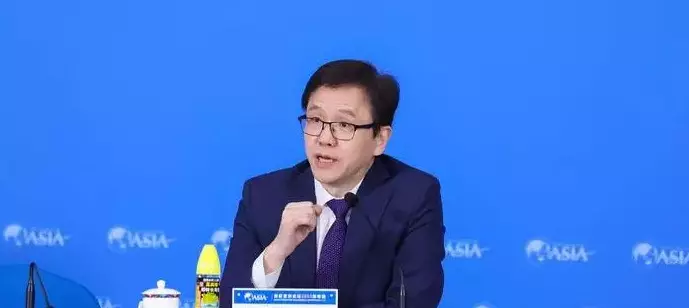
The Secretary for Innovation, Technology and Industry, Professor Sun Dong, Photo source: reference image
The Secretary for Innovation, Technology and Industry, Professor Sun Dong, said, "Hong Kong is accelerating the transformation of its economic growth drivers. There is broad consensus in society that innovation and technology should serve as the engine to drive the real economy towards higher-quality development. Advancing a new industrial system underpinned by technological innovation will help reshape Hong Kong's industrial base and enhance its overall competitive advantage. To support this direction, Hong Kong is actively developing new quality productive forces and promoting new industrialisation, including expediting the development of the Hong Kong Park of the Hetao Co-operation Zone, enhancing the I&T ecosystem, pooling R&D resources, advancing pilot production, preparing for the establishment of the first national manufacturing innovation centre outside the Mainland, and developing the Sandy Ridge Data Facility Cluster. These measures aim to foster deeper integration between technological and industrial innovation, actively integrate into the Greater Bay Area, and build a co-ordinated innovation model across the industrial chain. We are confident that 'Manufacturing and New Industrialisation' will continue to make a more significant contribution to Hong Kong and support the country's modern industrial system."
A spokesman for the C&SD said, "Following the revision to the domain of economic activities comprising 'Manufacturing and New Industrialisation-related Industries', its statistical framework has been updated accordingly. The C&SD will continue to keep abreast of relevant international guidelines and provide professional statistical advice to the ITIB and other stakeholders, with a view to compiling appropriate statistics that reflect the economic performance of 'Manufacturing and New Industrialisation-related Industries'."
"Manufacturing and New Industrialisation-related Industries" encompasses manufacturing and economic activities related to technological and industrial innovation, including:
(a) Manufacturing: for instance, the manufacturing of food products, pharmaceuticals, medicinal chemicals and botanical products, computer, electronic and optical products, and new energy equipment;
(b) Businesses involving outsourced production processes (satisfying relevant preconditions (Note)): for instance, cases where import and export companies outsource the production process with the provision of input materials or intellectual property inputs required for production;
(c) Science, product design and technology development: for instance, industrial and product design, chip design, new drug development, AI model development and application, and technical consulting services;
(d) Data services and software development: information technology activities such as data and computing centre services, data storage and processing, software development, and cloud services;
(e) Verification, testing and certification: for instance, functional testing and verification, technical and prototype testing, and compliance certification;
(f) Professional technical services: for instance, system design, integrated delivery, and maintenance services;
(g) Environmental engineering and green business: for instance, sewage treatment, waste recovery, sorting, and disposal; and
(h) Publishing and packaging: activities that generate intellectual property such as publishing productions and packaging products.
Note: The relevant preconditions refer to cases where a company outsourcing production processes should not only own the final products but also satisfy one of the following conditions:
(a) it owns the input materials used in the production process; or
(b) it exercises control over the production process through the provision of intellectual property inputs required for production (e.g. product design and technical specifications).
The Innovation, Technology and Industry Bureau (ITIB), Photo source: reference image