Skip to Content Facebook Feature Image

France moves to repeal Code Noir, the slavery law it never abolished

News

France moves to repeal Code Noir, the slavery law it never abolished
News

News

France moves to repeal Code Noir, the slavery law it never abolished

2026-05-28 13:10 Last Updated At:13:30

PARIS (AP) — For nearly two centuries after France abolished slavery, the colonial-era law that classified humans as property remained quietly in place. On Thursday, lawmakers will finally move to eliminate it.

The bill, expected to be adopted by the National Assembly, will repeal Code Noir, or Black Code, the 1685 decree King Louis XIV signed to govern slaves across France’s colonies.

The law turned human beings into chattel, allowing them to be worked, beaten, sold, raped and killed — and France never formally did away with it.

That realization has left many aghast.

“That shocks me,” said Muriel Jean-Baptiste, a Paris-born nurse whose parents are from Martinique, a French overseas department in the Caribbean.

“A law that treated Black people as property was left sitting there,” she said.

The code’s reach was total. Article 44 declared the enslaved “movable property.” Other sections ordered mutilation for those who fled, and dictated that the word of an enslaved person counted for nothing.

Code Noir’s 60 articles “should never have survived the abolition of slavery” in the 19th century, President Emmanuel Macron said last week.

“The silence, even the indifference, that we have maintained for nearly two centuries toward this Black Code is no longer an oversight,” Macron said. “It has become a form of offense.”

Like French presidents before him, Macron stopped short of an apology.

France ran the third-largest slave trade, shipping about 1.4 million Africans to plantations whose sugar wealth built the French cities of Nantes and Bordeaux. Its empire later spanned four continents.

Others see the repeal as something more telling — a symptom, they argue, of a country that has yet to reckon fully with that past, one of many slow steps along the way.

In law, officially eliminating it is the easy part, observers say. Code Noir lost all authority in 1848, when France abolished slavery.

France didn't relinquish its slave colonies: the four oldest — Guadeloupe, Martinique, French Guiana and Réunion — were made full French overseas departments in 1946. That means they're governed from Paris like any other.

Their roughly 1.9 million people, most descended from the enslaved, are French citizens.

Despite being fully part of France, the overseas departments remain among its poorest territories. Unemployment runs roughly double the mainland rate, and more than three-quarters of households in Mayotte live below the national poverty line.

Before he discovered the truth, the French lawmaker who put forward the proposal to repeal the law didn't know it still existed.

Max Mathiasin, from Guadeloupe, had bought copies of the text over the years and left them on his shelf.

“As the great-great-grandson of people who were enslaved, I had never been able to read it in full,” he said. “This was made by human beings — against human beings.”

For him, the vote is “a way of restoring our ancestors, restoring our humanity” before a France whose motto is liberty, equality, fraternity. “It means living up to the Republican promise.”

That promise, he says, is still unkept at home.

“In Guadeloupe,” Mathiasin said, “in the most important positions, in the structures of the state, they are white.”

The Foundation for the Memory of Slavery is chaired by a former prime minister, Jean-Marc Ayrault, and its deputy director is Pierre-Yves Bocquet — both white men.

Bocquet calls Code Noir the birthplace of France’s “colonial exception” — the principle that the French Republic’s founding rights could be suspended for those under its rule.

The principle outlived the empire, he said: “Even today, we accept that people in the overseas territories can have fewer rights than in mainland France.”

France is hardly the only country still holding fragments of empire — the United Kingdom and the United States still have overseas territories.

But what sets France apart, observers say, is that it made its slave colonies equal departments of the Republic, not dependencies it governs from afar.

The state insists that the overseas departments are France like anywhere else, even as the people who live there say they are treated as less.

For Max Relouzat, 81, president of the Association for the Memory of Slaveries, the repeal matters, because so little else has.

His African ancestor had no name under the law, only a number and a registration code — the family that lived in Martinique was given the name Relouzat at emancipation, likely after Nelouzat, a village in the Auvergne region of central France.

What galls him, he said, is what the symbolism leaves untouched: systemic racism in France.

“Under the cover of departmentalization, a colonial system was maintained,” Relouzat said. “If the overseas departments are part of France, why is there a ministry for the overseas?”

In France, he said, “we are still today in a form of apartheid … a form of colonial continuity.”

For some who have fought longest, Thursday isn't the milestone it appears.

For Florence Alexis, a slavery expert and daughter of the Haitian writer Jacques Stephen Alexis, the real turning point came 25 years ago. In 2001, the Taubira law made France the first country to call the slave trade, and slavery, crimes against humanity.

“That is what changed my life,” Alexis said.

For her, racism is the legacy of slavery itself, not of one edict.

“When I was a child at school, they called me the little monkey,” she said. “People made animal cries when I walked past — as they still do in football stadiums today.”

Paris-born Élodie Léon, 29, whose family is from French Guiana, welcomes the repeal, but resents the delay.

“Symbolic neglect is also neglect,” she said.

At the Taubira law’s 25th anniversary on May 21, Macron floated the idea of reparations — something that France has long stay away from addressing.

He called it “a question we must not refuse,” but one on which “we must not make false promises.”

He committed no money, instead defining repair first as truth-telling, education and historical work.

The wealthiest of France's plantations were in Saint-Domingue, where the enslaved rose up and won independence in 1804 as Haiti. France then forced the freed to pay reparations for the loss of their masters — a debt cleared only in 1947.

France isn't alone. In the United States, federal reparations legislation has stalled for decades. California approved an apology, but no cash.

But the timing of Macron's latest speech was awkward. Two months earlier, France abstained when the U.N. General Assembly voted 123-3, with 52 abstentions, to call the trans-Atlantic slave trade the gravest crime against humanity.

And this month at the Africa Forward Summit in Kenya, days after declaring himself a “pan-Africanist,” Macron seized a microphone and ordered the room to quiet down.

“As soon as he sets foot on the African continent,” French opposition lawmaker Danièle Obono said, “he can’t help but behave like a colonizer.”

The repeal of Code Noir, said Bocquet, “will have no direct effect.” Whether it helps France fight racism and inequality in its overseas territories, he said, “remains to be seen.”

“It is easy for the French authorities, and for Macron, to do this,” Alexis added. “Because it commits them to nothing.”
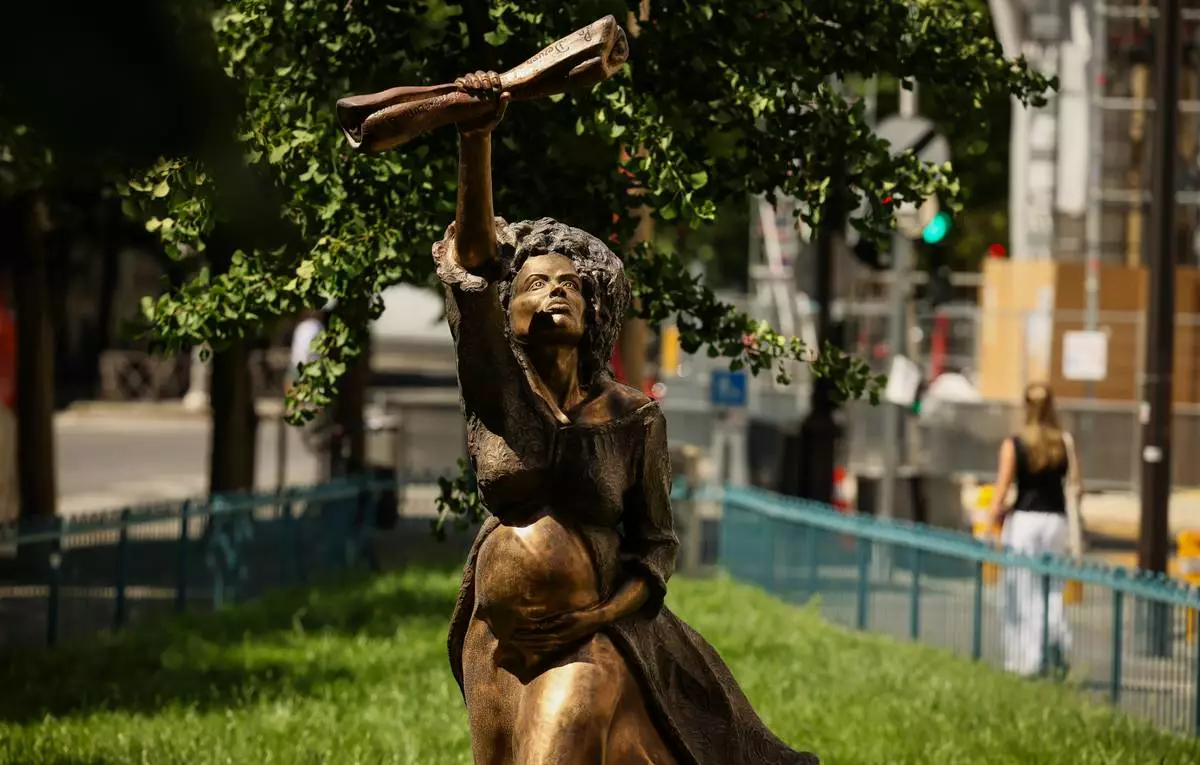
A statue is photographed by French artist Didier Audrat in Paris, Wednesday, May 27, 2026, honoring the memory of the abolition of slavery, depicting Solitude, the daughter of an African slave who was raped by a sailor aboard the ship transporting her to the Caribbean, holding the proclamation of Louis Delgres, an anti-slavery resistance leader calling for resistance and struggle. (AP Photo/Thomas Padilla)
A statue is photographed by French artist Didier Audrat in Paris, Wednesday, May 27, 2026, honoring the memory of the abolition of slavery, depicting Solitude, the daughter of an African slave who was raped by a sailor aboard the ship transporting her to the Caribbean, holding the proclamation of Louis Delgres, an anti-slavery resistance leader calling for resistance and struggle. (AP Photo/Thomas Padilla)

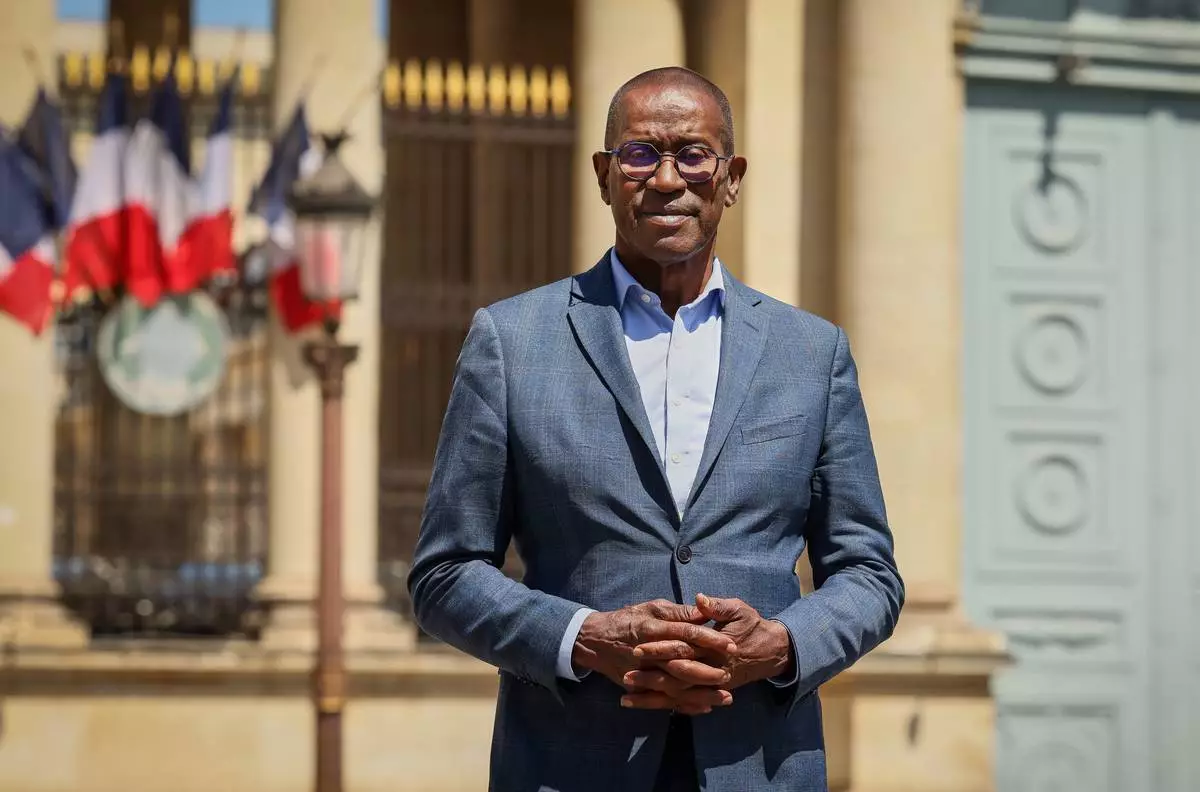
French lawmaker Max Mathiasin of the French Caribbean island Guadeloupe, poses at the entrance of the National Assembly in Paris, Wednesday, May 27, 2026, before lawmakers examine a bill to formally repeal the Code Noir, or Black Code, the 17th-century royal edict that governed slavery in French colonies and treated enslaved people as property. (AP Photo/Thomas Padilla)

French lawmaker Max Mathiasin of the French Caribbean island Guadeloupe, poses at the entrance of the National Assembly in Paris, Wednesday, May 27, 2026, before lawmakers examine a bill to formally repeal the Code Noir, or Black Code, the 17th-century royal edict that governed slavery in French colonies and treated enslaved people as property. (AP Photo/Thomas Padilla)

A statue named "Chains," by French artist Driss Sans-Arcidet, honoring the memory of the abolition of slavery, is photographed in a park in Paris, Wednesday, May 27, 2026, as France's National Assembly examines a bill to formally repeal the Code Noir, or Black Code, the 17th-century royal edict that governed slavery in French colonies and treated enslaved people as property. (AP Photo/Thomas Padilla)
A statue named "Chains," by French artist Driss Sans-Arcidet, honoring the memory of the abolition of slavery, is photographed in a park in Paris, Wednesday, May 27, 2026, as France's National Assembly examines a bill to formally repeal the Code Noir, or Black Code, the 17th-century royal edict that governed slavery in French colonies and treated enslaved people as property. (AP Photo/Thomas Padilla)
MALABO, Equatorial Guinea (AP) — At first glance, the hotel looks like any other on this tropical island off the Central African coast, with its palm tree-lined driveway, marble-floored foyer and portrait of the oil-rich country’s president hanging behind a mahogany reception desk.

Yet the eerily empty Bamy Hotel is not a refuge for adventure-seeking tourists or international business travelers these days. Since late last year, only a small number of people have been staying there, and they aren't on vacation. They are being held against their will.

Under an opaque $7.5 million deal with the Trump administration, Equatorial Guinea's all-powerful president, Teodoro Obiang Nguema Mbasogo, has turned this hotel owned by his family into a prison for asylum seekers deported from the United States.

The hotel is just a way station, though. Of the at least 32 people imprisoned there since November — all of whom had previously been granted protection from U.S. judges, their lawyers said — 25 have been forced to go back to home countries across Africa where their lives might be in danger. The rest face pressure from authorities to leave.

“Government people would come all the time and say: Where is your passport? You need to go back to your own country,” said a 26-year-old man from an East African country imprisoned at the hotel. Out of fear of retaliation, he spoke on condition of anonymity, as did two other deportees interviewed by The Associated Press.

The Trump administration uses deportations to third countries as a legal loophole, immigration lawyers say, to indirectly force asylum seekers back to their home countries.

Because Equatorial Guinea is run by an authoritarian government — as are some other countries that have signed similar deals — it is difficult for foreign journalists to visit and report directly on conditions there. AP traveled to the island of Bioko as part of a recent visit by the first American pope, and is the only international news organization to visit the hotel detaining migrants.

Trapped for now in a country many had never heard of before arriving, men and women from Angola, Eritrea, Ethiopia and Mauritania wander the hotel’s long corridors and gaze out the windows at the shimmering pool they are not allowed to use.

They haven’t faced any physical abuse, but they feel intense psychological pressure knowing they are likely headed back to home countries they fear.

“I am scared and depressed,” said the East African man.

Because of his ethnicity and the fact he fled his home country, he said he would be imprisoned or killed if forced to return. All of the asylum seekers at the hotel face a high risk of persecution back home, human rights experts say.

Under a series of murky and often-secret agreements, the Trump administration has deported thousands of people to nearly two dozen countries that are not their own, advocates say, all part of the broad U.S. crackdown on immigration. The countries with agreements are mostly in the developing world, according to the group Third Country Deportation Watch, including roughly a dozen in Africa. Experts say countries accepting the deportees may be doing so to earn goodwill in negotiations with the U.S. over trade, migration or aid.

The Trump administration declined to comment on the details of its deal with Equatorial Guinea. A State Department spokesperson said, “we remain unwavering in our commitment to end illegal and mass immigration.”

The Obiang administration did not respond to a request seeking comment.

As the man from East Africa at the Bamy Hotel recounted his journey, a government minder who spoke little English sat nearby, scrolling on his phone in an otherwise empty conference room.

After traveling from Africa to Brazil, the man said, he arrived in August 2024 at the U.S. border, where he was detained. He then was shuffled between immigration centers in California, Arizona and Louisiana — before landing in Equatorial Guinea almost six months ago.

The deportees' daily routines at the hotel are mundane, though the setting makes it all seem surreal, he said.

They sleep in fancy rooms that rarely get cleaned, he said, and they are served rice and meat at white cloth tables set up inside the hotel's restaurant. After being sickened by the food several times, the East African man said he eats the bare minimum.

A local lawyer brings new toothbrushes, cellphone SIM cards, and, for women, sanitary products.

Medical care has been uneven. The East African man was driven to the hospital right away after complaining of an eye problem. But when he came down with malaria and typhoid, he was not taken to a hospital until his condition had greatly deteriorated, requiring an IV. Other detainees have had similar experiences, he said.

Recently, the East African man complained to a police officer about his situation. The officer responded by saying his problems would go away if he went to the hotel’s fourth floor and jumped out the window.

“What can I do now? It’s become worse,” he said, his frail body shaking. “I started losing my mind.”

Equatorial Guinea is one of the richest countries in Africa thanks to its oil resources. It is also rife with corruption and human rights abuses, according to U.S. officials.

A former Spanish colony, the country fell into economic despair after gaining independence in 1968. Its fate shifted in the 1990s when U.S. companies started drilling for oil along its vast coastline. The subsequent boom transformed the economy, yet over half the population still lives in poverty.

The country's oil-fueled wealth has been largely pocketed by Obiang and his family, according to rights groups. Obiang’s 57-year-old son and heir apparent, Teodoro “Teodorin” Obiang Nguema, chronicles his lavish lifestyle on TikTok — soaking in infinity pools, feasting on lobster, traveling on private jets — even as citizens of Equatorial Guinea are banned from the platform.

The younger Obiang, who serves as vice president, has faced international sanctions because of corruption across his father’s administration. But the U.S. lifted sanctions, allowing the younger Obiang to travel to a high-level U.N. meeting in New York last September, just weeks before the deportations to Equatorial Guinea began.

There are virtually no critical voices in Equatorial Guinea, where the government has been accused by rights groups and the U.S. State Department of detaining, torturing and even killing those that dare to speak out.

Despite that, its largest foreign investors are U.S. businesses, and its military receives funding for training from the U.S. government.

The deportees still at the Bamy Hotel know they can be sent home any day.

Representatives of the U.N.'s International Organization for Migration, and its refugee agency, visited the hotel in November, and promised the deportees they would come back. They never did.

The East African man is the only one among them that has been allowed to see a lawyer, though it's not clear why.

While Equatorial Guinea has no asylum policy, his lawyer made a formal request with the prime minister's office — a long shot worth taking if there was any chance of being released from the hotel.

He was told to plead for mercy with the country's vice president, but his asylum claim was rejected.

The next morning, authorities deported five other people, leaving him anguished as he awaits his fate. He was told he would be next.

Associated Press writer Tim Sullivan in Minneapolis contributed to this report.

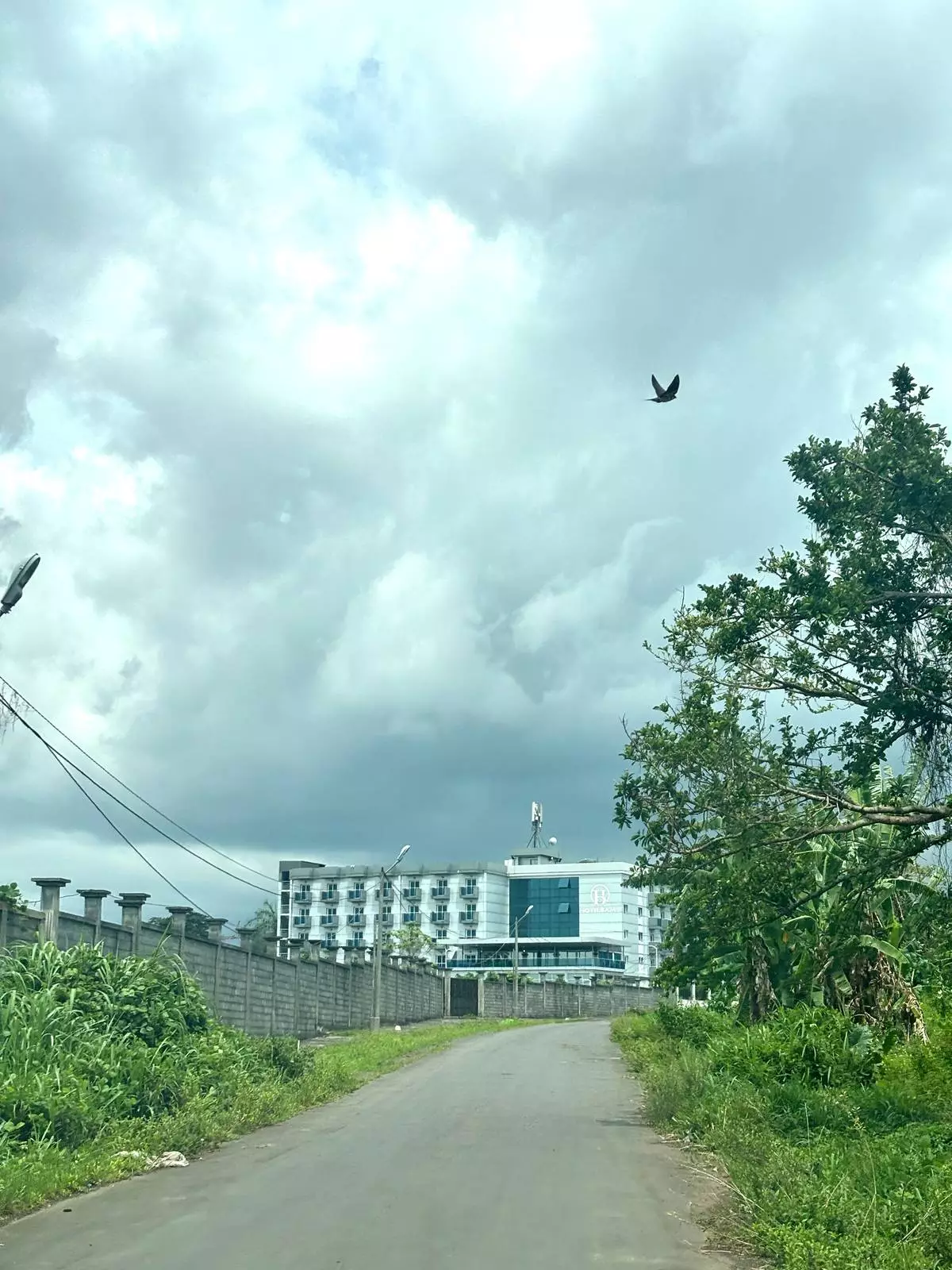
A view of Bamy Hotel where migrants are held in Malabo, Equatorial Guinea, Wednesday, May 13, 2026. (AP Photo/Monika Pronczuk)

A view of Bamy Hotel where migrants are held in Malabo, Equatorial Guinea, Wednesday, May 13, 2026. (AP Photo/Monika Pronczuk)

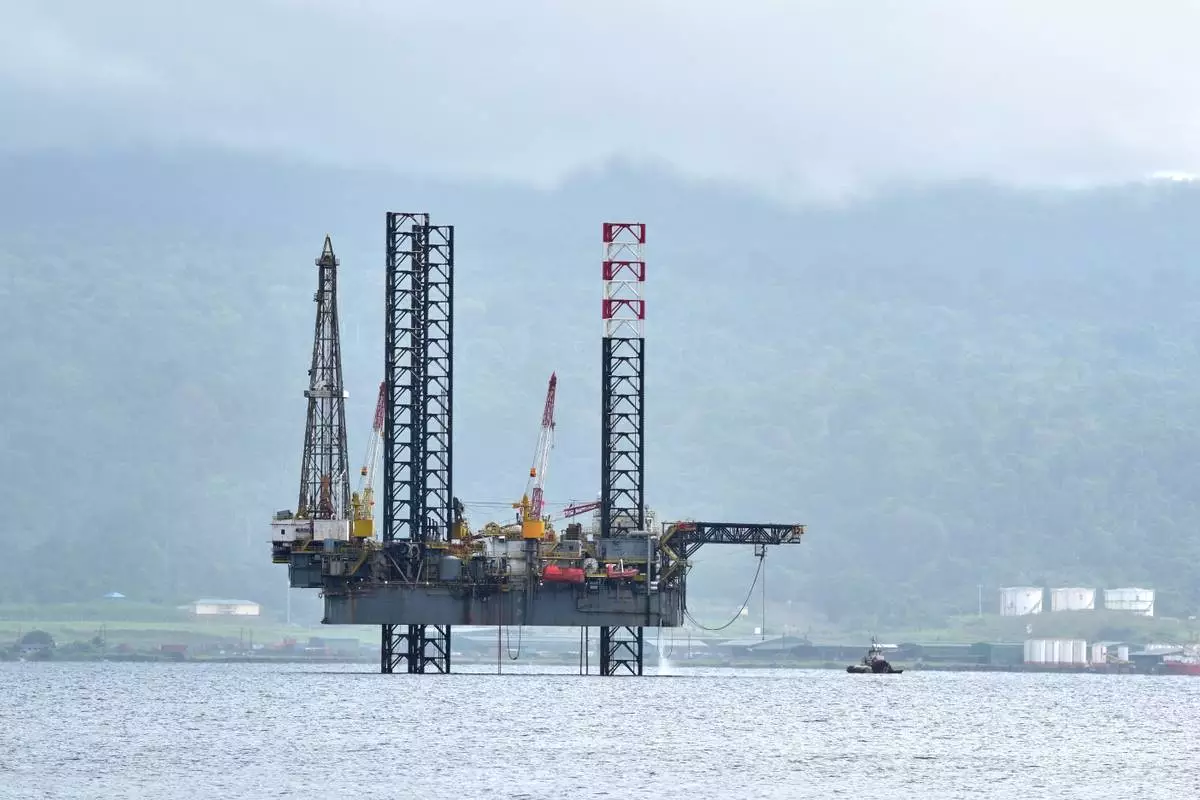
A drilling rig in Luba, Equatorial Guinea, Saturday, April 25, 2026. (AP Photo/Misper Apawu)

A drilling rig in Luba, Equatorial Guinea, Saturday, April 25, 2026. (AP Photo/Misper Apawu)

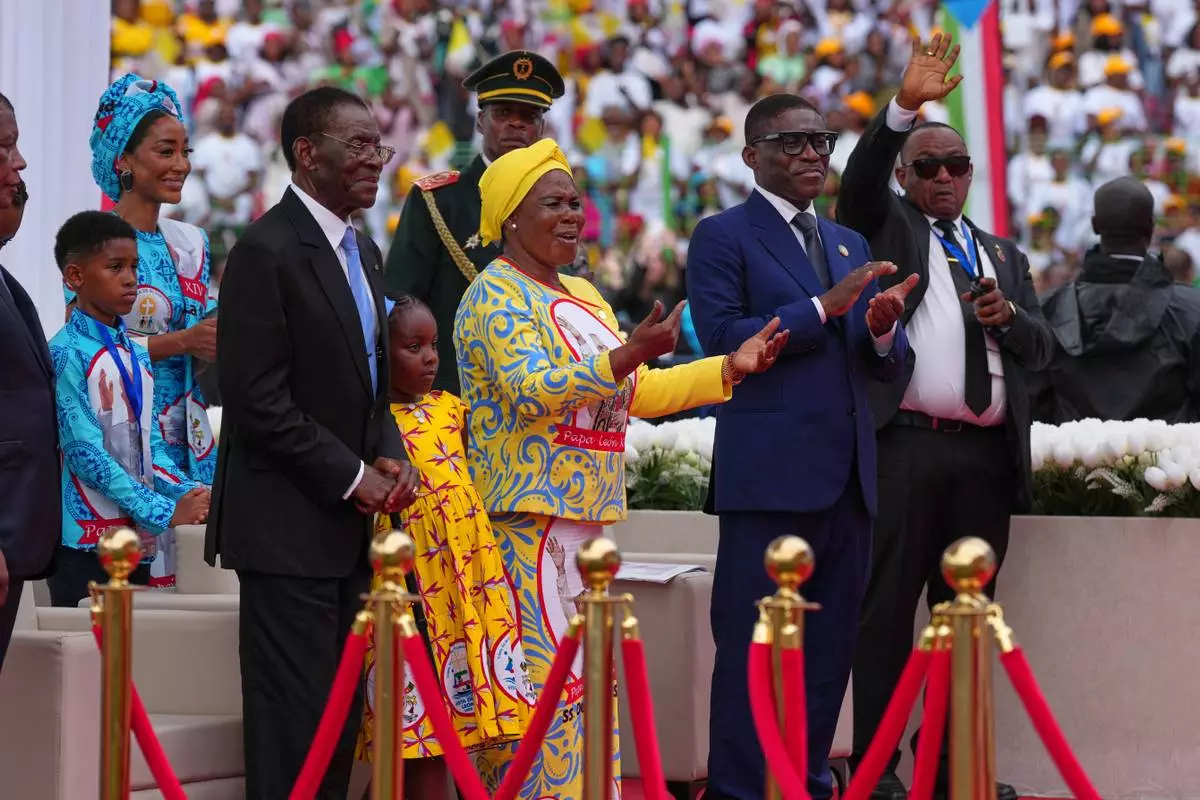
Front row, from left, Equatorial Guinea President Teodoro Obiang Nguema Mbasogo, first lady Constancia Mangue Nsue Okomo, and Equatorial Guinea Vice President Teodoro Nguema Obiang attend a Holy Mass with Pope Leo XIV at the Malabo Stadium in Malabo, Equatorial Guinea, Thursday, April 23, 2026. (AP Photo/Misper Apawu)

Front row, from left, Equatorial Guinea President Teodoro Obiang Nguema Mbasogo, first lady Constancia Mangue Nsue Okomo, and Equatorial Guinea Vice President Teodoro Nguema Obiang attend a Holy Mass with Pope Leo XIV at the Malabo Stadium in Malabo, Equatorial Guinea, Thursday, April 23, 2026. (AP Photo/Misper Apawu)

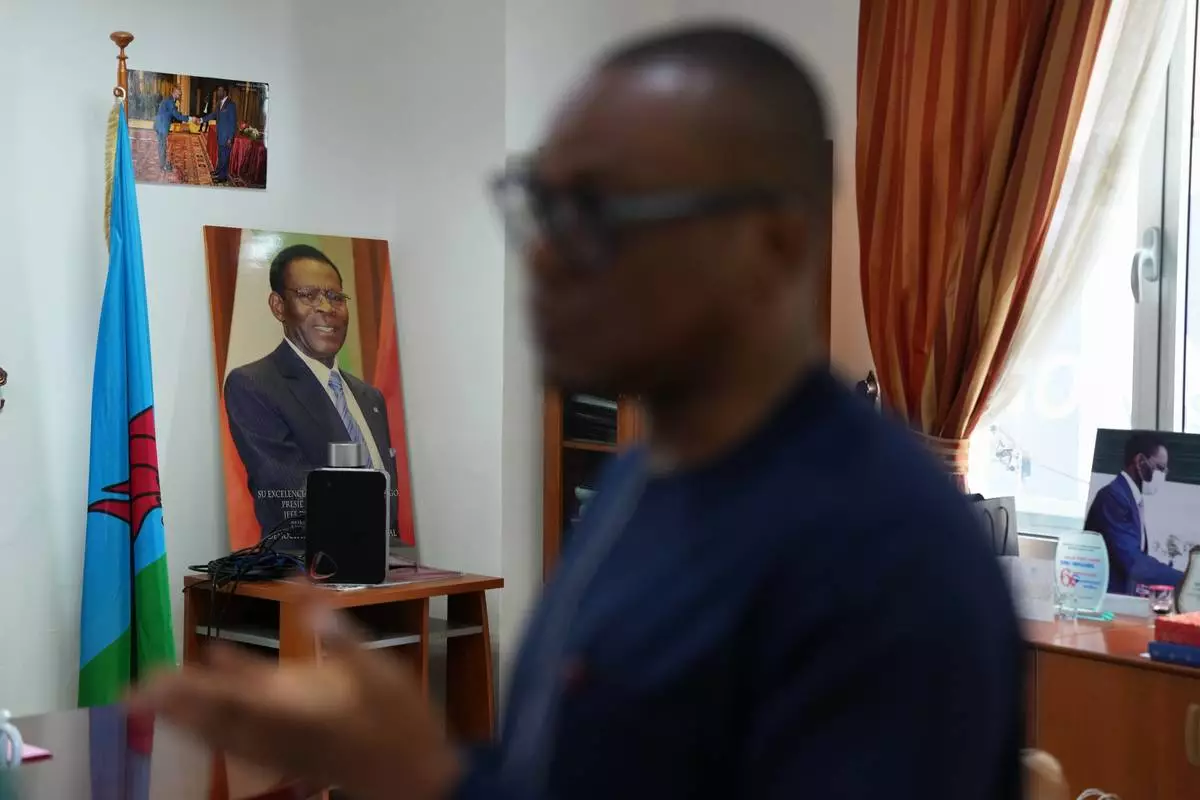
Framed portraits of Equatorial Guinea President, Teodoro Obiang Nguema Mbasogo, displayed in an office setting in Malabo, Equatorial Guinea, Friday, April 24, 2026. (AP Photo/Misper Apawu)

Framed portraits of Equatorial Guinea President, Teodoro Obiang Nguema Mbasogo, displayed in an office setting in Malabo, Equatorial Guinea, Friday, April 24, 2026. (AP Photo/Misper Apawu)

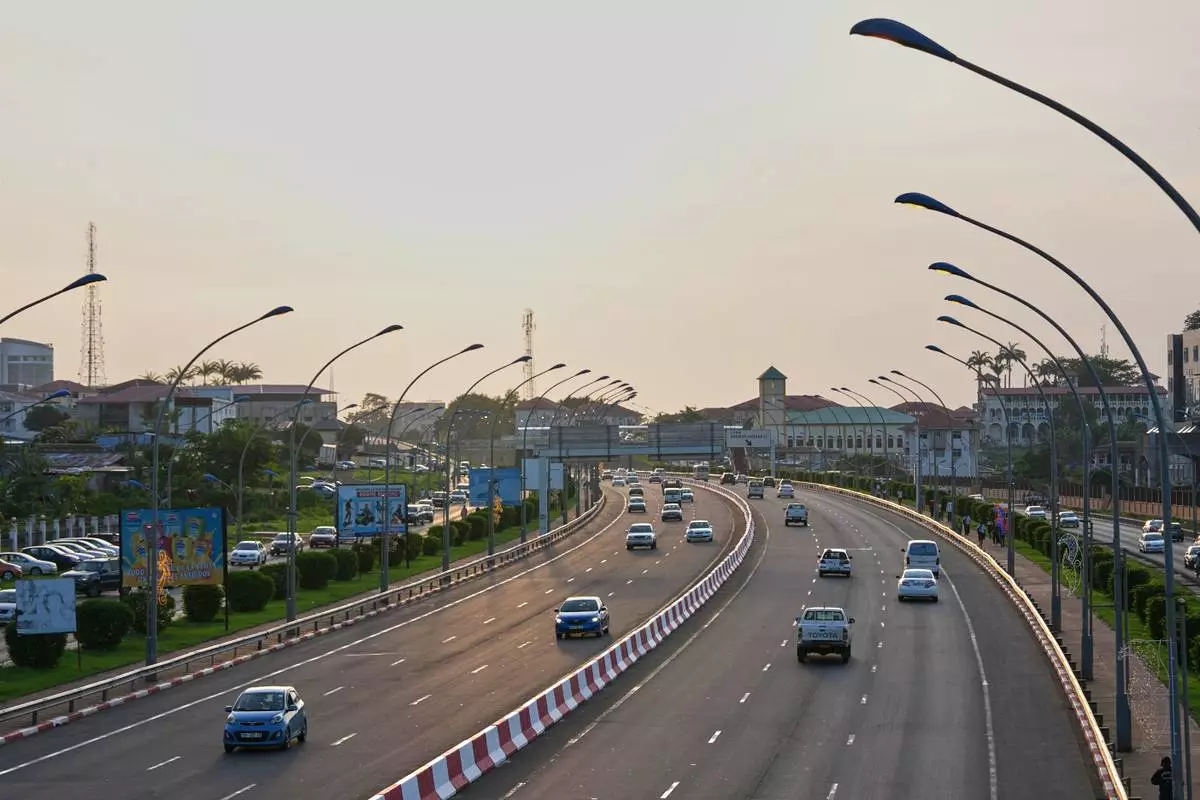
A street scene in Malabo, Equatorial Guinea, Saturday, April 25, 2026. (AP Photo/Misper Apawu)

A street scene in Malabo, Equatorial Guinea, Saturday, April 25, 2026. (AP Photo/Misper Apawu)

Recommended Articles