ACCA (the Association of Chartered Certified Accountants) released its latest Global Talent Trends Survey 2026, revealing how accountancy and finance professionals are navigating a rapidly changing workplace. According to the survey, Hong Kong respondents are increasingly concerned about the fast-growing use of AI – particularly in areas such as recruitment, job security and over-reliance on AI by junior staff. Participants observed a clear trend in headcount reduction – with traditional, routine or repetitive tasks being automated through technology or offshored to lower cost regions. 28% of Hong Kong respondents do not feel secure in their current roles, as the departure of multinational regional headquarters and the rapid adoption of AI are the two structural shifts reshaping the employment landscape. Employees must continuously upskill and diversify capabilities instead of relying on jobs that may soon disappear.
‘As mentioned in the report, AI brings both opportunities and real risks. While the use of AI is inevitable – and it is now heavily embedded in the workplace – accountancy and finance professionals should review, challenge and validate AI outputs, and should not treat AI as a substitute for their own judgment. This is the value of the profession and the reason it is an excellent training ground for broader career opportunities. Accounting professionals should embrace this key trend and continuously build the skills needed to thrive in it,’ said Wilson Cheng, Chairman of ACCA Hong Kong.
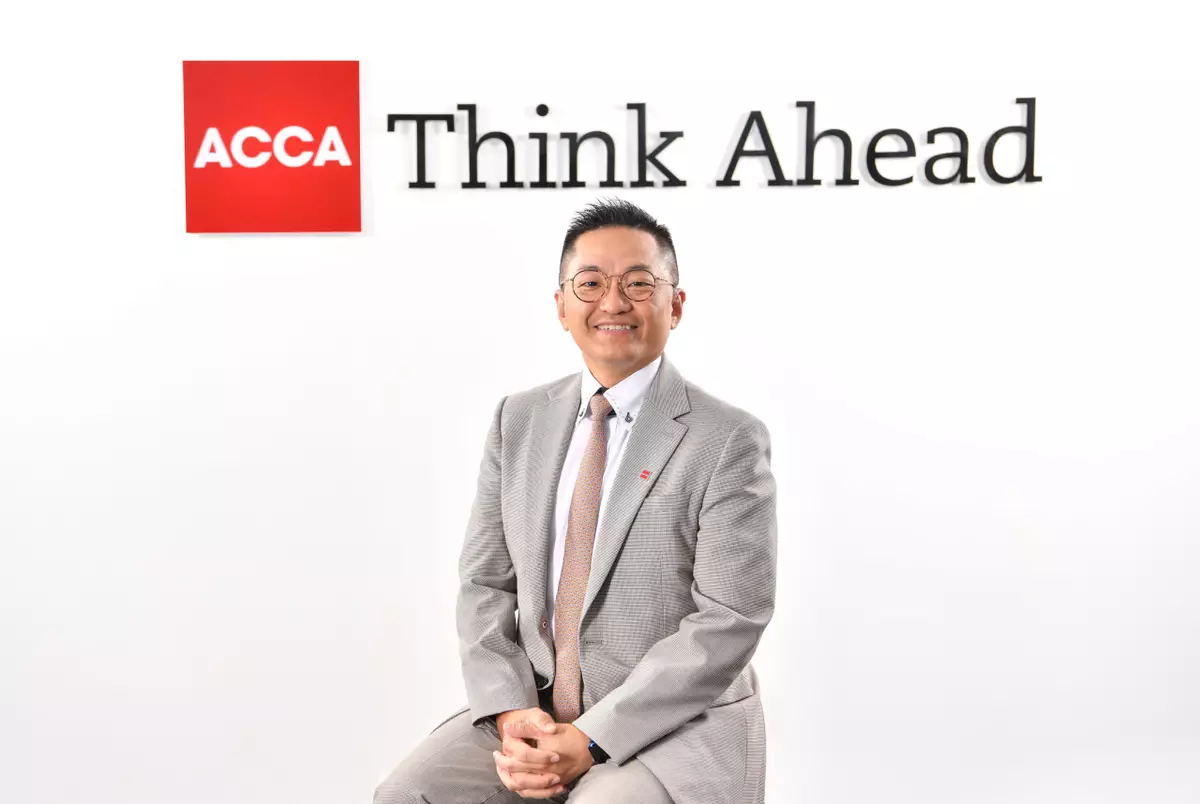
Wilson Cheng, Chairman of ACCA Hong Kong.
Global Talent Trends Survey 2026, the largest annual talent survey of accountancy and finance professionals across the world, is in its fourth edition this year. Over 11,000 individuals from 160 countries responded to the survey on issues ranging from AI concerns, job security concerns, cross-generational collaboration, social impact and mental health.
This year’s key findings from Hong Kong are as follows:
AI in recruitment: faster, but far from fairer: AI is widely used in Hong Kong to draft job descriptions and screen junior candidates. However, only 36% of Hong Kong respondents seem confident in AI’s ability to support fair and unbiased recruitment, compared to 63% ofChinese mainland respondents, 49% of South Asia respondents and 58% of respondents in the rest of the Asia Pacific. Current tools struggle with the nuanced judgment required for senior roles, and video interview platforms can generate false positives or false negatives. Roundtable participants view AI as a viable tool for high-volume, junior screening, but struggle with the complexity of senior hires.
Job security concerns intensify amid structural shifts: 28% of Hong Kong respondents (26% globally) do not feel secure in their current roles. Beyond cyclical economic downturns, two structural shifts are reshaping the employment landscape: (i) the departure of multinational regional headquarters, which has reduced the availability of high‑value roles, thinning the pool of opportunities for local professionals who relied on these international career pathways, and (ii) technological transformation, which the rapid adoption of AI continues to automate or replace specific human functions – quietly reimagining the nature of work itself. Staying competitive now means adapting to a world where traditional certainties no longer apply.
Rising AI application in the workplace: AI is becoming increasingly embedded in Hong Kong workplaces, with a large proportion of respondents (44% in Hong Kong and 52% globally) reflecting that AI technologies are used regularly in their current roles. At the same time, as Hong Kong has a higher proportion of using AI application in the workplace, it also has a higher proportion of concerns in the impact of AI on their own role. 53% of Hong Kong respondents (51% in global) have concerns about the impact of AI on their own roles.
Junior staff over‑reliance on AI raises concerns: Junior staff increasingly rely on AI to perform work entirely – blindly accepting outputs without question. This is eroding basic processing and critical thinking skills, with calls for juniors to review, challenge and validate AI outputs rather than treating them as a substitute for their own judgement.
Accountancy as a springboard to broader careers: Finance professionals in Hong Kong are increasingly drawn to fields such as technology, sustainability and the creative industries. In these areas, they can build products and express themselves more directly. The skills developed in accountancy – such as analytical thinking, risk management and operational discipline – are transferable across sectors. This enriches other industries and is increasingly viewed as a springboard to broader careers, creating opportunities for growth that require finance professionals to rethink traditional career paths. However, this trend often comes with challenges, such as temporary reductions in seniority and pay, because financial security is no longer the only measure of success.
Cross-generational collaboration remains a significant challenge: Hong Kong respondents report greater challenges in cross-generational collaboration than the global average, with 51% saying their organisations struggle to support effective collaboration across age groups, compared with 42% globally. Differences in communication styles, work expectations and skillsets are creating workplace friction, particularly between experienced employees valued for critical thinking and younger staff with stronger digital fluency. This friction is mirrored in the Chinese mainland, where 55% of respondents reflect their organisation faces cross-generational collaboration challenges due to misaligned work values and expectations, different approaches to work-life balance and communication style differences.
Social dimension of environment, social and governance (ESG) takes centre stage over environment and governance: Among ESG factors, the social pillar is the greatest concern for Hong Kong respondents (40% vs 53% globally), followed by governance (28% vs 25% globally) and environmental issues (23% vs 19% globally). Social factors – employee wellbeing, mental health support, work‑life balance, psychological safety, and representation metrics such as diversity data – resonate more deeply as they directly relate to everyday working life. Social credibility is no longer optional; it is a core component of employee trust and retention.
Mental health support remains inadequate despite growing demand: 65% of Hong Kong respondents (59% globally) would like greater organisational support for managing their mental health. Employers are responding with initiatives such as access to social workers, confidential counselling, wellness activities and redesigned physical workspaces – including plants and open‑plan layouts to reduce isolation. However, mental health and reward perception are intertwined, and employers cannot treat them as separate issues.
For details of the Global Talent Trends Survey 2026, please refer to the following link:
Global report: https://stories.accaglobal.com/global-talent-trends-2026/index.html
Hong Kong report: https://stories.accaglobal.com/global-talent-trends-2026/key-regions-headlines/hong-kong-sar-of-china-talent-trends-2026/index.html