WASHINGTON (AP) — The Supreme Court on Thursday ruled for a Black death row inmate from Mississippi who claims there was racial bias in the makeup of the jury that convicted him.
By a 5-4 vote, the justices sided with Terry Pitchford, who was sentenced to death for his role in the killing of a grocery store owner.
“In this case, whether due to confusion, oversight, an overly hurried jury selection process, or some other cause, things broke down,” Justice Brett Kavanaugh wrote for the court. Chief Justice John Roberts and the court’s three liberal justices joined with Kavanaugh.
There were 11 white jurors and one Black juror in a trial with similarities to that of another Black man on Mississippi’s death row, whose conviction the high court overturned seven years ago.
It’s unclear what happens next in Pitchford's case. Justice Neil Gorsuch, who dissented, suggested the state still could argue Pitchford’s conviction should be sustained. If his conviction is overturned, the state could seek to retry him.
“Mr. Pitchford is now entitled to a fair trial in the state court,” Joseph Perkovich, who argued the case for Pitchford at the Supreme Court, wrote in an email.
Doug Evans, a now-retired prosecutor with a history of dismissing Black jurors for discriminatory reasons, had excused four other Black people at Pitchford's trial. Black people make up more than 37% of Mississippi’s population.
The Supreme Court ruled 40 years ago in Batson v. Kentucky that jurors could not be excused from service because of their race and set up a system by which trial judges could evaluate claims of discrimination and the race-neutral explanations by prosecutors.
Pitchford’s case focused on whether his lawyers did enough to object to Judge Joseph Loper’s rulings and whether the state Supreme Court acted reasonably in ruling they had not.
Pitchford’s lawyers made the necessary arguments and the state high court acted unreasonably, Kavanaugh wrote.
In dissent, Gorsuch wrote that Pitchford had to show that no fair-minded judge could rule as the Mississippi court did and that the record in the case was crystal-clear in his favor.
“As I see things, Mr. Pitchford has failed to satisfy either of these standards,” Gorsuch wrote, joined by Justices Samuel Alito, Amy Coney Barrett and Clarence Thomas.
In 2019, the Supreme Court overturned the death sentence and conviction of Curtis Flowers, because of what Kavanaugh then described as a “relentless, determined effort to rid the jury of Black individuals.” Evans was the prosecutor in that case, and Loper presided over the final two of Flowers’ six trials.
Pitchford, now 40, was 18 when he and a friend decided to rob the Crossroads Grocery, just outside Grenada in northern Mississippi. The friend shot store owner Reuben Britt three times, fatally wounding him, but was ineligible for the death penalty because he was younger than 18. Pitchford was tried for capital murder and was sentenced to death.
The case has been making its way through the court system for 20 years. In 2023, U.S District Judge Michael P. Mills overturned Pitchford’s conviction, holding that the trial judge did not give Pitchford’s lawyers enough of a chance to argue that the prosecution was improperly dismissing Black jurors.
Mills wrote that his ruling was partially motivated by Evans’ actions in prior cases. A unanimous panel of the 5th U.S. Circuit Court of Appeals reversed the ruling.
Evans did not respond to The Associated Press' attempt to reach him for comment when he retired.
Follow the AP's coverage of the U.S. Supreme Court at https://apnews.com/hub/us-supreme-court.
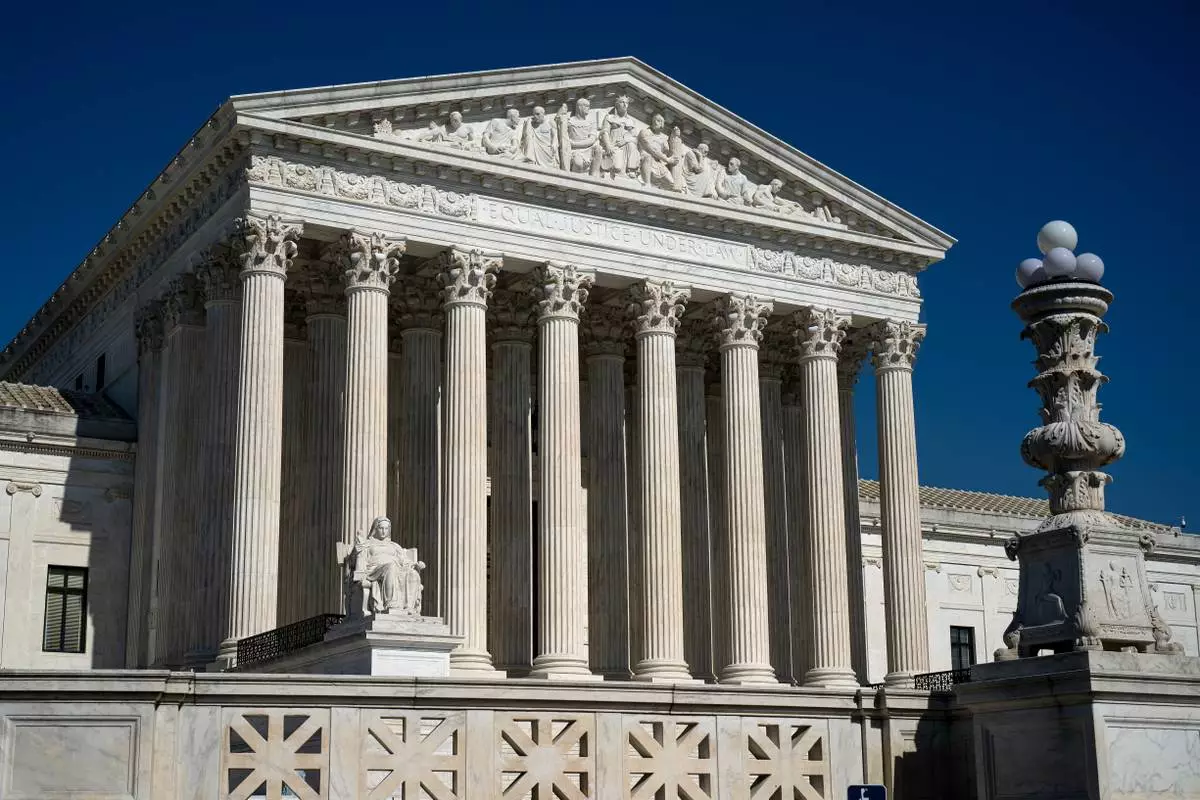
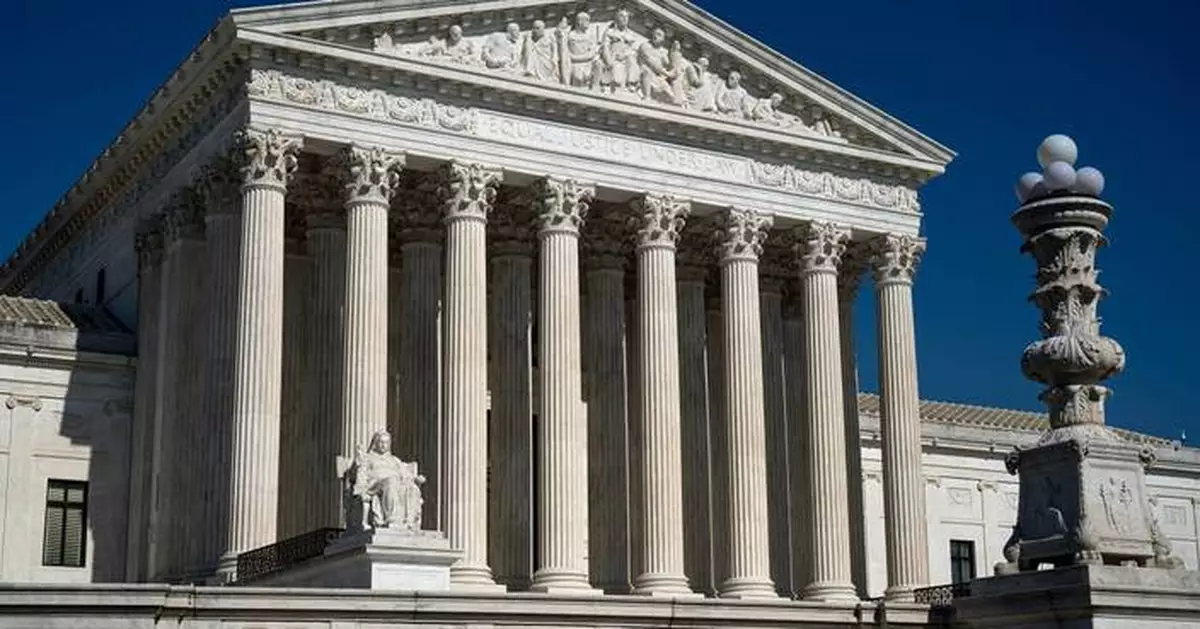
The Supreme Court is seen in Washington, Monday, May 18, 2026. (AP Photo/J. Scott Applewhite)
A federal judge has declined to halt President Donald Trump’s executive order creating a federal voter list and limiting mail voting, clearing the way for potential sweeping changes in how American elections are run shortly before this year's midterm elections.
U.S. District Judge Carl Nichols, a Trump appointee in Washington, late Wednesday rejected the request by Democrats and civil rights groups that had argued Trump’s order would likely be found unconstitutional because the states and Congress, not the president, have the power to set election rules. Nichols agreed with the Republican Trump administration's contention that it was too early to block the order because it has yet to be implemented.
Nichols' ruling leaves the door open for further challenges when the Trump administration moves to implement the president's directive. A separate lawsuit seeking to block the executive order is underway in Boston. No matter how rapidly the administration acts, no voting changes are expected during primary elections, which continue into next month.
“The Court recognizes that the Postal Service may ultimately issue a final rule that directly affects Plaintiffs or their members, or that the Government may develop State Citizenship Lists that omit specific individuals due to particularized flaws,” Nichols wrote. “Plaintiffs may, of course, renew their motions if and when those future actions occur. Until then, however, Plaintiffs cannot show that preliminary injunctive relief is warranted.”
The Trump administration has yet to formally issue lists of eligible voters, and those who filed the initial request for a temporary halt said they'd be back if the administration moves in that direction.
“We are ready to resume the fight if and when the administration takes those next steps,” said Juan Proaño, chief executive officer of the League of United Latin American Citizens, one of the organizations that sought the stay from Nichols.
Democratic party organizations that sought the order issued a joint statement with similar promises. “We are confident we will prevail in the end when this illegal and completely unworkable executive order is fully adjudicated,” the statement said.
Abigail Jackson, a White House spokeswoman, said: “Today’s ruling is a decisive victory for the rule of law and deals a blow against the Democrat strategy of suing first and finding legal arguments later."
Trump issued the order in March after a bill he supported to overhaul voting stalled in Congress. The order would have had the federal government create a list of eligible voters and then directed the U.S. Postal Service to deliver mail ballots only to those on the list. Election officials argued it was ripe for abuse and could cause chaos, and the postal union has objected to the idea of mail carriers policing ballots.
Since his 2020 presidential election loss to Democrat Joe Biden, Trump has groundlessly claimed mail voting is rife with fraud and has launched a federal investigation into that year's vote, even though repeated audits and investigations, including ones run by Republicans, found it was free of widespread fraud. Trump also has said he wants to “take over” election administration in Democratic areas.
Democrats and civil rights groups argued it was urgent that Nichols issue a restraining order amid the primary season, with states already gearing up for the fall midterm elections.
This was Trump's second executive order aimed at overhauling elections and voting. His initial election executive order, issued just months after he took office in his second term, has been blocked by multiplefederal judges. That order sought to require documentary proof of citizenship to register to vote, among other changes.
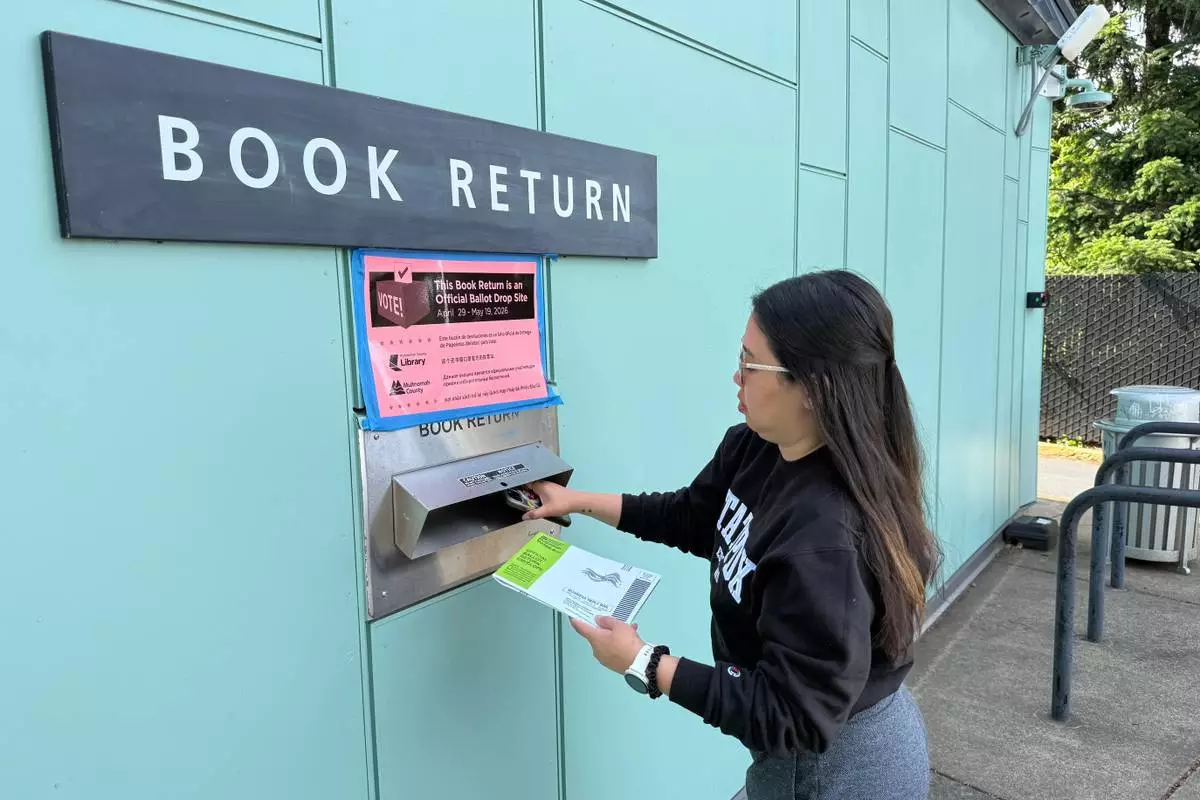
A voter drops off their ballot at a library in Portland, Ore. serving as a ballot dropbox site as Oregon held primary elections on May 19, 2026. (AP Photo/Claire Rush)
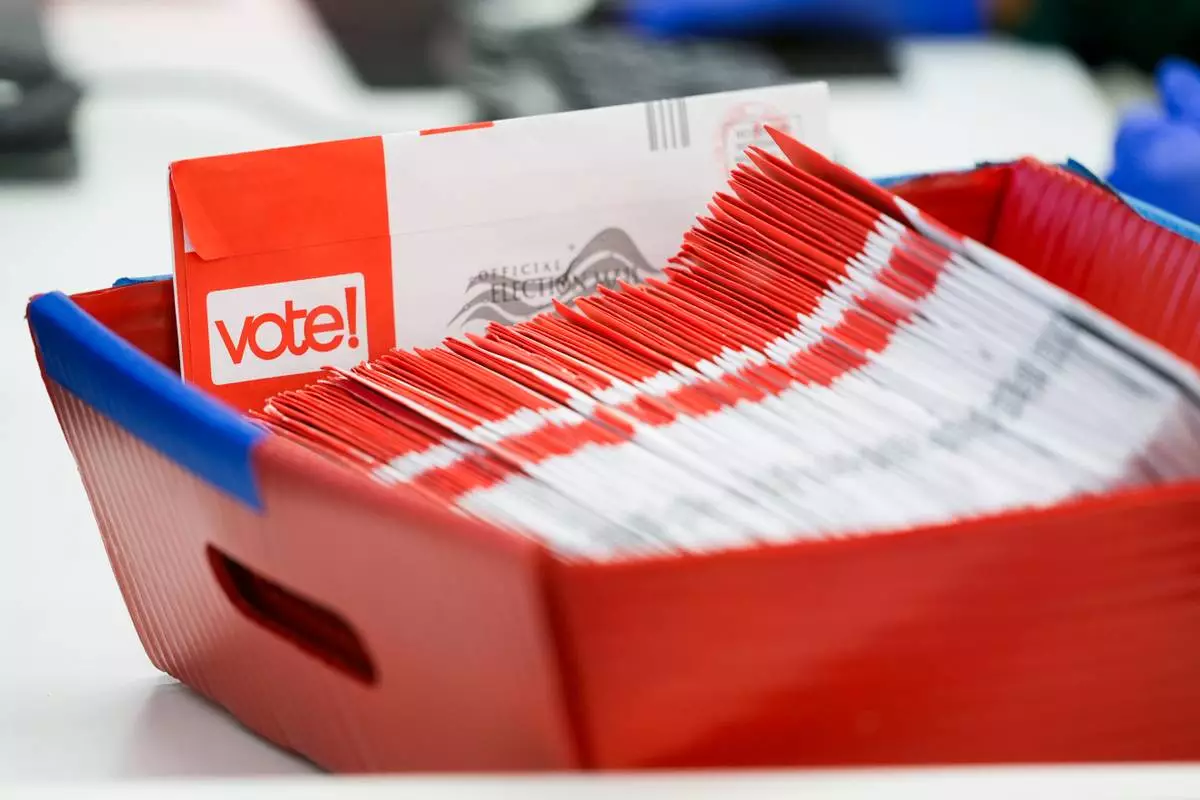
FILE - A tray of mail-in ballots is seen at King County Elections headquarters on Election Day, Nov. 5, 2024, in Renton, Wash. (AP Photo/Lindsey Wasson, File)
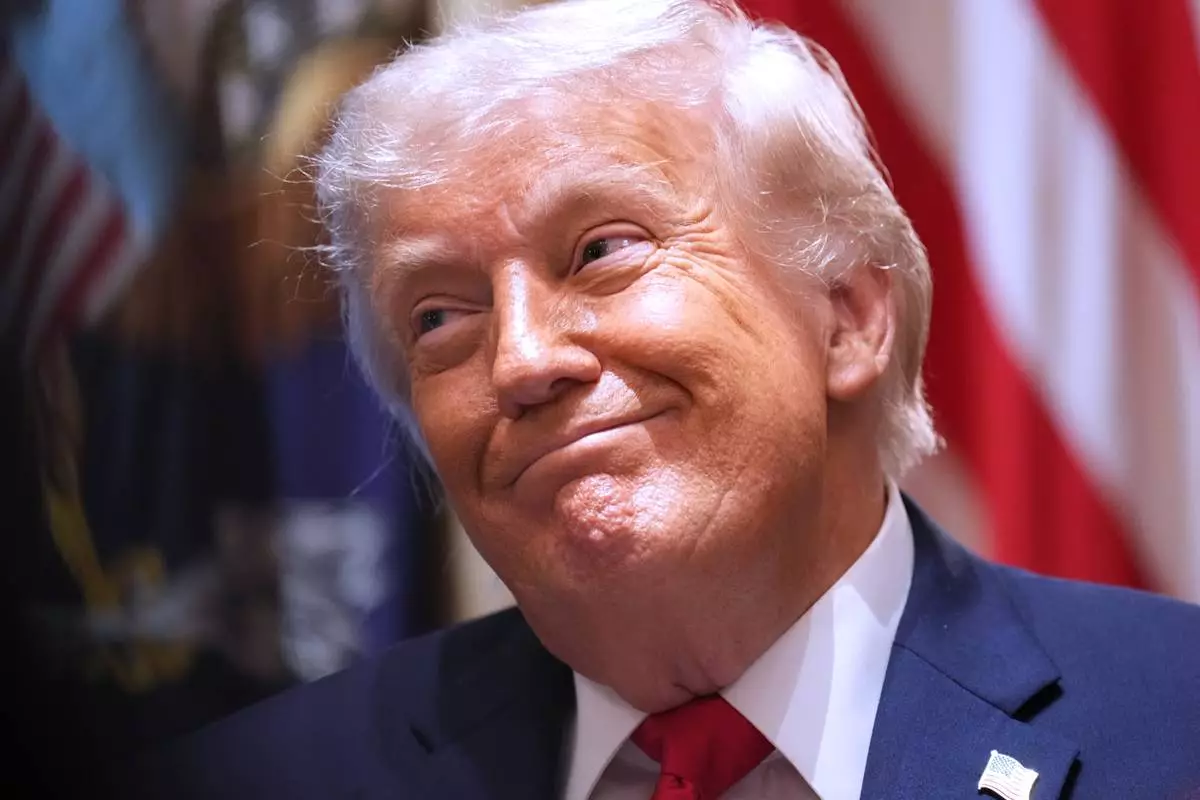
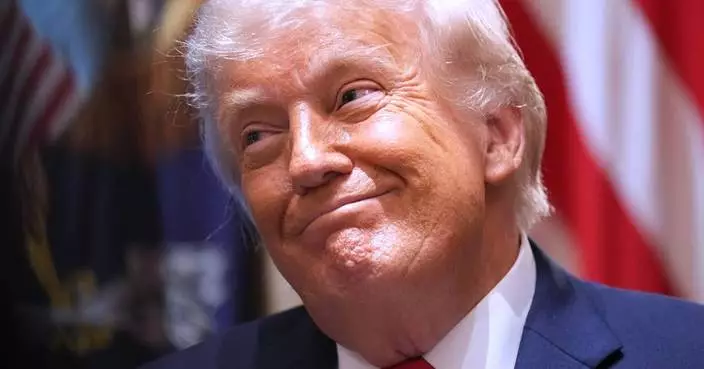
President Donald Trump listens during a Cabinet meeting at the White House, Wednesday, May 27, 2026, in Washington. (AP Photo/Jacquelyn Martin)