FAYETTEVILLE, Ga. (AP) — U.S. coach Mauricio Pochettino said his agent may have spoken with AC Milan and he also may have had a casual conversation with the Italian club but he remains open to staying with the American national team after the World Cup.
Speaking after training Thursday, Pochettino said he and U.S. Soccer Federation CEO JT Batson discussed the possibility of staying on during dinner Sunday at Jean-Georges, a highly rated and pricey restaurant in New York.
“He asked if we are open to listen (to) the project of the federation for the next four years,” Pochettino said. “And we said: Of course that we are open. Do you think that if we have a commitment with another people, we are going to waste time to listen?”
Pochettino agreed in September 2024 to a contract through the World Cup. He said until Sunday “we didn’t have (any) idea about if the federation was happy with us or not happy, wanted us for the future.”
Pochettino said it was good that his name was linked to big clubs, it means “we are doing something good.”
“The problem is ... the opposite, no one asks for you," he said.
Pochettino maintained not much significance should be made of AC Milan's discussions.
“My representatives, maybe, possible, because they need to do their job," he said. “Do you think all the people that represent different coaches have no conversation with different clubs?”
Pochettino avoided revealing whether he was personally involved in a meeting.
“If I met someone, what happened? What is going to change if I met someone?” he said. “We have friends everywhere and my representative works for me into trying to find the best possibility for the future. That is normal.”
Discussion of Pochettino's future isn't impacting players.
“I think I’m someone that lives in present day and right now he’s here and we’re working with him,” winger Tim Weah said. “It’s an amazing feeling having such a prestigious coach coaching us.”
Batson was unfazed by Pochettino's job talks.
“He had standing offers from other places to come and he wanted to be here,” Batson said. “There has been a longer list of outreach than what has even been reported."
Pochettino, 54, was hired after coaching at Espanyol, Tottenham, Paris Saint-Germain and Chelsea.
Batson wouldn't say whether the USSF has reached out to Pep Guardiola or Jurgen Klopp, two high-profile coaching free agents.
Matt Crocker, who as USSF sporting director recommended Pochettino be hired to replace Gregg Berhalter, quit last month to take a job with the governing body of Saudi Arabian soccer. Batson said a single sporting director in charge of both the men's and women's programs might not be hired.
“The men’s and women’s soccer ecosystems in the U.S. and around the world are different and so we need to think about how we’re structured to reflect that,” Batson said. “I would not expect a like-for-like sporting director going forward.”
Pochettino said he decided last winter on his starting lineup for the World Cup opener against Paraguay on June 12.
“The only thing that can change is because watching them in training,” he said.
Asked when he decided on the lineup, he responded: “before March.”
Pochettino is confident of a turnaround by Christian Pulisic, the top U.S. player. Pulisic ended his AC Milan season scoreless in 19 games since Dec. 28 and has gone eight U.S. matches without a goal since November 2024.
“He is going to score in World Cup. Yes, I really trust in that,” Pochettino said. “He has very good attitude, very good commitment. He’s trying so hard to get his best level and I think he will achieve it for sure.”
Pulisic skipped last year's CONCACAF Gold Cup, wanting to take vacation time. He offered to play in last year's pre-tournament friendlies but Pochettino turned him down.
“I was disappointed with him,” Pochettino said. "He was disappointed with our decision not to include him in the two friendly games.”
AP soccer: https://apnews.com/hub/soccer
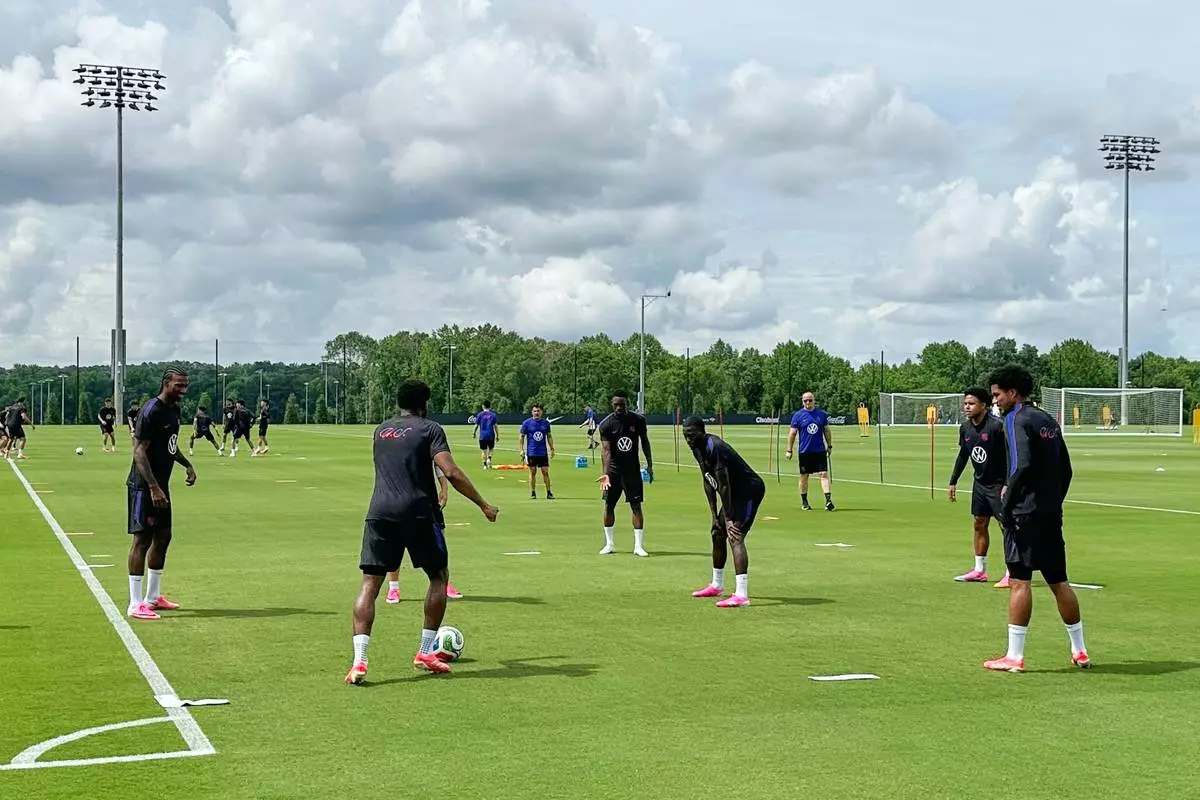
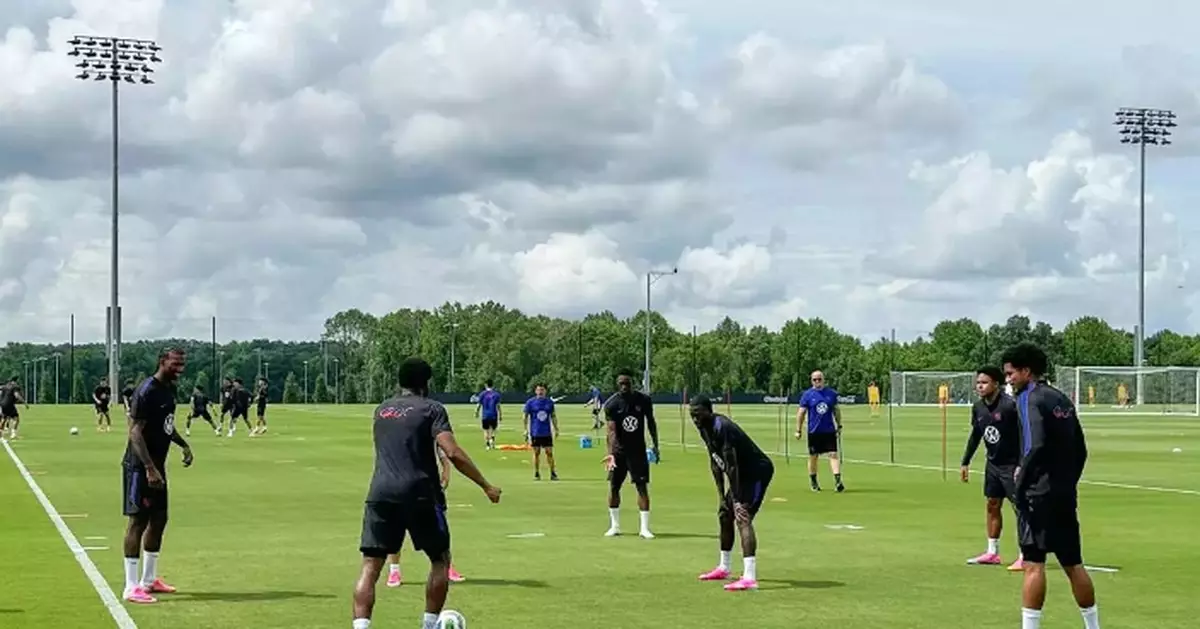
United States soccer players work on a drill at the new national training complex, Thursday, May 28, 2026, in Fayetteville, Ga., ahead of the 2026 World Cup soccer tournament. (AP Photo/Ronald Blum

U.S. Soccer Federation CEO JT Batson answers questions from the media at the national training complex, Thursday, May 28, 2026, in Fayetteville, Ga., about the possibility of U.S. coach Mauricio Pochettino discussing taking a job with Italian club AC Milan. (AP Photo/Ronald Blum

United States coach Mauricio Pochettino speaks with the media at the national training complex, Thursday, May 28, 2026, in Fayetteville, Ga., ahead of the FIFA World Cup soccer tournament. (AP Photo/Ronald Blum
TEL AVIV, Israel (AP) — The Israeli combat soldier saw his teammates yelling in celebration, congratulating one another. They had just struck a vehicle of Palestinians driving near the Israeli-controlled part of the Gaza Strip, killing everyone inside.
The reservist said scenes like this had become common after a fragile ceasefire took effect in October. In the weeks he was stationed in Gaza, he said, he saw soldiers relishing the chance to go after those who crossed — or came close to crossing — the so-called yellow line that divides the strip into Israeli-controlled and Palestinian areas.
“It was a jungle,” the soldier, in his 20s, told The Associated Press. “After the ceasefire, the order was: If someone crosses the line, you shoot them.”
As diplomatic efforts to strengthen the deal have stalled, three soldiers described to AP a sense of confusion in the embattled territory, with a lack of clarity on rules of engagement around the yellow line. Some commanders paid lip service to the agreement, the soldiers said, while privately voicing desire for the war in Gaza to continue. Sometimes, troops were too far away or acted too quickly to recognize who they were shooting, one soldier said — a concern echoed in comments from a whistleblower group of veterans.
The soldiers' accounts are a rare glimpse into what’s happened in the Israeli-controlled part of Gaza since the deal went into effect seven months ago. The soldiers — reservists deployed throughout Gaza between October and January who've since returned — spoke on condition of anonymity because they feared being ostracized over their comments. They said they were speaking out because they were angered and saddened by what they saw.
AP has documented shootings of Palestinian civilians, including children playing, close to the yellow line. And the soldiers said it felt like the killings never stopped amid the tenuous deal.
“To call it a ceasefire is a joke,” one soldier told AP.
When the ceasefire went into effect, Israel withdrew troops to a buffer zone demarcated by a yellow line, giving it control of just over half the strip. Under the agreement, Israeli forces are meant to complete a fuller withdrawal, though there's no timeline for that. The U.S.-backed diplomat overseeing the truce says progress is deadlocked over the central sticking point of disarming Hamas, upon which all other issues — including Israeli withdrawals and reconstruction — hinge.
In the meantime, Israel has expanded control over additional territory in Gaza. Both sides have accused the other of violating the ceasefire.
The line’s exact location has been ambiguous and sometimes invisible. In some places, it’s marked with yellow blocks and barrels; in others, it at times hasn't been indicated at all.
The Israeli military invited AP this week to see a section of the yellow line in central Gaza, near the Maghazi refugee camp. The line there was visible, demarcated by a wide dirt path and small yellow markings. To the east was a desolate stretch of open space leading to a heavily fortified Israeli military post about 500 meters away.
An Israeli military commander said Hamas is active on the other side of the line and frequently sends people — militants and civilians — toward the line and even across it to test the army’s readiness and responses.
“There is no reason for anyone to come near the line,” he said, speaking on condition of anonymity under military rules. “There’s nothing here.”
The army says the entire line, which stretches the length of Gaza, is now clearly marked.
Since the ceasefire went into effect, more than 900 people have been killed in Gaza — dozens of those close to or over the yellow line, according to Gaza’s Health Ministry. The ministry doesn't say how many are militants, but unarmed men and children have been among the dead.
Israel's military has said most of the people killed crossing the line posed a threat to troops. But soldiers who spoke to AP and Breaking the Silence — the whistleblower group that has collected troops' testimonies throughout the war — say that at times soldiers were too far away, acting too quickly and under too much pressure to tell.
Israel's army told AP that the area adjacent to the yellow line is a “sensitive operational environment” with signs saying approaching is prohibited. It said the army doesn't target civilians solely for approaching the line and that its rules of engagement require the use of warnings before using force. In situations involving an immediate threat, forces are authorized to act, it said.
It was the combat soldier's second tour in Gaza when the ceasefire began. He said he was posted several hundred meters from the yellow line and saw several people trying to cross it killed by soldiers.
Soldiers shooting or ordering drone strikes don't always know who's crossing the line, he said. Although soldiers must provide coordinates and get approval from superiors before striking, it's hard to give exact information as people are moving, he said. He described soldiers calling in coordinates based on a hunch or the last place they saw someone.
Breaking the Silence says the general rules of engagement are extremely permissive, especially for those crossing the line, with orders in many areas being “shoot to kill.” Executive director Nadav Weiman, a veteran who served in Gaza but not in this war, said distance from the target and some trigger-happy soldiers can be problematic.
He said orders and policies from the military’s high commanders “have created a reality where countless civilians have and are being killed for crossing invisible lines.”
In one account to Breaking the Silence, in interview notes seen by AP, a soldier describes instructions for troops about anyone crossing the yellow line: “eliminate him no matter what."
Another soldier stationed in Gaza for weeks after the ceasefire said the message from commanders was to hold the line at all costs.
“There was a general feeling that human lives are not valuable,” he said.
When it came to demarcating the yellow line, the soldier said his superiors told him it was “too much work," not their job and that Palestinians should know where it was.
Being in Gaza took an emotional toll, he said.
Sometimes snipers fired warning shots at people close to the line, he said, but commanders told troops to do more to protect themselves. The soldier understood that to mean firing more lethal shots.
He and the other soldiers who spoke to AP said troops generally understood, based on leaders and fellow soldiers' actions, that Israel was in Gaza for the long run, not an eventual withdrawal.
An internal report circulated among aid groups last month and seen by AP said that across Gaza, Israel has become “increasingly proactive” with its strikes.
Separate data from the Armed Conflict Location and Event Data Project, a U.S.-based nonprofit, said April was the deadliest month in Gaza this year and that recorded deaths near the yellow line or of people who crossed it increased by more than 25% from January to April, to 73 from 58.
This week, Israeli Prime Minister Benjamin Netanyahu said Israel controls 60% of Gaza and the next step was to move to 70% control.
The soldiers told AP that on the ground, the ceasefire is elusive.
“We need to stop using this term," one said of the word, ceasefire. "It’s not serving people that want to stop the war.”
Josef Federman contributed reporting from the central Gaza Strip.
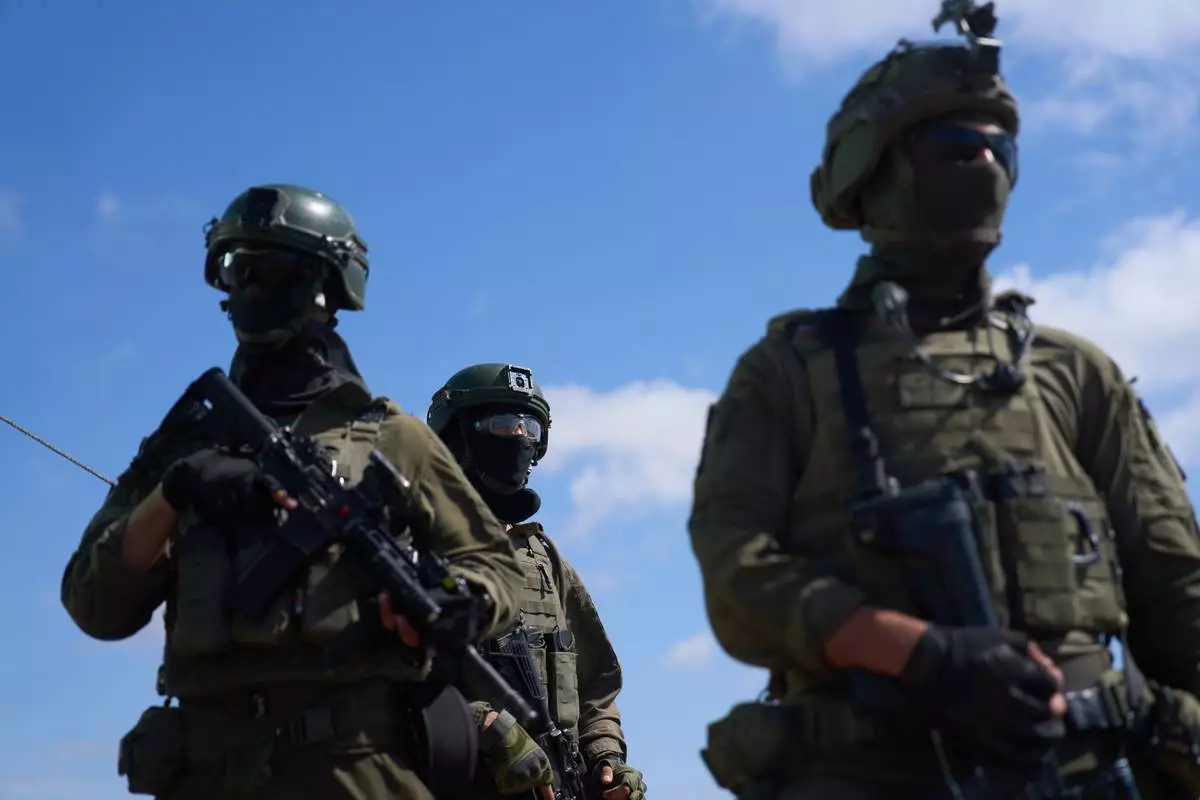
Israeli soldiers occupy a military position overlooking the so-called yellow line in the central Gaza Strip, Tuesday, May 26, 2026. (AP Photo/Ariel Schalit)
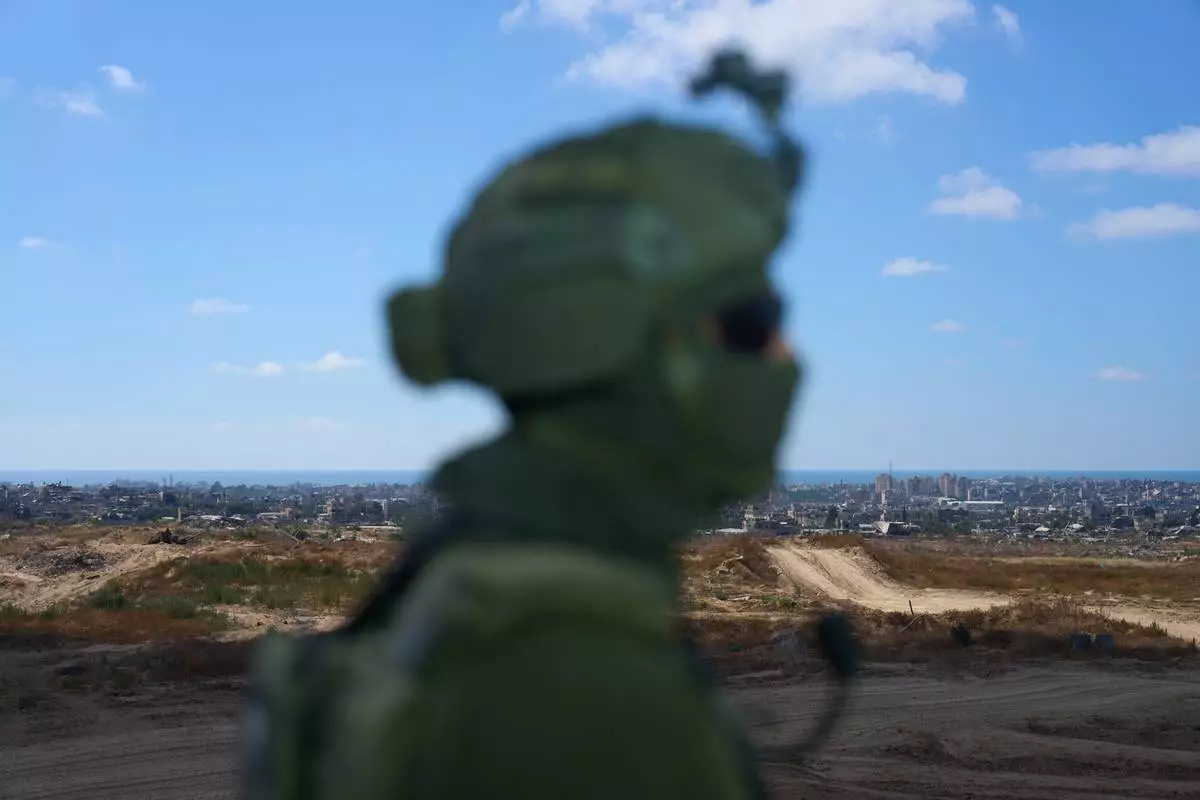
An Israeli soldier occupies a military position overlooking the so-called yellow line in the central Gaza Strip, Tuesday, May 26, 2026. (AP Photo/Ariel Schalit)
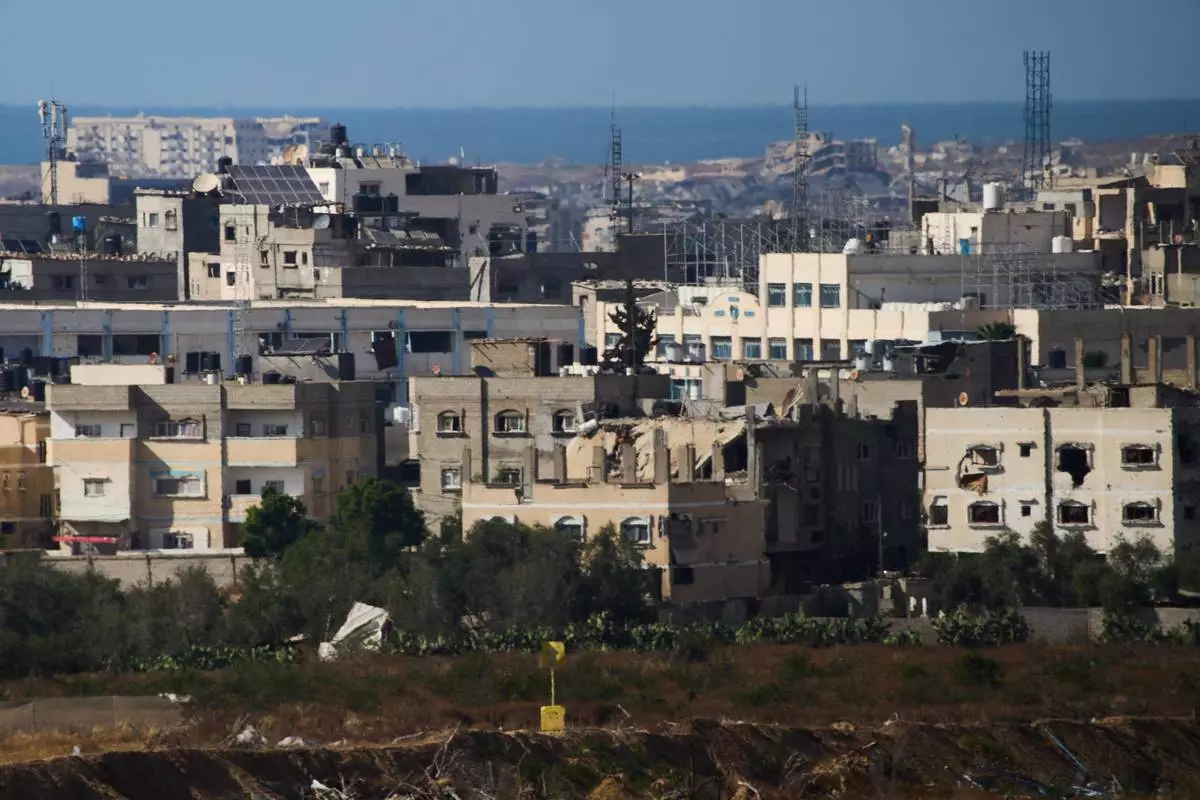
A yellow block noting part of the so-called yellow line that has separated the Gaza Strip's Israeli-held and Palestinian zones since the October ceasefire is visible in the central Gaza Strip, Tuesday, May 26, 2026. (AP Photo/Ariel Schalit)

An Israeli soldier occupies a military position overlooking the so-called yellow line in the central Gaza Strip, Tuesday, May 26, 2026. (AP Photo/Ariel Schalit)