Skip to Content Facebook Feature Image

Water shortages worsen across Cuba as oil supplies dwindle

News

Water shortages worsen across Cuba as oil supplies dwindle
News

News

Water shortages worsen across Cuba as oil supplies dwindle

2026-05-29 09:01 Last Updated At:09:10

HAVANA (AP) — Nearly 3 million Cubans experience water shortages every day because of a severe oil shortage that government officials blame on a U.S. energy blockade, authorities said late Wednesday during a roundtable discussion regarding the impact of the ongoing blockade.

The island’s water system is operating with only 37% of the required fuel as Cuba faces its worse energy crisis.

More Images
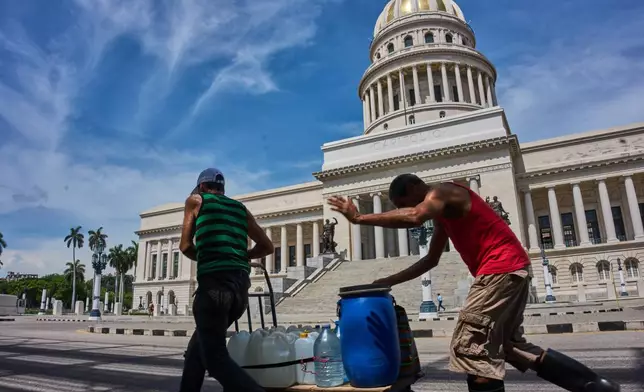
People carry containers of water past the Capitol in Havana, Wednesday, May 27, 2026. (AP Photo/Ramon Espinosa)
People carry containers of water past the Capitol in Havana, Wednesday, May 27, 2026. (AP Photo/Ramon Espinosa)

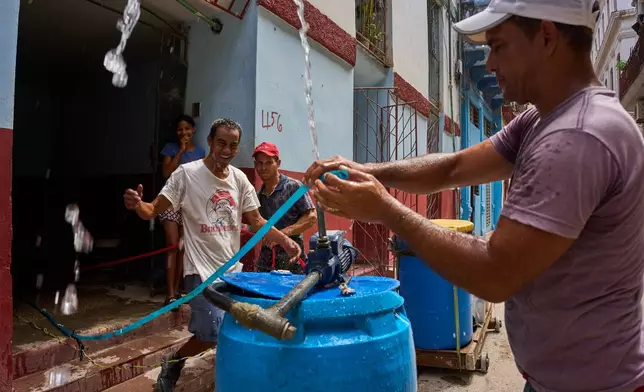
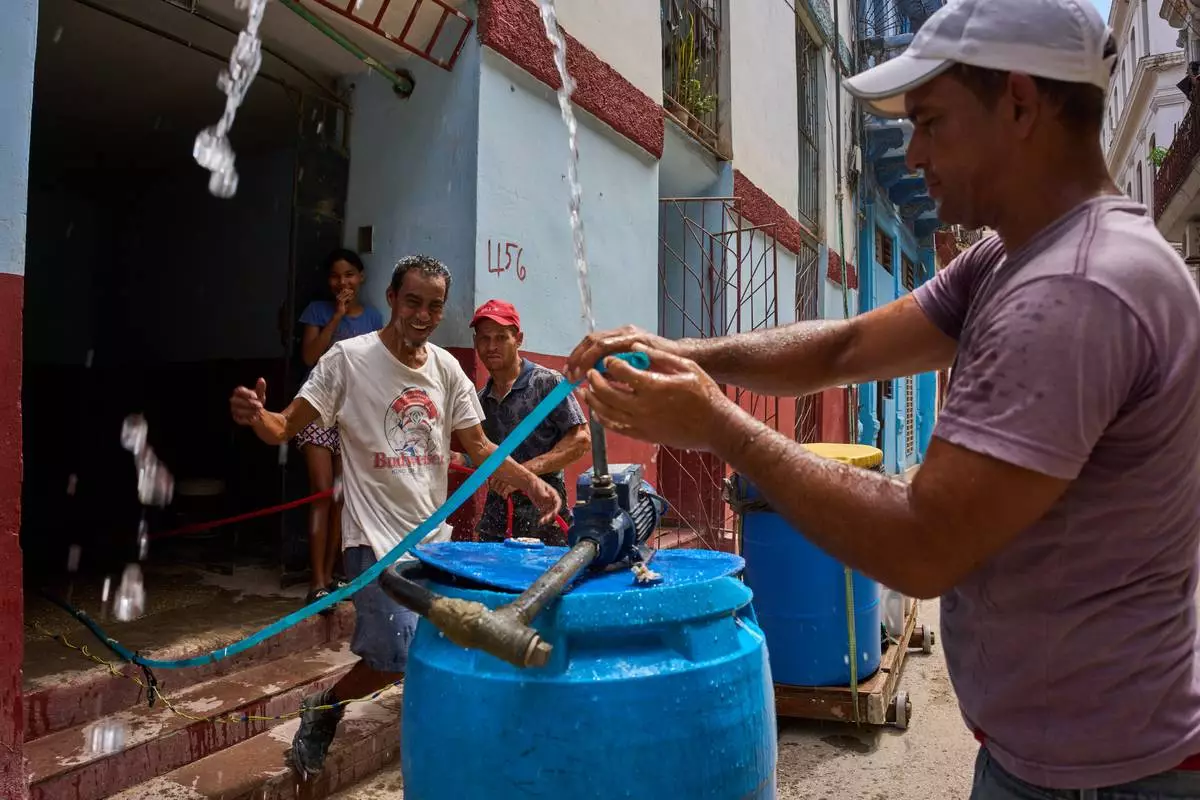
People react as a neighbor places a motor in a container of water by the entrance of their building in Havana, Wednesday, May 27, 2026. (AP Photo/Ramon Espinosa)
People react as a neighbor places a motor in a container of water by the entrance of their building in Havana, Wednesday, May 27, 2026. (AP Photo/Ramon Espinosa)

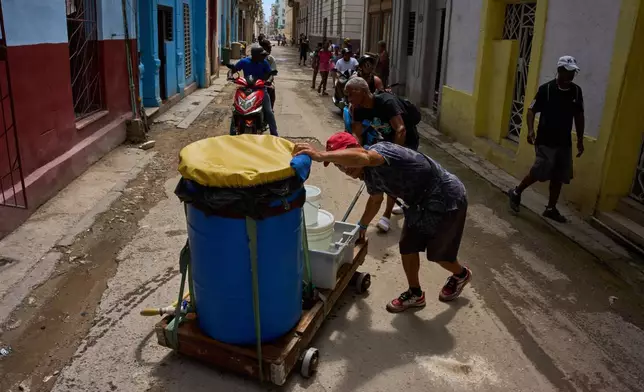
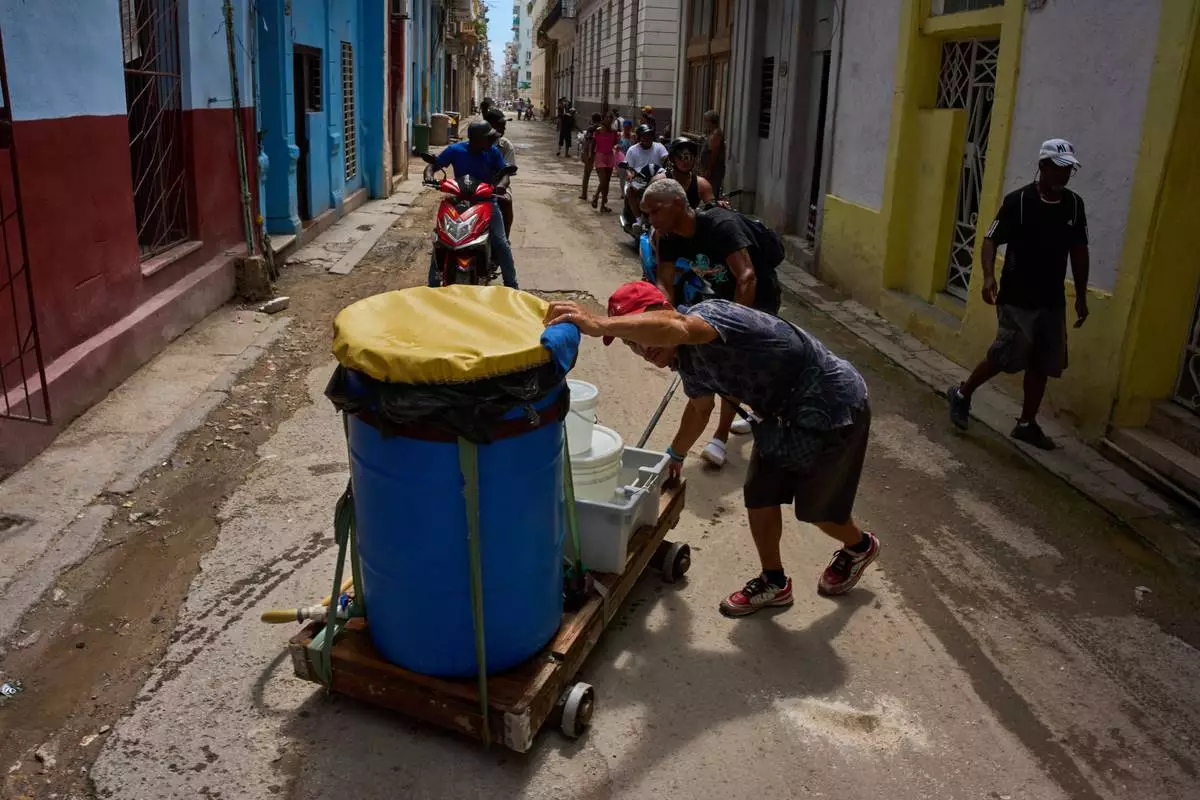
People transport containers of water in Havana, Wednesday, May 27, 2026. (AP Photo/Ramon Espinosa)
People transport containers of water in Havana, Wednesday, May 27, 2026. (AP Photo/Ramon Espinosa)

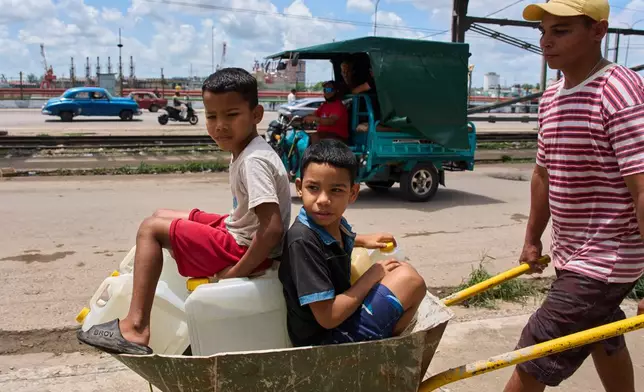
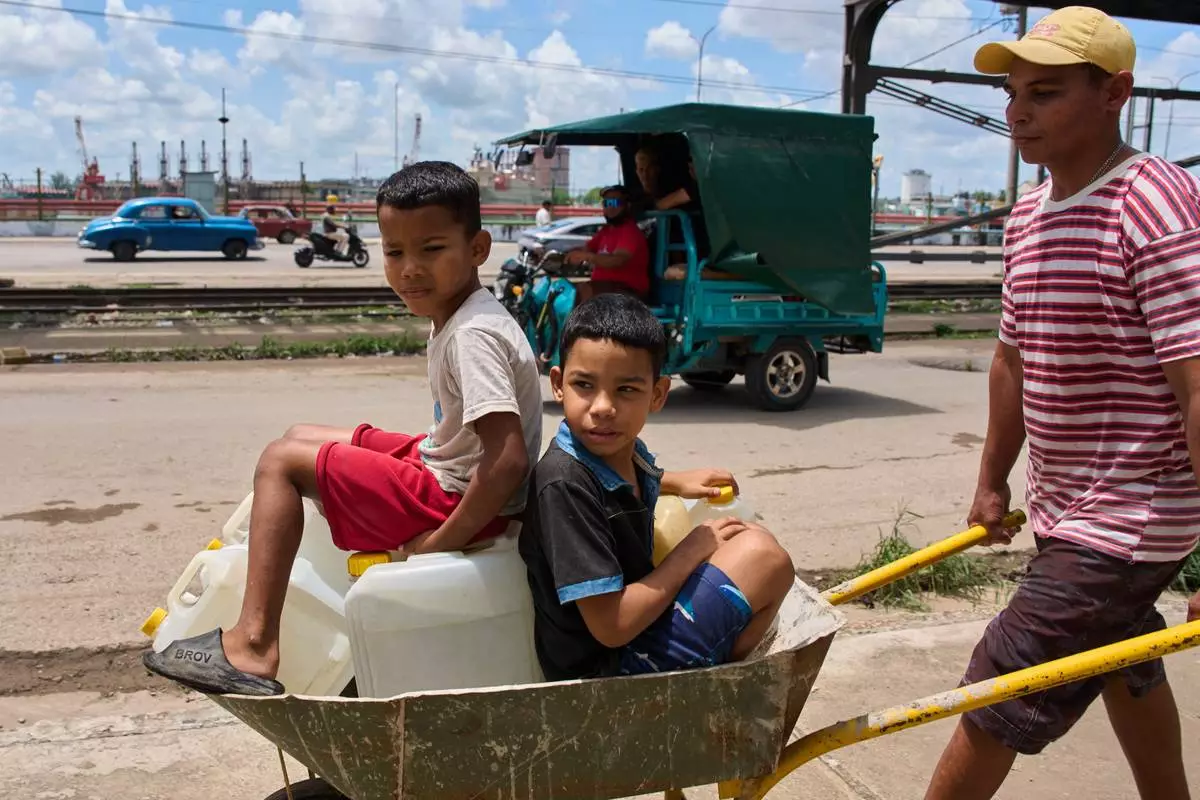
A man transports containers of water with his children in Havana, Thursday, May 28, 2026. (AP Photo/Ramon Espinosa)
A man transports containers of water with his children in Havana, Thursday, May 28, 2026. (AP Photo/Ramon Espinosa)

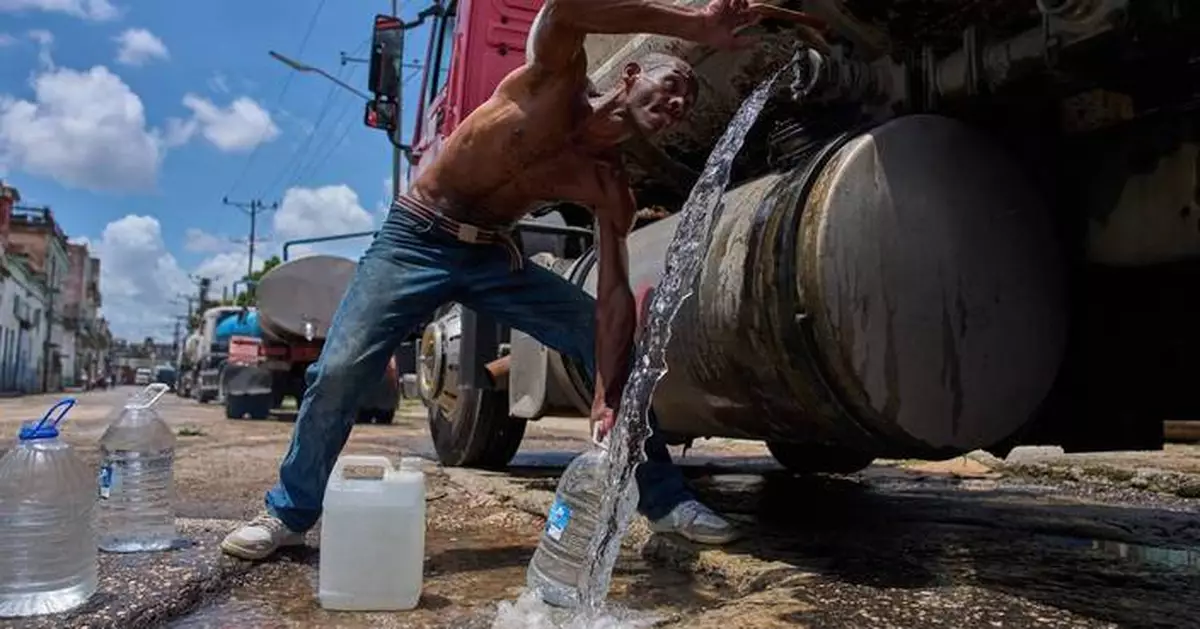
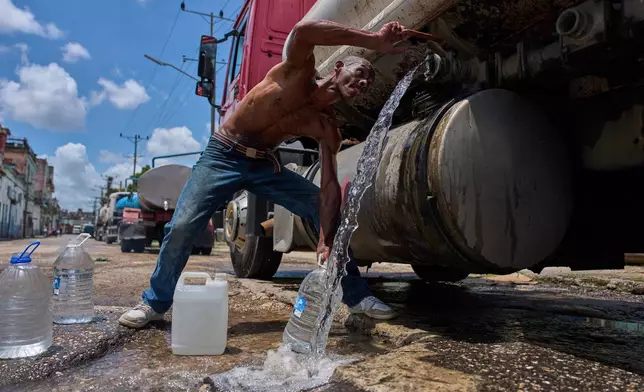
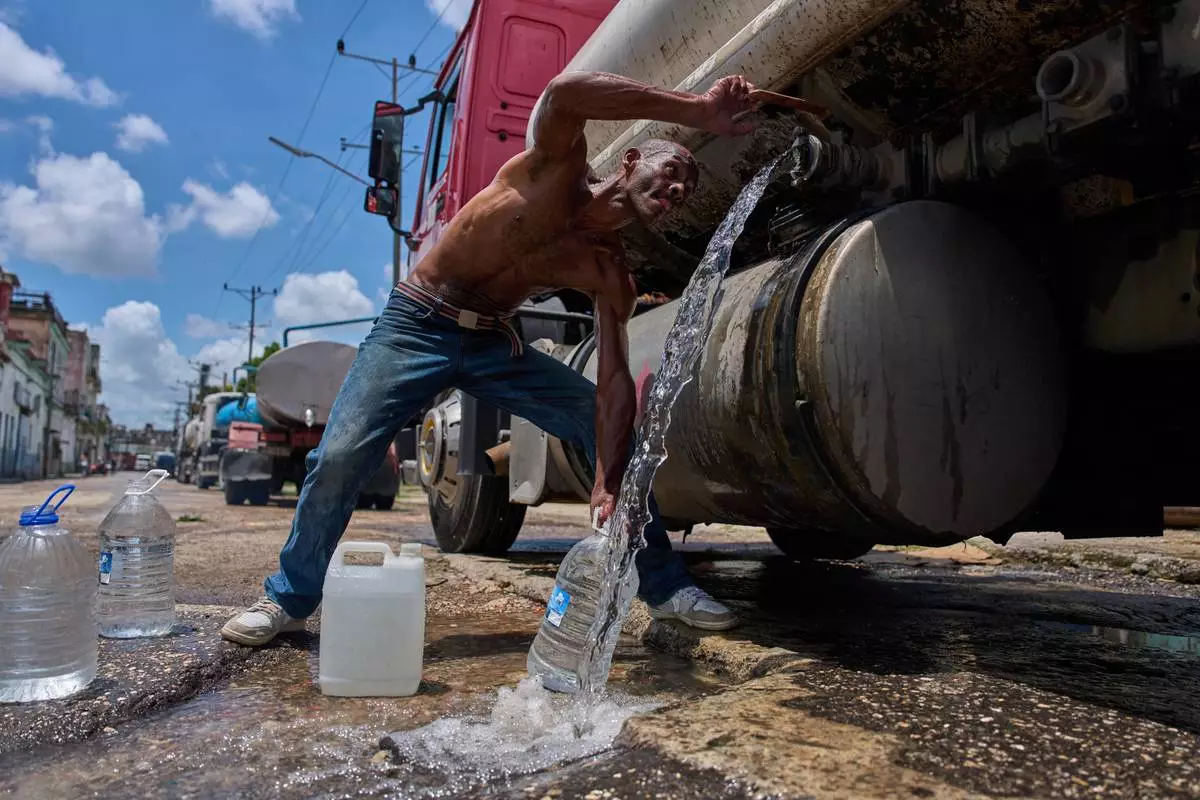
A man fills water jugs from a tanker truck in Havana, Thursday, May 28, 2026. (AP Photo/Ramon Espinosa)

A man fills water jugs from a tanker truck in Havana, Thursday, May 28, 2026. (AP Photo/Ramon Espinosa)

The water system is one of the sectors most affected because it is one of the country’s largest energy consumers, said Antonio Rodríguez, president of the state-run National Institute of Water Resources.

Details of the forum focused on the intermittent water supply affecting an overall population of nearly 10 million people were published Thursday by the official website Cubadebate.

Rodríguez said that not only does water pumping consume electricity, but all of the agency’s essential activities require fuel, from unclogging pipes and cleaning septic tanks to repairing leaks. Chemical supplies are also needed, and their import is currently paralyzed.

According to Rodríguez, the agency once purchased parts and other supplies worth some $100 million annually, but in the last year, purchases totaled only about $10 million given a total suspension of credit. Many suppliers are placing contracts on hold as they assess when it might be advantageous to deliver supplies to Cuba or what obstacles might arise in processing bank payments, not to mention the limitations on shipping services, he said.

Complicating the problem is aging infrastructure and oversaturated pumping stations, especially in large cities like Havana, Santiago de Cuba and Matanzas, Rodríguez said. Many high-rise buildings and apartments also require electricity to power the pumps that lift water to the elevated tanks.

The water crisis is not new, but it has worsened in recent months.

Since January, the U.S. government tightened sanctions it had already imposed on Cuba as it pressures the island to change its political model. U.S. President Donald Trump also threatened in late January to impose tariffs on any countries that sell or provide oil to Cuba, which produces only 40% of the fuel it needs.

The population, already having endured five years of economic crisis, inflation and shortages, is now struggling with daily power outages that last up to 20 hours.

Many neighborhoods in Havana receive water deliveries by tanker trucks, but they remain inconsistent.

“It’s been five days since the water came in,” Magaly Ribial, a 60-year-old teacher, said Thursday as she collected water for her home from a tanker truck parked near her house in Old Havana.

Meanwhile, 95-year-old Dayse Izquierdo struggles to carry water and obtains whatever her neighbors bring her when the tanker truck, which Cubans call a “pipa,” arrives.

Some residents even said they walk from other parts of the city when they hear that water trucks are arriving in a specific neighborhood.

“The water situation is widespread,” said 55-year-old Carlos Molina. “I come from another municipality to collect water because there is none there.”

Rodríguez noted that only a small portion of the agency’s operations depend on solar panels and other alternatives.

Authorities are developing an accelerated solar energy program, but experts note that such technologies require costly investments.

Associated Press videographer Ariel Fernández in Havana contributed.

Follow AP’s Latin America coverage at https://apnews.com/hub/latin-america
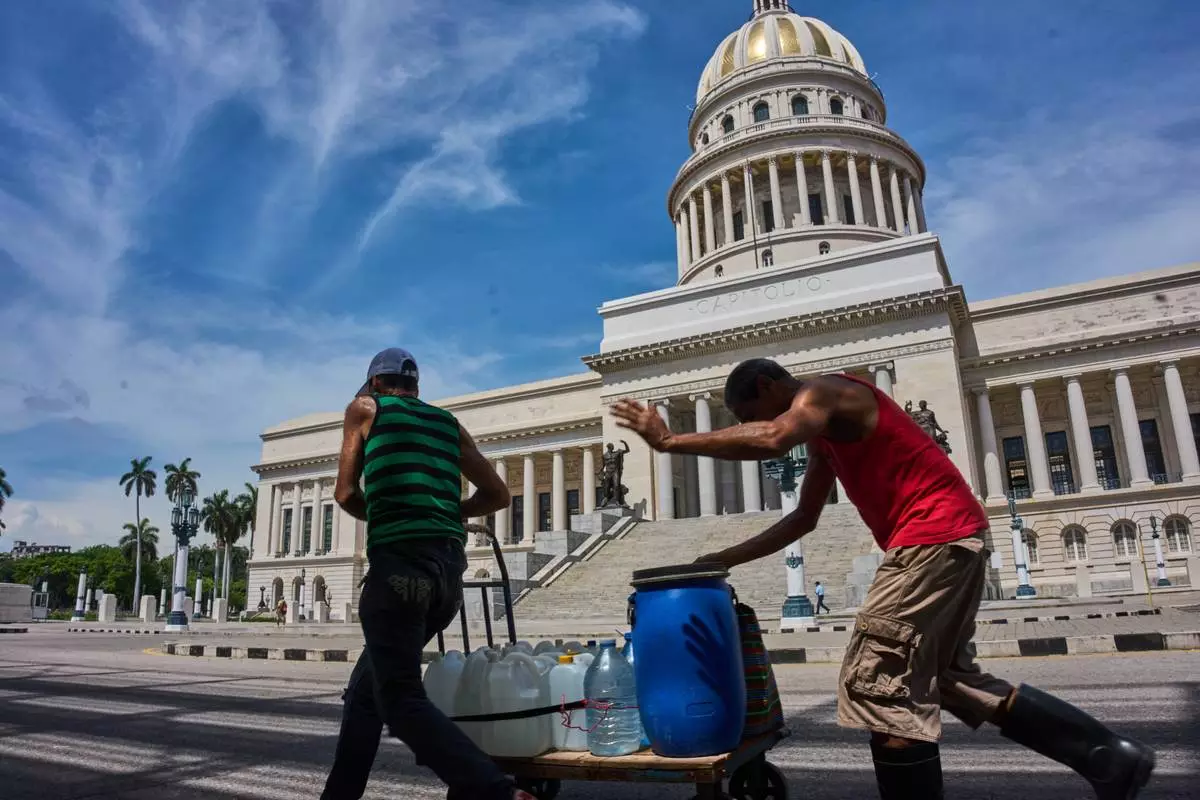
People carry containers of water past the Capitol in Havana, Wednesday, May 27, 2026. (AP Photo/Ramon Espinosa)
People carry containers of water past the Capitol in Havana, Wednesday, May 27, 2026. (AP Photo/Ramon Espinosa)

People react as a neighbor places a motor in a container of water by the entrance of their building in Havana, Wednesday, May 27, 2026. (AP Photo/Ramon Espinosa)
People react as a neighbor places a motor in a container of water by the entrance of their building in Havana, Wednesday, May 27, 2026. (AP Photo/Ramon Espinosa)

People transport containers of water in Havana, Wednesday, May 27, 2026. (AP Photo/Ramon Espinosa)
People transport containers of water in Havana, Wednesday, May 27, 2026. (AP Photo/Ramon Espinosa)

A man transports containers of water with his children in Havana, Thursday, May 28, 2026. (AP Photo/Ramon Espinosa)
A man transports containers of water with his children in Havana, Thursday, May 28, 2026. (AP Photo/Ramon Espinosa)

A man fills water jugs from a tanker truck in Havana, Thursday, May 28, 2026. (AP Photo/Ramon Espinosa)
A man fills water jugs from a tanker truck in Havana, Thursday, May 28, 2026. (AP Photo/Ramon Espinosa)
MOSCOW (AP) — Members of a Russia-led economic alliance on Friday warned member Armenia that it could face suspension over its aspirations to join the European Union as tensions continued to simmer between the Kremlin and the Armenian leadership.

Russian President Vladimir Putin and leaders of Belarus, Kazakhstan and Kyrgyzstan, who attended a summit of the Eurasian Economic Union in Kazakhstan's capital of Astana, noted that Armenia's bid for the EU membership creates “significant risks” for their economic security. They ordered their officials to prepare a report in December on “possible consequences of suspending” Armenia's membership in the grouping.

The four leaders also urged Armenia to hold a referendum to offer voters a choice between seeking a membership in the EU or staying in the Eurasian Economic Union, a single market created in 2015 to allow the free movement of goods, capitals and labor. Armenia's Prime Ministe r Nikol Pashinyan has previously rejected the idea of holding the vote.

The warning comes just over a week before Armenia's parliamentary elections on June 7, in which Pashinyan, in power since 2018, seeks to retain his job.

Armenia, which signed a U.S.-brokered agreement last year ending decades of hostilities with Azerbaijan, has increasingly sought to forge closer ties with the U.S. and the EU. Pashinyan has declared an intention to join the EU and his government has suspended the country’s participation in a Moscow-dominated security pact, the Collective Security Treaty Organization.

Armenia's westward shift has angered the Kremlin. Putin has warned Pashinyan that his country would suffer massive economic damage if it pursues its EU aspirations. In recent days, Moscow warned Armenia that it could stop supplies of cheap natural gas and banned imports of Armenian brandy, fruit and vegetables, part of the Kremlin's efforts to sway the outcome of Armenia's election.

Putin has said Armenia can't be a member of both the EU and the Eurasian Economic Union. He warned Friday that Armenia could lose up to 14% of its Gross Domestic Product if it opts out of the Moscow-dominated bloc.

Pashinyan has countered Putin's warnings by arguing that for now Armenia can combine its membership in the Eurasian Economic Union with developing cooperation with the EU.

Speaking Friday, Putin also compared the current arguments with Armenia to the developments in Ukraine, whose bid to sign an association deal with the EU led to the ouster of its Moscow-friendly president, Russia's annexation of Ukraine's Crimean Peninsula in 2014 and Moscow's support for a separatist insurgency in eastern Ukraine that erupted the same year. In February 2022, Putin sent troops into Ukraine, staring the largest military conflict in Europe since World War II.

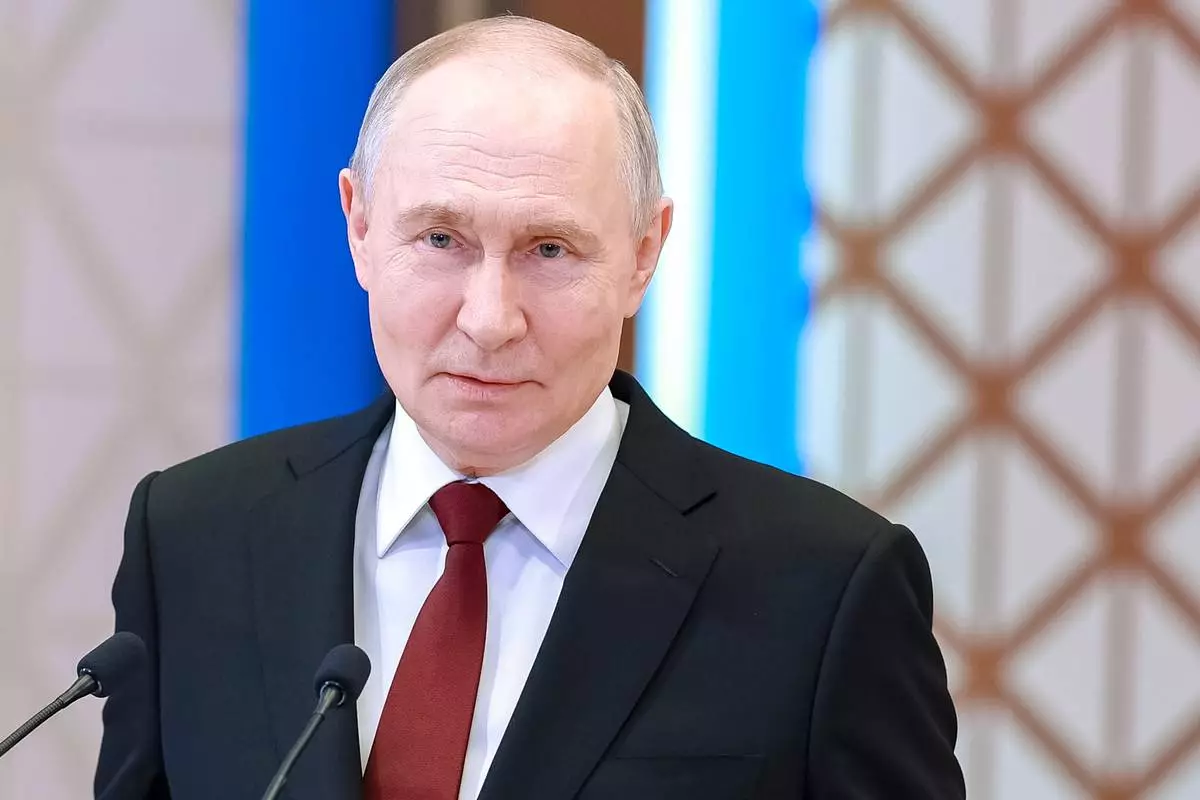
Russian President Vladimir Putin holds a news conference after the Supreme Eurasian Economic Union summit in Astana, Kazakhstan, Friday, May 29, 2026. (Alexander Shcherbak/Sputnik, Kremlin Pool Photo via AP)

Russian President Vladimir Putin holds a news conference after the Supreme Eurasian Economic Union summit in Astana, Kazakhstan, Friday, May 29, 2026. (Alexander Shcherbak/Sputnik, Kremlin Pool Photo via AP)

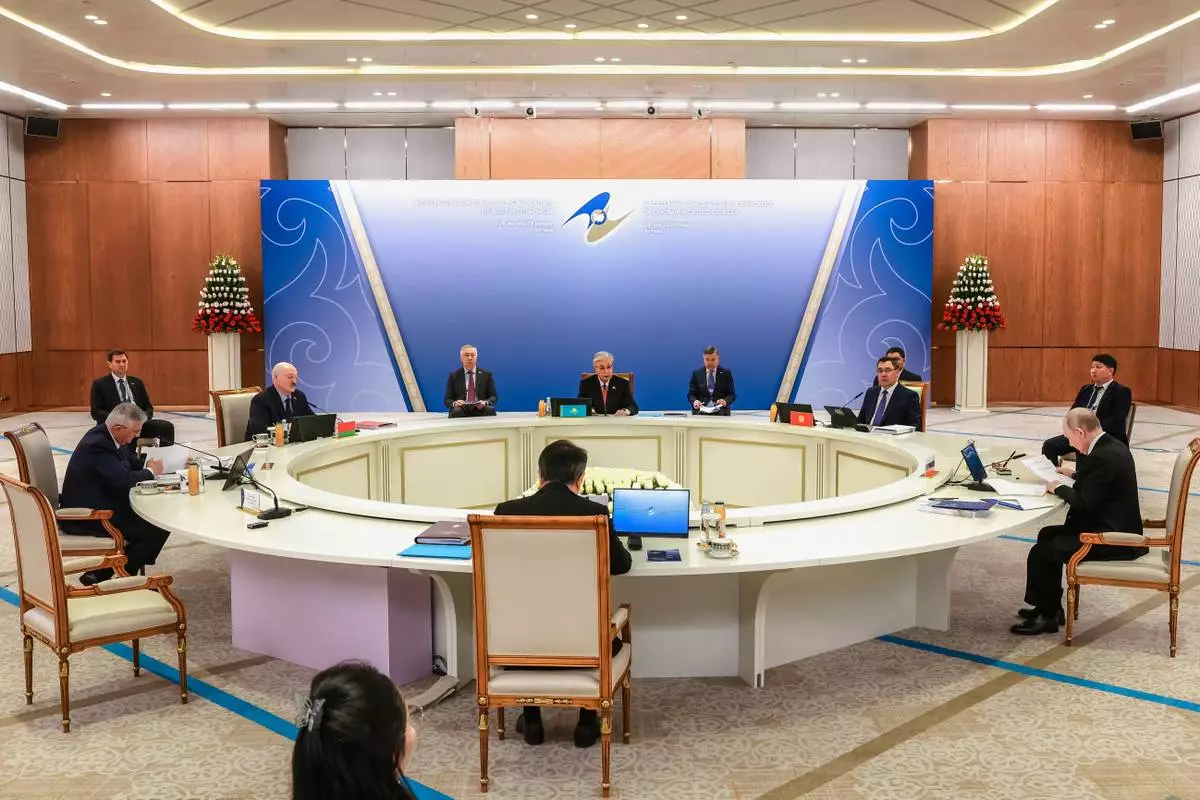
A view of the session of the Supreme Eurasian Economic Council summit at the Independence Palace in Astana, Kazakhstan, Friday, May 29, 2026. (Alexander Kazakov, Sputnik, Kremlin Pool Photo via AP)

A view of the session of the Supreme Eurasian Economic Council summit at the Independence Palace in Astana, Kazakhstan, Friday, May 29, 2026. (Alexander Kazakov, Sputnik, Kremlin Pool Photo via AP)

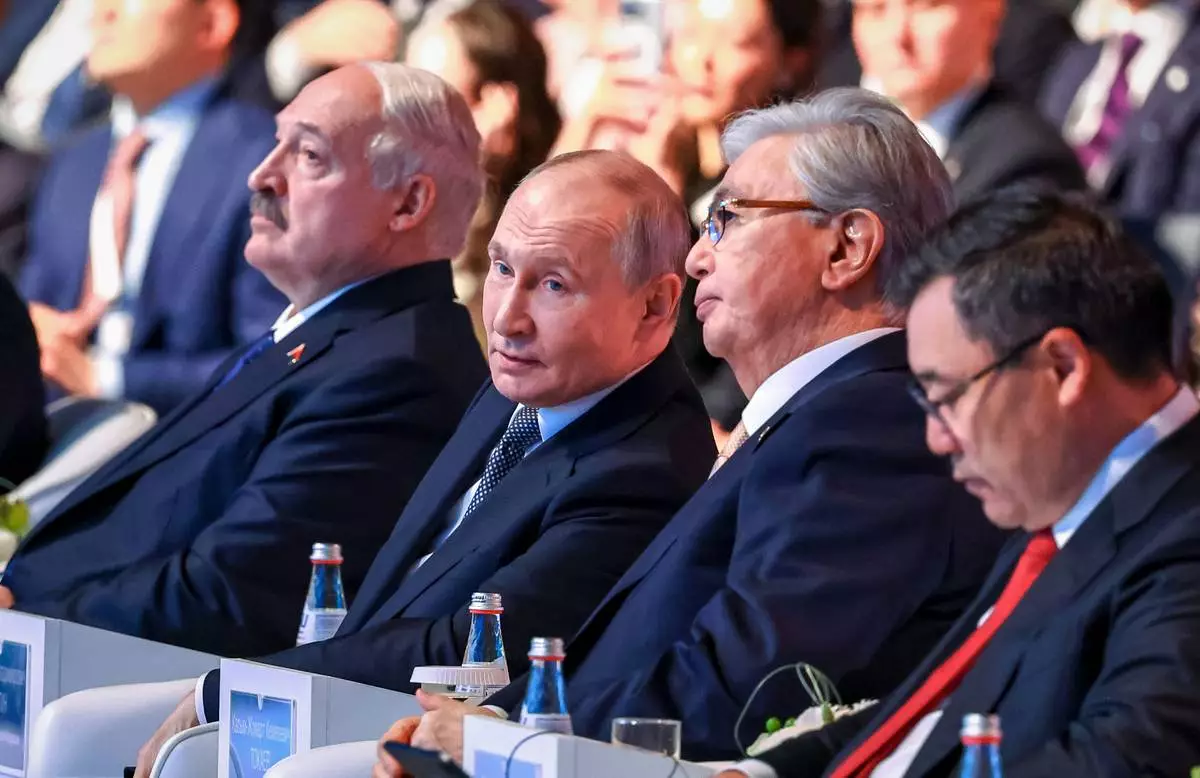
Front from left: Belarusian President Alexander Lukashenko, Russian President Vladimir Putin, Kazakhstan's President Kassym-Jomart Tokayev, and Kyrgyztan's President Sadyr Zhaparov attend a plenary session of the Eurasian Economic Forum in Astana, Kazakhstan, Thursday, May 28, 2026. (Alexander Kazakov/Sputnik, Kremlin Pool Photo via AP)

Front from left: Belarusian President Alexander Lukashenko, Russian President Vladimir Putin, Kazakhstan's President Kassym-Jomart Tokayev, and Kyrgyztan's President Sadyr Zhaparov attend a plenary session of the Eurasian Economic Forum in Astana, Kazakhstan, Thursday, May 28, 2026. (Alexander Kazakov/Sputnik, Kremlin Pool Photo via AP)

Recommended Articles