HAD opens temporary heat shelters
The Home Affairs Department will continue to open 19 community halls/community centres as temporary heat shelters today (May 29).
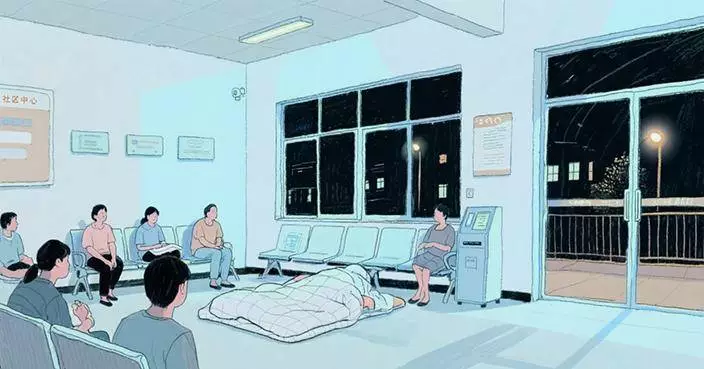
The temporary heat shelters will remain open for people to take refuge from the heat when the Very Hot Weather Warning is in force. From 10.30pm to 8am the next day, the temporary heat shelters will also provide bedding and a sleeping place for people in need. The shelters are manned by duty attendants.
For further information, please call the department's hotline before midnight on 2572 8427.
The heat shelters are located at:
Hong Kong Island:
---------------------
Central and Western -
Sai Ying Pun Community Complex Community Hall
3/F, Sai Ying Pun Community Complex
2 High Street, Sai Ying Pun
Eastern -
Causeway Bay Community Centre
3/F, 7 Fook Yum Road, Causeway Bay
Southern -
Lei Tung Community Hall
Lei Tung Estate, Ap Lei Chau
Wan Chai -
Wan Chai Activities Centre
LG/F, Wan Chai Market, 258 Queen's Road East, Wan Chai
Kowloon:
------------------
Kowloon City -
Hung Hom Community Hall
1/F, Kowloon City Government Offices
42 Bailey Street, Hung Hom
Kwun Tong -
Lam Tin (West) Estate Community Centre
71 Kai Tin Road, Lam Tin
Sham Shui Po -
Shek Kip Mei Community Hall
G/F, Block 42, Shek Kip Mei Estate
Wong Tai Sin -
Tsz Wan Shan (South) Estate Community Centre
45 Wan Wah Street, Tsz Wan Shan
Yau Tsim Mong -
Henry G Leong Yaumatei Community Centre
60 Public Square Street, Yau Ma Tei
New Territories:
--------------------------
Islands -
Tung Chung Community Hall
G/F, Tung Chung Municipal Services Building, 39 Man Tung Road, Tung Chung
Kwai Tsing -
Lai King Community Hall
205 Lai King Hill Road, Kwai Chung
North -
Cheung Wah Community Hall
Cheung Wah Estate, Fanling
Sai Kung -
Hang Hau Community Hall
G/F, Sai Kung Tseung Kwan O Government Complex, 38 Pui Shing Road, Hang Hau, Tseung Kwan O
Sha Tin -
Lung Hang Estate Community Centre
Lung Hang Estate, Sha Tin
Tai Po -
Tai Po Community Centre
2 Heung Sze Wui Street, Tai Po
Tsuen Wan -
Lei Muk Shue Community Hall
G/F, Hong Shue House, Lei Muk Shue Estate, Tsuen Wan
Tuen Mun -
Butterfly Bay Community Centre
Butterfly Estate (near Tip Sum House), Tuen Mun
Yuen Long -
Long Ping Community Hall
Long Ping Estate, Yuen Long
Yuen Long -
Tin Yiu Community Centre
Tin Yiu Estate, Tin Shui Wai
In addition to the above heat shelters, a number of community halls/community centres can also be used for taking refuge from the heat during their operating hours. For their address details, please browse the following document: www.had.gov.hk/file_manager/en/documents/public_services/emergency_services/List_CH_CC_Day_E.pdf.
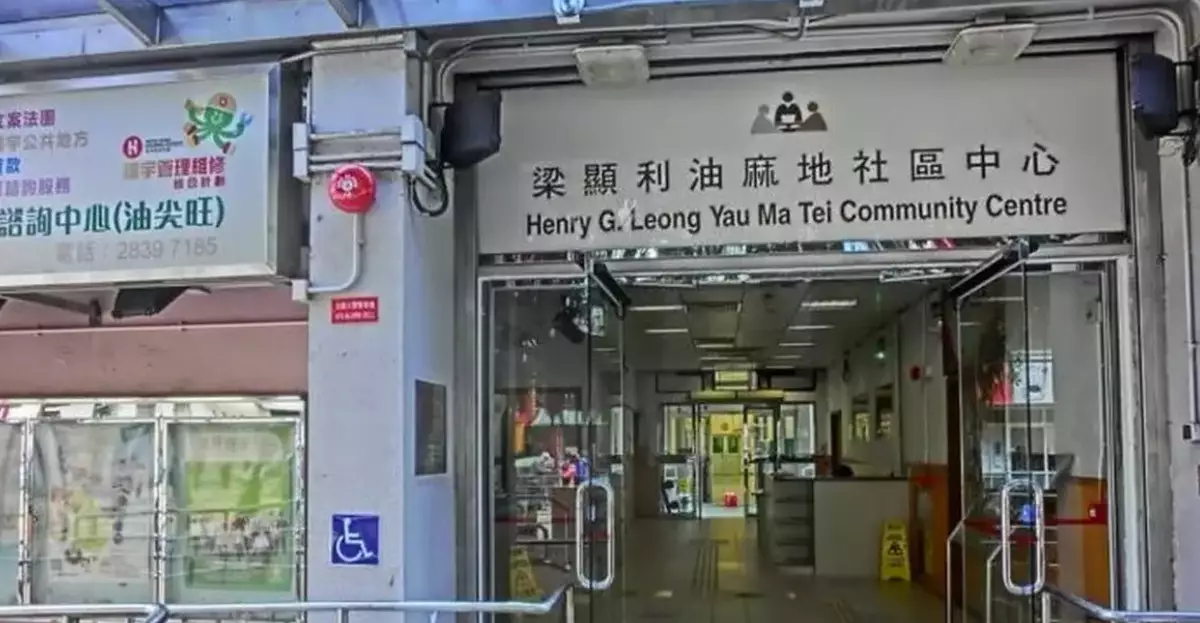
Henry G Leong Yaumatei Community Centre, Photo source: reference image
Update on mosquito-borne diseases, dengue fever and chikungunya fever
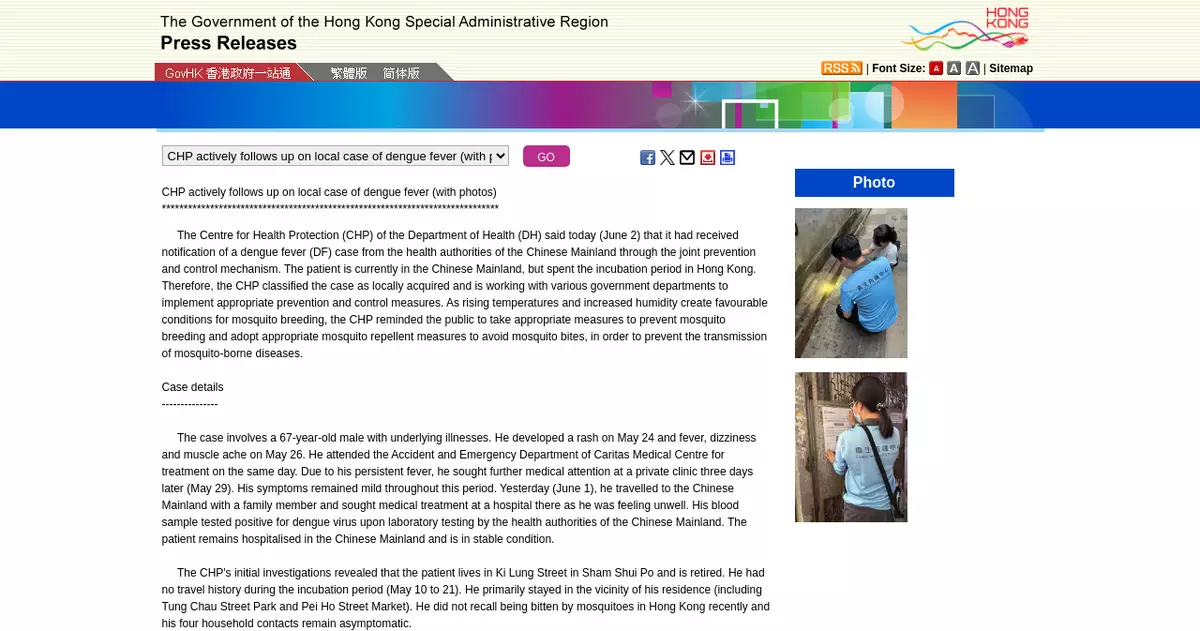
The Centre for Health Protection (CHP) of the Department of Health today (June 5) announced the latest situation regarding dengue fever (DF) and chikungunya fever (CF). As temperatures rise and humidity increases, creating favourable conditions for mosquito breeding, members of the public are reminded to take appropriate measures to prevent mosquito bites and mosquito breeding, both in Hong Kong and when travelling to areas affected by mosquito-borne diseases, in order to prevent mosquito-borne diseases.
Dengue fever
----------------
From May 29 to yesterday (June 4), the CHP recorded two imported DF cases, including one local DF case announced earlier, and an imported case in which the patient had travelled to Indonesia during the incubation period.
Regarding the local DF case announced earlier, as of noon today, the CHP had assessed over 1 600 residents through a health consultation booth at the Neighbour Care · Buildings Support Center (address: 165 Tai Nan Street, Sham Shui Po), an enquiry hotline, and questionnaire surveys. So far, the CHP has not received any notification of suspected cases epidemiologically linked to that local case. The CHP continues to urge individuals in the vicinity of Ki Lung Street in Sham Shui Po to call the enquiry hotline (tel: 2125 2373, operating from 9am to 6pm) if relevant symptoms develop, and seek medical attention if needed. The CHP and relevant departments’ investigations and follow-up are still ongoing.
Hong Kong has recorded 22 DF cases so far this year, comprising 20 imported cases and two local cases. A total of 59 DF cases were recorded last year (2025), all of which were imported cases. In 2024, 161 DF cases were recorded, comprising 156 imported cases and five local cases.
According to the World Health Organization (WHO), the global incidence of DF has markedly increased over the past two decades, posing a substantial public health challenge. In 2024, the WHO recorded over 14 million cases, which was a record number. From January to July 2025, over 4 million cases and over 3 000 DF-related deaths were reported in 97 countries/territories.
DF is prevalent in many neighbouring tourist destinations. In 2025, Indonesia, India and Vietnam each recorded over 120 000 cases; Malaysia and Thailand each recorded over 50 000 cases; and Singapore recorded over 4 000 cases. Meanwhile, as of May 10, the Guangdong Provincial Center for Disease Control and Prevention had recorded 97 cases in Guangdong Province this year, including eight locally infected cases. Guangdong Province recorded over 3 500 locally infected cases in 2025.
Detailed information on the latest DF situation in Hong Kong, as well as neighbouring and overseas countries and areas, has been uploaded to the CHP'swebsite.
Chikungunya fever
-----------------------
From May 29 to yesterday, no new cases of CF had been recorded. Hong Kong has recorded two confirmed CF cases so far this year, both of which were imported cases. Hong Kong recorded a total of 82 confirmed CF cases last year. Among them, 11 were local cases and the rest were imported cases.
Last year, a total of 502 264 CF cases and 186 CF-related deaths were reported in 41 countries/territories. Cases have been reported in the Americas, Africa, Asia and Europe. Meanwhile, as of May 10, the Guangdong Provincial Center for Disease Control and Prevention had recorded four cases in Guangdong Province this year, including one locally infected case.
Preventive measures to be taken by the public
----------------------------------------------------
According to the Food and Environmental Hygiene Department (FEHD), as compared with last year, the temperature began to climb earlier this year and the rainfall in April and May increased substantially, creating favourable conditions for mosquito growth and breeding. As a result, the rise in gravidtrap indexes occurred earlier this year. Depending on factors like rainfall, the indexes may rise further but the overall trend of gravidtrap indexes this year is similar to those of previous years.
Therefore, the CHP reminds members of the public to maintain good environmental hygiene, and to take appropriate measures to prevent mosquito bites and mosquito breeding, both in Hong Kong and when travelling to areas affected by mosquito-borne diseases, in order to prevent mosquito-borne diseases. Mosquito-borne diseases such as DF and CF are endemic in various countries worldwide. The risk of importation persists. Members of the public should check the situation at their destinations before travelling abroad, especially when travelling to Southeast Asian countries. Additionally, whether travelling or not, members of the public should use DEET-containing insect repellents or other effective active ingredients properly to prevent mosquito bites, but the following precautions should be taken when using them:
 read the label instructions carefully first;
apply right before entering an area with a risk of mosquito bites;
apply on exposed skin and clothing;
use DEET of up to 30 per cent for pregnant women and up to 10 per cent for children (for children who travel to countries or areas where mosquito-borne diseases are endemic or epidemic, and where exposure is likely, those aged 2 months or above can use DEET-containing insect repellents with a DEET concentration of up to 30 per cent);
apply sunscreen first, then insect repellent;
reapply only when needed and follow the instructions; and
in addition to DEET, there are other insect repellents available on the market containing different active ingredients, such as IR3535 and picaridin. When using any insect repellent, the public should follow the usage instructions and precautions on the product label.
read the label instructions carefully first;
apply right before entering an area with a risk of mosquito bites;
apply on exposed skin and clothing;
use DEET of up to 30 per cent for pregnant women and up to 10 per cent for children (for children who travel to countries or areas where mosquito-borne diseases are endemic or epidemic, and where exposure is likely, those aged 2 months or above can use DEET-containing insect repellents with a DEET concentration of up to 30 per cent);
apply sunscreen first, then insect repellent;
reapply only when needed and follow the instructions; and
in addition to DEET, there are other insect repellents available on the market containing different active ingredients, such as IR3535 and picaridin. When using any insect repellent, the public should follow the usage instructions and precautions on the product label.
The FEHD also appeals to members of the public to continue to stay alert and work together to carry out mosquito prevention and control measures early, including inspecting their homes and surroundings to remove potential breeding grounds, changing water in vases and scrubbing their inner surfaces, removing water in saucers under potted plants at least once a week, and properly disposing of containers such as empty cans and lunch boxes. The FEHD also advises members of the public and property management agencies to keep drains free of blockage and level all defective ground surfaces to prevent the accumulation of water. They should also scrub all drains and surface sewers with an alkaline detergent at least once a week to remove any mosquito eggs.
The public should call 1823 in case of mosquito problems, and may visit the following pages for more information: the CF page of theCHPand theTravel Health Service, the latestTravel Health News,tips for using insect repellents, and the CHPFacebook Page,Instagram AccountandYouTube Channel, and also theMosquito Prevention and Control dedicated pageof the FEHD.
Source: AI-found images