Skip to Content Facebook Feature Image

Despite scrutiny, special education money flows to for-profit residential treatment centers

News

Despite scrutiny, special education money flows to for-profit residential treatment centers
News

News

Despite scrutiny, special education money flows to for-profit residential treatment centers

2026-05-29 21:18 Last Updated At:21:20

SAN FRANCISCO (AP) — Across the country, many for-profit residential facilities in the so-called troubled teen industry that claim to treat severe mental and behavioral health issues in children and teens are deftly tapping into taxpayer money meant for students with disabilities.

Even in the face of increasing scrutiny over the safety of such private institutions, this money continues to flow given the fractured bureaucracy of the special education system, an Associated Press investigation finds.

More Images
AP Illustration / Marshall Ritzel

AP Illustration / Marshall Ritzel

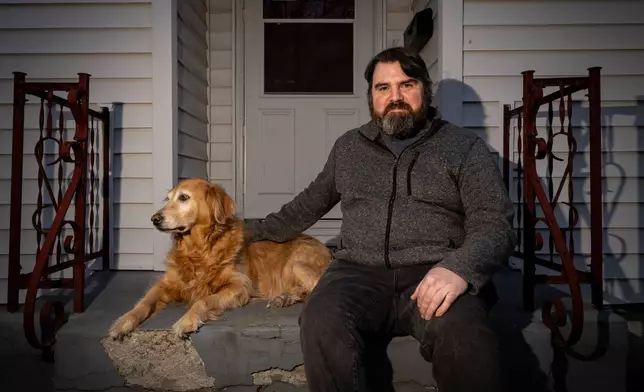
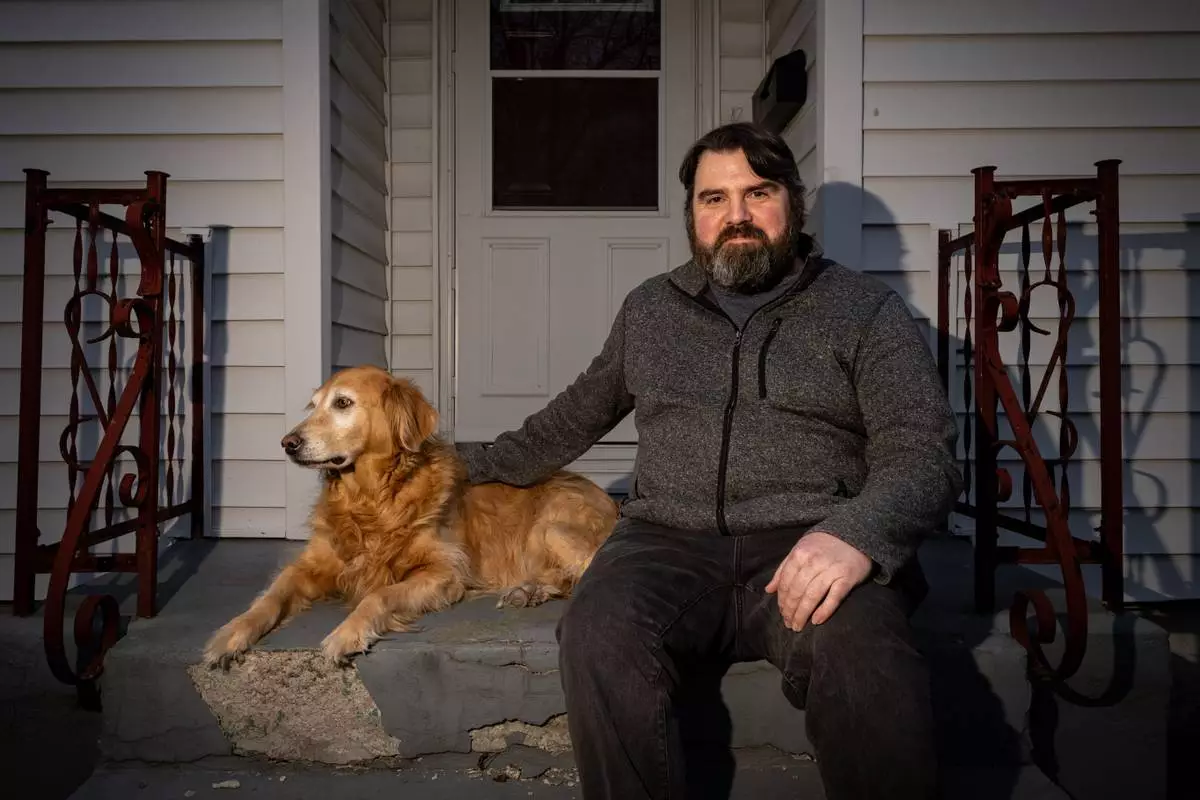
Dustin Wood, a former English teacher at the Calo Programs Residential Treatment Center, poses with his dog Moana, a former Calo therapy dog, on Feb 25, 2026, outside his home in Eldon, Mo. (AP Photo/Austin Johnson)
Dustin Wood, a former English teacher at the Calo Programs Residential Treatment Center, poses with his dog Moana, a former Calo therapy dog, on Feb 25, 2026, outside his home in Eldon, Mo. (AP Photo/Austin Johnson)

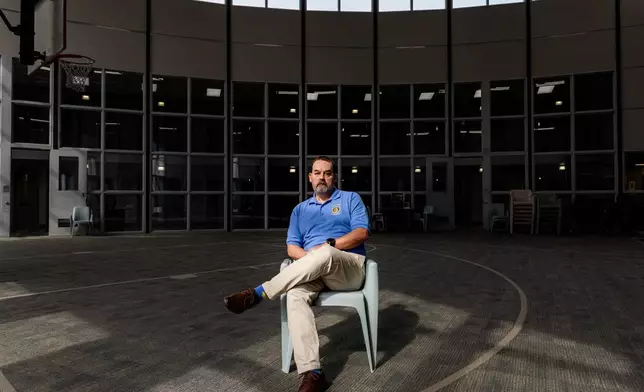
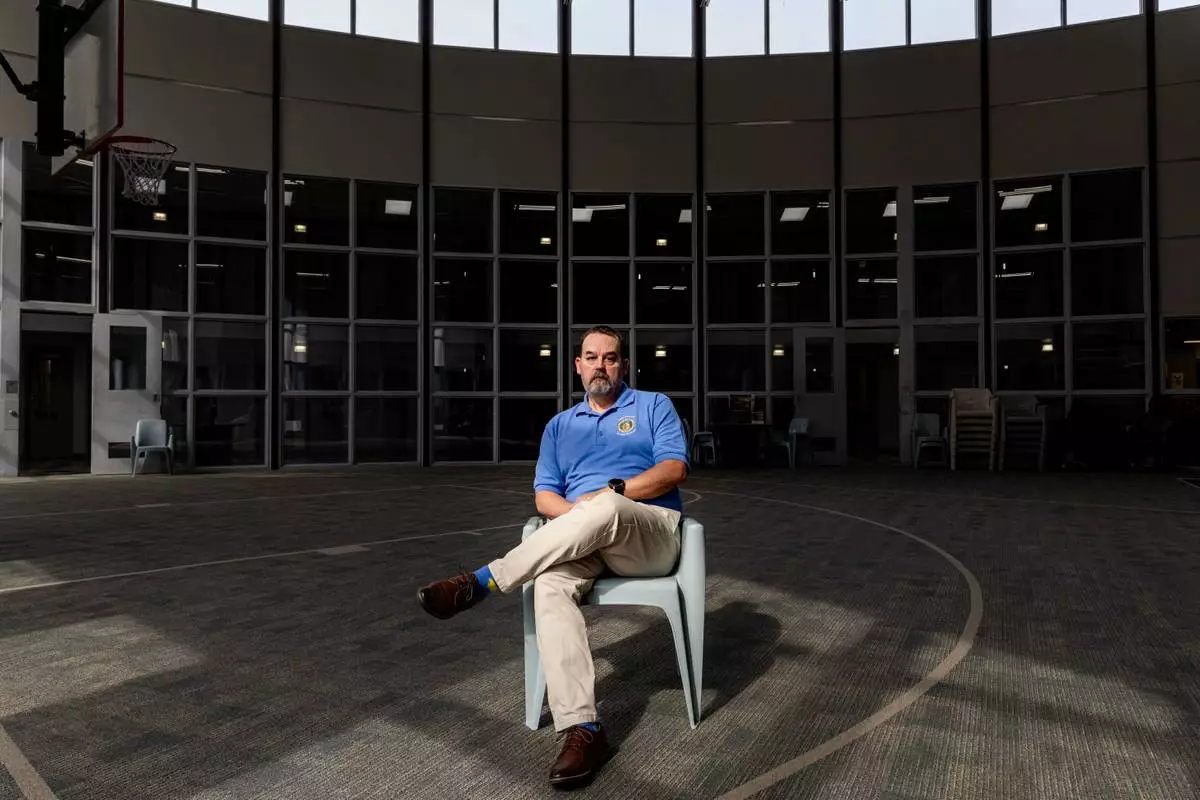
Stacy Roberts, superintendent of the Mary Dickerson Juvenile Justice Center, poses in the commons area, Feb. 24, 2026, at the Juvenile Justice Center in Camdenton, Mo. (AP Photo/Austin Johnson)

Stacy Roberts, superintendent of the Mary Dickerson Juvenile Justice Center, poses in the commons area, Feb. 24, 2026, at the Juvenile Justice Center in Camdenton, Mo. (AP Photo/Austin Johnson)

Sheriff Chris Edgar responds to questions regarding the Calo Programs Residential Treatment Center on Feb. 24, 2026, in his office at the Camden County Sheriffs Department in Camdenton Mo. (AP Photo/Austin Johnson)
Sheriff Chris Edgar responds to questions regarding the Calo Programs Residential Treatment Center on Feb. 24, 2026, in his office at the Camden County Sheriffs Department in Camdenton Mo. (AP Photo/Austin Johnson)

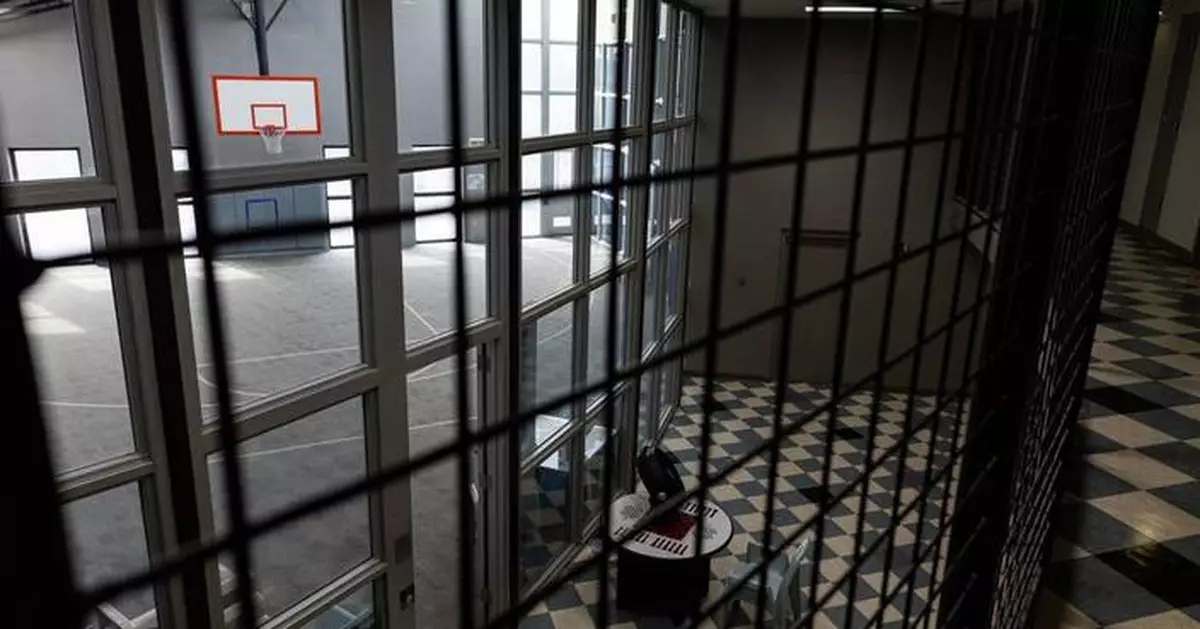
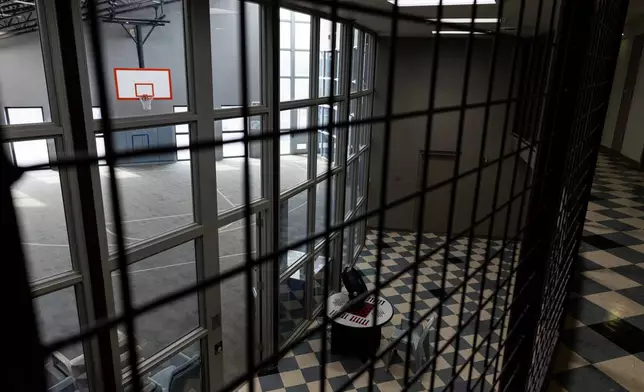
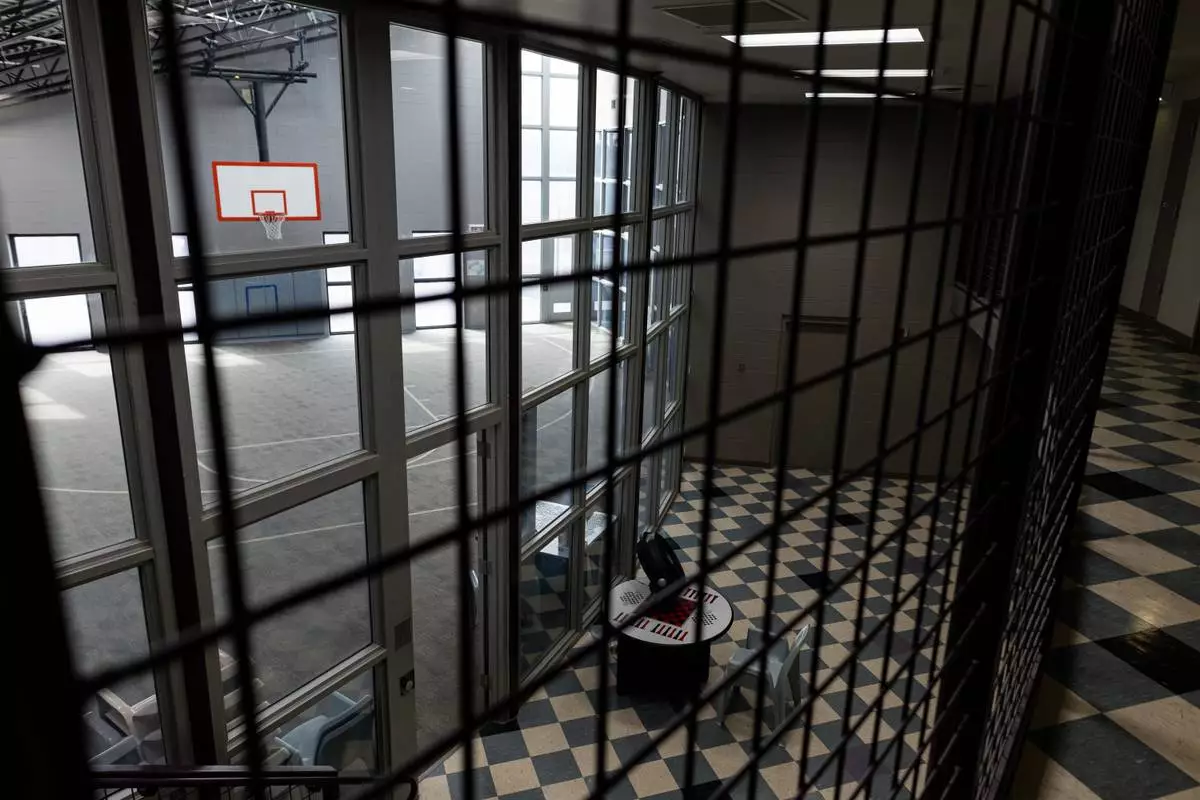
The commons area of Mary Dickerson Juvenile Justice Center stands outside rows of cells, Feb. 24, 2026, in Camdenton, Mo. (AP Photo/Austin Johnson)

The commons area of Mary Dickerson Juvenile Justice Center stands outside rows of cells, Feb. 24, 2026, in Camdenton, Mo. (AP Photo/Austin Johnson)

The playbook to profits includes operating on stand-alone contracts with individual school districts and drawing out-of-state kids — both of which effectively dilute any regulatory oversight. Residential centers are also capitalizing on a catch-all disability category, experts said, and relying on a shadow network of educational consultants who help get them business.

Meg Appelgate, CEO of Unsilenced, a nonprofit that supports former residential attendees, said the problem is that there are so few standard rules attached, from how centers get approved to provide special education services, to the lack of transparency when a student from any one district alleges abuse.

“It’s a huge issue,” Appelgate said. “It’s simply got too many holes in it and we have to shut it down.”

The Individuals with Disabilities Education Act is the federal law that allows special education money to pay for residential placements. Services are determined in the child’s Individualized Education Program plan, commonly known as an IEP, which is funded by a mix of local school district, state and federal dollars.

When AP sought information from all 50 state education departments, officials said it is the sole responsibility of each local school district to ensure special education money is used properly. Most agencies said they don’t keep any tabs on private residential placements, while others like Colorado and Maine told the AP they do not track students if they are sent out of state.

“(C)hildren enter and exit these institutions frequently,” said Chloe Teboe, a spokesperson for the Maine Department of Education.

A study commissioned by California legislators in 2022 found just half of all states have a certification process and few require on-site visits. Most state policies focused on educational concerns and didn’t include things like building codes or staff background checks.

That creates a gap in oversight when many residential programs lean heavily on out-of-state students rather than those close to home.

Calo Programs in Lake Ozarks, Missouri, which said it has treated children from 30 states as one of the largest centers of its kind, does significant IEP business with both Illinois and California. In 2025, special education money from those two states paid for at least 24 kids to go to Calo.

In contrast, the Missouri Department of Elementary and Secondary Education said only two in-state students have been placed at Calo in the past decade.

Calo said in a statement that its specialized program draws kids from all over the country because its program works for IEP students, and that the company welcomes rigorous outside oversight that is built into its contracts with school districts.

“Calo works with a high-volume of school districts across the country, and those districts can attest to the quality of care, instruction, and academic support we provide to all students,” Calo said in a statement.

IEP money has become a fraught loophole in California, ultimately leaving hundreds of vulnerable kids at risk, said Jennifer Rodriguez, executive director of the San Francisco-based Youth Law Center.

The advocacy group led the push last year to ban adoption subsidies from paying out-of-state facilities. The state had already prohibited foster care money from authorizing those same kinds of placements. Yet the California Department of Education said there are nearly 300 California students who have been out of state during the current school year.

“Education systems are often under a lot of pressure to meet specialized needs,” Rodriguez said. “They have completely different legal mandates, but you know the risk is the same ... they’re exposing youth to the same harm — no matter who is funding them.”

California state Sen. Shannon Grove said communication was “broken” after the child welfare system stopped sending foster kids out of state, so she championed a new law last year requiring education officials to interview students in person and hold quarterly calls with them on an unmonitored phone line.

“We don’t even have a face-to-face interview with these kids who could be there for months, even years. That’s completely unacceptable,” Grove said.

Special education funding for residential placement often relies on the catch-all “emotional disturbance” disability category.

Aaron Rachelle Campbell, a special education professor at Lincoln University of Missouri who is studying this trend, said residential centers are overusing the label, which is so broad that it’s actually meaningless. It can cover everything from serious depression to mouthing off in class. The special education process has no role in determining any possible medical diagnoses.

“We don’t always see signs of it at the level that we would say is a (special education) diagnosis,” Campbell said.

In her efforts to rein in this phenomenon, Oregon state Sen. Sara Gelser Blouin helped create the nation’s first registry for private educational consultants who are often hired to help parents get IEP money for placement.

Her 2021 law, which banned them from being paid by the companies for referrals, was fiercely opposed by the industry, she said, including Calo’s parent company, Embark Behavioral Health, which operates numerous facilities.

“Their argument was that without the education consultants, they would go out of business,” Gelser Blouin said.

Gelser Blouin also said she independently contacted the Embark admissions hotline to inquire about their services that year to try to understand their position and found she was immediately referred to a list of educational consultants.

“So you go to the consultant and $10,000 later, they make a recommendation to you, which likely will include one of the facilities that is with Embark or many of those facilities,” Gelser Blouin said. “It’s this whole big racket.”

Calo denied having any financial relationship with educational consultants.

“In all cases, our relationship with referral partners is focused solely on supporting the families they refer to our care,” the company said in a statement.

Imy Wax, an educational consultant based in the Chicago area, said she and other reputable professionals affiliated with the Independent Educational Consultants Association would never accept money from companies for referrals.

She said the current rise in the number of families seeking IEP money for residential programs has coincided with significant price increases for such placements.

“What I’m seeing is that parents are financially frightened,” Wax said. “I see much more leaning into the school system than I did in the past.”

AP Illustration / Marshall Ritzel
AP Illustration / Marshall Ritzel

Dustin Wood, a former English teacher at the Calo Programs Residential Treatment Center, poses with his dog Moana, a former Calo therapy dog, on Feb 25, 2026, outside his home in Eldon, Mo. (AP Photo/Austin Johnson)
Dustin Wood, a former English teacher at the Calo Programs Residential Treatment Center, poses with his dog Moana, a former Calo therapy dog, on Feb 25, 2026, outside his home in Eldon, Mo. (AP Photo/Austin Johnson)

Stacy Roberts, superintendent of the Mary Dickerson Juvenile Justice Center, poses in the commons area, Feb. 24, 2026, at the Juvenile Justice Center in Camdenton, Mo. (AP Photo/Austin Johnson)

Stacy Roberts, superintendent of the Mary Dickerson Juvenile Justice Center, poses in the commons area, Feb. 24, 2026, at the Juvenile Justice Center in Camdenton, Mo. (AP Photo/Austin Johnson)

Sheriff Chris Edgar responds to questions regarding the Calo Programs Residential Treatment Center on Feb. 24, 2026, in his office at the Camden County Sheriffs Department in Camdenton Mo. (AP Photo/Austin Johnson)
Sheriff Chris Edgar responds to questions regarding the Calo Programs Residential Treatment Center on Feb. 24, 2026, in his office at the Camden County Sheriffs Department in Camdenton Mo. (AP Photo/Austin Johnson)

The commons area of Mary Dickerson Juvenile Justice Center stands outside rows of cells, Feb. 24, 2026, in Camdenton, Mo. (AP Photo/Austin Johnson)

The commons area of Mary Dickerson Juvenile Justice Center stands outside rows of cells, Feb. 24, 2026, in Camdenton, Mo. (AP Photo/Austin Johnson)

WASHINGTON (AP) — Former Attorney General Pam Bondi is testifying before House lawmakers investigating Jeffrey Epstein's sexual abuse cases, a long-awaited appearance that brings fresh scrutiny of the Trump administration's botched release of the Epstein case files.

Bondi, who arrived Friday morning for her interview, was defiant in previous public testimony when she was confronted by lawmakers about the Epstein investigation. It's unclear whether she'll bring the same approach Friday, now that she is no longer in charge of the Justice Department. The session will be held behind closed doors.

The transcribed Bondi interview will give lawmakers a chance to dig for information on the Trump administration's handling of the Epstein files and other related matters, including the prison sentence of Epstein's former girlfriend and confidant, Ghislaine Maxwell.

“I think she absolutely could clear up many missing pieces if she wanted to,” said Rep. Yassamin Ansari, an Arizona Democrat on the House Oversight Committee. “Now it’s a question of whether or not she is willing to be transparent.”

Epstein killed himself in a New York City jail cell in 2019 while awaiting trial. Maxwell, a British socialite, was convicted in 2021 of luring teenage girls to be sexually abused by Epstein but has insisted she’s innocent, arguing she never should have been prosecuted. The Justice Department moved Maxwell from a federal prison in Florida to a prison camp in Texas last August.

Lawmakers are trying to find out what decisions prosecutors have made about investigating Epstein associates, how the Justice Department handled the congressional mandate to release the Epstein case files and whether President Donald Trump was involved in the process.

Bondi, who revealed this week that she is being treated for thyroid cancer, has stayed within the Republican president's orbit even after being ousted from her job in early April.

Trump appointed Bondi to a White House panel on artificial intelligence this week, and she will be accompanied Friday by Justice Department officials, including Harmeet Dhillon, who heads the department's Civil Rights Division, acting as her counsel.

Democrats say that arrangement is a conflict of interest.

A spokesperson for the Justice Department said the officials were there to help lawmakers understand the department's process for releasing the case files.

Bondi has been central to the political firestorm over Epstein, initially raising expectations for the full release of what's known as the Epstein files, only to later backtrack. That reversal prompted Congress to step in and pass a law requiring the release.

Bondi faced even more backlash when the Justice Department's release of the files was delayed and then included personal information of several potential victims. She has insisted in congressional hearings that she was trying to follow the law.

The House Oversight Committee, meanwhile, has been conducting a wide-ranging investigation into Epstein that spans multiple presidential administrations.

Bondi was subpoenaed by the committee in March in a bipartisan vote, but she tried to head off that demand by holding a closed-door meeting with lawmakers that month. The maneuver only added to the enmity between Bondi and Democrats on the committee.

Bondi's departure from the Justice Department also raised doubts about the enforcement of the congressional subpoena. After the committee's Democrats maneuvered to press for a civil contempt of Congress resolution against Bondi, she agreed to sit for a transcribed interview rather than a sworn deposition.

Democrats on the Oversight panel have criticized that arrangement, saying that it allows Bondi to decline to answer questions. They have also pressed the Republican chair of the committee, Rep. James Comer of Kentucky, to record the interview on video.

“A failure to film and release a video of Ms. Bondi’s testimony would present a grave injustice to the American people and survivors of Epstein’s crimes,” the committee's top Democrat, Rep. Robert Garcia of California, wrote to Comer.

Comer has said he is allowing Bondi to sit for a transcribed interview rather than a deposition as an incentive to cooperate. Previously, he had enforced a subpoena on former President Bill Clinton and former Secretary of State Hillary Clinton after they resisted the demand. Both of their depositions were video-recorded.

Still, Comer said Bondi could face prosecution if she lies to Congress. He said the committee would also release a transcript of the interview.

“Hopefully that will be good enough,” he said.

Follow the AP's coverage of the Jeffrey Epstein case at https://apnews.com/hub/jeffrey-epstein.

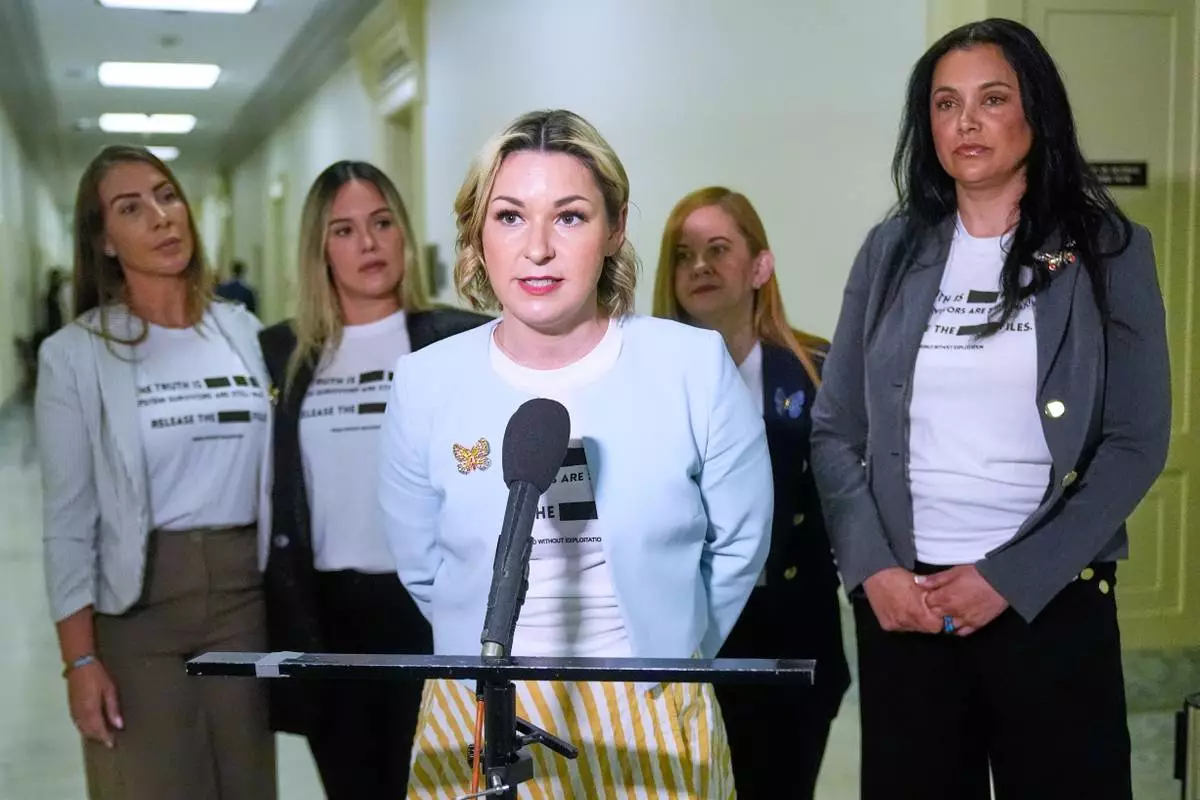
Victims of Jeffrey Epstein's abuse, from left, Marina Lacerda, Andrea Sterling, Dani Bensky, speaking, Liz Stein and Sharlene Rochard, before former Attorney General Pam Bondi arrives for her deposition at the Rayburn House Office Building on Capitol Hill, Friday, May 29, 2026, in Washington. (AP Photo/Manuel Ceneta)

Victims of Jeffrey Epstein's abuse, from left, Marina Lacerda, Andrea Sterling, Dani Bensky, speaking, Liz Stein and Sharlene Rochard, before former Attorney General Pam Bondi arrives for her deposition at the Rayburn House Office Building on Capitol Hill, Friday, May 29, 2026, in Washington. (AP Photo/Manuel Ceneta)

Former Attorney General Pam Bondi, center, arrives for her deposition at the Rayburn House Office Building on Capitol Hill, Friday, May 29, 2026, in Washington. (AP Photo/Rod Lamkey, Jr.)

Former Attorney General Pam Bondi, center, arrives for her deposition at the Rayburn House Office Building on Capitol Hill, Friday, May 29, 2026, in Washington. (AP Photo/Rod Lamkey, Jr.)

Former Attorney General Pam Bondi arrives for her deposition at the Rayburn House Office Building on Capitol Hill, Friday, May 29, 2026, in Washington. (AP Photo/Manuel Ceneta)

Former Attorney General Pam Bondi arrives for her deposition at the Rayburn House Office Building on Capitol Hill, Friday, May 29, 2026, in Washington. (AP Photo/Manuel Ceneta)

Former Attorney General Pam Bondi arrives for her deposition at the Rayburn House Office Building on Capitol Hill, Friday, May 29, 2026, in Washington. (AP Photo/Manuel Ceneta)

Former Attorney General Pam Bondi arrives for her deposition at the Rayburn House Office Building on Capitol Hill, Friday, May 29, 2026, in Washington. (AP Photo/Manuel Ceneta)

FILE - Attorney General Pam Bondi testifies before a House Judiciary Committee oversight hearing on Capitol Hill in Washington, Feb. 11, 2026, in front of survivors of convicted sex offended Jeffrey Epstein. (AP Photo/Tom Brenner, File)

FILE - Attorney General Pam Bondi testifies before a House Judiciary Committee oversight hearing on Capitol Hill in Washington, Feb. 11, 2026, in front of survivors of convicted sex offended Jeffrey Epstein. (AP Photo/Tom Brenner, File)

FILE - Attorney General Pam Bondi faces questions in the House Judiciary Committee over the Justice Department's handling of files related to convicted sex offender Jeffrey Epstein, at the Capitol in Washington, Feb. 11, 2026. (AP Photo/J. Scott Applewhite, File)

FILE - Attorney General Pam Bondi faces questions in the House Judiciary Committee over the Justice Department's handling of files related to convicted sex offender Jeffrey Epstein, at the Capitol in Washington, Feb. 11, 2026. (AP Photo/J. Scott Applewhite, File)

Recommended Articles