Scholars from China and other countries on Friday visited the Memorial Hall of the Victims in Nanjing Massacre by Japanese Invaders, commemorating the 80th anniversary of the commencement of the Tokyo Trial. Experts from China, Japan, the Republic of Korea, Malaysia, Brazil, Russia and New Zealand walked through the memorial's exhibition halls, where historical photographs and artifacts testify to the humanitarian catastrophe inflicted by invading Japanese troops more than 80 years ago.
The visit followed the International Symposium Commemorating the 80th Anniversary of the Commencement of the Tokyo Trial, held Thursday at Shanghai Jiao Tong University, where scholars examined the tribunal's legacy in advancing postwar justice.
"I've really only read about it before. It's my first visit. It's much more powerful than I imagined it would be in terms of the way it conveys the tragedy and the emotions that come with a tragedy and how brutal the war is. It's kind of a lesson about the dangers of militarism in politics and in countries," said Kevin Peter Blackburn, a professor of the National Institute of Education under Nanyang Technological University.
Takajing Fujita, Chairman of Japan's Inheritance and Development Murayama Talk, visited the memorial hall for the third time. He shed tears many times during the visit and wrote long remarks in the guestbook. "The Japanese army killed many Chinese people in Nanjing, committed atrocities against women and caused great harm. If Japan wants to be friendly with China, it must take history as a mirror, remember the past history of aggression, reflect on it well and apologize for that. It should never repeat the mistakes of history again," he said.
The Tokyo Trial, formally known as the International Military Tribunal for the Far East, established Japan's aggression against countries across the Asia-Pacific through evidence and legal procedures. Together with the Nuremberg trials, it punished war crimes and helped uphold postwar international order.
"It has been 80 years since the Tokyo Trial. To researchers, it is a historical event from 80 years ago, but it does have a very close connection with the present. The Tokyo Trial can be regarded as a summary and reckoning of Japan's responsibility for the war during World War II. Eighty years ago, the international community made a very courageous attempt. Instead of choosing violence to counter violence, it hoped to end war with the rule of law and warn future generations that waging war is an international crime. Today, we should continue to ensure that wars do not break out through the rule of law and in a civilized manner," said Zhao Yuhui, an associate research fellow from the Research Institute of War Crimes Trials and World Peace at Shanghai Jiao Tong University.
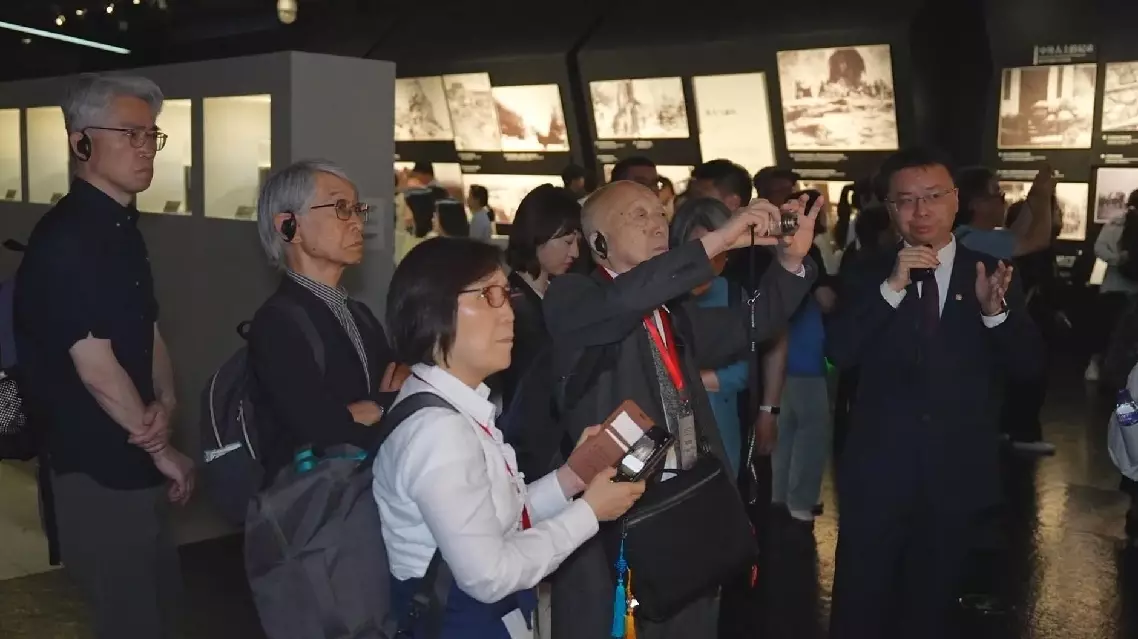
Global scholars visit Nanjing Massacre memorial hall to mark 80th anniversary of Tokyo Trial
The three astronauts of China's Shenzhou-21 crewed spaceflight mission returned safely to Earth on Friday after completing their planned tasks aboard the Tiangong space station.
The return capsule of the Shenzhou-22 spaceship, carrying Shenzhou-21 astronauts Zhang Lu, Wu Fei and Zhang Hongzhang, touched down at the Dongfeng landing site in north China's Inner Mongolia Autonomous Region at 20:11 Beijing Time (1211 GMT), according to the China Manned Space Agency.
The returned astronauts were reported to be in good physical condition after landing, according to staff on site.
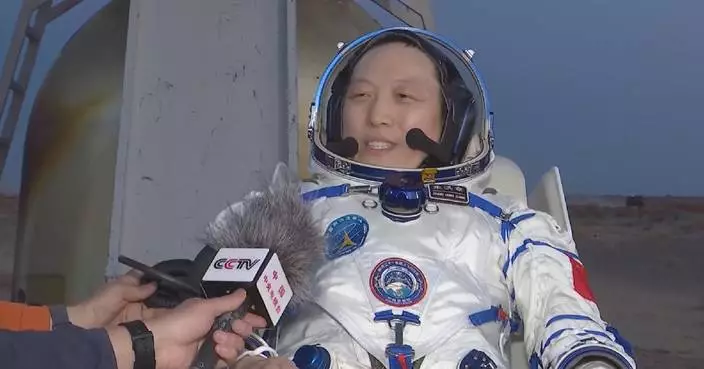
Zhang Lu was the first to exit the return capsule after it touched down on Earth.
"I'm thrilled to once again return to the embrace of our motherland. The Shenzhou-21 crew's seven-month stay in orbit would not have been possible without the care of our families and comrades, the support of leaders at all levels and all colleagues involved in the project, and above all, the backing of our country and our people. One sentence sums up my thoughts on my second space mission: 'It takes a whole team's devotion to make one person's voyage into the sea of stars,' " Zhang said in an interview with China Central Television (CCTV) shortly after he was carried out of the return capsule.
"I also have a gift to share with everyone. On the day of the Shenzhou-21 launch, the ground support team gave us an apple, wishing us a safe and smooth mission. Our safe return is their greatest wish. Tomorrow is May 30, the National Science and Technology Workers' Day. So when we left the space station, we specifically brought back an apple. We want to give it to all science and technology workers, and say 'thank you for your hard work'. At the same time, I wish our space industry continued prosperity, and every mission safe and smooth," he said.
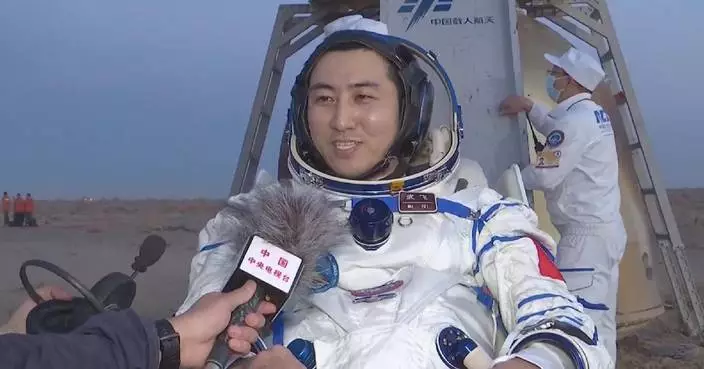
"Returning to Earth and to the embrace of our motherland, I feel extremely secure and proud. Being entrusted with such a significant responsibility in my first space mission is a great honor. It is the trust of my country, the guidance of my predecessors, and the teamwork of the entire crew that enabled me to successfully complete the mission. This mission has taught me that the most beautiful posture of youth is to march out for the country. I will turn this space experience into the driving force for my continued progress, and continue to fight and strive for the manned space program," said crew member Wu Fei.
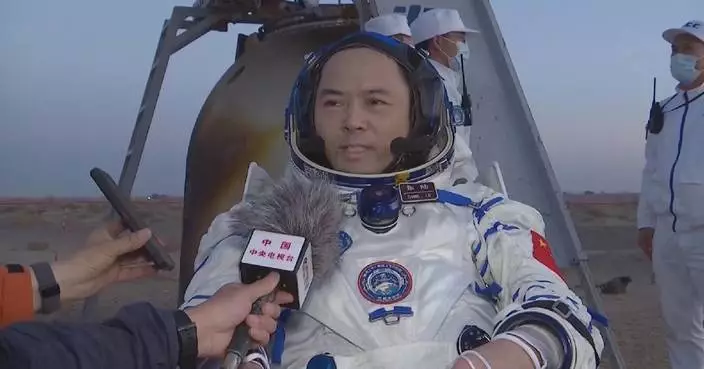
"From the ground laboratory to China's space station, it is our great motherland that has enabled me to achieve a perfect integration of my scientific ideals and spaceflight dreams. With the support of the entire project team, the assistance of researchers and scientists, and the care of so many people, our crew has worked as one and successfully completed all assigned scientific projects, including the first successful in-orbit breeding of small mammals, the growing of a thriving space vegetable garden with an even wider varieties, and the collection of valuable data from projects such as in-situ electrochemical and optical studies on lithium-ion batteries," said Zhang Hongzhang, who was the last of the astronauts to exit the spacecraft.
"Looking at Earth from space, I deeply felt that humanity is an indivisible community with a shared future. Now that I am back on Earth and have returned to my motherland, I feel an immense sense of security and warmth. Going forward, I will continue to build on these achievements and contribute to making China a strong power in space, science and technology," he said.
The returned crew members will now head to Beijing by plane and enter a quarantined recovery period, during which they will undergo comprehensive medical examinations and health assessments and start their recuperation process.
Prior to their return, the astronauts completed all planned tasks and handed over the space station to their three colleagues of the Shenzhou-23 mission who boarded the space station on May 25.
The crew's planned stay in-orbit was extended by approximately one month to further verify the technologies regarding the long-term stay of astronauts in orbit and fully use the supplies delivered by the Shenzhou-22 spacecraft in an emergency launch.
The Shenzhou-21 crew's original spaceship, which sent them into space on Oct 31 last year, was previously returned to Earth carrying the astronauts of the preceding Shenzhou-20 mission after tiny cracks were found in the viewport window of the Shenzhou-20 manned spacecraft's return capsule. That spacecraft was later safely brought back to Earth.
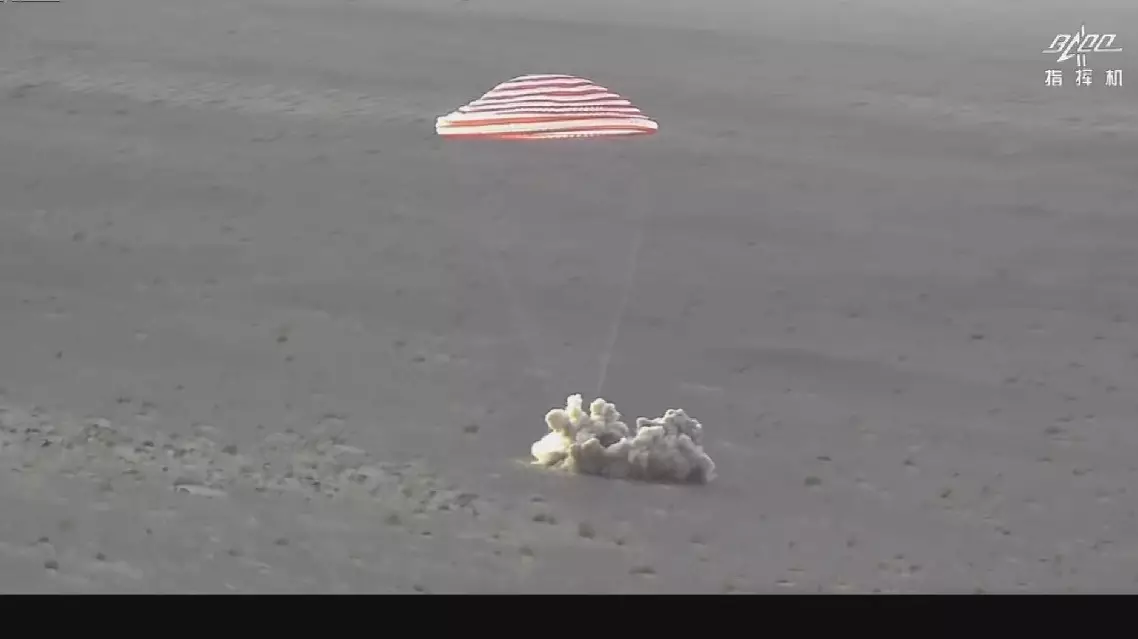
Shenzhou-21 crew return to Earth after successful seven-month mission in space