MINNEAPOLIS (AP) — A federal immigration officer wanted for shooting a Venezuelan man during the Trump administration’s Minnesota crackdown was arrested Friday in Texas, authorities said.
Christian Castro, of the Immigration and Customs Enforcement agency, was taken into custody 11 days after Minneapolis prosecutors charged him with assault and falsely reporting a crime in the Jan. 14 nonfatal shooting of Julio Cesar Sosa-Celis.
Hennepin County, Minnesota prosecutors said the state’s Bureau of Criminal Apprehension located Castro, 52, in Texas and worked with agents from the Department of Homeland Security's Inspector General's Office and the Texas Rangers to arrest him.
“Today’s arrest is a critical step forward in our prosecution of Mr. Castro,” Hennepin County Attorney Mary Moriarty said.
Online court records do not list an attorney for Castro and it wasn't immediately clear if he has one. Messages seeking comment were left with ICE, the Homeland Security Inspector General’s Office and the Texas Rangers.
Castro is the second federal agent to be charged over their conduct during the Minnesota crackdown, which was known as Operation Metro Surge. He is one of two agents that ICE Director Todd Lyons said lied about the circumstances of the incident.
According to prosecutors, Castro fired through a home’s front door and shot Sosa-Celis in the thigh after Castro and another officer chased a different man, Alfredo Alejandro Aljorna, to the Minneapolis apartment duplex where he and Sosa-Celis lived. Sosa-Celis and Aljorna were legally in the U.S., Moriarty said.
Federal authorities initially accused Sosa-Celis and Aljorna of beating an officer with a broom handle and a snow shovel. A federal judge later dismissed the charges, and ICE and the Justice Department opened an investigation into whether officers lied about what happened.
In a statement after the charges were announced, ICE said the U.S. attorney’s office was investigating statements made by officers, who could face disciplinary action including being fired and prosecuted. ICE called the Hennepin County attorney’s action “unlawful and nothing more than a political stunt.” DHS's Inspector General's Office, which Moriarty credited with assisting in the arrest, is separate from ICE and is meant to serve as a watchdog for DHS agencies, including ICE.
Minneapolis last month released video showing the moments before Sosa-Celis’s shooting, captured from a distance by a city-owned security camera.
The video appears to show a person standing with a snow shovel outside the house, near the street, then retreating toward the house and tossing the shovel into the yard. This happens as a person being chased by another person runs up from the street, falls on the sidewalk, gets up, and keeps heading toward the house.
The three appear to scuffle near the front steps for about 10 seconds. The exact moment when Sosa-Celis is shot isn’t clear. A car with flashing lights pulls up, and another person walks up.
The Trump administration sent thousands of officers to the Minneapolis and St. Paul area as part of President Donald Trump’s national deportation campaign and considered Operation Metro Surge a success.
But tensions mounted during the weekslong campaign, and the shooting deaths of U.S. citizens Renee Good and Alex Pretti by federal officers sparked mass unrest and raised questions about officers’ conduct.
Minnesota leaders and the Trump administration have clashed over who has the authority to investigate and prosecute federal officers for on-duty conduct.
Moriarty’s office last month charged immigration agent Gregory Donnell Morgan Jr. with assault for allegedly pointing his gun at people in a car on a highway. He turned himself in last week and his lawyer disputes the charges.
The county is also investigating Good’s and Pretti’s killings and sued the Trump administration in March to gain access to evidence in those cases and the Sosa-Celis shooting.
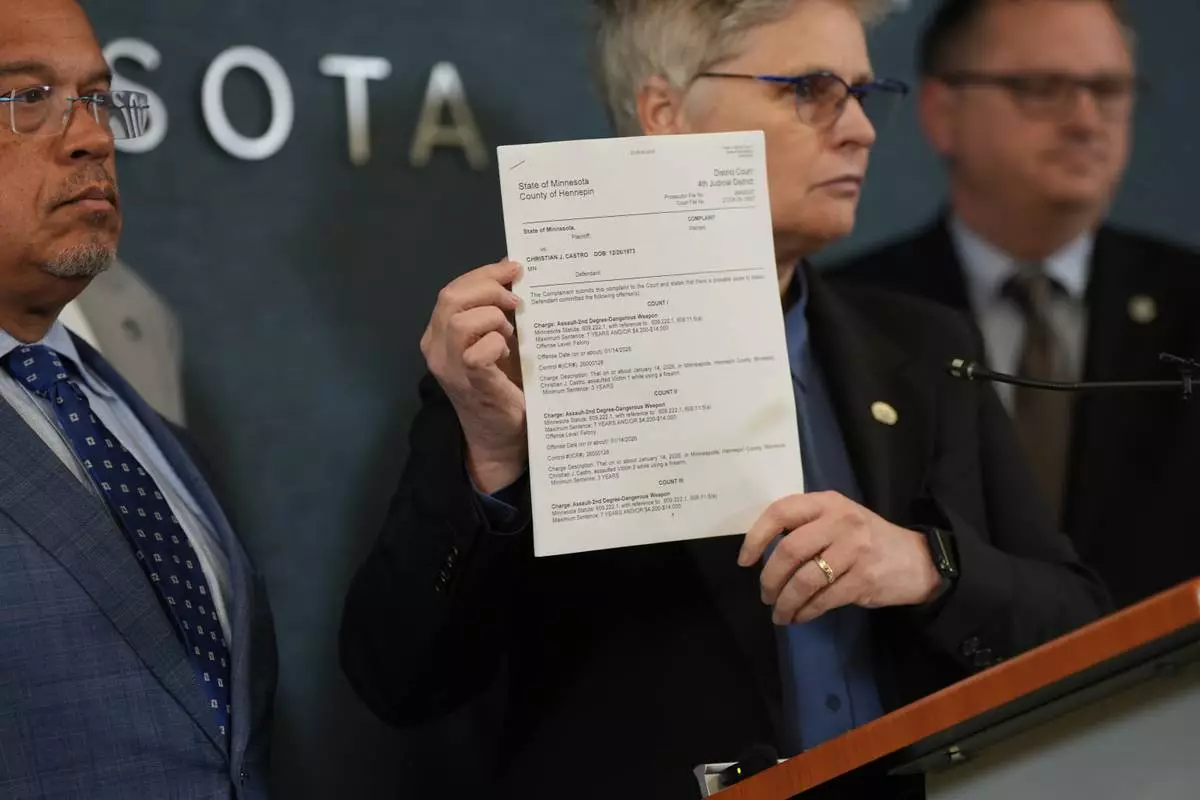
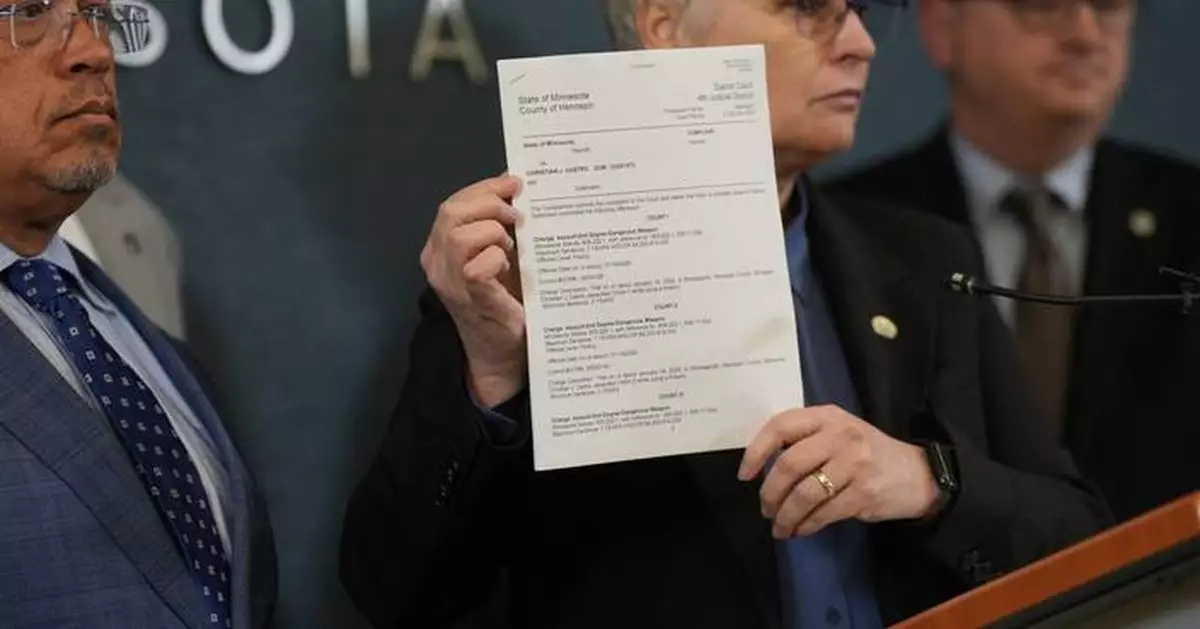
Hennepin County attorney Mary Moriarty holds up a document containing charges against ICE agent Christian Castro during a news conference at the Hennepin County Government Center in Minneapolis, on Monday, May 18, 2026. (Renée Jones Schneider/Minnesota Star Tribune via AP)
BATON ROUGE, La. (AP) — Louisiana lawmakers passed a new congressional map Friday designed to pick up a Republican seat while leaving the state with just one of its two majority-Black House districts represented by Democrats.
Approval of the new House map came a month after the U.S. Supreme Court struck down the state’s current map as an illegal racial gerrymander, weakening the landmark 1965 federal Voting Rights Act. That decision intensified a national redistricting battle fueled by President Donald Trump’s efforts to protect the Republicans’ slim House majority in the midterm elections.
Louisiana Republicans had considered drawing a map giving the party a shot at winning all six of the state’s U.S. House seats. But that would have required adding more Black voters to Republican-held districts, potentially backfiring with losses. Some Republicans said a 5-1 map better protects U.S. House Speaker Mike Johnson from facing a difficult reelection.
Republican Gov. Jeff Landry is expected to sign the new map into law.
In the weeks following the Supreme Court’s decision, several other Republican-controlled Southern states have seized upon a weakened federal Voting Rights Act to try to redraw their own congressional districts. It’s the latest flare-up in a heated national redistricting battle heading into the November elections, spurred along by President Donald Trump.
So far, Republicans are winning the redistricting contest. But that doesn’t necessarily mean they will win a narrowly divided U.S. House in November. So far, Republicans think they could gain as many as 14 seats from their redistricting efforts, while Democrats think they could gain six seats from new districts in California and Utah.
In Louisiana, Republicans currently hold four of six congressional seats on a court-ordered map drawn in 2024 to comply with the Voting Rights Act by including a second district with a majority-Black population.
That map, however, was challenged in court, and the Supreme Court responded on April 30 by striking it down as an illegal racial gerrymander.
Landry postponed the state’s U.S. House primary, scheduled for May 16, until later this summer to allow time for Republican lawmakers to draw and pass a new map.
The proposed map redraws Democratic U.S. Rep. Cleo Fields' district, clustering it around predominantly white communities in the Baton Rouge area and southern Louisiana. It also adds part of Baton Rouge to a heavily Democratic, majority-Black district based in New Orleans currently represented by Democratic U.S. Rep. Troy Carter.
More lawsuits were expected over the new map.
Democrats say the proposed map could still constitute a racial gerrymander because it packs Black voters into a single congressional district. Meanwhile, the plaintiffs in the U.S. Supreme Court's decision criticized the Legislature's map for leaving a majority-Black district in place.
Several other Southern states also have acted on redistricting since the Supreme Court's decision.
Florida’s Legislature passed new congressional districts just hours after the ruling, completing a redrawing that was in the works in anticipation of the decision. It could yield Republicans as many as four additional seats in the midterm elections.
Tennessee adopted new U.S. House districts a week after the ruling, carving up a majority-Black district based in Memphis in a Republican attempt to win an additional seat.
In Alabama, Republicans are attempting to pick up another seat by redrawing two districts where Black residents compose a majority or close to it. Democrats hold both seats, and the proposal is mired in a court battle.
South Carolina’s Senate, meanwhile, decided against redistricting, despite pressure from Trump.
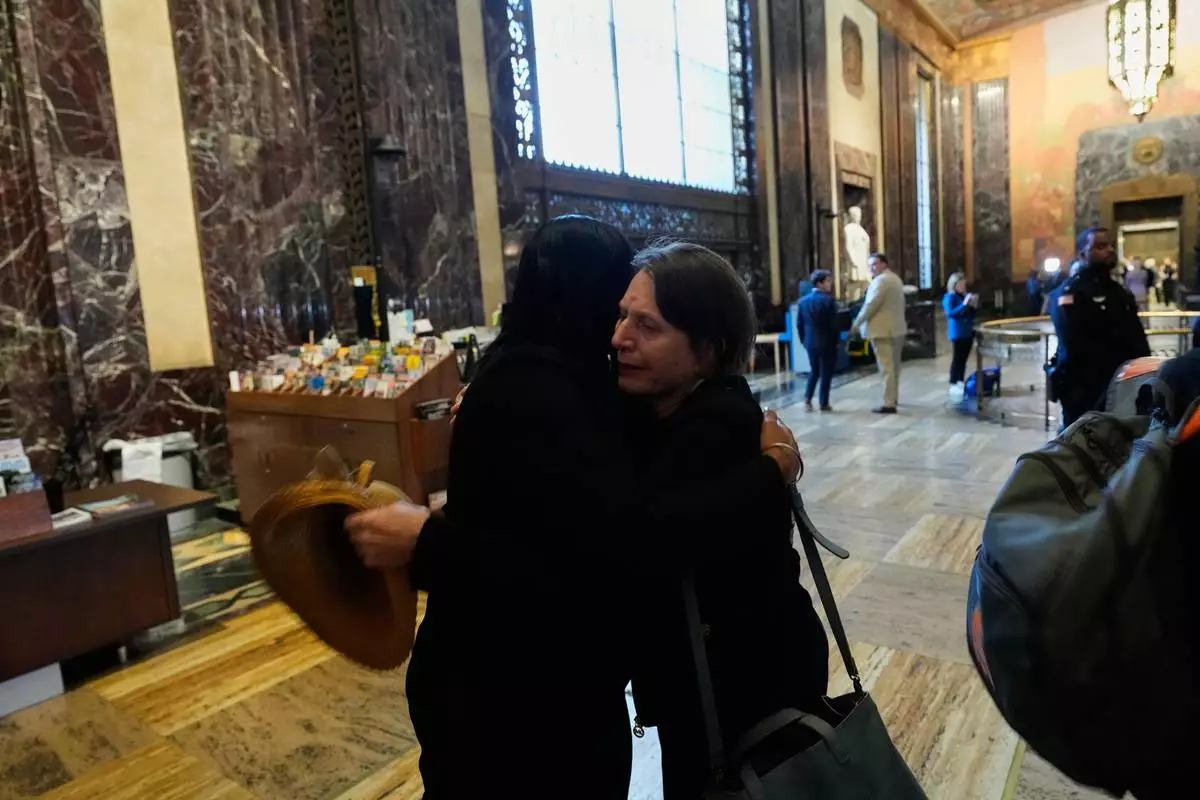
Mary Anne Mushatt, of the League of Women Voters and the Orleans Parish Democratic Committee, right, hugs Rep. Tammy T. Phelps, D-District 3, after a redistricting plan to eliminate a majority-Black congressional district, in response to a U.S. Supreme Court ruling, was passed by the House in Baton Rouge, La., Thursday, May 28, 2026. (AP Photo/Gerald Herbert)
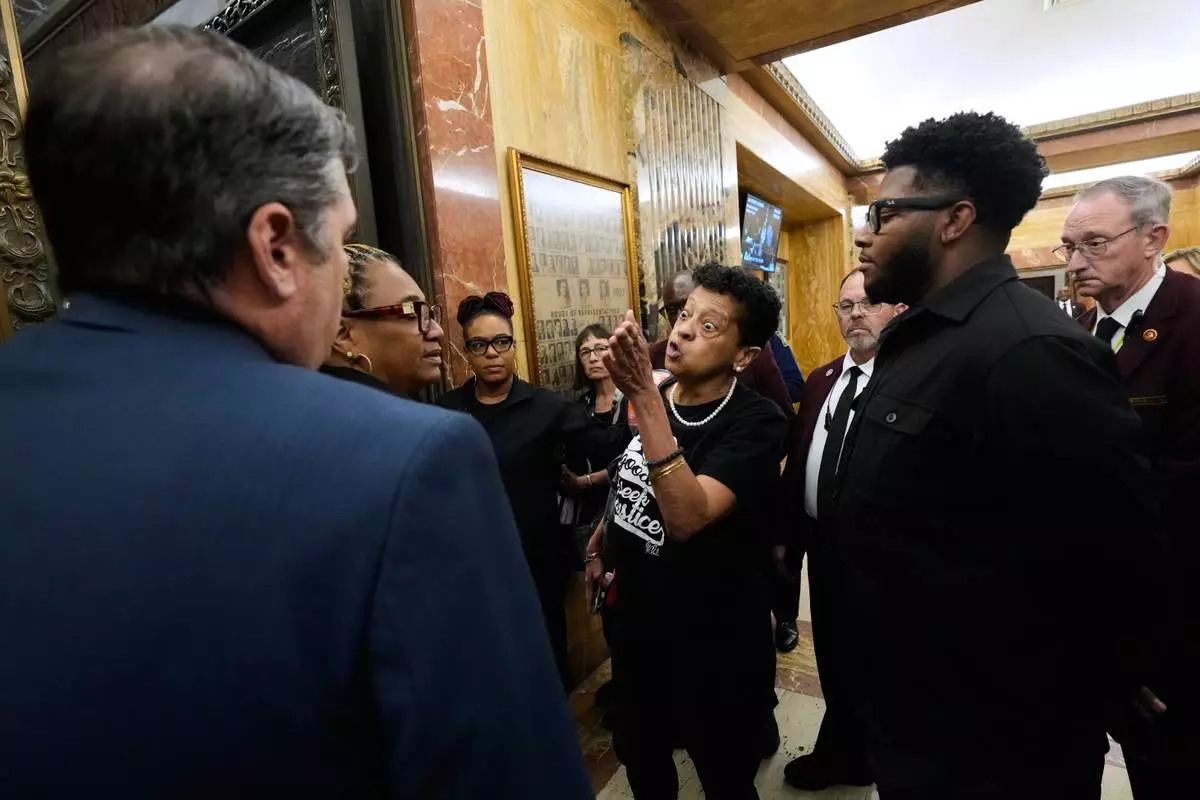
A person opposed to the redistricting plan reacts as she leaves the Louisiana House chambers after the plan to eliminate a majority-Black congressional district, in response to a U.S. Supreme Court ruling, was passed in Baton Rouge, La., Thursday, May 28, 2026. (AP Photo/Gerald Herbert)
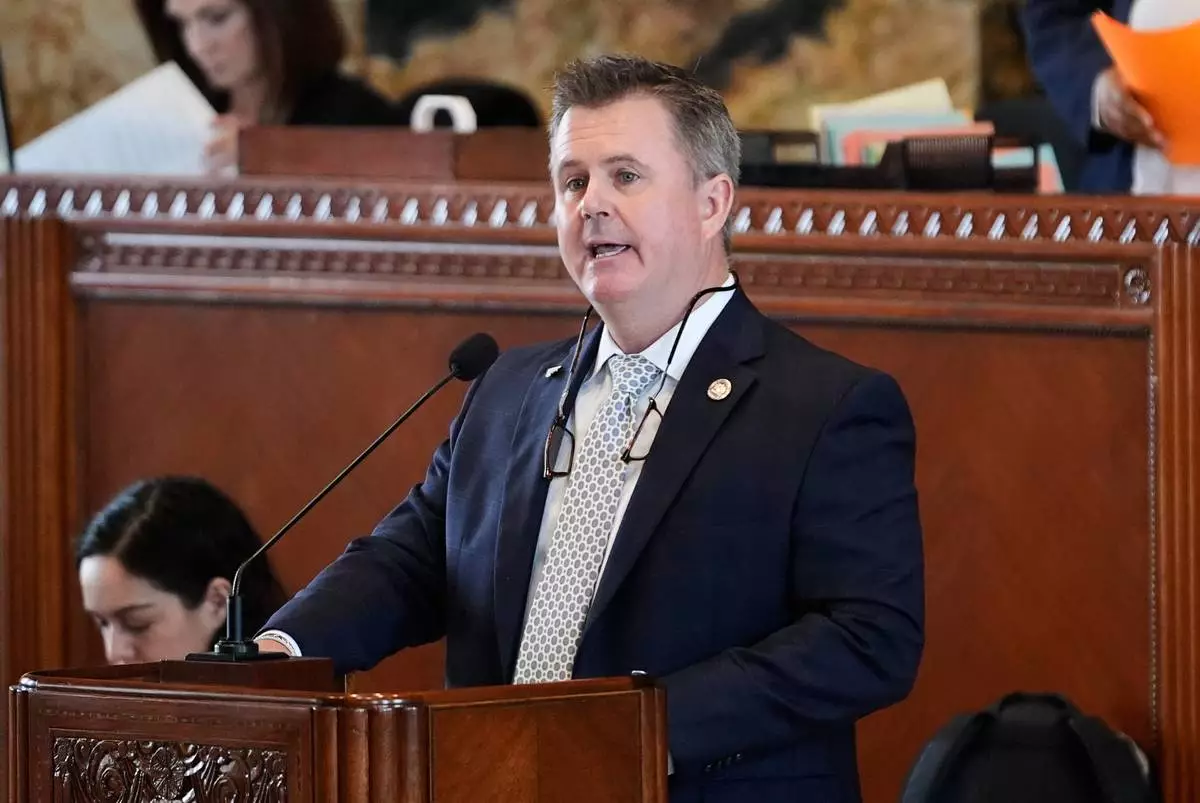
Louisiana Rep. Gerald Beaullieu, IV, R-Dist 48, speaks prior to a Louisiana House vote on a redistricting plan to eliminate a majority-Black congressional district in response to a U.S. Supreme Court ruling, in Baton Rouge, La., Thursday, May 21, 2026. (AP Photo/Gerald Herbert)
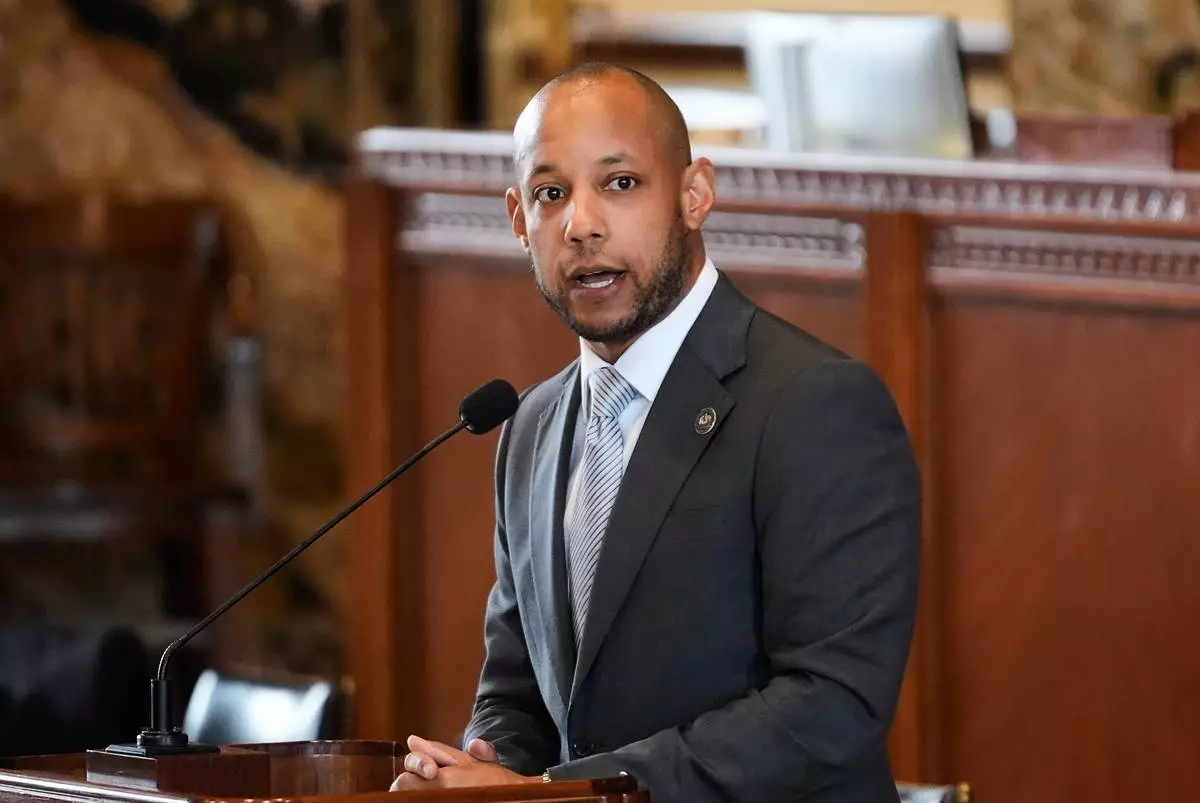
Louisiana Rep. Kyle M. Green, Jr., D-Dist 83, speaks prior to a Louisiana House vote on a redistricting plan to eliminate a majority-Black congressional district in response to a U.S. Supreme Court ruling, in Baton Rouge, La., Thursday, May 21, 2026. (AP Photo/Gerald Herbert)
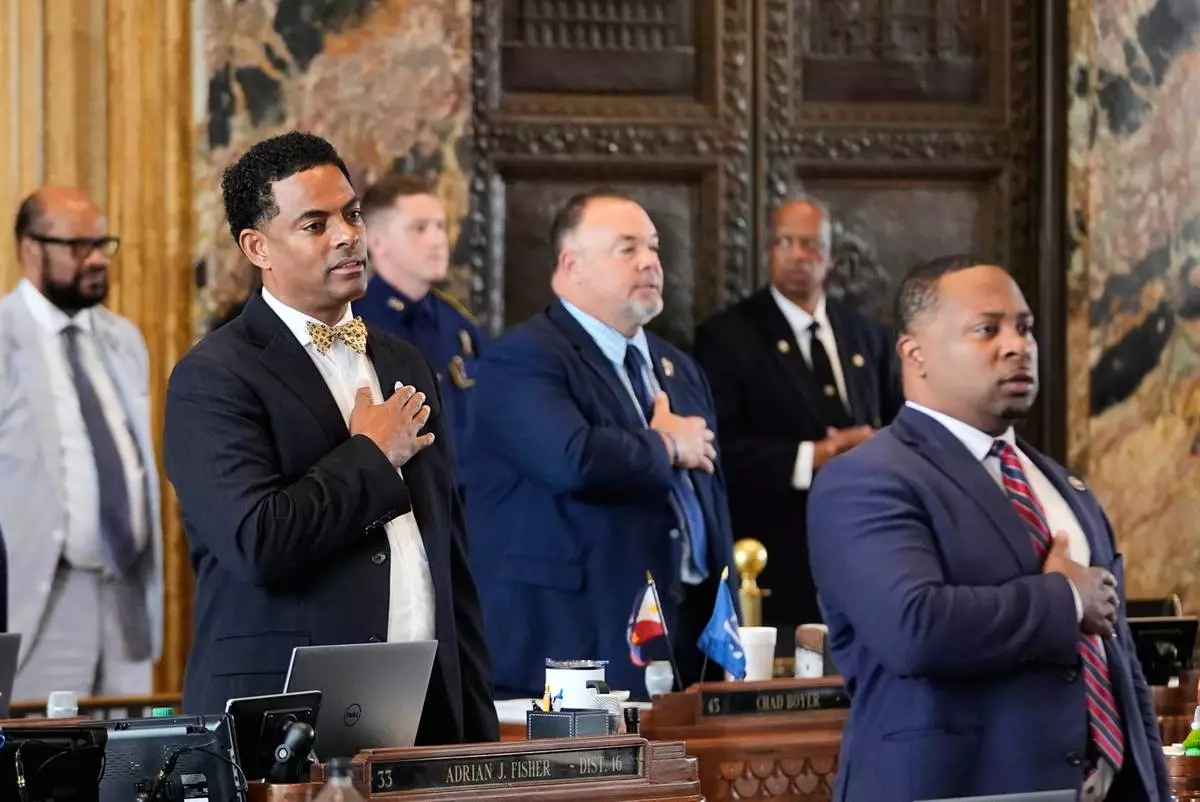
Louisiana Reps. Adrian Fisher, D-Dist 16, left, Chad Michael Boyer, R-Dist 46, and C. Travis Johnson, D-Dist 21, right, recite the pledge of allegiance prior to a house vote on a redistricting plan to eliminate a majority-Black congressional district in response to a U.S. Supreme Court ruling, in Baton Rouge, La., Thursday, May 21, 2026. (AP Photo/Gerald Herbert)