MEXICO CITY (AP) — Mexico President Claudia Sheinbaum delivered a promise on Friday by giving away her ticket to the World Cup opening match.
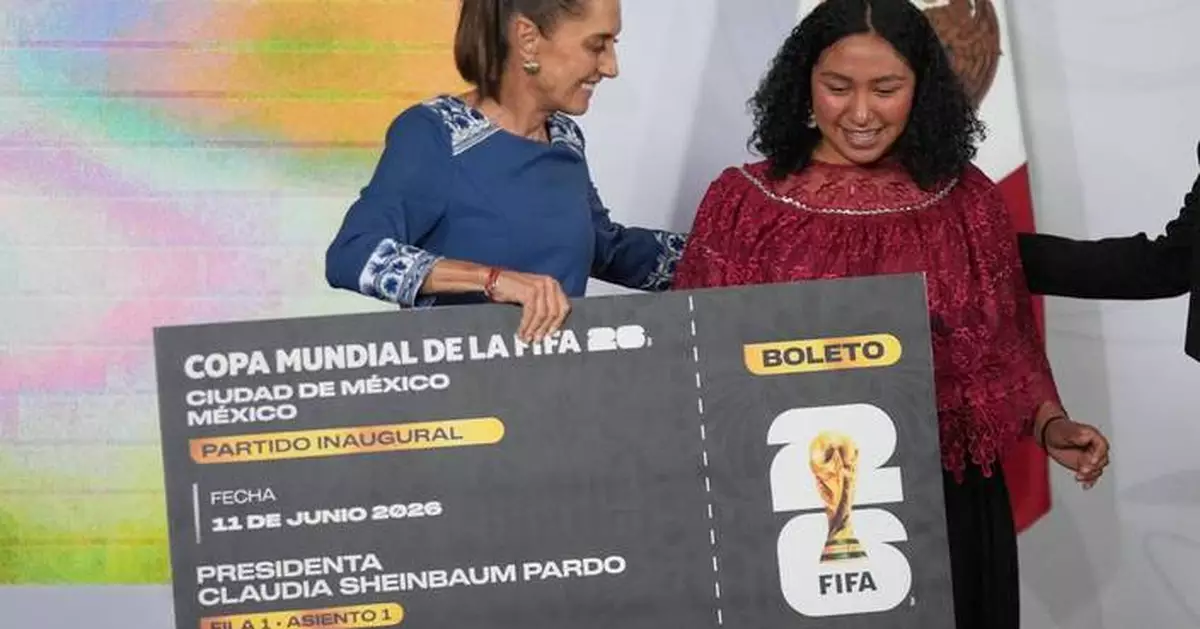
Sheinbaum, the first female president in the country’s 200-year history, donated her ticket No. 00001 to Yolett Cervantes Cuaquehua, a 21-year-old Indigenous woman from the eastern state of Veracruz.
Mexico plays the opening match against South Africa on June 11 at Azteca Stadium.
Cervantes Cuaquehua was selected by a jury after winning a contest for her ball-handling skills.
“They are the pride of Mexico. They will not represent the president, or the head of government, they will represent Mexico,” Sheinbaum said at a press conference to give away the ticket to Cervantes Cuaquehua.
Sheinbaum also gave away tickets to other matches being played in Mexico City, Guadalajara, and Monterrey — the Mexican venues for the World Cup — to three other amateur athletes aged 16, 22, and 23. They were also selected by the jury as part of a contest organized by the government.
“Thank you so much for considering us,” Cervantes Cuaquehua said.
Sheinbaum in March ruled out attending the opening game, stating she wanted to give prominence to young Mexican female soccer players.
“I think a young woman who plays soccer is a great representative of our country. Very few people will be able to attend the opening,” Sheinbaum said at the time. She added she will watch the game at the Zócalo, the capital’s main square, where a Fan Fest will be set up.
The president’s announcement generated mixed reactions in Mexico. While some considered it a commendable decision, others criticized it, arguing that it was a missed opportunity to promote the country.
AP World Cup: https://apnews.com/hub/fifa-world-cup
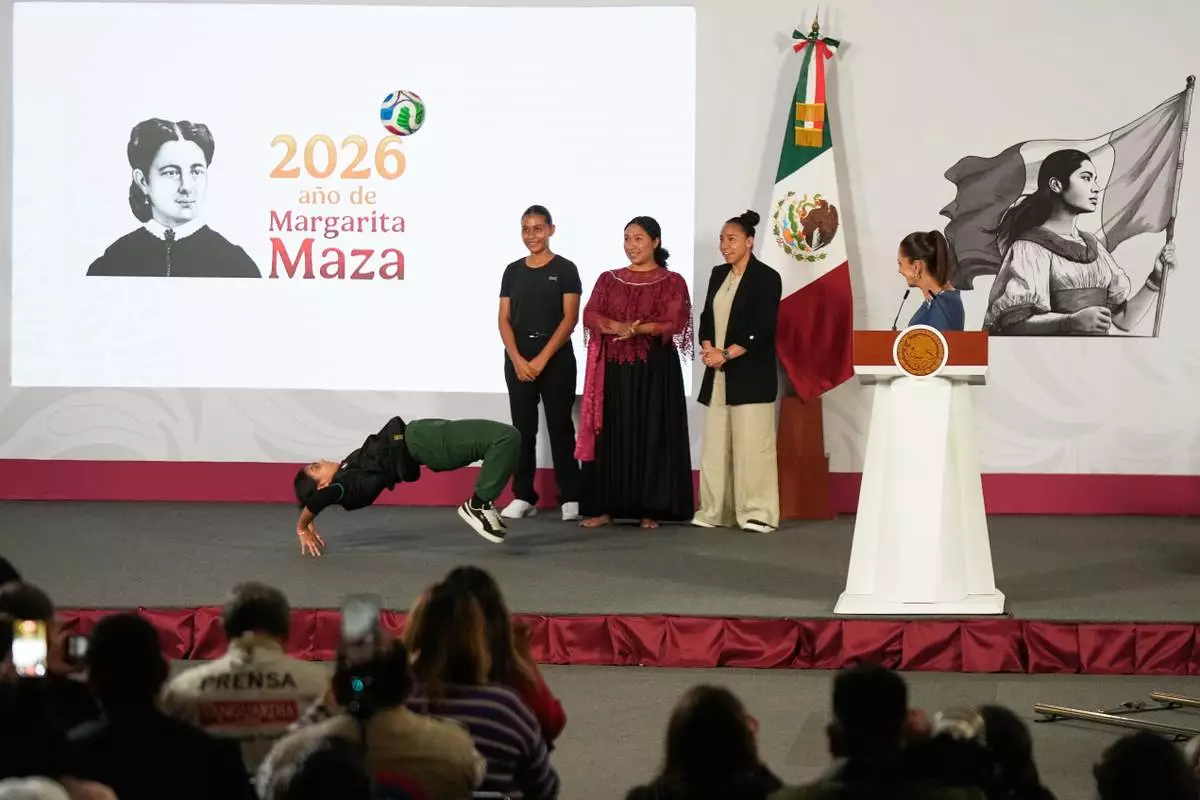
Mexican President Claudia Sheinbaum, right, watches the soccer skills of one of the winners during a ceremony distributing tickets to the opening match of the 2026 FIFA World Cup, at the president's daily news conference at the National Palace in Mexico City, Friday, May 29, 2026. (AP Photo/Fernando Llano)
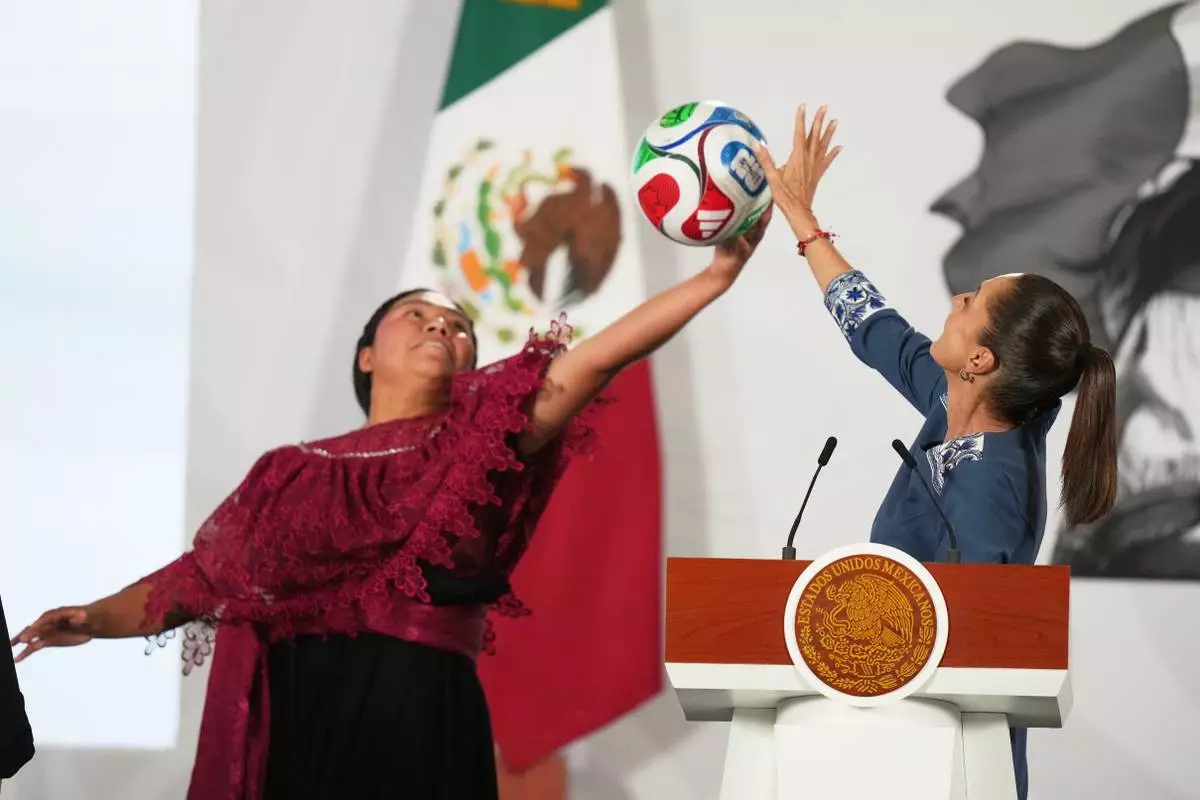
Mexican President Claudia Sheinbaum, right, and amateur soccer player Yolett Cervantes reach to catch a soccer ball during a ceremony distributing tickets to the opening match of the 2026 FIFA World Cup, at the president's daily news conference at the National Palace in Mexico City, Friday, May 29, 2026. (AP Photo/Fernando Llano)
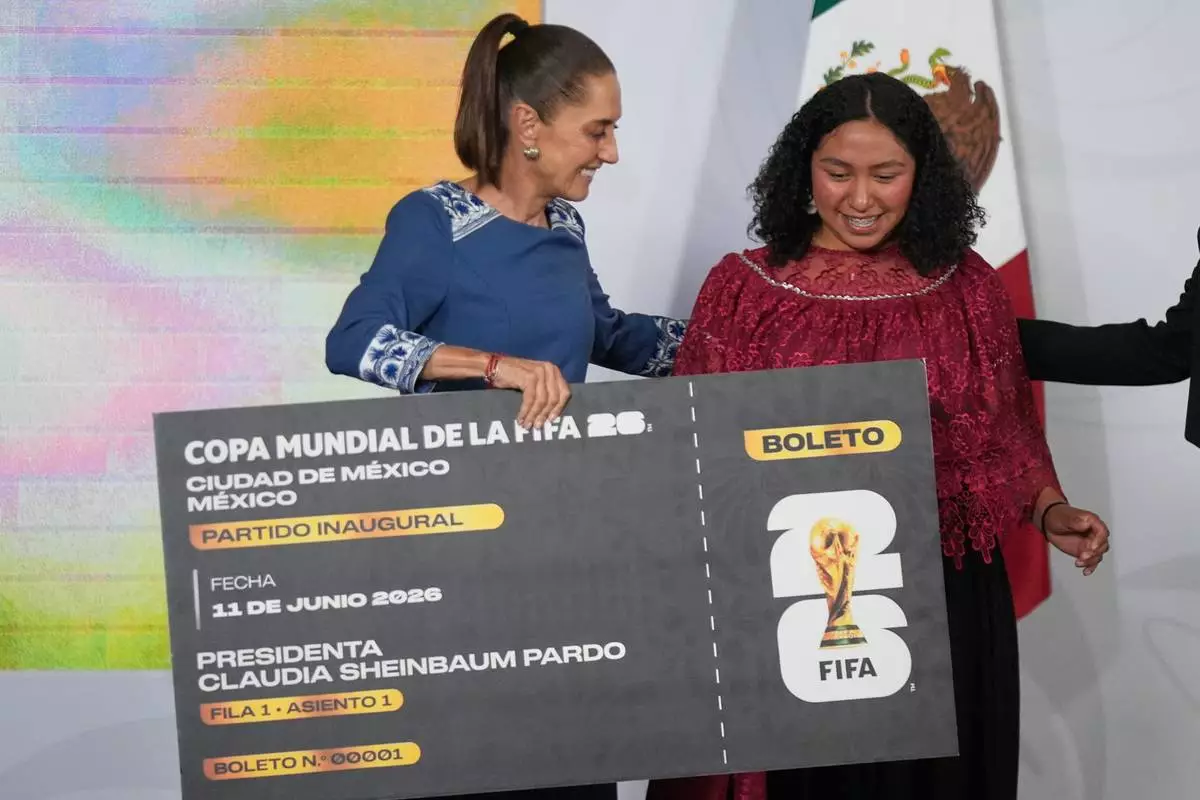
Mexican President Claudia Sheinbaum gives a copy of a symbolic ticket for the 2026 FIFA World Cup opening match to amateur soccer player Yolett Cervantes during her daily news conference at the National Palace in Mexico City, on Friday, May 29, 2026. (AP Photo/Fernando Llano)
WASHINGTON (AP) — U.S. President Donald Trump said Friday he’s holding a White House Situation Room meeting with his advisers as he looks to make a “final determination” on moving forward with a deal to extend the Iran ceasefire and reopen the Strait of Hormuz. Iran said the deal has not been finalized.
Trump confirmed the high-level talks the day after The Associated Press and other news outlets reported that U.S. and Iranian negotiators had come to terms on a tentative agreement. The deal would extend the fragile ceasefire by 60 days as new talks are held on Iran’s disputed nuclear program.
Trump wrote on social media that “Iran must agree that they will never have a Nuclear Weapon or Bomb.” He said the strait must be reopened for international navigation and all sea mines destroyed.
Iran’s main negotiator said Friday that it has “no trust in guarantees or words,” only actions, underscoring lingering distrust after the U.S. and Israel have twice attacked Iran over the past year while it was engaged in nuclear negotiations.
“No step will be taken before the other side acts,” Mohammad Bagher Qalibaf wrote on X. “We do not gain concessions through talks, but through missiles."
Foreign Ministry spokesman Esmail Baghaei later told a state broadcaster that the agreement “has not been finalized yet.”
On Thursday, U.S. Vice President JD Vance suggested negotiators were trying to strike general terms on Iran’s nuclear program, with the specifics to be hammered out in the ensuing talks.
Trump and his team said from the start of the conflict that a prime objective was to ensure that Iran can never have a nuclear weapon, but Vance framed the war’s accomplishments more modestly.
“We’re in a position where we could substantially set back their nuclear program, not just during the term of this president but over the long term,” Vance said, adding that it would be “very, very good” for Americans.
Baghaei, however, said Friday that Iranian officials were "focused on the end of war and are not discussing the details of the nuclear plan at this point.”
Iran also wants any deal to include a truce between Israel and Iran-backed Hezbollah militants in Lebanon, where fighting has intensified despite a nominal ceasefire.
The Islamic Republic has 440.9 kilograms (972 pounds) of uranium that is enriched up to 60% purity, a short, technical step from weapons-grade levels of 90%, according to the International Atomic Energy Agency.
Iran has long maintained its nuclear program is peaceful and has not publicly committed to giving up the stockpile. It's believed to be buried under three nuclear sites that were badly damaged by U.S. strikes last year.
Trump returned Friday to his on-and-off demand for the removal of the cache as part of a deal. The material would be unearthed by the U.S., in coordination with Iran and the IAEA, “and DESTROYED,” he posted.
The proposed memorandum makes clear that Iran would not be able to impose tolls on the Strait of Hormuz and that it would have to remove all mines from the vital waterway within 30 days, according to a U.S. official who was not authorized to comment publicly and spoke on condition of anonymity.
The U.S. would gradually lift its blockade on Iranian ports and would also agree to relax sanctions, allowing Iran to sell more of its oil.
Baghaei said Iran and Oman, which lie on opposite sides of the strait, would manage it and “adopt mechanisms” for transit through it, "based on their own national interests and the interests of the international community.”
The two nations' foreign ministers discussed the issue by phone earlier Friday, according to Iranian Foreign Minister Abbas Araghchi, who wrote on X that he had expressed solidarity “in the face of any threat.”
On Wednesday, Trump had warned Oman — a U.S. ally — not to enter into any agreement with Iran to share control of the strait or the U.S. will “have to blow them up.”
Iran has effectively closed the strait since the U.S. and Israel launched a surprise attack on Feb. 28 that killed Iran's supreme leader and other top officials. Before then, the waterway was open to international traffic, and around a fifth of the world's oil and gas passed through it.
The closure of the strait has caused the price of fuel and other goods to soar, with the effects felt far beyond the Middle East.
Iran has said it lets some commercial vessels pass — about two dozen daily in recent days, compared with more than 100 a day before the war. But the Islamic Republic also has charged tolls for at least some ships and established a formal gatekeeper agency earlier this month, spurring a new round of U.S. sanctions this week.
Since the ceasefire began about seven weeks ago, the U.S. and Iran have traded strikes and accusations of ceasefire violations. But they have not returned to full-scale hostilities and have kept negotiating.
Associated Press writers Jennifer Peltz and Farnoush Amiri in New York, and Matthew Lee in Washington, contributed.
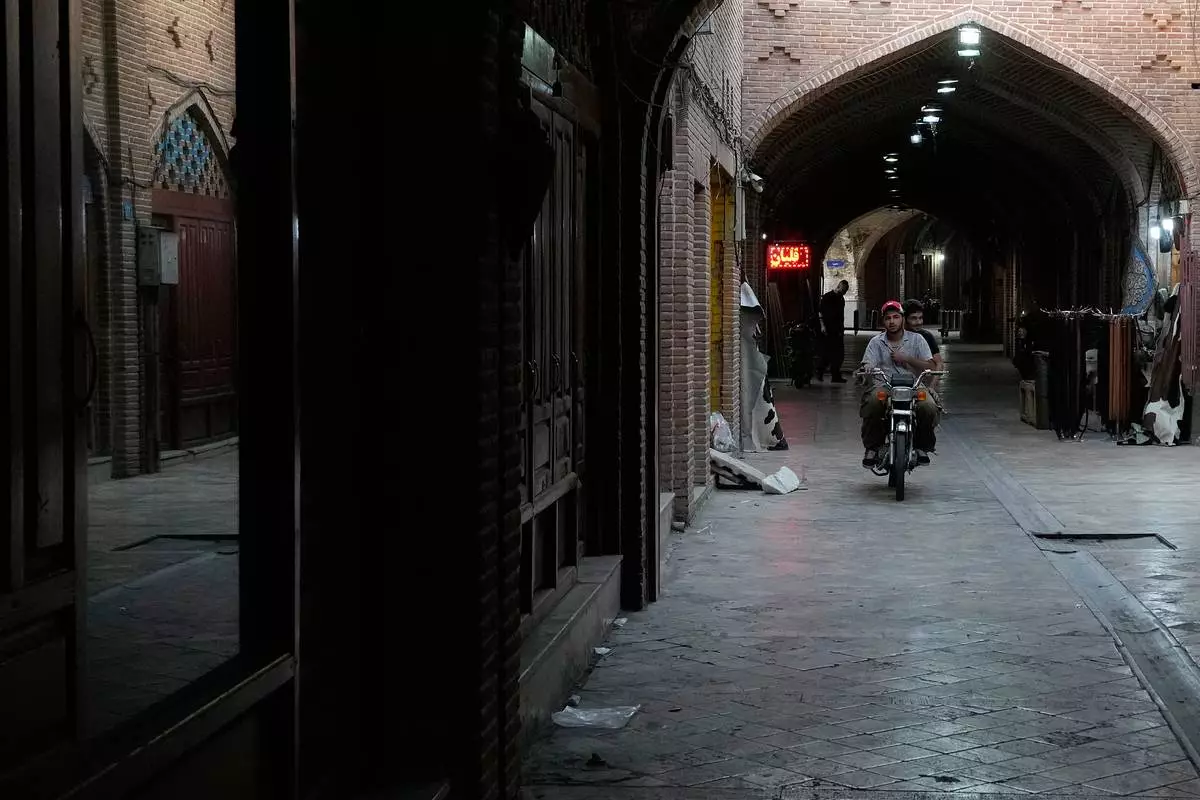
Men ride on their motorbike at the historic neighborhood of Oudlajan in Tehran, Iran, Thursday, May 28, 2026. (AP Photo/Vahid Salemi)
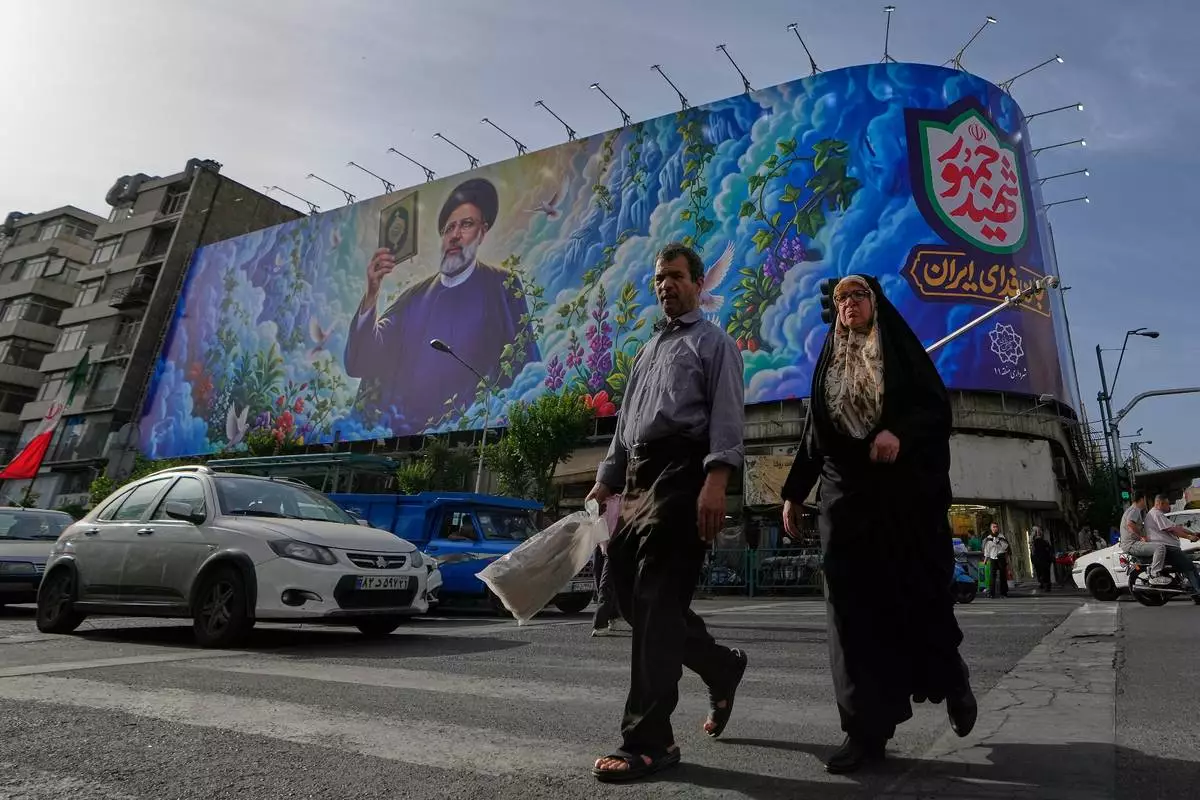
People cross an intersection in front of a billboard showing a portrait of the late Iranian President Ebrahim Raisi, who was killed in a helicopter crash in 2024, in downtown Tehran, Iran, Thursday, May 28, 2026. (AP Photo/Vahid Salemi)