Skip to Content Facebook Feature Image

A trip to the United Arab Emirates' darkest spot reveals a rare view of the Milky Way

TECH

A trip to the United Arab Emirates' darkest spot reveals a rare view of the Milky Way
TECH

TECH

A trip to the United Arab Emirates' darkest spot reveals a rare view of the Milky Way

2026-05-30 13:22 Last Updated At:15:21

AL QUAA DESERT, United Arab Emirates (AP) — The gleaming skyscrapers and brights lights of the United Arab Emirates draw the eyes of all who travel there, a sign of the Arabian Peninsula nation's rapid, oil-fueled development over the last decades into a major hub for commerce and tourism.

But something has been lost over that period: a clear vision across nearly all of the country's inhabited lands of the stars in the night sky that once guided Bedouin across the shifting desert dunes of its vast interior, known as the Empty Quarter.

More Images
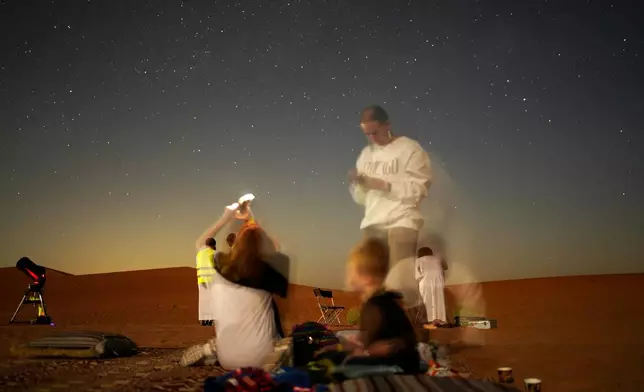
This long-exposure photograph shows a family taking mobile phone pictures in the Al Quaa Desert outside of Abu Dhabi, United Arab Emirates, Saturday, May 23, 2026. (AP Photo/Jon Gambrell)
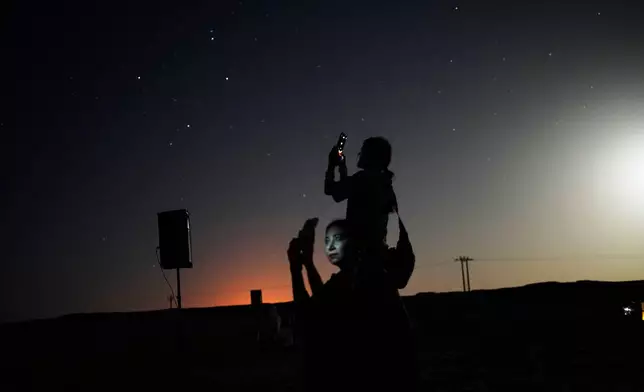
This long-exposure photograph shows a family taking mobile phone pictures in the Al Quaa Desert outside of Abu Dhabi, United Arab Emirates, Saturday, May 23, 2026. (AP Photo/Jon Gambrell)
This long-exposure photograph shows women taking mobile phone pictures in the Al Quaa Desert outside of Abu Dhabi, United Arab Emirates, Saturday, May 23, 2026. (AP Photo/Jon Gambrell)
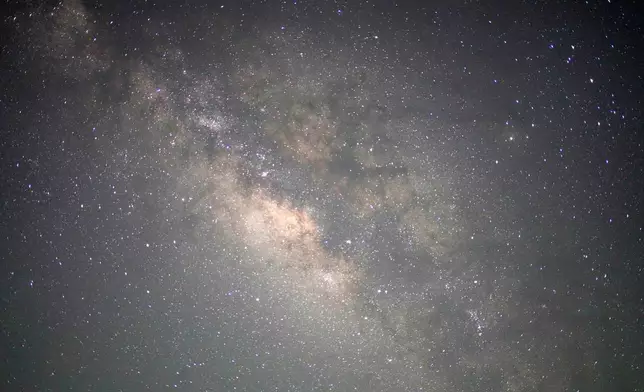
This long-exposure photograph shows women taking mobile phone pictures in the Al Quaa Desert outside of Abu Dhabi, United Arab Emirates, Saturday, May 23, 2026. (AP Photo/Jon Gambrell)

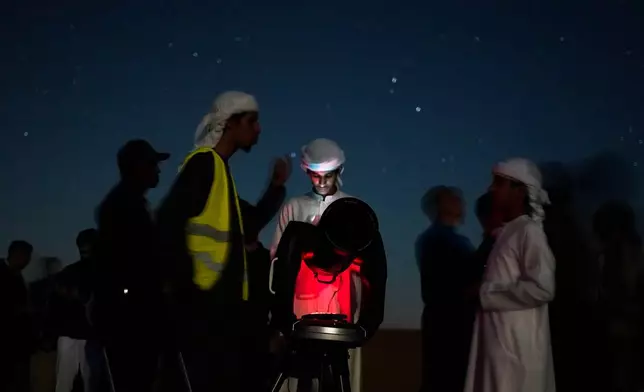
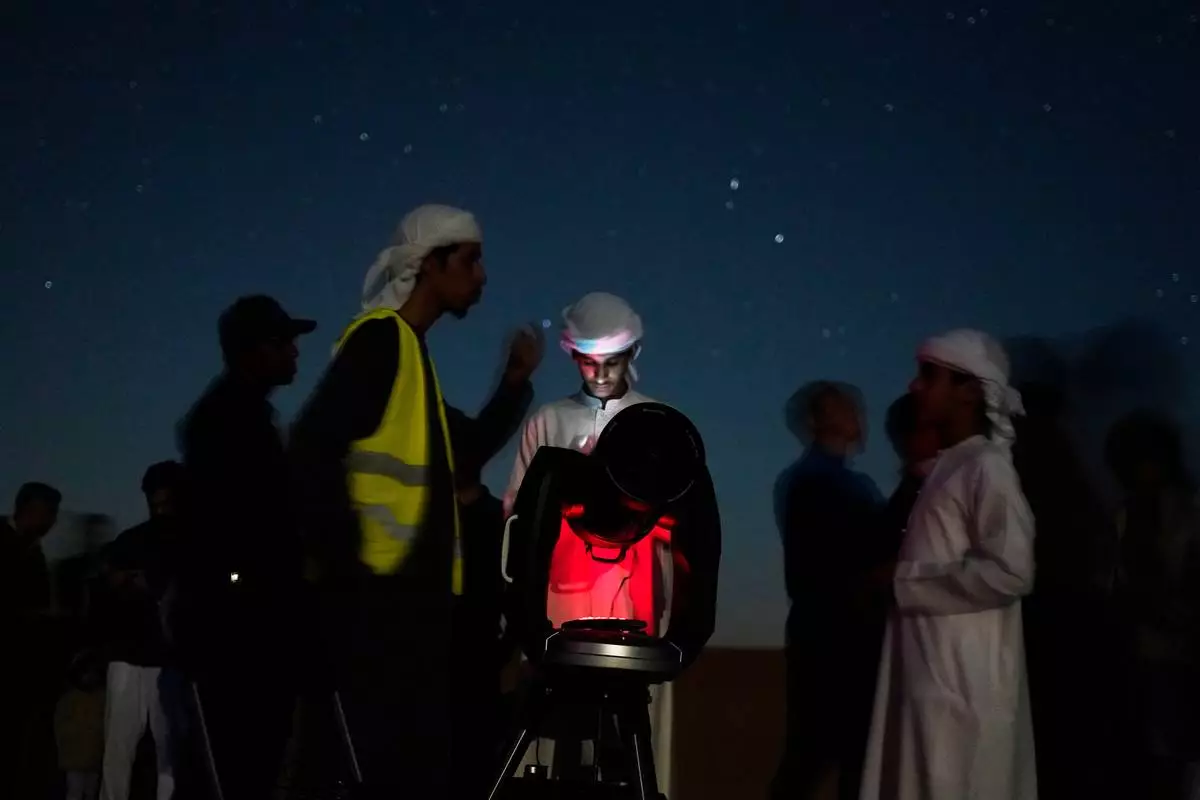
This long-exposure photograph shows Emiratis gathered around a telescope in the Al Quaa Desert outside of Abu Dhabi, United Arab Emirates, Saturday, May 23, 2026. (AP Photo/Jon Gambrell)

This long-exposure photograph shows Emiratis gathered around a telescope in the Al Quaa Desert outside of Abu Dhabi, United Arab Emirates, Saturday, May 23, 2026. (AP Photo/Jon Gambrell)

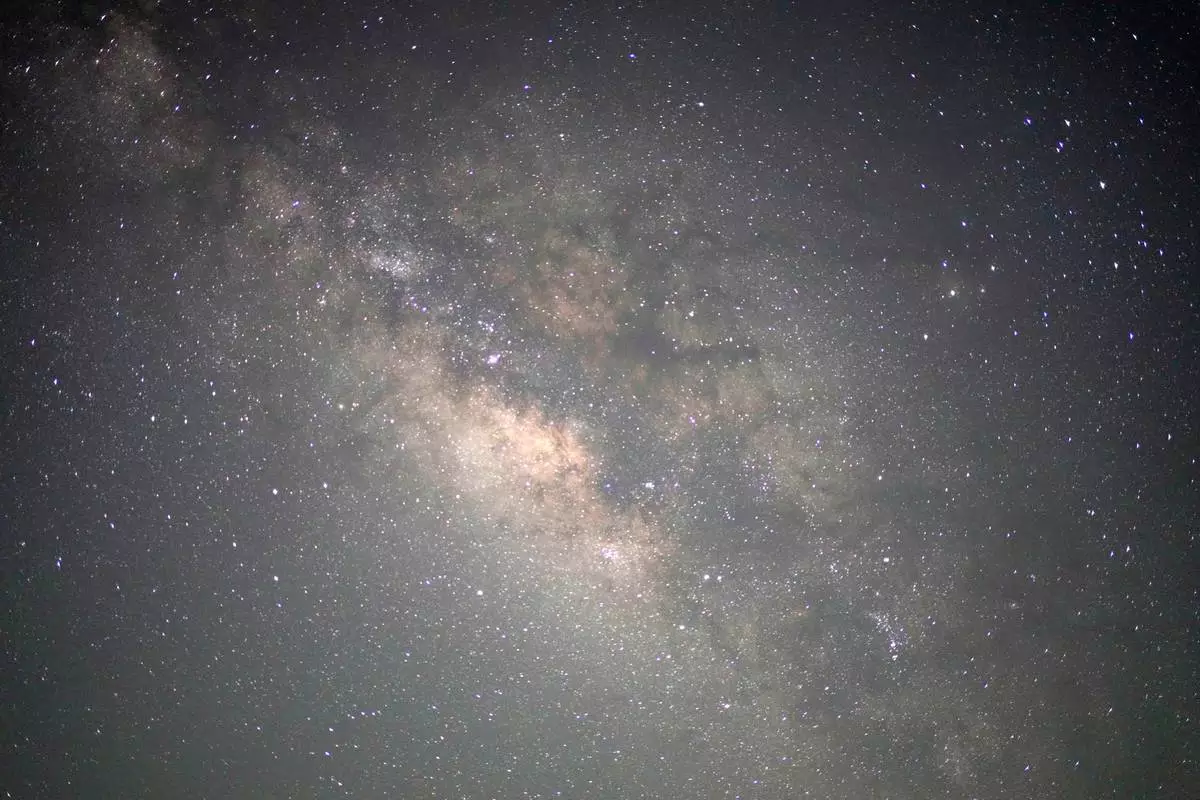
The Milky Way galaxy is seen in this long-exposure photograph from the Al Quaa Desert outside of Abu Dhabi, United Arab Emirates, Sunday, May 24, 2026. (AP Photo/Jon Gambrell)
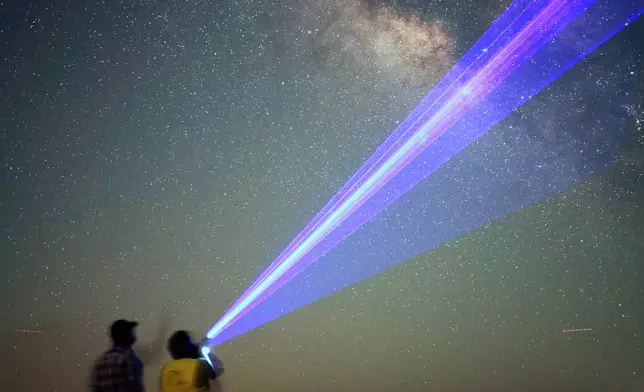
The Milky Way galaxy is seen in this long-exposure photograph from the Al Quaa Desert outside of Abu Dhabi, United Arab Emirates, Sunday, May 24, 2026. (AP Photo/Jon Gambrell)

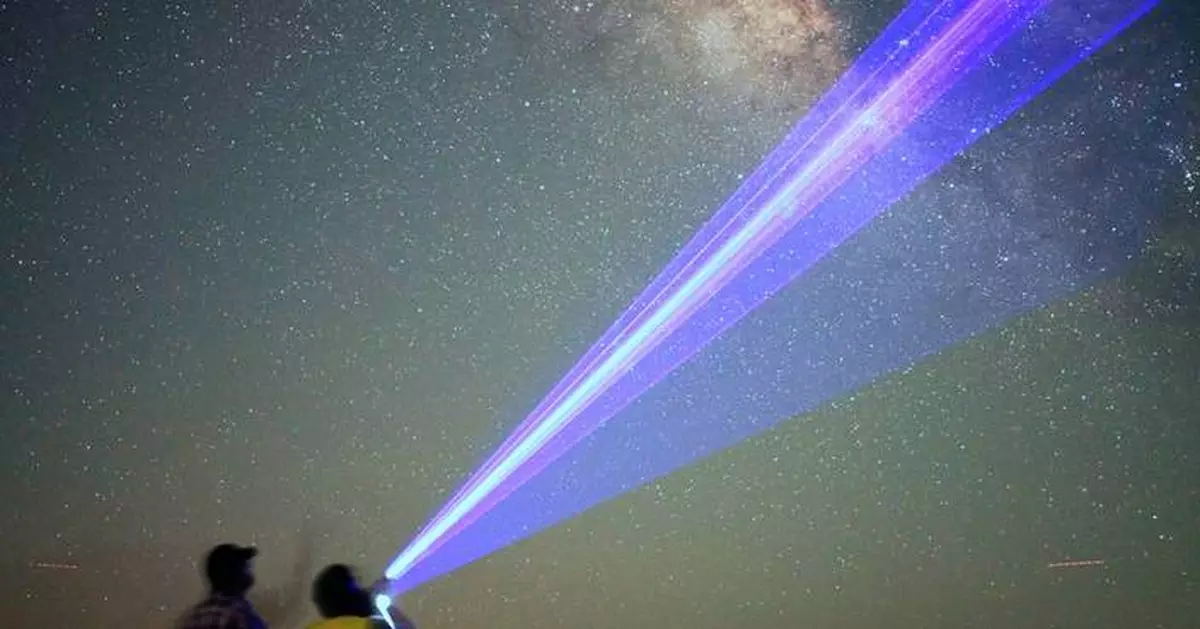
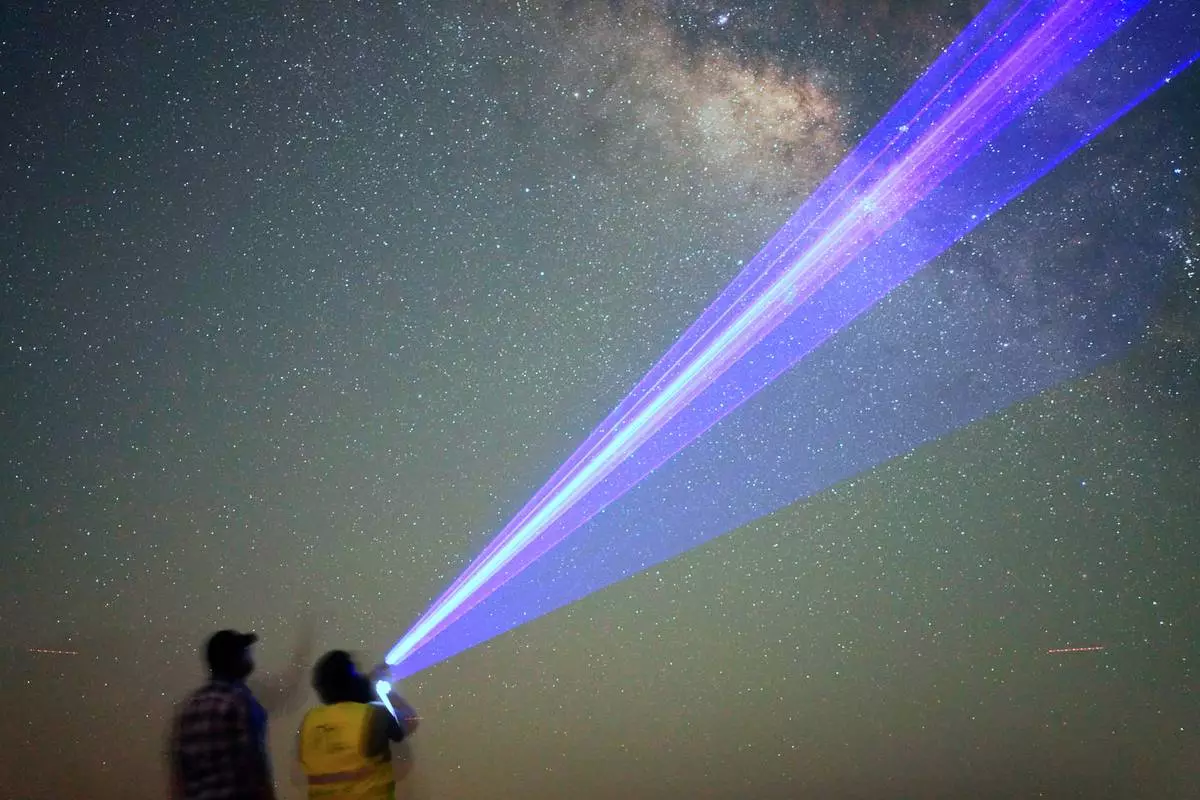
This long-exposure photograph shows men using a laser pointer to name the stars in the Milky Way galaxy in the Al Quaa Desert outside of Abu Dhabi, United Arab Emirates, Sunday, May 24, 2026. (AP Photo/Jon Gambrell)

This long-exposure photograph shows men using a laser pointer to name the stars in the Milky Way galaxy in the Al Quaa Desert outside of Abu Dhabi, United Arab Emirates, Sunday, May 24, 2026. (AP Photo/Jon Gambrell)

A group of volunteers from the Dubai Astronomy Group recently has been helping people reconnect with the sight of stars and the Milky Way by taking them on nighttime excursions to Al Quaa Desert, one of the darkest spots remaining in the Emirates.

“It causes us to appreciate our existence in this galaxy,” Sheeraz Awan, the general manager of the astronomy group, said as he guided participants through a weekend view of the stars in late May.

The UAE ranks among the world's most light-polluted countries, along with several other Gulf Arab states whose populations largely live in major cities.

A 2016 scientific study concluded “humanity has enveloped our planet in a luminous fog” and suggested 99% of the Emirates population could not see the Milky Way from their homes because of artificial lights.

That illumination ranges from street lights on roadways to the LED light show thrilling tourists at Dubai's Burj Khalifa, the world's tallest building. Abu Dhabi plans to build a $1.7 billion version of the Sphere, the Las Vegas attraction, on its Yas Island.

In Abu Dhabi, capital of the UAE, authorities have acknowledged the light pollution problem, coming up with what it calls a “Dark Sky Policy” in 2024 on lighting and other issues across its entire emirate. In Dubai, increasingly more buildings have LED displays and LED billboards have become more common. Authorities in the emirate did not respond to a request for comment, though Dubai also is home to the Al Qudra Lakes, a rural area with fewer areas of light pollution.

City lights don’t reach Al Quaa Desert.

The desert is easily reachable by vehicle, about 100 kilometers (62 miles) southeast of the city of Abu Dhabi along a major highway to the oasis city of Al Ain, then another road south far out into the desert.

Despite overhead road lights on the stretch known as Razeen Road, with a heavily lit prison along the way, the desert stretches just beyond in total darkness, unburdened by the bright illumination of the city. Razeen Road finally jogs east, but an automatic gate opens to allow drivers onto an unpaved road leading deeper into the desert.

Kilometers (miles) further along, past those camping in the dunes and enjoying some of the last good overnight weather before the UAE summertime high temperatures of around 45 degrees Celsius (113 degrees Fahrenheit), the astronomers gathered dozens of people to see the stars.

They weren't alone. Several laborers beneath heavy blankets slept nearby in the back of a pickup truck under the stars. Under one small LED lamp signaling where to park, a Solifugae — better known as a camel spider — ate another camel spider after a long struggle. The creature ran briefly toward a journalist and a volunteer before the vibrations of an approaching car sent it scurrying back into the darkness. Everyone around then carefully watched their steps.

On carpets laid out for the weekend excursion in May, families speaking Arabic, English and Russian looked up at the sky. The half-moon slowly set over the horizon. Soon, the outline of the Milky Way could be seen by the naked eye.

“When you look toward the east, can you see that faint cloud,” Awan asked. “That, ladies and gentlemen, is the Milky Way.”

He used a laser point to highlight the array of stars, drawing one woman to exclaim: “Ay ye ye!”

The Dubai Astronomy Group volunteers described this as one of the best times of the year to see the galaxy. Several gasped as they spotted meteors occasionally streaking across the sky, easily visible in the darkness without the interference of urban lights.

Some gathered around telescopes to look at individual stars. Others lay flat on the cold desert sand, getting tips on how to make their mobile phones take long-exposure pictures to see the galaxy gleaming overhead. Over time, people slowly drifted to their cars and started the drive back to the UAE's lighted highways and cities.

For a moment, they had engaged with the night in the same way as Bedouins before them.

“When we look at this Milky Way, we're kind of involved in an activity, which is not new,” Awan told the stargazers. “It's something that people throughout time have been engaged in.”
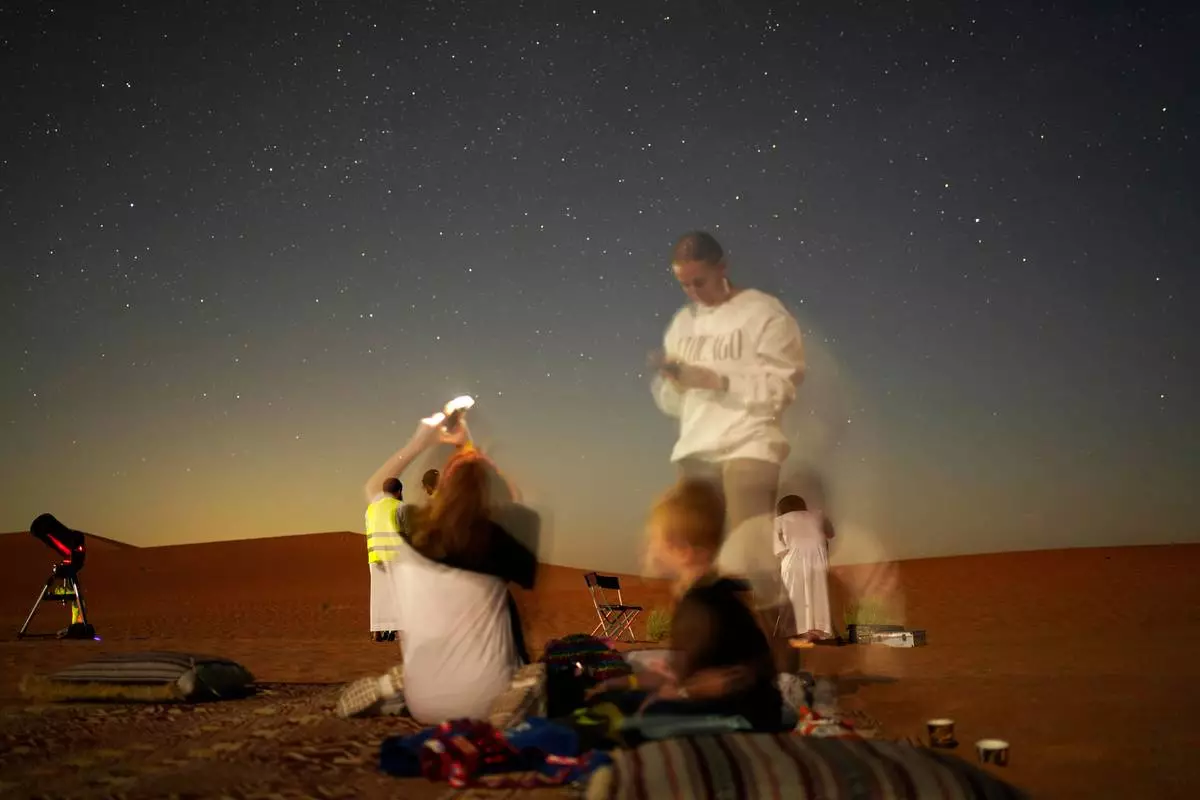
This long-exposure photograph shows a family taking mobile phone pictures in the Al Quaa Desert outside of Abu Dhabi, United Arab Emirates, Saturday, May 23, 2026. (AP Photo/Jon Gambrell)
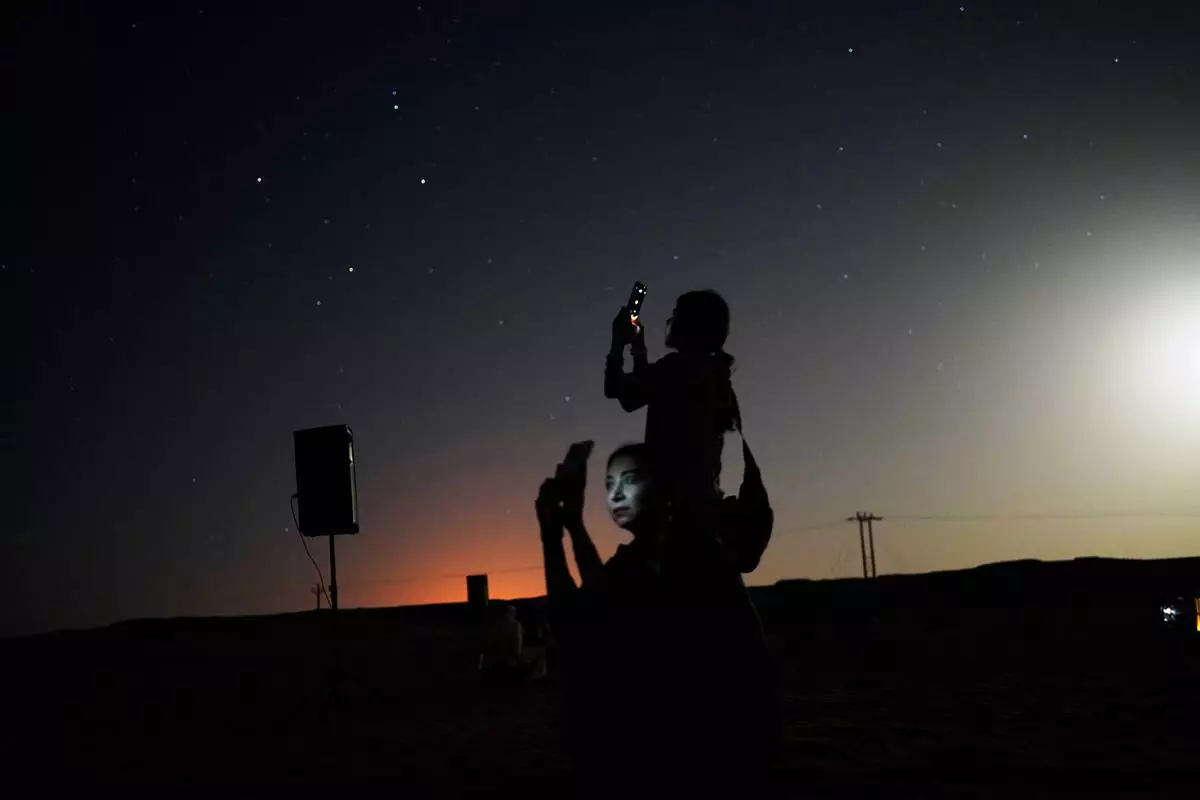
This long-exposure photograph shows a family taking mobile phone pictures in the Al Quaa Desert outside of Abu Dhabi, United Arab Emirates, Saturday, May 23, 2026. (AP Photo/Jon Gambrell)
This long-exposure photograph shows women taking mobile phone pictures in the Al Quaa Desert outside of Abu Dhabi, United Arab Emirates, Saturday, May 23, 2026. (AP Photo/Jon Gambrell)
This long-exposure photograph shows women taking mobile phone pictures in the Al Quaa Desert outside of Abu Dhabi, United Arab Emirates, Saturday, May 23, 2026. (AP Photo/Jon Gambrell)

This long-exposure photograph shows Emiratis gathered around a telescope in the Al Quaa Desert outside of Abu Dhabi, United Arab Emirates, Saturday, May 23, 2026. (AP Photo/Jon Gambrell)

This long-exposure photograph shows Emiratis gathered around a telescope in the Al Quaa Desert outside of Abu Dhabi, United Arab Emirates, Saturday, May 23, 2026. (AP Photo/Jon Gambrell)

The Milky Way galaxy is seen in this long-exposure photograph from the Al Quaa Desert outside of Abu Dhabi, United Arab Emirates, Sunday, May 24, 2026. (AP Photo/Jon Gambrell)
The Milky Way galaxy is seen in this long-exposure photograph from the Al Quaa Desert outside of Abu Dhabi, United Arab Emirates, Sunday, May 24, 2026. (AP Photo/Jon Gambrell)

This long-exposure photograph shows men using a laser pointer to name the stars in the Milky Way galaxy in the Al Quaa Desert outside of Abu Dhabi, United Arab Emirates, Sunday, May 24, 2026. (AP Photo/Jon Gambrell)
This long-exposure photograph shows men using a laser pointer to name the stars in the Milky Way galaxy in the Al Quaa Desert outside of Abu Dhabi, United Arab Emirates, Sunday, May 24, 2026. (AP Photo/Jon Gambrell)
ATHENS, Greece (AP) — Before North America, World Cup magic made a stopover in Greece.

Players battled and bonded not at the mega-stadiums of Mexico, Canada and the United States, but on practice fields squeezed into urban neighborhoods of Athens.

There were no luxury suites or grand arenas — just a local soccer competition where migrants and Greek players kicked the ball on city fields before crowds pressed to chain‑link fences, as music spilled into the streets.

And while Albania, Afghanistan, Cameroon, Guinea, Mali, Nigeria and Sudan didn't qualify for the World Cup, amateur players with ties to those countries brought their best game in Athens.

Many migrant players have been bracing for the implementation of Europe’s stricter migration and asylum rules in June. But the tournament for migrant and refugee communities was a joyful distraction, a celebration of football and identity.

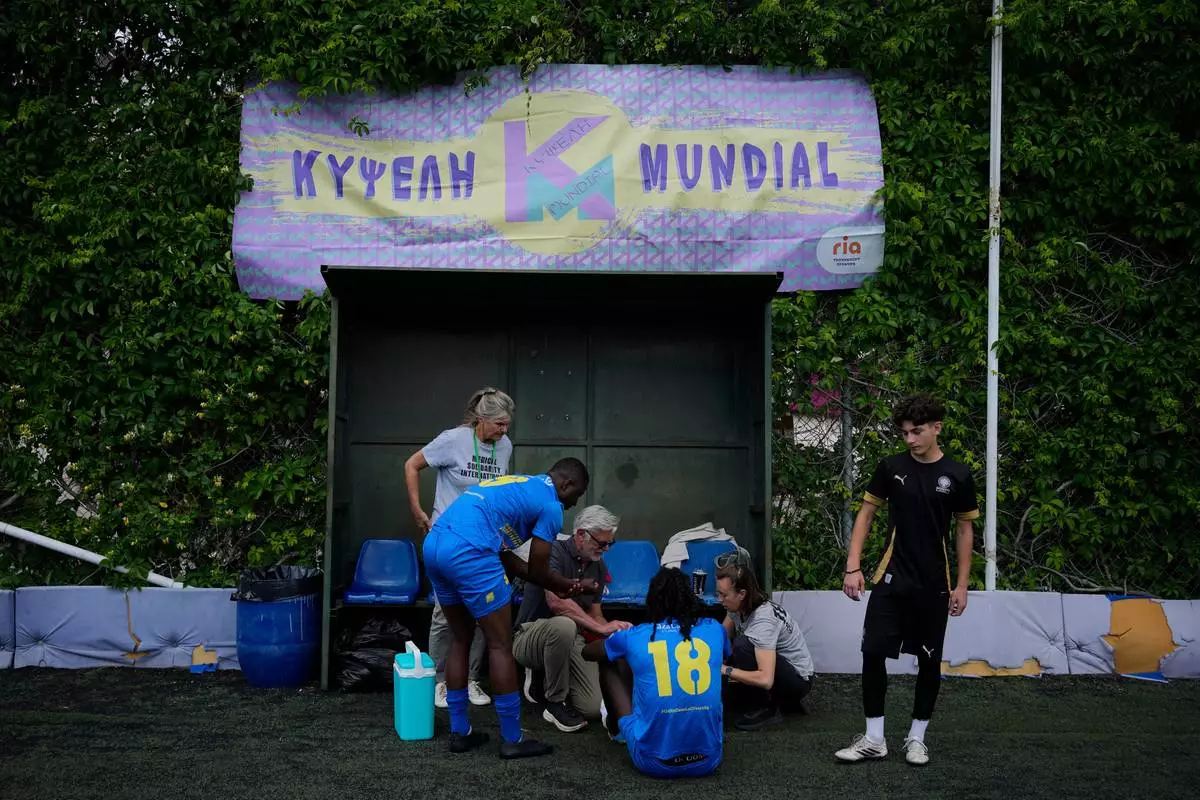
At one venue near Plato’s Academy, where ancient Athenians once debated the meaning of citizenship, the Acropolis rose in the distance beyond the field. In the densely populated district of Kypseli, supporters waved Congolese and Ivory Coast flags while volunteers led outdoor drumming lessons nearby.

Teams competed to the soundtrack of African pop music as coaches shouted instructions and supporters cheered from the sidelines.

Amelie Nguedia of Cameroon danced onto the field before kickoff as others joined in, laughing around her.

“Coming to play here is a real pleasure,” she said. “We aren’t professionals, but we love participating.”

Nguedia said that she would be supporting Ivory Coast at the World Cup, after Cameroon failed to qualify.

The Kypseli Mundial tournament was founded three years ago by Ivorian Moussa Sangare, who says he wanted to use football to combat fear and mistrust toward migrants in Greece.

The Mediterranean nation is at the forefront of migrants illegally entering the European Union and was the stage of the 2015 refugee crisis. While the number of irregular border crossings to Greece fell in the last decade, anti-migration sentiment has grown, while the government enforces stricter border controls and vows to increase deportations.

“People are often afraid of migrants, but we wanted to change this narrative,” he said. “Interacting with migrants and second-generation migrants and doing things together: People change their minds through experience.”

Sangare rarely stopped moving throughout the competition — setting schedules, welcoming teams, filming social videos and cleaning up after matches.

“For us, this tournament is like a mini–World Cup in Greece,” he said.

The timing of the Athens competition carried its own symbolism.

The five-week World Cup starts June 11. A day later, new EU migration and asylum rules take effect, with tougher border controls and faster deportations. Greece also wants to move migrant detention facilities offshore to countries in Africa.

Despite that backdrop, there was a festive atmosphere in Athens.

Matches were competitive, but rarely hostile. Hard tackles drew shouts from the sidelines. Coaches barked instructions from cramped dugouts. Fans joked with rival supporters from opposite sides of the fencing.

Moments later, they shared a laugh.

For most players, the tournament stood apart from the routines of daily life. Many work long hours away from public view in restaurant kitchens, hotels, construction sites and food delivery jobs across Athens.

“I am very proud to be playing in this tournament for the first time,” said Amissi, a midfielder from Mali, shortly after finishing a game. He works in a factory assembling water heaters.

After 21 teams participated, Nigeria's team won the men’s competition, while Greek neighborhood club Fostiras claimed the women’s title.

Head referee Chara Vogiatzidaki said that the tournament’s significance extended beyond results on the field.

“There are so many countries and different cultures, and I think the main goal is to show respect for all communities,” she said.

“There are some teams that are technically very advanced, and others that are less so. But the important thing is that all the teams have the mindset of enjoying themselves," Vogiatzidaki said. "That’s really beautiful.”

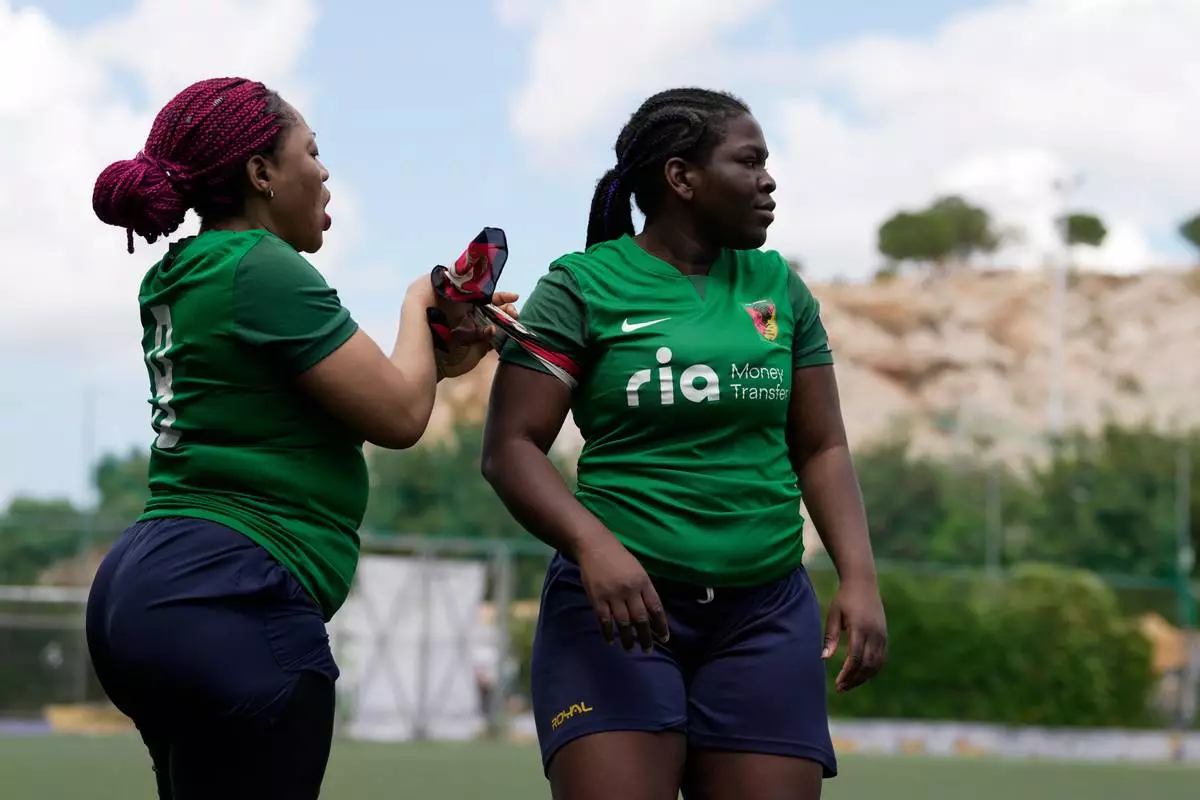
Amelie Nguedia from Cameroon, left, gives the captain's armband after being substituted to Maria Chaffi during a semifinal soccer match against Fostiras Kaisarianis for the Kypseli Mundial in Athens, Greece, on Sunday, May 24, 2026. (AP Photo/Thanassis Stavrakis)

Amelie Nguedia from Cameroon, left, gives the captain's armband after being substituted to Maria Chaffi during a semifinal soccer match against Fostiras Kaisarianis for the Kypseli Mundial in Athens, Greece, on Sunday, May 24, 2026. (AP Photo/Thanassis Stavrakis)

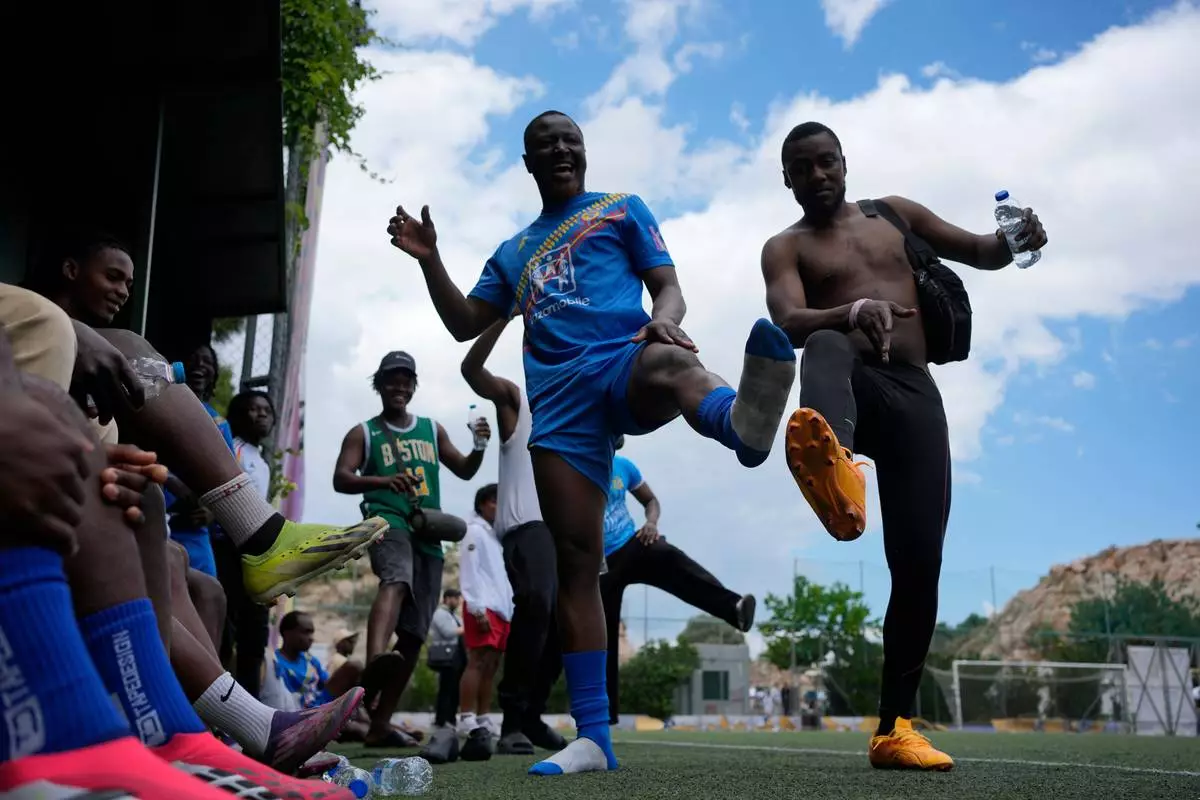
Migrants from Congo dance during a semifinal soccer match against Mali for the Kypseli Mundial in Athens,Greece, on Sunday, May 24, 2026. (AP Photo/Thanassis Stavrakis)

Migrants from Congo dance during a semifinal soccer match against Mali for the Kypseli Mundial in Athens,Greece, on Sunday, May 24, 2026. (AP Photo/Thanassis Stavrakis)

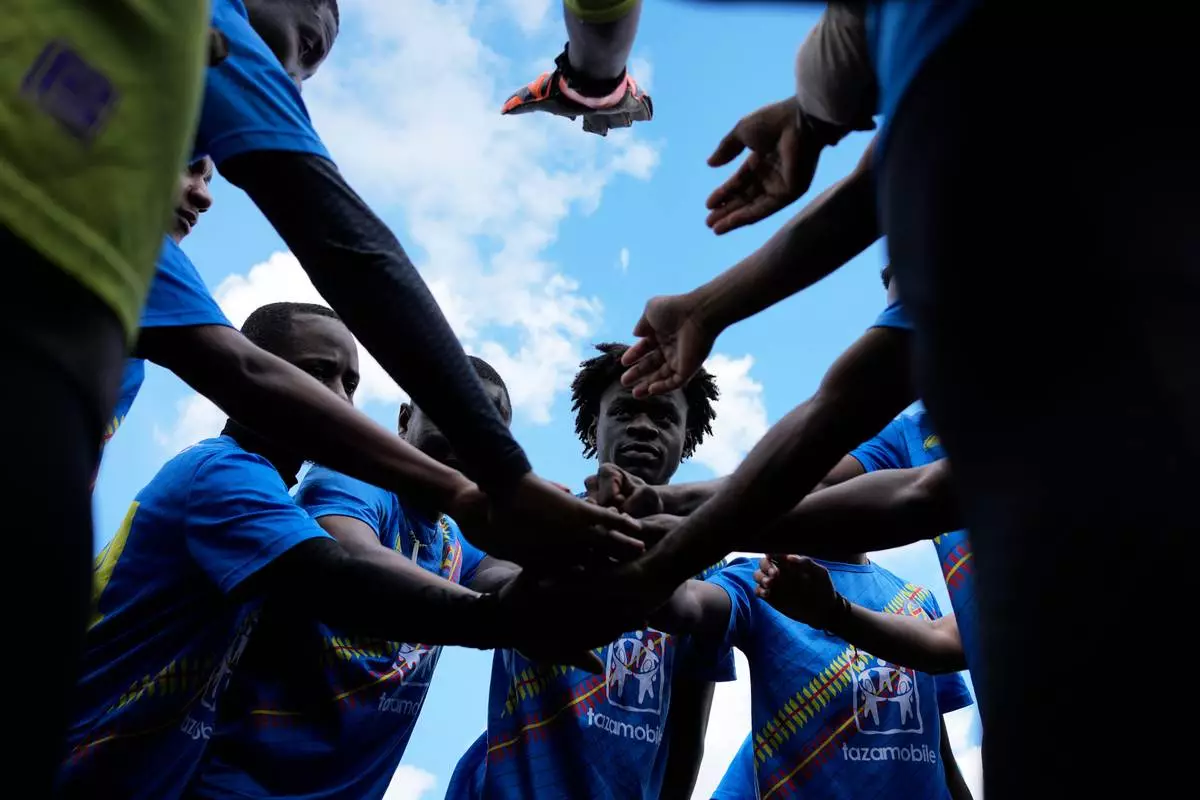
Migrants from Congo gather before a semifinal soccer match against Mali during the Kypseli Mundial in Athens, Greece, on Sunday, May 24, 2026. (AP Photo/Thanassis Stavrakis)

Migrants from Congo gather before a semifinal soccer match against Mali during the Kypseli Mundial in Athens, Greece, on Sunday, May 24, 2026. (AP Photo/Thanassis Stavrakis)

A migrant from Mali celebrates with teammates after scoring a goal during a semifinal soccer match against Congo for the Kypseli Mundial in Athens, Greece, on Sunday, May 24, 2026. (AP Photo/Thanassis Stavrakis)

A migrant from Mali celebrates with teammates after scoring a goal during a semifinal soccer match against Congo for the Kypseli Mundial in Athens, Greece, on Sunday, May 24, 2026. (AP Photo/Thanassis Stavrakis)

Migrants from Congo prepare before a semifinal soccer match against Mali during the Kypseli Mundial in Athens, Greece, on Sunday, May 24, 2026. (AP Photo/Thanassis Stavrakis)

Migrants from Congo prepare before a semifinal soccer match against Mali during the Kypseli Mundial in Athens, Greece, on Sunday, May 24, 2026. (AP Photo/Thanassis Stavrakis)

Recommended Articles