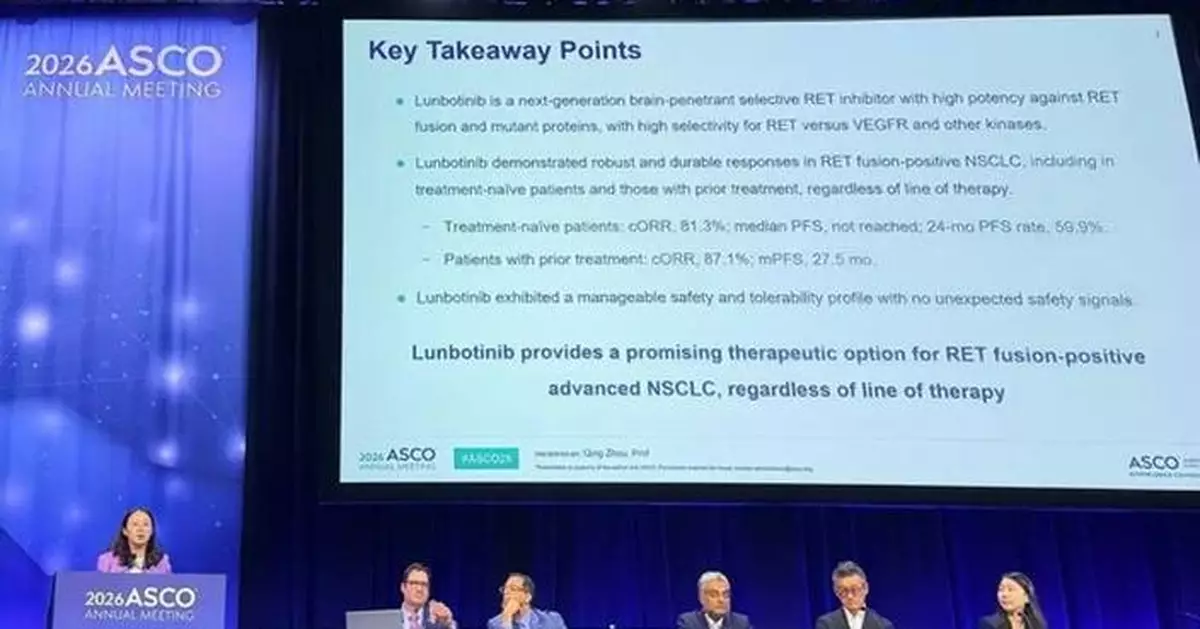
CHENGDU, China, May 30, 2026 /PRNewswire/ -- Sichuan Kelun-Biotech Biopharmaceutical Co., Ltd. (the "Company", 6990.HK) announced that at the 2026 American Society of Clinical Oncology (ASCO) Annual Meeting held in Chicago, USA, results from the pivotal Phase II study of the Company's next-generation selective RET inhibitor, lunbotinib fumarate (A400/EP0031, 宁泰莱®[1]), in advanced rearranged during transfection (RET) fusion-positive non-small cell lung cancer (NSCLC) were presented as an oral report by Professor Qing Zhou from Guangdong Provincial People's Hospital (Abstract #8505, Lung Cancer—Metastatic Non-Small Cell). Based on these results, a New Drug Application (NDA) for lunbotinib fumarate for the treatment of adult patients with locally advanced or metastatic RET fusion-positive NSCLC has been accepted by the National Medical Products Administration (NMPA) of China.
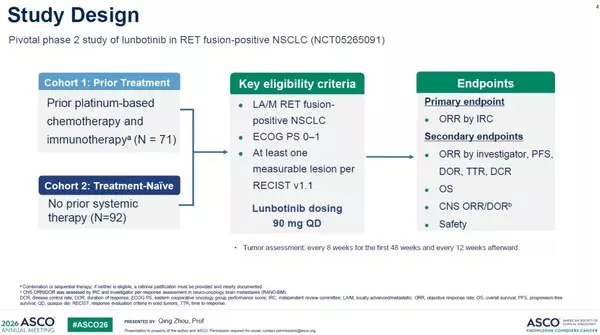
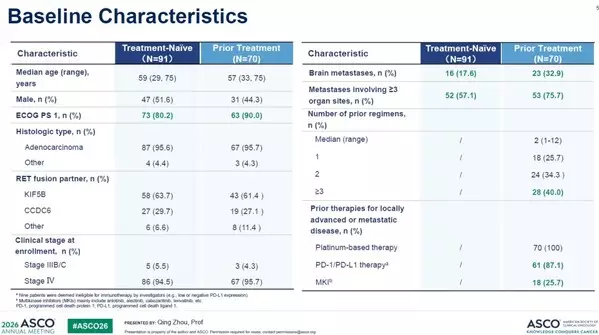
The study enrolled 71 patients who had previously received platinum-based chemotherapy and immunotherapy (pre-treated patients) and 92 patients who had not received prior systemic therapy (treatment-naïve patients). As of the data cutoff date of October 29, 2025, the median follow-up was 22.6 months and 20.7 months, respectively.
Click to Gallery
Kelun-Biotech Presents Pivotal Phase II Data for Lunbotinib Fumarate (A400/EP0031) in RET Fusion-Positive NSCLC at 2026 ASCO
Kelun-Biotech Presents Pivotal Phase II Data for Lunbotinib Fumarate (A400/EP0031) in RET Fusion-Positive NSCLC at 2026 ASCO
Kelun-Biotech Presents Pivotal Phase II Data for Lunbotinib Fumarate (A400/EP0031) in RET Fusion-Positive NSCLC at 2026 ASCO
Kelun-Biotech Presents Pivotal Phase II Data for Lunbotinib Fumarate (A400/EP0031) in RET Fusion-Positive NSCLC at 2026 ASCO
Kelun-Biotech Presents Pivotal Phase II Data for Lunbotinib Fumarate (A400/EP0031) in RET Fusion-Positive NSCLC at 2026 ASCO
Kelun-Biotech Presents Pivotal Phase II Data for Lunbotinib Fumarate (A400/EP0031) in RET Fusion-Positive NSCLC at 2026 ASCO
Kelun-Biotech Presents Pivotal Phase II Data for Lunbotinib Fumarate (A400/EP0031) in RET Fusion-Positive NSCLC at 2026 ASCO
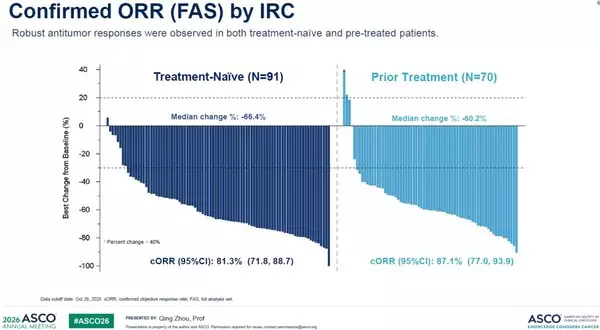
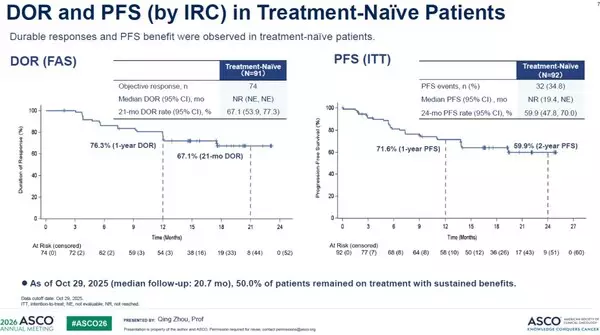
The confirmed objective response rate (ORR) assessed by Independent Review Committee (IRC) was 81.3% (95% CI: 71.8–88.7) in treatment-naïve patients and 87.1% (95% CI: 77.0–93.9) in pre-treated patients.
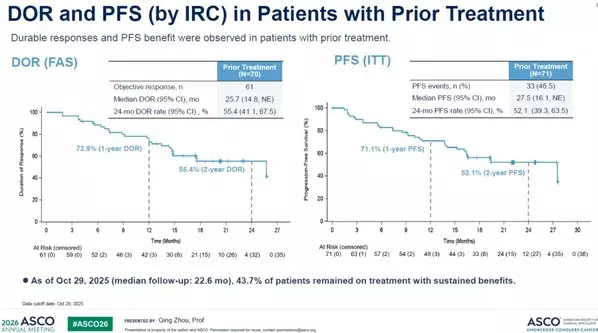
In treatment-naïve patients, median duration of response (mDOR) and median progression-free survival (mPFS) were not reached. In pre-treated patients, mDOR was 25.7 months, and mPFS was 27.5 months.
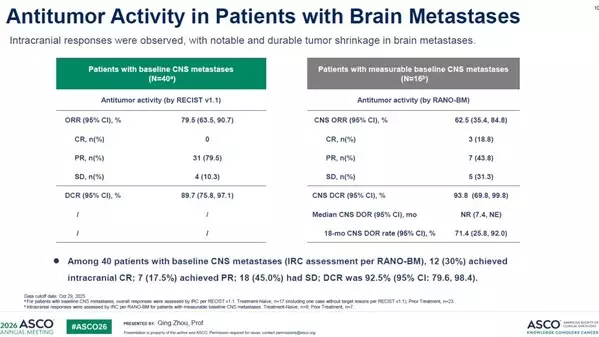
Among 40 patients with central nervous system (CNS) metastases at baseline (assessed by IRC per response assessment in neuro-oncology brain metastases (RANO-BM) criteria), the intracranial complete response (CR) rate was 30%, and the disease control rate (DCR) was 92.5% (95% CI: 79.6–98.4).
Lunbotinib fumarate was well tolerated, with treatment-related adverse events (TRAEs) being predominantly Grade 1–2. The rate of permanent discontinuation due to TRAEs was 1.2%, and no treatment-related deaths were reported.
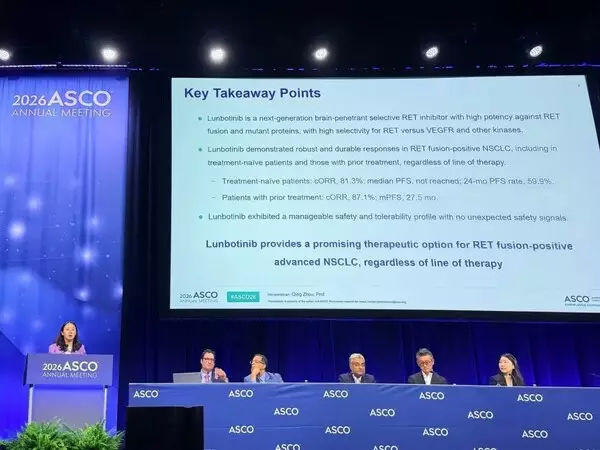
The study shows that lunbotinib fumarate demonstrated robust and durable clinical activity in RET fusion-positive NSCLC, regardless of line of therapy, in a largely poor-prognostic patient population. Favorable CNS efficacy was observed in patients with measurable baseline CNS metastases. The safety profile was manageable, with no unexpected safety signals.
Professor Qing Zhou, principal investigator from Guangdong Provincial People's Hospital, said: "From the first presentation of Phase I data at ASCO 2023 to today's pivotal Phase II results, we have witnessed the progression of lunbotinib fumarate from early exploration to a confirmatory study. These data show that lunbotinib fumarate delivers robust and durable responses in both treatment-naïve and pre-treated patients with RET fusion-positive NSCLC, with particularly remarkable intracranial efficacy in patients with CNS metastases at baseline. As a next-generation selective RET inhibitor, it will offer an important new treatment option for patients."
| [1] Trade name to be approved by NMPA. |
|
[1] Trade name to be approved by NMPA.
About lunbotinib fumarate (A400/EP0031, 宁泰莱®)
Lunbotinib fumarate is a novel, next-generation selective RET inhibitor for NSCLC, medullary thyroid cancer (MTC) and other solid tumors with a high prevalence of RET alterations. The NDA of lunbotinib fumarate has been accepted for review by the NMPA of China for the treatment of adult patients with RET-fusion positive locally advanced or metastatic NSCLC. The Company is also conducting a Phase Ib/II clinical study in China for the treatment of RET-positive solid tumors.
In March 2021, the Company granted Ellipses Pharma Limited, a U.K.-based international oncology drug development company, an exclusive license to develop, manufacture and commercialize this agent outside Greater China and certain Asian countries. In April 2024, lunbotinib fumarate was cleared by the Food and Drug Administration (FDA) to progress into a Phase II clinical trial (NCT05443126) which is currently recruiting in the United States, United Kingdom, Europe and United Arab Emirates, where it is being evaluated as a monotherapy and in combination with chemotherapy in RET fusion positive advanced NSCLC.
About Kelun-Biotech
Kelun-Biotech (6990.HK) is a holding subsidiary of Kelun Pharmaceutical, which focuses on the R&D, manufacturing, commercialization and global collaboration of innovative biological drugs and small molecule drugs. Kelun-Biotech focuses on major disease areas such as solid tumors, autoimmune, and metabolic diseases, and in establishing a globalized drug development and industrialization platform to address the unmet medical needs in China and the rest of world. Kelun-Biotech is committed to becoming a leading global enterprise in the field of innovative drugs. At present, Kelun-Biotech has more than 30 ongoing key innovative drug projects, of which 4 projects with 8 indications have been approved for marketing, 1 project is in the NDA stage and more than 10 projects are in the clinical stage. Kelun-Biotech has established one of the world's leading proprietary ADC and novel DC platforms, OptiDC™, and has 2 ADC projects with 5 indications approved for marketing, and multiple ADC and novel DC assets in clinical or preclinical research stage. For more information, please visit https://en.kelun-biotech.com/.
** This press release is distributed by PR Newswire through automated distribution system, for which the client assumes full responsibility. **
Kelun-Biotech Presents Pivotal Phase II Data for Lunbotinib Fumarate (A400/EP0031) in RET Fusion-Positive NSCLC at 2026 ASCO
Kelun-Biotech Presents Pivotal Phase II Data for Lunbotinib Fumarate (A400/EP0031) in RET Fusion-Positive NSCLC at 2026 ASCO
Kelun-Biotech Presents Pivotal Phase II Data for Lunbotinib Fumarate (A400/EP0031) in RET Fusion-Positive NSCLC at 2026 ASCO
Kelun-Biotech Presents Pivotal Phase II Data for Lunbotinib Fumarate (A400/EP0031) in RET Fusion-Positive NSCLC at 2026 ASCO
Kelun-Biotech Presents Pivotal Phase II Data for Lunbotinib Fumarate (A400/EP0031) in RET Fusion-Positive NSCLC at 2026 ASCO
Kelun-Biotech Presents Pivotal Phase II Data for Lunbotinib Fumarate (A400/EP0031) in RET Fusion-Positive NSCLC at 2026 ASCO
Kelun-Biotech Presents Pivotal Phase II Data for Lunbotinib Fumarate (A400/EP0031) in RET Fusion-Positive NSCLC at 2026 ASCO
From RPO and Romomo to PartyOS, RoboParty is building an open humanoid robotics foundation for developers worldwide.
PITTSBURGH, Oct. 4, 2026 /PRNewswire/ -- On September 28, 2026, RoboParty publicly unveiled RP1 (ROBOTO 01) at IROS 2026, marking the robot's global debut.
In January 2026, RoboParty fully open-sourced RPO (ROBOTO ORIGIN), its first open-source humanoid robotics project. To date, RPO has received more than 2,500 GitHub stars. As a developer-oriented open-source humanoid robot, RPO has attracted broad attention worldwide and inspired multiple community builds and reproductions.
Building on this foundation, RoboParty positions RP1 as the world's first high-performance full-stack open-source bipedal humanoid robot. RP1 is designed for researchers, educators, robotics developers and embodied AI teams, with the goal of providing a humanoid robotics system that can be used, modified, trained and continuously extended in real development workflows.
Kick Me: Putting Dynamic Stability to the Test
At RoboParty's IROS booth, the "Kick Me" interactive demonstration was one of the most direct ways for visitors to experience RP1's capabilities.
During the demonstration, visitors could directly apply external disturbances to the robot. When pushed or kicked, RP1 rapidly adjusted its posture and recovered its balance. Unlike demonstrations based only on predefined motions, this open interaction allowed visitors to observe the robot's dynamic stability and control performance under external disturbances.
The repeated high-intensity interactions also provided a direct test of the robot's body performance and system-level robustness.
RP1's dynamic motion and disturbance-recovery capabilities at IROS were supported by PartyOS, RoboParty's open R&D foundation for humanoid robotics, which integrates the UFO framework.
UFO — short for "A General Unsupervised Reinforcement Learning Framework for Humanoid Control" — is a training framework for discovering humanoid motor skills through unsupervised reinforcement learning. It trains low-level motion policies that allow robots to learn dynamic behaviors without relying entirely on conventional predefined motion trajectories, including skill transitions, disturbance recovery and fall recovery.
Rather than treating motion control as an isolated algorithmic module, RoboParty is integrating the robot body, actuator modules, low-level control and embodied AI algorithms into one system for continuous joint validation. The goal is to ensure that algorithmic capabilities are built on a stable and reproducible humanoid robotics platform.
The IROS demonstration marked an important validation milestone for this technical direction.
Throughout the exhibition, researchers, university faculty and students, robotics developers and industry professionals from different countries and regions visited RoboParty's booth. Discussions extended beyond motion performance to RP1's robot body, Romomo actuator modules, motion control, modular design and future open-source plans.
Multiple research teams and developers also discussed the procurement of robots and core components, algorithm reproduction, embodied AI research and open-source collaboration with the RoboParty team.
From Closed Systems to Full-Stack Open Source
With RP1, RoboParty is exploring an alternative path for humanoid robotics.
Today, high-performance humanoid robots are typically delivered as complete products or closed systems. Researchers and developers may be able to use or observe these robots, but the underlying hardware, motion-control systems, simulation environments and software stacks are often difficult to inspect, modify, reproduce or extend.
RP1 is designed to redefine how humanoid robots are developed — from a developer's perspective.
For RoboParty, "full-stack open source" does not mean releasing only mechanical files or a single software module. In addition to the robot body and core actuator modules, RoboParty plans to progressively open its motion-control systems, simulation environments, SDKs, training tools and PartyOS development foundation.
This will allow developers to participate more deeply in humanoid robotics development, from hardware and low-level control to model training and deployment.
"Humanoid robots should not be closed systems that only a small number of teams can build while everyone else can do little more than watch," said Yi Huang, founder of RoboParty. "We want RP1 to become an open foundation that developers can access, modify, train and continuously improve. Full-stack open source has been our technical direction since the RPO project."
RoboParty plans to announce further details of RP1's open-source roadmap in October 2026, with broader software and hardware releases and a mass-production program to follow later in Q4.
RP1: A High-Performance Open-Source Body for Embodied AI
RP1 is designed to provide a high-performance humanoid platform for dynamic motion, embodied AI model training, validation and deployment, data collection and continuous development.
RP1 delivers peak joint torque of up to 160 N•m. From its in-house-developed Romomo actuator modules and mechanical structure to its real-time motion-control system, RP1 is designed around the requirements of dynamic motion, disturbance recovery and long-term development experiments.
These capabilities were demonstrated live at IROS. During the "Kick Me" interaction, visitors directly applied external disturbances while RP1 adjusted its posture and regained its balance. The robot also demonstrated continuous motion, disturbance recovery and fall recovery. These behaviors reflected not only algorithmic performance but also the coordination of the robot body, actuator modules and motion-control system.
RP1 builds on RoboParty's broader full-stack open-source roadmap.
RoboParty began with RPO, its fully open-source bipedal humanoid robotics project. Through the development and community adoption of RPO, RoboParty expanded its technical capabilities to cover core actuators, robot bodies, motion control, dexterous manipulation and robotics software systems.
RoboParty subsequently introduced the Romomo actuator modules and its dexterous RP Hand while continuing to build PartyOS.
RPO validated an open-source bipedal robot body, motion-control system and developer workflow. Romomo expanded the technical foundation to cover core actuator modules. RP Hand extended the stack into dexterous manipulation and human-robot interaction. RP1 now brings these capabilities together into a humanoid robotics system designed for research and development.
Based on these capabilities, PartyOS is evolving across humanoid locomotion, perceptual interaction, whole-body manipulation and autonomous intelligent humanoids.
By bringing the robot body, actuators, motion control, perception, manipulation and intelligent software into one coordinated development system, RoboParty is building a full-stack open-source humanoid robotics platform from low-level hardware to high-level intelligence.
Building a Global Developer Community
RoboParty's team spans robot hardware, motion control, artificial intelligence, systems software and manufacturing engineering. Core team members studied at Tsinghua University's Yao Class, Peking University's Zhi Class, Harbin Institute of Technology, Stanford University, Carnegie Mellon University, Zhejiang University and other leading institutions.
RoboParty has already built a global community of more than 5,000 developers across research, education and maker communities.
As RP1 becomes progressively more open, RoboParty aims to further develop this community into an open ecosystem spanning robot hardware, algorithms, data and applications, enabling more researchers, model-development teams and developers to participate in building and advancing humanoid robotics.
Media Contact: marketing@roboparty.com
GitHub: https://github.com/Roboparty/roboto_origin
Website: https://roboparty.com/
** This press release is distributed by PR Newswire through automated distribution system, for which the client assumes full responsibility. **
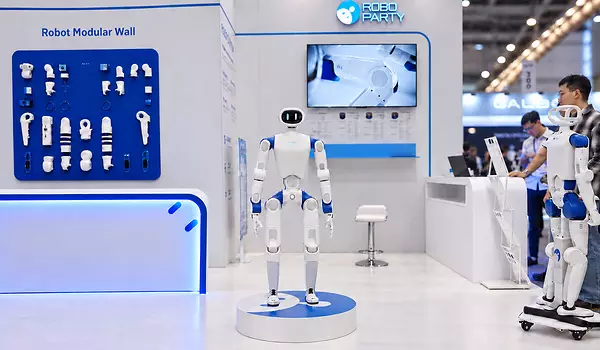
RoboParty Unveils RP1, a High-Performance Full-Stack Open-Source Humanoid Robot at IROS