The economy, inflation and how those forces could impact the lives of Americans were front and center over the past week. Trips to the grocery store or gas station are more painful than they were last year, and rising costs are impacting the decisions of both households and businesses.
Here’s a snapshot of prominent economic data and news that occurred over the past week and what it potentially means for you.
A key inflation gauge that is monitored closely by the Federal Reserve accelerated in April to the highest level in three years, squeezing Americans’ finances and creating political challenges for President Trump and congressional Republicans with midterm elections just five months away.
Inflation jumped to 3.8% in April compared with a year ago, the Commerce Department said Thursday, up from 3.5% in March and the highest since May 2023. On a monthly basis, prices rose 0.4%, down from the 0.7% jump in March but still higher than the inflation-fighters at the Federal Reserve would prefer.
Thursday’s inflation report also showed that in addition to gasoline, prices for groceries, clothing and electricity are also on the rise, suggesting that inflation may be growing more entrenched.
U.S. consumer confidence declined slightly this month as gas prices stayed high and inflation remained elevated, a sharp contrast to soaring stock prices that have neared record levels.
The Conference Board’s consumer confidence index slipped 0.7 points to 93.1 in May, the first decline after three months of gains.
The index follows a separate gauge of consumer sentiment released last week by the University of Michigan, which fell to a record low this month. Spikes in gas prices as well as higher food costs have worsened inflation, which has outpaced the growth in average paychecks, reducing most Americans’ purchasing power. Americans have soured on President Trump’s economic policies, polls show, potentially creating problems for Republicans heading into the midterm elections.
The average long-term U.S. mortgage rate rose again this week, reaching its highest level in nine months, another setback for prospective homebuyers.
The benchmark 30-year fixed rate mortgage rate rose to 6.53% from 6.51% last week, mortgage buyer Freddie Mac said Thursday. Despite the latest increase, the average rate remains below 6.89%, where it was a year ago.
When mortgage rates rise they can add hundreds of dollars a month in costs for borrowers, reducing their purchasing power.
Rates have been mostly trending higher since the war with Iran began, disrupting the passage of tankers ferrying crude oil from the Persian Gulf to customers worldwide. That’s sent oil prices sharply higher — a key driver of inflation.
More Americans sought unemployment benefits last week, but layoffs remain low despite economic uncertainty caused by the Iran war.
The Labor Department reported Thursday that jobless claims were up to 215,000, up from 210,000 the week before. The four-week moving average of claims, which smooths out week-to-week volatility, rose by nearly 6,300 to 209,000.
The number of Americans signing up for unemployment benefits — a proxy for layoffs — has stabilized in a low range of mostly 200,000 to 250,000 a week since the U.S. economy emerged from a brief but nasty pandemic recession in 2020.
The total number of people collecting jobless aid rose by 15,000 to 1.79 million the week that ended May 16.
The persistently low number of claims suggests that most U.S. companies have not resorted to layoffs. But even if they’re not cutting jobs, employers haven’t been adding many either. Last year, companies, nonprofits and government agencies added fewer than 10,000 jobs a month, the weakest hiring outside recession years since 2002.
Stocks rose on Wall Street Friday, adding to the all-time highs they set a day earlier.
The S&P 500 climbed slightly. The index is coming off six gains in a row and is headed for a ninth straight winning week, which would be the longest such streak since 2023.
Every major index is on track for records and to close out May with solid gains, despite worries about the U.S. war with Iran and its impact on inflation.
Markets in Europe and Asia mostly rose.

Trader Edward Curran, left, and specialist Meric Greenbaum, center, work on the floor of the New York Stock Exchange, Friday, May 22, 2026. (AP Photo/Richard Drew)
The Atlantic is quiet — record quiet — this hurricane season thanks to an enormous El Nino that crushes storms before they get going.
No Atlantic hurricanes have formed yet this year and none are likely to form for at least another week, even though this would normally be the peak of the season, according to the National Hurricane Center. Only five relatively weak and brief tropical storms have spun up this season.
On Saturday, 2026 set a record for the longest a season has begun without a storm that has reached winds of 74 mph (119 kph) to qualify as a hurricane — at least in the satellite era, said Nick Novella, a meteorologist at the government's Weather Prediction Center. Before the 1950s there were a few years where no hurricanes were recorded this late in the season, but meteorologists don't trust those records because ocean monitoring wasn't complete.
Overall hurricane activity using a measurement that factors in the number of storms, their strength and how long they last is also at a post-1950 record low, according to Colorado State University hurricane expert Phil Klotzbach. Storm activity in the Atlantic is only 7% of normal for this time of year.
People shouldn't let down their guard because it just takes one storm, even during an El Nino, to be catastrophic. Several experts pointed to 1992, which kicked off late but nastily with devastating Hurricane Andrew.
“It’s really staggering, just how inhospitable the Atlantic is to anything that could form a tropical cyclone right now,” said Kristen Corbosiero, a University at Albany atmospheric science professor. “Anything that tries to form is just getting this triple whammy” of winds that decapitate a storm, dry air that starves it and downward pushing winds that basically stomp it.
Those three forces are classic impacts of El Nino, the natural and temporary warming of parts of the equatorial Pacific that warps and warms weather worldwide, five experts told The Associated Press.
"It's just hammering the Atlantic. It’s just impressive,” Klotzbach said. “We haven’t even had anything really even close to a hurricane.”
The biggest El Nino effect in the Atlantic is record-strong wind shear, which is when strong easterly winds hit a storm system at low levels while strong westerly winds push it the other way at upper altitudes. The result is that they “tear apart” the storm, Corbosiero said.
In the area between Africa and the Caribbean where the strongest storms normally form and head west, that wind shear is about 45 mph (74 kph) more than what a tropical cyclone can withstand, Corbosiero said. That's an unheard of level, she said.
“Their heads are cut off before they even have a chance,” said University of Miami hurricane expert Brian McNoldy.
The one area where wind shear hasn't been high has been the Gulf of Mexico and those storms tend to really get going later in the season, so there could still be some strong ones coming to that region, Corbosiero and others warned.
Along with the dry air that starves the storm, African dust is choking it and there are fewer “seeds” of stormy weather that could develop, all classic El Nino signs, the experts said. And in the Atlantic, high pressure is pushing the air downward, which also hinders storms from forming, they said.
This is all despite warm waters — the world's oceans have been record hot for 100 days — that normally feed storms. It shows the power of El Nino to overcome that, Klotzbach said.
The trouble is the Atlantic waters, while warm, haven't warmed up nearly as quickly as the atmosphere above, which got hotter quickly as part of El Nino, said Massachusetts Institute of Technology meteorology professor Kerry Emanuel. His research found what matters more than just the water temperature is the difference in temperature between the air and the water; because hurricanes are powered by the flow of heat from the ocean to the air, the higher that is, the less storm activity there will be.
The waters of the Atlantic are a few months behind the atmosphere in feeling the El Nino effect. But next year, as the El Nino winds down and cools closer to normal, the warm water will persist, which will increase the odds for next season to be extra busy, Emanuel said.
Just as El Nino traditionally dampens Atlantic hurricane season, it tends to rev up tropical cyclone activity in the Pacific, with moist air and little wind shear. And so far this year, storm activity in the eastern Pacific is nearly double normal, with hurricanes lasting much longer than usual. In the central Pacific, activity is about 40% more than normal.
“It's just a party out there, one right after the other in the eastern Pacific,” Klotzbach said.
While the Atlantic has had only five small tropical storms, there have been 16 named storms in the eastern Pacific and 20 in the central Pacific.
Hawaii has been hit twice. El Nino tends to push storms farther west than other years, Corbosiero said.
Because scientists have long known about El Nino's effects on storm activity in both oceans, forecasters months ago predicted a slow Atlantic hurricane season.
“I don't think anyone really foresaw it being this quiet,” McNoldy said. “This is quite remarkable.”
This story corrects the wind speed in paragraph 3.
The Associated Press’ climate and environmental coverage receives financial support from multiple private foundations. AP is solely responsible for all content. Find AP’s standards for working with philanthropies, a list of supporters and funded coverage areas at AP.org.
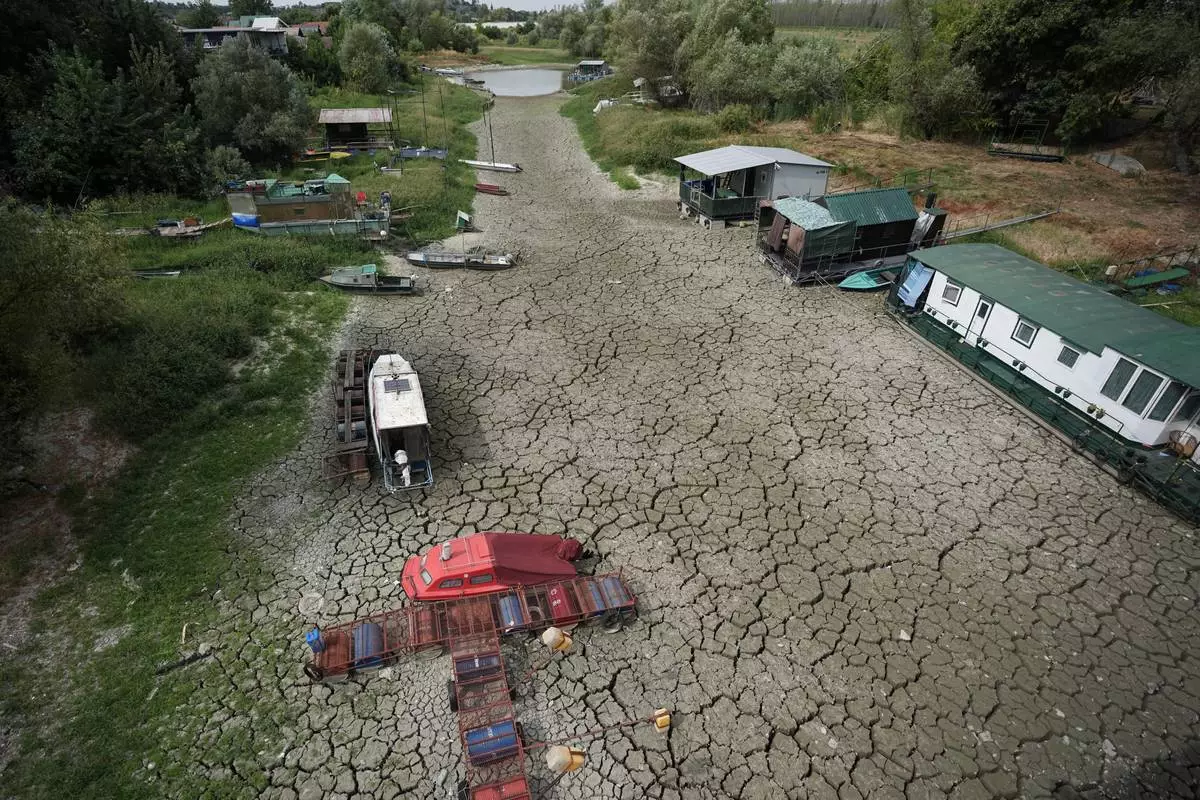
FILE - Boats sit on dry ground as water levels have dropped on the Danube River in Petrovaradin, Serbia, Aug. 25, 2026. (AP Photo/Darko Vojinovic, File)
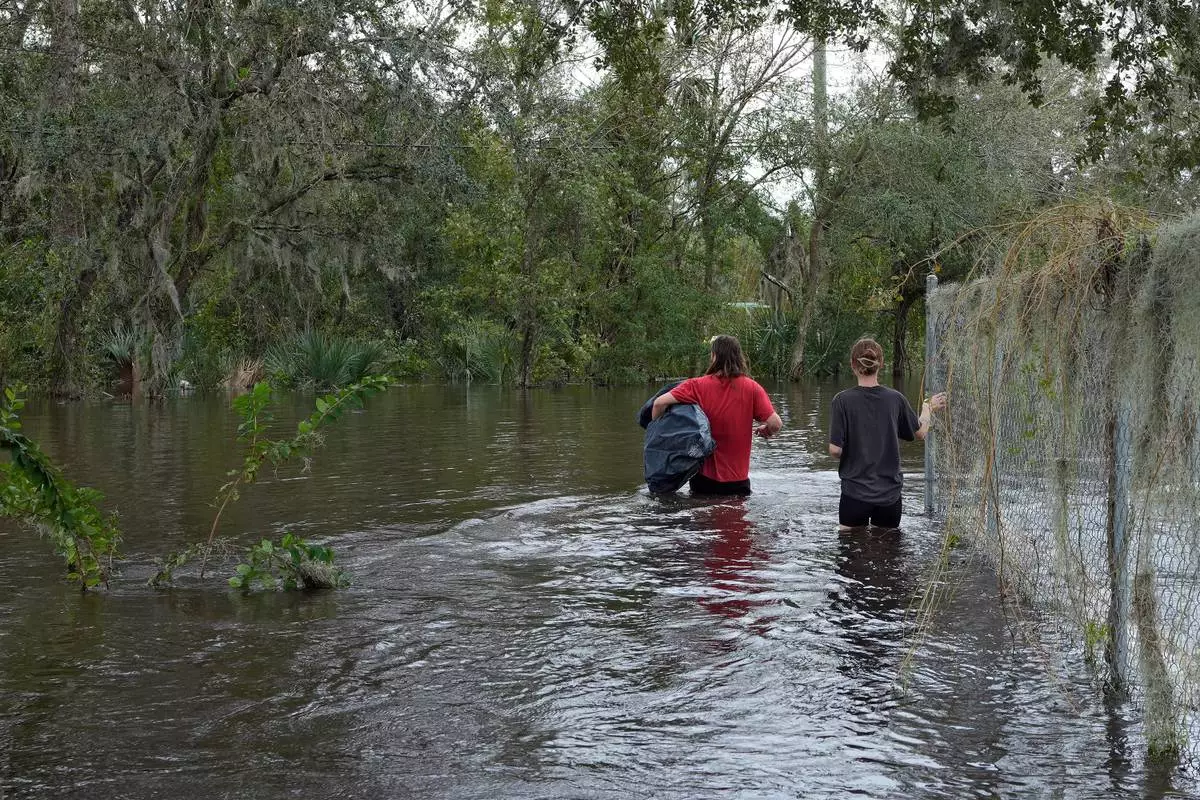
FILE - Connor Hughes and Kaylee Swenson walk through floodwaters from the Alafia River caused by Hurricane Milton, Oct. 11, 2024, in Lithia, Fla. (AP Photo/Chris O'Meara, File)
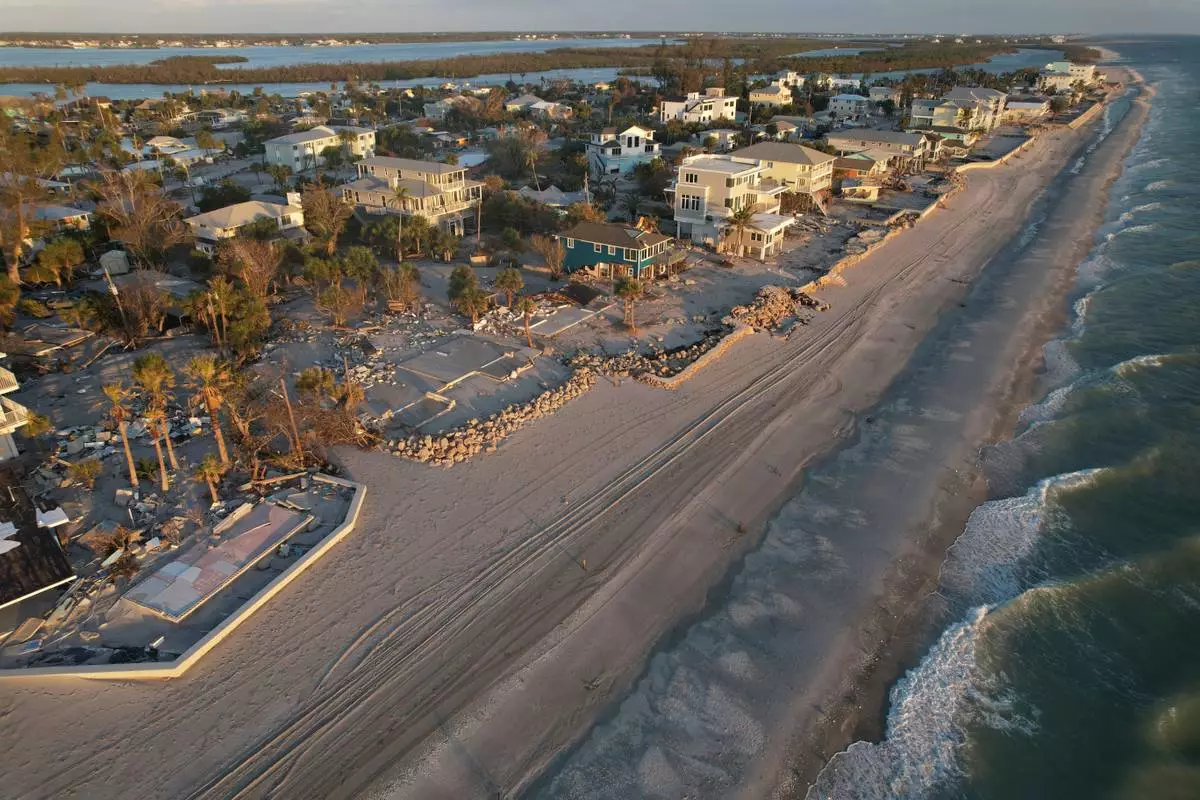
FILE - Waves roll in from the Gulf of Mexico toward lots where only empty foundations and debris remain after homes were swept away in Hurricane Milton on Manasota Key in Englewood, Fla., Oct. 13, 2024. (AP Photo/Rebecca Blackwell, File)