Skip to Content Facebook Feature Image

Mexican designer blends soccer and pre-Hispanic culture ahead of the World Cup

ENT

Mexican designer blends soccer and pre-Hispanic culture ahead of the World Cup
ENT

ENT

Mexican designer blends soccer and pre-Hispanic culture ahead of the World Cup

2026-05-31 14:01 Last Updated At:14:11

MEXICO CITY (AP) — It’s no coincidence that Hugo Rosas’ jersey designs ahead of the World Cup resemble some of Mexico's most iconic decorations. His work fuses soccer and Mexican identity to showcase his country’s culture beyond its borders.

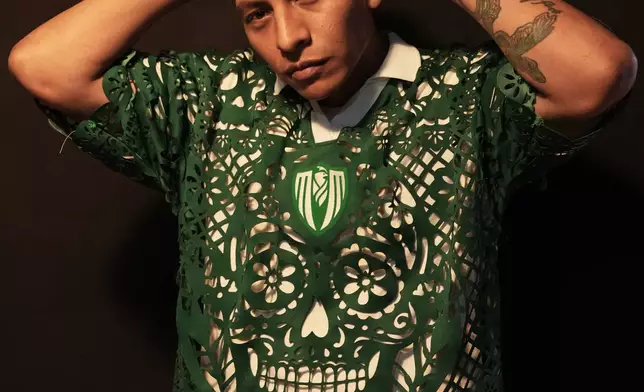
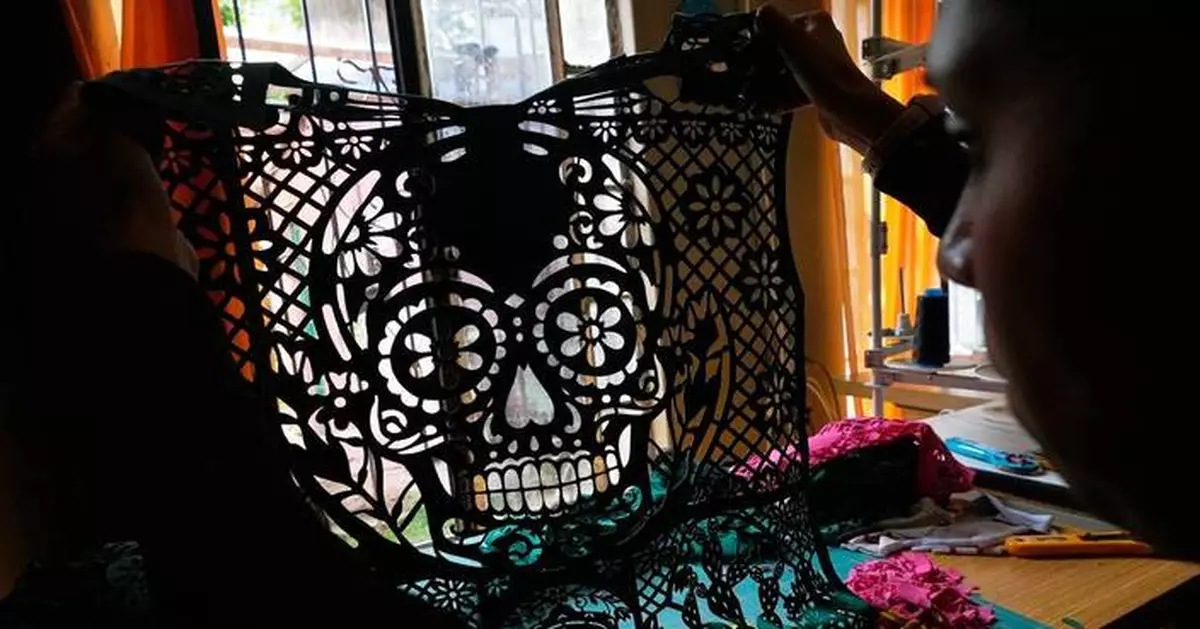
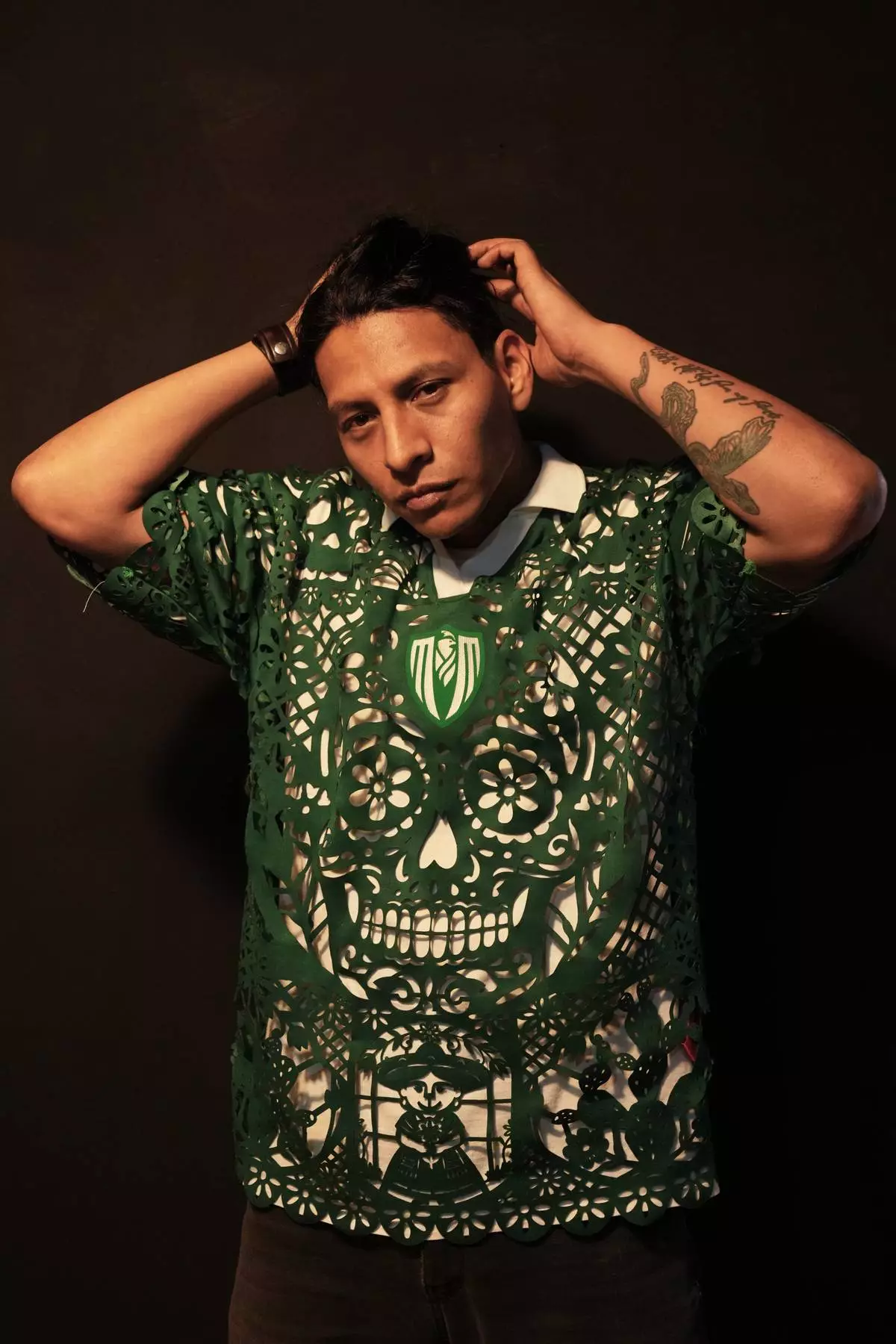
His latest collection is called “Calados del Alma” or “Cutouts of the Soul.” It draws inspiration from ancient Mexican beliefs and papel picado, the delicate cut-paper ornaments commonly used during local celebrations and holidays.

More Images
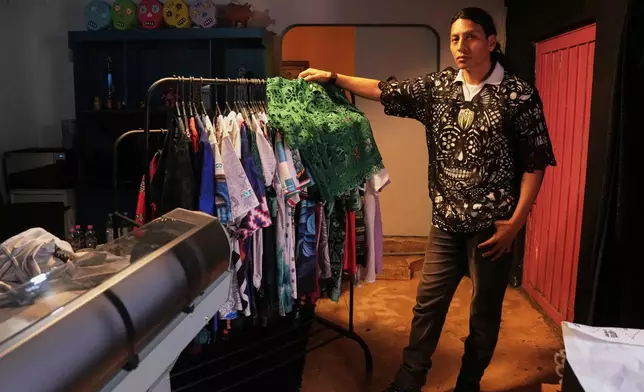
Designer Hugo Rosas poses for a photo wearing a soccer jersey, inspired by papel picado and traditional folk art, from his brand Mexclart, which he produces in his workshop in Cuautitlán Izcalli, Mexico, Monday, May 25, 2026. (AP Photo/Marco Ugarte)
Designer Hugo Rosas poses for a photo wearing a soccer jersey, inspired by papel picado and traditional folk art, from his brand Mexclart, which he produces in his workshop in Cuautitlán Izcalli, Mexico, Monday, May 25, 2026. (AP Photo/Marco Ugarte)

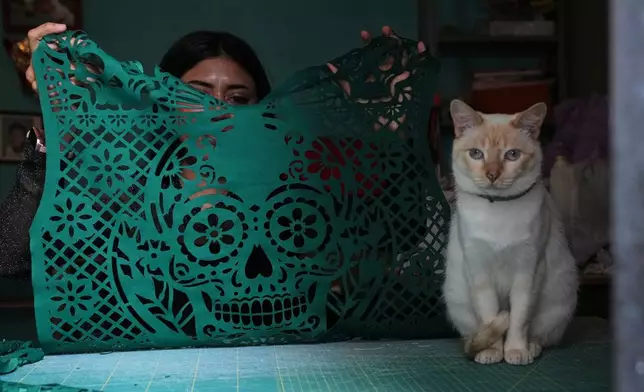
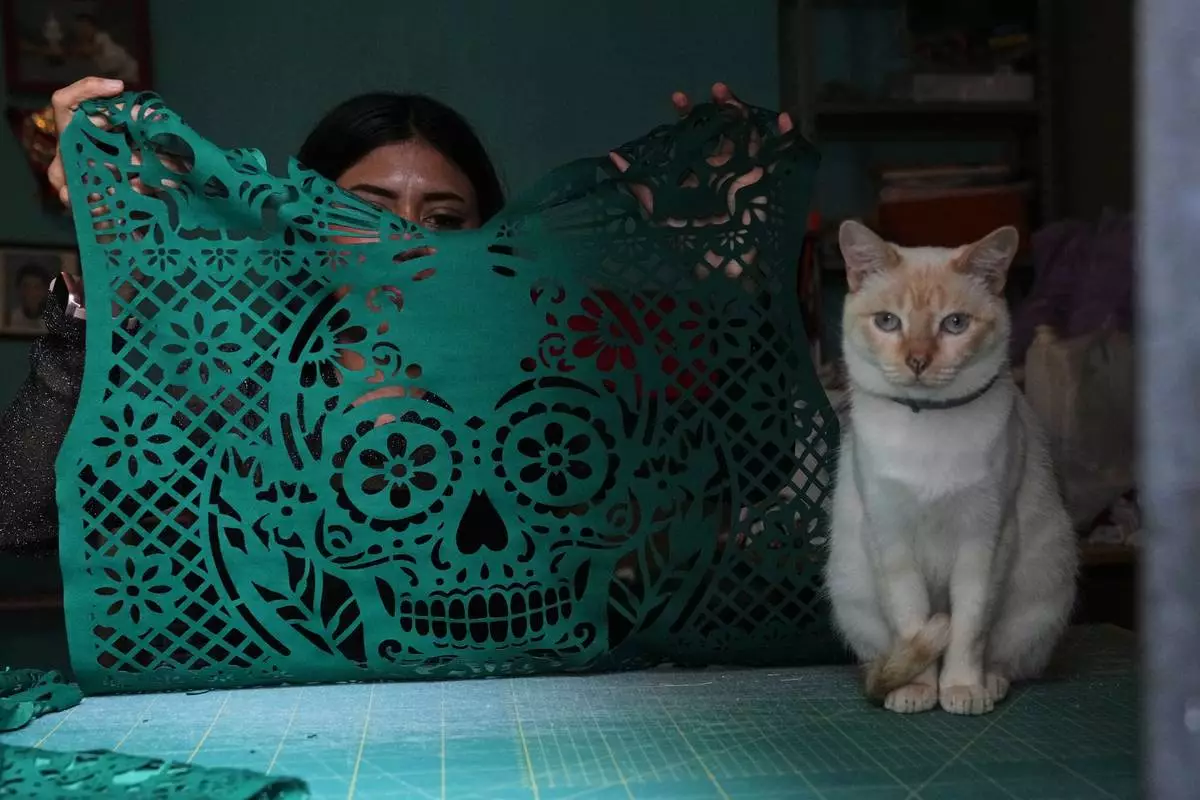
Cande Martinez prepares soccer jerseys inspired by papel picado and traditional folk art, alongside her cat Nube in Cuautitlán Izcalli, Mexico, Monday, May 25, 2026. (AP Photo/Marco Ugarte)
Cande Martinez prepares soccer jerseys inspired by papel picado and traditional folk art, alongside her cat Nube in Cuautitlán Izcalli, Mexico, Monday, May 25, 2026. (AP Photo/Marco Ugarte)

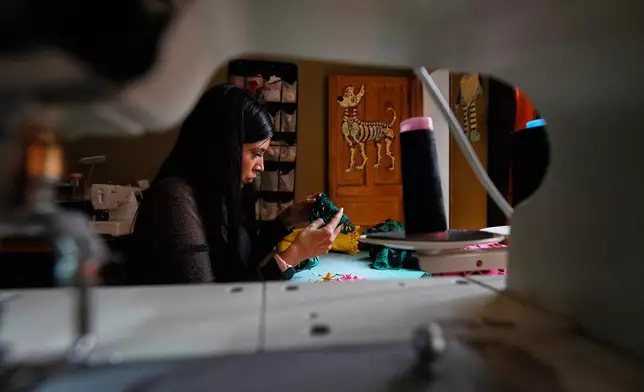
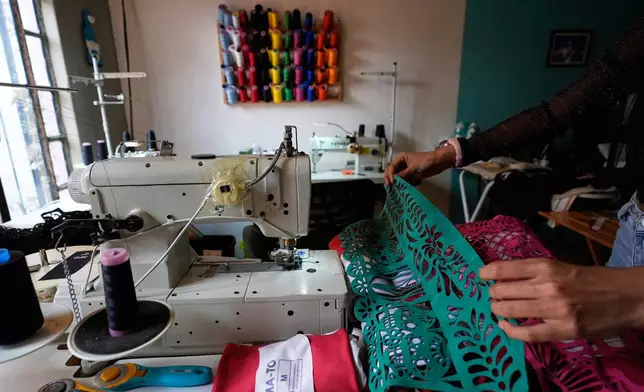
Cande Martinez prepares soccer jerseys, inspired by papel picado and traditional folk art, from the brand Mexclart, in Cuautitlán Izcalli, Mexico, Monday, May 25, 2026. (AP Photo/Marco Ugarte)
Cande Martinez prepares soccer jerseys, inspired by papel picado and traditional folk art, from the brand Mexclart, in Cuautitlán Izcalli, Mexico, Monday, May 25, 2026. (AP Photo/Marco Ugarte)

Designer Hugo Rosas poses for a photo with soccer jerseys, inspired by papel picado and traditional folk art, from his brand Mexclart, which he produces in his workshop in Cuautitlán Izcalli, Mexico, Monday, May 25, 2026. (AP Photo/Marco Ugarte)
Designer Hugo Rosas poses for a photo with soccer jerseys, inspired by papel picado and traditional folk art, from his brand Mexclart, which he produces in his workshop in Cuautitlán Izcalli, Mexico, Monday, May 25, 2026. (AP Photo/Marco Ugarte)

Cande Martinez prepares soccer jerseys, inspired by papel picado and traditional folk art, from the brand Mexclart, in Cuautitlán Izcalli, Mexico, Monday, May 25, 2026. (AP Photo/Marco Ugarte)
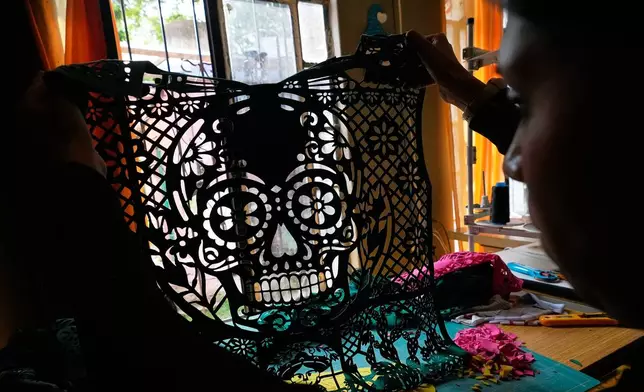
Cande Martinez prepares soccer jerseys, inspired by papel picado and traditional folk art, from the brand Mexclart, in Cuautitlán Izcalli, Mexico, Monday, May 25, 2026. (AP Photo/Marco Ugarte)

Cande Martinez prepares soccer jerseys, inspired by papel picado and traditional folk art, from the brand Mexclart, in Cuautitlán Izcalli, Mexico, Monday, May 25, 2026. (AP Photo/Marco Ugarte)

Cande Martinez prepares soccer jerseys, inspired by papel picado and traditional folk art, from the brand Mexclart, in Cuautitlán Izcalli, Mexico, Monday, May 25, 2026. (AP Photo/Marco Ugarte)

“We try to create concepts that resonate with us and convey traditions that make Mexicans feel proud,” said Rosas, who has run a workshop with his brother Andrés near Mexico City since 2022. “The country’s best is reflected in papel picado, colors and town celebrations.”

The first jersey sketched by the brothers portrayed Quetzalcoatl, the feathered serpent deity revered by several pre-Hispanic civilizations. That garment remains Andrés’ favorite to date.

“Quetzalcoatl represents a balance that sees the world as a system, not as something extractive that human beings can simply benefit from,” said Andrés, who oversees the brand’s marketing. “I connect with that pre-Hispanic worldview, which is why most of our products are deeply rooted in that vision.”

Hugo’s World Cup collection builds on an earlier set of designs he called “Ofrenda Viva,” or “Live Offering.”

Its aesthetics and concept are rooted in Mexico’s Day the Dead — that the living remember and honor their dearly departed with celebration instead of sorrow.

“It’s a garment resembling papel picado so that a person can offer their actions, thoughts and passions as an homage to those who are already gone,” Rosas said.

The jerseys are made of polyester so the fabric can be cut like papel picado without becoming vulnerable to tears or rips. Rosas and his team once experimented with natural fibers, but the material could not withstand the weight and structure required after production.

Designing each jersey can take up to three weeks, while sewing and cutting requires between eight and 10 hours of work.

Rosas’ first step is deciding the symbols he wishes to depict. He then determines the size and shape of each figure so the stitching aligns with his vision. Once a design is ready, the team’s seamstresses patiently cut and sew each piece of clothing.

The Rosas brothers operate on a modest scale and are proud of that approach. They value the care and time devoted to each jersey, keeping the process as artisanal as possible.

Since the World Cup garments went on sale in April, their Mexclart brand has crafted about 30 jerseys. Hugo Rosas expects demand to increase as the opening ceremony approaches.

Among his other collections is one devoted to pre-Hispanic gods. His favorite portrays Mictlantecuhtli, the Aztec ruler of the underworld, who is often depicted in skeletal form.

“Putting on a garment like this is like wearing a modern armor through which we can carry that pride and passion for our roots and show it to the world,” Rosas said.

He sometimes turns to books about Mexico’s history while developing his designs. However, the source of inspiration he enjoys the most is traveling to Indigenous communities where ancient ceremonies and customs remain alive.

“If it were up to me, I’d use gold or another material that could accurately represent our gods the way our ancestors did,” he said. “All the garments we create are meant to give Mexicans the chance to bring those deities into the present.”

Associated Press religion coverage receives support through the AP’s collaboration with The Conversation US, with funding from Lilly Endowment Inc. The AP is solely responsible for this content.
Designer Hugo Rosas poses for a photo wearing a soccer jersey, inspired by papel picado and traditional folk art, from his brand Mexclart, which he produces in his workshop in Cuautitlán Izcalli, Mexico, Monday, May 25, 2026. (AP Photo/Marco Ugarte)
Designer Hugo Rosas poses for a photo wearing a soccer jersey, inspired by papel picado and traditional folk art, from his brand Mexclart, which he produces in his workshop in Cuautitlán Izcalli, Mexico, Monday, May 25, 2026. (AP Photo/Marco Ugarte)

Cande Martinez prepares soccer jerseys inspired by papel picado and traditional folk art, alongside her cat Nube in Cuautitlán Izcalli, Mexico, Monday, May 25, 2026. (AP Photo/Marco Ugarte)
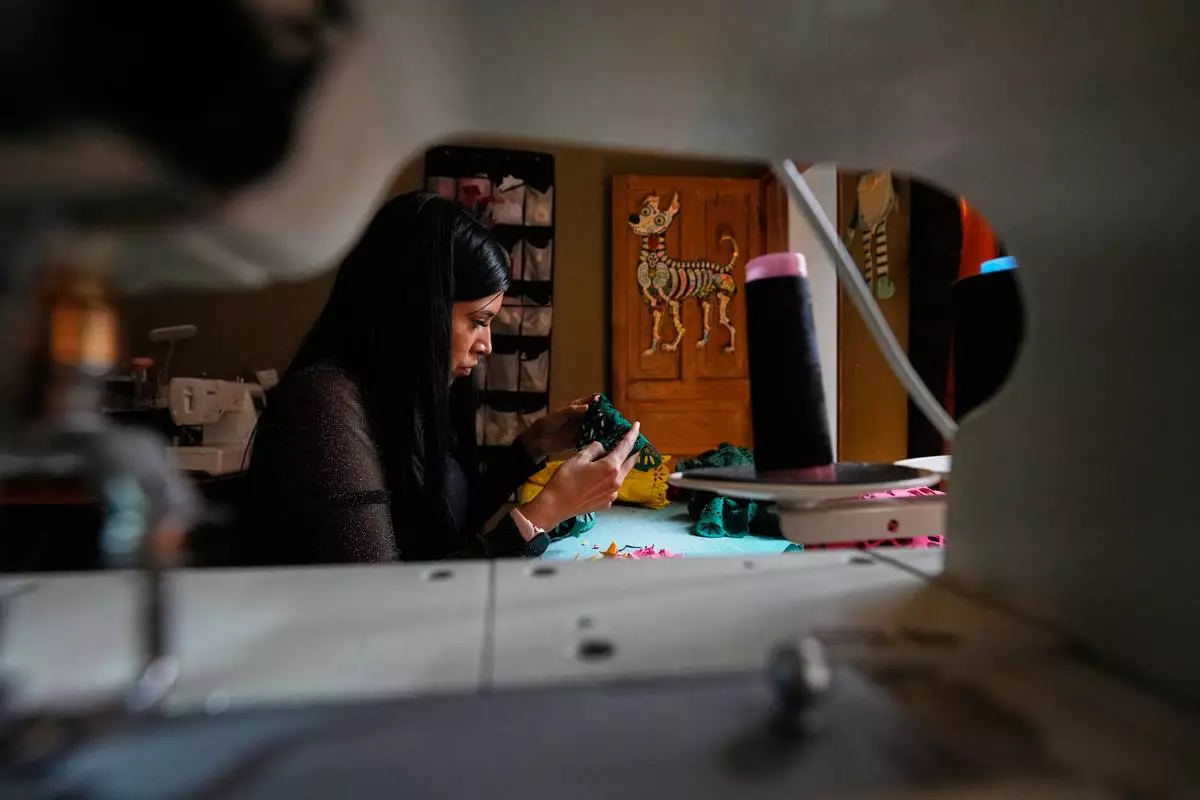
Cande Martinez prepares soccer jerseys inspired by papel picado and traditional folk art, alongside her cat Nube in Cuautitlán Izcalli, Mexico, Monday, May 25, 2026. (AP Photo/Marco Ugarte)

Cande Martinez prepares soccer jerseys, inspired by papel picado and traditional folk art, from the brand Mexclart, in Cuautitlán Izcalli, Mexico, Monday, May 25, 2026. (AP Photo/Marco Ugarte)
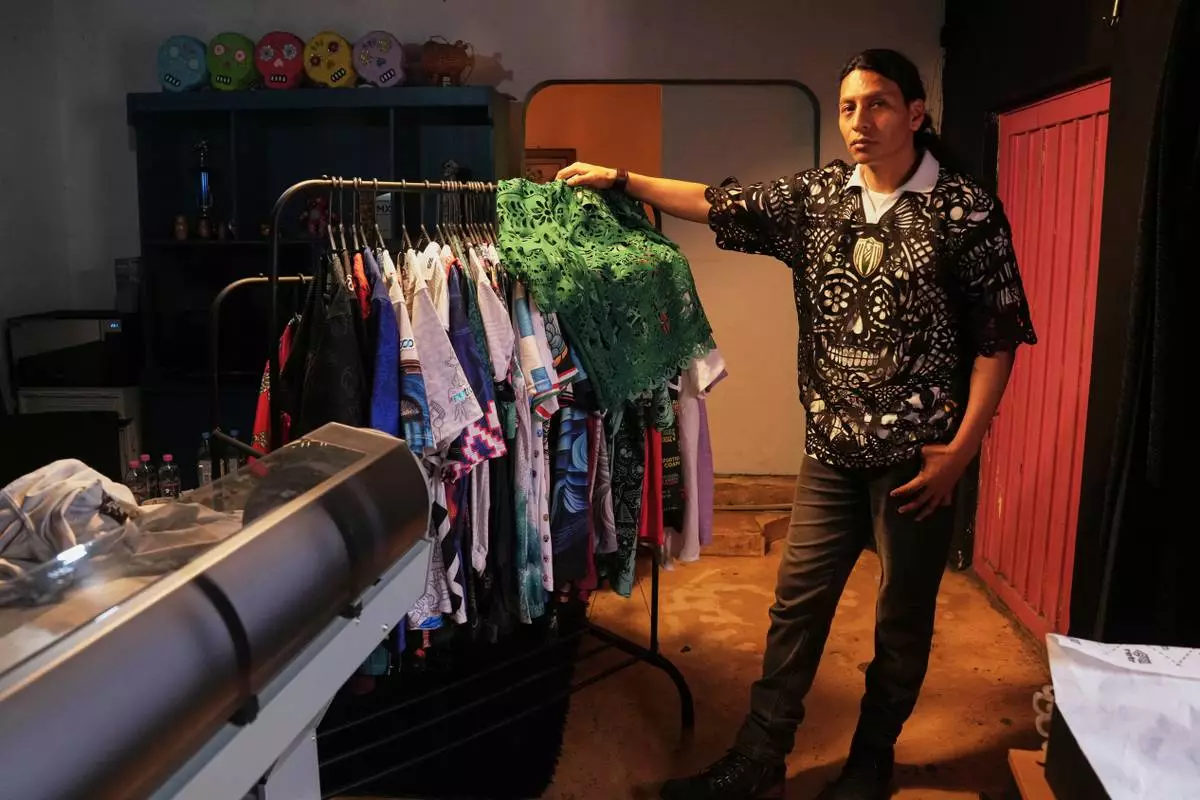
Cande Martinez prepares soccer jerseys, inspired by papel picado and traditional folk art, from the brand Mexclart, in Cuautitlán Izcalli, Mexico, Monday, May 25, 2026. (AP Photo/Marco Ugarte)

Designer Hugo Rosas poses for a photo with soccer jerseys, inspired by papel picado and traditional folk art, from his brand Mexclart, which he produces in his workshop in Cuautitlán Izcalli, Mexico, Monday, May 25, 2026. (AP Photo/Marco Ugarte)
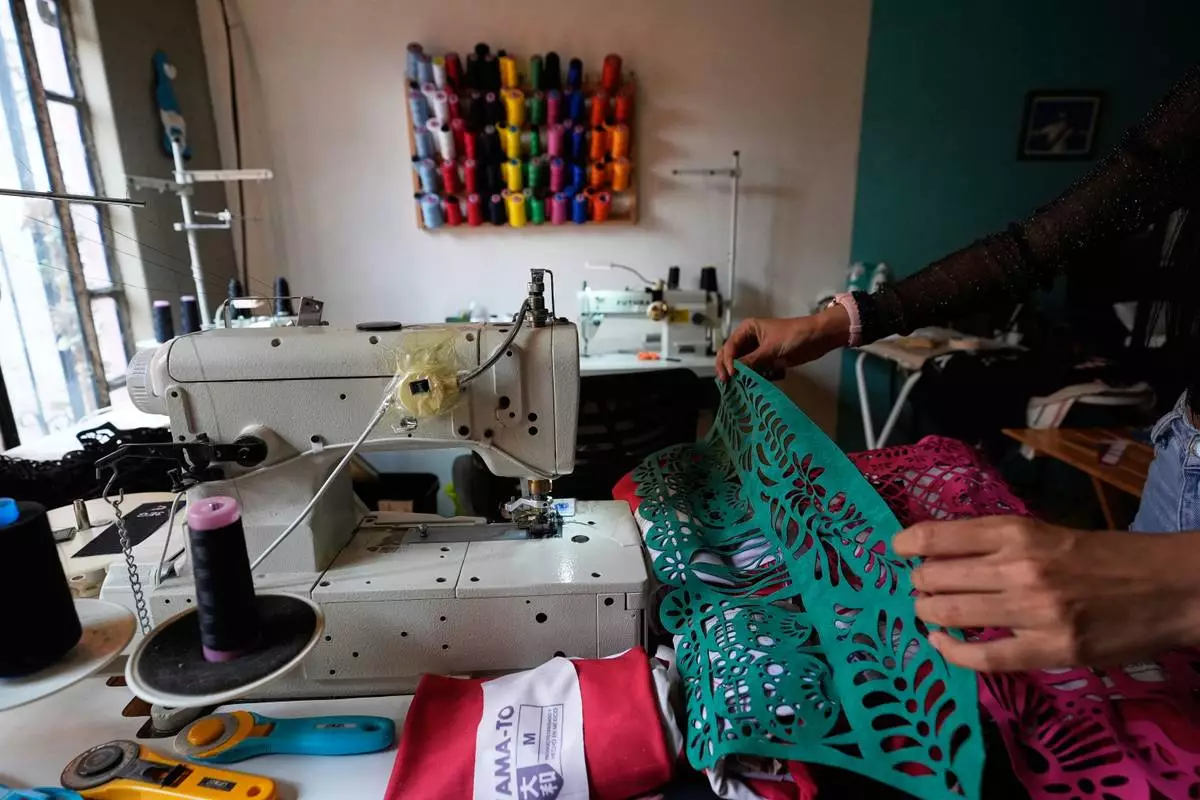
Designer Hugo Rosas poses for a photo with soccer jerseys, inspired by papel picado and traditional folk art, from his brand Mexclart, which he produces in his workshop in Cuautitlán Izcalli, Mexico, Monday, May 25, 2026. (AP Photo/Marco Ugarte)

Cande Martinez prepares soccer jerseys, inspired by papel picado and traditional folk art, from the brand Mexclart, in Cuautitlán Izcalli, Mexico, Monday, May 25, 2026. (AP Photo/Marco Ugarte)
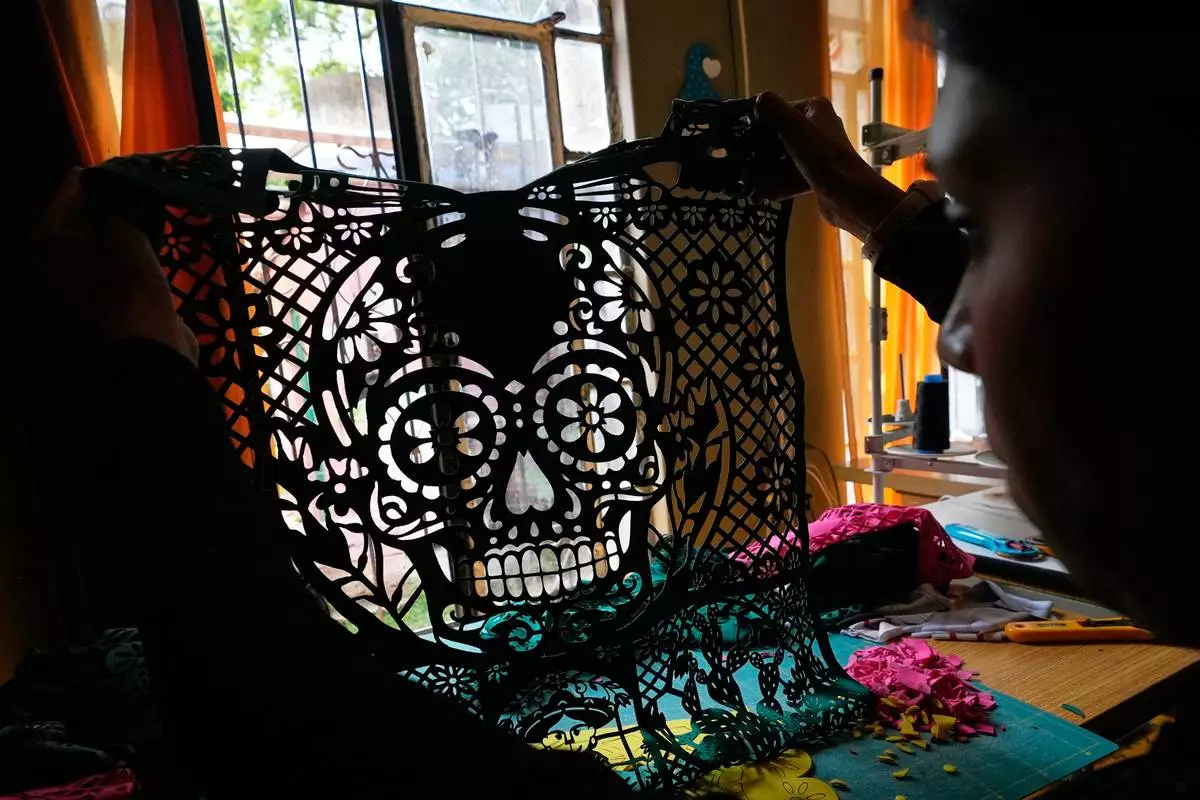
Cande Martinez prepares soccer jerseys, inspired by papel picado and traditional folk art, from the brand Mexclart, in Cuautitlán Izcalli, Mexico, Monday, May 25, 2026. (AP Photo/Marco Ugarte)

Cande Martinez prepares soccer jerseys, inspired by papel picado and traditional folk art, from the brand Mexclart, in Cuautitlán Izcalli, Mexico, Monday, May 25, 2026. (AP Photo/Marco Ugarte)
Cande Martinez prepares soccer jerseys, inspired by papel picado and traditional folk art, from the brand Mexclart, in Cuautitlán Izcalli, Mexico, Monday, May 25, 2026. (AP Photo/Marco Ugarte)

BANGKOK (AP) — Heavy rains threatened to delay the search for two people missing in a flooded cave in Laos on Sunday, after the rescue of five other people who were trapped underground for over a week.

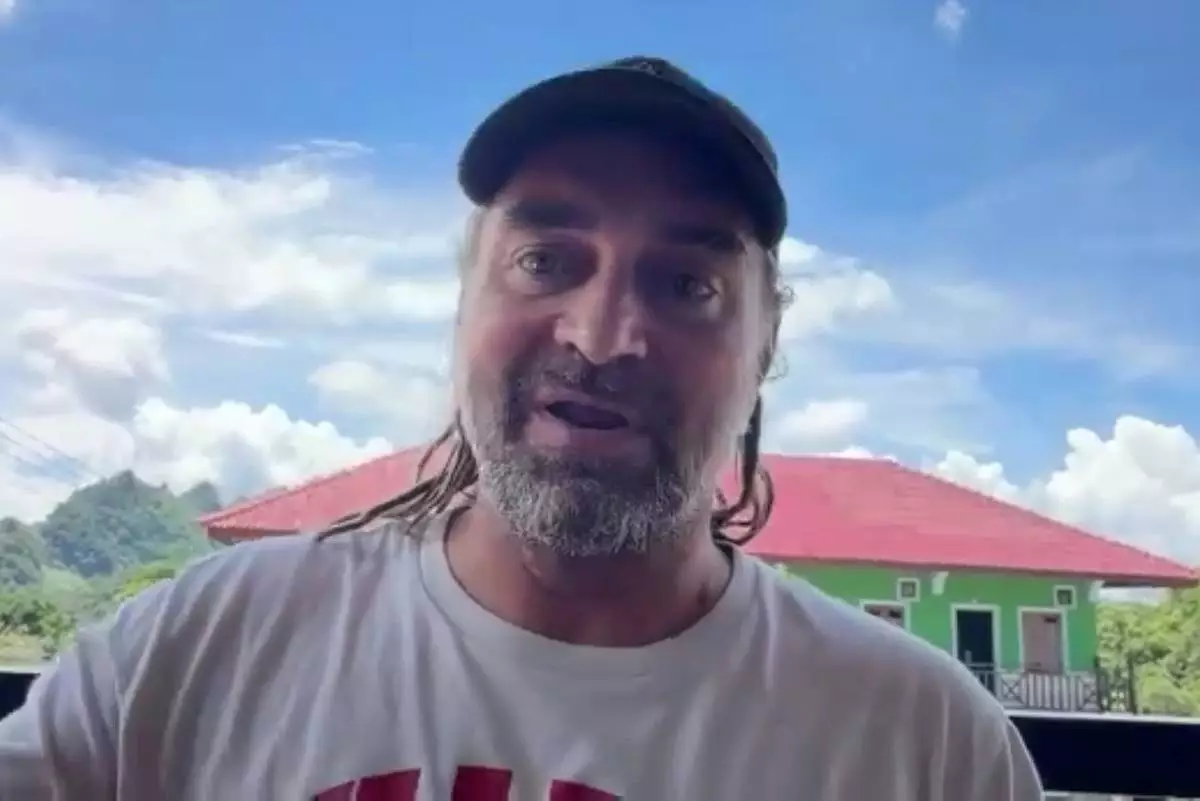
Finnish diver Mikko Paasi, one of the first international rescuers to arrive at the site, told The Associated Press that rains had filled the cave up to the second chamber, preventing divers from entering the cave until pumps can lower the water level.

The seven villagers reportedly entered the cave last week to look for valuable minerals before being trapped by a flash flood that blocked their way out. One other villager escaped and alerted the authorities.

Rescue teams from Laos and neighboring Thailand have been working together in the past week at the site in a rugged area in the central province of Xaisomboun, about 120 kilometers (75 miles) north of the capital, Vientiane. They were joined by divers from countries including Finland, Malaysia, Japan, Indonesia, France and Australia.

Several of the rescuers previously took part in the complicated 2018 cave rescue in northern Thailand that saved 12 schoolboys and their soccer coach from a flooded cave.

The rescued men are being treated at a local hospital and are doing well, Malaysian diver Lee Kian Lie, who’s taking part in the operation, told the AP on Sunday.

“We interviewed them about how the deeper part of the cave looks like. We will continue to search based on the information we have, and perhaps we will be able to get to the other two,” he said.

According to rescuers, they have navigated more than 200 meters into the cave and discovered five chambers in the system. The five people rescued so far were found in the fifth chamber.

Paasi told the AP that the survivors said there’s a narrow crack in the fifth chamber that could be a passage leading to a deeper part of the cave system.

“This was the only place that we haven’t checked in the mine, where the two lost miners could still be,” he said during a video interview.

“Now there’s a theory that, through that small crack, it still continues, and there’s a sixth chamber, which gives us hope now that, if we could penetrate that small restriction, we might be able to reach the sixth chamber and then see what is there.”

The five people who have been rescued were first found Wednesday. They were identified by their first names as Khamla, Mued, Ee, Ing and Laen.

The first man was safely evacuated on Friday, guided through a narrow flooded passage by an expert diver. The remaining four left the cave on Saturday after the water receded enough for them to walk out on their own, rescuers said.

Videos posted online Saturday by rescuers at the site showed emotional moments as the men emerged one by one from the cave. Some collapsed on the ground at the cave’s entrance, and were hugged by a group of workers who cried in joy. Later moments showed them lying on a stretcher, wrapped in foil blankets and fitted with an oxygen mask before being transported out of the site.

In this image taken from an online interview, Finnish diver Mikko Paasi speaks to the Associated Press on the latest situation around search and rescue in a flooded cave in Xaisomboun province, Laos Sunday, May 31, 2026. (AP Photo)

In this image taken from an online interview, Finnish diver Mikko Paasi speaks to the Associated Press on the latest situation around search and rescue in a flooded cave in Xaisomboun province, Laos Sunday, May 31, 2026. (AP Photo)

Recommended Articles