Japan's accelerating remilitarization raised many concerns at the just-concluded Shangri-La Dialogue.
The three-day event brought together more than 550 delegates from over 40 countries and regions, with one major point of discussion being Japan's military expansion and its growing security partnerships with the Philippines.
From boosting its defense spending to easing restrictions on the export of lethal weapons, Japan is also moving to revise its pacifist Constitution.
Meanwhile, its interactions with the Philippines have been elevated to a strategic partnership. The Reciprocal Access Agreement between the two countries has formalized the presence of the Japanese Self-Defense Forces in the Philippines.
Critics argue that the arrangement is eroding the post-war regional order, while memories of the atrocities committed by Japanese militarism during World War II continue to resonate with the public.
"Does a country that has not thoroughly eradicated the toxic legacy of militarism have the right to talk about defense cooperation on the international stage? Can it win the trust of the international community, especially the Asian countries it once invaded? I have serious doubts," said Meng Xiangqing, head of Chinese delegation.
Japan has justified its actions by citing the Taiwan question with Prime Minister Sanae Takaichi warning that Japan could invoke its right to collective self-defense while calling for greater US involvement. However, the U.S. doesn't act as Japan expected.
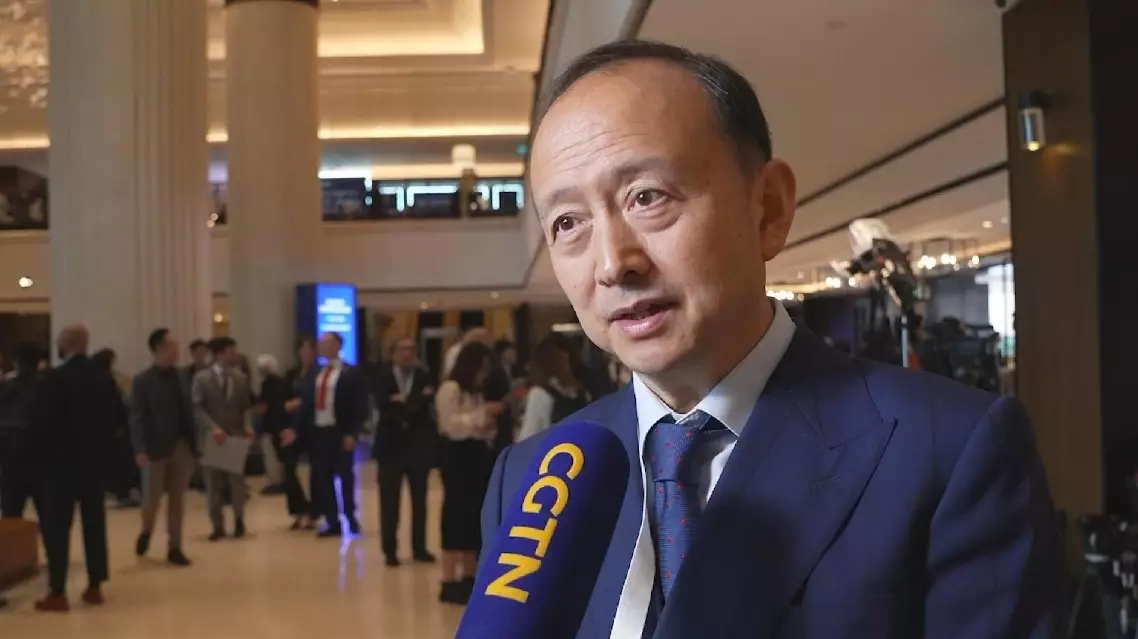
"Talking like that, without the United States even making clear about its own strategic ambiguity, this is just like the tail trying to wag the dog," Zhou Bo, senior fellow, Center for International Security and Strategy, Tsinghua University.
At this Asia's premier defense and security summit, Japanese Minister of Defense Shinjiro Koizumi promoted the new version of the "free and open Indo-Pacific," noting that Japan will assume a "new role" in regional defense equipment cooperation.
But what is really behind Japan's advocation is its intention to stir up bloc confrontation and form exclusive "small circles," under the guise of "freedom and openness."
"Asia Pacific will not be free and open if a few countries try to gang up to intimidate others or try to deprive others of their legitimate right to develop. And the region will not be free and open if there's on-going attempt to divide the region into confrontational blocs. And the region will not be free and open if the outcome of the anti-fascist war is challenged or even denied," said Cui Tiankai, former Chinese Ambassador to United States.
By promoting a more inclusive environment, China is advocating for a global governance system that brings greater stability to both the region and the wider world.
"It is quite assuring that China has been more responsible and has been making measures that try to result in peace rather than in war," Lawrence Loh, director of Center for Governance and Sustainability with National University of Singapore.
Concerns arise over resurgence of Japanese militarism