Skip to Content Facebook Feature Image

Oil prices rise, but not by enough to drag Wall Street far off its records

News

Oil prices rise, but not by enough to drag Wall Street far off its records
News

News

Oil prices rise, but not by enough to drag Wall Street far off its records

2026-06-01 22:30 Last Updated At:22:40

NEW YORK (AP) — Oil prices are rising Monday following the latest fighting to threaten the U.S.-Iran ceasefire, but Wall Street isn’t very worried, and U.S. stocks are hanging near their records.

The S&P 500 was virtually unchanged from its all-time high set on Friday. The Dow Jones Industrial Average was down 102 points, or 0.2%, as of 10:15 a.m. Eastern time, and the Nasdaq composite was flat. Both are also coming off records.

More Images
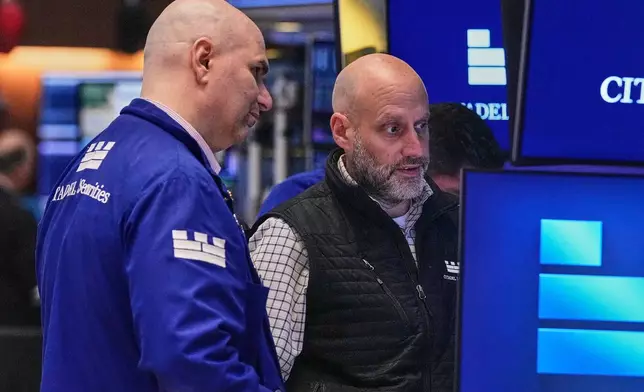
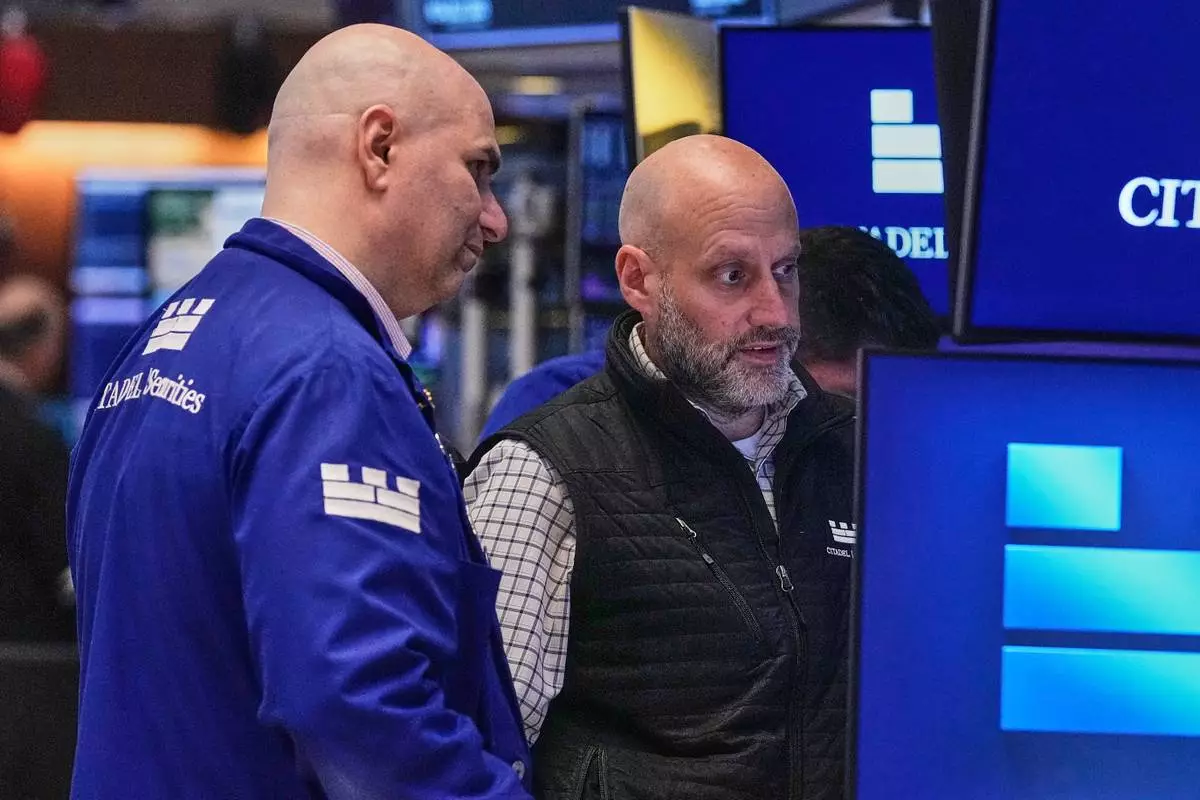
Specialists Philip Finale, left, and Meric Greenbaum work on the floor of the New York Stock Exchange, Friday, May 29, 2026. (AP Photo/Richard Drew)
Specialists Philip Finale, left, and Meric Greenbaum work on the floor of the New York Stock Exchange, Friday, May 29, 2026. (AP Photo/Richard Drew)

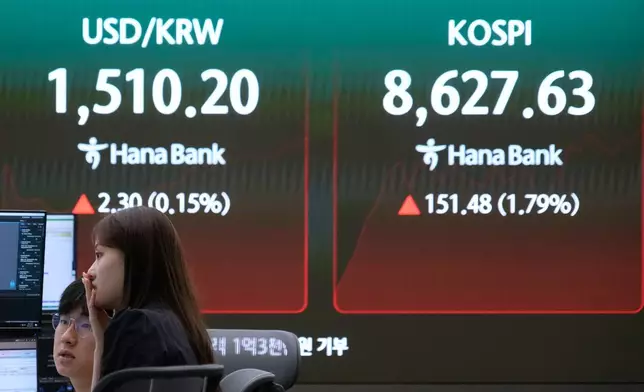
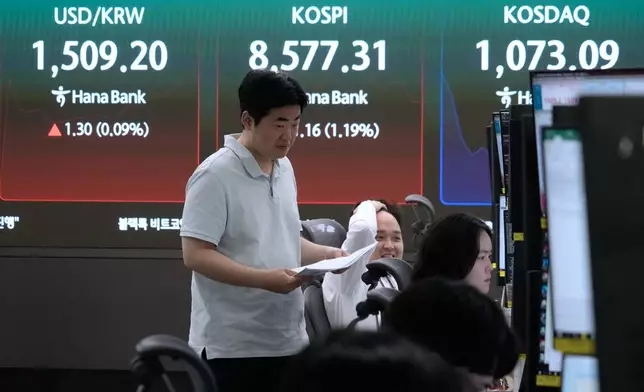
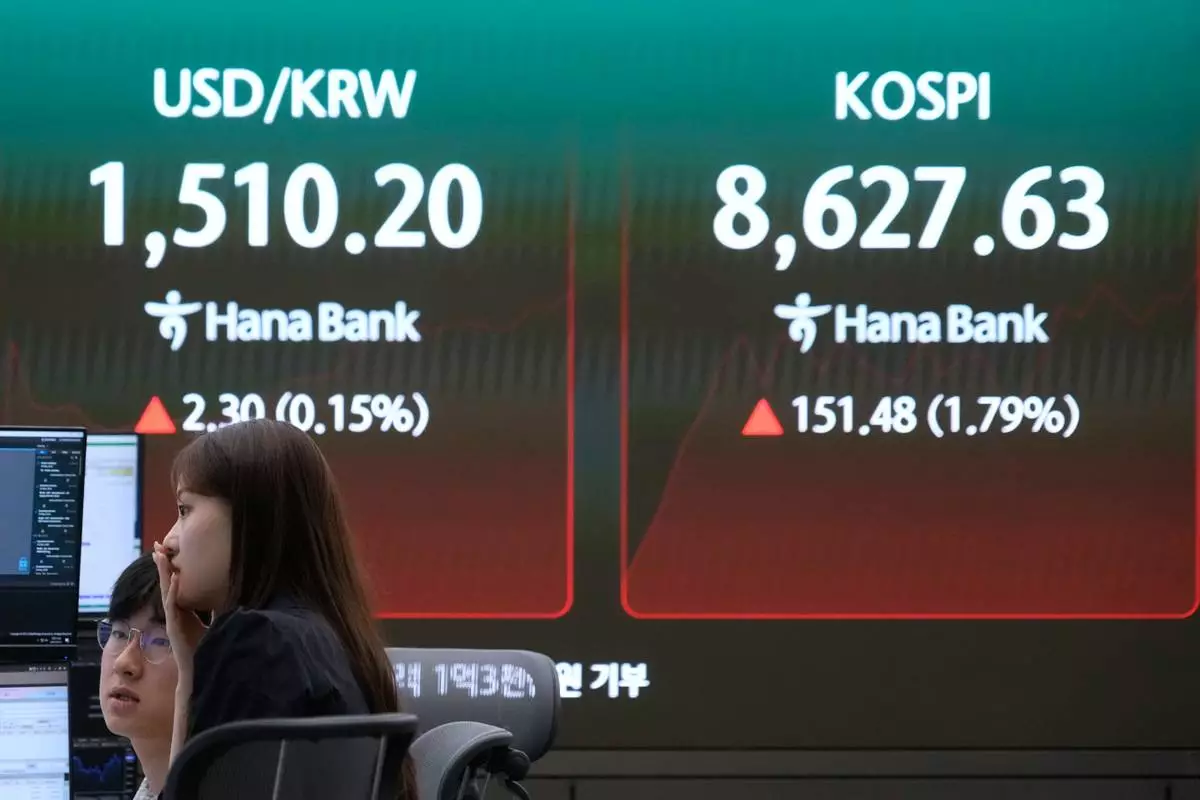
Currency traders watch monitors near a screen showing the Korea Composite Stock Price Index (KOSPI) and the foreign exchange rate between U.S. dollar and South Korean won at the foreign exchange dealing room of the Hana Bank headquarters in Seoul, South Korea, Monday, June 1, 2026. (AP Photo/Ahn Young-joon)
Currency traders watch monitors near a screen showing the Korea Composite Stock Price Index (KOSPI) and the foreign exchange rate between U.S. dollar and South Korean won at the foreign exchange dealing room of the Hana Bank headquarters in Seoul, South Korea, Monday, June 1, 2026. (AP Photo/Ahn Young-joon)

Currency traders work near a screen showing the Korea Composite Stock Price Index (KOSPI) and the foreign exchange rate between U.S. dollar and South Korean won at the foreign exchange dealing room of the Hana Bank headquarters in Seoul, South Korea, Monday, June 1, 2026. (AP Photo/Ahn Young-joon)

Currency traders work near a screen showing the Korea Composite Stock Price Index (KOSPI) and the foreign exchange rate between U.S. dollar and South Korean won at the foreign exchange dealing room of the Hana Bank headquarters in Seoul, South Korea, Monday, June 1, 2026. (AP Photo/Ahn Young-joon)

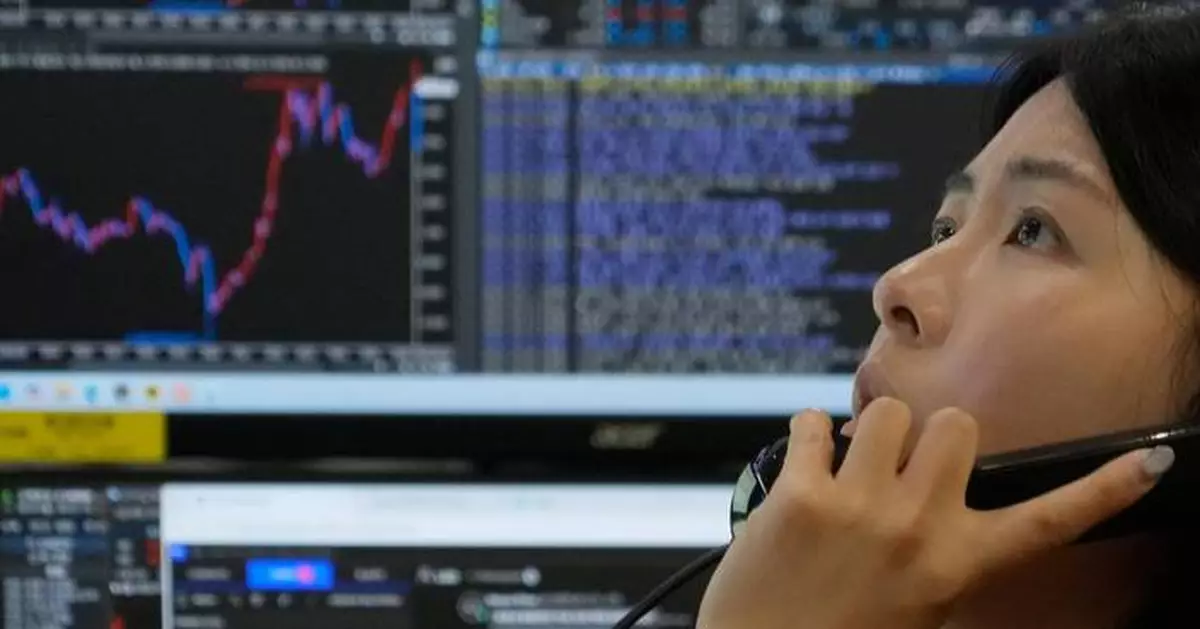
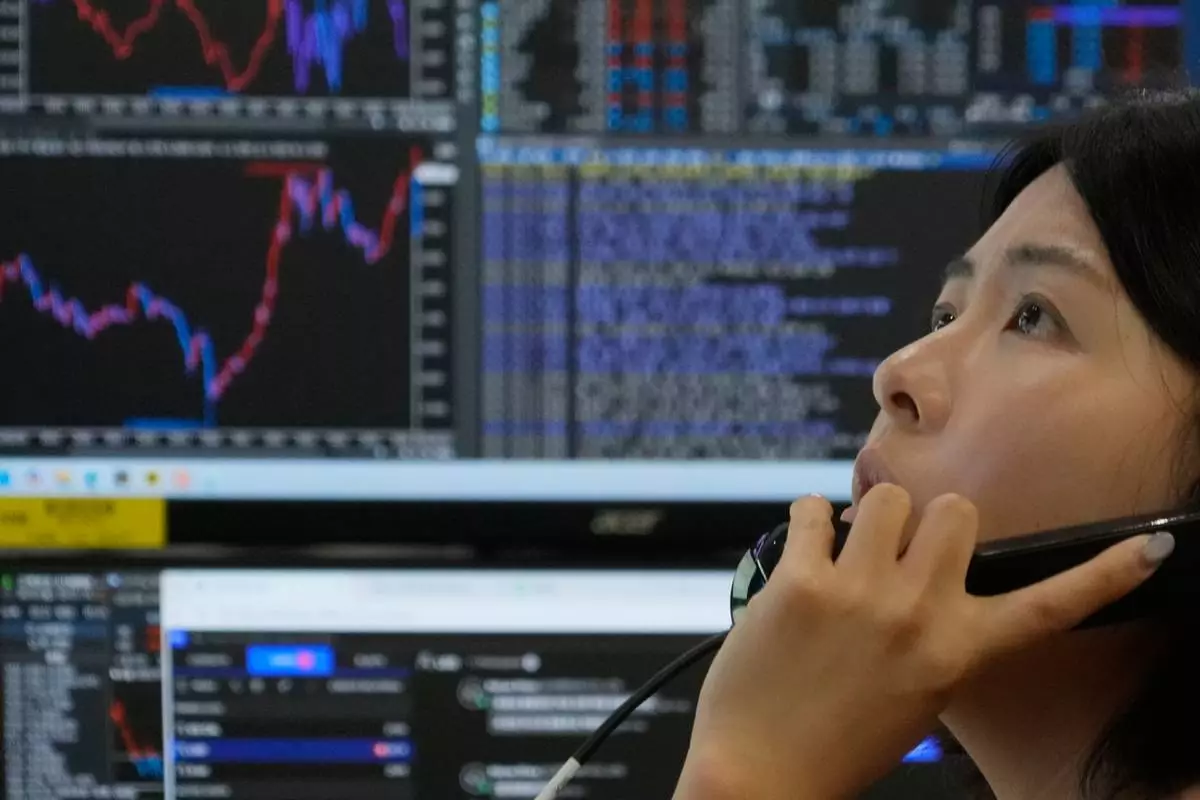
A currency trader talks on the phone at the foreign exchange dealing room of the Hana Bank headquarters in Seoul, South Korea, Monday, June 1, 2026. (AP Photo/Ahn Young-joon)

A currency trader talks on the phone at the foreign exchange dealing room of the Hana Bank headquarters in Seoul, South Korea, Monday, June 1, 2026. (AP Photo/Ahn Young-joon)

Some of the sharpest losses hit companies with big fuel bills hurt by the rise in oil prices. United Airlines lost 2.9%, and cruise-operator Carnival fell 2.7% after the price for a barrel of Brent crude oil climbed 6.7% to $97.22. That clawed back a chunk of its loss from last week and means it's still well above its price of roughly $70 from before the war.

Expensive oil has already sent inflation around the world higher, which not only increases bills for households but also pushes up bond yields. High yields worldwide recently have threatened to slow economies and undercut prices for stocks and all kinds of other investments.

Some of the hardest hit by high interest rates are smaller companies, which have a tougher time borrowing to grow when loans are more expensive to repay. The Russell 2000 index of the smallest U.S. stocks sank 1%, much more than the rest of the market.

But hope seems to be remaining on Wall Street that the United States and Iran will ultimately reach an agreement to reopen the Strait of Hormuz, allow deliveries of oil to resume from the Persian Gulf and ease the upward pressure on inflation.

Strength from several market heavyweights also helped to overshadow such fears.

Nvidia was the strongest force pushing upward the market and rose 4.8% after CEO Jensen Huang announced several product updates at a conference. Among them, he said the company’s next-generation artificial-intelligence platform, Vera Rubin, is ramping into full production. That helped calm some investor concerns about potential delays, analysts said.

What Nvidia does matters immensely for the U.S. stock market because it’s the biggest in terms of overall market value. That means the movements for its stock carry more weight on the S&P 500 than any other’s.

And Wall Street’s biggest companies have been growing so much that they’re dominating the market. The top 10 stocks control nearly half the S&P 500’s total market value, a 40-year high, according to Thomas Carroll, equity market strategist at Stifel.

That worked well as those Big Tech companies shot higher thanks to exuberance around AI. But it could also weigh on the index if the market’s leadership broadens, Carroll warns. Even if most stocks end up rising in such a rotation, stagnation or declines for Big Tech heavyweights could drag on S&P 500 index funds.

And a key indicator Carroll follows about market breadth “is signaling a rotation is coming,” he wrote in a report.

Elsewhere on Wall Street, Science Applications International Corp. jumped 12.8% after becoming the latest U.S. company to report bigger profit for the latest quarter than analysts expected. SAIC also raised forecasts for upcoming financial results after winning several contracts from the U.S. Department of Homeland Security, army and other agencies.

A cavalcade of such profit reports has helped the U.S. stock market push to records despite the war with Iran.

Berkshire Hathaway slipped 0.4% after it said it would buy Taylor Morrison Home for $6.8 billion. It’s one of the first big acquisitions announced by the company under Greg Abel’s leadership following famed investor Warren Buffett. Taylor Morrison Home jumped 22.5%.

In the bond market, Treasury yields rose with oil prices and after a report said growth in U.S. manufacturing accelerated by more last month than economists expected. The yield for the 10-year Treasury climbed to 4.50% from 4.45% late Friday.

High yields have already forced the average long-term U.S. mortgage rate to its most expensive level in nine months, and they could curtail companies’ borrowing to build the AI data centers that have supported the U.S. economy’s growth recently.

In stock markets abroad, indexes fell in Europe following a stronger finish in Asia.

Japan’s Nikkei 225 rose 0.9%, and South Korea’s Kospi jumped 3.7% to hit records led by technology-related stocks, as investors continued to see growth in AI and other advanced technologies.

In South Korea, the Kospi index jumped 3.7% to a record. Samsung Electronics, its biggest company, soared 10.1%. Official data on Monday showed that South Korea’s exports surged 53% year-on-year in May, buoyed by global demand for semiconductors.

AP Business Writers Chan Ho-him and Matt Ott contributed.
Specialists Philip Finale, left, and Meric Greenbaum work on the floor of the New York Stock Exchange, Friday, May 29, 2026. (AP Photo/Richard Drew)
Specialists Philip Finale, left, and Meric Greenbaum work on the floor of the New York Stock Exchange, Friday, May 29, 2026. (AP Photo/Richard Drew)

Currency traders watch monitors near a screen showing the Korea Composite Stock Price Index (KOSPI) and the foreign exchange rate between U.S. dollar and South Korean won at the foreign exchange dealing room of the Hana Bank headquarters in Seoul, South Korea, Monday, June 1, 2026. (AP Photo/Ahn Young-joon)
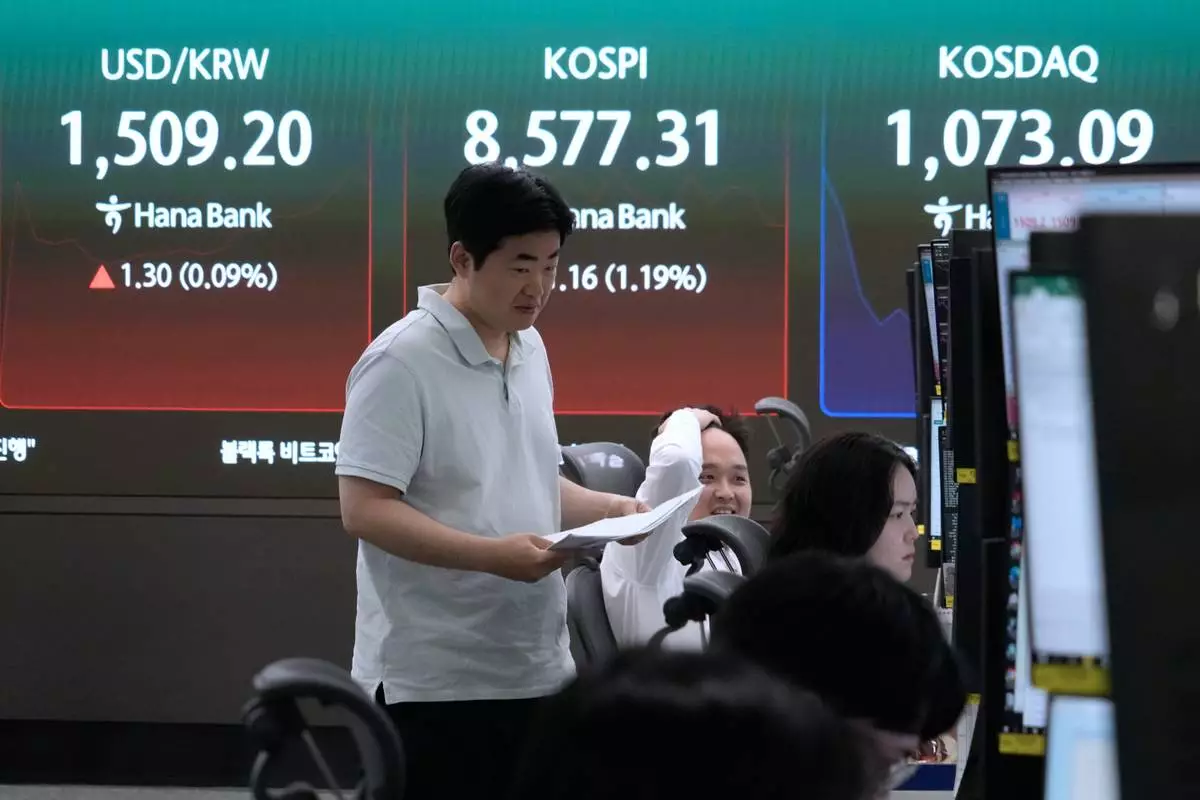
Currency traders watch monitors near a screen showing the Korea Composite Stock Price Index (KOSPI) and the foreign exchange rate between U.S. dollar and South Korean won at the foreign exchange dealing room of the Hana Bank headquarters in Seoul, South Korea, Monday, June 1, 2026. (AP Photo/Ahn Young-joon)
Currency traders work near a screen showing the Korea Composite Stock Price Index (KOSPI) and the foreign exchange rate between U.S. dollar and South Korean won at the foreign exchange dealing room of the Hana Bank headquarters in Seoul, South Korea, Monday, June 1, 2026. (AP Photo/Ahn Young-joon)

Currency traders work near a screen showing the Korea Composite Stock Price Index (KOSPI) and the foreign exchange rate between U.S. dollar and South Korean won at the foreign exchange dealing room of the Hana Bank headquarters in Seoul, South Korea, Monday, June 1, 2026. (AP Photo/Ahn Young-joon)
A currency trader talks on the phone at the foreign exchange dealing room of the Hana Bank headquarters in Seoul, South Korea, Monday, June 1, 2026. (AP Photo/Ahn Young-joon)

A currency trader talks on the phone at the foreign exchange dealing room of the Hana Bank headquarters in Seoul, South Korea, Monday, June 1, 2026. (AP Photo/Ahn Young-joon)

WASHINGTON (AP) — The retirements of two of Iowa’s most prominent Republican officeholders, Gov. Kim Reynolds and U.S. Sen. Joni Ernst, have had ripple effects throughout Tuesday’s state primary, creating competitive nomination contests to replace them and a chain reaction of open seats down the ballot.

The winners will compete in November’s critical midterm elections, in which Iowa’s U.S. Senate and House seats could determine control of the narrowly divided chambers. The next governor could also play a pivotal role in the 2028 election, given the state’s long history of making or breaking presidential hopefuls.

Two Republicans and two Democrats are competing in primaries to replace Ernst, who announced in 2025 that she would not seek a third term. U.S. Rep. Ashley Hinson faces former state Sen. Jim Carlin in the Republican primary, while state Rep. Josh Turek and state Sen. Zach Wahls compete for the Democratic nomination. Carlin ran for Iowa’s other U.S. Senate seat in 2022, receiving about 27% of the primary vote against U.S. Sen. Chuck Grassley.

Reynolds also announced in 2025 that she would not seek a third term. Vying for the GOP nomination are state Rep. Eddie Andrews, U.S. Rep. Randy Feenstra, entrepreneur and private school co-founder Zach Lahn, former state Rep. Brad Sherman and former state administrative services director Adam Steen. President Donald Trump has endorsed Feenstra.

The winner will face Democratic state Auditor Rob Sand, who is unopposed in his primary. Sand is Iowa’s only Democrat in elected statewide office.

Hinson’s and Feenstra’s statewide campaigns have created open seat contests in the state’s 2nd and 4th Congressional Districts, respectively. Feenstra’s district is heavily Republican and is unlikely to play a major role in determining control of the chamber. Hinson’s district is more competitive, although she won reelection in 2024 with 57% of the vote.

In Iowa’s most competitive congressional seats, Republican U.S. Reps. Mariannette Miller-Meeks of the 1st District and Zach Nunn of the 3rd District are both seeking reelection. Miller-Meeks faces a rematch with her 2024 primary opponent, advertising executive David Pautsch, who received about 44% of the vote. The Democratic field includes former state Rep. Christina Bohannan, who came within 1 percentage point of defeating Miller-Meeks in one of the closest U.S. House races of 2024.

In the 3rd Congressional District, both Nunn and his Democratic opponent, state Sen. Sarah Trone Garriott, are unopposed in their primaries.

Trump received roughly 54% of the 2024 presidential vote in both the 1st and 2nd Congressional Districts and about 52% of the 3rd District vote.

Polk, Linn and Scott counties are Iowa’s most populous, and all three play major roles in both Republican and Democratic statewide primaries. Johnson County is the fourth largest, but as home to Iowa City and the University of Iowa it is an overwhelming Democratic stronghold and tends to exert much less influence in Republican primaries.

Here are some of the key facts about the election and data points the AP Decision Team will monitor as the votes are tallied:

Polls close at 8 p.m. CT, which is 9 p.m. ET.

The Associated Press will provide vote results and declare winners in contested primaries for U.S. Senate, U.S. House, governor, auditor, state Senate and state House.

Only voters registered with a political party may participate in that party’s primary. However, voters may change their party affiliations at the polls on the day of the primary.

As of May 4, there were about 2.1 million registered voters in Iowa, including about 692,000 registered Republicans, about 496,000 registered Democrats and about 589,000 voters not registered with any party.

About 196,000 Republican primary votes and about 157,000 Democratic primary votes were cast in the 2022 U.S. Senate primaries.

About 16% of the Republican primary vote and about 25% of the Democratic primary vote in the 2022 U.S. Senate primaries was cast before primary day.

As of Friday, about 48,000 ballots had already been cast in Tuesday’s election, roughly 30,000 in the Democratic primary and more than 18,000 in the Republican primary.

Nearly all counties release the results of absentee-by-mail voting at the start of the night. However, counties vary in terms of when they release in-person absentee voting results.

In the last contested state primary in 2022, the AP first reported results at 9:12 p.m. ET, or 12 minutes after polls closed. The last vote update of the night was at 2:29 a.m. ET, with more than 99% of total votes counted.

The AP does not make projections and will declare a winner only when it’s determined there is no scenario that would allow a trailing candidate to close the gap. If a race has not been called, the AP will continue to cover any newsworthy developments, such as candidate concessions or declarations of victory. In doing so, the AP will make clear that it has not yet declared a winner and explain why.

Iowa does not have an automatic recount law, but candidates may request and pay for a recount. Candidates do not have to pay for recounts when the margin is less than 1% of the total vote or fewer than 50 votes, whichever is larger. The AP may declare a winner in a race that is subject to a recount if it can determine the lead is too large for a recount or legal challenge to change the outcome.

As of Tuesday, there will be 154 days until the 2026 midterm elections.

Follow the AP’s coverage of the 2026 election at https://apnews.com/projects/elections-2026/.

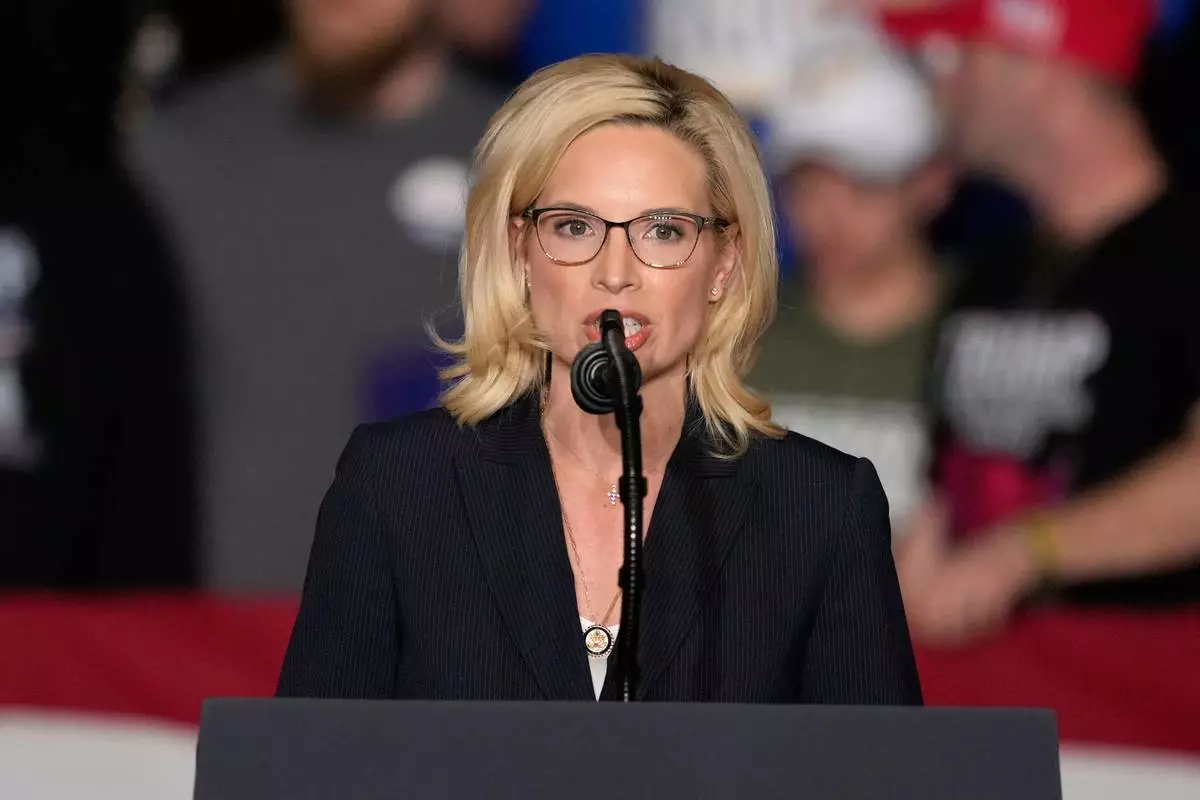
FILE - Rep. Ashley Hinson, R-Iowa, speaks before President Donald Trump arrives at a rally, Jan. 27, 2026, in Clive, Iowa. (AP Photo/Charlie Neibergall, File)

FILE - Rep. Ashley Hinson, R-Iowa, speaks before President Donald Trump arrives at a rally, Jan. 27, 2026, in Clive, Iowa. (AP Photo/Charlie Neibergall, File)

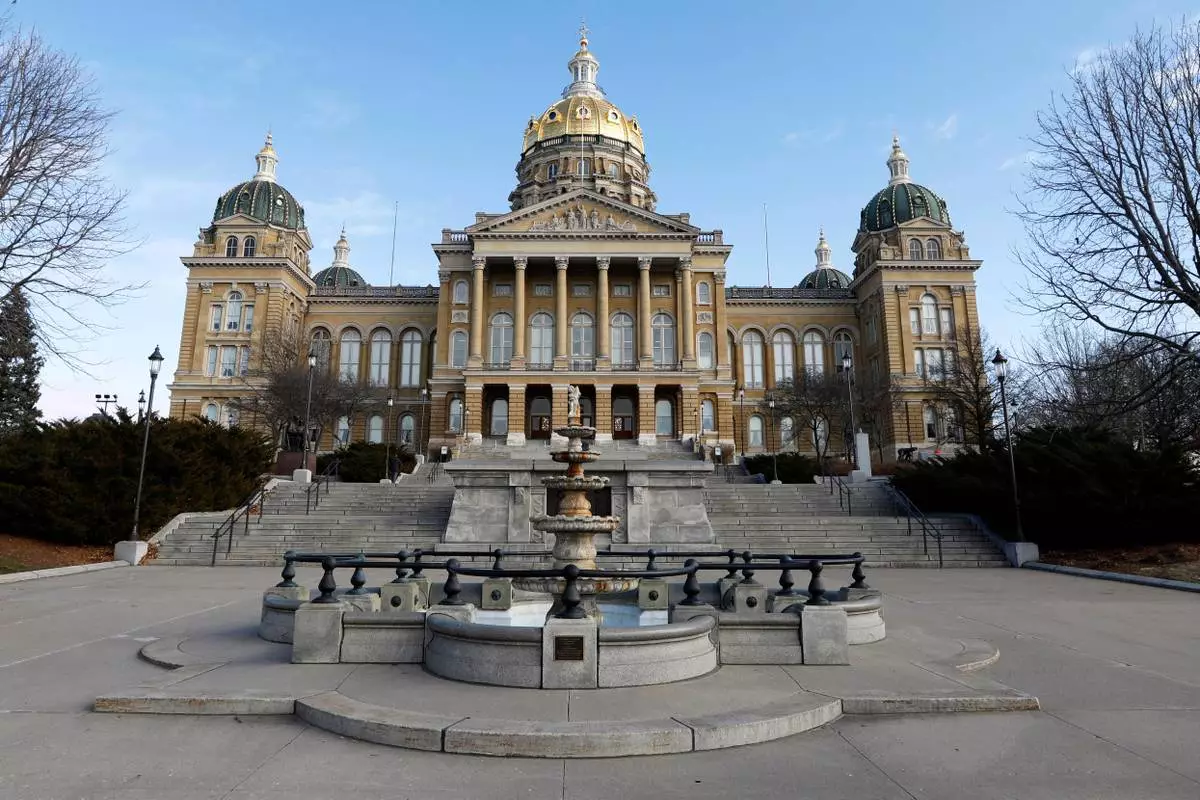
FILE - The Iowa Capitol building is viewed Jan. 7, 2020, in Des Moines, Iowa. (AP Photo/Charlie Neibergall, File)

FILE - The Iowa Capitol building is viewed Jan. 7, 2020, in Des Moines, Iowa. (AP Photo/Charlie Neibergall, File)

Recommended Articles