Government launches Future Innovative Logistics Acceleration Scheme to promote digitalisation of logistics trade
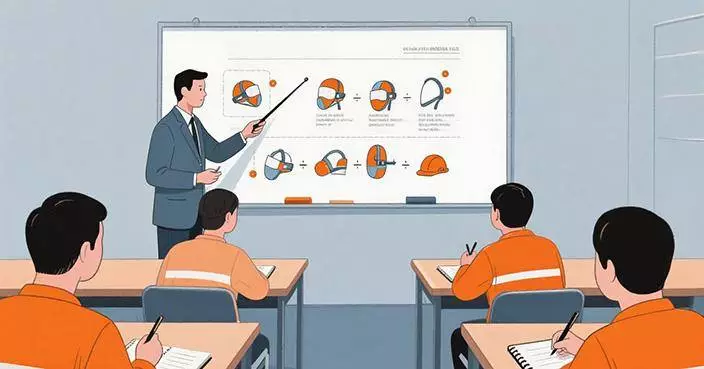
The Government today (June 1) launched the Future Innovative Logistics Acceleration Scheme (FILAS) to spur the development of information technology (IT) onboarding solutions that facilitate logistics enterprises to use logistics data platforms operated by the Government or public organisations, including the Port Community System and the HKIA Cargo Data Platform, with a view to promoting digitalisation of the industry.
A spokesman for the Transport and Logistics Bureau said, "The level of digitalisation of some logistics enterprises, especially the small- and medium-sized ones, is relatively low, which presents an obstacle for them to use existing logistics data platforms. By encouraging the development of innovative IT onboarding solutions through FILAS, we hope to bridge the digital divide and facilitate the wider use of logistics data platforms by the industry, thereby enhancing its competitiveness and fostering Hong Kong's development as an international smart logistics hub."
As part of the Government's continual effort in promoting the digitalisation of Hong Kong's logistics trade, the Financial Secretary announced in the 2026-27 Budget that FILAS would be established under the Pilot Subsidy Scheme for Third-party Logistics Service Providers (Pilot Scheme). The target number of logistics enterprises that will benefit from FILAS is 100.
Under FILAS, third-party logistics service providers (3PLs) may apply for funding support for subscribing to or using pre-approved solutions listed on a white list. Same as the Pilot Scheme, applicant enterprises for FILAS must be non-listed enterprises registered in Hong Kong under the Business Registration Ordinance (Cap. 310) with substantive business operations related to either inbound or outbound third-party logistics services in Hong Kong, and funding support will be provided based on the subsidy ratio of 2 (Government) to 1 (enterprise). Each eligible enterprise may receive funding support of up to $2 million under the Pilot Scheme (including FILAS).
Solution providers may apply for their IT onboarding solution, no matter whether it is developed or under development, to be listed on a white list of pre-approved solutions under FILAS. Solution providers, which must be enterprises registered in Hong Kong under the Business Registration Ordinance (Cap. 310), can submit only one proposal for IT onboarding solution for one or more logistics data platform(s) for inclusion on the white list. As the first stage, FILAS is now open to white list applications with the submission of the first batch of applications closing on June 30, 2026.
White list applications will be subject to a three-tier assessment mechanism, namely, (i) an initial assessment by the Hong Kong Productivity Council (HKPC), the Secretariat of FILAS, on the eligibility of solution providers; (ii) a two-stage technical assessment via preliminary interviews by logistics data platform operator(s) on, among others, the compatibility of the solutions with the platform(s) concerned, their compliance with the relevant security and technical requirements and their relevance to the industry; and (iii) final endorsement by the Management Committee for the Pilot Scheme from the perspective of the alignment of the proposed solutions with FILAS policy objectives and overall benefits to the logistics sector.
Upon inclusion on the white list, such solutions will be deemed capable and practical for helping logistics enterprises to use the specified logistics data platform(s), and can be chosen by interested 3PLs, who can then apply for a subsidy under FILAS for subscribing to or using the solutions.
Details of FILAS are available on the Pilot Scheme's dedicated website (tplsp.hkpc.org). Interested solution providers may contact the HKPC for enquiries and submission of applications (Tel: 2788 6077; email: tplsp_sec@hkpc.org).

Source: AI-found images
DH announces latest situation regarding Legionnaires' disease case
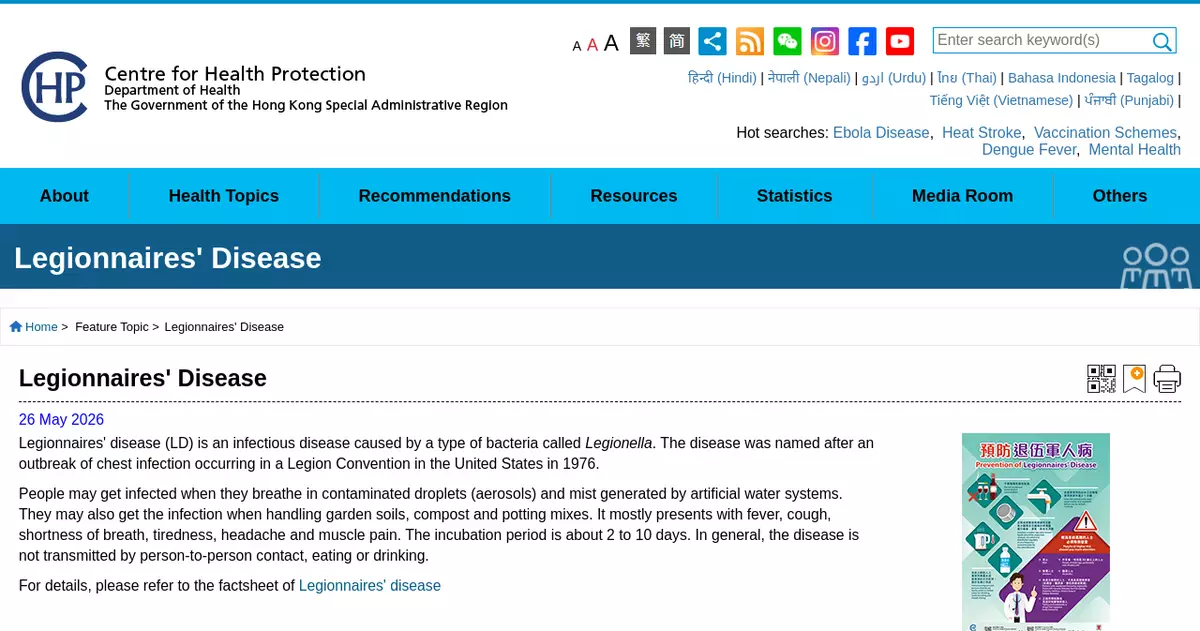
The Centre for Health Protection (CHP) of the Department of Health (DH) today (June 1) reported the latest number of Legionnaires' disease (LD) cases, and reminded the public of the importance of using and maintaining properly designed man-made water systems, adding that susceptible groups should strictly observe relevant precautions.
From May 24 to 30, the CHP recorded eight community-acquired LD cases. All patients had underlying illnesses, aged between60 and 96. The details are as follows:
 a 69-year-old male living in Yuen Long District;
a 66-year-old female living in Sham Shui Po District;
a 93-year-old male living in Kwun Tong District;
a 74-year-old male living in Islands District;
a 60-year-old female living in Sha Tin District;
a 96-year-old male living in Yuen Long District;
a 66-year-old male living in Tuen Mun District; and
a 91-year-old female living in Yau Tsim Mong District.
a 69-year-old male living in Yuen Long District;
a 66-year-old female living in Sham Shui Po District;
a 93-year-old male living in Kwun Tong District;
a 74-year-old male living in Islands District;
a 60-year-old female living in Sha Tin District;
a 96-year-old male living in Yuen Long District;
a 66-year-old male living in Tuen Mun District; and
a 91-year-old female living in Yau Tsim Mong District.
The CHP is conducting epidemiological investigations to identify the potential sources of infection and high-risk exposure. An initial investigation revealed that the eight community-acquired cases are sporadic cases. No epidemiological linkages have been established between these cases and other confirmed cases previously recorded in Hong Kong.
As of May 30, 67 LD cases had been recorded this year. In 2025 and 2024, there were 167 and 135 LD cases respectively.
Men, people aged over 50, smokers, alcoholics and persons with weakened immunity are more susceptible to LD. Some situations may also increase the risk of infection, including poor maintenance of water systems; living in areas with old water systems, cooling towers or fountains; using electric water heaters, whirlpool spas or hot water spring spas; and recent stays in hotels or ships.
Legionellae are found in various environmental settings and grow well in warm water (20 to 45 degrees Celsius). They can be found in aqueous environments such as water tanks, hot and cold water systems, cooling towers, whirlpool spas, water fountains, humidifiers and home respiratory devices that support breathing. People may become infected when they breathe in contaminated droplets (aerosols) and mist generated by artificial water systems, or when handling garden soil, compost and potting mixes.
Immunocompromised persons should:
Use sterile or boiled water for drinking, tooth brushing and mouth rinsing;
Avoid using humidifiers, or other mist- or aerosol-generating devices; and
If using humidifiers, or other mist- or aerosol-generating devices, fill the water tank with only sterile or cooled freshly boiled water, and not water directly from the tap. Also, clean and maintain humidifiers/devices regularly according to manufacturers' instructions. Never leave stagnant water in a humidifier/device. Empty the water tank, wipe all surfaces dry, and change the water daily.
The public should observe the health advice below:
Observe personal hygiene;
Do not smoke and avoid alcohol consumption;
Strainers in water taps and shower heads should be inspected, cleaned, descaled and disinfected regularly or at a frequency recommended by the manufacturer;
If a fresh-water plumbing system is properly maintained, it is not necessary to install domestic water filters. Use of water filters is not encouraged as clogging occurs easily, which can promote growth of micro-organisms. In case water filters are used, the pore size should be 0.2 micrometres (µm) or less and the filter needs to be changed periodically according to the manufacturer's recommendations;
Drain and clean water tanks of buildings at least quarterly;
Drain or purge for at least one minute infrequently used water outlets (e.g. water taps, shower heads and hot water outlets) and stagnant points of the pipework weekly or before use;
Seek and follow doctors' professional advice regarding the use and maintenance of home respiratory devices and use only sterile water (not distilled or tap water) to clean and fill the reservoir. Clean and maintain the device regularly according to the manufacturer's instructions. After cleaning/disinfection, rinse the device with sterile water, cooled freshly boiled water or water filtered with 0.2 µm filters. Never leave stagnant water in the device. Empty the water tank, keep all surfaces dry, and change the water daily; and
When handling garden soil, compost and potting mixes:
Wear gloves and a face mask;
Water gardens and compost gently using low pressure;
Open composted potting mixes slowly and make sure the opening is directed away from the face;
Wet the soil to reduce dust when potting plants; and
Avoid working in poorly ventilated places such as enclosed greenhouses.
The public may visit the CHP'sLD page, theCode of Practice for Prevention of LDand theHousekeeping Guidelines for Cold and Hot Water Systems for Building Managementof the Prevention of LD Committee, and the CHP'srisk-based strategyfor prevention and control of LD.
Additionally, as smokers and alcoholics are more susceptible to LD, the Government urgesmembers of the public to quit smoking and avoid drinking. Members of the public may call the DH Integrated Smoking Cessation Hotline at 1833 183, which is answered by registered nurses who provide professional counselling and referral to a wide range of free smoking cessation services. The public may also visit the smoking cessation thematic website (www.livetobaccofree.hk) for more information on smoking cessation. The DH has also developed and promulgated the Alcohol Screening and Brief Intervention tool to primary healthcare service providers to facilitate the early identification and management of at-risk drinkers. For information on alcohol-related harm, please visit the DH'sChange for Health website.
Source: AI-found images