Skip to Content Facebook Feature Image

Ebola disease in Democratic Republic of Congo: MSF scales up response to a rapidly evolving outbreak

Business

Ebola disease in Democratic Republic of Congo: MSF scales up response to a rapidly evolving outbreak
Business

Business

Ebola disease in Democratic Republic of Congo: MSF scales up response to a rapidly evolving outbreak

2026-06-01 18:06 Last Updated At:18:25

HONG KONG, June 1, 2026 /PRNewswire/ -- In eastern Democratic Republic of Congo (DRC), people have been living through insecurity and with an under-resourced health system for years. The Ebola disease outbreak due to the Bundibugyo virus – which does not yet have approved vaccines or specific treatments – is posing a major additional challenge.

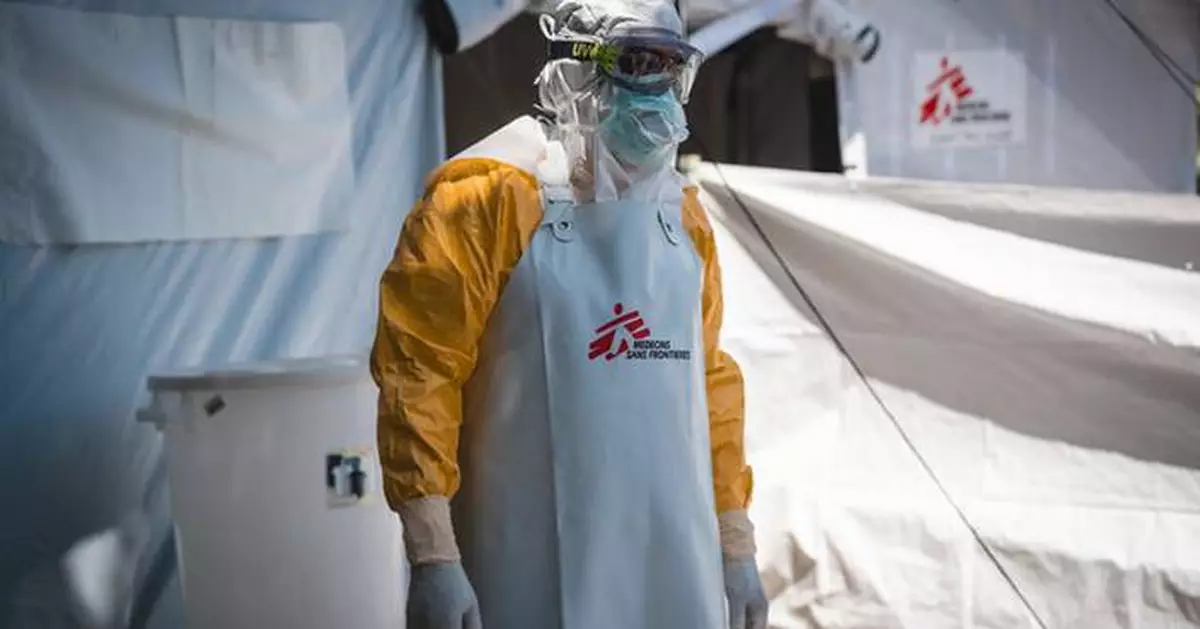
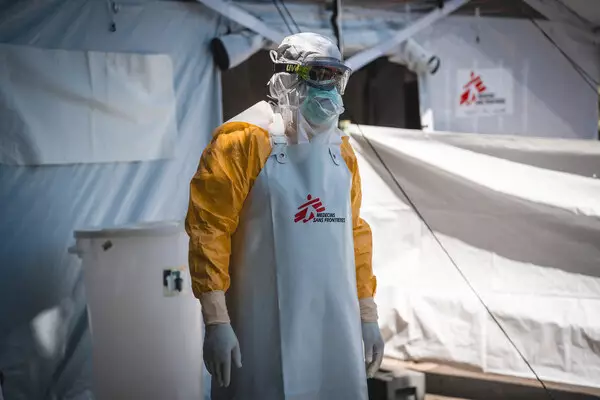
Médecins Sans Frontières (MSF) teams are working to contain the spread of the disease and strengthen patient care, alongside the Ministry of Health.

As of 28 May, 125 confirmed cases, 906 suspected cases, and 223 deaths have been officially reported across Ituri, North Kivu, and South Kivu provinces. However, the true scale of the outbreak remains impossible to measure. Extremely limited testing capacity and difficulties in accessing certain areas mean that figures must be interpreted with caution.

Ituri, the epicentre of the outbreak, accounts for more than 90 per cent of the suspected cases that have been reported. The number of cases is increasing in Mongbwalu and Rwampara health zones. 

"We are working in a particularly difficult context," says Dr Alan Gonzalez, MSF deputy director of operations. "For the past two weeks, our ability to get supplies and teams into the affected areas has been hampered by air and land travel restrictions. Testing capacity remains insufficient, and hundreds of samples are still awaiting processing in laboratories. Isolation and care capacity are also insufficient. All of this is impeding the rapid scale-up of the response and creating legitimate anxieties and fears among communities."  

Only a limited number of specialised organisations - including MSF - are currently responding in Ituri, and people's needs far outweigh the available capacity. 

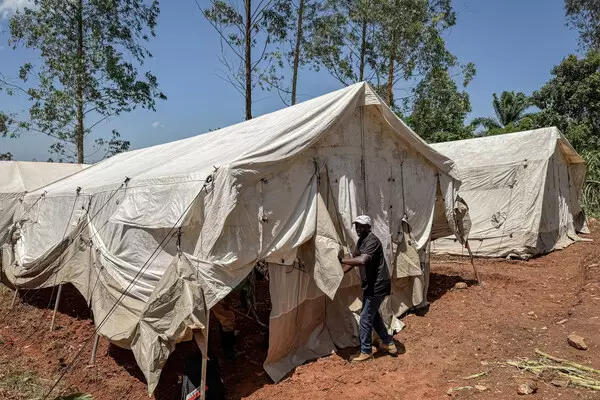
In Ituri, MSF teams have begun constructing a 65-bed Ebola treatment centre (ETC) to admit both confirmed and suspected cases. We are also supporting the Ministry of Health in caring for and isolating people who are suspected cases at the Mongbwalu General Referral hospital, as well as at the Fataki General Referral hospital.

In Bunia, the capital of Ituri, MSF has set up an isolation system for patients in Salama hospital, and we are supporting several health facilities in and around the city to strengthen the safe treatment of suspected and confirmed cases. Teams are also reinforcing infection prevention and control measures. This is critical for preventing hospital-acquired infections, especially at a time when health services are under intense pressure. 

At the same time, medical, logistics, and health promotion teams are supporting epidemiological surveillance and community awareness activities. This close collaboration with communities is crucial because, in many areas, concerns, fear, and the spread of rumors are complicating response efforts and can delay people from seeking timely care.

Beyond the Ebola outbreak itself, MSF teams are seeing how the outbreak is complicating people's access to healthcare.  In several areas, patients with other medical conditions are no longer seeking care at health facilities out of fear of Ebola or isolation measures. This raises concerns about a silent escalation of other health emergencies.  

In North Kivu, the response is being organised around systems that were already established following epidemics that have affected the province in recent years, including Ebola disease, Mpox, and cholera. In Goma, an 80-bed ETC has been set up, and the first patients have been admitted. Isolation units have also been set up for people who are suspected to have the disease in several health facilities supported by MSF, including in Walikale, Mweso and Rutshuru, and at Kyeshero hospital. In Butembo, MSF has sent a medical-logistics team to assess people's needs and identify areas for response, in collaboration with the Ministry of Health.  

In South Kivu, where several cases have been confirmed, MSF teams have started setting up two ETCs in Bukavu and Lwiro. At the same time, we are training health workers in infection prevention and control measures in both cities.

An emergency medical response currently underway 

"This outbreak is affecting regions already severely weakened by years of ongoing conflict and massive displacement," explains Ewald Stals, MSF's representative in DRC.  

"In Ituri, as well as in North and South Kivu, insecurity has forced millions of people to flee their homes in search of safety. This constant movement is compounded by fragile and underfunded health systems," says Stals. "In some health facilities, admission and isolation capacities are already reaching their limits. In this context, rapid case identification, contact tracing, and the isolation of sick people become particularly difficult, increasing the risk of further spread of the disease." 

MSF is doing everything possible to support the response. Despite security and access constraints – including border closures and flight cancellations – MSF teams are working tirelessly to ensure that vital supplies continue to arrive in affected areas. Several hundred tons of medical and logistics supplies have already been delivered to Ituri and North Kivu.  

As cases continue to rise, and with the response still ramping up, the coming weeks will be critical for strengthening care capacity, accelerating testing, and maintaining access to essential healthcare in affected areas.


** This press release is distributed by PR Newswire through automated distribution system, for which the client assumes full responsibility. **
Ebola disease in Democratic Republic of Congo: MSF scales up response to a rapidly evolving outbreak
Ebola disease in Democratic Republic of Congo: MSF scales up response to a rapidly evolving outbreak

Ebola disease in Democratic Republic of Congo: MSF scales up response to a rapidly evolving outbreak

Ebola disease in Democratic Republic of Congo: MSF scales up response to a rapidly evolving outbreak

PROVIDENCIALES, Turks and Caicos Islands, June 1, 2026 /PRNewswire/ -- KuCoin Web3 today announced that KuCoin Web3 Wallet is expanding into Crypto + TradFi perpetual markets through the integration of Hyperliquid Improvement Proposal 3 (HIP-3). The upgrade enables users to access a broader universe of perpetual trading opportunities—including crypto assets, equities, commodities, indices, and foreign exchange–linked markets—directly within a single self-custody wallet, combining a mobile-first Web3 experience with a professional and intuitive trading interface. The release builds on KuCoin Web3 Wallet's January launch of native in-wallet Perps, further advancing a streamlined derivatives experience while maintaining user control over assets and private keys.

HIP-3 is an upgrade within the Hyperliquid ecosystem designed to make the creation of new perpetual markets more open. Under this model, qualified builders can deploy new perpetual markets using on-chain mechanisms intended to support accountability and operational standards. With HIP-3 support now integrated, KuCoin Web3 Wallet's in-wallet Perps experience can connect to a broader universe of markets as the ecosystem expands—while keeping trading within a unified in-wallet interface optimized for speed, simplicity, and consistency.

"By integrating Hyperliquid's HIP-3 framework, we're bringing a more open market expansion model directly into KuCoin Web3 Wallet's native Perps experience," said Gas Meng, Lead of KuCoin Web3 Wallet Operation. "This upgrade helps users access a broader and faster-moving set of perpetual markets—from crypto to TradFi-linked price exposure—through one mobile-first, self-custody entry point, while we prioritize mature liquidity sources to keep execution quality and usability consistent as the ecosystem grows."

By integrating HIP-3, KuCoin Web3 Wallet is extending market access beyond crypto-native instruments to support a more comprehensive "Crypto + TradFi one-stop Perps" experience. As eligible markets become available, users can access derivative-based price exposure across a wider set of categories from a single self-custody entry point, reducing the need to navigate multiple apps and disconnected trading workflows. At launch, KuCoin Web3 Wallet integrates HIP-3 via the XYZ protocol, selected for its more established liquidity and execution quality, supporting market expansion while maintaining a balanced trading experience.

KuCoin Web3 Wallet introduced native in-wallet Perps in January to streamline on-chain derivatives access with a smoother user journey. This HIP-3 upgrade marks the next step in that product roadmap, pairing a familiar, professional and intuitive trading experience with a more open market expansion architecture to support broader asset coverage within a self-custodial, mobile-native format.

About KuCoin Web3 Wallet

KuCoin Web3 Wallet is a decentralized, non-custodial wallet that supports multiple blockchains. Designed with security and on-chain alpha at its core, it features a built-in cross-chain swap aggregator DEX for seamless trading across networks, along with Smart Money tools to help you spot early opportunities. With access to over 1,000 DApps and a dedicated airdrop hub featuring trending and newly listed tokens, KuCoin Web3 Wallet serves as your ultimate all-in-one gateway to the Web3 world.

Learn more: X | Telegram | Instagram

PROVIDENCIALES, Turks and Caicos Islands, June 1, 2026 /PRNewswire/ -- KuCoin Web3 today announced that KuCoin Web3 Wallet is expanding into Crypto + TradFi perpetual markets through the integration of Hyperliquid Improvement Proposal 3 (HIP-3). The upgrade enables users to access a broader universe of perpetual trading opportunities—including crypto assets, equities, commodities, indices, and foreign exchange–linked markets—directly within a single self-custody wallet, combining a mobile-first Web3 experience with a professional and intuitive trading interface. The release builds on KuCoin Web3 Wallet's January launch of native in-wallet Perps, further advancing a streamlined derivatives experience while maintaining user control over assets and private keys.

HIP-3 is an upgrade within the Hyperliquid ecosystem designed to make the creation of new perpetual markets more open. Under this model, qualified builders can deploy new perpetual markets using on-chain mechanisms intended to support accountability and operational standards. With HIP-3 support now integrated, KuCoin Web3 Wallet's in-wallet Perps experience can connect to a broader universe of markets as the ecosystem expands—while keeping trading within a unified in-wallet interface optimized for speed, simplicity, and consistency.

"By integrating Hyperliquid's HIP-3 framework, we're bringing a more open market expansion model directly into KuCoin Web3 Wallet's native Perps experience," said Gas Meng, Lead of KuCoin Web3 Wallet Operation. "This upgrade helps users access a broader and faster-moving set of perpetual markets—from crypto to TradFi-linked price exposure—through one mobile-first, self-custody entry point, while we prioritize mature liquidity sources to keep execution quality and usability consistent as the ecosystem grows."

By integrating HIP-3, KuCoin Web3 Wallet is extending market access beyond crypto-native instruments to support a more comprehensive "Crypto + TradFi one-stop Perps" experience. As eligible markets become available, users can access derivative-based price exposure across a wider set of categories from a single self-custody entry point, reducing the need to navigate multiple apps and disconnected trading workflows. At launch, KuCoin Web3 Wallet integrates HIP-3 via the XYZ protocol, selected for its more established liquidity and execution quality, supporting market expansion while maintaining a balanced trading experience.

KuCoin Web3 Wallet introduced native in-wallet Perps in January to streamline on-chain derivatives access with a smoother user journey. This HIP-3 upgrade marks the next step in that product roadmap, pairing a familiar, professional and intuitive trading experience with a more open market expansion architecture to support broader asset coverage within a self-custodial, mobile-native format.

About KuCoin Web3 Wallet

KuCoin Web3 Wallet is a decentralized, non-custodial wallet that supports multiple blockchains. Designed with security and on-chain alpha at its core, it features a built-in cross-chain swap aggregator DEX for seamless trading across networks, along with Smart Money tools to help you spot early opportunities. With access to over 1,000 DApps and a dedicated airdrop hub featuring trending and newly listed tokens, KuCoin Web3 Wallet serves as your ultimate all-in-one gateway to the Web3 world.

Learn more: X | Telegram | Instagram

** This press release is distributed by PR Newswire through automated distribution system, for which the client assumes full responsibility. **

KuCoin Web3 Wallet Expands Into Crypto + TradFi Perpetuals With HIP-3 Upgrade

KuCoin Web3 Wallet Expands Into Crypto + TradFi Perpetuals With HIP-3 Upgrade

Recommended Articles