Even as the European Union and China moved toward a "soft landing" in their electric vehicle tariff dispute through minimum price agreements earlier this year, the EU's protectionist duties on Chinese-made EVs risk undermining, rather than advancing, Europe’s green transition, warned Michele Geraci, former Undersecretary of State at the Italian Ministry of Economic Development.
The warning came during a China Global Television Network (CGTN) special program, where Geraci sharply criticized the tariffs, arguing that the EU had taken a shortsighted approach that went too far in trying to protect an EV industry that "pretty much does not exist".
"The question is: Are the EU tariffs a good idea for the European Union and its future on the EV? My answer is no. The European Union has taken a little bit of a short-term view with the goal to protect our -- I'm Italian, so I talk about 'our' -- green EV industry that, however, pretty much does not exist," he said.
Geraci went on to explain the broader damage caused by the tariffs.
"At the same time, by delaying the development of imports from the country that is the best in the world, China, we are also inflicting another secondary damage, which is probably the most important that we are not learning to compete with the best in the world. So by closing ourselves into our own bubble of an EV industry, which is limited in quality and prices, we do not allow our companies to compete with what China is best in. Given the events of the last few days, we are not really getting out of dependence on fossil fuels that come from countries that are unstable," he said.
Geraci also pointed out inconsistencies in the policy, noting that Chinese carmakers such as BYD are already producing vehicles inside the EU, notably in Hungary, and those vehicles are exempt from the import tariffs.
Zha Daojiong, a professor at China's prestigious Peking University, offered a different interpretation of the EU's strategy, viewing the tariffs as a form of "market for technology", designed not to ban Chinese EVs outright, but to encourage local manufacturing inside Europe.
"In essence, the EU is not saying that foreign-made or non-EU-made EVs cannot be sold in that region. Rather, through tariffs, the EU worked to incentivize manufacturing of final EV end product," said Zha.
The EU began imposing additional duties on Chinese EVs in 2024. Despite the measures, Chinese brands have continued gaining market share in Europe. In January 2026, the two sides advanced toward a "soft landing" by allowing Chinese manufacturers to offer minimum price commitments as an alternative to high tariffs.

EU's protectionist EV tariffs risk derailing green transition: former Italian official
Chinese humanoid robot maker Unitree Robotics passed the review of its initial public offering (IPO) application on the country's STAR Market on Monday, according to the Shanghai Stock Exchange.
Based in Hangzhou, in east China's Zhejiang Province, Unitree Robotics specializes in the development of high-performance humanoid and quadruped robots, robot components and embodied AI models. It was among the first companies in the world to commercialize high-performance quadruped robots and apply them to industrial scenarios.
The company's prospectus states it plans to raise 4.2 billion yuan (about 616.13 million U.S. dollars) through the IPO. The proceeds will be used for researching and developing intelligent robot models and robotic bodies, developing of new intelligent robot products, and building an intelligent robot manufacturing base.
The firm's operating revenue rose from 159 million yuan (about 23.5 million U.S. dollars) in 2023 to 393 million yuan (about 58 million U.S. dollars) in 2024, and reached nearly 1.7 billion yuan (about 251 million U.S. dollars) in 2025, the prospectus said.
In June 2025, the China Securities Regulatory Commission rolled out measures to reform the STAR Market, including a pilot pre-review mechanism for IPO applications from high-quality technology companies. Unitree Robotics is the second company to file an IPO application under this mechanism.
The STAR Market was inaugurated in June 2019 at the Shanghai Stock Exchange. It is designed to bolster companies in the high-tech and strategic emerging sectors.
Timothy Pope, a market analyst for China Global Television Network (CGTN), said that Unitree exemplifies a broader policy shift where Chinese regulators are opening curated "green channels" for the listing of companies that are strategically important.
"There are a lot of companies in a similar position to Unitree being strategically important in those key sectors for Chinese tech development - embodied AI, semiconductors, aerospace - and many more of these were given quite a lot of prominence in the latest Five-Year Plan. But the problem for a lot of young companies in these sectors is that they reinvest almost everything that they make into R and D, which makes it very difficult for them to list on the stock markets, because there are profit-and-revenue rules governing listing. There are other avenues for those companies, of course, to raise money, but the Chinese government and the stock exchanges are keen to have some of these companies listed and are not necessarily relaxing rules, but sort of opening green channels for these companies in special cases, which want to list on the Shanghai STAR market in particular," said Pope.
He highlighted other high-profile IPOs advancing under this framework, including Changxin Memory Technologies (CXMT), China's flagship memory chip developer.
"Aside from Unitree, you mentioned one of the most prominent ones lately has been CXMT, China's flagship memory chip company. This one really is viewed as being, I guess, China's answer to Samsung or Micron, which those two companies really dominate this sector globally. CXMT is planning a 29.5 billion RMB (about 4.4 billion U.S. dollars) IPO. It did pass the committee review last week. So, it is plausible that we will see it come to market in the next couple of months. We do not have a firm listing date yet, nor do we have a sort of price range for the company yet, but it is probable that it will be the biggest A-share IPO this year," said Pope.
Meanwhile, commercial rocket maker LandSpace is progressing with a 7.5 billion yuan (about 1.1 billion U.S. dollars) fundraising plan to develop reusable launch vehicle technology, according to Pope.
"Another one that's in the middle of the application process is the rocket company LandSpace. Its application is on pause right now while it updates its financials, but it's looking to raise 7.5 billion RMB (about 1.1 billion U.S. dollars) again to fund research and development, in this case of reusable rocket technology." said the analyst.
He noted that with more of these companies going public throughout this year, China's tech sector is poised to grow strongly.
"So we are seeing the exchanges allow, I guess what you call a curated selection of promising companies in key sectors into the equity markets. And we can definitely expect this to feed the rally in tech shares as they list throughout this year," said Pope.
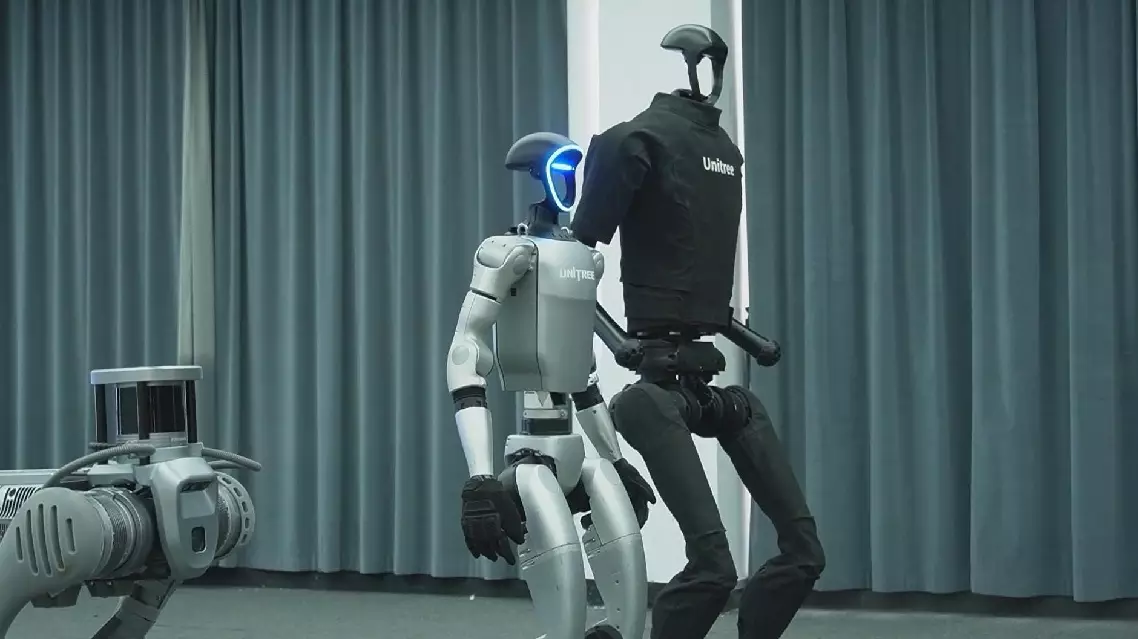
China's Unitree Robotics clears stock market listing review, leading wave of hi-tech listings