Skip to Content Facebook Feature Image

SLW: Highlights AI Innovations at OSH INNO Expo for Enhanced Workplace Safety

HK

SLW: Highlights AI Innovations at OSH INNO Expo for Enhanced Workplace Safety
HK

HK

SLW: Highlights AI Innovations at OSH INNO Expo for Enhanced Workplace Safety

2026-06-02 12:05 Last Updated At:12:27

Speech by SLW at opening ceremony of OSH INNO Expo

Following is the speech by the Secretary for Labour and Welfare, Mr Chris Sun, at the opening ceremony of the OSH INNO Expo jointly organised by the Labour Department and the Occupational Safety and Health Council this morning (June 2):

Dr Mong (Chairman of Occupational Safety and Health Council, Dr David Mong), Dr Mohammed (President of the International Social Security Association, Dr Mohammed Azman), Mr Ho (President of the International Association of Labour Inspection, Mr Ho Siong-hin), Alice (Permanent Secretary for Labour and Welfare, Ms Alice Lau), Sam (Commissioner for Labour, Mr Sam Hui), Bonnie (Executive Director of the Occupational Safety and Health Council, Ms Bonnie Yau), distinguished speakers, distinguished guests, ladies and gentlemen,

A very warm good morning to all of you. Clearly, it is my great honour to welcome all of you to Hong Kong today to the OSH INNO Expo. As one who made a small contribution to the inception of the Expo, I am truly excited to see it growing into a very unique and renowned platform for safety innovators across the industry.

Here in Hong Kong, we attach great importance to the use of innovation and technology in public service, which is very essential to enhancing our quality and efficiency of the service we provide to our public, while at the same time ensuring cost effectiveness. When it comes to occupational safety and health, we are right now witnessing a fundamental transformation in workplace safety, all powered by artificial intelligence (AI). Through AI-enabled computer vision that monitors site hazards, and Internet of Things sensors that identify risks before they escalate, we are moving away from a reactive mindset towards a proactive culture of prevention.

But here in Hong Kong, we are adopting cutting-edge technologies to ensure safety that will eventually, we believe, reshape our construction site safety landscape. The Government, you can rest assured, will remain steadfast in promoting AI-driven solutions and Smart Site Safety Systems. Here in Hong Kong, we call them the 4S for occupational safety in construction sites.

Last year in July, we witnessed a key regulatory milestone, where we are going to mandate the use of 4S alert systems for building works involving tower cranes and mobile plants. Equipped with AI-powered sensors, these systems eliminate blind spots and detect potential human-machine conflicts in real time. By triggering instant audible and visual alerts - when you are touring with us, you can experience that in person - they help maintain a crucial safety buffer between workers and also the operating machinery. By embedding AI-driven systems into the data operation of construction sites, the 4S framework not only sets a new benchmark, but also demonstrates that achieving "Vision Zero" is realistic and attainable.

Indeed, our vision of Smart City is clearly reflected in today's Expo. The participating government departments, including the Development Bureau, the Labour Department, the Drainage Services Department, the Highways Department, and also the Water Services Department, have already integrated advanced technologies into their daily operations, enhancing both service delivery and enforcement effectiveness.

As the gate-keeper of occupational health and safety (OSH) here in Hong Kong, the Labour Department is one of the pioneers in adopting innovation and technology in inspection and enforcement work. For instance, it began utilising small unmanned aircraft for site inspections in October 2025. Equipped with superzoom cameras, these drones provide comprehensive aerial oversight of hard-to-reach and high-risk areas such as tower cranes and scaffolding. In the coming months, the Department will also introduce small unmanned detection vehicles to support inspections of high-risk drainage works and related accident investigations. These vehicles can verify the accuracy and comprehensiveness of risk assessments conducted by competent persons and enhance the OSH level within confined spaces. In addition, to combat climate change, the Department leveraged on the availability of extra data collected to enhance our Heat Stress at Work Warning system. Because in the hot days, we have to warn our workers about heat stress by incorporating more heat index measurements apart from traditional data to help enhance the system and accuracy of our heat index. This improves the coverage and sensitivity of the system. As a result, it strengthens the protection of health for employees working under a hot environment.

This Expo serves as a vital catalyst for scaling transformative technologies, underscoring that innovation is one of our most powerful tools for protecting lives. The advancements showcased in this event demonstrate that digital transformation is already taking root across our workplaces. I encourage all stakeholders - industry leaders, practitioners, workplace managers and innovators - to build on the momentum of this event and enhance a forward-looking, data-driven safety culture. I am sure, through our collective efforts, we can turn "Vision Zero" into a lasting reality.

On this occasion, I wish you all a very fruitful exchange and an inspiring experience at the Expo. Thank you and see you all tomorrow.
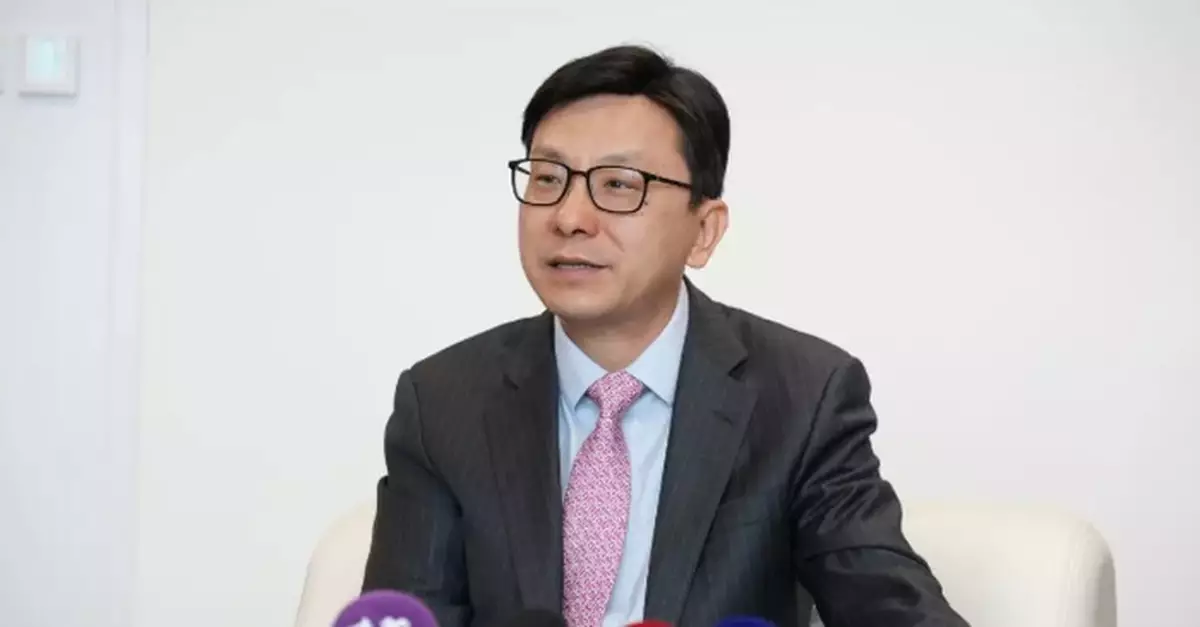
The Secretary for Labour and Welfare, Mr Chris Sun, Photo source: reference image

The Secretary for Labour and Welfare, Mr Chris Sun, Photo source: reference image
DH reminds public to take precautions against heat-related illnesses during very hot weather

The Centre for Health Protection (CHP) of the Department of Health (DH) today (June 2) reminded members of the public to take appropriate precautions against heat-related illnesses, such as heat cramps, heat exhaustion and heat stroke, during very hot weather.

In a high-temperature environment, excessive sweating and difficulty in heat dissipation can cause stress to the body. Members of the public should take the following precautions:

  • Hydrate in a timely manner to prevent dehydration;

  • Wear light-coloured, loose-fitting and breathable clothing to minimise heat absorption and facilitate perspiration and heat dissipation;

  • Keep indoor areas well ventilated and maintain appropriate temperature and humidity, e.g. by opening windows or using a fan or air-conditioning;

  • Avoid strenuous exercise and prolonged activities such as hiking or trekking;

  • Arrange outdoor activities in the morning or the late afternoon, if possible, and bring enough water; and

  • Avoid beverages containing caffeine, such as coffee and tea, as well as alcoholic beverages, which may speed up water loss through the urinary system.

In addition, infants and children, the elderly, pregnant women, individuals with chronic illnesses such as heart disease or high blood pressure, overweight people and outdoor/manual workers are more susceptible to heat stroke. These groups should pay special attention to the following:

  • Infants and young children: Avoid going outside when the temperature is high. If they must go outside, adults should ensure they stay in places with moderate temperatures and good ventilation or air-conditioning. Infants and young children should never be left unattended in a confined space such as a vehicle;

  • The elderly, pregnant women, individuals with chronic illnesses and overweight people: Pay close attention to health conditions and seek help as soon as possible if experiencing any abnormalities in health indicators such as blood pressure, heart rate, etc or if there are fluctuations in health conditions. Avoid going out when the temperature is high. Make sure there is good ventilation, or turn on a fan or air-conditioner to keep an appropriate temperature indoors. High temperatures can also worsen the condition of people with chronic illnesses (such as cardiovascular and respiratory diseases). Therefore, they should have an ample supply of their usual medication and keep in contact with family members, neighbours and the community. People should seek immediate help if they feel unwell.

  • Outdoor/manual workers: Reschedule work to cooler hours as far as feasible. If working in a hot environment is unavoidable, provide shade where practicable and use ventilation and heat dissipation equipment. Once work has begun, gradually adjust the pace of work and take breaks in the shade to regain strength.

The DH reminded the public that heat stroke is one of the most common health risks in hot weather. Over the past five years, there have been over 200 hospital admissions due to heat stroke each year in Hong Kong, with two to five fatal cases occurring mainly during the summer months from May to September. Vulnerable groups are more susceptible to heat stroke. Symptoms include dizziness, headache, nausea, shortness of breath or confusion. In severe cases, patients may suffer from convulsions or become unconscious, which can be life-threatening if they are not cooled down and resuscitated in a timely manner.

Members of the public are also advised to pay attention to the latest weather, as well as the real-time and forecasted ultraviolet (UV) index released by the Hong Kong Observatory (HKO). When the UV index is high (6 or above), the public should note the following:

  • Avoid direct sunlight exposure to the skin and the eyes;

  • Apply broad-spectrum, water-resistant sunscreen liberally, with a sun protection factor (SPF) of at least 30 or higher, when participating in outdoor activities. Reapply every two hours if staying outdoors for long periods, or after swimming, sweating or towelling off;

  • While using DEET-containing insect repellents for personal protection against mosquito-borne diseases, apply sunscreen before insect repellent;

  • Seek shade;

  • Wear UV-blocking sunglasses;

  • Wear loose-fitting clothing with long-sleeves; and

  • Wear a wide-brimmed hat or use an umbrella.

If symptoms develop, such as dizziness, headache, nausea, shortness of breath or confusion, rest and seek help immediately, and seek medical advice as soon as possible.

For more health information, the public may visit the CHP's heat stroke page and UV radiation page; the HKO's Dial-a-Weather (1878 200), latest weather report and forecast,UV Index and weather information for hiking and mountaineering; and press releases of the Labour Department on precautions against heat stroke for outdoor workers and their employers when the Heat Stress at Work Warning is in force.

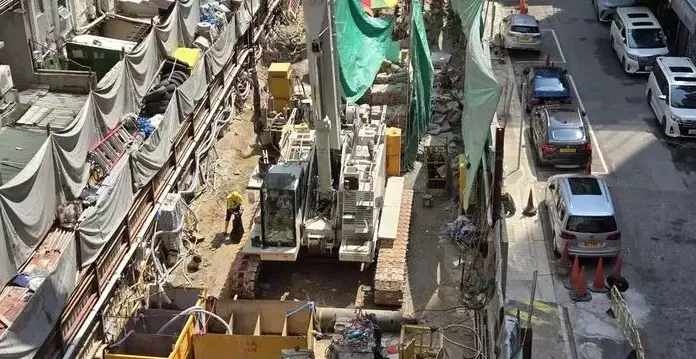
Hot weather in Hong Kong, Photo source: reference image
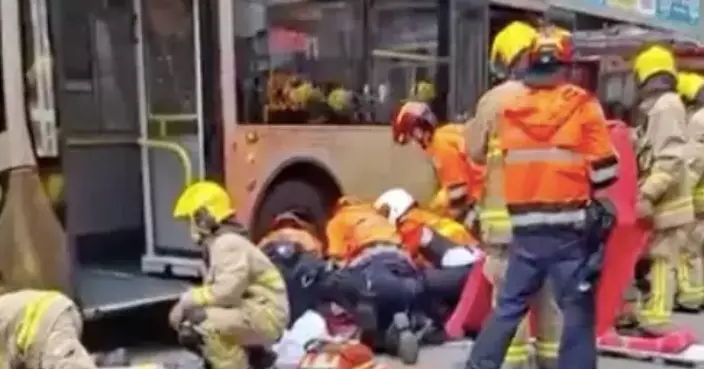
Hot weather in Hong Kong, Photo source: reference image

Recommended Articles