Skip to Content Facebook Feature Image

Mouser's Rise of the Robots Program Explores Humanoid Design Considerations

Business

Mouser's Rise of the Robots Program Explores Humanoid Design Considerations
Business

Business

Mouser's Rise of the Robots Program Explores Humanoid Design Considerations

2026-06-02 23:20 Last Updated At:23:31

DALLAS & FORT WORTH, Texas--(BUSINESS WIRE)--Jun 2, 2026--

Mouser Electronics, Inc., the authorized global distributor with the newest electronic components and industrial automation products, today announced the latest installment of its Empowering Innovation Together (EIT) technology series, Rise of the Robots, which explores key technologies behind humanoid robots and their potential for transformation. The series shares how these robots have progressed from simple machinery to critical tools used in caregiving, industrial automation, education, and even in the harshest environments.

This press release features multimedia. View the full release here: https://www.businesswire.com/news/home/20260602293561/en/

While science fiction has long envisioned robots resembling humans, recent advances in sensing, actuation, AI, embedded computing, and power systems have enabled practical, real-world robotic deployments across industrial, healthcare, and high-risk environments. Engineers are now integrating multimodal perception, real-time control, and simulation-driven training using physical AI approaches to accelerate development and improve performance. Although many systems still require supervision, they serve as the foundation for collaborative robotic platforms capable of complex, human-like interaction. The latest EIT installment explores the engineering design process, system integration challenges, and the role of legacy infrastructure, safety, and ROI in shaping scalable humanoid robot deployment.

"Humanoid robotics represents a convergence of sensing, control, and embedded intelligence that is reshaping how engineers approach system design," said Jeff Newell, President of Mouser Electronics. "Through this latest installment of Empowering Innovation Together, we're providing engineers with the insights and resources they need to better understand and navigate that shift."

In The Tech Between Uspodcast, Raymond Yin, Director of Technical Content at Mouser Electronics, and Leo Chen, Head of US Operations at robotics manufacturer Engineered Arts, discuss the role of robotics in industrial settings and the engineering approach to creating human-like facial features and expressions. Chen also explains how the Engineered Arts' humanoid, Ameca, came to fruition with careful design considerations.

"Developing humanoid robots requires solving complex, system-level challenges across perception, actuation, and real-time control," said Yin. "In this episode, we break down how engineers approach those challenges and what it takes to build systems that can operate reliably in real-world environments."

In addition to the podcast, the EIT series includes an in-depth video, technical articles, a topic-related infographic, as well as subscriber-exclusive content, exploring practical applications of AI in engineering workflows. By examining the range of cases where AI can enhance technical expertise, engineers can develop tools to help reshape how people think, decide, and create while protecting privacy and control.

Established in 2015, Mouser's Empowering Innovation Together program is one of the electronic component industry's most recognized educational programs. To learn more, visit https://www.mouser.com/empowering-innovation/humanoid-robotics-systems/ and follow Mouser on Facebook, LinkedIn, X, and YouTube.

For more Mouser news and our latest new product introductions, visit https://www.mouser.com/newsroom/.

As a global authorized distributor, Mouser offers the widest selection of the newest semiconductors, electronic components and industrial automation products. Mouser's customers can expect 100% certified, genuine products that are fully traceable from each of its manufacturer partners. To help speed customers' designs, Mouser's website hosts an extensive library of technical resources, including a Technical Resource Center, along with product data sheets, supplier-specific reference designs, application notes, technical design information, engineering tools and other helpful information.

Engineers can stay abreast of today's exciting product, technology and application news through Mouser's complimentary e-newsletter. Mouser's email news and reference subscriptions are customizable to the unique and changing project needs of customers and subscribers. No other distributor gives engineers this much customization and control over the information they receive. Learn about emerging technologies, product trends and more by signing up today at https://sub.info.mouser.com/subscriber/.

About Mouser Electronics

Mouser Electronics is an authorized semiconductor and electronic component distributor focused on New Product Introductions from its leading manufacturer partners. Serving the global electronic design engineer and buyer community, the global distributor's website, mouser.com, is available in multiple languages and currencies and features more than 6.8 million products from over 1,200 manufacturer brands. Mouser offers 28 support locations worldwide to provide best-in-class customer service in local language, currency and time zone. The distributor ships to over 650,000 customers in 223 countries/territories from its 1 million-square-foot, state-of-the-art distribution facilities in the Dallas, Texas, metro area. For more information, visit https://www.mouser.com/.

Trademarks

Mouser and Mouser Electronics are registered trademarks of Mouser Electronics, Inc. All other products, logos, and company names mentioned herein may be trademarks of their respective owners.
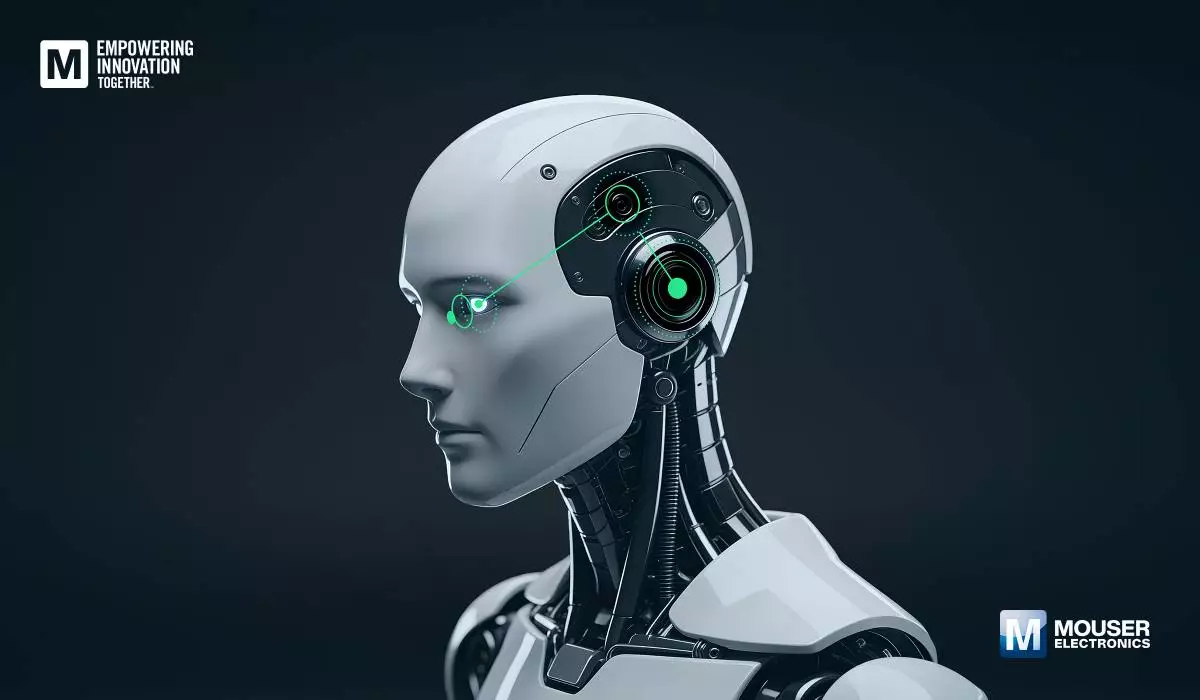
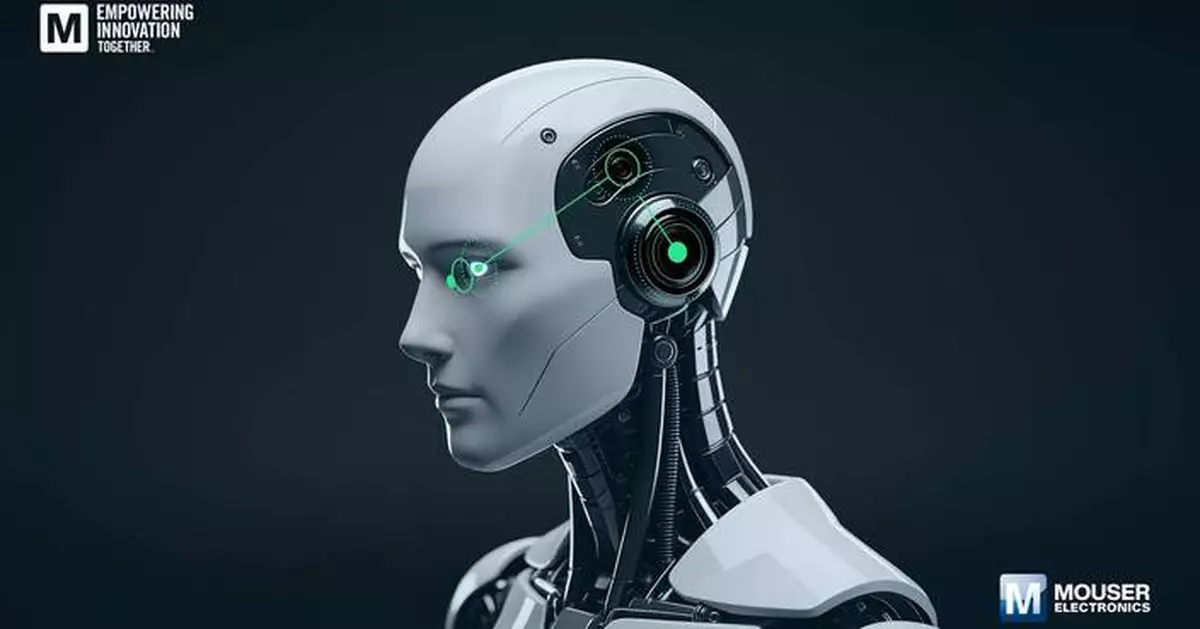
The latest EIT installment explores the engineering design process, system integration challenges, and the role of legacy infrastructure, safety, and ROI in shaping scalable humanoid robot deployment.

The latest EIT installment explores the engineering design process, system integration challenges, and the role of legacy infrastructure, safety, and ROI in shaping scalable humanoid robot deployment.
DUBAI, United Arab Emirates (AP) — Iran stopped communicating with mediators about extending a ceasefire in the war with the U.S. and Israel, two semiofficial Iranian news agencies reported Tuesday, as tensions flared in Israel's separate but related fight against the Iranian-backed militia Hezbollah in Lebanon.

The halt in communication was likely meant to increase pressure on U.S. President Donald Trump over negotiations on the Iran war ceasefire and loosening the Islamic Republic's chokehold on the Strait of Hormuz and the oil, gas and other commodities that normally pass through it. Trump then could potentially push Israeli Prime Minister Benjamin Netanyahu to halt or slow the advance of his forces, which have moved deeper into Lebanon than at any time in over a quarter of a century.

The reports by the Fars and Tasnim news agencies, both believed to be close to Iran’s paramilitary Revolutionary Guard, come as the conflicts in Iran and Lebanon have increasingly become conjoined. Iran insists that any potential truce in the war there must also quell the fighting in Lebanon, where Hezbollah remains one of Iran's chief allies in its self-described “axis of resistance” against Israel.

A regional official involved in the mediation, speaking on condition of anonymity to discuss the talks, told The Associated Press that Iran had not communicated at all on Tuesday after saying that a ceasefire needed to be enforced in Lebanon for negotiations to continue.

Israel and the U.S. maintain the fighting in Lebanon is separate from the Iran war talks.

Meanwhile, year-on-year inflation in Iran reached a level in May unseen since World War II, underlining the economic pain average Iranians are facing. While the U.S. is eager to ease the Islamic Republic's grip on the strait — through which a fifth of all traded oil and natural gas passed in peacetime — Iran faces economic challenges as its oil-backed economy remains under a U.S. naval blockade.

Economic pressure touched off nationwide protests in Iran in 2017 into 2018, when rising food prices sparked demonstrations that killed over 20 people and saw hundreds arrested. The next year, an increase in government-subsidized gasoline prices caused protests that saw over 300 people reportedly killed.

Then came the protests over the collapsing value of Iran's currency, the rial, at the start of this year. They were the most intense demonstrations to shake the Islamic Republic since its 1979 revolution and the chaotic years that followed. Iran's theocracy met January's protests with a crackdown on demonstrators in January that killed over 7,000 people, according to activists' estimates.

Now, even as hard-liners hold gun-handling workshops and organize marriages under the shadow of a ballistic missile to bolster spirits, experts note there could be new demonstrations if people find themselves priced out of feeding their families.

“I have no doubt that if Trump leaves (Iran without a formal peace deal) ... most probably, we will see something like January by the end of summer because of the economic and social situations," analyst Mohsen Jalilvand said in a video published by Iran's Fararu news website.

Iran's Central Bank said the consumer price index, which measures a basket of goods and services, reached 77.2% in May compared with the year before. The rate is 8.5% higher than in April, the bank added. Inflation in daily and general needs — like medicine, taxi fares, tobacco and communication fees — rose 113.8% from the year before.

A private economic think tank in Iran, the Bamdad Institute of Economic Studies, described the current figures as “an unprecedented rate since World War II.” Iran’s Central Bank did not acknowledge the significance of the figures.

The previous record came in 1942. During the war, the British and Soviets invaded Iran and took over its railway, disrupting food supplies. The lack of food, worsened by a poor harvest, sparked hyperinflation and a famine. Hunger and a typhus outbreak killed many.

Airstrikes this year have greatly damaged Iran's businesses and its oil industry, Meanwhile, the U.S. blockade has been targeting Iranian crude oil shipments trying to reach the international market, a key source of hard revenue. Tax revenues have been depressed by businesses struggling even after the fighting paused.

The rial, which traded at 32,000 to $1 in 2015, now trades at over 1.7 million to $1.

“We will definitely have higher prices," Iranian President Masoud Pezeshkian warned in May. "We are fighting, and we must accept this hardship.”

Tehran-based economist Saeed Leilaz, speaking to the AP, warned that annual inflation in Iran could reach 80%.

"Iran’s society cannot tolerate above 25%” annual inflation, he said.

Karimi reported from Tehran, Iran. Magdy reported from Cairo.

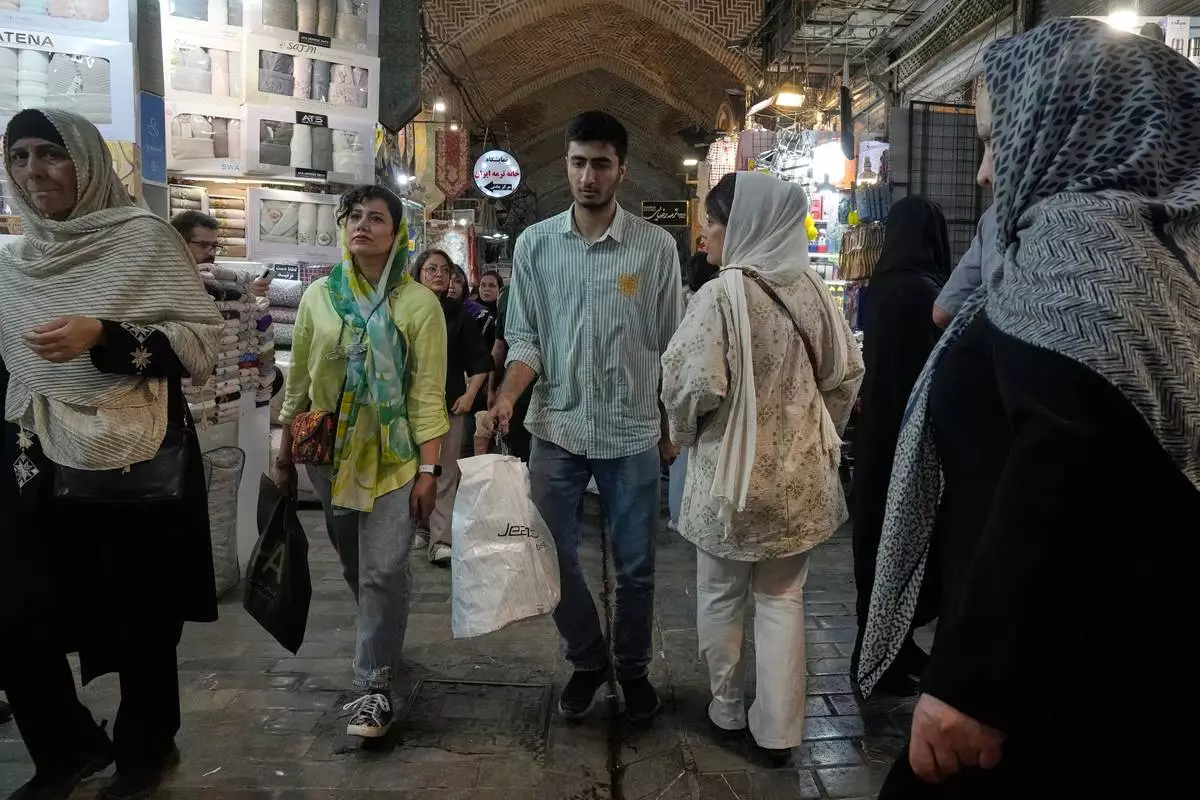
People walk at Tehran's historic Grand Bazaar, Iran, Monday, June 1, 2026. (AP Photo/Vahid Salemi)

People walk at Tehran's historic Grand Bazaar, Iran, Monday, June 1, 2026. (AP Photo/Vahid Salemi)

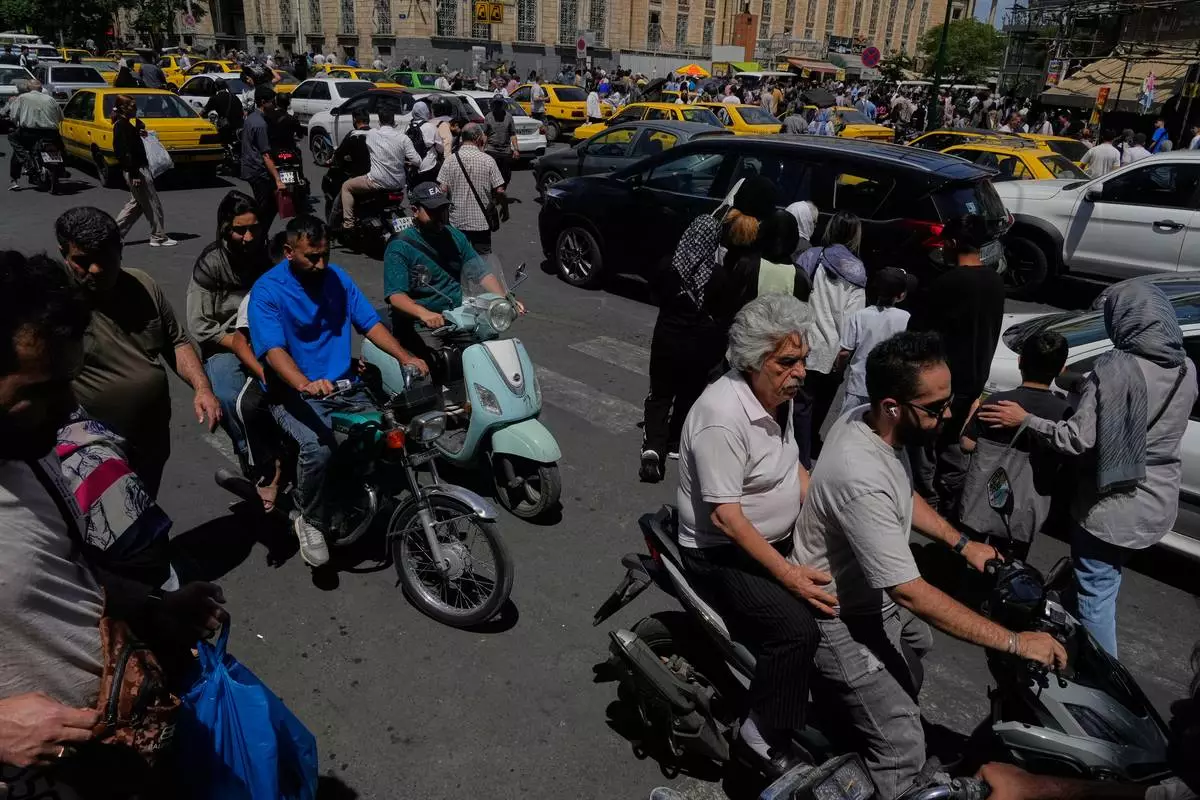
Pedestrians and vehicles cross an intersection around Tehran's historic Grand Bazaar, Iran, Monday, June 1, 2026. (AP Photo/Vahid Salemi)

Pedestrians and vehicles cross an intersection around Tehran's historic Grand Bazaar, Iran, Monday, June 1, 2026. (AP Photo/Vahid Salemi)

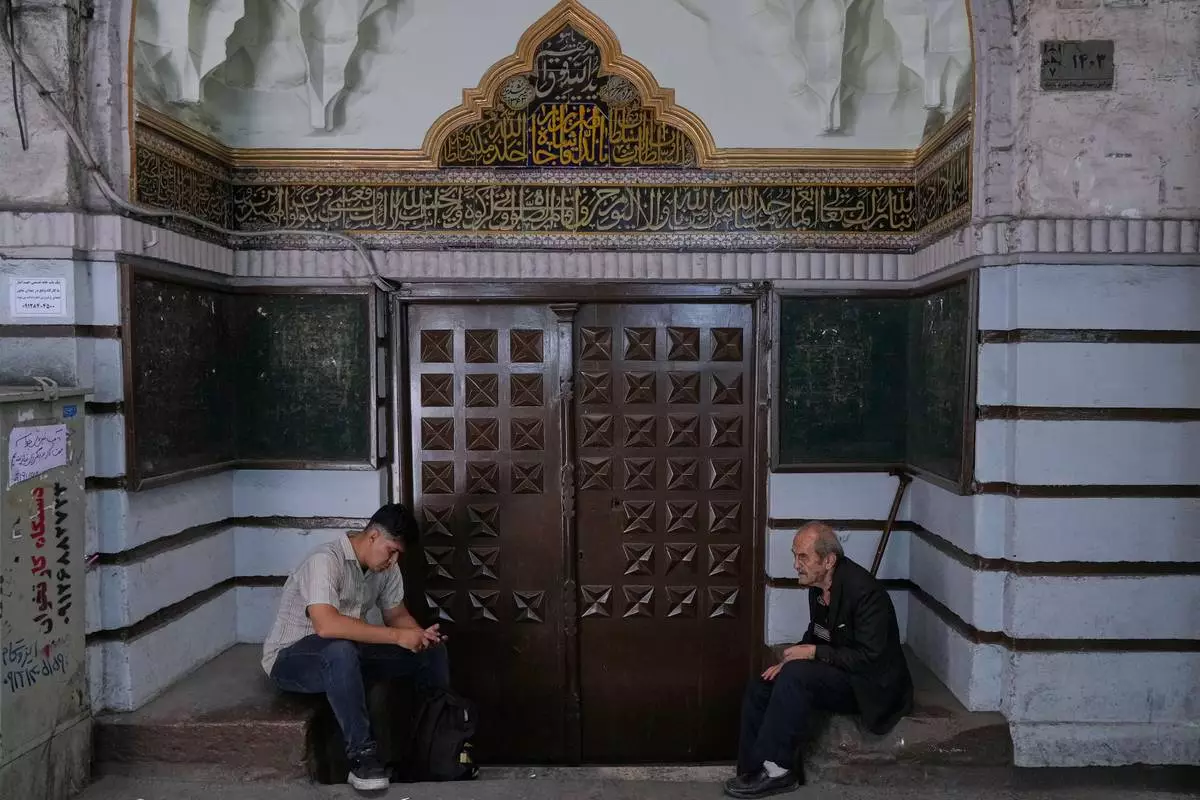
Men sit at the gate of a mosque at Tehran's historic Grand Bazaar, Iran, Monday, June 1, 2026. (AP Photo/Vahid Salemi)

Men sit at the gate of a mosque at Tehran's historic Grand Bazaar, Iran, Monday, June 1, 2026. (AP Photo/Vahid Salemi)

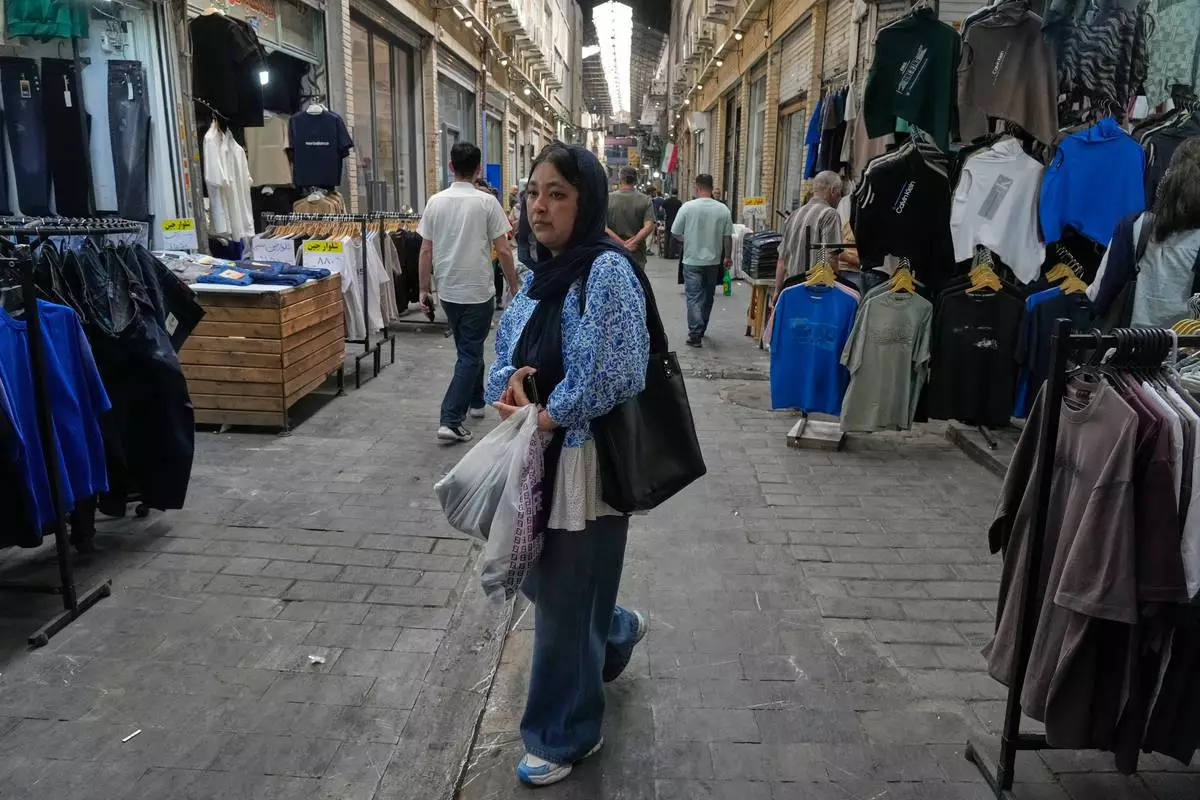
A woman walks at Tehran's historic Grand Bazaar, Iran, Monday, June 1, 2026. (AP Photo/Vahid Salemi)

A woman walks at Tehran's historic Grand Bazaar, Iran, Monday, June 1, 2026. (AP Photo/Vahid Salemi)

People carry packages at Tehran's historic Grand Bazaar, Iran, Monday, June 1, 2026. (AP Photo/Vahid Salemi)

People carry packages at Tehran's historic Grand Bazaar, Iran, Monday, June 1, 2026. (AP Photo/Vahid Salemi)

Recommended Articles