BOSTON (AP) — A federal judge on Tuesday heard from voting rights groups and a coalition of two dozen states that want the courts to halt President Donald Trump’s executive order seeking to create a federal voter list and limit who can receive a mail ballot.
The plaintiffs argued in two lawsuits that Trump’s order should be found unconstitutional because the states and Congress, not the president, have the power to set election rules. They also told the court that the move imposes a costly burden on state election officials to comply and would spread fear about the possibility of prosecution.
"This is going to be a sea change in the way that some states administer their ballots," said Michael Cohen, who was part of a team representing California, adding that “it will be difficult to overstate the disruption that this will cause.”
Trump's executive order, the second one aimed at elections during his second term, comes as he continues to raise the specter of widespread voting by noncitizens as a reason to change election rules. But states already have detailed processes aimed at keeping their voter rolls accurate, and voting by noncitizens has been shown to be rare. It also is a felony that can be punishable by deportation.
His latest order is being challenged through multiple lawsuits, including two filed in U.S. District Court in Boston.
The American Civil Liberties Union, which represented the League of Women Voters in one of the two Boston cases, has called the order “a dangerous attempt to disenfranchise eligible voters nationwide." The group said the order transforms "the U.S. Postal Service from a neutral mail carrier to an arbiter of who may cast a ballot by mail.”
“This case challenges an extraordinary and abusive assertion of executive power over the administration of federal elections,” the organization said in its complaint.
The hearing comes less than a week after another judge declined to halt the order. U.S. District Judge Carl Nichols, a Trump appointee in Washington, agreed with the Trump administration’s contention that it was too early to block the order because it has yet to be implemented.
The administration, in its motions to dismiss the lawsuits, argued that the plaintiffs lack standing to bring their claims. They also argued the motions are premature and that plaintiffs lack the legal basis to bring their Administrative Procedure Act claim, which governs how federal agencies develop and issue regulations.
Stephen Pezzi, a lawyer for the Trump administration, said the harms the plaintiffs referenced were subjective, since much can change with the voting list before it is finalized. He also said no one would be prosecuted for violating the executive order.
Missouri Solicitor General Lou Capozzi, speaking for the states supporting the list, argued it was too early to say how his state might use the list, but that it was “unlikely” any voter would be removed this year from the voter rolls because of it.
“We are not exactly sure how we would use it,” Capozzi said, adding that "we don't want this process to be strangled in the crib, so to speak.”
U.S. District Judge Indira Talwani took the requests for motions to halt the order, along with motions to dismiss the cases under advisement.
During oral arguments, Talwani expressed concerns about whether the federal system envisioned under the executive order could be ready for the upcoming midterm elections and about the risks posed to election workers who rely on a state list that differs from the federal one. She also raised doubts about the reliability of a federal list — noting, for example, women who changed their names after getting married or someone who has moved from state to state might be missed.
“Isn’t there a reasonable fear and concern on behalf of voters that they will be precluded?” Talwani asked.
Trump issued the order in March after a bill he supported to overhaul voting stalled in Congress. The order would have had the federal government create a list of eligible voters and then directed the Postal Service to deliver mail ballots only to those on the list. Election officials argued that it was ripe for abuse and could cause chaos, and the postal union has objected to the idea of mail carriers policing ballots.
The Postal Service has published a proposed rule required by Trump's executive order in the Federal Register. Among other things, the rule would not apply to primary elections or overseas ballots.
Since his 2020 presidential election l oss to Democrat Joe Biden, Trump has groundlessly claimed mail voting is rife with fraud and has launched a federal investigation into that year’s vote, even though repeated audits and investigations, including ones run by Republicans, found it was free of widespread fraud. Trump also has said he wants to “take over” election administration in Democratic areas.
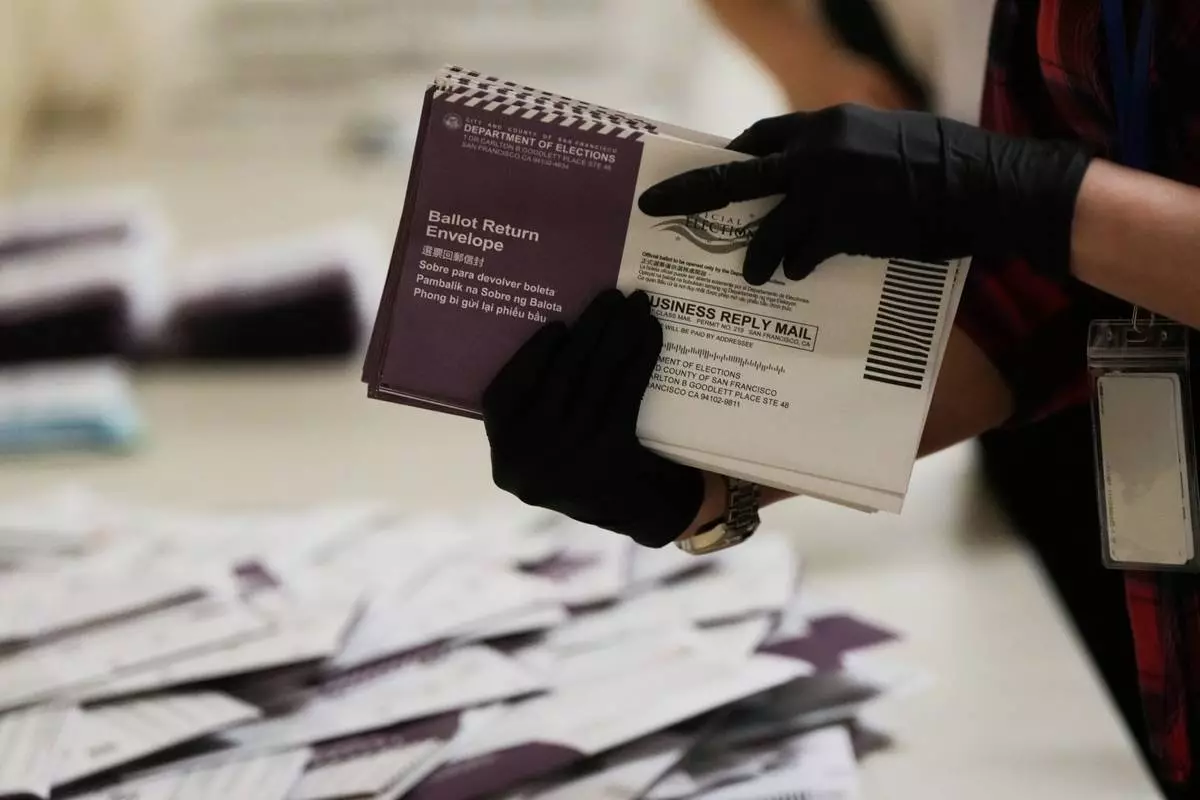
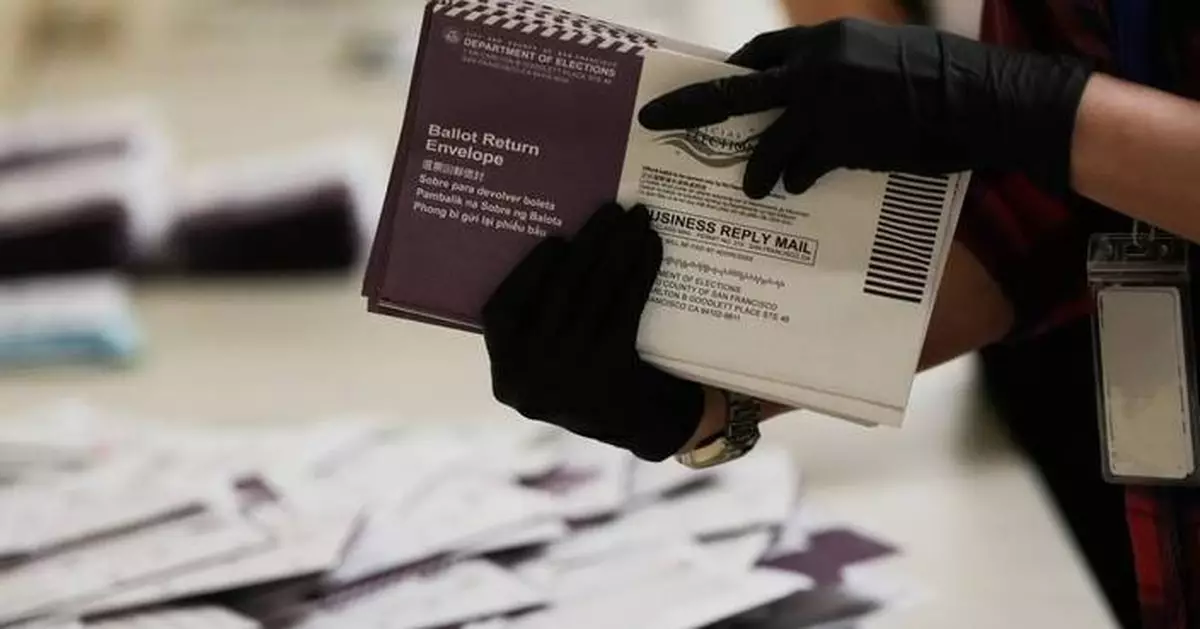
Department of Elections workers sort mail-in ballots for the California primary election at City Hall on Tuesday, June 2, 2026, in San Francisco. (AP Photo/Jeff Chiu)
For a state that’s home to Hollywood, there isn’t much star power in California’s gubernatorial race. It’s a somewhat different story in Los Angeles, where a reality television personality is running for mayor as the city prepares to host the Olympics.
More primaries are being held on Tuesday as well. Democrats are banking on a rare chance to regain ground in Iowa, a rural state that has repeatedly eluded them in recent years. Republicans, meanwhile, are grappling with a New Jersey congressman whose unexplained absence could put their already slim majority at risk.
— California: Voters are weighing in on who should lead the nation’s most populous state, where there is no clear leader among candidates vying to advance in the race to succeed Democratic Gov. Gavin Newsom. Plus, U.S. House races are on the ballot, along with the Los Angeles mayor’s race.
— New Mexico: Contests in the state include primaries for congressional seats, a U.S. Senate seat and a long list of statewide offices, but the governor’s race is the main attraction. Former Interior Secretary Deb Haaland is running for the Democratic nomination, which could put her on a historic path for Native American leaders.
— New Jersey: One of this year’s most closely watched House midterms will take place in the battleground district represented by Rep. Tom Kean Jr., who has drawn public scrutiny and concern after missing more than 100 House votes due to an undisclosed medical issue. Voters are deciding which Democrat will run against him in November.
— Read more about races in Iowa, Montana and South Dakota.
Here's the latest:
If she wins her party’s nomination, Haaland will be on a path to become the first Native American woman elected as a governor in the U.S.
In 2018, the member of Laguna Pueblo became one of the first two Native American women elected to Congress. Under President Joe Biden, she became the first Native American Cabinet secretary.
New Mexico has trended increasingly blue in recent years, with Democrats winning every statewide elected office since 2017.
Haaland leads her challenger Sam Bregman in fundraising by a significant margin.
Democrats convinced California voters to let them redraw the state’s congressional map to counter the five-seat gain Republicans hoped to earn in Texas when they revised that state’s map at the president’s urging.
But one of the seats Democrats are counting on picking up, a new district outside San Diego that replaces a conservative seat, could end up out of their reach on primary night.
That’s because California’s primary awards spots on the November ballot to the top two vote-getters, regardless of political party. Nine Democrats are on the ballot in the 48th District, so many that some in the party worry the two Republicans will nab the top two slots while the Democrats split the majority of the vote and get locked out of the general election.
Other Democrats are confident their voters will coalesce around one of the most prominent candidates — former Obama administration official Ammar Campa-Najjar or San Diego City Councilwoman Marni von Wilpert.
Jose Rivera says casting a ballot, especially in local elections, is a way to make a difference in your community.
“This is proof that you do have a voice,” he said Tuesday outside his LA polling place.
Rivera voted for Karen Bass for mayor because, he said, she deserves a second term to deliver on her promises.
“She’s done a pretty good job in my opinion overall,” he said.
Democrats in New Jersey's 7th District, where incumbent Republican U.S. Rep. Tom Kean Jr. has been absent for months, are picking their nominee to take him on in the fall.
Kean’s team has said he’s dealing with a personal medical issue and he plans to return soon, but they haven’t disclosed any details about what’s made him more than 100 votes in Congress.
Bruce Paterson, 75, a self-described “regular Democrat” who has been supportive of Kean, said at a recent state legislative town hall that he’s been tracking Kean’s absence.
“He has been out for months. Nobody knows where he is,” he said.
Competing for the Democratic nomination are Rebecca Bennett, Michael Roth, Tina Shah and Brian Varela.
The district, which has New York suburbs and rural areas and includes Trump’s Bedminster golf course, has flipped parties in midterms in 2018 and 2022.
Democrats redrew the 40th District southeast of Los Angeles to create a solidly conservative district that was bound to eliminate one of two Republicans they have struggled to defeat over the years: Rep. Ken Calvert or Rep. Young Kim.
Both incumbents are now stuck in the same district and have launched a monthslong slugfest over who is more conservative and more loyal to Trump. Both might make it through to the general election. But if one doesn’t, their political career will end — at least for now.
Julian Bartell quit his job last winter to take a higher-paying position 30 miles from his home in Newton, Iowa. That was just as the war with Iran was starting. The new daily, hour-long commute and its higher fuel cost erased his higher pay, he said.
He was voting for Zach Wahls, the state senator from progressive stronghold of Iowa City, in Tuesday’s Democratic U.S. Senate primary and Travis Terrell, the lesser-known progressive candidate running against Christina Bohannan for the Democratic nomination in Iowa’s 1st Congressional District.
The 22-year-old cook wants to see higher-income earners to pay more in taxes in order to help the working class.
“My priorities are wealth taxes, Medicare for all and guaranteed basic income,” Bartell, a cook, said as he walked out of the Jasper County office building where he was voting around midday Tuesday.
“I don’t see enough change happening for people who need help. There are solutions. We know what they are,” he said. “We just need to get people talking about them more.”
Polls are open across New Mexico, where voters will decide primaries in three congressional seats, a U.S. Senate seat and a long list of statewide offices. The governor’s race is the main attraction as the state grapples with high rates of violent crime, underperforming schools and cuts to federal programs that are key safety nets for residents.
Two Democrats and three Republicans are vying for their parties’ nominations to replace Gov. Michelle Lujan Grisham, a Democrat who is term-limited. The winner of November’s general election is all but likely to be a Democrat, given the party’s dominance in recent years. A Republican candidate has not won statewide election in New Mexico in 10 years.
Despite the state’s persistent challenges, the primary election comes at a time of promise for the next governor, as elevated global oil prices from the Iran war have translated into increased tax revenue for state coffers.
Leo Blain, 24, likes Raman’s progressive agenda and believes she can be effective at building coalitions.
“I think she has a really good understanding about how the city of LA works and would be a really effective mayor,” Blain said Tuesday outside his polling place.
But Blain found it hard to get excited about any of the candidates for governor.
He voted for billionaire Tom Steyer because he believes the Democrat has the best shot to win in the November general election.
Most of the campaign has focused on issues like rebuilding from the Palisades Fire, affordable housing and persistent homelessness. But there are other, more existential concerns as well.
Hollywood jobs have been decamping for years for cheaper filming locations. A downtown renaissance was crushed by extended pandemic closures, and many office buildings remain desperate for tenants.
The city has long struggled to provide basic services, whether paving buckled streets and sidewalks or keeping streetlights on. The restaurant industry has witnessed a long string of high-profile closures. The city’s notorious gridlock continues unabated.
All of this has increased pressure on city leadership as it prepares to host the Olympics in 2028.
Wallace McCracken was taking time during his lunch break as an energy company safety manager to vote in Newton, the seat of Jasper County in central Iowa.
The 43-year-old registered Democrat said the nation is at a turning point in 2026, and that he wanted to be part of the direction it turns.
“We’re at a precipice and a changing point,” he said, declining to say for whom he voted in Iowa’s Democratic U.S. Senate primary. “If people want change to occur, they’ve got to do something about it.”
The married father of a middle-school student described the course of the nation as “struggling,” in part because he believes government is too tied to corporate interests.
“I would like to see a government did not funnel so much money to private corporations and bend over to lobbyists,” he said, “and, instead, do more for the people directly."
Zach Wahls and Josh Turek are both state lawmakers running for the Democratic nomination for the U.S. Senate seat currently held by the retiring Republican Ernst.
They agree on a lot. But they each say they’re the better pick to win a state that’s dominated by Republicans.
Iowa hasn’t elected a Democrat to the U.S. Senate since Tom Harkin won his last term in 2008.
GOP Rep. Ashley Hinson is endorsed by Trump and Ernst for the Republican nomination. Hinson faces former state Sen. Jim Carlin in the GOP primary.
John Smith, 56, said the most important factor in his vote in Iowa’s Democratic primary for U.S. Senate was identifying an individual who would be “best positioned in the general.”
Smith voted for Josh Turek over Zach Wahls.
The two state lawmakers campaigned on different visions for how to win statewide in November. Democrats want to flip the seat held by retiring Republican Sen. Joni Ernst. U.S. Rep. Ashley Hinson, who has the backing of Trump and Ernst, is seeking the GOP nomination.
“It feels like there’s more opportunity for Democrats to gain ground this year than in past years,” said Smith, who lives in Des Moines.
Steyer kicked off Pride Month and capped off the last full day of his primary campaign for California governor by belting out Tom Petty’s “I Won’t Back Down.”
A photo he posted on social media shows Steyer, wearing a backward baseball cap, singing karaoke alongside his wife Kat at a bar in the gay enclave of West Hollywood on Monday night.
“I can’t sing,” Steyer wrote Tuesday on X, “but I can wish you a Happy Pride.”
Steyer, a former hedge fund manager turned liberal activist, has spent millions of his own money as he hopes to advance to the November election.
One of California Democrats’ top targets when they redrew the state’s congressional map was Republican Rep. Kevin Kiley. They split his Northern California district in two, tethering each half to more Democratic areas near Sacramento to create two Democratic-leaning seats.
Kiley opted to run in the 6th District, which is crowded with local Democratic candidates. He became an outspoken critic of political gerrymandering and then left the Republican Party to run as an independent. That might be his best shot of survival with the new California map.
Emily MacFarland, a Democrat, said she voted Tuesday feeling concerned about the nation’s democracy and the state of Iowa. She said she’s glad to see more national attention on the once-competitive state. “I’m just hoping that we can become more purple,” the 49-year-old Des Moines, Iowa, resident said. “I think that Donald Trump is helping out all of the Democrats. This is our chance, honestly.” Like other Iowa Democrats, MacFarland said she had a hard time deciding between Josh Turek and Zach Wahls, two state lawmakers competing to be the Democratic nominee for U.S. Senate. Being more progressive, she said she normally would’ve voted for Wahls. But ultimately, MacFarland chose Turek, who has said his experience winning a state House race in a red district can translate to success statewide. “I feel that he has a better shot at maybe getting a few Republicans that maybe are not happy with the Republican Party, or lean more independent,” she said.
The party has been adrift in the Democratic-leaning state since last year when its Trump-backed candidate for governor lost by double digits.
Voters face a four-way race between attorney Justin Murphy, surgeon Robert Lebovics, Army veteran Richard Tabor and former TV reporter Alex Zdan.
The winner will face Booker, the Democrat who is running for a full third term. Republicans have struggled in Senate contests in New Jersey, which they haven’t won in over five decades.
Kristen Anderson, 48, and her 21-year-old daughter, Sydney Baratta of Des Moines, Iowa, both voted on Tuesday for Zach Wahls to be the Democratic nominee for U.S. Senate. Anderson said it was a “hard call” because there wasn’t anything wrong with Wahls’ competitor, Josh Turek. Many Iowa Democrats felt torn between the two state lawmakers who want to flip retiring Republican Sen. Joni Ernst’s seat in November. “I don’t have strong inclination that one of them is necessarily better than the other,” Anderson said. But Wahls is “not someone whose going to shy away from his stance,” she said. “He just seems like a good guy, just generally.” Baratta said she wants to see a younger person in office and that she’d be happy with either candidate. But Wahls, she said, brings fresh perspective and a vocal record protecting women’s access to abortion and public education, both important issues to her. “I’m really excited and intrigued by the fact that we might have some younger people in office who can portray my perspective a little bit more realistically,” she said.
Former House Speaker Nancy Pelosi was the embodiment of the Democratic establishment for some. So it was perhaps natural that a wealthy former software engineer, Saikat Chakrabarti, announced plans to challenge her in her San Francisco district.
Chakrabarti is the founder of Justice Democrats, a group that launches primaries of fellow Democrats from the left, and he’s used the millions he made in Silicon Valley to fund his campaign. But Pelosi, who has been in office for nearly 40 years, is retiring from her 11th District seat, and it’s not clear Chakrabarti will make it to the November ballot.
He faces state Sen. Scott Wiener, a well-known lawmaker who has served in San Francisco and the state capitol in Sacramento, and San Francisco Supervisor Connie Chan, who has been endorsed by Pelosi.
Republican Spencer Pratt is dismissing Nithya Raman’s campaign as “weak” and effectively over. The only real race, he says, is between him and Democratic incumbent Karen Bass.
Raman, a former Bass ally and progressive city council member, is challenging the mayor from the left.
In a social media video posted Monday, Pratt says Raman hasn’t gotten anything done during her six years in city leadership. He calls a vote for Raman a waste.
“At this point, it’s me and Karen,” Pratt says.
President Donald Trump on Tuesday urged his followers to vote for Hilton, a former Fox News TV host and British political adviser.
“He will work with me and the Federal Government, the money will flow because I have confidence in him (but not any of the others!), and we will MAKE CALIFORNIA GREAT AGAIN!” Trump wrote on Truth Social.
Meanwhile, Vice President J.D. Vance called Hilton a “good guy” and encouraged Californians to vote for him.
“California is such a beautiful state--it just needs better political leadership!” Vance wrote on X.
Nithya Raman was once an ally to Bass, but she filed to challenge her as mayor just hours before the filing deadline. Raman described the city as “at a breaking point.”
She has promised to speed up housing construction, bring back entertainment industry jobs and improve services in a city known for dirty streets and buckled pavement.
Raman hasn’t drawn as much national chatter as Pratt, a former reality television star whose supporters have tried to boost his candidacy with AI-generated videos.
Last week, Raman took a shot at that tactic with her own video showing her flanked by supporters. “No AI was used in the making of this video,” it said.
The nation’s most populous state is dominated by Democrats, but some are unsure of who to vote for.
“I’m kind of pinching my nose and voting this go-around rather than being excited,” said Colin Culver, a 21-year-old San Diego resident who ultimately voted for Tom Steyer.
It’s been a chaotic campaign, particularly when former Rep. Eric Swalwell dropped out of the race after being accused of sexual assault.
Paul Mitchell, a Democratic strategist tracking ballot returns, said some voters “are holding onto the ballot because they have seen this kind of topsy-turvy governor’s race,” and “they’re waiting to make sure they’re making the right choice.”
Two Democrats are seeking their party’s nomination to replace Gov. Michelle Lujan Grisham, a term-limited Democrat who will leave office at the end of 2026. Sam Bregman, an Albuquerque-based district attorney, is campaigning on his law enforcement record and promises to stand up to the Trump administration.
Former congresswoman and U.S. Interior Secretary Deb Haaland has emphasized her ancestral roots in the state and experience working in the nation’s capital.
Haaland leads Bregman in fundraising by a wide margin, but the primary has become increasingly combative. Bregman’s campaign has seized on the fact that Haaland has declined multiple opportunities to debate him. Meanwhile Haaland’s campaign has cast Bregman as out of touch with everyday New Mexicans, highlighting his personal wealth.
By any measure, Bass’ first term has been challenging. The worst wildfire in city history began while she was traveling with a presidential delegation in Ghana. Homelessness continues to be a challenge.
“I haven’ always got it right,” Bass says.
But now she wants a second term, which would allow her to keep leading the city of 4 million people as it hosts the Olympics in 2028.
Bass is facing challenges from the left and the right. Progressive city council member Nithya Raman and Republican reality television personality Spencer Pratt are among the 14 names on the ballot.
With so many candidates, no one is likely to get a majority of the vote on Tuesday, meaning the election would be settled by a November runoff between the top two.
One of the most closely watched House races in this year’s midterms is unfolding in the New Jersey district represented by Rep. Tom Kean Jr., who’s been absent from votes for nearly three months.
Kean is running unopposed in the Republican primary, where he’s has Trump’s support. But his absence because of an undisclosed personal medical issue has generated outsized interest in the contest.
Kean is seeking a third term.
Republican Rep. Tom Kean Jr. is running unopposed in the primary for New Jersey’s 7th congressional district on Tuesday. But he’s facing growing scrutiny for an unexplained medical absence that has stretched for more than three months, causing him to miss more than 100 votes in Congress.
Trump weighed in on social media late Monday, saying Kean was “working tirelessly” to support the MAGA agenda.
Though Kean isn’t facing any GOP competition today, he’s seeking reelection this fall in one of the few genuinely competitive congressional districts left on the map. Several Democrats vying to take him on in the general election have made his absence — and the lack of clarity surrounding it — a central part of their message.
Every two years, the attention of the nation’s political class is riveted on a Democratic-leaning congressional district in California’s Central Valley. Republican Rep. David Valadao has been able to fend off repeated Democratic challengers, except in 2018, when he barely lost. But he ran again two years later and reclaimed the seat.
Democrats redrew the district to make it even tougher for Valadao. They recruited a moderate who represents the area in the state capital, Assemblywoman Jasmeet Bains, to run against him. But she’s had to battle a more liberal rival, political science professor and school board member Randy Villegas. The primary will determine Valadao’s next opponent.
That means all candidates are on the same ballot, regardless of their party affiliation. California has used that system for more than a decade.
It’s occasionally resulted in two candidates from the same party competing against each other in a general election. That happened most notably in U.S. Senate races in 2016 and 2018, when two Democrats faced off.
In the governor’s race, though, one Republican and one Democrat have always advanced to November. Democrats had feared a lockout this year given their large field of candidates. But those worries have diminished in the race’s closing weeks.
A Democrat has held the governor’s office since 2011, when Jerry Brown took over from Republican Arnold Schwarzenegger.
Democrats have also had a firm grip on the state Legislature.
Republicans Steve Hilton and Chad Bianco say that means Democrats are to blame for the state’s expensive gas and housing, its homelessness crisis and a slew of other problems. Both have pledged to reduce regulations and taxes.
Hilton has President Donald Trump’s backing. That could help him in the primary but hurt him in the general election in the heavily Democratic state.
Holding on to Iowa is a big part of the GOP’s plan to keep its U.S. Senate majority.
A super PAC affiliated with Senate Republicans has pledged $29 million to help ensure the seat stays in GOP hands.
That means all candidates are on the same ballot, regardless of their party affiliation. California has used that system for more than a decade.
It has occasionally resulted in two candidates from the same party competing against each other in a general election. That happened most notably in U.S. Senate races in 2016 and 2018, when two Democrats faced off.
In the governor’s race, though, one Republican and one Democrat have always advanced to November. Democrats had feared a lockout this year, given their large field of candidates. But those worries have diminished in the race’s closing weeks.
The candidates are U.S. Rep. Randy Feenstra, state Rep. Eddie Andrews, businessman and former conservative political director Zach Lahn, former state Rep. Brad Sherman and former director of the state Department of Administrative Services Adam Steen.
If no candidate earns at least 35% of Republican primary voters, the nominee would be selected at a contested state party convention.
Trump endorsed Feenstra on Friday, saying on social media that “Randy is MAGA all the way!”
The generational fighting that has been ripping through the Democratic Party continues in California’s primaries.
In the Los Angeles-area’s 32nd District, 42-year-old lawyer Jake Levine is challenging Brad Sherman, 71, a 15-term member of the House of Representatives.
And in the 7th District near Sacramento, 40-year-old city councilwoman Mai Vang is challenging Doris Matsui, 81, who has held the seat since her husband, a congressman himself for decades, died in 2005.
Tom Steyer, the former hedge fund manager turned climate activist, spent nearly $200 million of his money on advertising alone.
The billionaire’s ad campaign was the most expensive in the country by far this election cycle. The data comes from advertising tracker AdImpact.
Steyer’s rivals in the governor’s race and his critics have accused him of trying to buy the election.
But he’s defended his spending, saying he is fighting against powerful corporate interests that are driving up the price of living in the state. Pacific Gas & Electric, a major California utility, is among the corporations and business interests funding anti-Steyer ads.
“I’m only working for the people of California,” Steyer said last week.
They are former mayor of fast-growing Rio Rancho Gregg Hull, cannabis business owner Duke Rodriguez and public relations professional Doug Turner.
While Hull and Turner have not aligned their campaigns with the MAGA movement, Rodriguez was recently served a cease-and-desist letter from a law firm representing Trump for “deceptive use” of the president’s image in campaign materials. That contest's winner faces an uphill battle to win in a state where a Republican has not been elected to statewide office in 10 years.
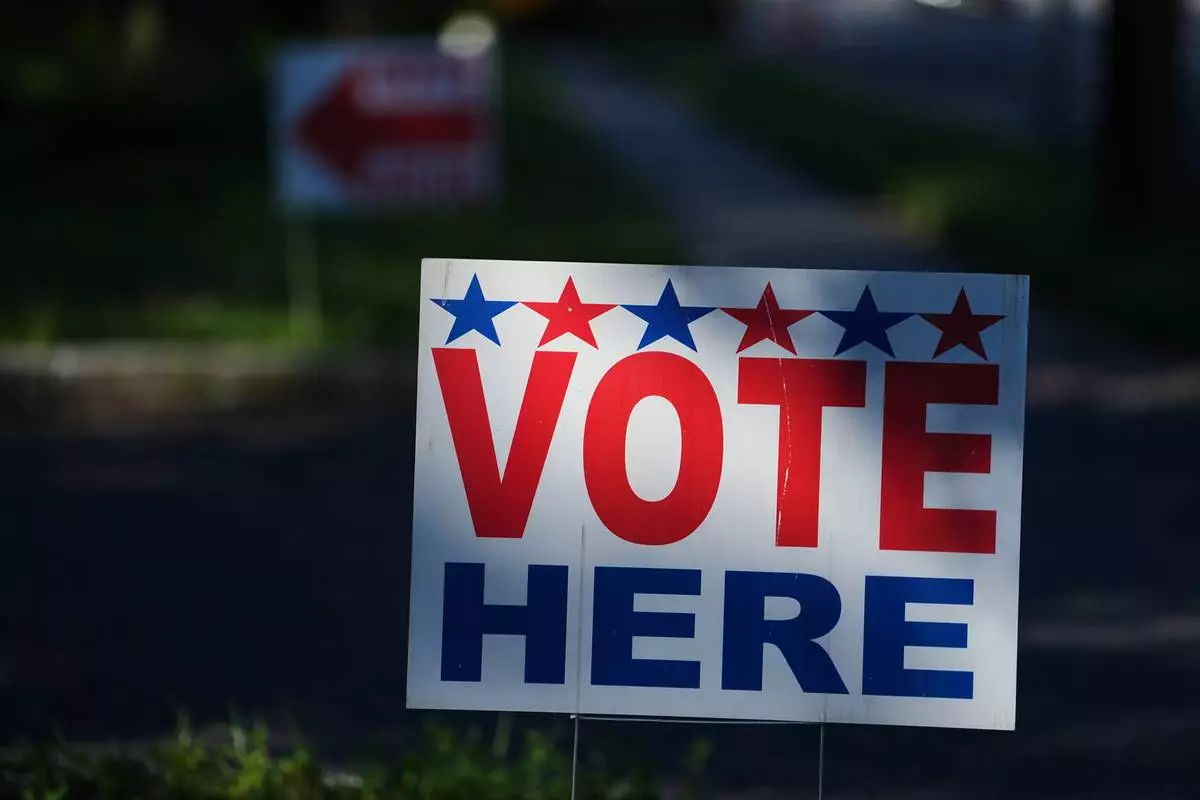
A sign directs voters to a polling place for the New Jersey primary election in Cherry Hill township, N.J., Tuesday, June 2, 2026. (AP Photo/Matt Rourke)
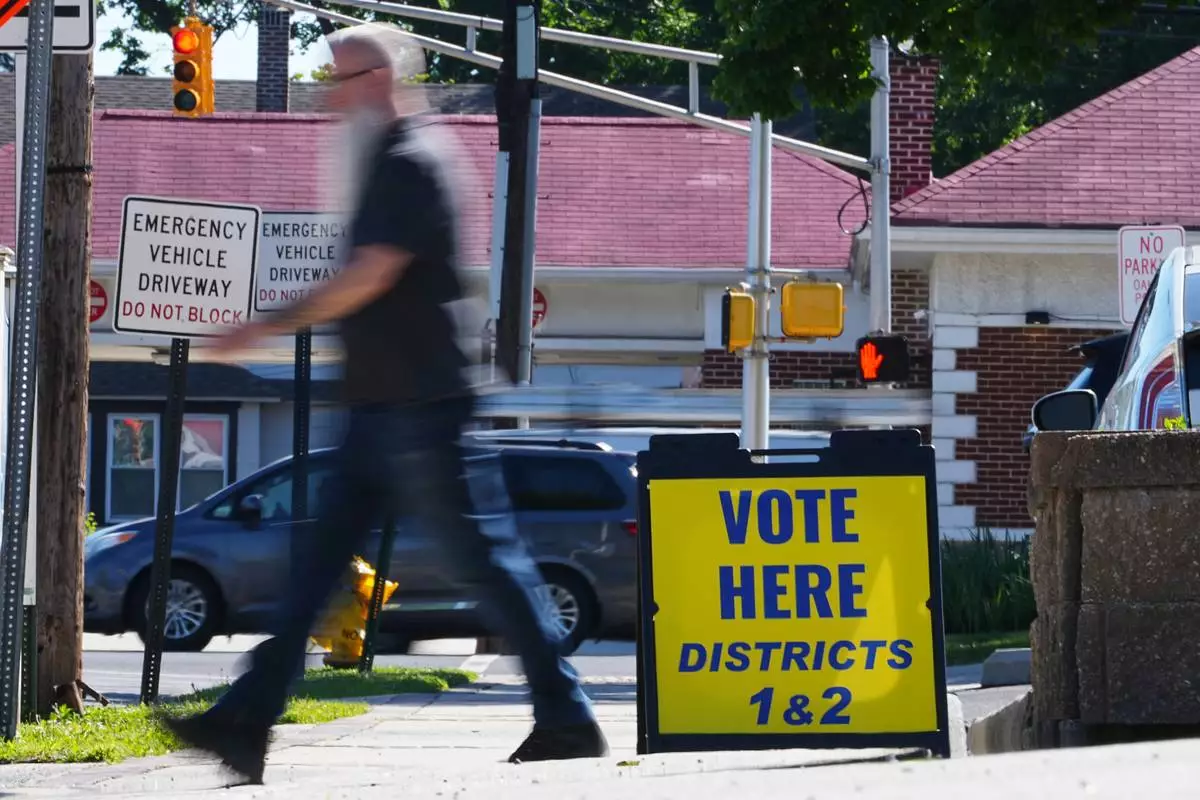
A person walks from a polling place for the New Jersey primary election in Oaklyn, N.J., Tuesday, June 2, 2026. (AP Photo/Matt Rourke)