Skip to Content Facebook Feature Image

UN chief proposes options to help end Israel-Hezbollah conflict after peacekeepers leave Lebanon

News

UN chief proposes options to help end Israel-Hezbollah conflict after peacekeepers leave Lebanon
News

News

UN chief proposes options to help end Israel-Hezbollah conflict after peacekeepers leave Lebanon

2026-06-03 06:25 Last Updated At:06:31

UNITED NATIONS (AP) — The United Nations chief has proposed three options to help end the decades-old conflict between Lebanon’s Iran-backed Hezbollah militants and Israel when the 8,100-member U.N. peacekeeping mission in southern Lebanon ends on Dec. 31.

All of the options presented to the U.N. Security Council by Secretary-General Antonio Guterres would continue U.N. military monitoring of the boundary between Israel and Lebanon, support Lebanese forces in deploying throughout the country and strengthen political efforts to end the fighting, which has persisted despite a nominal ceasefire.

U.N. peacekeepers have played a significant role in monitoring the security situation in southern Lebanon, a Hezbollah stronghold, for decades. Six of the peacekeepers have been killed in recent months.

Bowing to demands from the United States and its close ally Israel, the Security Council voted unanimously in August 2025 to terminate the peacekeeping mission known as UNFIL and asked Guterres to present options for implementing a 2006 resolution that ended a monthlong war between Israel and Hezbollah.

The resolution demands that Hezbollah disarm, Israeli forces withdraw and the Lebanese army deploy throughout the country as the sole military force. None of this has happened.

In his letter to the Security Council on Monday, Guterres said the recurring hostilities between Israel and Hezbollah show the imperative of implementing the 2006 resolution, which is the framework toward peace.

The secretary-general said U.N. military monitoring of the U.N.-drawn boundary between Israel and Lebanon, known as the Blue Line, was "paramount.”

Under all options, he said, “a uniformed United Nations presence working to facilitate de-escalation, dialogue, liaison and coordination, and support for the Lebanese Armed Forces would be necessary.” The U.N. military would complement the strengthened U.N. special coordinator for Lebanon, who would continue to lead efforts to implement the 2006 resolution.

Guterres proposed three options for the U.N. military force, ranging from 5,525 to 1,980 personnel, including some unarmed military observers. He said the largest force would be able "to most credibly observe developments along the length of the Blue Line.”

U.N. spokesman Stephane Dujarric told reporters Tuesday that the secretary-general hopes the Security Council will make a decision soon.
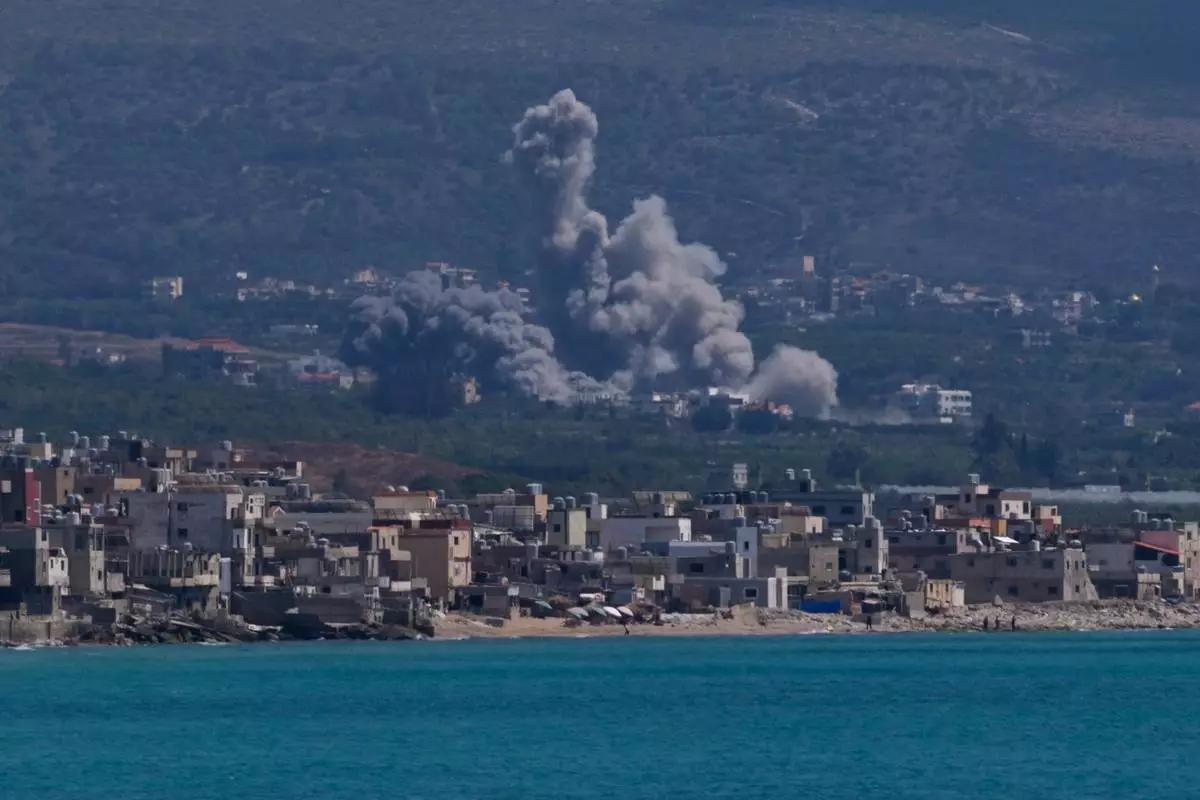
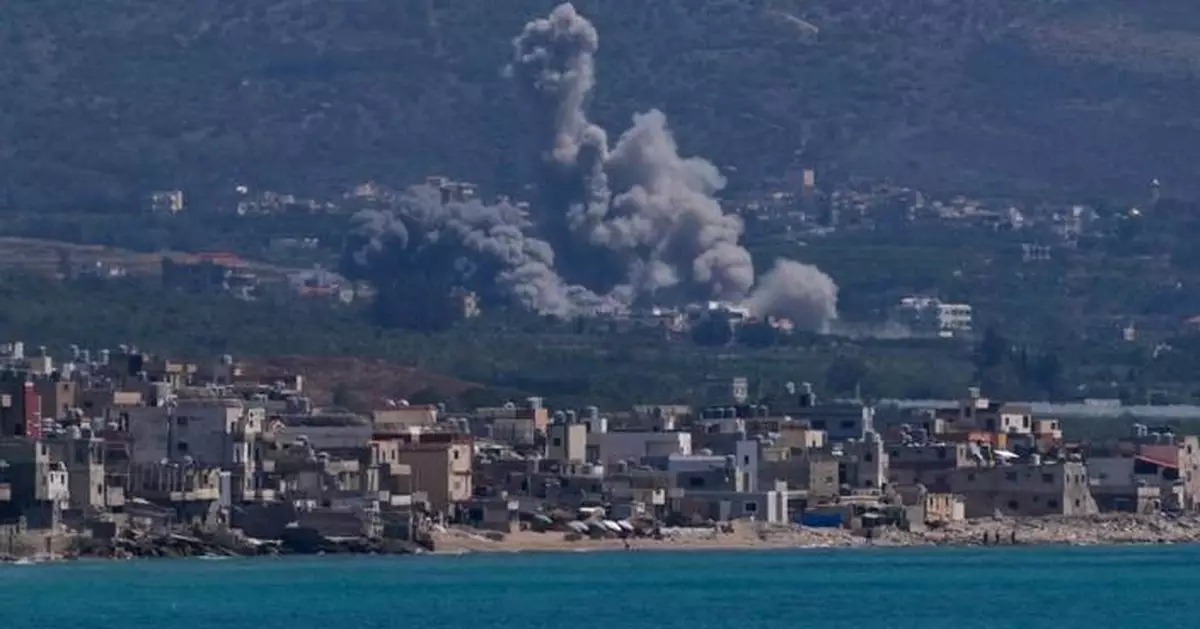
Smoke rises from an Israeli airstrike that hit Qlaileh village, as it seen from the southern port city of Tyre, Lebanon, Tuesday, June 2, 2026. (AP Photo/Mohammed Zaatari)

Smoke rises from an Israeli airstrike that hit Qlaileh village, as it seen from the southern port city of Tyre, Lebanon, Tuesday, June 2, 2026. (AP Photo/Mohammed Zaatari)
PORT-AU-PRINCE, Haiti (AP) — The U.S. government has given a visa to Woodensky Pierre, the only member of Haiti’s national soccer team who lives in the Caribbean country, to travel and participate in the World Cup, an official said Tuesday.

Thecieux Jeanty, Haiti’s soccer federation spokesperson, told The Associated Press that Pierre was traveling to Florida on Tuesday.

“It was a great moment for him, a moment of happiness,” he said.

Supporters gathered around Pierre as he arrived at the airport in Port-au-Prince on Tuesday, telling the AP that he had “a happy heart.”

Airport workers sought to have photos with him, while his mother hugged him several times before he left.

Among the fans was Guy Ernst Phillipe, who hugged Pierre: “We could not be any more proud. ... I'm touching history right now.”

He also had a personal message for Pierre: “At least 10 goals," he said as both of them laughed.

Pierre's teammates arrived in Florida last week to start preparing for the World Cup. It is the second time that Haiti has qualified. The last time it appeared on soccer’s biggest stage was more than half a century ago.

Pierre had been training with local players in an upscale area of Port-au-Prince as he awaited the visa. The team’s stadium in Haiti’s capital was considered too dangerous, so Haiti was forced to play its “home” World Cup qualifiers in Curaçao.

Pierre is from Cite Soleil, a seaside neighborhood that has long struggled with hunger, massacres and gang violence. It is located in western Port-au-Prince, which is 70% controlled by gangs.

Haiti will play World Cup warmup matches against New Zealand on Tuesday and Peru on Friday.

Haiti opens World Cup play on June 13 in Foxborough, Massachusetts, against Scotland, then plays five-time champion Brazil on June 19 in Philadelphia and Morocco on June 24 in Atlanta.

Coto reported from San Juan, Puerto Rico.

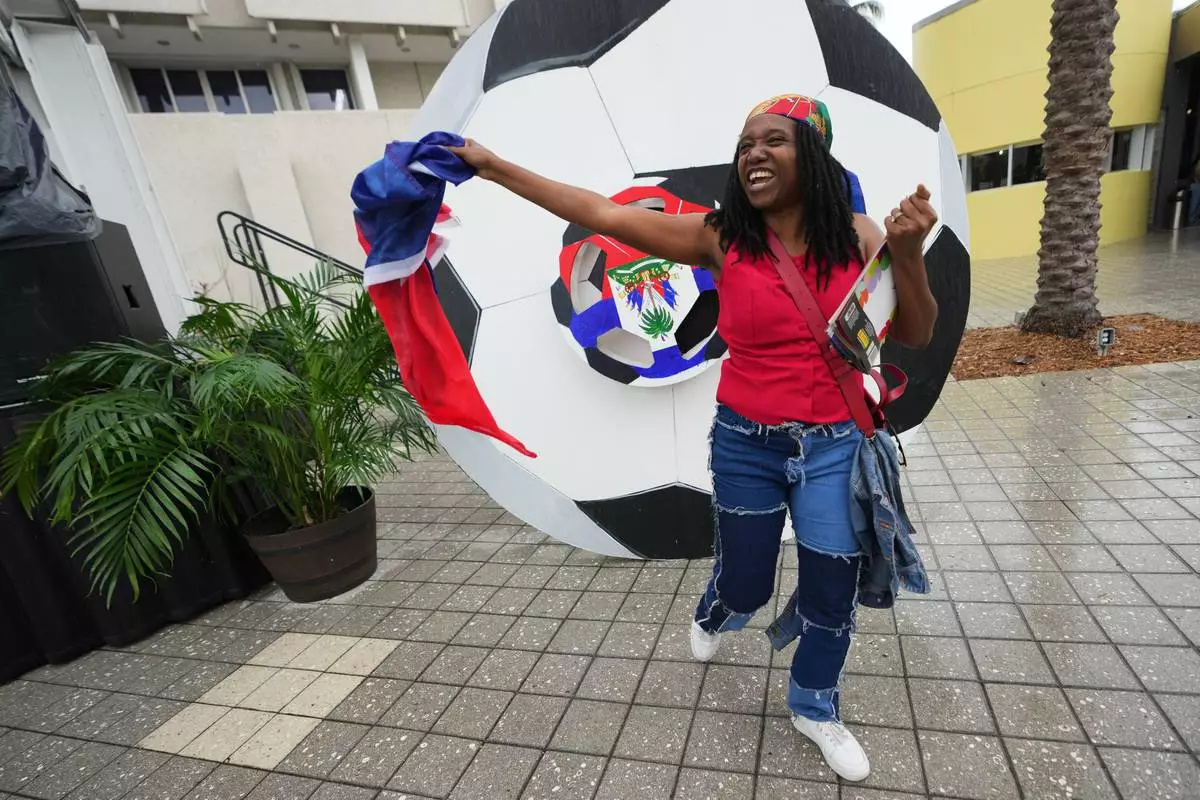
Odeline Paul dances with a Haitian flag at a Haitian Heritage Month event featuring the Haiti national soccer team, Saturday, May 30, 2026, in North Miami, Fla., ahead of the FIFA World Cup soccer tournament. (AP Photo/Lynne Sladky)

Odeline Paul dances with a Haitian flag at a Haitian Heritage Month event featuring the Haiti national soccer team, Saturday, May 30, 2026, in North Miami, Fla., ahead of the FIFA World Cup soccer tournament. (AP Photo/Lynne Sladky)

Recommended Articles