SAVANNAH, Ga. (AP) — A museum in Georgia's oldest city on Wednesday welcomed a truckload of treasures from the earliest period of U.S. history — 17 cannons that experts believe sank to the bottom of the Savannah River during the American Revolution and remained undiscovered for nearly 240 years.
Workers carefully hoisted the big guns one-by-one from the back of a truck and wheeled them inside their new home at the Savannah History Museum, which will put them on display just in time for the Fourth of July celebration of America's 250th birthday.
Click to Gallery
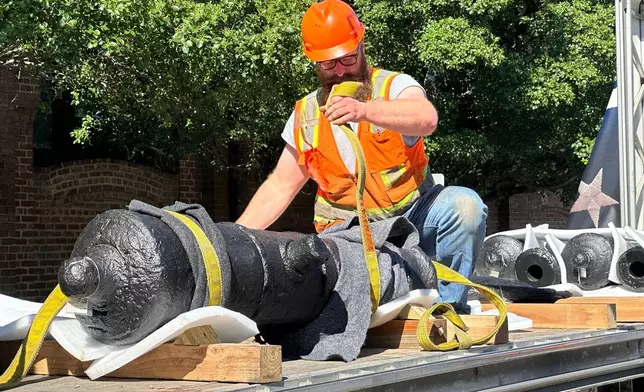
Bradford Shields fastens lifting straps to a cannon, which sunk to the bottom of the Savannah River during the American Revolution, on a flatbed truck at the Savannah History Museum in Savannah, Ga., on Wednesday, June 3, 2026. (AP Photo/Russ Bynum)
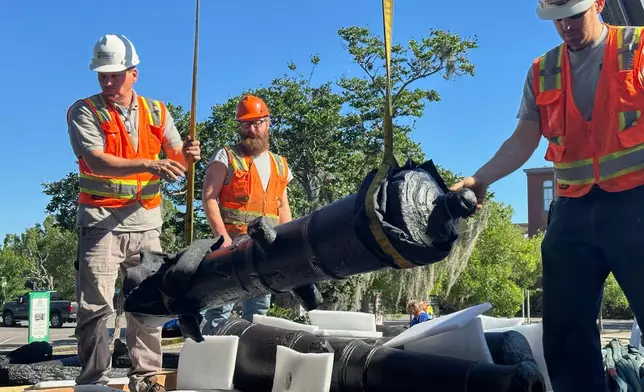
Terry Koller, Bradford Shields and Joseph Robinson steady a cannon, which sunk to the bottom of the Savannah River during the American Revolution, as it's hoisted from the bed of a truck at the Savannah History Museum in Savannah, Ga., on Wednesday, June 3, 2026. (AP Photo/Russ Bynum)
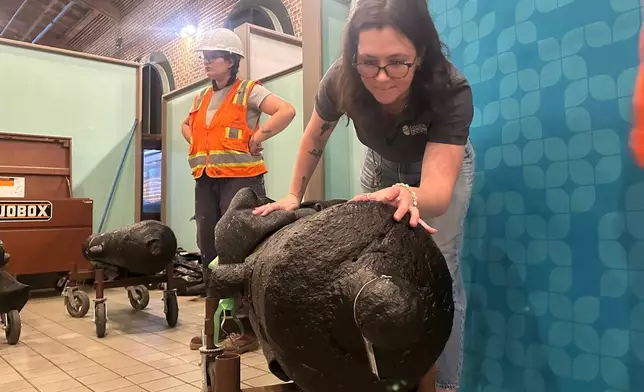
Samantha Moss inspects a cannon, which sunk to the bottom of the Savannah River during the American Revolution, at the Savannah History Museum in Savannah, Ga., on Wednesday, June 3, 2026. (AP Photo/Russ Bynum)
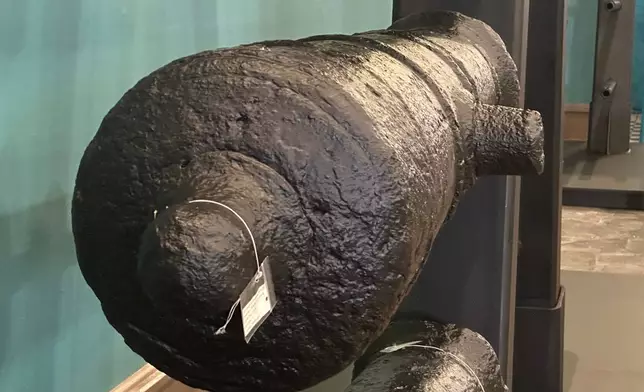
Cannons, which sunk to the bottom of the Savannah River during the American Revolution, sit on a rack after arriving at the Savannah History Museum in Savannah, Ga., on Wednesday, June 3, 2026. (AP Photo/Russ Bynum)
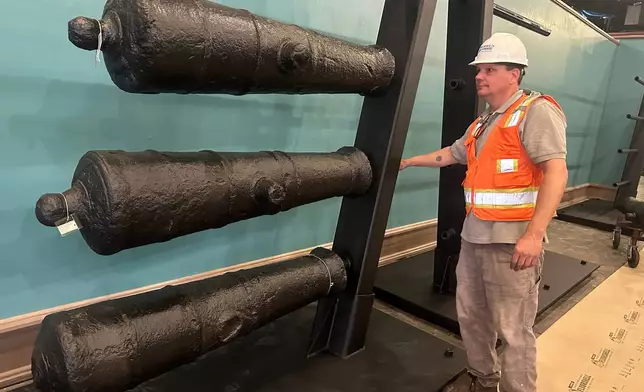
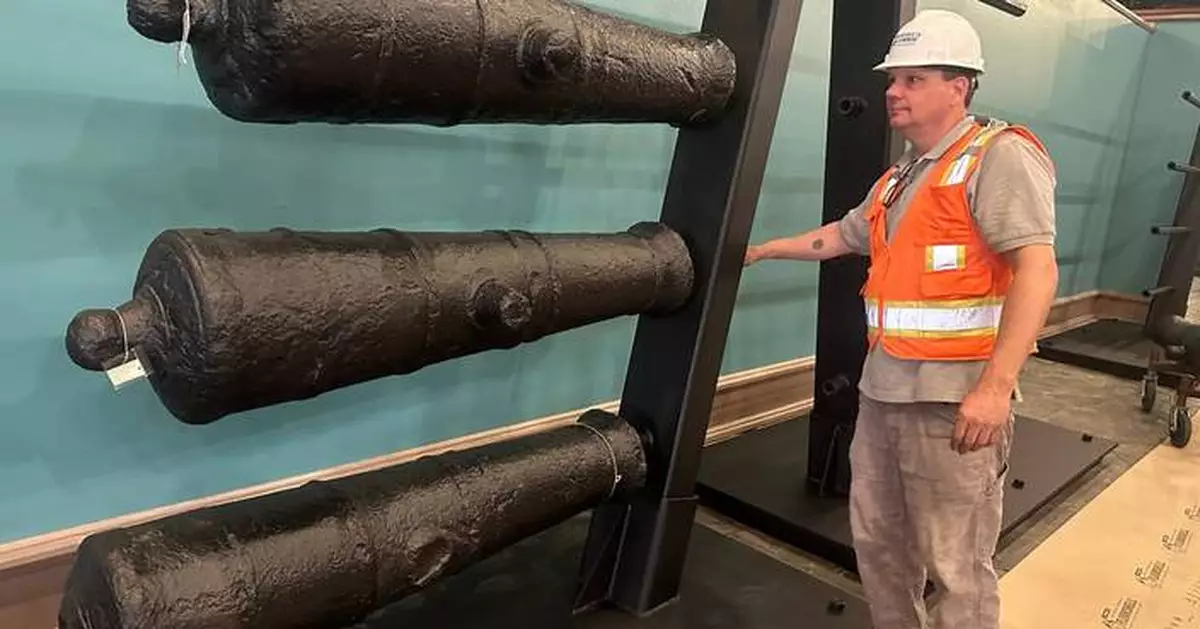
Terry Koeller inspects cannons, which sunk to the bottom of the Savannah River during the American Revolution, on a rack at the Savannah History Museum in Savannah, Ga., on Wednesday, June 3, 2026. (AP Photo/Russ Bynum)
“They look brand new,” said Andrea Farmer, a U.S. Army Corps of Engineers archaeologist who was part of the team that researched and preserved the cannons. "They could pretty much be fired if someone wanted to.”
The artifacts were discovered in 2021 when a dredge scooping sediment from the riverbed as part of an Army Corps project to deepen Savannah's shipping channel pulled up a cannon in its metal jaws. The crew soon dug up two more.
In the course of just over a year, a total of 19 cannons were hoisted from the location just downstream from Savannah, which is where Georgia was founded in 1733 as the last of Britain's 13 American colonies.
After being pulled from the river, most of the cannons left Georgia for several years to undergo cleaning and preservation work at a Texas lab.
Archaeologists initially assumed the cannons likely dated to the Civil War. But further research indicated they’re likely almost a century older and sank during the buildup to the American Revolution’s bloody siege of Savannah.
Savannah was under British occupation in the fall of 1779, when colonists planned an attack to retake the city with help from French allies.
When French ships carrying troops were spotted off the Georgia coast, British forces scuttled at least six ships in the Savannah River downstream from the city to block the French vessels.
The land battle that followed was one of the bloodiest of the war. British forces killed nearly 300 colonial fighters and their allies, and wounded hundreds more.
The Savannah History Museum sits right next to the battlefield. Its staff on Wednesday hoisted the cannons, weighing up to 1500 pounds (680 kilograms) apiece, onto custom display mounts that staffers likened to giant wine racks.
The cannons will be part of a new exhibit on Savannah's role in the American Revolution, which is scheduled to open Fourth of July weekend, said Samantha Moss, the museum's curator.
"Our great team has been prepping for months -- building mounts and planning how we can safely display these very large, very special artifacts,” she said.
Each of the iron cannons emerged from the river covered by a thick crust of mud and minerals.
Two were left in that raw state and put on display at the museum. The other 17 were sent to Texas A&M University, which has a lab that specializes in preserving underwater artifacts. Its staff spent years painstakingly cleaning the big guns and coating them in paint and wax to prevent rusting and corrosion.
“A lot of them have scour marks on the side from anchors or dredging, so there’s some scarring on the cannons," said Chris Dostal, a professor of nautical archaeology who leads Texas A&M's Conservation Research Lab. "But most of them look pretty exceptional.”
Most of the cannons arrived with wooden plugs still sealing their bores, which remained packed with cannonballs and gunpowder charges.
Dostal said radiocarbon dating of the wooden stoppers placed them roughly in the late 1700s. His team shared the cannons' measurements and other details with experts in London, who concluded three of them were very likely forged by the British military.
The rest appeared to be of French design but bore no telltale markings. Dostal said he suspects those guns may have been cast in America around the time of the war.
Other artifacts found with the cannons included pieces of anchors and a portion of a ship's bronze bell. Like the cannons, none of them bore engravings indicating which ship they came from.
That means many details of the cannons' origins remain a mystery.
“You don't have all of the information,” Farmer said. “You're trying to piece it together as best as you can.”
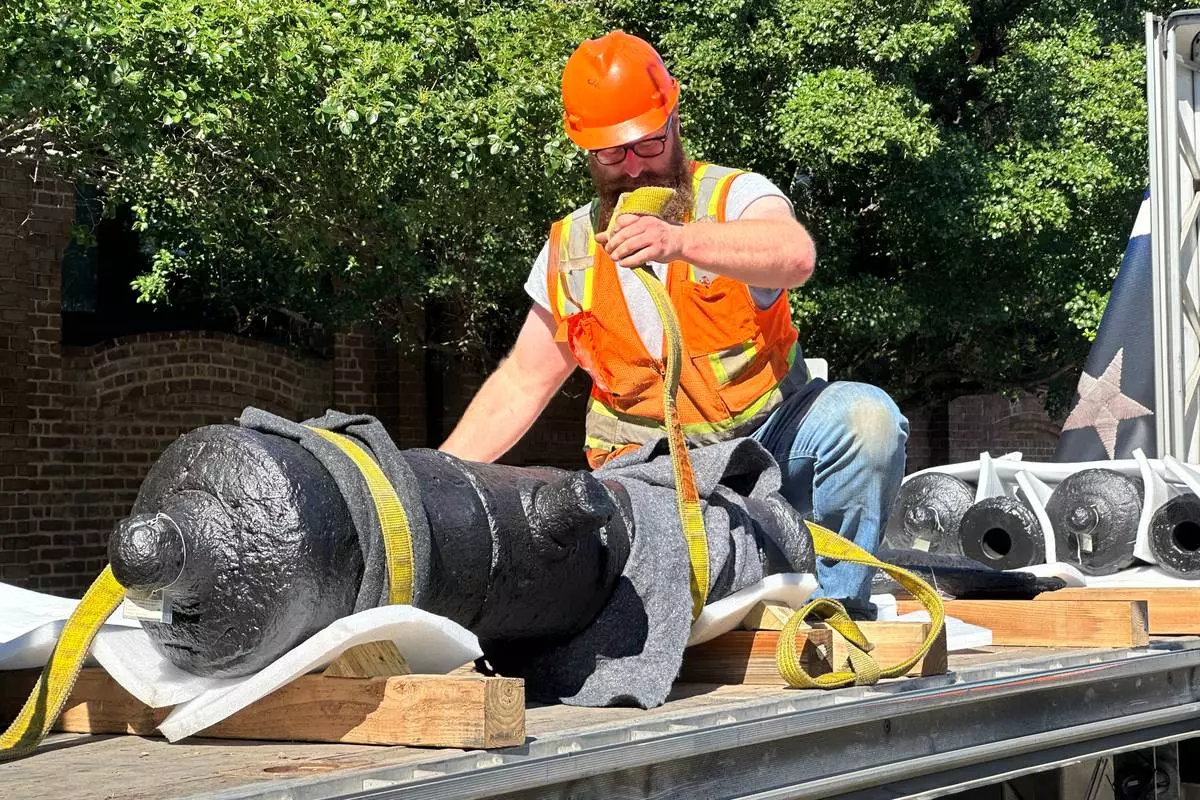
Bradford Shields fastens lifting straps to a cannon, which sunk to the bottom of the Savannah River during the American Revolution, on a flatbed truck at the Savannah History Museum in Savannah, Ga., on Wednesday, June 3, 2026. (AP Photo/Russ Bynum)
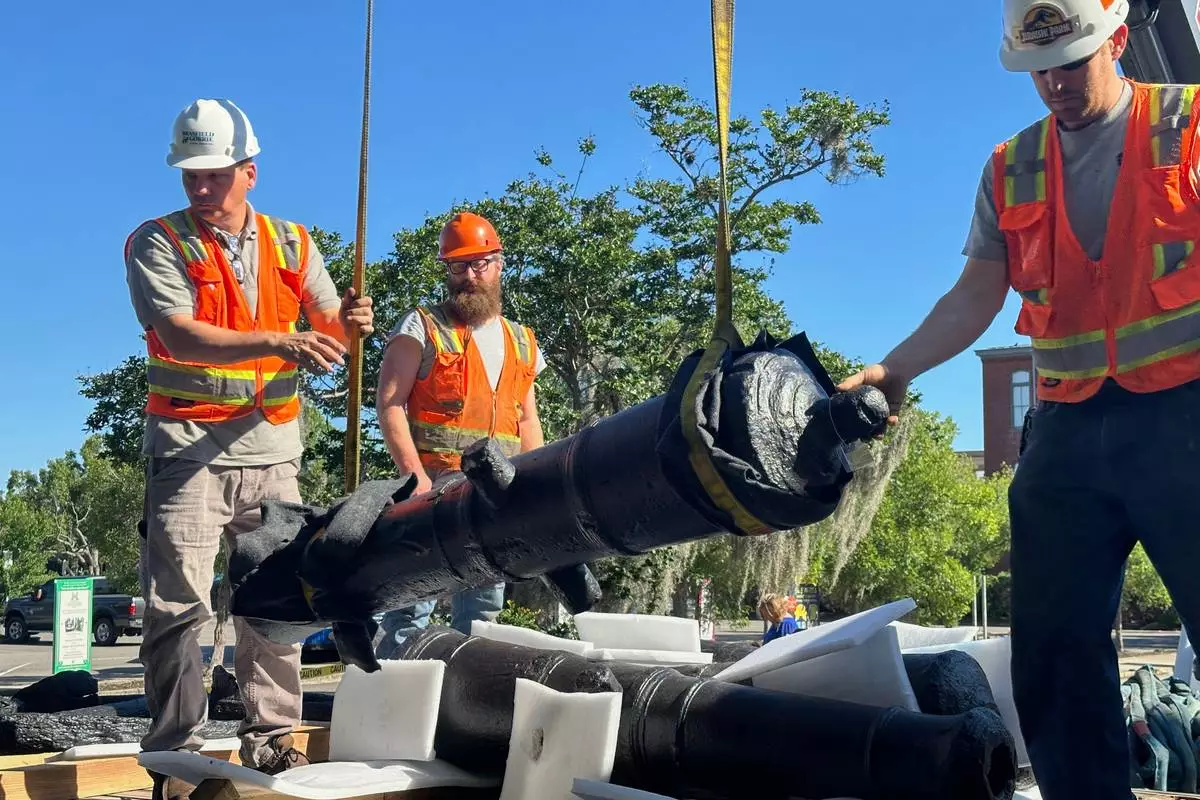
Terry Koller, Bradford Shields and Joseph Robinson steady a cannon, which sunk to the bottom of the Savannah River during the American Revolution, as it's hoisted from the bed of a truck at the Savannah History Museum in Savannah, Ga., on Wednesday, June 3, 2026. (AP Photo/Russ Bynum)
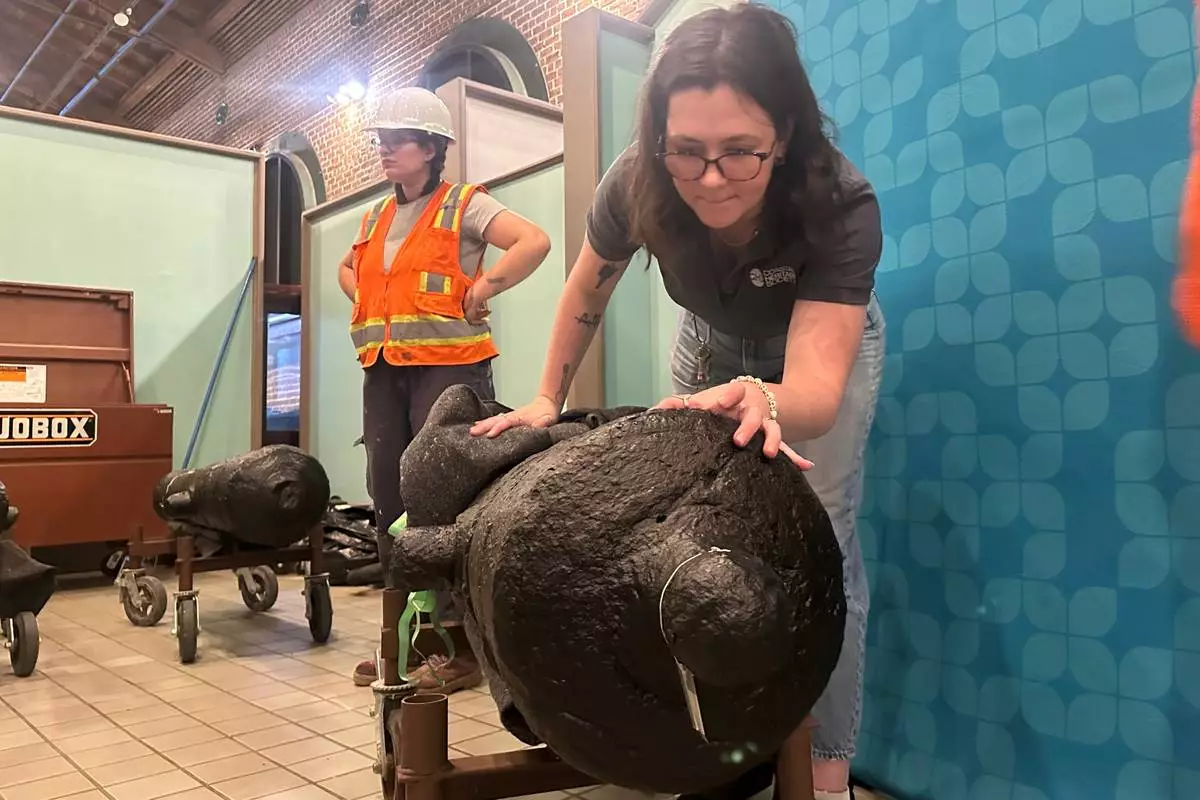
Samantha Moss inspects a cannon, which sunk to the bottom of the Savannah River during the American Revolution, at the Savannah History Museum in Savannah, Ga., on Wednesday, June 3, 2026. (AP Photo/Russ Bynum)
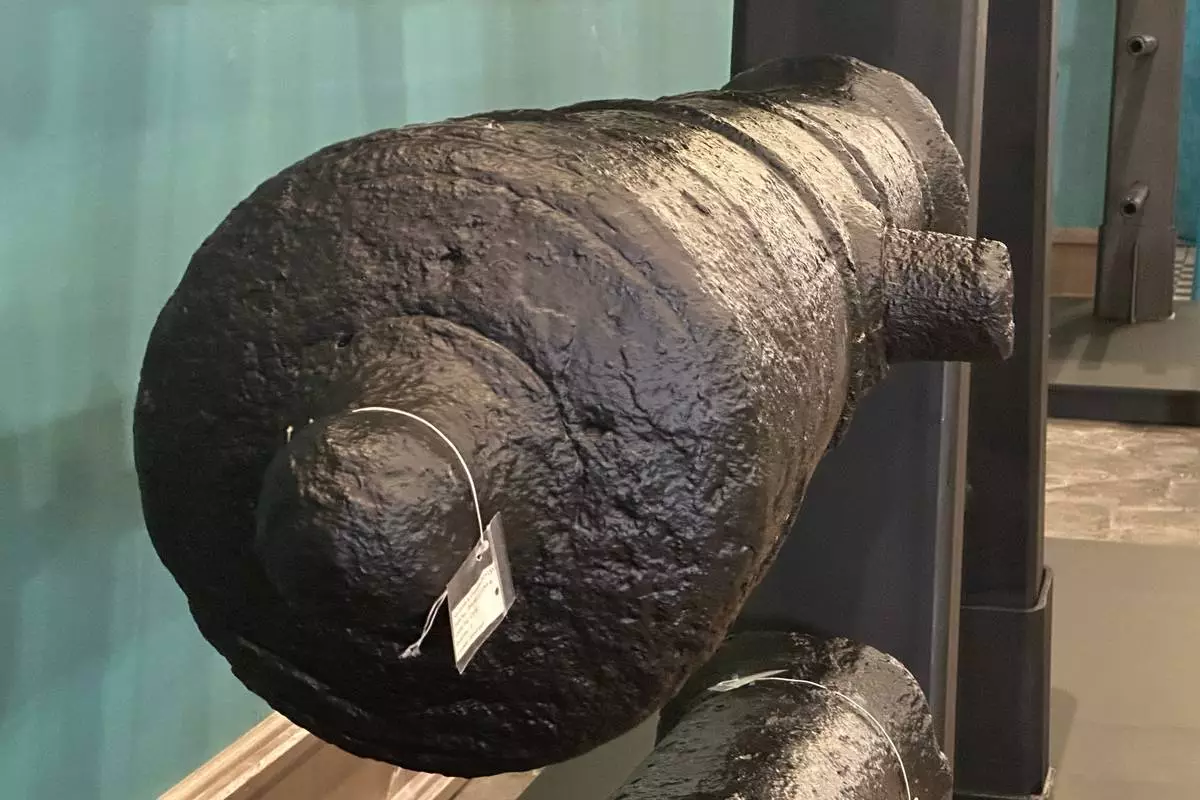
Cannons, which sunk to the bottom of the Savannah River during the American Revolution, sit on a rack after arriving at the Savannah History Museum in Savannah, Ga., on Wednesday, June 3, 2026. (AP Photo/Russ Bynum)
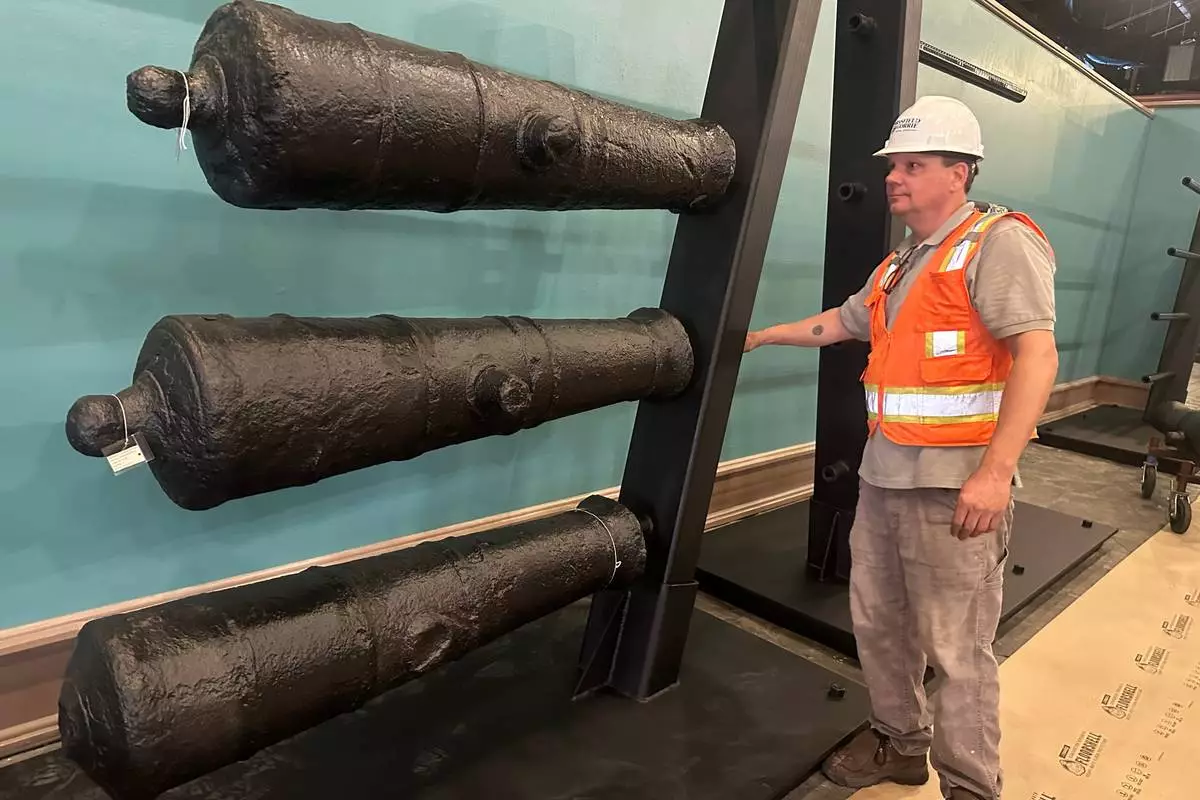
Terry Koeller inspects cannons, which sunk to the bottom of the Savannah River during the American Revolution, on a rack at the Savannah History Museum in Savannah, Ga., on Wednesday, June 3, 2026. (AP Photo/Russ Bynum)